Search Results(13805)

2009-11-02
PIER M
Vol. 9, 107-122
Bandwidth Analysis by Introducing Slots in Microstrip Antenna Design Using ANN
Vandana Vikas Thakery and Pramod Kumar Singhal
Many applications of microstrip antenna are rendered by their inherent narrow bandwidth. In this paper a new approach is proposed to design inset feed microstrip antenna with slots in it to improve the antenna bandwidth. This paper deals with the design of slotted microsrip antenna on a substrate of thickness 1.588 mm that gives wideband characteristics using ANN. The illustrated patch antenna gives enhanced bandwidth as compared to antenna with out slots of the same physical dimensions. In the present work an Artificial Neural Network (ANN) model is developed to analyse the bandwidth of the example antenna. The Method of Moments (MOM) based IE3D software has been used to generate training and test data for the ANN. The example antenna is also designed physically with glass epoxy substrate with εr = 4.7 for few results for testing the artificial neural network model. The different variants of training algorithm of MLPFFB-ANN (Multilayer Perceptron feed forward back propagation Artificial Neural Network) and RBF -ANN (Radial basis function Artificial Neural Network) has been used to implement the network model. The results obtained from artificial neural network when compared with experimental and simulation results, found satisfactory and also it is concluded that RBF network is more accurate and fast as compared to different variants of backpropagation training algorithms of MLPFFBP.
BANDWIDTH ANALYSIS BY INTRODUCING SLOTS IN MICROSTRIP ANTENNA DESIGN USING ANN
2009-10-31
PIER
Vol. 98, 267-282
Detecting Dissimilarities in EM Constitutive Parameters Using Differential Imaging Operator on Reconstructed Wavefield
Md Ishfaqur Raza and Richard E. DuBroff
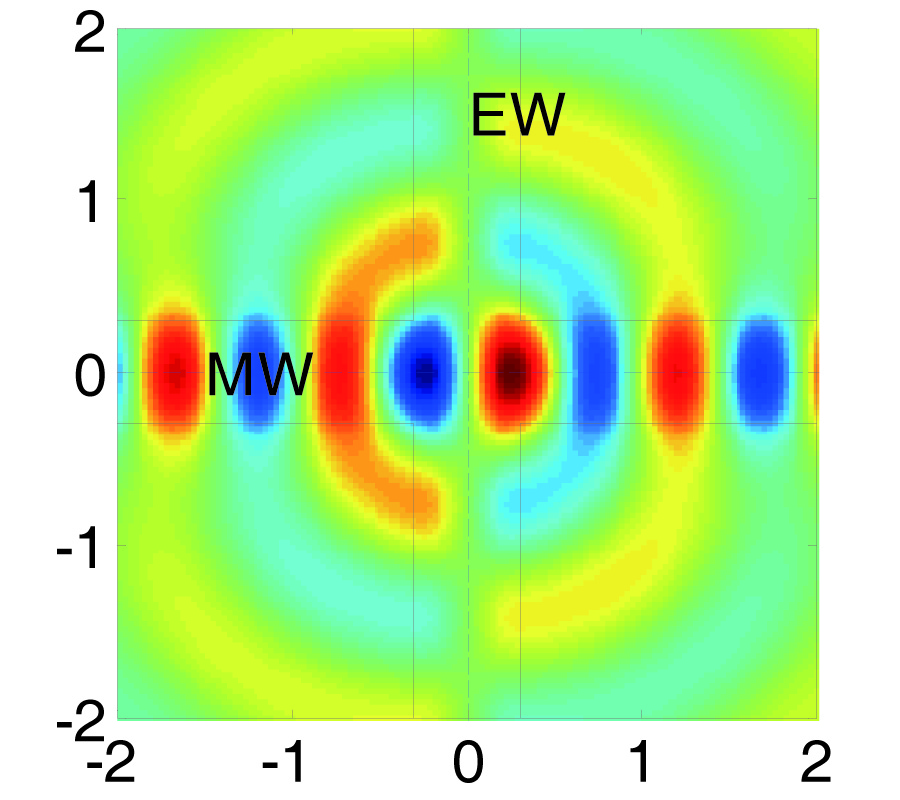
Electromagnetic field will scatter when incident on boundaries separating media with different constitutive parameters. This paper demonstrates the use of a differential operator on recorded scattered waves to reveal the shape of the boundary. The method is noninvasive and is composed of three phases. First, the area of interest is illuminated and the resulting scattered electromagnetic fields are recorded. In the 2nd phase, the captured data is numerically reverse simulated in time to reconstruct the field distribution in the region of interest. Finally, the differential imaging operator is applied on the reconstructed wave field, creating an image delineating the boundary where scattered fields originated. This technique does not require the knowledge of location of the boundaries nor the nature of the discontinuity in the constitutive parameters. The proposed imaging system is scalable, whereby modification of the source signal, recorder sampling, and numerical model allows imaging objects of smaller dimensions and creation of sharper and more accurate images.
DETECTING DISSIMILARITIES IN EM CONSTITUTIVE PARAMETERS USING DIFFERENTIAL IMAGING OPERATOR ON RECONSTRUCTED WAVEFIELD
2009-10-31
PIER
Vol. 98, 251-266
Performance of Multiband Complex Wavelet Based Multicarrier DS-CDMA System with Multi-Antenna Receiver Over Nakagami-m Fading Channel
Xiangbin Yu and Guang-Guo Bi
On the basis of analyzing the principle of multicarrier DS-CDMA, we propose a novel multiband complex wavelet based multicarrier DS-CDMA system in this paper by using the optimized multiband complex wavelet as multicarrier basis function. The system bit error rate (BER) performance is investigated over Nakagami-m Rayleigh fading channel. Without any cyclic prefix (CP), the proposed system can avoid the decrease of spectrum efficiency and data rate of conventional multicarrier DS-CDMA with CP. Meanwhile, the space diversity combining (SDC) technique based on multi-antenna receiver is employed to improve the system performance further. By the mathematical derivation, the BER analysis of the system with or without SDC is given in detail. Theoretical analysis and simulation results show that the proposed multicarrier system outperforms the conventional multicarrier DS-CDMA system and real wavelet packet based multicarrier DS-CDMA system due to the superior properties of the optimized multiband complex wavelet. Especially, the application of SDC technique can effectively improve the system ability against spatial fading and interferences, and thus the superior performance is obtained.
PERFORMANCE OF MULTIBAND COMPLEX WAVELET BASED MULTICARRIER DS-CDMA SYSTEM WITH MULTI-ANTENNA RECEIVER OVER NAKAGAMI-m FADING CHANNEL
2009-10-30
PIER
Vol. 98, 233-249
Gaussian Process Modeling of CPW-Fed Slot Antennas
J. P. de Villiers and Jan Pieter Jacobs
Gaussian process (GP) regression is proposed as a structured supervised learning alternative to neural networks for the modeling of CPW-fed slot antenna input characteristics. A Gaussian process is a stochastic process and entails the generalization of the Gaussian probability distribution to functions. Standard GP regression is applied to modeling S11 against frequency of a CPW-fed secondresonant slot dipole, while an approximate method for large datasets is applied to an ultrawideband (UWB) slot with U-shaped tuning stub --- a challenging problem given the highly non-linear underlying function that maps tunable geometry variables and frequency to S11/input impedance. Predictions using large test data sets yielded results of an accuracy comparable to the target moment-method-based full-wave simulations, with normalized root mean squared errors of 0.50% for the slot dipole, and below 1.8% for the UWB antenna. The GP methodology has various inherent benefits, including the need to learn only a handful of (hyper) parameters, and training errors that are effectively zero for noise-free observations. GP regression would be eminently suitable for integration in antenna design algorithms as a fast substitute for computationally intensive full-wave analyses.
GAUSSIAN PROCESS MODELING OF CPW-FED SLOT ANTENNAS
2009-10-28
PIER
Vol. 98, 221-231
Dual Linear/Circular Polarized Plannar Antenna with Low Profile Double-Layer Polarizer of 45º Tilted Metallic Strips for WiMAX Applications
Jose Luis Masa-Campos and Fernando Gonzalez-Fernandez
A low profile double-layer polarizer structure is presented for planar patch antennas to obtain circular polarization in 3.5 GHz WiMAX band (3.4-3.6 GHz≈5.7% bandwidth). Each polarizer layer is composed of 45º tilted metallic strips on a printed circuit. A bandwidth widening is obtained due to a significant reduction of the distance between polarizer and patches. The associated effects from the interaction of the two structures have been studied. A 2x2 array prototype has been implemented and measured, with a 8% average bandwidth in reflection and dual linear/circular polarization.
DUAL LINEAR/CIRCULAR POLARIZED PLANNAR ANTENNA WITH LOW PROFILE DOUBLE-LAYER POLARIZER OF 45º TILTED METALLIC STRIPS FOR WIMAX APPLICATIONS
2009-10-28
PIER
Vol. 98, 207-219
Magnetic Field Produced by a Parallelepipedic Magnet of Various and Uniform Polarization
Romain Ravaud and Guy Lemarquand
This paper deals with the modeling of parallelepipedic magnets of various polarization directions. For this purpose, we use the coulombian model of a magnet for calculating the magnetic potential in all points in space. Then, we determine the three components of the magnetic field created by a parallepiped magnet of various polarization direction. These three components and the scalar magnetic potential are also expressed in terms of fully analytical terms. It is to be noted that the formulas determined in this paper are more general that the ones established in the literature and can be used for optimization purposes. Moreover, our study is carried out without using any simplifying assumptions. Consequently, these expressions are accurate whatever the magnet dimensions. This analytical formulation is suitable for the design of unconventional magnetic couplings, electric machines and wigglers.
MAGNETIC FIELD PRODUCED BY A PARALLELEPIPEDIC MAGNET OF VARIOUS AND UNIFORM POLARIZATION
2009-10-28
PIER
Vol. 98, 191-205
Design Analysis of Ferrite Sheet Attachment for SAR Reduction in Human Head
Mohammad Tariqul Islam , Mohammad Rashed Iqbal Faruque and Norbahiah Misran
In this paper, reducing Specific Absorption Rate (SAR) with ferrite sheet attachment is investigated. The finite-difference time-domain method with Lossy-Drude model is adopted in this study. The methodology of SAR reduction is addressed and then the effects of attaching location, distance, size and material properties of ferrite sheet on the SAR reduction are investigated. Computational results show that the SAR averaging over 10 gm was better than that for 1 gm and SAR reduction of 57.75% is achieved for SAR 10 gm. These results show the way to choose a ferrite sheet with the maximum SAR reducing effect for phone model.
DESIGN ANALYSIS OF FERRITE SHEET ATTACHMENT FOR SAR REDUCTION IN HUMAN HEAD
2009-10-28
PIER
Vol. 98, 175-190
Simulation of Time Modulated Linear Antenna Arrays Using the FDTD Method
Shiwen Yang , Yikai Chen and Zai-Ping Nie
Time modulated linear antenna arrays consisting of printed dipoles above a ground plane are simulated using the finite-difference time-domain (FDTD) method. The FDTD method brings great convenience to the investigation of the time domain responses of the time modulated arrays. In conjunction with the near-to-far field transformation in time domain, the far-field transient response can be computed to explain the physical essence of different time sequences. By employing the discrete Fourier Transform (DFT) and the frequency domain near-to-far field transformation, the radiation patterns at the frequencies of interest are obtained and are compared with the measured results. Simulation results show that the FDTD method is an effective and accurate approach for the full-wave simulation of time modulated antenna arrays.
SIMULATION OF TIME MODULATED LINEAR ANTENNA ARRAYS USING THE FDTD METHOD
2009-10-28
PIER
Vol. 98, 163-173
Broadband E-h Shaped Microstrip Patch Antenna for Wireless Systems
Mohammad Tariqul Islam , Mohammed Nazmus Shakib and Norbahiah Misran
A broadband inverted E-H shaped microstrip patch antenna is proposed and experimentally investigated. The antenna employs novel E-H shaped patch with L-probe feed technique. Prototype of the proposed antenna has been fabricated and measured for electromagnetic analysis including the impedance bandwidth, radiation pattern, and antenna gain. The designed antenna has a dimension of 80 mm by 50 mm, leading to broad bandwidths covering 1.76 GHz to 2.38 GHz. Stable radiation patterns across the operating bandwidth are observed. In addition, a parametric study is conducted to facilitate the design and optimization process.
BROADBAND E-H SHAPED MICROSTRIP PATCH ANTENNA FOR WIRELESS SYSTEMS
2009-10-27
PIER
Vol. 98, 137-162
The Analytical Design of a Folded Waveguide Traveling Wave Tube and Small Signal Gain Analysis Using Madey's Theorem
Mohd Fareq Bin Abd Malek
We are developing an analytical model for the design of the folded waveguide traveling wave tube (FWTWT). This analytical model provides the physical view for rapid design optimization of the FWTWT. The design and analysis of the FWTWT using the spatial harmonics method of the TE10 mode of the EM wave are presented. An X-band FWTWT is used to verify this method. The normalized dispersion and beam line equations are used to simplify the design process so that the FWTWT can be designed to operate at any desired frequency. The small signal gain of an FWTWT is calculated by using Madey's theorem. The results of this analysis are compared with the numerical single particle simulation carried out using MATLAB. The results are in excellent agreement. The Madey's theorem can be used to provide a potential indication of the gain magnitude of the FWTWT.
THE ANALYTICAL DESIGN OF A FOLDED WAVEGUIDE TRAVELING WAVE TUBE AND SMALL SIGNAL GAIN ANALYSIS USING MADEY'S THEOREM
2009-10-27
PIER
Vol. 98, 119-136
Design of a Sparse Antenna Array for Communication and Direction Finding Applications Based on the Chinese Remainder Theorem
Tao Hong , Maozhong Song and Xin-Yu Sun
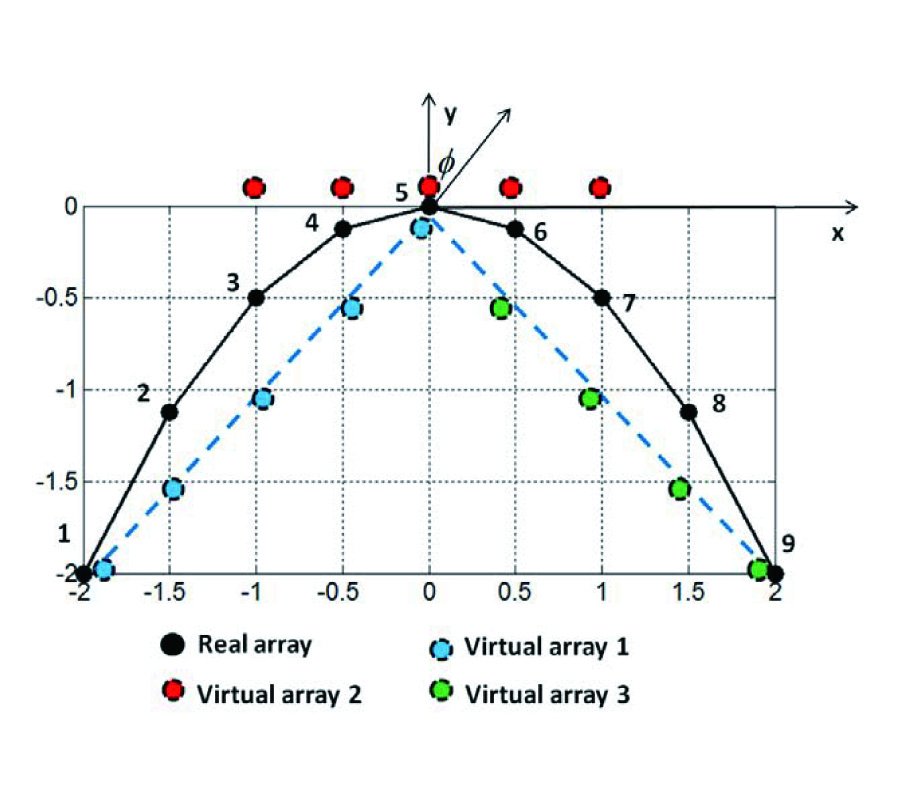
In this paper we propose a sparse antenna array with nine elements for the integrated system of communication and direction finding. The main idea is that the sparse antenna array, whose element spacing is relatively larger than half wavelength, are divided into six two-element subarrays to transmit multi-beam. According to the spatial correlation characteristics of multi-beam, a packet exciting method employing multi-carrier Orthogonal Frequency Division Multiplexing (OFDM) signal is designed to modulate the directional information into the signal space of subcarriers. In this way, a receiver with a single antenna can accomplish communication and direction-finding function by demodulation received signal. For the direction finding algorithm of the sparse antenna array, an approximate algorithm is designed to resolve the ambiguity problem based on the Chinese remainder theorem. Simulation results show that the proposed sparse antenna array can be applied to the integrated application of communication and direction finding.
DESIGN OF A SPARSE ANTENNA ARRAY FOR COMMUNICATION AND DIRECTION FINDING APPLICATIONS BASED ON THE CHINESE REMAINDER THEOREM
2009-10-27
PIER
Vol. 98, 97-118
Plasmons and Diffraction of an Electromagnetic Plane Wave by a Metallic Sphere
Marian Apostol and Georgeta Vaman
The di®raction of a plane electromagnetic wave by an ideal metallic sphere (Mie's theory) is investigated by a new method. The method represents the charge disturbances (polarization) by a displacement field in the positions of the mobile charges (electrons) and uses the equation of motion for the polarization together with the electromagnetic potentials. We employ a special set of orthogonal functions, which are combinations of spherical Bessel functions and vector spherical harmonics. This way, we obtain coupled integral equations for the displacement field, which we solve. In the non-retarded limit (Coulomb interaction) we get the branch of "spherical" (surface) plasmons at frequencies ω = ωpsqrt(l/(2(l/ + 1)), where ωp is the (bulk) plasma frequency and l = 1, 2,.... When retardation is included, for an incident plane wave, we compute the field inside and outside the sphere (the scattered field), the corresponding energy stored by these fields, Poynting vector and scattering cross-section. The results agree with the so-called theory of "effective medium permittivity", although we do not start the calculations with the dielectric function. In turn, we recover in our results the well-known dielectric function of metals. We have checked the continuity of the tangential components of the electric field and continuity of the normal component of the electric displacement at the sphere surface, as well as the conservation of the energy flow and re-derived the "optical theorem". In the limit of small radii (in comparison with the electromagnetic wavelength) the sphere exhibits a series of resonant absorptions at frequencies close to the plasmon frequencies given above. For large radii these resonances disappear.
2009-10-27
PIER B
Vol. 18, 279-309
Accelerated Antenna Design Methodology Exploiting Parameterized Cauchy Models
George Shaker , Mohamed H. Bakr , Nagula Sangary and Safieddin Safavi-Naeini
We propose an optimization methodology suitable for the design of various antenna structures. This methodology includes a rapidly-converging iterative scheme. In each iteration stage, the algorithm generates a parameterized Cauchy model using the available results from previous iterations. Optimization is then applied to this Cauchy model to obtain better design parameters that are also used in enhancing the accuracy of the model. This cycle continues until the specifications are met. In addition, this on-the-fly technique produces an analytical model of the behavior of the antenna structure. Sensitivity and tolerance analyses can thus be efficiently carried out without the need for further costly electromagnetic simulations.
ACCELERATED ANTENNA DESIGN METHODOLOGY EXPLOITING PARAMETERIZED CAUCHY MODELS
2009-10-26
PIER
Vol. 98, 75-95
Wavelet-Based Breast Tumor Localization Technique Using a UWB Radar
Antonio Lazaro , David Girbau and Ramon Villarino
This paper deals with the potential of ultra-wideband (UWB) microwave imaging for the detection and localization of breast cancer in its early stages. A method is proposed for locating tumors which is based on the signal time-of-flight backscattered by the tumor. Time-of-flight is detected using a wavelet transform algorithm. The feasibility of the method has been investigated by means of simulated results using Finite-Difference Time-Domain (FDTD) and experimental results with a UWB radar and a phantom.
WAVELET-BASED BREAST TUMOR LOCALIZATION TECHNIQUE USING A UWB RADAR
2009-10-26
PIER
Vol. 98, 53-73
The Development of Curved Microstrip Antenna with Defected Ground Structure
Jun-Ping Geng , Jiajing Li , Rong-Hong Jin , Sheng Ye , Xianling Liang and Minzhu Li
A series of curved microstrip antennae with defected ground structure for multiband are proposed,which are more smaller, conveniently conformal, wider radiation beam and suitable for WLAN terminal for different environment. The relation between the main geometry parameters and the antennas' characters are studied with the cavity model method and EM simulation, and the optimum size antenna is achieved later. If keeping the other parameters but increasing the curving angle α, the return loss is almost good at f=2.45 GHz, but poor at f=5.25 GHz and 5.8 GHz. After slight tuning the key parameters, these curved antennae all can work at f=2.45 GHz, 5.25 GHz and 5.8 GHz, and their patterns in the plane that is vertical to the curve axes become more wider or even omni-directional with the curving angle α increasing, which are verified by experiment, their measured gain are 2 dB--6.3 dB.
THE DEVELOPMENT OF CURVED MICROSTRIP ANTENNA WITH DEFECTED GROUND STRUCTURE
2009-10-26
PIER
Vol. 98, 33-52
Sidelobes Reduction Using Simple Two and Tri-Stages Non Linear Frequency Modulation (Nlfm)
Yee Kit Chan , Chua Ming Yam and Voon Koo
The Linear Frequency Modulation (LFM) waveform is the most commonly and extensively used signal in practical radar system. However a compressed LFM signal at the receiver will produce the first sidelobe at a level of -13 dB to the peak of the main lobe. A weighting function is needed to apply in order to reduce the sidelobes. However, the penalty of mismatch loss is clearly evident. It may reduce output SNR, typically by 1 to 2 dB. Every single dB of additional SNR can have great effects in reducing false alarm rates in target detection applications. In an effort to achieve low autocorrelation sidelobe level without applying weighting function, Non-Linear Frequency Modulation (NLFM) signal has been investigated. This paper describes the sidelobe reduction techniques using simple two-stage FM waveform, modified two-stage FM waveform and tri-stage FM waveform. Simulation results of the proposed NLFM signal are presented. Sidelobe reduction of more than -19 dB can be achieved by this design without any weighting technique applied.
SIDELOBES REDUCTION USING SIMPLE TWO AND TRI-STAGES NON LINEAR FREQUENCY MODULATION (NLFM)
2009-10-26
PIER
Vol. 98, 15-31
The Factorized Sparse Approximate Inverse Preconditioned Conjugate Gradient Algorithm for Finite Element Analysis of Scattering Problems
Xue Wei Ping and Tie-Jun Cui
The edge-based finite element method is used for the solution of scattering problems. The factorized sparse inverse preconditioner is considered for the conjugate gradient iterative solution of the large sparse linear systems generated from the finite element method. The efficiency of the proposed preconditioner is illustrated on a set of model problems in the final of the paper. The results suggest that the sparse inverse preconditioner is very efficient for the solution of large-scale electromagnetic scattering problems.
THE FACTORIZED SPARSE APPROXIMATE INVERSE PRECONDITIONED CONJUGATE GRADIENT ALGORITHM FOR FINITE ELEMENT ANALYSIS OF SCATTERING PROBLEMS
2009-10-26
PIER
Vol. 98, 1-13
A Wideband Half Oval Patch Antenna for Breast Imaging
Jing Yu , Mengqing Yuan and Qing Huo Liu
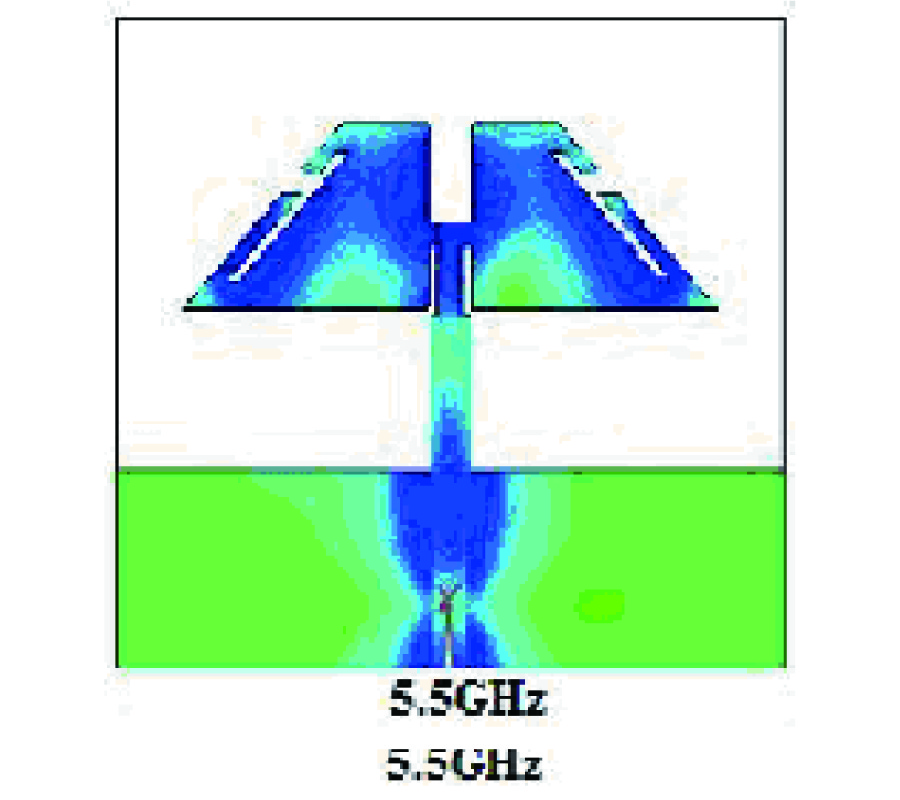
A simple half oval patch antenna is proposed for the active breast cancer imaging over a wide bandwidth. The antenna consists of a half oval and a trapezium, with a total length 15.1 mm and is fed by a coaxial cable. The antenna performance is simulated and measured as immersed in a dielectric matching medium. Measurement and simulation results show that it can obtain a return loss less than -10 dB from 2.7 to 5 GHz. The scattered field detection capability is also studied by simulations of two opposite placed antennas and a full antenna array on a cubic chamber.
A WIDEBAND HALF OVAL PATCH ANTENNA FOR BREAST IMAGING
2009-10-26
PIER Letters
Vol. 12, 99-109
Design of Broadband Compact Size Antenna Comprised of Printed Planar Dipole Pairs
Jian-Ying Li
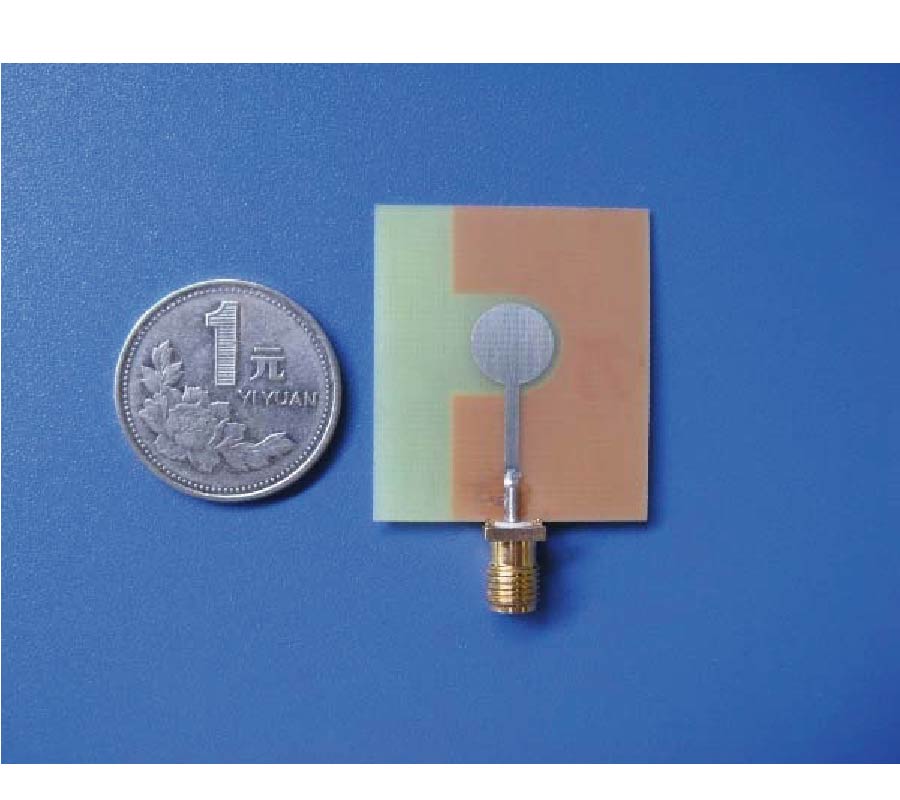
In this paper, a wideband planar dipole antenna is proposed. Compared to conventional dipole antennas, this antenna has wideband impedance matching, simple structure and compact size. From EM simulations, dimensions of antennas are chosen for better performance. For verification, this newly proposed structure is fabricated and measured. It is shown that return loss of the antenna between 2.5 GHz and 8.0 GHz is better than -10 dB.
DESIGN OF BROADBAND COMPACT SIZE ANTENNA COMPRISED OF PRINTED PLANAR DIPOLE PAIRS
2009-10-22
PIER
Vol. 97, 417-431
Two-Probe Excited Circular Ring Antenna for MIMO Application
Monai Krairiksh , Panisa Keowsawat , Chuwong Phongcharoenpanich and Sompol Kosulvit
This paper presents the analysis and design of a two-probe excited circular ring antenna. The analysis is conducted by using induced emf method and transmission line model. The design process is to choose a suitable radius of the ring for a single probe antenna. Then, the suitable probe length and ring length are determined for the two-probe antenna. Finally, isolation between the two probes is enhanced by insertion of an inductor coil between the probes. The operational characteristics of the prototype antenna at the frequency of 5.2 GHz are measured and compared with calculation results. It is evident that these results are in good agreement. The antenna achieved isolation in excess of 20 dB and VSWR less than 2:1 over the desired bandwidth and a bidirectional radiation pattern with 4 dBi gain. This antenna is suitable for Multiple-Input Multiple-Output (MIMO) system covering a long and narrow environment.
TWO-PROBE EXCITED CIRCULAR RING ANTENNA FOR MIMO APPLICATION