Search Results(13899)

2009-12-10
PIER
Vol. 100, 27-36
Enhancement of Photonic Band Gap in a Disordered Quarter-Wave Dielectric Photonic Crystal
Chien-Jang Wu , Yu-Nian Rau and Wei-Hsieh Han
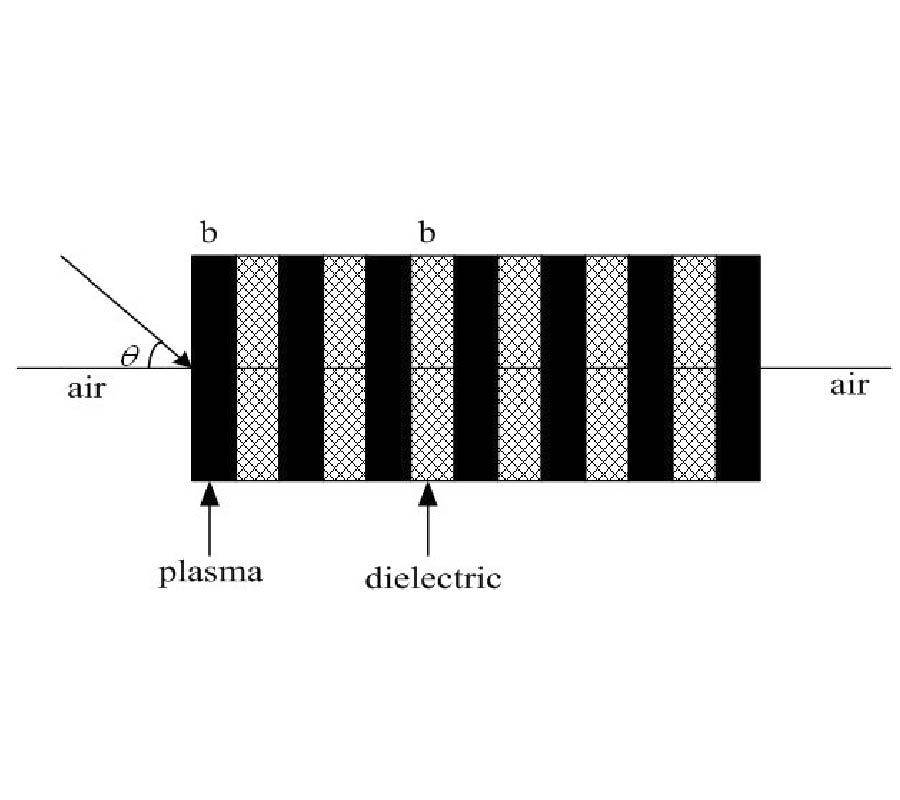
The enhancement of the photonic band gap in visible region for a disordered one-dimensional dielectric-dielectric photonic crystal (DDPC) is theoretically investigated. The DDPC is made of alternating two high/low-index quarter-wave dielectric layers stacked periodically. A disordered DDPC is modeled by randomly changing the real thicknesses, or, the optical lengths, of the two dielectrics. In a single disorder case, where the disorder only appears in one of the two constituents, it is found the photonic band gap can be preferably enhanced for the disordered high-index layer. In the double disorder stack, in which both the constituent layers are disordered, the photonic band gap can, however, be significantly enlarged. In addition, numerical results illustrate that a flat band gap can be obtained by the use of disorder in the optical length.
ENHANCEMENT OF PHOTONIC BAND GAP IN A DISORDERED QUARTER-WAVE DIELECTRIC PHOTONIC CRYSTAL
2009-12-09
PIER
Vol. 99, 453-463
Analysis of Finite Periodic Dielectric Gratings by the Finite-Difference Frequency-Domain Method with the Sub-Entire-Domain Basis Functions and Wavelets
Gang Zheng , Bing-Zhong Wang , Hua Li , Xiao-Fei Liu and Shuai Ding
In this paper, the finite-difference frequency-domain (FDFD) method, boundary integral equation (BIE) method and sub-entire-domain (SED) basis functions are combined to analyze scatterings from finite periodic dielectric gratings. The wavelet method is used to reduce the number of inner product operations in calculating the mutual-impedance elements between the SED basis functions. In the numerical examples, the RCS curves obtained by the method in this paper are in good agreement with those obtained by the classical full-domain FDFD method, but the computational times are largely reduced and no large matrix equation needs to be stored and solved in the former.
ANALYSIS OF FINITE PERIODIC DIELECTRIC GRATINGS BY THE FINITE-DIFFERENCE FREQUENCY-DOMAIN METHOD WITH THE SUB-ENTIRE-DOMAIN BASIS FUNCTIONS AND WAVELETS
2009-12-09
PIER Letters
Vol. 13, 1-9
Influence of Low Intensity Coherent Electromagnetic Millimeter Radiation (EMR) on Aqua Solution of Dna
Vitaly P. Kalantaryan , Poghos O. Vardevanyan , Yu S. Babayan , E. S. Gevorgyan , S. N. Hakobyan and A. P. Antonyan
The thermostability and density of water-salt solutions of DNA, irradiated by non thermal coherent millimeter electromagnetic waves with frequency 64.5 GHz have been investigated using the methods of spectrophotometry and densitometry. It is shown that the thermostability of DNA and density of its solutions are increased, depending on time of irradiation. It is expected that under the influence of millimeter electromagnetic radiation the hydration of DNA and ions of Na+ that are present in solution decrease. As a result, the physicochemical characteristics of DNA are changed.
INFLUENCE OF LOW INTENSITY COHERENT ELECTROMAGNETIC MILLIMETER RADIATION (EMR) ON AQUA SOLUTION OF DNA
2009-12-09
PIER
Vol. 100, 13-26
Microwave Measurements of Dielectric Constants by Exponential and Logarithmic Mixture Equations
Jyh Sheen , Zuo-Wen Hong , Che-Wei Su and Heng-Chou Chen
This article reports on a study of the dielectric constants of ceramic dispersions in the polyethylene matrix at microwave frequency. The exponential and logarithmic mixture rules are studied in three ceramic powders of fillers with dielectric constants 10, 20, and 36, respectively. The experimental values of the dielectric constants of the mixtures are compared to those obtained by using different mixing laws. The mixing rules are also adopted to calculate the dielectric constants of pure ceramics from the measured dielectric constants of composites with various concentrations. The theories on errors of calculations are studied. The most adequate mixture equation for measuring the dielectric constants of pure ceramics is suggested.
MICROWAVE MEASUREMENTS OF DIELECTRIC CONSTANTS BY EXPONENTIAL AND LOGARITHMIC MIXTURE EQUATIONS
2009-12-09
PIER
Vol. 100, 1-12
Equivalent Electrical Circuit for Designing MEMS-Controlled Reflectarray Phase Shifters
Farooq Ahmad Tahir , Herve Aubert and Etienne Girard
This article presents an equivalent electrical circuit for designing Radio-Frequency MEMS-controlled planar phase shifter. This kind of phase shifters has recently been incorporated in reconfigurable reflectarrays. The proposed equivalent circuit depends on the number, the ON/OFF state and the locations of the switches inside the unit cell. Such equivalent circuit is used for determining, with a little computational effort, the two important design parameters i.e., the number and the locations of RF-MEMS switches in the phase shifter cell. These two design parameters then allow a designer to design a phase shifter cell having a linear distribution of a given number of phases over 360° phase range at a single desired frequency.
EQUIVALENT ELECTRICAL CIRCUIT FOR DESIGNING MEMS-CONTROLLED REFLECTARRAY PHASE SHIFTERS
2009-12-08
PIER
Vol. 99, 427-451
Experiments with Lanczos Biconjugate a-Orthonormalization Methods for MoM Discretizations of Maxwell's Equations
Yan-Fei Jing , Bruno Carpentieri and Ting-Zhu Huang
In this paper, we consider a novel class of Krylov projection methods computed from the Lanczos biconjugate A-Orthonormalization procedure for the solution of dense complex non-Hermitian linear systems arising from the Method of Moments discretization of Maxwell's equations. We report on experiments on a set of model problems representative of realistic radar-cross section calculations to show their competitiveness with other popular Krylov solvers, especially when memory is a concern. The results presented in this study will contribute to assess the potential of iterative Krylov methods for solving electromagnetic scattering problems from large structures enriching the database of this technology.
EXPERIMENTS WITH LANCZOS BICONJUGATE A-ORTHONORMALIZATION METHODS FOR MOM DISCRETIZATIONS OF MAXWELL'S EQUATIONS
2009-12-08
PIER
Vol. 99, 405-426
Microwave Screen with Magnetically Controlled Attenuation
Sergey Nickolaevich Starostenko and Konstantin Rozanov
The effect of magnetic bias on dielectric spectra of composite sheets filled with Fe or Co-based microwires is studied experimentally and via simulation. The permittivity is measured using a free-space technique within the frequency band from 6 to 12 GHz. The bias is applied either parallel or perpendicular to the microwave electric field; the bias strength varies from 0 to 2.5 kOe. The composites with Fe-based wires reveal a single region of bias dependent permittivity under bias about 800-1000 Oe. The composites with Co-based wires reveal two such regions: the high-field region is close to that of composites with Fe wires, and the low-field region corresponds to the coercive field of Co wires (2-3 Oe). The high-field effect is related to the dependence of ferromagnetic resonance (FMR) parameters on bias; the low-field effect is related to the rearrangement of the domain structure of Co-based wires. The interference of magnetoimpedance and dipole resonance is analyzed, revealing the effects off wire length, diameter, parameters of magnetic resonance and composite structure. The results are considered in view of application to the problem of controlled microwave attenuation. Simulation shows that the narrower is the FMR spectrum and the higher is the admissible loss of a sheet in a transparent state, the wider is the dynamic range of attenuation control. The attenuation range of a lattice of continuous wires is smaller than that of a screen with identical wire sections, where the magnetoimpedance effect is amplified resonantly. At 15 GHz frequency the strength of the bias switching opaque sheet with Fe-based wires to the transparent state is about 2000 Oe. For 3 dB admissible loss, the range of attenuation control about 10 dB is feasible in a composite with aligned wire sections. If the aligned sections are distributed regularly, the loss in a transparent state is about 1 dB lower.
MICROWAVE SCREEN WITH MAGNETICALLY CONTROLLED ATTENUATION
2009-12-08
PIER C
Vol. 11, 183-198
A Novel Active Antenna Beamforming Networks Using Butler Matrices
Sharul Kamal Bin Abd Rahim and Peter Gardner
In this paper, a novel architecture of using cascaded Butler Matrices (BM) integrated with Low Noise Amplifiers (LNAs) is proposed. By using the narrow beams available from the Butler Matrix, it is possible for a receiver to increase the gain in the desired signal directions and reduce the gain in interference directions. Hence, high-gain narrowbeam signals for long-range application are produced. A novel technique is introduced which uses high linearity LNAs and a second Butler Matrix, acting as a mirror of the first Butler Matrix, reconstructing the antenna patterns of the individual radiating elements. The resulting outputs have high linearity and broad beam width that can be used for short-range communication. Design of the Butler Matrix, Low Noise Amplifier, Wilkinson Power Divider and High Linearity Low Noise Amplifier are presented in this paper. A final design of active antenna beamforming network using cascaded Butler Matrices integrated with LNAs is proposed. The beamforming network provides a method, which could be applicable in vehicle communication systems, where long-range communications with roadside beacons and short-range communications with the fast moving vehicle are both required.
A NOVEL ACTIVE ANTENNA BEAMFORMING NETWORKS USING BUTLER MATRICES
2009-12-08
PIER M
Vol. 10, 49-57
Design of TM0n- Mode Couplers for Diagnostics of a Vircator
M. Sumathy , Sushant Kumar Chhotray , D. Senthil Kumar , K. S. Bhat and Lalit Kumar
The waveguide and the coaxial-probe type wideband high power TM0n-mode couplers (n=1,2) were designed and qualified with respect to the coupling factor using the wheel-type mode launchers. The mode launchers and the mode couplers were simulated and experimentally tested, the former for the VSWR and the latter for the coupling factor. The coupler chamber has been used in single-shot experiments, the values of the measured frequencies of coupled output of a typical vircator agreed with those predicted values by particle-in-cell code simulation using MAFIA.
DESIGN OF TM0N- MODE COUPLERS FOR DIAGNOSTICS OF A VIRCATOR
2009-12-08
PIER M
Vol. 10, 39-47
Study of Mode Propagation in Pseudochiral Transmission Lines
Hossein Hatefi-Ardakani and Jalil Rashed-Mohassel
In this paper, a generic planar transmission line filled, homogeneously, with a pseudochiral omega medium is considered. It is shown that only a uniaxial omega medium can support TE and TM modes separately. Thus, for such a medium, the fields and modal equations for TE, TM and TEM mode propagation are obtained. The special case of parallel plate waveguide is solved, and the effect of pseudochirality parameter Ω on the propagation constant and cut-off frequency is considered. For TEM propagation, an equivalent circuit is given which is different from the common isotropic transmission line model. Finally, a pseudochiral stripline is analyzed, and the elements of the equivalent circuit are calculated. The results show that the properties of the line vary as the pseudochirality parameter changes.
STUDY OF MODE PROPAGATION IN PSEUDOCHIRAL TRANSMISSION LINES
2009-12-04
PIER C
Vol. 11, 171-182
Distributed Particle Filter for Target Tracking in Sensor Networks
Hong-Qing Liu , Hing-Cheung So , Frankie Kit Wing Chan and Kenneth Wing Kin Lui
In this paper, we present a distributed particle filter (DPF) for target tracking in a sensor network. The proposed DPF consists of two major steps. First, particle compression based on support vector machine is performed to reduce the cost of transmission among sensors. Second, each sensor fuses the compressed information from its neighboring nodes with use of consensus or gossip algorithm to estimate the target track. Computer simulations are included to verify the effectiveness of the proposed approach.
DISTRIBUTED PARTICLE FILTER FOR TARGET TRACKING IN SENSOR NETWORKS
2009-12-02
PIER
Vol. 99, 383-404
Dark Soliton Behaviors Within the Nonlinear Micro and Nanoring Resonators and Applications
Somsak Mitatha
We propose some fascinating results regarding dark soliton pulse propagation within the nonlinear micro and nano waveguides. The system consists of nonlinear micro and nanoring resonators whereby the dark soliton is input into the system and travels within the waveguide. A continuous dark soliton pulse is sliced into smaller pulses by the nonlinear effect which is known as chaos. The nonlinear behaviors such as chaos, bistability and bifurcation are analyzed and discussed. The broad area of applications such as dark-bright soliton conversion and power amplification, binary code generation by the dark-bright soliton pair, dark soliton trapping and millimeter wave generation are proposed and discussed. The biggest advantage is that, where security is the most important consideration, power amplification can be used to perform the long distance link.
DARK SOLITON BEHAVIORS WITHIN THE NONLINEAR MICRO AND NANORING RESONATORS AND APPLICATIONS
2009-12-02
PIER Letters
Vol. 12, 171-181
Interaction of Electromagnetic Wave and Plasma Slab with Partially Linear and Sinusoidal Electron Density Profile
Çiğdem Seçkin Gürel and Emrah Öncü
Interaction of an electromagnetic wave and an inhomogenous plasma slab with electron distribution in the form of partially linear and sinusoidal profiles is analysed to determine new reflection, absorbtion and transmission characteristics. Broadband and tunable absorbtion performance of the plasma layer accompanied with narrowband reflection characteristics is presented as the function of electron density profile parameters and external magnetic field excitation. According to the resulting performance characteristics, proposed plasma layer is found to be useful as a new absorbing layer for shielding and stealth applications.
INTERACTION OF ELECTROMAGNETIC WAVE AND PLASMA SLAB WITH PARTIALLY LINEAR AND SINUSOIDAL ELECTRON DENSITY PROFILE
2009-12-01
PIER
Vol. 99, 355-382
Chitosan Spheroids with Microwave Modulated Drug Release
Zakaria Zabliza and Tin Wui Wong
The interplay effects of matrix formulations with microwave on drug release were investigated using an agglomerate system. Chitosan spheroids were formulated with stearic acid and/or sodium chloride by extrusion-spheronization technique, and chlorpheniramine maleate as water-soluble model drug. The spheroids were treated by microwave at 80 W for 5 to 40 min. The profiles of drug dissolution, drug content, drug-polymer interaction, polymer-polymer interaction, sodium leaching, matrix morphology and integrity were determined. Unlike chitosan matrix prepared by ionotropic gelation method, the retardation of drug release from chitosan spheroids by microwave required a more complex formulation containing both stearic acid and sodium chloride unless a high stearic acid fraction was used. These spheroids demonstrated a high resistance to disintegration during dissolution owing to salt-induced bridging by sodium chloride. In response to microwave, sodium chloride aided stearic acid spread and effected domain interaction via C=O moiety over a matrix with reduced specific surface area thereby reducing drug dissolution. The drug release of spheroids can be retarded by microwave through promoting the layering of hydrophobic stearic acid in a matrix structure sustained by sodium chloride.
CHITOSAN SPHEROIDS WITH MICROWAVE MODULATED DRUG RELEASE
2009-12-01
PIER
Vol. 99, 339-354
Effect of Temperature and Multiple Scattering on Rain Attenuation of Electromagnetic Waves by a Simple Spherical Model
Eko Setijadi , Akira Matsushima , Naoki Tanaka and Gamantyo Hendrantoro
Specific rain attenuation is discussed from the viewpoint of numerical solution for scattering and absorption of electromagnetic waves related to dielectric spheres. Special attention is paid to the quantitative evaluations considering the change of temperature and the existence of multiple scattering effect. The analysis is based on the set of Stratton's vector spherical wave functions and its addition theorem, which lead to the simultaneous linear equations for the expansion coefficients with adaptively selected truncation numbers. Computed extinction cross sections lead directly to the specific rain attenuation, where the Weibull raindrop distribution model is used. It is discussed how the dependence of the permittivity of water on temperature and frequency affects the attenuation property. Furthermore, the effect of multiple scattering is evaluated in terms of the root mean square of attenuation deviation from the simple superposition of single scattering (Mie's) coefficients. Contrary to general belief, this deviation is the highest at around the boundary between microwave and millimeter wave bands.
EFFECT OF TEMPERATURE AND MULTIPLE SCATTERING ON RAIN ATTENUATION OF ELECTROMAGNETIC WAVES BY A SIMPLE SPHERICAL MODEL
2009-12-01
PIER
Vol. 99, 323-338
Analytical and Numerical Analyses of a Current Sensor Using Non Linear Effects in a Flexible Magnetic Transducer
Eric Vourc'h , Pierre-Yves Joubert and Lionel Cima
A theoretical study and a simulation method are proposed for superparamagnetic current sensors implementing a uniformly wound toroidal core topology. So as to be easy to implement, this sensor topology can be made flexible thanks to the use of a core made up of a superparamagnetic powder embedded in a flexible plastic matrix. The measurement of DC and AC currents is possible provided that a sinusoidal magnetic field excitation is applied to the superparamagnetic transducer. An analytical model is proposed for computing the sensor output signal and we demonstrate that when the detection of the component at the second order harmonic of the excitation frequency is used, the measurement is independent of the conductor position in a given current range. For simulating the dynamic response of the sensor, we propose to combine the analytical model, or a finite elements model, with a time-discretization method. Furthermore, simulations are carried out considering a ring shaped sensor and the real magnetization characteristics of a superparamagnetic material. Simulations are provided over the [-10 kA 10 kA] range and for various amplitudes of the excitation signal. The results obtained with the analytical model, which is computationally efficient, are within 4% to 12.7% from the numerical results.
ANALYTICAL AND NUMERICAL ANALYSES OF A CURRENT SENSOR USING NON LINEAR EFFECTS IN A FLEXIBLE MAGNETIC TRANSDUCER
2009-12-01
PIER
Vol. 99, 307-322
Signal Processing for Noise Cancellation in Actual Electromagnetic Environment
Hisako Orimoto and Akira Ikuta
The observed phenomena in actual electromagnetic environment are inevitably contaminated by the background noise of arbitrary distribution type. Therefore, in order to evaluate the electromagnetic environment, it is necessary to establish some signal processing methods to remove the undesirable effects of the background noise. In this paper, we propose a noise cancellation method for estimating a specific signal with the existence of background noise of non-Gaussian distribution. By applying the well-known least mean squared method for the moment statistics with several orders, a practical method for estimating the specific signal is derived. The effectiveness of the proposed theoretical method is experimentally confirmed by applying it to an estimation problem in actual magnetic field environment.
SIGNAL PROCESSING FOR NOISE CANCELLATION IN ACTUAL ELECTROMAGNETIC ENVIRONMENT
2009-12-01
PIER Letters
Vol. 12, 161-170
The Effect of Loss-Tangent on Laddering Behavior in Delay Lines
Ali Kabiri , Mohammed M. Bait-Suwailam , Mohammad H. Kermani and Omar M. Ramahi
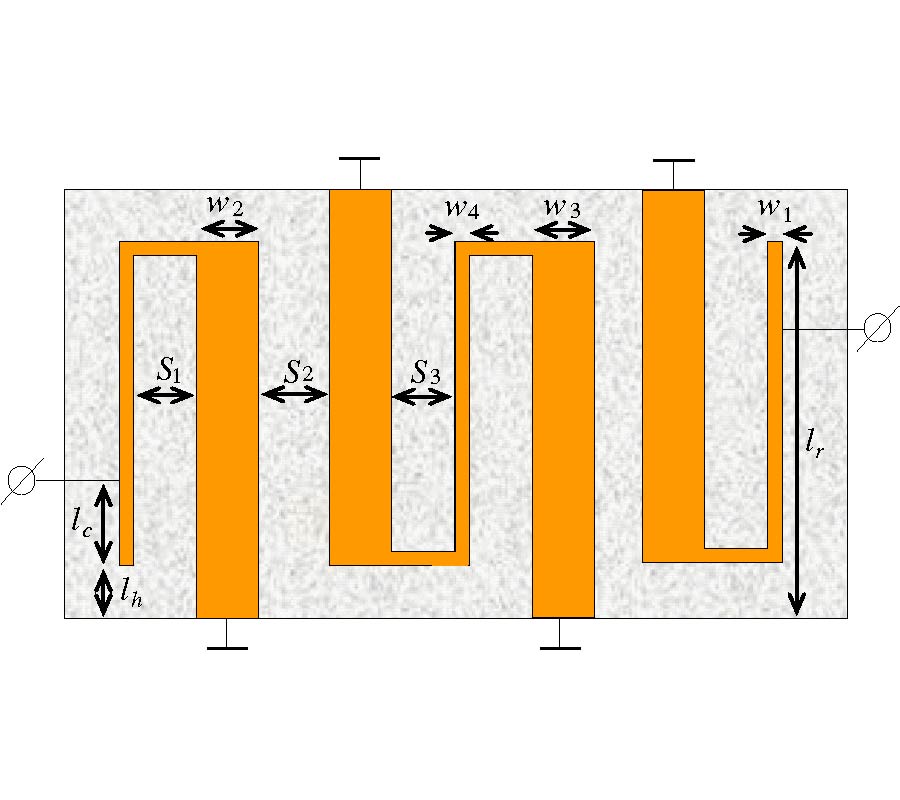
Delay lines come in varying topologies such as the simple meander line or the spiral delay lines. The major characteristic of these delay lines is their introduction of a laddering behavior at the output. Such laddering behavior can render the predictability of the delay very difficult unless time-consuming full-wave simulation is used. In previous works, delay lines were considered with minimal attention to the effect of the loss tangent. In this paper we have studied the effect of loss- tangent on the laddering behavior in delay lines and found that by considering the loss-tangent of the dielectric of the host medium, the laddering behavior is no longer present, thus eliminating the possibility of over- or under shooting logic levels at the output.
THE EFFECT OF LOSS-TANGENT ON LADDERING BEHAVIOR IN DELAY LINES
2009-12-01
PIER M
Vol. 10, 25-38
Comparative Analysis of Split-Ring Resonators for Tunable Negative Permeability Metamaterials Based on Anisotropic Dielectric Substrates
Jiun-Yeu Chen , Wang-Lin Chen , Jia-Yi Yeh , Lien-Wen Chen and Ching-Cheng Wang
The magnetic resonance of various split ring resonators (SRRs) is numerically investigated to analyze the dependence of the resonance frequency on their parameter designs. The behavior of the magnetic resonance frequency in the configuration of the 2-cut single-ring SRR (2C-SRR) shows a larger shift in relation to the changes of the SRR size scaling, split width and substrate permittivity. A new magnetic particle formed by the 2C-SRR structure incorporating nematic liquid crystals (LCs) into the multilayered substrate is proposed for the realization of a tunable magnetic metamaterial. When using such inclusions, the tuning range of the magnetic resonance conditions could be as wide as ~1.1 GHz via changing the orientation of LC molecules by 90°.
COMPARATIVE ANALYSIS OF SPLIT-RING RESONATORS FOR TUNABLE NEGATIVE PERMEABILITY METAMATERIALS BASED ON ANISOTROPIC DIELECTRIC SUBSTRATES
2009-12-01
PIER M
Vol. 10, 13-24
An External Cloak with Arbitrary Cross Section Based on Complementary Medium
Chengfu Yang , Ming Huang , Jingjing Yang , Zhe Xiao and Jinhui Peng
Electromagnetic cloak is a device which makes an object "invisible" for electromagnetic irradiation in a certain frequency range. Material parameters for the complementary medium-assisted external cylindrical cloak with arbitrary cross section are derived based on combining the concepts of complementary media and transformation optics. It can make the object with arbitrary shape outside the cloaking domain invisible, as long as an "antiobject" is embedded in the complementary layer. The external cloaking effect has been verified by full-wave simulation. Moreover, the effect of metamaterial losses is studied, and small losses less than or equal to 0.01 do not disturb the cloaking effect.
AN EXTERNAL CLOAK WITH ARBITRARY CROSS SECTION BASED ON COMPLEMENTARY MEDIUM