Search Results(13878)

2006-07-29
PIER
Vol. 63, 141-152
New Gl Method and Its Advantages for Resolving Historical Difficulties
Ganquan Xie , Feng Xie , Lee Xie and Jianhua Li
Abstract-In this paper, we propose two types of new electromagnetic (EM) integral equation systems and their dual integral equation systems. Based on the EM integral equation systems, we propose a GL EM modeling and inversion algorithms. We make finite step iterations to exactly solve these integral equation systems or the EM and seismic differential integral equations in finite sub domains. The Global EM wave field is improved successively by the Local scattering EM wave field in the sub domains. Only 3 x 3 or 6 x 6 small matrices need to be solved in the GL method. There is no artificial boundary for infinite domain in the method; In the GL method, the cylindrical and spherical coordinate singularities are resolved; Our method combines the analytic and asymptotic method and numerical method. It is more accurate than FEM and FD method and Born likes approximation, the GL method is available for all frequencies and high contrast materials. Its solution has O(h2) convergent rate. If the Gaussian integrals are used, the field has O(h4) super convergence. The method is a high perform parallel algorithm with intrinsic self parallelization properties. The method has very simple scheme or no scheme or half scheme such that it has half mesh and no mesh. In the method, we can use both of Riemann and Lebesgue integral that induces a meshless method. We have developed software for 3D/2.5D EM, seismic, acoustic, flow dynamic, and QEM modeling and inversion.
NEW GL METHOD AND ITS ADVANTAGES FOR RESOLVING HISTORICAL DIFFICULTIES
2006-07-29
PIER
Vol. 63, 125-140
Minimizing Crosstalks in Unshielded Twisted-Pair Cables by Using Electromagnetic Topology Techniques
Phumin Kirawanich , J. Wilson , Naz E. Islam and Susumu Yakura
Crosstalk reduction is analyzed for a reconfigured category-five cable network using electromagnetic topology-based simulation. The reconfigured network results in a marked reduction in inductive near-end crosstalk for the unshielded twisted-pair cable network. Analyses show that half-loop shifting of the generator-pair wires placed next to the receptor is the most effective way to control the near-end crosstalk level. This is primarily due to additional coupling sources induced on receptor wires that effectively deactivate the original cross coupling effect. The analysis also reveals the usefulness of electromagnetic topology-based simulations. The technique applied in this paper is applicable for any large network systems. A sub-network compaction scheme is critical in creating the equivalent junctions that provide a significant reduction in total computational time and total computer memory requirement for analyzing large network systems. For a 5.28-m long cable we have considered in this paper, the results are valid up to 10 MHz.
MINIMIZING CROSSTALKS IN UNSHIELDED TWISTED-PAIR CABLES BY USING ELECTROMAGNETIC TOPOLOGY TECHNIQUES
2006-07-29
PIER
Vol. 63, 107-123
Diffraction of Plane Wave by Two Parallel Slits in an Infinitely Long Impedance Plane Using the Method of Kobayashi Potential
Amjad Imran , Qaisar Abbas Naqvi and Kohei Hongo
We studied the diffraction of E-polarized electromagnetic plane wave by two parallel slits in an infinitely long impedance plane. Analysis is based on the concept of Kobayashi potential. Imposition of required boundary conditions leads to dual integral equations. The dual integral equations can be reduced to matrix equations with the infinite unknowns by using the properties of Weber-Schafheitlin's discontinuous integrals and Jacobi's polynomials. Matrix elements are given in terms of indefinite integrals which are difficult to evaluate analytically. The matrix elements are solved numerically. Diffracted far fields in the upper half space are studied.
DIFFRACTION OF PLANE WAVE BY TWO PARALLEL SLITS IN AN INFINITELY LONG IMPEDANCE PLANE USING THE METHOD OF KOBAYASHI POTENTIAL
2006-07-29
PIER
Vol. 63, 75-88
Field Analysis to Optimize Charge Collection in a Sub-Micron Grated Metal-Semiconductor-Metal Photodetector
S. Kache , N. Kranthi , M. Nizam , Phumin Kirawanich , R. McLaren , Naz E. Islam , A. Sharma , C. Mayberry and S. Lucero
The effects of different geometries, heights and concentrations per unit area of gratings in the active region of a metal semiconductor metal photo-detector have been analyzed for enhanced charge collection through electromagnetic field analysis. Plots of the electric field amplitude as it propagates from the constricted grating region to a larger cross-section in the active region have been studied for comparison. This study shows that a hatched top cone shaped grating allows for maximum energy transfer into the active region, thus enhancing collection. The height for this structure is also a minimum over all structures, thus making the hatched cone the optimum design for enhanced collection. The cladding of such structures with SiO2 also appears to contribute to increased energy transfer into the substrate.
FIELD ANALYSIS TO OPTIMIZE CHARGE COLLECTION IN A SUB-MICRON GRATED METAL-SEMICONDUCTOR-METAL PHOTODETECTOR
2006-07-29
PIER
Vol. 63, 51-73
The Method of Images in Velocity-Dependent Systems
Dan Censor
This study investigates the application of image methodology to velocity-dependent wave systems. Special Relativity is used for the analysis of waves scattered by arbitrary moving objects in the presence of a perfectly-conducting plane-interface. The various scenarios considered involve geometrical, material, and kinematic symmetries. Cases discussed include free-space, material media at-rest, and material media in motion, with respect to the plane-interface boundary. The last configuration is elaborated for two different scenarios: the first assumes the same medium velocity throughout space when the plane boundary is removed; the second introduces two symmetrical velocityfields in the half-spaces involved, with a jump in flow direction at the interface. Where the method applies it simplifies the analysis, and the results enrich our yet limited repertoire of canonical problems for relativistic scattering.
2006-07-29
PIER
Vol. 63, 33-50
On a Study of Diffraction and Dispersion Managed Soliton in a Cylindrical Media
Mousumi Ballav and Asesh Chowdhury
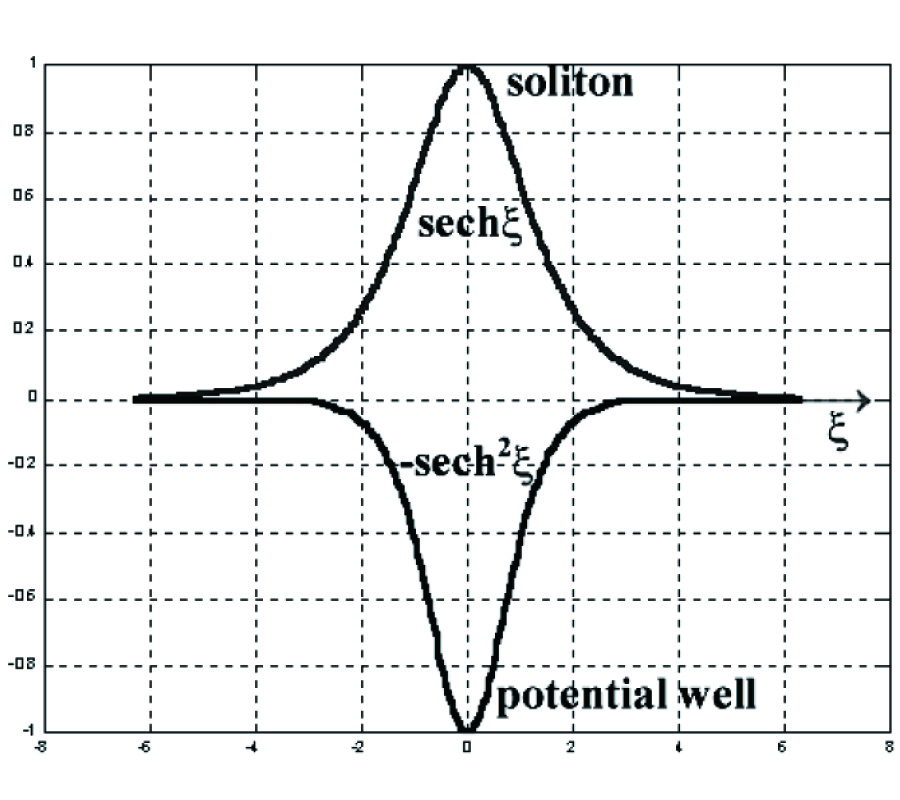
Analytical and numerical techniques are developed for the analysis of the solitary pulse propagation in a cylindrical media, where both the dispersion and diffraction management are known to exist. In the first part we treat the situation when there is no diffraction management by a simple analytical approach and show that it is possible to control both spatial and temporal width over one period of the dispersion map. An important out put of our analytical treatment is that we can predict the value of length of the second link and the amount of group velocity dispersion there if the initial conditions are given. Unfortunately since the spatial chirp can not be controlled, the treatment can not be repeated a second time. So for a long distance propagation a different treatment in needed. We then show that for long period of transmission, it is necessary to introduce diffraction management term, the best form turns out to be periodic function of the distanced travelled. The detailed variation of spatial and temporal width, chirp, and amplitude are explicitly given.
ON A STUDY OF DIFFRACTION AND DISPERSION MANAGED SOLITON IN A CYLINDRICAL MEDIA
2006-07-29
PIER
Vol. 63, 21-32
Inverse for the Skewon Medium Dyadic
Ismo Veikko Lindell
In four-dimensional differential-form representation linear medium relations can be expressed in terms of a medium dyadic mapping the electromagnetic two-form involving the B and E fields to the two-form involving the D and H fields. There does not seem to exist a method to invert the medium dyadic in a coordinate-free manner for the general bi-anisotropic medium. Such an inversion is introduced here for the special class of skewon media which is a 15 parameter subclass of previously studied IB media. The resulting compact analytic expression is verified through two simple tests and an expansion in eigenvectors.
2006-07-29
PIER
Vol. 63, 1-20
Natural-Mode Representation for the Field Reflected by an Inhomogeneous Conductor-Backed Material Layer - TE Case
Edward J. Rothwell
The transient plane-wave field reflected by a conductorbacked, inhomogeneous, planar material layer is considered. The reflected field is written as a natural-mode expansion, and the natural resonance frequencies of the slab are found by solving a homogeneous integral equation for the field within the slab. Several examples are considered, and the natural mode series is verified by comparison to the inverse fast-Fourier transform of the frequency-domain reflected field.
NATURAL-MODE REPRESENTATION FOR THE FIELD REFLECTED BY AN INHOMOGENEOUS CONDUCTOR-BACKED MATERIAL LAYER - TE CASE
2006-07-04
PIER
Vol. 62, 203-215
Analysis of Guided Modes in Asymmetric Left-Handed Slab Waveguides
Zi-jun Wang and Jian-Feng Dong
The guided modes in a left-handed material (LHM) asymmetric slab waveguide are studied in this paper. Dispersion properties of electromagnetic guided waves are discussed by introducing three normalized parameters. The guidance conditions of guided modes in waveguide are determined by using a graphical method. Then we put emphasis on the surface wave modes with respect to different waveguide parameters and structures. The power flux in LHM asymmetric waveguide according to the Poynting vector is investigated in the end.
ANALYSIS OF GUIDED MODES IN ASYMMETRIC LEFT-HANDED SLAB WAVEGUIDES
2006-07-02
PIER
Vol. 62, 317-331
Character of Surface Plasmons in Layered Spherical Structures
Ari Sihvola
This article discusses the effect of geometry on the surface plasmon resonances. The static dielectric polarizability of a sphere suffers a singularity when its permittivity relative to the surroundings is -2. This well-known resonance condition is changed when the shape of the particle is no longer a sphere. In this article the character of the resonances is studied,with a particular emphasis on a two-layer sphere.
CHARACTER OF SURFACE PLASMONS IN LAYERED SPHERICAL STRUCTURES
2006-07-02
PIER
Vol. 62, 281-315
Analysis of the Mixed Coupling in Bilateral Microwave Circuits Including Anisotropy for Mics and Mmics Applications
Mohamed Lamine Tounsi , R. Touhami , A. Khodja and Mustapha Yagoub
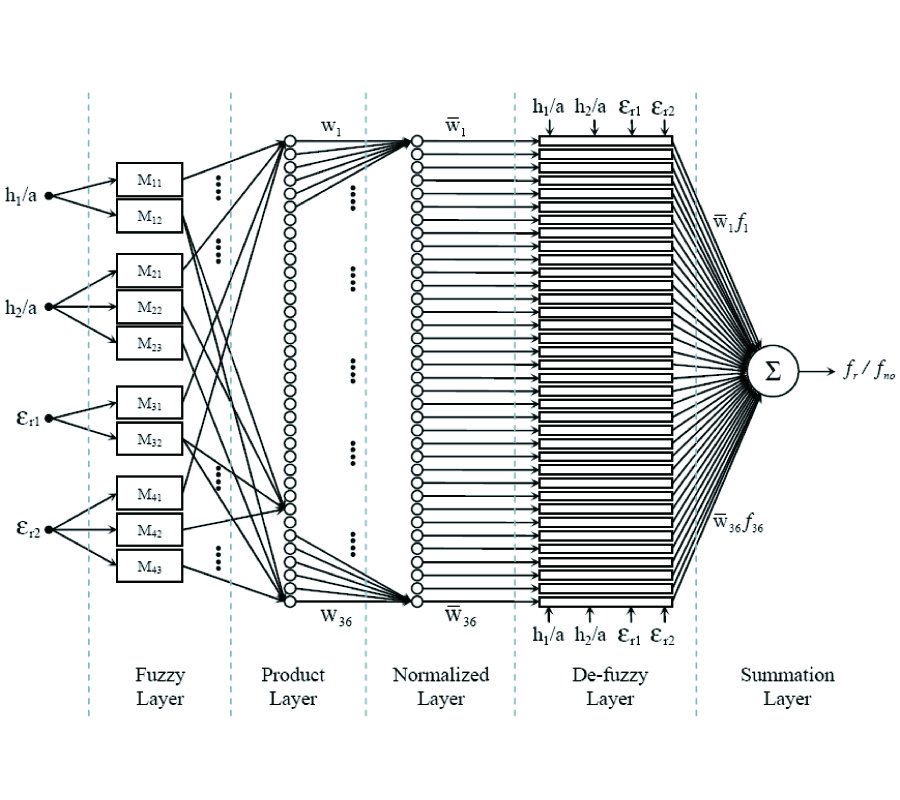
Higher integration and smaller layout size, two major trends in today's industry, lead to more prominent electromagnetic coupling with direct applications in the RF/microwave area such as directional couplers, filters, multiplexers, shifters, delay lines, etc. In the present work, an efficient hybrid-mode method is presented for a rigorous characterization of the coupling in multilayer bilateral microwave circuits including anisotropy effects. Various types of planar configurations were considered including microstrip, finline and coplanar structures, but the proposed approach can easily be extended to any form of coupled lines. To fully characterize bilateral multilayer circuits in millimetre wave region with an arbitrary number of conductors, closed forms of dyadic Green's functions were determined in the spectral domain, with use of the Galerkin technique. The computed results show good agreement with data available in the literature. Furthermore, two original configurations based on three line bilateral couplers were computed and validated using neural network models.
ANALYSIS OF THE MIXED COUPLING IN BILATERAL MICROWAVE CIRCUITS INCLUDING ANISOTROPY FOR MICs AND MMICs APPLICATIONS
2006-07-02
PIER
Vol. 62, 261-280
EM Energy Absorption in the Human Body Tissues Due to UWB Antennas
Maciej Klemm and G. Troester
This paper presents electromagnetic energy absorption in the homogeneous and layered human body models due to body-worn UWB antennas, at frequencies of 3, 6 and 8 GHz. Typical small planar UWB antennas are used in this study: printed UWB disc monopole and UWB slot antenna. Distances of 2, 5 and 10mm (reactive near-field region) between antennas and human body were chosen, approximating realistic scenarios of operation in Wireless Body Area Networks. To approximate different parts of the human body, or body variations among different users, we compare results obtained for the planar homogeneous (muscle) model with those for three-layer body models (skin, fat and muscle), with different thicknesses of the skin (0.5- 2mm) and fat (1-9mm) tissue. For these body models we investigate the electromagnetic energy absorption mechanism by examining the peak 1-g SAR and peak SAR (without mass averaging). Based on our results we present and discuss new finding concerning the general electromagnetic energy absorption mechanism in human tissues under reactive near-fields exposure conditions.
EM ENERGY ABSORPTION IN THE HUMAN BODY TISSUES DUE TO UWB ANTENNAS
2006-07-02
PIER
Vol. 62, 237-260
Wave Propagation and Dispersion Characteristics for a Nonreciprocal Electrically Gyrotropic Medium
Abdullah Eroglu and Jay Kyoon Lee
The general dispersion relation for a nonreciprocal electrically gyrotropic or a gyroelectric medium is derived in two distinct forms by using three different methods. One of them is a new method which can be used when the stratification of the layers is in the z-direction. The wave numbers corresponding to each dispersion relation are obtained in closed form. It is shown that there exist two types of waves, type I and type II, in a gyroelectric medium. The wave propagation is investigated and the polarization of the waves, resonances and cut off conditions are obtained for the principle waves. The general wave propagation regions are identified using resonances and cut off conditions. These regions are then used to construct the Clemmow-Mually-Allis (CMA) diagram. The conditions showing the frequency bands for which wave can propagate in each region are tabulated for the first time. The results presented in this paper can be used in the development of nonreciprocal devices and in ionospheric problems including radiation and scattering applications.
WAVE PROPAGATION AND DISPERSION CHARACTERISTICS FOR A NONRECIPROCAL  ELECTRICALLY GYROTROPIC MEDIUM
2006-05-28
PIER
Vol. 62, 217-235
Development and Analysis of a Microwave Direct Contact Water-Loaded Box-Horn Applicator for Therapeutic Heating of Bio-Medium
Ramesh Gupta and Surya Singh
A novel, potential and efficient microwave direct contact hyperthermia applicator referred to as water-loaded box-horn for therapeutic heating of bio-medium is designed and developed at 915 and 2450MHz. Also, theoretical expressions for fields in bio-medium as produced by a direct contact box-horn applicator have been derived using plane wave spectral technique. The box-horn is a special type of dual mode horn antenna which supports TE10- and TE30- modes. Therefore, the aperture field distribution over the H-plane of the box-horn is nearly uniform which prevents steep temperature gradients in the heating medium. Water-loading of the box-horn provides a better impedance match to the bio-medium and hence better coupling of microwave energy into bio-medium. Also, it reduces the size of box-horn applicator considerably. The SAR distributions in bio-medium in direct contact with water-loaded box-horn have been computed theoretically with the developed analytical model and measured experimentally with the help of Agilent/HP vector network analyzer (8714 ET) at 915 and 2450MHz. The theoretical and experimental results for SAR are in nearly in agreement with each other. It is investigated that higher penetration depth, lower power absorption coefficient and higher half-power width/depth or lower resolution in heating medium are found for box-horn designed at 915MHz in comparison to those for box-horn designed at 2450MHz.
DEVELOPMENT AND ANALYSIS OF A MICROWAVE DIRECT CONTACT WATER-LOADED BOX-HORN APPLICATOR FOR THERAPEUTIC HEATING OF BIO-MEDIUM
2006-05-28
PIER
Vol. 62, 193-201
Nonlinear Inversion of Multi-Frequency Microwave Fresnel Data Using the Multiplicative Regularized Contrast Source Inversion
Aria Abubakar , Tarek Habashy and Peter Van den Berg
This paper presents the results of profile inversion of multi-frequency electromagnetic scattered field data, measured by the Institute Fresnel, Marseille, France, from cylindrical objects, both for TM and TE illuminations. The reconstructions are obtained by applying the Multiplicative Regularized Contrast Source Inversion (MR-CSI) method. The results show that the MR-CSI method successfully performs 'blind' inversion of a wide class of scattered field data. Further, we also show that by inverting both TM and TE data simultaneously, a more accurate reconstructed image can be obtained.
NONLINEAR INVERSION OF MULTI-FREQUENCY MICROWAVE FRESNEL DATA USING THE MULTIPLICATIVE REGULARIZED CONTRAST SOURCE INVERSION
2006-05-28
PIER
Vol. 62, 165-192
On the Design of Patch Antennas Tuned by Transversely Magnetized Lossy Ferrite Including a Novel Resonating Mode
Anestis Mavridis , George Kyriacou and John Sahalos
Circularly symmetric patch antennas tuned by transversely magnetized lossy ferrite are studied. The circular and ring patch geometries printed on ferrite substrate or tuned by ferrite post and ferrite toroid are studied. Both saturated and partially magnetized ferrite are considered. Strong effects on the dispersive properties of modes propagating under the patch and in turn on the antenna resonant frequency and input impedance are observed when the ferrite losses are taken into account. The patch antennas resonance at a novel mode propagating in the traditionally assumed switch-off frequency range of negative effective permeability constitutes an essential original contribution of this work. In all cases the dynamic control of the patch resonant frequency through the DC-biasing field is investigated. The "perfect magnetic walls approximation" was employed in the analysis since it offers a valuable physical insight as well as simplified closed form expressions for the resonant conditions. These are used as engineering design formulas for an initial antenna design, which is in turn fine tuned with the aid of a numerical simulation-optimization scheme. The validity of the present method was verified through comparisons with published experimental results and numerical simulations.
ON THE DESIGN OF PATCH ANTENNAS TUNED BY TRANSVERSELY MAGNETIZED LOSSY FERRITE INCLUDING A NOVEL RESONATING MODE
2006-05-28
PIER
Vol. 62, 143-164
Modelling the Passive Microwave Remote Sensing of Wet Snow
Zhong-Xin Li
Combined volume scattering with rough surface scattering effects in passive microwave remote sensing of wet snow is studied in this paper. The dense medium radiative transfer (DMRT) theory with quasicrystalline approximation (QCA) is used to describe the volume scattering model for densely distributed sticky coated dielectric particles. The Numerical Maxwell Model of 3D simulations (NMM3D) is used to simulate the rough surface bistatic scattering and emission, and the bistatic scattering coefficients and emissivity of the rough surfaces are utilized as the boundary conditions for the DMRT. Full multiple scattering solutions are calculated by solving the DMRT numerically. Wet snow model is adopted in this paper, the results are illustrated for a layer of wet snow over a moist rough ground at 18.7 GHz and 38.5GHz.
MODELLING THE PASSIVE MICROWAVE REMOTE SENSING OF WET SNOW
2006-05-28
PIER
Vol. 62, 127-142
Performance Analysis of EMI Sensor in Different Test Sites with Different Wave Impedances
Saswati Ghosh and Ajay Chakraborty
Abstract-Electromagnetic Interference (EMI) is becoming a crucial issue in the era of modern electronic systems. For EMI measurement, it is required to place a sensor to receive the radiation from the equipment in a suitable test environment. The performance of the sensor depends on its Antenna Factor, which is the ratio of the incident electric field on the antenna surface to the received voltage at the load end. Here, a Method of Moment-based numerical technique has been used to evaluate the performance of a sensor in different test environments with different wave impedances. The evaluation of the sensor has been performed in terms of the Antenna Factor. The results are presented for free space environment of impedance 377Ω and Gigahertz Transverse Electromagnetic (GTEM) Cell of characteristic impedance 50Ω. The results show well agreement with experimental data.
PERFORMANCE ANALYSIS OF EMI SENSOR IN DIFFERENT TEST SITES WITH DIFFERENT WAVE IMPEDANCES
2006-05-28
PIER
Vol. 62, 107-125
Elliptically Bent Slotted Waveguide Conformal Focused Array for Hyperthermia Treatment of Tumors in Curved Region of Human Body
Ramesh Gupta and Surya Singh
In present paper, a novel and effective hyperthermia applicator utilizing an elliptically bent conformal array of longitudinal slots in narrow wall of rectangular waveguide is analyzed by two different approaches, viz., the vector potential method and Fresnel- Kirchhoff scalar diffraction field theory. The agreement between two theories is reasonably very good. This configuration is mainly intended as a specialized and very effective applicator for hyperthermia treatment of tumor within curved portions of human body such as abdomen, neck, chest etc. Each slot of the conformal array is excited by a coaxial line probe. It is proposed that the interior of the waveguide be filled with water to provide a good impedance match with the bio-medium. The contour distribution of specific absorption rate (SAR) in x-z plane, SAR distribution in y-direction and parameters such as penetration depth, power absorption coefficient, effective field size (EFS) due to the conformal array as well as single slot are evaluated and compared at 433 MHz. The results for contour SAR distribution at 433 MHz for elliptically bent conformal array are also compared with those for other array configurations such as circularly bent conformal array and planar array. The effect of change in phase and amplitude excitation of each slot of the array on SAR distribution is also examined. The results demonstrate that slotted waveguide conformal array offers marked improvement in SAR distribution and penetration depth over single slot. It also has better focusing ability as compared with planar array for controlled amplitude and phase excitations of the elements.
ELLIPTICALLY BENT SLOTTED WAVEGUIDE CONFORMAL FOCUSED ARRAY FOR HYPERTHERMIA TREATMENT OF TUMORS IN CURVED REGION OF HUMAN BODY
2006-05-28
PIER
Vol. 62, 89-106
Performance of a Six-Beam Switched Parasitic Planar Array Under One Path Rayleigh Fading Environment
Apostolos Sotiriou , Pantelis Varlamos , P. Trakadas and Christos N. Capsalis
The technology of adaptive antennas is rapidly growing during the last years. It is true that switched beam antennas, the simplest type of smart antennas, may provide substantial benefits when implemented in a cellular mobile telephony system. The performance of a six-beam switched parasitic planar array, in terms of bit error rate (BER) measurement, is presented in this paper. The switched parasitic planar array is designed with the aid of genetic algorithms method. The antenna system is evaluated in a radio environment where interfering signals are present. The results obtained from the simulation are compared with respect to the ones when an omni directional antenna is used instead of the switched beam array, revealing that the performance of such a telecommunication system can be improved.
PERFORMANCE OF A SIX-BEAM SWITCHED PARASITIC PLANAR ARRAY UNDER ONE PATH RAYLEIGH FADING ENVIRONMENT