Search Results(13783)

2026-02-13
PIER Letters
Vol. 129, 21-28
Improving Gain-Bandwidth Product of Modified Split Ring Resonators for 6G Wireless Networks
Al-Moatasem Al-Hinaai , Anthony N. Caruso , Travis D. Fields , Mohamed Z. M. Hamdalla and Kalyan C. Durbhakula
Metamaterials are emerging as a key enabler for 6G wireless communications, attracting growing attention from industry due to their engineered electromagnetic properties that enable control over wave propagation. Metamaterials have shown promise across diverse applications; however, the desire to achieve 1 TBPS data rates in 6G communications is partially constrained by a major fundamental challenge in metamaterials: achieving gigahertz of instantaneous bandwidth (IBW) values. To address the IBW issue, we designed, fabricated, and tested a fundamental component of metamaterial, i.e., a modified split ring resonator (MSRR), achieving 90% of the targeted 1 GHz IBW and an effective permeability (μeff) close to 25 within the IBW. In addition, the gain-bandwidth product (GBWP) is over 1.5× greater than that of commercial 5G antennas, while maintaining the same aperture size of 1.59λc. We studied and reported the effect of MSRR frequency-dependent μeff on the IBW and GBWP and proposed an optimized MSRR design that achieves 3× the bandwidth of a conventional SRR. Finally, we integrated the proposed MSRR atop a wideband patch antenna, enhancing peak realized gain by 6 dBi.
Improving Gain-Bandwidth Product of Modified Split Ring Resonators for 6G Wireless Networks
2026-02-12
PIER C
Vol. 166, 89-96
A Low Sidelobe Dual-Beam Sparse Reflectarray Antenna with Combination of Transmissive and Reflective Elements
Wei Luo , Mingli Xie , Liu Luo and Yuqi Yang
A low sidelobe dual-beam reflectarray antenna is proposed based on the sparse array principle. The reflected dual beams achieve high gain through optimized phase compensation, in which the transmissive elements act as dummy elements to suppress sidelobes. A global search optimization technique based on genetic algorithm (GA) is adopted to improve the arrangement of transmissive and reflection elements. Since all the reflective and transmissive elements operating in the same wide frequency band are non-uniformly distributed on the aperture, both the backward radiation and cross polarization levels are effectively suppressed. The measurement results show that the sidelobe level of the dual-beams is less than -19 dB. The peak gain and peak aperture efficiency of the designed antenna are 26.0 dBi and 38.9%, respectively. The 3-dB gain bandwidth is 13.8%. The front to back ratio at 30 GHz is 27 dB. This dual-beam antenna has the advantages of high gain, low sidelobes, and wide beam radiation range, which make it suitable for millimeter-wave multi-target radar detection systems.
A Low Sidelobe Dual-Beam Sparse Reflectarray Antenna with Combination of Transmissive and Reflective Elements
2026-02-11
PIER C
Vol. 166, 76-88
An Experimental Validation of Amplitude Only Genetic Algorithm Techniques for Side Lobe Level Optimization and Beam Shaping in 6G Massive MIMO Systems
Neev B. Patel , Rizwan Habibbhai Alad , Kosha Shah , Yashvi Mojidra and Purvang D. Dalal
Traditional side-lobe suppression techniques such as Chebyshev and Taylor tapering provide limited adaptability to hardware constraints and fixed array geometries. Existing Genetic Algorithm applications predominantly focus on planar arrays with variable spacing, leaving linear arrays with fixed element spacing underexplored. This work presents a genetic algorithm-based amplitude tapering framework for optimizing side-lobe levels in 8­element linear phased arrays with fixed 0.48λ spacing. The approach incorporates hardware quantization constraints and validates performance through experimental implementation. Experimental validation uses the Analog Devices CN0566 Phaser kit operating at 10.25 GHz (centre frequency) with 0.5 dB gain resolution and 2.8125˚ phase quantization. Genetic algorithm parameters including population size, mutation rate, and fitness function were held constant while the convergence rate and side-lobe suppression are evaluated. This research work demonstrates practical genetic algorithm implementation for linear phased array optimization under real-world hardware constraints, providing design guidelines for X-­band radar and communication systems.
An Experimental Validation of Amplitude Only Genetic Algorithm Techniques for Side Lobe Level Optimization and Beam Shaping in 6G Massive MIMO Systems
2026-02-11
PIER C
Vol. 166, 68-75
Wideband GCPW-Fed Coplanar Vivaldi Antenna with Low Cross-Polarization
Yiqing Gao , Zhao Bai , Hongcheng Zhou , Changhai Hu , Zhongming Yan and Yu Wang
The traditional microstrip-fed Vivaldi antenna has the disadvantage of a high cross-polarization level owing to the nonparallelism between the electric field and the antenna plane. Based on the balanced E-field distribution property of the grounded coplanar waveguide (GCPW) structure, this paper proposes a planar ultrawideband Vivaldi antenna with low cross-polarization. The measured results confirm that an enhanced impedance bandwidth of 159.54% is achieved in the range of 2.01-17.86 GHz (|S11| < -10 dB) with a 4-6 dB improvement in cross-polarization over traditional Vivaldi antenna. In addition, the proposed antenna has a maximum gain of 9.9 dBi within the size of 88.2 mm × 107.3 mm × 1 mm. Owing to the advantages of ultra-wideband, low cross-polarization ratio, stable radiation patterns and high gain, the proposed method can be widely applied in UWB communication and multifunctional integrated RF systems.
Wideband GCPW-Fed Coplanar Vivaldi Antenna with Low Cross-Polarization
2026-02-11
PIER C
Vol. 166, 57-67
Lower Cost Variable-Leakage-Flux Reverse-Salient-Pole Permanent Magnet Motor by Reducing Rare-Earth Permanent Magnet Usage
Xiping Liu , Hongzhan Hu , Qianli Jia , Zhangqi Liu and Zhiguo Zhu
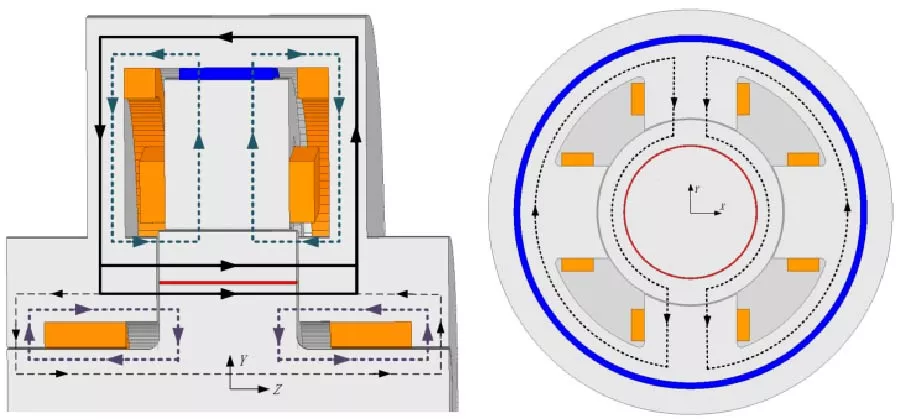
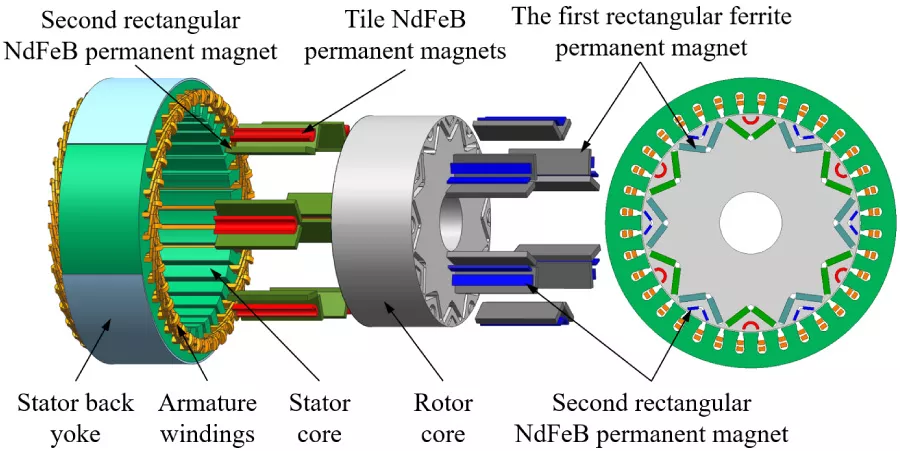
This paper proposes a novel less-rare-earth variable-leakage-flux reverse-salient-pole motor (LRE-VLF-RSPM). The proposed motor achieves the reverse-salient-pole and variable-leakage-flux characteristics by reasonably arranging three layers of arc-shaped flux barriers between adjacent magnetic poles. Furthermore, it incorporates ferrite magnets to reduce the usage of rare-earth permanent magnets by one-third while maintaining torque output, thereby fulfilling the less-rare-earth objective. First, the paper introduces the rotor topology and operational principle. Subsequently, it employs two-dimensional finite element analysis (FEA) to compare the electromagnetic performance - including torque, flux-weakening capability, constant power speed range (CPSR), and high-efficiency region proportion - among a conventional V-type synchronous motor (CTVSM), a variable-leakage-flux reverse-salient-pole motor (VLF-RSPM), and the LRE-VLF-RSPM. The final results demonstrate that the proposed motor reduces rare-earth usage by one-third compared to the benchmark motor and exhibits superior flux-weakening capability, a wide constant power speed range, and a large high-efficiency region. These findings verify the effectiveness and feasibility of the proposed motor.
Lower Cost Variable-Leakage-Flux Reverse-Salient-Pole Permanent Magnet Motor by Reducing Rare-Earth Permanent Magnet Usage
2026-02-10
PIER C
Vol. 166, 52-56
Wide-Passband Miniaturized Filter with Higher-Order Mode Suppression Using QMSIW and Microstrip Resonators
Jingyv Wang , Haiyan Zeng , Mengling Su , Xuan'an Chen , Lishan Huang , Jinming Ou and Xiaohei Yan
This paper presents a wide-passband, miniaturized filter based on quarter-mode substrate-integrated waveguide (QMSIW) resonant cavities and microstrip resonators. The filter employs two QMSIW resonant cavities, which effectively reduce its size. Moreover, the higher-order modes TE120, TE210, and TE220 cannot propagate within these cavities. The addition of two microstrip resonators at the coupling iris between the QMSIW cavities enables a fourth-order filter response using only two resonant cavities. High selectivity is achieved through cross-coupling, which introduces two transmission zeros (TZs). The filter was fabricated and measured, showing good agreement with the simulation results. Compared with other substrate-integrated waveguide (SIW) filters, the proposed filter offers advantages in compactness, passband bandwidth, and higher-order mode suppression.
Wide-Passband Miniaturized Filter with Higher-Order Mode Suppression Using QMSIW and Microstrip Resonators
2026-02-10
PIER C
Vol. 166, 41-51
High-Gain Dual Band MIMO Antenna Using Metamaterial Surface for Bluetooth, Wi-Fi and 5G Applications
Nilesh Lakade , Shankar D. Nawale , Anjali Rochkari , Mahadu Trimukhe and Rajiv Kumar Gupta
In this paper, an elliptical monopole antenna is operated in fundamental mode by reducing the electromagnetic coupling (EMC) between higher-order modes. The electromagnetic coupling is decreased by decreasing the width of the radiating element and ground-plane dimensions, and increasing the gap between the radiating element and ground plane. The ellipse is sliced from the top, as there is little surface current on the top portion of a monopole. The symmetrical portion of this sliced elliptical monopole is selectively etched with little effect on impedance variation. Dual-band characteristics are obtained over 2.3-2.7 GHz (Wi-Fi and Bluetooth bands) and 5.4-5.9 GHz (WLAN band), as well as over 2.3-2.7 GHz (Wi-Fi and Bluetooth bands) and 5.13-5.71 GHz (WLAN band), depending on the etching amount. A rectangular strip is added to the etched monopole to operate over 2.3-2.7 GHz (Wi-Fi, Bluetooth bands) and 3.3-3.9 GHz (5G band). To enhance the gain of a compact dual-band antenna, a reflecting metamaterial surface consisting of an array of square patches is designed and placed below the structure. A high-gain dual-band MIMO antenna is designed by placing four elements orthogonally above the centre of four edges of the metamaterial surface. S11 < -10 dB, isolation > 18 dB and 22 dB, and antenna gain of 7.5 dBi and 7.4 dBi are obtained over 2.35-2.7 GHz and 3.3-3.6 GHz, respectively. The structure is fabricated. The measurement results validate the simulation ones.
High-gain Dual Band MIMO Antenna Using Metamaterial Surface for Bluetooth, Wi-Fi and 5G Applications
2026-02-09
PIER C
Vol. 166, 27-40
Photovoltaic Power Prediction Model Based on Fuzzy Entropy Clustering and Self-Attention Mechanism Combined with ICEEMDAN-WOA-CNN-BiLSTM
Zhongan Yu , Faneng Wu , Zhiwei Huang , Zihao Deng and Feng Zhang
To address the randomness and nonlinearity of photovoltaic (PV) power caused by meteorological factors, this paper proposes an ICEEMDAN-WOA-CNN-BiLSTM prediction model integrated with fuzzy entropy clustering and a self-attention mechanism. First, the original PV power sequence is decomposed into multiple multi-scale intrinsic mode function (IMF) components and residuals via the Improved Complete Ensemble Empirical Mode Decomposition with Adaptive Noise (ICEEMDAN). Subsequently, components with similar complexity are merged using fuzzy entropy clustering to simplify the calculations. Then, the Whale Optimization Algorithm (WOA) is adopted to optimize the hyperparameters of the CNN-BiLSTM model, and the self-attention mechanism is integrated into the model to enhance the weights of key features. Comparative experiments demonstrate that the proposed model significantly outperforms single and traditional hybrid models in terms of Mean Absolute Error (MAE), Root Mean Square Error (RMSE), and Coefficient of Determination (R2). This can effectively improve the accuracy of short-term PV power prediction and provide support for power station dispatching and power grid stability.
Photovoltaic Power Prediction Model Based on Fuzzy Entropy Clustering and Self-Attention Mechanism Combined with ICEEMDAN-WOA-CNN-BiLSTM
2026-02-09
PIER C
Vol. 166, 19-26
A Miniaturized Highly Isolated Quad-Port Penta-Band-Notched UWB MIMO Antenna Based on EBG Structures
Koritala Nagavardhani , Pullagura Rajesh Kumar and Veera Malleswara Rao
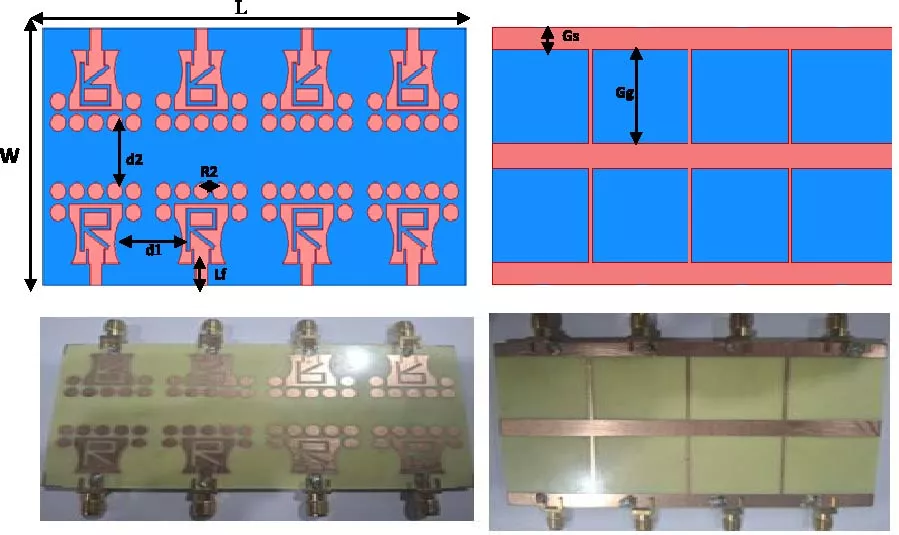
This paper presents a miniaturized quad-port ultrawideband (UWB) MIMO antenna that integrates band-notch functionality and exhibits high isolation. The design employed four circular monopole radiators positioned on a modified defected ground structure (DGS), and periodic electromagnetic bandgap (EBG). These EBG components are an advanced variation of traditional mushroom-type structures that incorporate grid-shaped top patches, a metallic ground plane, and multiple vias connecting both layers. Located at the center of the substrate, the EBG network effectively reduces the electromagnetic coupling between adjacent radiating elements. To achieve multi-band rejection, five inverted U-shaped slots are etched into each monopole, enabling selective suppression of unwanted frequencies at 3.36-3.56 GHz, 3.72-3.92 GHz, 4.11-4.32 GHz, 4.59-4.83 GHz, and 5.22-5.50 GHz, corresponding to WiMAX, C-band, Wi-Fi, INSAT, and WLAN systems. Experimental validation confirms that the antenna attains -10 dB impedance bandwidth extending from 3.0 to 14.0 GHz, with inter-element isolation above -22.5 dB, gain of 6.2 dB, and radiation efficiency reaching 79.2%.
A Miniaturized Highly Isolated Quad-Port Penta-Band-Notched UWB MIMO Antenna Based on EBG Structures
2026-02-09
PIER C
Vol. 166, 9-18
Broadband Array Aperture Fill Time Correction Algorithm Based on Low-Complexity Variable Fractional Delay Filter
Yufan Wang , Mingwei Shen , Zixuan Wang and Guodong Han
To address the aperture fill time problem in broadband arrays, this paper proposes an efficient delay compensation algorithm based on a variable fractional delay (VFD) filter with high numerical stability. A low-complexity Newton structure is introduced into the VFD Lagrange interpolation algorithm; in addition, the numerical stability is significantly enhanced by centrally offsetting the element delay parameters and avoiding the explicit inversion of the transformation matrix. Subsequently, the robust Newton-VFD is applied to the implementation of the broadband array aperture fill time correction algorithm. The algorithm utilizes a cascaded architecture consisting of coarse integer-delay compensation and fine fractional-delay correction via the Newton-VFD. Simulation results demonstrate that the proposed low-complexity Newton-VFD significantly reduces hardware complexity while maintaining excellent magnitude-frequency characteristics, which enables efficient and high-precision correction of broadband array aperture fill time.
Broadband Array Aperture Fill Time Correction Algorithm Based on Low-Complexity Variable Fractional Delay Filter
2026-02-09
PIER C
Vol. 166, 1-8
A Design Approach of High-Efficiency Filtering Power Amplifiers Using Harmonic-Tuned Network and Terminated Coupled-Line Structures
Lang Ran , Bin Wang , Yongxin Wang and Shihao Chen
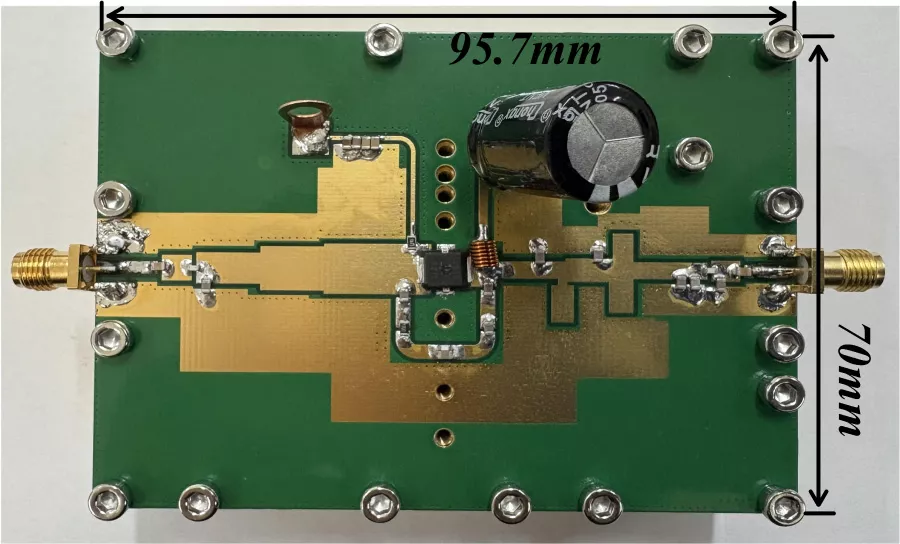
A design approach using a harmonic-tuned network (HTN) and terminated coupled-line structures (TCLSs) for high-efficiency filtering power amplifiers (FPA) is proposed in this paper, effectively addressing the efficiency degradation caused by the integration of filtering structures in conventional FPA designs. The proposed approach enables compact circuitry while providing bandpass filtering characteristics. Bandpass filtering is realized through the cascaded TCLSs, while the incorporation of open-circuit and short-circuit branches introduces additional transmission zeros and poles, significantly improving frequency selectivity. In addition, HTN enables precise control of the harmonic impedance, effectively improving the efficiency of the power amplifier (PA). Based on this approach, an FPA operating in the 2.3-2.6 GHz band is designed and implemented. Experimental results show that the FPA achieves a output power (Pout) of 40.8-41.3 dBm, a drain efficiency (DE) of 67.2-72.2%, a gain of 12.8-13.3 dB, and stopband suppression greater than 39 dB on both sides of the passband. These results verify the effectiveness of the proposed design in enhancing PA efficiency and enabling circuit miniaturization, while also providing a feasible design approach for FPA development.
A Design Approach of High-Efficiency Filtering Power Amplifiers Using Harmonic-Tuned Network and Terminated Coupled-Line Structures
2026-02-08
PIER C
Vol. 165, 291-300
Design of Compact Spiral Antenna with Modified Feed Structure for Electronic Warfare Applications
Abhay Madhukar Morey , Avinash R. Vaidya and Sandeepak S. Kakatkar
A compact spiral antenna is investigated by integrating a modified feed structure with a reflector backing. A significant reduction in antenna height is achieved without affecting performance over the desired frequency band. Experimental results demonstrate a negligible impact on radiation loss, impedance continuity, polarization purity, and bandwidth. The implementation preserves stable impedance matching and maintains circular polarization characteristics across the 2-18 GHz frequency range. The findings validate the practical feasibility of incorporating sharp bends in a tapered balun for spiral antennas. This height reduction facilitates low-profile integration in space-constrained applications without compromising antenna efficiency or radiation quality. The compactness and low-profile configuration make the antenna highly suitable for electronic countermeasure (ECM) applications, including radar warning receivers, missile systems, and EW pods, where size and integration are critical.
Design of Compact Spiral Antenna with Modified Feed Structure for Electronic Warfare Applications
2026-02-07
PIER C
Vol. 165, 284-290
Compact Shared-Radiator Four-Element MIMO Antenna Module for 5G Terminals
Shuaipeng Zhang and Xiao-Mei Ni
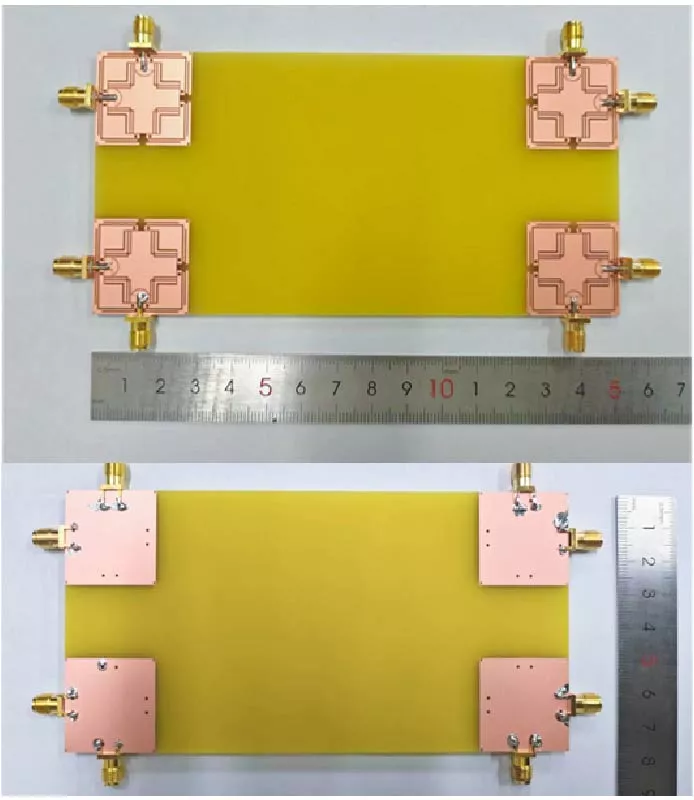
This work introduces a compact, low-profile, wideband multiple-input multiple-output (MIMO) antenna module designed for integration into 5G-enabled mobile terminals. The MIMO system comprises four patches with I-slots, each connected to one feed port. For the single patch, the slot controls and merges the TM10 mode with TM01 mode, enabling dual-mode operation. Subsequently, shared-radiator technique is used, utilizing the coupling between the patches. When one patch is activated, it causes adjacent patches to become excited as well, resulting in a multi-patch operational mode that improves impedance matching. To ensure isolation, metallized vias are used to control coupling between elements, achieving an isolation level over 15 dB. The design measures a compact size of 28 mm × 28 mm × 1.5 mm. The prototype exhibits an impedance bandwidth of 4.34-5.06 GHz, confirming its practical usability in N79 band. It achieves over 40% efficiency and low envelope correlation coefficients (ECC). The design's compact size, good isolation, and ease of integration render it a suitable candidate for mobile terminals.
Compact Shared-Radiator Four-Element MIMO Antenna Module for 5G Terminals
2026-02-06
PIER C
Vol. 165, 276-283
A Parallel Block Splitting FFT Method for Efficient Computation of Electromagnetic Scattering from Time-Varying Sea Surface
Zhiwei Liu , Feng Xia , Rui Wang and Xiao-Yan Zhang
2-D Fast Fourier transform (FFT) is the most time-consuming step for modeling of time-varying sea surface using high-order small slope approximation (SSA). In this paper, a parallel block splitting method is proposed to accelerate 2D FFT calculation. The whole 2-D FFT matrix is divided into m × n blocks, and the traditional 2-D FFT is applied to each block in parallel. Finally, the complete FFT result can be obtained by using the message passing interface (MPI) for data communication and superimposing phase factors. This method can effectively reduce the communication overhead by combining symmetric domain decomposition and is more suitable than traditional parallel libraries. Accordingly, both generations of sea surface and computation of scattering using SSA can be accelerated. Numerical experiments demonstrate that the proposed method exhibits strong scalability. Under a four-node configuration, the parallel efficiency of sea surface generation reaches 61.2%, while the second-order SSA parallel efficiency achieves 80.7%. This effectively resolves low-efficiency issues in large-scale sea surface generation and serial SSA computations.
A Parallel Block Splitting FFT Method for Efficient Computation of Electromagnetic Scattering from Time-Varying Sea Surface
2026-02-06
PIER C
Vol. 165, 267-275
Superstrate-Based Low Observable Cavity-Backed Archimedean Spiral Antenna (2-18 GHz) for Electronic Warfare Applications
Christy Aby Prasad , Abhina A. Manoj , Shrikrishan Baghel , Konidala Sreeramulu Venu , Vineetha Joy and Hema Singh
A superstrate comprising a dielectric and metasurface pattern, placed at an optimum height from the antenna surface, can facilitate radar cross section (RCS) reduction of the antenna. An optimally designed superstrate will not degrade the radiation performance of the antenna. In this paper a novel design of low RCS superstrate-based right-handed circularly polarized (RHCP) cavity-backed Archimedean spiral (CBAS) antenna has been presented. The superstrate consists of a resistive sheet based metasurface pattern on the top layer and a metallic pattern on the bottom surface of dielectric substrate. It is shown that the proposed thin (0.82 mm) superstrate placed at an optimal height of 19.2 mm from the antenna surface resulted in the RCS reduction of 6-8 dBsm over the operating frequency range (2-18 GHz), without any degradation in VSWR (< 2.1), gain (> 3 dBi), and axial ratio (< 3 dB). Such a low observable, cost-effective, and efficient spiral antenna without any payload constraints can be a preferred choice for electronic warfare applications in aerospace platforms.
Superstrate-based Low Observable Cavity-backed Archimedean Spiral Antenna (2-18 GHz) for Electronic Warfare Applications
2026-02-06
PIER M
Vol. 137, 13-23
Design of a Flexible and Tri-Band MIMO Antenna for Conformal Wi-Fi 7/5G Applications
Tian-Xiang Wang , Chengzhu Du and Xi Sun
This paper describes a flexible dual-port multiple-input multiple-output (MIMO) antenna system tailored for multi-band operation, covering 2.4 GHz Wi-Fi, 3.5 GHz 5G, as well as the 5-7 GHz band used in wireless applications such as Wi-Fi 7. The antenna is fabricated on a liquid crystal polymer (LCP) substrate, featuring an ultra-thin profile of 0.1 mm and a compact size of 60 × 35 mm2, making it highly suitable for integration into modern flexible and wearable devices. To achieve high port isolation, a complementary split-ring resonator (CSRR) structure is incorporated between the two radiating elements. The measurement results indicate that the antenna achieves impedance bandwidths across 1.36-2.71 GHz, 3.07-3.655 GHz, and 4.015-8.245 GHz, which fully cover the target frequency bands of 2.4-2.483 GHz, 3.4-3.5 GHz, and 5.15-7.125 GHz. The antenna's performance is comprehensively characterized by evaluating key parameters including S-parameters, envelope correlation coefficient (ECC), diversity gain (DG), total active reflection coefficient (TARC), gain, mean effective gain (MEG), and radiation patterns, along with other relevant metrics. All measured results confirm that the antenna meets the essential requirements for MIMO and diversity systems. Furthermore, bending tests conducted at two distinct radii of 30 mm and 50 mm confirm stable antenna performance, verifying its mechanical robustness and reliability under practical bending conditions.
Design of a Flexible and Tri-Band MIMO Antenna for Conformal Wi-Fi 7/5G Applications
2026-02-04
PIER C
Vol. 165, 257-266
A Self-Diplexing Multi-Mode SIW Cavity-Backed Antenna with a Lambda(λ)-Shaped Slot for X- and Ku-Band Applications
Ravindiran Asaithambi , Maruthamuthu Paramasivam Prabakaran and Govindasamy Rajesh
This paper presents a self-diplexing, multi-mode substrate-integrated waveguide (SIW) antenna based on a cavity-backed SIW configuration. The antenna employs a λ-shaped radiating slot that provides inherent filtering characteristics. The proposed architecture achieved independent dual-band control through two diagonally oriented slots arranged at 45°, forming a λ-shaped aperture. These slots, integrated within an SIW cavity and excited by two separate 50-Ω microstrip feeds, enable dual resonances at 10.76 GHz and 12.39 GHz, corresponding to the TE210 and TE220 modes for X-band and Ku-band operation, respectively. Experimental validation confirmed reflection coefficients below -10 dB in both bands, with measured bandwidths of 3.0% (10.61-10.93 GHz) and 3.2% (12.19-12.59 GHz). The proposed filtenna achieves gains of 6.12 dBi and 6.15 dBi and exhibits high port isolation exceeding 28 dB between channels, along with an overall simulated radiation efficiency of 91.16%. In addition, a single-layer structure offers two-band operation, broadside linear polarization, and intrinsic filtering functionality, making it a compact and efficient solution for X/Ku-band applications.
A Self-Diplexing Multi-Mode SIW Cavity-Backed Antenna with a Lambda(λ)-Shaped Slot for X- and Ku-Band Applications
2026-02-03
PIER C
Vol. 165, 247-256
Adaptive Model-Free Sliding Mode Fault-Tolerant Speed-Current Control for Permanent Magnet Synchronous Motor Under Extreme Operating Conditions with Parameters Mismatch
Junqin Liu , Haicheng Zhong , Zhentong Wang , Xinchun Jiang , Yilin Chen , Daoyi Gu , Kaihui Zhao , Xiangfei Li and Lin Liu
To address the limitations of Permanent Magnet Synchronous Motor (PMSM) speed-current closed-loop systems, including control performance degradation due to PI controller integral saturation and insufficient convergence in traditional model predictive current control (MPCC) while simultaneously reducing the computational load in the control system, this study combines model-free control theory with higher-order sliding mode methods and proposes an adaptive nonsingular terminal model-free sliding mode composite control strategy (ANTMFSMC) that considers parameter mismatch. First, based on the mathematical model of PMSM and the model-free theory for nonlinear systems, a speed-current loop control model is established. By combining the nonsingular terminal sliding mode with adaptive sliding mode reaching law, a speed-current loop ANTMFSMC controller is designed, and an improved exponential sliding mode disturbance observer (INTSMDO) is constructed to estimate the unknown components of the unmodeled dynamics and parameter uncertainties in the system. These estimates are then introduced as a feedforward compensation into the ANTMFSMC controller to form a complete composite control architecture. Finally, through simulations and experimental comparisons with traditional PI control and the traditional nonsingular terminal model-free sliding mode control based on sliding mode disturbance observer method (NTMFSMC-SMDO), the results show that the proposed strategy effectively suppresses d-q axis current and voltage ripple, significantly improves the convergence speed and anti-disturbance capability of the system, and demonstrates good engineering application value.
Adaptive Model-Free Sliding Mode Fault-Tolerant Speed-Current Control for Permanent Magnet Synchronous Motor under Extreme Operating Conditions with Parameters Mismatch
2026-02-03
PIER B
Vol. 117, 43-58
Design and Optimization of an FPCB-Based Multi-Transmitter Single-Receiver Wireless Power Transfer System for Implantable Medical Devices
You Fu , Jianan Luo , Xinguang Chen and Dequan Jiang
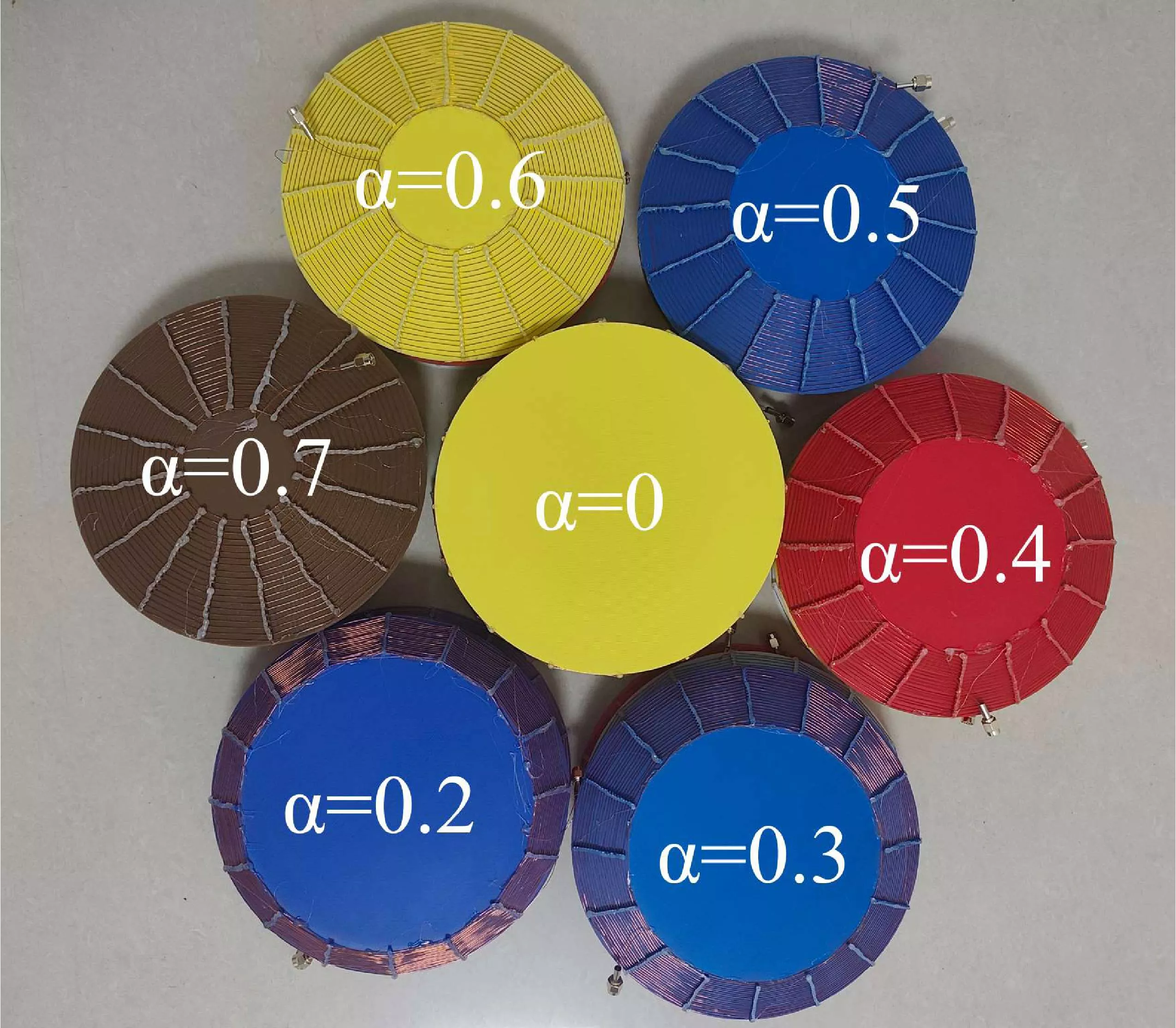
The focus of this study is the design of a multi-transmitter single-receiver wireless power transfer (MTSR-WPT) system, particularly for implantable medical devices such as brain pacemakers. Conventional charging methods rely on invasive surgery or frequent battery replacement, posing significant challenges for patients. To address this issue, this work proposes an MTSR-WPT system based on a flexible printed circuit board (FPCB). The designed small-coil array topology leverages the mechanical flexibility of FPCB to conform to complex biological surfaces, significantly enhancing two-dimensional omnidirectional anti-misalignment capability while reducing magnetic leakage during operation. To further compensate for misalignment between the transmitter and receiver, a backpropagation neural network optimized by the Seagull Optimization Algorithm (SOA-BP) is introduced for receiver coil position prediction, combined with a fuzzy PID control strategy for dynamic output voltage regulation. Simulation and experimental results demonstrate that under a fixed load condition, the proposed system achieves stable energy transfer within a 120 mm charging area, maintaining an output power exceeding 1 W when the receiver coil is positioned at a height of 20 mm. Compared with traditional single-coil systems, the optimized multi-coil array exhibits superior performance in both misalignment tolerance and magnetic leakage suppression. These results verify the effectiveness of the proposed MTSR-WPT system and highlight its potential for implantable medical devices and other power electronic applications, providing a novel solution for achieving efficient and reliable wireless energy transfer.
Design and Optimization of an FPCB-Based Multi-Transmitter Single-Receiver Wireless Power Transfer System for Implantable Medical Devices
2026-02-02
PIER C
Vol. 165, 239-246
Compact Multi-Ring Reflectarray Antenna at Wi-Fi for Overcoming Signal Blockage in Dense Urban Areas
Make Madhu Manikya Kumar and Rama Devi Kolisetty
The demand for reliable and high-speed wireless communication in urban environments such as offices and densely populated areas is often hindered by signal obstructions. Reflectarray antennas offering beam steering capabilities through passive configurations have gained significant attention as a potential solution. However, existing designs at lower frequency bands struggle to achieve efficient phase variation within a single layer while maintaining high gain and consistent performance. In order to overcome these constraints, this work presents a reflectarray design that operates at 5 GHz. It utilizes a 15 × 15 multi-ring unit cell structure on a single-layer FR4 substrate to achieve a complete 360˚ phase variation. Two prototypes were fabricated to steer beams at 30˚ and 60˚, demonstrating the design's flexibility and adaptability for various application-specific requirements. The proposed reflectarray realizes a peak gain of 21 dBi and operates over a wide frequency range of 4.5-5.5 GHz, as validated through simulation and experimental results. The design effectively enhances signal coverage and addresses blockage challenges in urban areas, providing a practical solution for passive reflectarrays in Wi-Fi and similar wireless communication applications.
Compact Multi-ring Reflectarray Antenna at Wi-Fi for Overcoming Signal Blockage in Dense Urban Areas