Search Results(13783)

2026-01-09
PIER C
Vol. 164, 174-185
Design of a Radiation Error Correction Algorithm for Four-Wire Sounding Temperature Sensor
Yutong Liu , Renhui Ding , Zhengjie Ying and Jiale Jiang
To ensure adequate ventilation, radiosonde temperature sensors are typically mounted on top of the device and directly exposed to solar radiation. However, this configuration makes the sensors highly susceptible to radiation-induced errors, which can significantly compromise temperature measurement accuracy. This study proposes a four-wire structural design for the radiosonde temperature sensor and evaluates its performance through computational fluid dynamics (CFD) simulations. The radiosonde follows a helical ascent trajectory, which causes the incident solar radiation on the sensor to vary continuously. This continuous variation makes the quantification and correction of radiation errors more difficult. The proposed four-wire design achieves favorable radiative thermal balance in three-dimensional space. It also demonstrates low sensitivity to changes in the ascent trajectory. This characteristic allows the correction model to be simplified by neglecting variations in the incident radiation direction. A coupled flow-structure thermal analysis is conducted under varying environmental conditions, including altitude, ascent velocity, and solar radiation intensity, to quantify the radiation error of the four-wire sensor. A neural network algorithm is then trained on the simulation data to develop a radiation error correction model. Experimental validation is performed using a platform comprising a full-spectrum solar simulator and a low-pressure wind tunnel. The experimental results yield a root mean square error (RMSE) of 0.159 K, mean absolute error (MAE) of 0.143 K, and correlation coefficient of 0.962 between simulated and corrected radiation errors, demonstrating the high accuracy of the proposed correction algorithm.} After correction, the average radiation error of the four-wire sensor decreases from 0.446 K to 0.143 K, substantially improving temperature measurement accuracy.
Design of a Radiation Error Correction Algorithm for Four-wire Sounding Temperature Sensor
2026-01-08
PIER C
Vol. 164, 164-173
Numerical and Experimental Analysis of a Reversible Damage Model for Millimeter-Wave Diagnostics of Glass Fiber Reinforced Polymer Structures
Manuel E. Rao , Jochen Moll , Maximilian Ebel , Peter Kraemer and Viktor Krozer
In this work, a delamination model for millimeter-wave inspections of glass fiber reinforced polymer (GFRP) is proposed that replicates the scattering characteristics of a real delamination. The model can be used not only for the performance assessment of conventional non-destructive testing (NDT) approaches, but also for structural health monitoring (SHM) applications with permanently installed radar sensors in the frequency band from 57 to 65 GHz. Parametric numerical and experimental investigations were carried out for three different cases: (a) delamination represented by two GFRP plates with a defined air gap between the plates, (b) erosion protection tape above a GFRP plate separated by an air gap, and (c) erosion protection tape on top of a rigid foam that has similar dielectric properties to air. All signals have been processed using a damage indicator approach (DI). The numerical and experimental results show a high degree of similarity in the DI curve as a function of the delamination thickness. The differences between simulation and experiment are between 0 and 0.3 mm in delamination thickness. Hence, the proposed model can be used for the qualification of radar-based NDT and SHM systems for various practical applications, e.g. wind turbine blades, eliminating the need for expensive, destructive testing.
Numerical and Experimental Analysis of a Reversible Damage Model for Millimeter-Wave Diagnostics of Glass Fiber Reinforced Polymer Structures
2026-01-07
PIER C
Vol. 164, 154-163
Calculation of the Permittivity of Lossy Dielectrics Using Cylindrical Cavity Perturbation Technique by Investing in Modified Model of Depolarizing Factor
Khawla Ghorab , Rawdha Thabet , Junwu Tao , Mohamed Lahdi Riabi and Tan Hoa Vuong
To achieve accurate characterization of a dielectric sample, an improved approach to the cylindrical cavity perturbation technique is proposed, with particular emphasis on the depolarization factor. The problem arises from the depolarized field within the sample when its height is smaller than that of the cavity, and it depends on the sample's geometry and the orientation of the applied field lines. Two models are examined: the proposed model, based on the resolution of Maxwell's equations, and the ellipsoidal model refined through image theory. The objective is to enhance the accuracy of complex permittivity extraction for lossy dielectric materials. Standard low-loss and high-loss materials (Al2O3, Teflon, and SiC) with various shapes (rod, needle, disk and sphere) are analyzed using HFSS simulations and MATLAB computations. The maximum sample volume is also evaluated for different geometries and material types to ensure accurate permittivity estimation. Low-loss materials generally allow a larger sample volume than high-loss ones, and provide more consistent results for permittivity extraction. Experimental measurements were further performed on disk-shaped polyamide and ceramic samples, demonstrating that the proposed approach provides improved permittivity estimation, particularly for high-loss and disk-shaped dielectric materials.
Calculation of the Permittivity of Lossy Dielectrics Using Cylindrical Cavity Perturbation Technique by Investing in Modified Model of Depolarizing Factor
2026-01-06
PIER C
Vol. 164, 143-153
Au Nanopatterned LT-GaAs Based h-Shaped Photoconductive Antenna for Terahertz Applications
Sheo Kumar Mishra , Palakkal Mohamed Mashood , Ashish Singh , Shekhara Kavitha , Himanshu Singh and Ravi Shankar Saxena
This manuscript presents the design of a nanopatterned H-shaped photoconductive antenna on an LT-GaAs substrate for terahertz applications. The use of gold nanoparticles and Si lens in the gap between two electrodes improves the photoconductive conductive antenna's low efficiency. It is noticed that the proposed PCA resonates at 1.35 THz with -24.2 dB, 1.65 THz with -22.1 dB, and 2.4 THz with -21.32 dB reflection coefficient. Further, with the Si lens, PCA resonates at 2.15 THz with a -30.2 dB reflection coefficient. Moreover, the nanopatterned H-shaped photoconductive antenna resonates at 1.7 THz with the minimum reflection level of -40 dB. These results indicate that the reflection in the photoconductive antenna can be reduced using the nanopatterning technique. This further increases the efficiency of the photoconductive antenna. The proposed H-shaped photoconductive antenna is designed and optimised using the COMSOL Multiphysics platform.
Au Nanopatterned LT-GaAs Based H-Shaped Photoconductive Antenna for Terahertz Applications
2026-01-06
PIER C
Vol. 164, 131-142
Ultra-High Precision Power Metering Theory Based on Quantum Sensing and Miniaturized Device Design
Tong Wang , Jia Xi , Xin Li , Shengjie Mu and Yusheng Cai
With the development of smart grids and the high proportion of new energy integration, traditional electromagnetic power metering technology is gradually facing bottlenecks in terms of accuracy, anti-interference ability and frequency response range. This paper proposes a new ultra-high-precision power measurement method based on diamond nitrogen-vacancy (NV color center) quantum sensing. By establishing an electromagnetic field-spin quantum state coupling model, it achieves microtesla-level magnetic induction intensity measurement, and then reconstructs current, voltage and power parameters. At the theoretical level, the response function of the multi-pulse quantum manipulation sequence (XY8-K) to the power frequency alternating magnetic field was derived, and an adaptive quantum state locking algorithm was proposed to suppress environmental noise. At the device level, a multi-layer heterogeneous integrated miniaturized quantum sensing chip was designed, combining silicon-based photonic waveguides and microwave resonant structures. Its size was controlled at 8×8×2 mm3, and its power consumption was less than 200 mW. Experiments show that this system has a remarkable effect and provides technical support for the next generation of intelligent metering equipment.
Ultra-high Precision Power Metering Theory Based on Quantum Sensing and Miniaturized Device Design
2026-01-06
PIER C
Vol. 164, 122-130
An Innovative Electromagnetic Vector Antenna Design for HF Angle of Arrival
Wei Qiao , Chen Zhou , Mingjie Lv and Qiong Tang
This letter presents a compact electromagnetic vector antenna (EMVA) operating across the 3–30 MHz high-frequency (HF) band and capable of simultaneously sensing all six Cartesian components of the electromagnetic field. The design integrates three orthogonal dipoles and three orthogonal loops co-located at a common phase center (CPC), enabling full vector-field reconstruction for polarization analysis and direction finding. A transformer-assisted broadband passive matching network ensures impedance compatibility across the HF band, with measured insertion loss and inter-port isolation appropriate for electrically small HF elements. Field experiments using an ionospheric sounding configuration validate the antenna's effectiveness, achieving RMS direction-of-arrival errors of 10.02° (azimuth) and 8.42° (elevation) for O-mode signals, and 14.77°/26.09° for X-mode signals, respectively. These results demonstrate the suitability of the proposed CPC EMVA for compact, polarization-diverse sensing in mobile and space-constrained HF platforms.
An Innovative Electromagnetic Vector Antenna Design for HF Angle of Arrival
2026-01-06
PIER C
Vol. 164, 117-121
A Simple Structure of High-Gain Dual-Beam Fabry-Perot Antenna Design
Chang-Yi Yi and Yanfei Li
Beam steering antennas are advanced technologies used for directing radio waves in a specific direction without physically moving the antenna. In this paper, a simple two steering beams antenna is designed based on Fabry-Perot structure. The amplitude and phase control theory is introduced to design the electric field phase and electric field strength in the near field to obtain the far-field radiation pattern required for the Fabry-Perot antenna (FPA). The FPA working at 10 GHz with the aperture of 5λ0 × 5λ0 steers to ±30° with the maximum gain of 18 dB for each beam realized by a proper design of the superstrate, which is a key to realizing a beam-steering antenna with a simple structure.
A Simple Structure of High-Gain Dual-Beam Fabry-Perot Antenna Design
2026-01-05
PIER
Vol. 185, 1-16
Progress in Structured Light with Nonlinear Optics
Sachleen Singh and Andrew Forbes
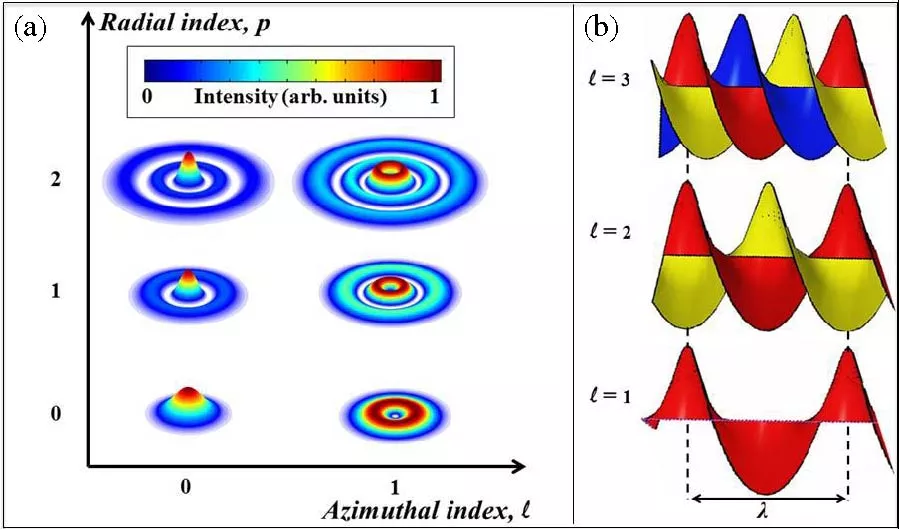
The control of all of light's degrees of freedom and its harnessing for applications is captured by the emergent field of structured light. The modern toolkit includes external modulation of light with devices such as metasurfaces and spatial light modulators, their intra-cavity insertion for structured light directly at the source, and their deployment to engineer quantum structured light at the single photon and entangled state regimes. Historically, this control has involved linear optical elements, with nonlinear optics only recently coming to the fore. This has opened unprecedented functionality while revealing new paradigms for nonlinear optics beyond plane waves. In this review we look at the recent progress in structured light with nonlinear optics, covering the fundamentals and the powerful applications they are facilitating in both the classical and quantum domains.
Progress in Structured Light with Nonlinear Optics
2026-01-03
PIER C
Vol. 164, 105-116
Bandwidth-Enhanced Waveguide-Fed Metasurface Antennas Based on CELC Polarizability Mapping
Ivan Eduardo Diaz Pardo , Carlos Arturo Suarez Fajardo , Juan Domingo Baena Doello and Hector Guarnizo
This work presents the design, characterization, and experimental validation of waveguide-fed metasurface antennas based on complementary electric-LC (CELC) resonators. The magnetic polarizability of individual unit cells was extracted using the Incremental Difference Method, enabling physically grounded complex weighting of each metasurface element without the need for external feeding networks. Two CELC geometries (square and circular) were investigated under identical WR340 waveguide excitation. The circular CELC exhibited a smoother current distribution and a more uniform polarizability profile, as observed in the polarizability-mapping results, whereas the square CELC provided a slightly higher gain owing to its sharper magnetic resonance. Lateral-slot perturbations were introduced as a simple geometric modification to overcome the intrinsic narrowband nature of Lorentz-type resonators. The simulated and measured results confirm a significant improvement in impedance bandwidth, reaching 194 MHz (simulated) and 189 MHz (measured) for the square slot geometry, and 222 MHz (simulated) and 209 MHz (measured) for the circular slot geometry. Radiation-pattern measurements in an indoor antenna chamber showed good agreement with full-wave simulations, validating the polarizability-based weighting mechanism and the overall metasurface antenna model. The results demonstrate that magnetic-polarizability mapping combined with geometry-tailored perturbations provides an effective and experimentally verified approach for compact and bandwidth-enhanced metasurface antenna design.
Bandwidth-Enhanced Waveguide-Fed Metasurface Antennas Based on CELC Polarizability Mapping
2026-01-03
PIER B
Vol. 116, 107-124
Design and Implementation of Metamaterial Inspired Reconfigurable Multiband Antenna for 5G/Sub 6 GHz NR and Wireless Applications
Hareetaa Mallani , Archana Agrawal and Ritesh Kumar Saraswat
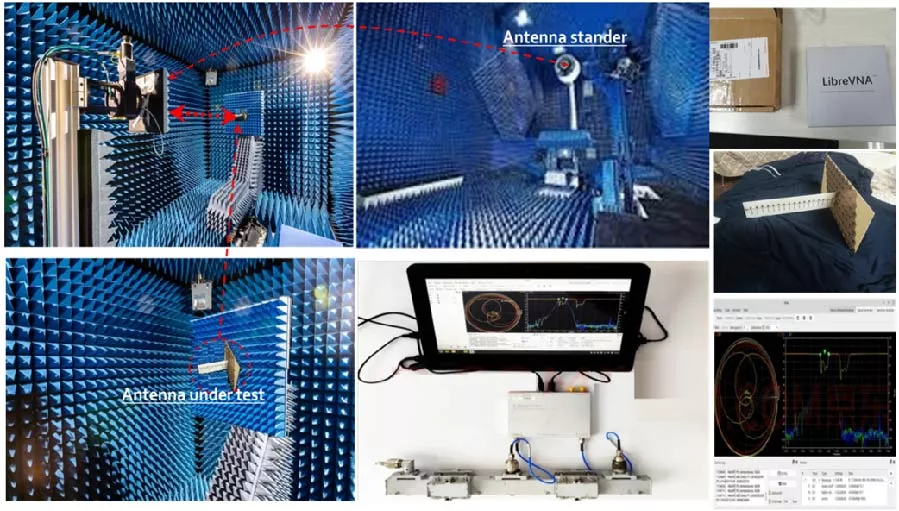
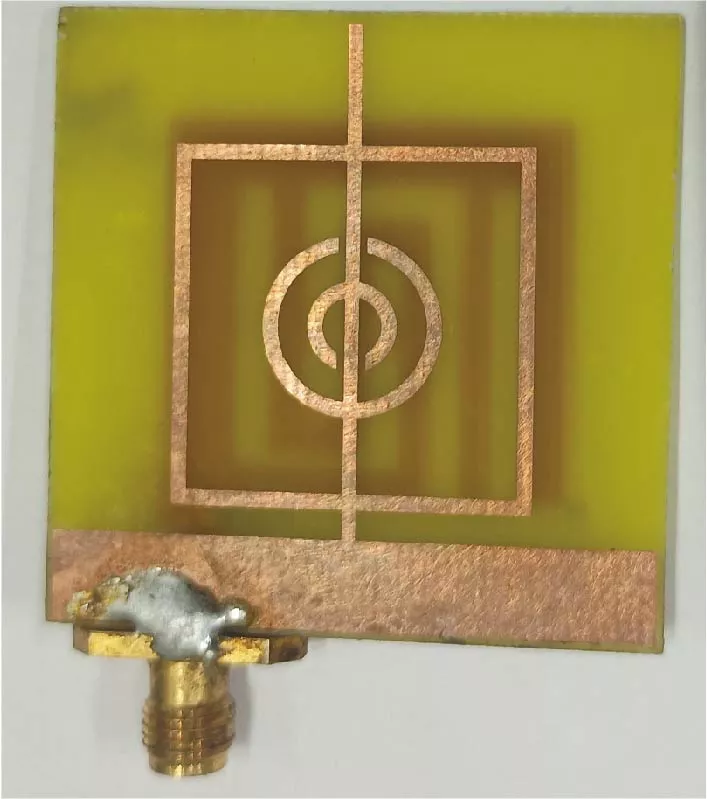
In this article, the authors propose the design and implementation of a frequency reconfigurable metamaterial-inspired octagon-shaped antenna for multiple wireless standards. The multiband functionality is achieved by incorporating a slotted self-similar octagonal radiating part with two SRR cells. The antenna design incorporates PIN diode switching elements on the slotted radiating patch, along with metamaterial-based SRR cell loading and a modified trapezoid-shaped partial ground plane, enabling its use across multiple wireless standards. The proposed design is resonating across five microwave frequency bands, including S-band WiMAX (3.5 GHz - IEEE 802.16e), 5G NR bands (n48: 3.55-3.70 GHz, n46: 5.15-5.925 GHz, n47: 5.855-5.925 GHz, n77: 3.3-4.2 GHz, n78: 3.3-3.8 GHz, n79: 4.4-5.0 GHz), C-band WLAN (5.0/5.8 GHz - IEEE 802.11a/ac), X-band (satellite communication, radar, terrestrial broadband, space communication), lower Ku-band for radar communication (13.43-14.55 GHz), upper Ku-band for molecular rotational spectroscopy (17.25-18.32 GHz), and lower K-band for astronomical observation services (18.81-19.96 GHz). The multiband antenna is then fabricated and tested, with measured and simulated results for return loss, gain, radiation efficiency, E-plane, and Hplane showing good agreement. The antenna's penta-band operation, compact size, stable radiation characteristics, and good impedance across the entire resonating band make it well-suited for various wireless applications.
Design and Implementation of Metamaterial Inspired Reconfigurable Multiband Antenna for 5G/Sub 6 GHz NR and Wireless Applications
2026-01-02
PIER C
Vol. 164, 96-104
Enhanced Impedance Matching in Microstrip Grid Array Antenna Using Differential-Shifted Feeding and Parasitic Patches
Rajamohan Varun Prakash , Jeyagobi Logeswaran , Atham Mohamed Mahin Ayas and Pandurangan Sridhar
This paper aims to design and analyze a tri-band Differential Shifted-Feed Microstrip Grid Array Antenna (DSF-MGAA) with eight parasitic elements to achieve better return loss and isolation characteristics and improved antenna gain at various frequency ranges in the Golden band, X-band and Ku band. The non-uniform grid element is excited through two 180-degree out-of-phase signal-carrying feed lines with the LC matching network to provide better impedance matching. The antenna provides a minimum peak return loss of -17.88 dB, -27.13 dB and -26.7 dB at 7 GHz, 9 GHz and 12.2 GHz. Measured results show a good agreement with the simulated results. Parasitic elements incorporated provide a maximum gain of 17.2 dBi. The results confirm that the proposed antenna suits for high-frequency applications such as 6G communication, Space and Defense application and VSAT (Very Small Aperture Terminal) networks.
Enhanced Impedance Matching in Microstrip Grid Array Antenna Using Differential-Shifted Feeding and Parasitic Patches
2026-01-01
PIER C
Vol. 164, 89-95
Research on Microstrip Array Antennas for Microwave DE-Icing of Wind Turbine Blades
Yuchen Xia , Ning Liu , Zhengqing Yang , Yunhong Liu , Xian-Jun Sheng , Dongdong Zhang , Guangwen Jiang and Xin Li
Wind turbine blades are prone to icing in low-temperature environments, which affects the efficiency and safety of wind power generation. Microwave de-icing technology, with its high efficiency, non-contact, and rapid response characteristics, has become an important method for addressing the issue of blade icing. This paper focuses on the antenna design for a microwave de-icing system for wind turbine blades. Based on microstrip patch antennas, a low-side lobe, a high-gain array antenna was designed, operating at a frequency of 2.45 GHz with a maximum gain of 13.9 dB, with side lobe levels of -22.3 dB. An experimental system was established, and an infrared thermal imager was used to measure heating results, verifying temperature increases under different absorptive materials, heating times, heating powers, and radiation distances, laying the foundation for de-icing applications.
Research on Microstrip Array Antennas for Microwave De-icing of Wind Turbine Blades
2026-01-01
PIER B
Vol. 116, 94-106
Microstrip Array Antenna Design for a 24 GHz Radar-Based Vital Signs Monitoring System
Murtini Murtini , Nurhayati Nurhayati , Usman Rizqi Iman , Fitri Yuli Zulkifli , Dewiani Dewiani and Lilik Anifah
Non-contact vital signs monitoring using radar technology has become increasingly important in modern healthcare, as it enables continuous physiological measurement without direct skin contact, minimizing patient discomfort and the risk of infection. To address these needs, this study presents the design and analysis of a 24 GHz microstrip array antenna developed for a radar-based vital signs monitoring system. Array configurations consisting of one to five circular patch elements were analyzed to optimize reflection coefficient, gain, and radiation characteristics, aiming to achieve high sensitivity, compactness, and safety for biomedical radar applications. Simulation results indicate that the four-element array achieves optimal performance, with a reflection coefficient of -39.27 dB, gain of 5.29 dBi, and bandwidth of 1.35 GHz at 24 GHz. To evaluate electromagnetic safety, Specific Absorption Rate (SAR) analysis using a three-layer human tissue model (skin, fat, and muscle) yielded values of 0.637 W/kg (1 g) and 0.205 W/kg (10 g) at a 50 mm separation distance, both within ICNIRP and FCC limits. Furthermore, bending simulations with curvature radii of 5 mm, 15 mm, and 50 mm confirmed stable impedance matching and minimal frequency variation, demonstrating strong mechanical flexibility. Overall, the proposed antenna exhibits high gain, reliable performance, and safety compliance, making it suitable for integration into portable radar-based medical devices for continuous and contactless monitoring of heart rate and respiration.
Microstrip Array Antenna Design for a 24 GHz Radar-Based Vital Signs Monitoring System
2025-12-30
PIER C
Vol. 164, 78-88
Synthesis of Planar Antenna Arrays Based on Subarray Division Using the ICOK-Hybrid Algorithm
Chenxin Ren , Hua Guo , Yang Xiao , Peng Song and Lijian Zhang
In modern wireless systems, such as radar, satellite communication and 5G communication, planar antenna arrays can achieve high-performance radiation characteristics. The synthesis of these arrays that can produce patterns with low peak sidelobe levels (PSLL) is critical for improving the performance of the antenna system. However, the synthesis of large-scale planar arrays presents a complex nonlinear optimization challenge because of the vast number of variables which leads to high design complexity. To address these issues, an improved hybrid optimization method which is called ICOK-Hybrid Algorithm is proposed. The hybrid algorithm integrates Invasive Weed Optimization (IWO), Convex Optimization (CO) and K-means clustering. The convex optimization is used to efficiently optimize the excitation amplitudes and phases while the IWO algorithm is used to refine the positions of the array elements. Furthermore, an innovative subarray partitioning strategy based on an improved K-means algorithm was introduced to group elements with similar excitations which significantly reduces the design complexity and hardware costs. Numerical results demonstrate that the proposed algorithm achieves a significantly lower PSLL compared with the results obtained by other methods. The practical feasibility and reliability of the proposed approach are further verified by full-wave electromagnetic simulation software CST.
Synthesis of Planar Antenna Arrays Based on Subarray Division Using the ICOK-Hybrid Algorithm
2025-12-29
PIER C
Vol. 164, 69-77
A Model-Free Adaptive Control for PMSM Using Multi-Innovation Improved EKF
Kaihui Zhao , Youzhuo Duan , Jie Xiong , Lingxuan Tu and Yishan Huang
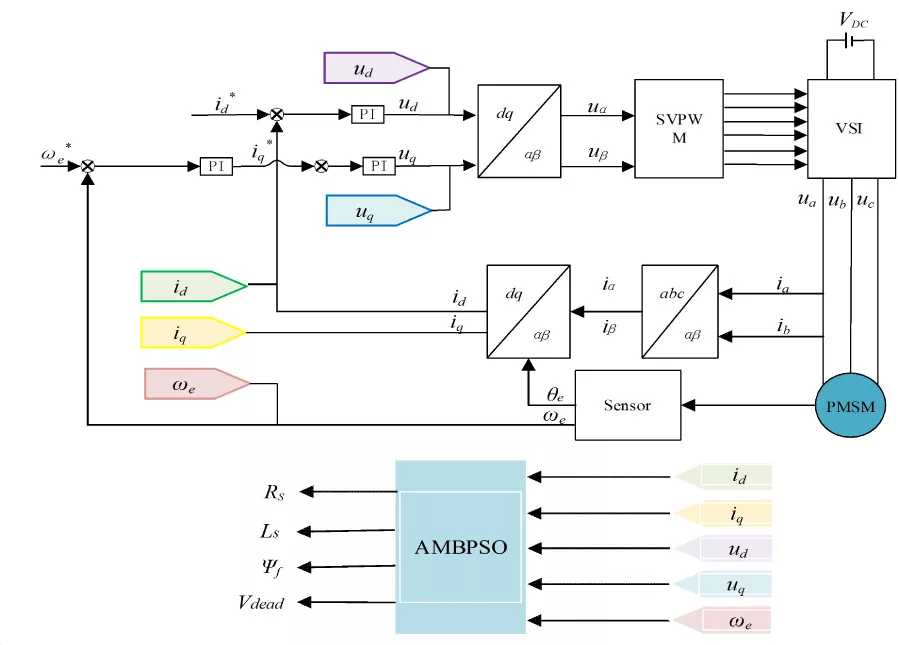
Permanent magnet synchronous motor (PMSM) used in high-end applications has stringent control performance requirements. However, harsh environments, complex operating conditions, and nonlinear parameter variations can compromise model adaptability, which undermines system reliability and precision. This paper proposes a model-free adaptive control (MFAC) method that utilizes a Multi-Innovation Improved Extended Kalman Filter (MIIEKF) algorithm for prediction and update to enhance system reliability and accuracy. First, the proposed method transforms the PMSM model into a compact-form dynamic linearization (CFDL) data model, which mitigates the need for precise mathematical modeling. Next, an improved Extended Kalman Filter (IEKF) algorithm is used to predict and update the pseudo partial derivative (PPD) in real-time. This resolves its estimation dependency and compensates for data model inaccuracies. Then, the IEKF algorithm is optimized by using Multi-Innovation identification theory to ensure rapid state convergence. Finally, experimental validation confirms that the proposed method significantly improves the convergence rate, reduces chattering, and achieves efficient data-driven control compared to PI control and conventional model-free adaptive control.
A Model-Free Adaptive Control for PMSM Using Multi-Innovation Improved EKF
2025-12-28
PIER C
Vol. 164, 58-68
Short-Term Photovoltaic Power Prediction Based on SCC-CEEMDAN-HO-BiLSTM
Jianwei Liang , Jie Yue , Yanli Xin , Shuxin Pan , Jiaming Tian and Jingxuan Sun
To address the challenge of high prediction difficulty caused by the random volatility of photovoltaic (PV) power output, this paper proposes a hybrid forecasting model that deeply integrates multi-scale feature analysis with an intelligent optimization algorithm. First, the spearman correlation coefficient (SCC) is used to select influencing factors as model inputs, and the complete ensemble empirical mode decomposition with adaptive noise (CEEMDAN) is applied to extract multi-scale features from the power data across four seasons. Second, the hippopotamus optimization (HO) algorithm is introduced in order to overcome the randomness and inefficiency of manual hyperparameter tuning and to optimize the hyperparameters of the bidirectional long short-term memory (BiLSTM) network. Through multi-seasonal case studies, the pro-posed SCC-CEEMDAN-HO-BiLSTM model outperforms conventional models. Specifically, it shows significant improvements in both prediction accuracy and robustness compared to benchmark methods such as the standalone BiLSTM model and the unoptimized CEEMDAN-BiLSTM model. The model effectively handles the multi-scale fluctuations in PV power sequences and meets the requirements for short-term photovoltaic power forecasting.
Short-Term Photovoltaic Power Prediction Based on SCC-CEEMDAN-HO-BiLSTM
2025-12-27
PIER C
Vol. 164, 51-57
Compact and Broadband CPW-to-RWG Transition Using 180° Phase Shifter
Yueh-Hsien Cheng and Chun-Long Wang
In this paper, a compact and broadband 50-Ω coplanar waveguide-to-rectangular waveguide (CPW-to-RWG) transition using a 180° phase shifter and a meandered dipole is proposed. The frequency range, for which the reflection coefficient is smaller than -15 dB, covers the whole X-band (8.2~12.4 GHz). In addition to the broadband performance, the transition occupies a small length of 7.37 mm. Furthermore, the characteristic impedance of the coplanar waveguide is 50 Ω, which conforms to the commonly used 50 Ω impedance of radio frequency systems. To further reduce the circuit size, a compact and broadband 50-Ω CPW-to-RWG transition using an inductance-compensated 180° phase shifter and a meandered dipole is proposed. The frequency range, for which the reflection coefficient is smaller than -15 dB, also covers the whole X-band (8.2~12.4 GHz). Besides, the transition size is reduced from 7.37 mm to 6.55 mm, which is smaller than a quarter-wavelength. Furthermore, the characteristic impedance of the coplanar waveguide is of the nominal value of 50 Ω.
Compact and Broadband CPW-to-RWG Transition Using 180° Phase Shifter
2025-12-27
PIER C
Vol. 164, 41-50
Compact Dual-Band SIW Bandpass Filter Featuring Reconfigurability for Multi-Application Scenarios
Amjad A. Al-Rahmah and Bashar J. Hamza
The proposed compact dual-band SIW BPF features reconfigurable center frequency and bandwidth, providing two passbands around 2.7 GHz and 4.7 GHz. The lower band targets S-band weather and air-traffic-control radar systems, whereas the upper band covers the 5G NR n79 band, enabling multi-application use in radar and sub-6 GHz 5G wireless communication, utilizing independent reconfigurable methods facilitated by PIN diodes. The suggested design exhibits compact dimensions of 0.21λg × 0.48λg, a minimal insertion loss of 1.5 dB, and a substantial return loss of 14 dB. Advanced design methodologies, including eigenmode analysis, were utilized to attain precise selectivity and computing of coupling matrix. The engineered filter demonstrates superior performance, with outcomes closely aligning with models, and guarantees little interference with suppression up to 8 GHz. The tuning mechanism provides versatility by independently modifying the operating frequencies of the first and second band, rendering the design very flexible for dynamic wireless communication settings. This study emphasizes a robust and effective answer for contemporary mobile communication systems.
Compact Dual-Band SIW Bandpass Filter Featuring Reconfigurability for Multi-Application Scenarios
2025-12-26
PIER C
Vol. 164, 35-40
Design and Analysis of Interior Permanent-Magnet Machine for Improving Reluctance Torque and Heat Dissipation
Yujie Tang , Jingfeng Mao and Junqiang Zheng
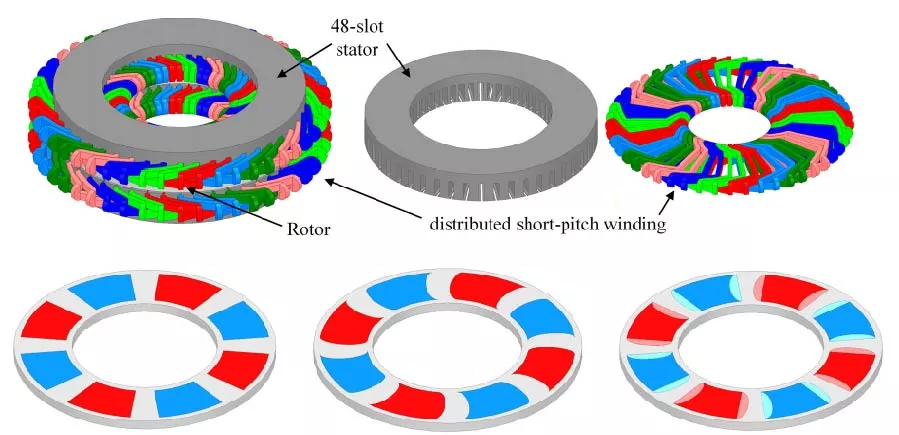
This paper proposes an Interior Permanent Magnet (IPM) machine for electric vehicles, which features excellent heat dissipation performance and maximizes the utilization of reluctance torque. The inverted triangular structure design, combined with multi-layer flux barriers and ventilation auxiliary slots, effectively increases the saliency ratio and enhances the reluctance torque. The rotor self-ventilation slots significantly expand the heat dissipation area, improve the heat dissipation performance under steady-state operation, and extend the service life of the rotor. In addition, performance evaluation of the IPM machine is conducted, covering back-EMF, torque performance, dq-axis inductances, rotor stress and deformation, as well as thermal performance. This work provides guidance and reference for machine design.
Design and Analysis of Interior Permanent-Magnet Machine for Improving Reluctance Torque and Heat Dissipation
2025-12-26
PIER C
Vol. 164, 27-34
RCS Reduction Technology for Circularly Polarized Satellite Navigation Antenna Based on Phase Gradient Surface
Lei Gan , Kun Wei , Jing-Xian Chen and Qing-Chao Guo
With the advancement of radar detection technology, stealth technology has become increasingly critical in modern warfare. Antennas, as essential components of airborne platforms, are significant scattering sources on stealth aircraft. This paper proposes a method to reduce the Radar Cross Section (RCS) of B3-band satellite navigation antennas using a broadband phase gradient surface. The phase gradient surface is designed to deflect scattered energy into non-threatening angular domains, thereby achieving RCS reduction. The proposed design is validated through simulation software, demonstrating its effectiveness in reducing RCS while maintaining the radiation performance of the antenna. The results show that the phase gradient surface can achieve more than 4 dB and 6 dB of RCS reduction under phi- and theta-polarized plane wave incidence, respectively, in the frequency range of 5.5 GHz to 15 GHz.
RCS Reduction Technology for Circularly Polarized Satellite Navigation Antenna Based on Phase Gradient Surface