Search Results(13783)

2025-12-14
PIER B
Vol. 116, 65-80
Rainfall DSD Modelling Using Supervised Learning Techniques for Rain Attenuation Prediction in South Africa
Tsietsi Condry Ramatladi and Akintunde Ayodeji Alonge
Reliable modelling of rainfall-induced attenuation is crucial for designing and operating high-frequency communication systems, particularly those operating above 10 GHz, in regions with severe rainfall conditions such as subtropical climates. This study offers a comparison of supervised machine learning (ML) models - k-nearest neighbours (KNN), decision trees (DT), and random forests (RF) - against traditional statistical methods such as the lognormal and gamma distributions for estimating raindrop size distribution (DSD) and specific attenuation. Rainfall measurements taken between 2018 and 2019 were obtained from 1-minute disdrometer at the measurement location in Durban, South Africa (29.8651°S, 30.9734°E). The investigated models were then tested across four different rainfall regimes processed from the dataset: drizzle, widespread rain, shower, and thunderstorm. An adaptive tuning method for selecting the best k-value in KNN was introduced to enhance prediction accuracy across various rainfall intensities. Model performances are evaluated using error metrics of root mean square error (RMSE), mean absolute error (MAE), and the coefficient of determination (R2). The results show that KNN outperforms RF and DT, providing the highest accuracy and lowest prediction errors across all rainfall regimes. The confidence interval (CI) analysis confirms that KNN delivers more precise and stable estimates, while RF and DT exhibit greater variability and uncertainty in performance. Additionally, specific attenuation estimations from these ML models are compared at different rain rates with the ITU-R P.838-8 estimations for frequencies up to 100 GHz. These findings highlight the superiority of data-driven model, particularly the adaptive KNN, in capturing complex rainfall microstructures and improving attenuation predictions. This has direct implications for planning and deploying rain-resilient wireless networks in variable climatic regions.
Rainfall DSD Modelling Using Supervised Learning Techniques for Rain Attenuation Prediction in South Africa
2025-12-13
PIER C
Vol. 163, 60-72
Matrix Square Root Based Differentiable Rcwa Implementation for High-Performance Parallel Computing
Frank Van der Ceelen , Yifeng Shao and Wim M. J. Coene
Rigorous Coupled-Wave Analysis (RCWA) is a semi-analytical method, used to determine the optical response of nanostructures, such as meta-materials. Recently, the ability to combine RCWA with automatic differentiation for optical response optimization has been demonstrated. We seek to build upon this use by attempting to address RCWA's poor performance on parallel computer architecture, stemming from the presence of an eigendecomposition. We do this by outlining an alteration of RCWA, which replaces the eigendecomposition with a matrix square root and matrix exponential evaluation. Furthermore, we demonstrate that these matrix functions can be evaluated using algorithms which are both differentiable and readily evaluated in parallel. Finally, we show that replacing the eigendecomposition with these matrix functions resolves the bottleneck and paves the way for higher-accuracy parameter retrieval using RCWA approaching real-time performance, without compromising stability.
Matrix Square Root Based Differentiable RCWA Implementation for High-Performance Parallel Computing
2025-12-12
PIER C
Vol. 163, 50-59
Integral Sliding Mode Speed Control of PMSM Based on Novel Fuzzy Exponential Reaching Law
Zhonggen Wang , Jinpeng Ma and Wenyan Nie
To enhance the speed control performance of permanent magnet synchronous motor (PMSM) drive systems, a novel sliding mode control (SMC) strategy based on a new fuzzy exponential reaching law (NFERL) is proposed. The law enhances the traditional exponential reaching law by introducing a system-state-dependent power term and a fuzzy term that adapts the reaching speed based on the sliding mode function. A hyperbolic tangent function replaces the high-frequency switching term to suppress chattering. This control strategy helps reduce current ripples and torque pulsations, and improves the stability and response speed of system operation. Additionally, to address the issue that the system is susceptible to unknown disturbances, a sliding mode disturbance observer (SMDO) is designed to estimate the total disturbance of the system, and the estimated disturbance is fed forward into the composite speed controller. Finally, the introduced control strategy is validated using MATLAB/Simulink simulations and a motor experimental platform. Both simulated and experimental results demonstrate that the new reaching law effectively reduces the startup speed overshoot of the PMSM compared to the traditional law, while also achieving faster convergence, reduced chattering, and superior anti-disturbance performance.
Integral Sliding Mode Speed Control of PMSM Based on Novel Fuzzy Exponential Reaching Law
2025-12-12
PIER C
Vol. 163, 43-49
Improvement of Isolation and Bandwidth of Notch Ultra-Wideband MIMO Antenna on Metamaterial Wall
Shuming Liu , Jingchang Nan and Yifei Wang
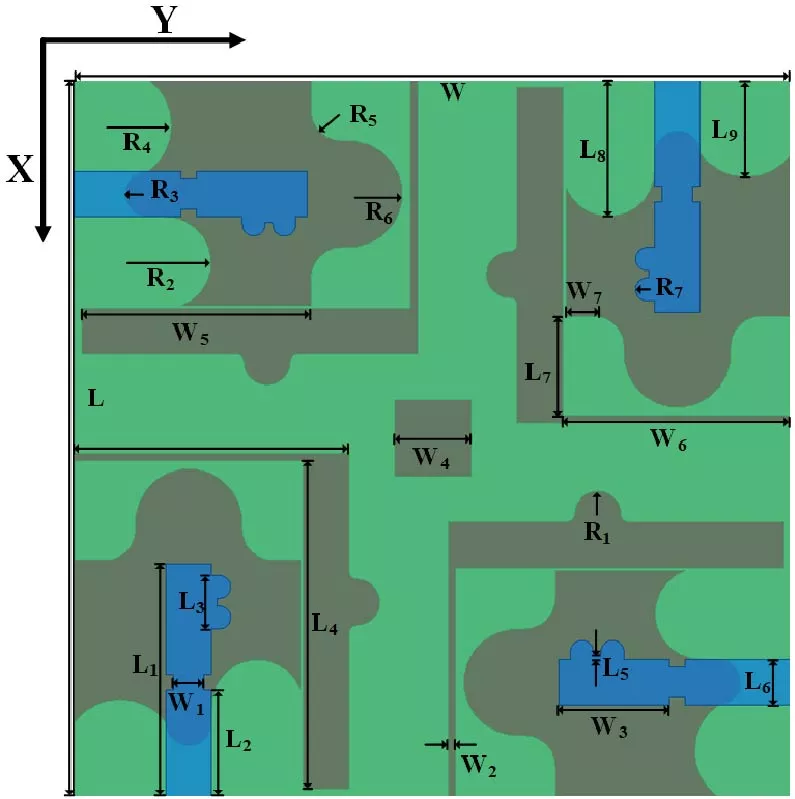
This paper presents a novel notch-based ultra-wideband (UWB) MIMO antenna with a metamaterial wall (MLB-MW) designed to significantly enhance the isolation and operational bandwidth between antenna elements. The antenna adopts a 2 × 1 notch UWB structure, integrating a metamaterial wall made of metallic lines, with an overall size of 20 × 40 × 1.6 mm3, and utilizes an FR-4 dielectric substrate (εr = 4.4, tanδ = 0.02). By leveraging the μ-negative characteristics of the MLB-MW, the antenna achieves a 10 dB improvement in isolation across the C, X, and Ku frequency bands. Its impedance bandwidth (|S11| < -10 dB) extends from 6.09-13.07 GHz to 5.51-15 GHz, with a relative expansion rate of 36%. Additionally, key performance parameters of the MIMO antenna are comprehensively evaluated: the envelope correlation coefficient (ECC) remains below 0.01 across the entire frequency band; the diversity gain (DG) is close to 10 dB; and the total active reflection coefficient (TARC) stays below -10 dB across the entire operating band, indicating excellent channel independence and diversity performance. Experimental results verify the feasibility and effectiveness of this antenna in 5G base station applications.
Improvement of Isolation and Bandwidth of Notch Ultra-Wideband MIMO Antenna on Metamaterial Wall
2025-12-12
PIER C
Vol. 163, 35-42
Design and Analysis of High Isolation Four Port MIMO Antenna for N77 Band 5G Communication
Ramesh Manikonda , Govindarao Tamminaina and Subhashini Gulla
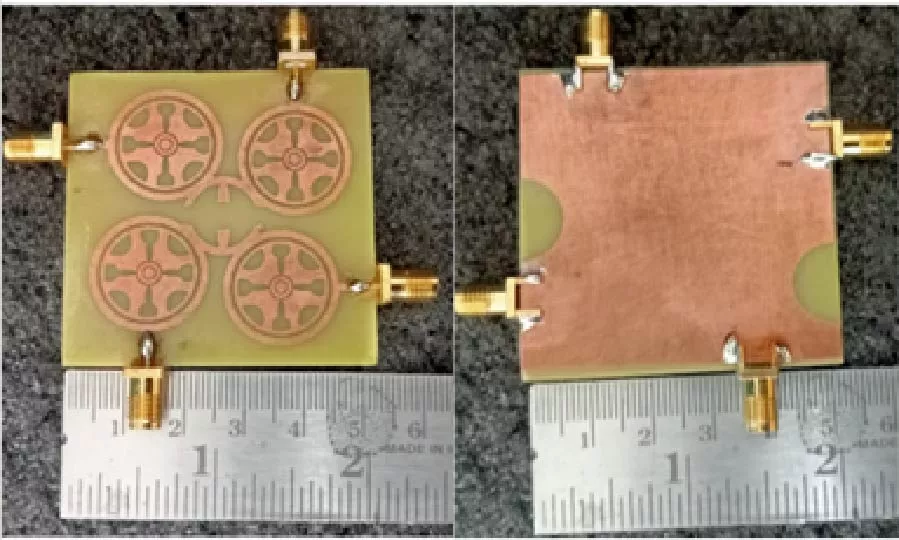
This paper proposes a four-port multiple-input multiple-output (MIMO) antenna for 5G communication. The reference hexagonal antenna with WI-FI slots is designed on FR-4 substrate. Next, four reference antennas are arranged orthogonal to each other for reduction of isolation. The overall dimensions of WI-FI slot four port MIMO antenna is 60×60×1.6 mm3, and it is implemented on an FR-4 substrate with defective ground structure. With an impedance bandwidth of 1 GHz(Giga Hertz), the suggested MIMO antenna operates in the frequency range of 3.3 to 4.3 GHz. The mutual coupling is more than 23 dB among all ports. Furthermore, the MIMO antennas' channel capacity loss (CCL), diversity gain (DG), and envelope correlation coefficient (ECC) are estimated. The parameters are measured using anritsu MS2037C Vector Network Analyzer(VNA).
Design and Analysis of High Isolation Four Port MIMO Antenna for N77 Band 5G Communication
2025-12-12
PIER Letters
Vol. 128, 48-53
Single-Fed Dielectric Resonator Antenna with Large Frequency Ratio Based on Metasurface
Wenhan Wan , Wu-Sheng Ji , Zhaoyi Wang and Xing-Yong Jiang
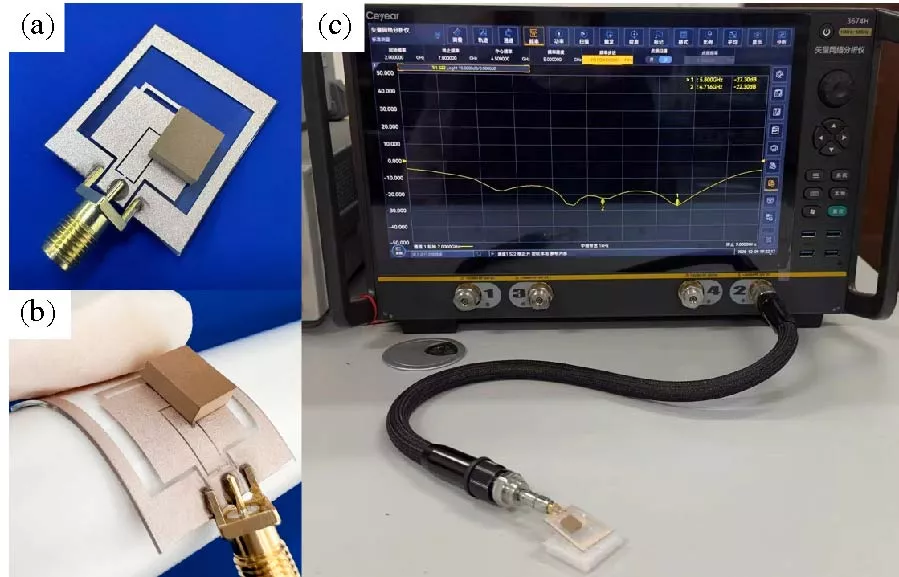
This paper proposes a single-fed antenna with large frequency ratio. The antenna integrates a metasurface antenna and a dielectric resonator antenna (DRA), capable of simultaneous operation in both microwave and millimeter-wave bands with single-port feeding. The microwave band achieves resonance through the metasurface antenna, while the millimeter-wave band resonates by exciting the HEM12δ higher-order mode of the DRA. The proposed metasurface antenna achieves 24% (5.6 GHz-7.13 GHz) impedance bandwidth, 10% (6.2 GHz-6.9 GHz) axial ratio bandwidth, and 6.07 dBi peak gain in the microwave band; the DRA provides 13.4% (27.47 GHz-31.43 GHz) impedance bandwidth and 6.4 dBi peak gain in the millimeter-wave band. With simple structure and excellent performance, this antenna achieves a frequency ratio of 5.2, making it suitable for 5G communication scenarios requiring concurrent Sub-8 GHz and FR2 operation.
Single-fed Dielectric Resonator Antenna with Large Frequency Ratio Based on Metasurface
2025-12-12
PIER Letters
Vol. 128, 41-47
A Touch Sensing Method Using EIT-Based Microstrip Structure for Interactive Applications
Jiyou Jiang and Jiangtao Huangfu
Touch interaction is an important function in various electronic systems. In this paper, a touch sensing method based on an electromagnetically induced transparency (EIT) microstrip structure is proposed. The design consists of a U-shaped two-port microstrip transmission line with four open stubs oriented in four directions. Two transmission narrow bands are generated by the proposed structure at around 1.8 GHz and 3.5 GHz, corresponding to the EIT effect. When finger-like objects approach the terminals of these open stubs, their transmission characteristics change significantly, as indicated by variations in the S-parameter response. To precisely determine the touch position, a shifting vector method is introduced based on the variations of S-parameters at different touch positions on the board plane. Both simulation and experimental results demonstrate a touch localization accuracy of 94.4% with a spatial resolution of 3 mm. The proposed design offers a low-cost and compact platform that integrates touch interaction and RF communication, showing strong potential for future interactive electronic and communication systems.
A Touch Sensing Method Using EIT-Based Microstrip Structure for Interactive Applications
2025-12-11
PIER
Vol. 184, 32-42
Magneto-Optical Driven Topological Polarization Singularities Modulation in the Photonic Crystal Slab
Bo Yang , Wanhua Zheng and Anjin Liu
The modulation of topological polarization singularities in momentum space in photonics has attracted much attention due to their relations with bound states in the continuum (BICs), unidirectional guided resonances, and chirality. Current modulation strategies that rely on structural symmetry breaking or phase-change materials are challenging to achieve dynamic and flexible modulation of polarization singularities. Recently, magneto-optical (MO) modulation of light provides a promising theoretical strategy for the dynamic modulation of polarization singularities. However, the dynamics of transverse electric (TE)/transverse magnetic (TM)-mode singularities under varying magnetic fields remain elusive in the MO photonic crystal (PhC) slab. Herein, we systematically investigate the dynamic modulation of topological polarization singularities in the PhC slab based on the MO effect. In-plane (x/y) magnetic fields have no effect on the TE mode of the MO PhC slab. However, the fields induce splitting and separation of vortex polarization singularity (V point) of the TM mode into a pair of circular polarization points (C points), enabling extrinsic chirality without breaking the structural symmetry. A magnetic field along the z direction enables near-unity circular dichroisms (CDs) over a broad angular range when circular polarizations are formed at off-Γ points for the TE and TM modes. Furthermore, by introducing single symmetry breaking (in-plane symmetry breaking for TE, out-of-plane symmetry breaking for TM) with magnetic field tuning, one of the C points can be shifted to the Γ point, resulting in intrinsic chiral quasi-BICs (QBICs) with ultra-high Q-factors and near-unity CDs. This study provides a dynamic and flexible modulation approach for polarization singularities, which enhances light-matter interactions for applications in advanced chiral photonic devices and tunable optoelectronic devices.
Magneto-optical Driven Topological Polarization Singularities Modulation in the Photonic Crystal Slab
2025-12-11
PIER C
Vol. 163, 20-34
Multilayer Waveguide Bandpass Filters Based on Subwavelength CSRR and Omega Type Inclusions
Ivan Eduardo Diaz Pardo , Juan Domingo Baena Doello , Carlos Arturo Suarez Fajardo and Hector Guarnizo
This paper presents the design, modeling, and experimental validation of multilayer waveguide bandpass filters employing two subwavelength resonator topologies: complementary split-ring resonators (CSRRs) and Ω-type cells. A hybrid methodology is adopted, combining equivalent circuit models, polarizability extraction from scattering parameters, and full-wave simulations. Mirrorsymmetric configurations are introduced to suppress frequency splitting and improve band uniformity. For both CSRR and Ω arrays, equivalent LC parameters are derived and incorporated into a transmission-matrix framework, enabling accurate prediction of resonant behavior in cascaded layers. Numerical simulations in WR340 waveguides demonstrate that CSRR arrays achieve narrowband responses with high selectivity, while Ω-cells provide wider passbands and improved tolerance to interlayer spacing. Prototypes fabricated on high-purity aluminum sheets were measured using a vector network analyzer, confirming the theoretical and simulation results. The experimental data show close agreement with the proposed model, validating the scalability of the approach to multilayer designs. Quantitatively, the mirror-symmetric CSRR filter exhibits a center frequency of 2.49 GHz, a fractional bandwidth of 1.8%, and an insertion loss of 1.26 dB, whereas the proposed Ω-based configuration achieves a 2.41 GHz center frequency, 5.6% fractional bandwidth, and only 0.27 dB insertion loss. These results show that the Ω topology attains a wider fractional bandwidth and the consequently lower insertion loss predicted by fractional-bandwidth theory, rather than a reduction of intrinsic resonator loss. The proposed framework thus provides a systematic and efficient route for metamaterial filter synthesis, bridging analytical models, numerical simulations, and experimental validation.
Multilayer Waveguide Bandpass Filters Based on Subwavelength CSRR and Omega Type Inclusions
2025-12-11
PIER C
Vol. 163, 11-19
A Flexible Hexagonal Loop Monopole Antenna with Novel Embedded EBG for SAR Reduction in WBAN
Shital B. Gundre and Varsha R. Ratnaparkhe
This paper introduces a novel compact, flexible hexagonal loop shaped patch antenna embedded with a novel electromagnetic bandgap (EBG) structure designed for ISM band operation, targeting 2.45 GHz wearable applications in close proximity to the human body. The EBG unit cell is formed using a rectangular patch which has nested U shaped slots with a stretched strip of inverted U shaped slot at bottom. Both hexagonal loop antenna and the 2 × 2 EBG array are simulated using Ansys HFSS (High Frequency Structure Simulator). A key aim of this research is to achieve the specific absorption rate (SAR) reduction. The effectiveness of the EBG array structure in reducing surface waves and dropping down the SAR is demonstrated using a multilayer human tissue equivalent phantom comprising skin, fat, muscle, bone layers, confirming obtained SAR values are within the safety limits set by regulatory authorities. The simulation results are verified and validated by the fabricated antenna experimental measurements. Furthermore, the antenna was experimentally assessed in terms of its performance under bending and in practical on-body conditions.
A Flexible Hexagonal Loop Monopole Antenna with Novel Embedded EBG for SAR Reduction in WBAN
2025-12-11
PIER Letters
Vol. 128, 35-40
Single-Layer Wideband Circularly Polarized Metasurface Antenna with Stepped Stubs Based on Characteristic Mode Analysis
Zhaoyi Wang , Wu-Sheng Ji , Meng Wang , Wenhan Wan and Xing-Yong Jiang
In this work, we present a single-layer, wideband circularly polarized (CP) metasurface antenna fed by a coplanar waveguide (CPW). The proposed antenna employs a rotated CPW feed structure, which achieves circular polarization without adding dielectric layers, significantly simplifying the antenna structure and improving manufacturability, while incorporating two stubs to adjust impedance matching and broaden the bandwidth. Measurement results indicate a -10 dB impedance bandwidth covering 4.23-6.2 GHz (a fractional bandwidth of 37.7%), and a 3-dB axial ratio bandwidth of 5.26-6.32 GHz (a fractional bandwidth of 18.3%), with a peak measured gain of 9 dBi. The antenna targets Sub-6 GHz with strong 5G integration potential.
Single-layer Wideband Circularly Polarized Metasurface Antenna with Stepped Stubs Based on Characteristic Mode Analysis
2025-12-10
PIER C
Vol. 163, 1-10
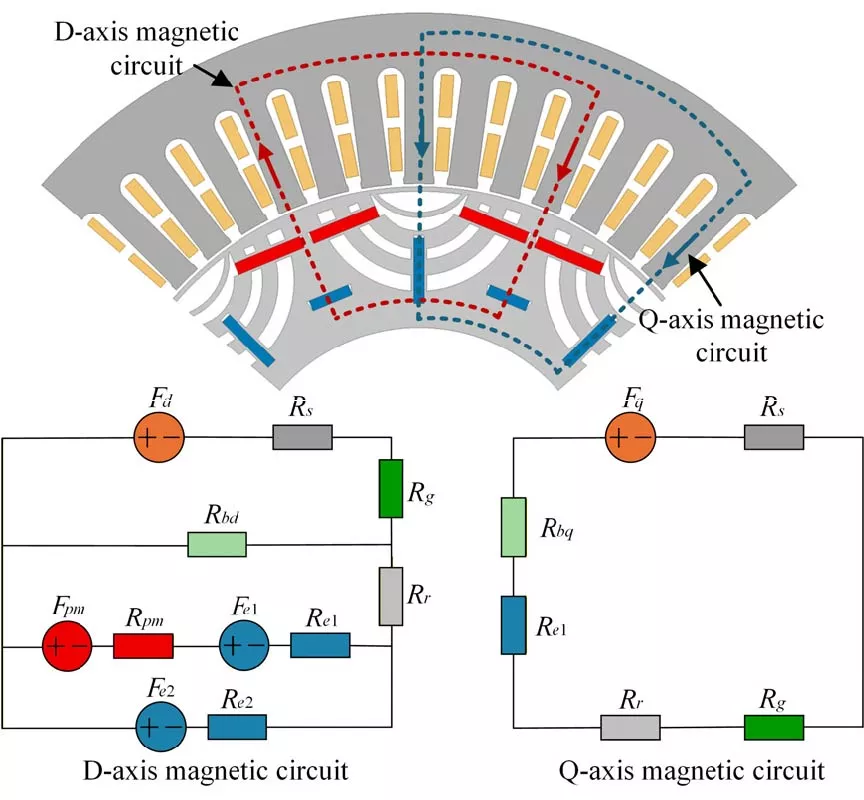
Multi-Mode Dual Five-Phase Hybrid Excitation Motor High Efficiency Control Based on Gradient Descent
Yu Nan , Ye Yuan , Zhenzhen Kong , Xiaozhou Yang , Dong Mu and Fan Yang
The multi-mode dual five-phase hybrid excitation (MM-DFHE) motor, owing to its unique dual-stator configuration, is capable of operating in four distinct modes, offering exceptional operational flexibility. However, this flexibility introduces a control challenge, particularly in Mode IV where the auxiliary stator acts as both an exciter and a torque producer. The additional current variables in this mode lead to suboptimal current distribution, compromising efficiency and dynamic response. To address this, this paper proposes a novel low-loss current optimization control strategy. The key contribution is a Gradient Descent (GD) based online optimization algorithm that dynamically distributes the auxiliary excitation current, specifically tailored for the improved Mode IV operation. This approach resolves the trade-off between loss minimization and dynamic performance prevalent in conventional methods. Simulated and experimental results demonstrate that the proposed strategy reduces total copper loss by up to 13% compared to conventional methods.
Multi-Mode Dual Five-Phase Hybrid Excitation Motor High Efficiency Control Based on Gradient Descent
2025-12-10
PIER C
Vol. 162, 274-285
Compact Multiband Antenna for Implantable Medical Device Applications
Vivek Gupta and Rajeev Kumar
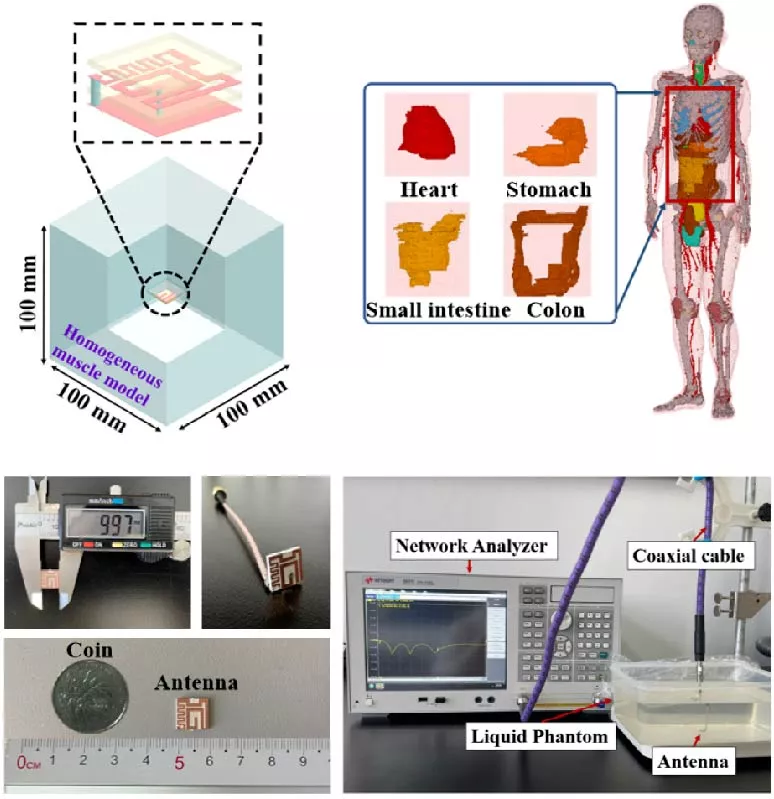
This article presents the design and simulation of a small, high-gain circular patch antenna specifically for an implantable biotelemetry application. The antenna is constructed on a Rogers RT/Duroid 6010/6010LM™ substrate, 1.27 mm in thickness, including 0.035 mm circular radiating patches, as well as a ground plane. The antenna is tiny, with a patch radius of 14 mm, and the total volume of the antenna is 825 mm3. The reduced size creates a more efficient radiation pattern, and the substrate material is high in dielectric constant (εr = 10.2), allowing for a smaller size without sacrificing performance. Our suggested work introduces a novel solution to the given problems and presents a compact multi-band implantable antenna for implantable medical devices, which are used in the wireless medical telemetry service (WMTS) (1395-1400 MHz), medical body area network (MBAN) (2360-2400 MHz), lower ultra-wide band (UWB-L) (3100-4800 MHz), and upper ultra-wide band (UWB-U) (4800-10600 MHz) frequency bands. The proposed antenna design intends to enhance bandwidth, efficiency, and radiation pattern, all while remaining within strict size limits and biocompatibility requirements of implantable medical devices by carrying out widespread simulation and experimental verification.
Compact Multiband Antenna for Implantable Medical Device Applications
2025-12-09
PIER C
Vol. 162, 264-273
A Harmonic Suppression Algorithm for PMSMs Featuring Collaborative Dead-Time and DC Bias Compensation
Yang Yu , Zehua Gong and Xin Wang
To enhance the stability of the spindle drive system in computer numerical control (CNC) machine tools and ensure machining accuracy by reducing non-ideal torque fluctuations caused by current harmonics during high-precision processes, a multi-factor harmonic current suppression algorithm based on an extended state observer (ESO) is proposed. Firstly, a mathematical model of the permanent magnet synchronous motor (PMSM) is established, and the current measurement offset errors (CMOEs) and their effects on the current waveform are analyzed in depth. Subsequently, the zero-point lag phenomenon of the voltage source inverter (VSI) and its resulting harmonic characteristics are discussed in detail. Furthermore, the compensation principles for CMOE and VSI dead-time nonlinear distortion are elucidated, and a corresponding ESO structure is designed through theoretical derivation. The proposed method constructs a unified perturbation model and designs adaptive ESO to achieve cooperative compensation. A comparative analysis of the control strategy's performance before and after optimization validates the significant effectiveness of the proposed method in harmonic suppression. Experimental results show that the proposed strategy reduces the total harmonic distortion (THD) of the phase current to 3.28%, and key harmonics such as the 5th and 7th are suppressed to much lower levels. Torque ripple and speed fluctuation are significantly reduced, effectively improving the operational stability of the motor. The experimental results indicate that the proposed dual compensation scheme for dead-time and DC offset current can effectively reduce harmonic distortion and significantly enhance the operational performance of the PMSM.
A Harmonic Suppression Algorithm for PMSMs Featuring Collaborative Dead-Time and DC Bias Compensation
2025-12-09
PIER C
Vol. 162, 252-263
Power Utilization Analysis for Centralized and Distributed Antenna Systems
Kamya Yekeh Yazdandoost
Mobile network data rates are increasing with each generation, due to the usage of emerging technologies and advanced architectures. They may consume substantially more power than the present fourth-generation (4G) and fifth-generation (5G) systems. Base stations have been determined as the primary source of energy usage in a mobile network. They are responsible for more than 60% of the energy consumption of mobile networks. Moreover, the recent 5G base stations (BSs), which provide higher bandwidth and data rates and have more transceivers with centralized antennas, raise alarms about their power consumption. With eco-friendly concerns about the amount of carbon dioxide (CO2) reduction, the intergovernmental panel on climate change (IPCC) sees climate change as a threat to human well-being and planetary health, and ever-increasing energy costs have already created an urgent need for more energy-efficient and low-power consumption BSs in mobile communications. As a result, the energy consumption and carbon emissions of 5G mobile networks are concerning. Information and communication technologies (ICT) have great potential for reducing CO2 emissions. Therefore, power consumption is one of the central topics for telecom network providers, especially when they are challenged by higher costs. Distributed antenna systems (DAS) could decrease network power usage through smaller cell size or moving closer to users. In this study, we look at the impact of cell size on power consumption in centralized and distributed antenna systems. The distributed antenna system consumes more than 35% less power than the usual centralized structure; thus, swapping a centralized antenna with a distributed antenna may lower total power consumption.
Power Utilization Analysis for Centralized and Distributed Antenna Systems
2025-12-09
PIER C
Vol. 162, 242-251
Power Line Communication: Extreme Noise Events Modelling and Characterization Over Low-Voltage Networks
Steven O. Awino and Bakhe Nleya
This paper examines the use of extreme value theory (EVT) in modelling and forecasting extreme noise events in Power Line Communication (PLC) networks. PLC noise is characterised by random, high-amplitude noise spikes that significantly degrade PLC performance. As such, EVT, which is a branch of statistics that is concerned with modelling and analysing extreme deviations of random processes, is particularly useful for modelling PLC noise impulsive noise events, which are random since it focuses on the tail behaviour of the noise distribution. In this proposed EVT analysis, the probability of extreme noise events is estimated from the high-amplitude spikes. The heavy-tailed characteristics of PLC noise are estimated by the shape parameter (ξ) to model impulsive noise distributions, and the Block Maxima (BM) approach is employed to handle the worst-case PLC noise events lasting over long periods, consequently estimating the maximum expected noise over time. Lastly, the peaks over threshold (POT) method is proposed to handle the threshold exceedance probability, which can be used for threshold selection for PLC noise suppression.
Power Line Communication: Extreme Noise Events Modelling and Characterization over Low-voltage Networks
2025-12-08
PIER C
Vol. 162, 234-241
Optimized Multi-Layers Inversion Scheme for Azimuthal Resistivity Logging-While-Drilling Based on Supervised Descent Method
Yongsheng Xu , Yuehui Li , Junyuan Zheng , Xiangyang Sun , Peng Hao and Jie Ren
Logging-While-Drilling (LWD) azimuthal resistivity measurements deliver critical support for geosteering in complex hydrocarbon reservoirs by acquiring real-time azimuthal responses of formation electrical properties around the borehole; the precision and efficiency of its inversion directly govern the reliability of horizontal well trajectory optimization strategies. Currently, the inversion study of azimuthal resistivity logging with drilling mainly focuses on the simplified three-layer stratigraphic model, and this simple layered model and limited stratigraphic parameter settings have been difficult to adapt to the needs of the increasingly complex geological exploitation. However, inversion of complex multilayer formations (≥5 strata) confronts three main challenges: high-dimensional parameterization, attenuated response sensitivity, and noise-impaired accuracy. These constraints compromise field-applicable accuracy thresholds for multilayer stratigraphic inversion. To address the above problems, in this paper, by combining the advantages of traditional inversion methods with machine learning concepts, a new optimized supervised descent inversion method is proposed for azimuthal resistivity LWD in a five-layer formation model. The data-adaptive reconstruction algorithm enhances outer formation response sensitivity. Subsequent integration of multi-matrix fusion with secondary inversion optimization further augments accuracy in field well-log inversion. Numerical simulations and downhole measurements verify the effectiveness of the proposed method, which is a field-deployable real-time inversion algorithm with higher accuracy and stronger noise immunity.
Optimized Multi-layers Inversion Scheme for Azimuthal Resistivity Logging-While-Drilling Based on Supervised Descent Method
2025-12-07
PIER C
Vol. 162, 224-233
Slot-Enhanced Next-Generation Wireless Antenna for Millimeter-Wave Applications for SDG-9 and SDG-11
Swati Varun Yadav , Manish Varun Yadav , Saraswati Kulkarni , Vikas Gupta and Tanweer Ali
This article presents a slot-enhanced compact antenna tailored for next-generation millimeter-wave communication systems. The design, implemented on an FR4 substrate with dimensions of 15 × 16 × 1.5 mm3, was optimized using CST Microwave Studio and validated through fabrication and experimental testing. At 9.1 GHz, the antenna exhibits an electrical size of 0.45λ × 0.48λ × 0.045λ, confirming its suitability for integration into modern high-frequency platforms. The measured and simulated results demonstrate an ultra-wide impedance bandwidth of approximately 166%, covering 9.1-100 GHz with a primary resonance observed at 45.45 GHz. Throughout this wide operating spectrum, the antenna maintains stable radiation characteristics, achieving a peak gain of 8.91 dBi and efficiency close to 90%. The slot-based geometry enables excitation of multiple resonant modes, ensuring wideband operation while maintaining compactness. With its robust performance across multiple frequency bands, the proposed antenna is a strong candidate for applications in X-band radar, Ku- and Ka-band satellite communications, K-band sensing, V-band short-range links, W-band automotive radar, and future 6G wireless networks.
Slot-Enhanced Next-Generation Wireless Antenna for Millimeter-Wave Applications for SDG-9 and SDG-11
2025-12-06
PIER C
Vol. 162, 214-223
A Two-Port Triple Band Beam Steering Leaky-Wave Corrugated Antenna for Millimeter Wave Applications
Nidhi Tewari , Abhay Kumar , Nitin Muchhal and Shweta Srivastava
A pattern reconfigurable wideband leaky wave corrugated antenna is designed and presented in this paper. The proposed antenna shows a beam steering performance. The proposed antenna is designed using transverse periodic logarithmic slots at the top layer and longitudinal periodic leaky wave slots at the bottom ground layer. The transverse leaky wave antenna radiates in end fire direction at 25.9 GHz and 27.3 GHz. The longitudinal periodic slots on the antenna's bottom metal layer provides broadside radiation at 24.7 GHz. The leaky wave antenna scans beam at 90°, -90°, 159° and -160° by varying the port excitation. The proposed antenna design is suitable for millimeter wave applications.
A Two-port Triple Band Beam Steering Leaky-wave Corrugated Antenna for Millimeter Wave Applications
2025-12-05
PIER C
Vol. 162, 206-213
Curved Parasitic Element-Based Quad-Element Antenna for High-Gain Millimeter Wave 5G Communications
Manish Kumar Dabhade and Krishna Keshavrao Warhade
This paper proposes a novel four-port MIMO antenna specifically designed for millimeter-wave (mm-wave) 5G applications. The antenna features a compact symmetric layout measuring 22 mm × 22 mm, corresponding to approximately 2.7λ × 2.7λ at 37 GHz. The prototype is fabricated on a Rogers RT Duroid 5880 substrate (εr = 2.2, tanδ = 0.0009, h = 0.8 mm) to ensure low loss and stable performance at high frequencies. The antenna operates effectively over two targeted frequency bands, 37-41 GHz and 42-43.5 GHz, making it suitable for high-data-rate, short-range communication systems in emerging 5G networks. The structure is evolved through multiple design stages using strategically placed curved parasitic elements to achieve dual-band operation, high isolation, and enhanced gain. Experimental validation using a vector network analyzer and anechoic chamber confirms good agreement between simulated and measured S-parameters, with isolation better than -20 dB. The antenna demonstrates a measured gain between 9.3 and 9.7 dBi, with simulated peaks up to 11 dBi. Far-field pattern measurements exhibit stable bidirectional radiation with low cross-polarization and well-defined main lobes at both 38 GHz and 42 GHz. MIMO performance metrics such as ECC < 0.01, DG ≈ 10 dB, MEG ≈ -3 dB, and CCL < 0.4 bps/Hz confirm efficient multi-port operation. The proposed antenna thus offers a compact, high-isolation, high-gain solution for next-generation mm-wave 5G MIMO systems.
Curved Parasitic Element-Based Quad-Element Antenna for High-Gain Millimeter Wave 5G Communications