Search Results(13875)

2025-12-22
PIER C
Vol. 163, 239-251
Beam Steering, Biodegradable MIMO DRA: A 3D-Printed Solution for Wideband and High-Isolation C-Band Applications
Bingi Naresh Kumar , Metuku Shyam Sunder and Dasari Ramakrishna
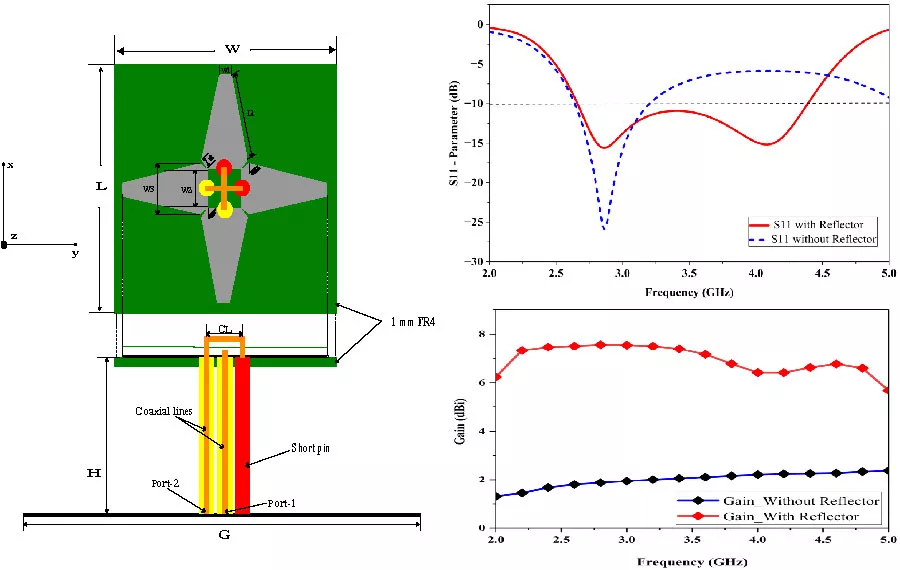
In this study, we describe a compact two-port MIMO dielectric resonator antenna (DRA) system made from biodegradable polylactic acid (PLA) using additive manufacturing techniques. Performance goals were achieved through a systematic performance study on the pin height, pin position, cavity width, and cavity length. The simulated results showed a wide range of bandwidth from 5.0 to 7.4 GHz with return loss (|S11|) lower than -10 dB corresponding to a fractional bandwidth of approximately 36.8%. Excellent port isolation is achieved with |S21| < -20 dB consistent across the entire band. The antenna provides more than 10 dBi gain with a high directivity making it useful for high-performance wireless applications. Furthermore, diversity MIMO performance confirms exceptional diversity performance with the Envelope correlation coefficient (ECC) remaining below 0.015 and ideal Diversity Gain (DG) of 10 dB. Another important feature is the electronic beam steering capability of this antenna, enabled by adjusting the phase difference between the two ports. With excitation phase shifts of 0°, 90°, 180°, and 270°, the antenna's main beam can be steered between broadside and unidirectional directions, providing flexible spatial coverage through dynamic phase control, rather than switching among fundamentally different radiation patterns. The employment of environmentally friendly PLA materials paired with 3D printing technology fosters sustainable practices for antenna development while simultaneously permitting inexpensive prototype creation and swift adaptability in the design changes. This MIMO DRA system can be extensively employed in C-band applications like the 5G communication systems, satellite downlink services, radar systems, and high-speed wireless data links where it is crucial to have wide bandwidth, high isolation, and compact size.
Beam Steering, Biodegradable MIMO DRA: A 3D-Printed Solution for Wideband and High-Isolation C-Band Applications
2025-12-22
PIER B
Vol. 116, 81-93
Research on RIS-Assisted Millimeter Wave Beam Tracking Algorithms for Vehicular Communications
Chenwei Feng , Zhenzhen Lin , Yawei Sun , Yu Sun , Yangbin Huang and Yinhua Wu
In this paper, for millimeter wave (mmWave) vehicle-to-infrastructure communication, a reconfigurable intelligent surface (RIS) is introduced for assisted beam tracking in order to overcome the problem that the line-of-sight (LOS) transmission characteristics of mmWave are highly susceptible to communication disconnection caused by large vehicles or obstacles in a highly mobile scenario like Internet of Vehicles (IoV). In this paper, we study the case of switching to the RIS-assisted virtual-line-of-sight (VLOS) path for temporary beam tracking when the direct connection LOS path is disconnected. The cascading channel model for the VLOS path used for tracking after the introduction of RIS is investigated. Combining the new state model of position and velocity, a three-dimensional beam tracking model of the VLOS path is derived based on the extended Kalman filter algorithm. The beam tracking process is designed, and the beam tracking performance is analyzed for different cases under this scheme. Simulation results show that the scheme in this paper has lower tracking error than the scheme of the conventional state model, and the introduction of RIS can overcome the problem that mmWave IoV communication is vulnerable to occlusion.
Research on RIS-Assisted Millimeter Wave Beam Tracking Algorithms for Vehicular Communications
2025-12-21
PIER C
Vol. 163, 231-238
High-Sensitive Mid-Infrared Photonic Crystal Sensor Based on Slotted-Waveguide Coupled-Cavity for Acetylene Detection
Mouad Mezhoud , Hadjira Tayoub , Ahlam Harhouz , Farida Kebaili and Abdesselam Hocini
The environment is crucial to maintaining a healthy lifestyle and ensuring the continued existence of life on Earth. Nonetheless, throughout the past several years, environmental pollution has increased significantly due to the rapid growth of the global population and technological advancement. Consequently, numerous new sensors and techniques have been developed to effectively detect different types of environmental pollutants. Among all the various methods proposed for environmental monitoring, photonic crystal (PhC) devices have demonstrated great potential in sensing applications due to their high sensitivity to refractive index change, visual detectability, room-temperature operability, and easy portability. Recently, integrated mid-infrared (mid-IR) photonics have gained considerable attention because most gases exhibit a characteristic absorption peak in the mid-IR range. As a result, Mid-IR photonic crystals offer enormous potential for novel applications in optical interconnects and sensing. In this work, we propose a novel highly-sensitive mid-infrared photonic crystal-based slotted-waveguide coupled-cavity sensor to behave as a refractive index sensing device at a mid-infrared wavelength of 3.9 µm. The proposed sensor is simulated using Plane Wave Expansion (PWE) method and Finite-Difference Time-Domain (FDTD) algorithm. The high performance and simple design of the proposed sensor make it a promising candidate for environmental monitoring applications.
High-Sensitive Mid-Infrared Photonic Crystal Sensor Based on Slotted-Waveguide Coupled-Cavity for Acetylene Detection
2025-12-20
PIER
Vol. 184, 64-78
A Random Phase Approximation Method for the Generation of Complex Beams and Its Verification via Phase-Only Digital Metasurfaces
Caiyu Qian , Zhen Jie Qi , Zheng Xing Wang , Hui Xu , Xuan Jing Li , Rui Wen Shao , Jun Wei Zhang , Lingang Fan , Youjia Chen , Zhangjie Luo , Junyan Dai , Jun Wei Wu , Qiang Cheng and Tie-Jun Cui
Complex beams hold significant value in radar and communication systems due to their distinctive propagation characteristics. Digital metasurfaces, which can dynamically control electromagnetic (EM) waves, play an important role in realizing complex beams. Conventional analytic and optimization methods face challenges in synthesizing complex beams of low-bit digital metasurfaces due to the quantization error and the high computational complexity. Here, we propose a statistical method to realize complex beams with phase-only digital metasurfaces. To this end, we introduce tailored quantization probabilities to design the discrete random phase distributions, which approximate the continuous excitation coefficients derived from analytic methods. Based on the proposed method, we analyze the error between the realized and target patterns. These findings offer critical insights into the accuracy of random quantization. Complex patterns with cosecant, prescribed null, flat-top, and dual-beam are designed and validated in combination with a 2-bit phase coding digital metasurface. The experimental results are in good agreement with the theoretical analysis. This work pioneers the application of random phase approximation and statistical synthesis in digital metasurfaces, providing a fast and efficient route for realizing complex beams in modern radar and wireless communication technologies.
A Random Phase Approximation Method for the Generation of Complex Beams and Its Verification via Phase-Only Digital Metasurfaces
2025-12-20
PIER C
Vol. 163, 222-230
Miniaturized Wideband Filtering Antenna Without Additional Filtering Structures
Li Wang , Han Lin and Chenlu Li
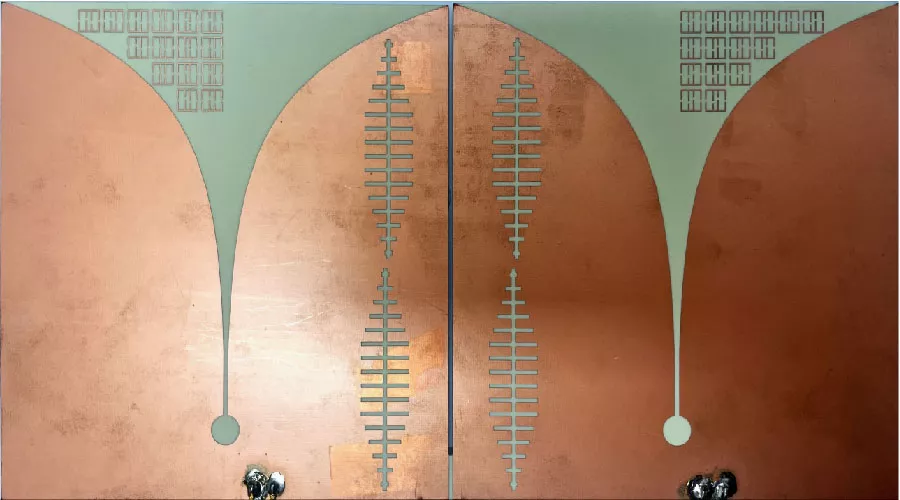
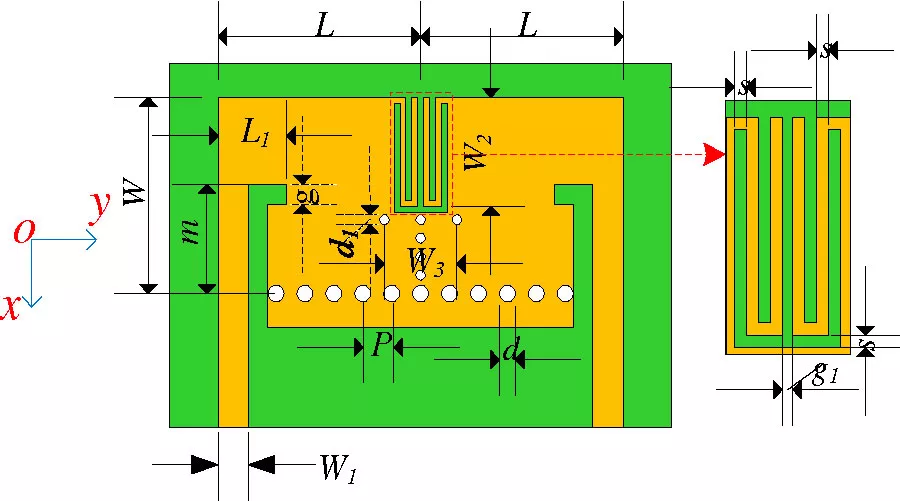
This paper proposes a single-layer, low-profile, and compact filtering patch antenna. The antenna requires no additional filtering structures and consists only of a dielectric substrate, a radiating patch etched with both star-shaped slots and L-shaped slots, a feeder line integrated with a quarter-wavelength matching stripline, and a partial ground plane connected to inverted-π branches. Among these components, the radiating patch, feeder line, and inverted-π branches work synergistically to form two radiation nulls on either side of the passband. This not only enhances the frequency selectivity at the band edges but also optimizes the antenna's radiation performance and filtering performance simultaneously. Finally, to verify the validity of the design, a prototype of the antenna is designed, fabricated, and tested, and the measured results are in good agreement with the simulated results. The design achieves a wide impedance bandwidth of 66.5% (2.33-4.65 GHz), a peak realized gain of 4.25 dBi, and an average efficiency of up to 92%. With a size of 35 mm × 29 mm × 0.8 mm, the antenna satisfies the miniaturization requirement and can be applied to various scenarios, including short-range wireless communication and 5G communication.
Miniaturized Wideband Filtering Antenna without Additional Filtering Structures
2025-12-20
PIER C
Vol. 163, 210-221
A Quad-Band Dipole Antenna with Dual I-Shaped Stubs and V-Shaped Etching for Surveying Drone Applications
Suwat Sakulchat , Sommart Promput , Watcharaphon Naktong and Panuwit Thongbor
This research presents a quad-band dipole antenna for use with a surveying drone. The dipole antenna structure design employs the technique of adding I-shaped stubs and V-shaped etching, using aluminum plates with a strong and lightweight structure, with a thickness of 2 mm, a width of 1,325 mm, and a length of 190 mm. The antenna is designed to support frequency bands according to standards (VOR: Very High Frequency Omnidirectional Range) at 118 MHz, (GS: Glide Slope) at 336 MHz, (DME: Distance Measuring Equipment) at 1231 MHz, and WiFi at 2.45 GHz. From the calculations and simulations using the CST program, optimal parameter values were obtained, leading to the fabrication of a prototype antenna and the testing of its antenna properties. The results showed reflection coefficient values of -21.87 dB (108-118 MHz), -12.76 dB (328-336 MHz), -11.99 dB (962-1231 MHz), and -21.79 dB (2400-2480 MHz), which covers the VOR/GS/DME/ IEEE 802.11b/g/n standards. The antenna gain values are 1.12, 2.38, 3.76, and 4.00 dBi, respectively, with an omnidirectional radiation pattern, and the prototype dipole antenna tested with a drone was found to operate normally in the low frequency range of 108-118 MHz, the first mid frequency range of 328-336 MHz, the second mid frequency range of 962-1231 MHz, and the high frequency range of 2400-2480 MHz.
A Quad-Band Dipole Antenna with Dual I-Shaped Stubs and V-Shaped Etching for Surveying Drone Applications
2025-12-19
PIER C
Vol. 163, 198-209
Unbalance Vibration Compensation Control of Permanent Magnet Assisted Bearingless Synchronous Reluctance Motor Based on LMS Filter Algorithm Optimized by BPNN
Tianliang Du and Huangqiu Zhu
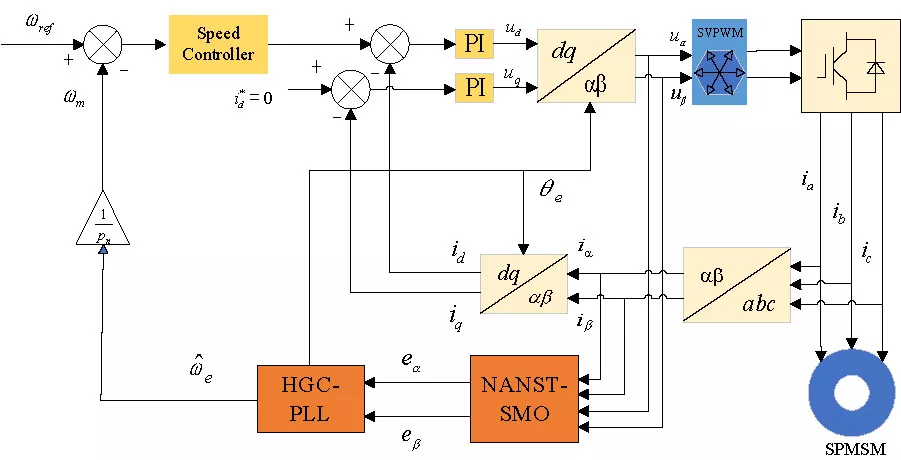
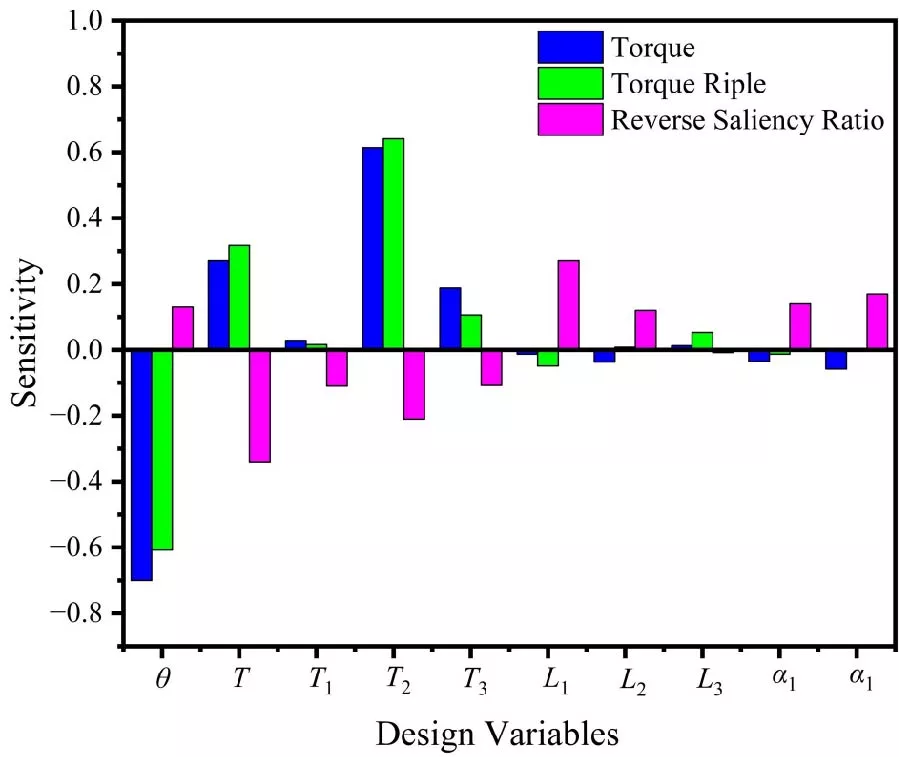
To address the rotor vibration induced by rotor unbalance in a permanent magnet assisted bearingless synchronous reluctance motor (PMa-BSynRM), a feedforward compensation control method based on the Least Mean Squares (LMS) adaptive filtering algorithm, optimized by a Back Propagation Neural Network (BPNN), is proposed. Firstly, the operating principle of the PMa-BSynRM is introduced, and the mechanism of rotor unbalance vibration is analyzed. Secondly, a feedforward compensation controller is developed to extract the vibration signal and suppress rotor vibration. The BPNN is employed to adaptively adjust the LMS step size, thereby enhancing convergence speed, accuracy, and anti-interference capability. Furthermore, to overcome the inherent limitations of the BPNN, a hybrid optimization strategy that integrates particle swarm optimization (PSO) with an improved genetic algorithm (IGA) is adopted to optimize the initial weights and thresholds of the BPNN. Finally, a rotor unbalance vibration compensation control system for the PMa-BSynRM is established. Simulation and experimental results verify that the proposed control algorithm effectively reduces radial displacement and suppresses unbalanced vibration, while also exhibiting strong anti-interference performance and robustness.
Unbalance Vibration Compensation Control of Permanent Magnet Assisted Bearingless Synchronous Reluctance Motor Based on LMS Filter Algorithm Optimized by BPNN
2025-12-19
PIER C
Vol. 163, 187-197
A 5G NR n79 Band Compact MIMO Antenna with DGS-Based Isolation Enhancement
Prabhu Kumar Kothavari and Venkata Rajasekhar Nuthakki
A compact four-port multiple-input multiple-output (MIMO) antenna operating on the N79 band (4.4-5.0 GHz) is designed for use in 5G wireless communication systems. The suggested antenna is synthesized over an FR4 epoxy substrate with a relative permittivity of εr = 4.4, and a standard height of 1.2 mm. The overall dimensions of the antenna are 45 × 45 × 1.2 mm3, making it suitable for insertion into miniature 5G-enabled portable devices. A novel defected ground structure (DGS) is proposed, employing the strategic placement of two stubs of unequal lengths within the shared ground plane to effectively mitigate surface-wave propagation and thereby suppress mutual coupling among antenna elements. Thus, the design achieves considerable isolation, with a level below -20 dB across the targeted operational band. The suggested antenna operates at 4.67 GHz with a peak gain of 2.83 dBi and a radiation efficiency of 92%. The performance of the MIMO antenna was comprehensively assessed using standard diversity metrics, achieving an 0.01 envelope correlation coefficient (ECC), a diversity gain (DG) of 9.99 dB, a channel capacity loss (CCL) of 0.36 bits/s/Hz, and a mean effective gain (MEG) consistently below -3 dB. A strong correlation between experimental and simulated findings points towards the robustness of the suggested design. With its compact size, high isolation, and excellent MIMO performance, the antenna demonstrates strong potential for integration into sub-6 GHz 5G MIMO wireless communication systems.
A 5G NR n79 Band Compact MIMO Antenna with DGS-Based Isolation Enhancement
2025-12-19
PIER C
Vol. 163, 181-186
Broadband Validation of a 2D-FDTD-PML and Nelder-Mead Framework for Liquid Permittivity Extraction
Omaima Talmoudi , Lahcen Ait Benali , Jaouad Terhzaz and Abdelwahed Tribak
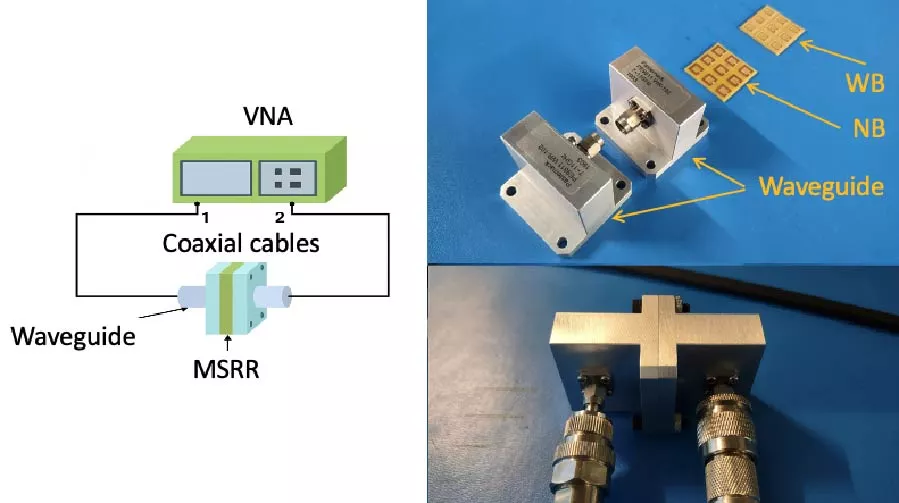
A methodology for estimating the complex permittivity of liquid dielectrics is presented in a rectangular waveguide using the Ku-band (10-15 GHz, WR75). A two-dimensional finite difference time-domain (FDTD) model with perfectly matched layers (PMLs) serves as the forward solver, and TE10 modal projection provides the simulated scattering parameters. Subsequently, a gradient-free Nelder-Mead inversion extracts the real and imaginary parts of the permittivity from the measured S11 and S21 parameters. This approach is implemented in a multilayer fixture, which enables leak-tight loading while remaining analytically simple. Validation on air and water shows good agreement between simulation and measurement across 10-15 GHz, and results at 12 GHz are consistent with independent X-band extractions. This approach is computationally efficient, practical for experimentation, and can be extended to other liquids and multilayers.
Broadband Validation of a 2D-FDTD-PML and Nelder-Mead Framework for Liquid Permittivity Extraction
2025-12-19
PIER C
Vol. 163, 161-167
Research and Design of Non-Contact Electromagnetic Flowmeter
Jing Zeng , Haoxuan Xu , Hongjia Liu , Jing Liu , Yuanyuan Li , Guo-Qiang Liu and Errun He
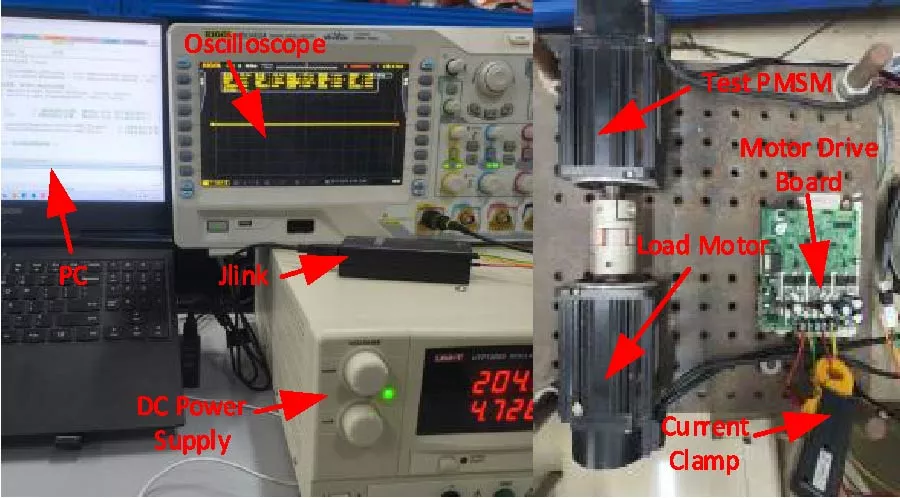
Liquid metals possess significant application value in key sectors such as new energy, nuclear energy, and metallurgy due to their excellent fluidity, high electrical and thermal conductivity, and remarkable high-temperature stability. Accurate flow measurement during their application is crucial for ensuring system safety. However, conventional flow measurement techniques struggle to guarantee long-term stability under high-temperature conditions. To address this challenge, this paper proposes a non-contact alternating current excitation electromagnetic flowmeter. The design generates a stable alternating magnetic field via an excitation coil and employs externally mounted, differentially connected induction coils as the sensing element. This configuration enables non-contact measurement of liquid metal flow within metal pipes, fundamentally overcoming the reliability degradation issues associated with direct sensor contact with the measured medium. Experimental results demonstrate that the system has the potential to operate stably at a high temperature of 600°C and has achieved a high measurement accuracy of 3%.
Research and Design of Non-Contact Electromagnetic Flowmeter
2025-12-19
PIER M
Vol. 136, 86-94
Dual-Mode BaTiO3 Ceramic Filter with Gold-Copper Metallization
Víctor Daniel Vazquez Pereira , Marcelo E. Chávez , Sebastián Murcia , Jordi Verdú Tirado and Pedro de Paco
In the design and fabrication of ceramic filters, the quality of metallization is crucial to minimize resistive losses and ensure optimal resonator performance. This work presents the design and fabrication of a monoblock dual-mode filter with two distinct types of couplings, based on barium titanate (BaTiO3) ceramics, operating at S-band frequencies. Sputtering deposition was used to create a 5 nm gold seed layer, on which a 30 μm copper metallization was grown through electroplating. This method guarantees high conductivity in the resonator coating, and test results demonstrated that the fabricated device offers very good filtering performance with a minimal insertion loss of 0.57 dB.
Dual-Mode BaTiO3 Ceramic Filter with Gold-Copper Metallization
2025-12-19
PIER M
Vol. 136, 77-85
Design of Near-Field Focusing Optical Transparent Metasurface for Millimeter-Wave Communication
Licong Fan , Yuan Yao , Jingchang Nan and Yifei Wang
Low-emissivity glass, commonly employed in building curtain walls strongly reflects and weakly transmits millimeter-wave signals, thereby hindering signal propagation. To address this issue, this paper introduces a novel method that leverages the low-emissivity film itself to design a metasurface for enhanced signal transmission. Two specific metasurface designs are presented. The simulation results validate the proposed method. For the design targeting linearly polarized waves, a 23 dB enhancement in the transmitted electric field is achieved compared to that of uncoated glass. The design for circularly polarized waves achieves a 22 dB enhancement. Both metasurfaces exhibit excellent wide-angle performance, maintaining single-point focusing up to a 30° incidence angle with an electric field enhancement exceeding 15 dB. The proposed millimeter-wave transparent metasurface features a simple structure, supports wide-angle incidence, and can be deployed over large areas with adjustable focal points to meet communication requirements. This work provides a reliable solution for mitigating millimeter-wave transmission loss through low-emissivity glass.
Design of Near-Field Focusing Optical Transparent Metasurface for Millimeter-Wave Communication
2025-12-19
PIER M
Vol. 136, 68-76
Machine Learning-Based RCS Prediction for Metasurface-Integrated Cavity Structures
Xi Liu , Peng Nian , Yu Zhang , Yi Ren , Yi-Xin Guo , Yang-Chun Gao and Bing Chen
Conventional full-wave methods face prohibitive computational costs for far-field scattering optimization of metasurface-integrated cavity structures. To address this limitation, a lightweight residual neural network is introduced within a two-stage scattering prediction framework. This framework effectively mitigates model degradation. The first stage employs shallow convolutional networks to extract local phase-coupling features. The second stage integrates residual layers with fully connected layers to refine cross-scale scattering responses. A compact CNN-ResNet surrogate model is developed for rapid cavity scattering prediction. With only 2.5×10⁴ parameters and training on 500 full-wave samples spanning 6.0-16.0 GHz, the model achieves high computational efficiency. The proposed approach directly maps binary phase-coded matrices to far-field electromagnetic characteristics. Extensive validation on a cavity structure across 6.0-16.0 GHz demonstrates excellent accuracy. The per-sample runtime is reduced from hours to milliseconds while maintaining prediction errors below 3 dB. These results confirm the effectiveness of the approach in enabling fast and accurate electromagnetic scattering prediction for complex cavity environments. The approach provides a practical solution for metasurface-integrated cavity optimization.
Machine Learning-Based RCS Prediction for Metasurface-Integrated Cavity Structures
2025-12-18
PIER C
Vol. 163, 149-160
A Novel Wideband Coaxial-to-Rectangular Waveguide Transition Integrated with a Septum Horn Antenna for C-Band Satellite
Ajitesh and Manoj Kumar Meshram
In this paper, a novel wideband coaxial-to-rectangular waveguide transition integrated with a septum horn antenna is proposed for C-band satellite communication applications. The design employs a modified supershape excitation probe, derived from an extended superformula, to achieve smooth impedance transformation and broadband performance. Initially, the probe geometry is optimized through parametric simulations to validate its effectiveness within a rectangular waveguide structure. The transition is then effectively incorporated into a stepped septum horn antenna that facilitates dual circular polarization through a compact dual-feed mechanism. The septum structure ensures efficient conversion of linearly polarized modes into left-hand and right-hand circularly polarized waves, while maintaining high isolation and low axial ratio. An equivalent circuit model is developed to provide analytical insight into the impedance behavior. A prototype antenna is fabricated, and its performance is validated through measurements. The measured results confirm reflection coefficients below -10 dB across 4.6-8.6 GHz, peak gain of 15.8 dBi, and inter-port isolation exceeding 20 dB. Furthermore, the antenna achieves a 3 dB axial ratio bandwidth of 76.9%. A comparison with state-of-the-art designs demonstrates the superior performance and design efficiency of the proposed antenna architecture.
A Novel Wideband Coaxial-to-Rectangular Waveguide Transition Integrated with a Septum Horn Antenna for C-Band Satellite
2025-12-18
PIER C
Vol. 163, 139-148
Inertial Forces from Relativistic and Thermal Effects of Electromagnetic Frequency Sweeps
Roberto Bernardo Benedicto Ovando
We investigate the thermal and relativistic effects produced when an electrically conductive object is moving in tandem with a source of a variable electromagnetic field. First, we derive an energy–frequency relation to quantify the temperature rise induced by such a field. This relation is then combined with the Lorentz-Fitzgerald contraction and time dilation from special relativity to identify a force, Fc, required to reconcile energy conservation between stationary and moving observers. We further relate Fc to the relativistic energy of a moving mass, extending the analysis to objects without electrical conductivity. This connection leads to the prediction of an inertial force Fcf generated by the frequency sweep of an electromagnetic wave (whether caused by relative motion or by internal modulation) that interacts with mass regardless of its electrical properties.
Inertial Forces from Relativistic and Thermal Effects of Electromagnetic Frequency Sweeps
2025-12-18
PIER Letters
Vol. 129, 1-8
Compact Gap-Coupled Circularly Polarized Broadband Metasurface Antenna Based on Characteristic Mode Analysis
Xuemei Zheng and Ao Gui
In response to the demand for broadband antennas in satellite communications, this paper sets out the proposal of a broadband circularly polarised metasurface antenna. Based on the theory of characteristic mode analysis of super surface, a pair of characteristic modes with the potential to realize circular polarization broadband are obtained and used as the modes to be excited. At the same time, the metasurface current is analyzed; the position of the floor gap is determined according to the results; and the shape of the floor gap is designed to better stimulate the characteristic mode. Subsequently, the power is transmitted through the microstrip line gap coupling feeding structure to excite the selected mode. Finally, an MTS antenna with dimensions of 0.9λ0 × 0.9λ0 × 0.076λ0 at a centre frequency of 5 GHz was determined. The antenna was modeled using CST, a 3D electromagnetic simulation software, and then physically tested for verification. The experimental findings indicate that the impedance bandwidth of the antenna in question is 4.20-5.83 GHz (relative bandwidth of 32.6%). Furthermore, the 3 dB axial ratio bandwidth is 4.38-5.97 GHz (relative bandwidth of 30.7%).
Compact Gap-Coupled Circularly Polarized Broadband Metasurface Antenna Based on Characteristic Mode Analysis
2025-12-18
PIER Letters
Vol. 128, 67-73
Design of a Compact High-Temperature Superconducting Bandpass Filter with Mixed Electromagnetic Coupling
Chenhao Xu , Chenchen Wang , Yiqiuzi Shen and Liguo Zhou
This paper systematically analyzes the electromagnetic coupling characteristics between microstrip resonators and proposes a novel structure that enables mutual cancellation of electromagnetic coupling, effectively reducing the spacing between resonators. Based on this approach, a 14th-order compact high-temperature superconducting (HTS) microstrip bandpass filter is designed and implemented. By constructing a folded symmetric resonator structure to minimize the total electromagnetic coupling energy, and by optimizing the non-uniform coupling gaps in conjunction with the coupling characteristics, precise control of the coupling paths is achieved, leading to a significantly enhanced compactness. The filter is fabricated using double-sided YBCO HTS thin films and tested at liquid nitrogen temperature (77 K). Both simulation and measurement results show that the filter operates within the 0.96~1.06 GHz frequency band, exhibits an insertion loss below 0.4 dB, an out-of-band rejection better than 78 dB, and a passband edge roll-off rate exceeding 60 dB/MHz, demonstrating excellent performance in terms of low loss, wide bandwidth, and high suppression.
Design of a Compact High-Temperature Superconducting Bandpass Filter with Mixed Electromagnetic Coupling
2025-12-18
PIER Letters
Vol. 128, 61-66
Robust Adaptive Array Beamforming Using Generalized Sidelobe Canceller and Zero-Forcing Equalizer Under Array Mutual Coupling
Cheng-Jie Wang and Ju-Hong Lee
Generalized sidelobe canceller (GSC) based adaptive beamformer possesses a main advantage of superior interference rejection due to its capability in tracking the interference characteristics. However, its performance is very sensitive to even a small mismatch in array scenarios. For example, the mismatch due to mutual coupling between array sensors is a common phenomenon in practical environments. Two common problems considered are as follows. (1) The existing adaptive array beamformers are very sensitive to MCE. (2) The existing robust methods inevitably suffer from the problems, including additional computational complexity and estimate accuracy. In this paper, we present an efficient method to deal with the performance degradation induced by the MCE to achieve robust beamforming. The proposed method simply utilizes a well-known scheme, namely the zero-forcing (ZF) equalizer. The ZF equalizer simply preprocesses the data vector received by the antenna array and then inputs the processed data vector into a GSC based adaptive array processor. The combination of a ZF equalizer and a GSC based adaptive array processor results in an adaptive array beamformer providing satisfactory beamforming performance in the presence of the MCE. The performance analysis regarding the proposed method is analyzed. Simulation results are also presented for confirmation and comparison. The simulation results show that the ZF equalizer alleviates the MCE and the GSC based adaptive beamformer can subdue the background noise enhanced by ZF equalizer.
Robust Adaptive Array Beamforming Using Generalized Sidelobe Canceller and Zero-Forcing Equalizer under Array Mutual Coupling
2025-12-18
PIER Letters
Vol. 128, 54-60
Innovative Design and Investigation on Resistive and Capacitive Network Based NGD Topology
Runtao Song , Sonia Moussa , Nathan B. Gurgel , Nicolas Waldhoff , Ali Hamada Damien Fakra , Dmitry Kholodnyak , Mathieu Guerin , Glauco Fontgalland , Fayu Wan and Blaise Ravelo
This paper investigates the circuit theory of elementary passive topology exhibiting reconfigurable positive/negative delay (RPND) effect. This novel evaluated framework enables identification of the first-order L-topology constituted by RC-network operating under RPND effect. The investigated passive L-cell can operate in both negative and positive group delay (NGD or PGD) mode depending on the RC-network parameter. After establishing the NGD existence condition, the design equations versus the RPND effect including the target parameter values are formulated. To validate the theory, an RC-circuit representing a RPND Proof-of-Concept (PoC) was designed, implemented and tested especially in the time-domain by verifying the time-advance signature corresponding to the NGD operation mode. By tuning a PoC resistor, experimentation of pulse and arbitrary waveform signals confirm the feasibility to observe RPND reconfigurability. In the NGD mode, it is observed that outputs in time-advance of their own inputs about -3 ms. The RPND circuit is particularly useful for adjusting delay effect and signal synchronization in the communication system.
Innovative Design and Investigation on Resistive and Capacitive Network Based NGD Topology
Engineering Chance --- Planning for the Unplanned as a Modern Discovery Paradigm