Search Results(13875)

2025-12-17
PIER C
Vol. 163, 128-138
Miniaturized High-Efficiency Wideband Multi-Slot Antenna for Radar, Military, and 5G Applications for SDG-9
Swati Varun Yadav , Manish Varun Yadav , Himanshu Gupta and Vikas Gupta
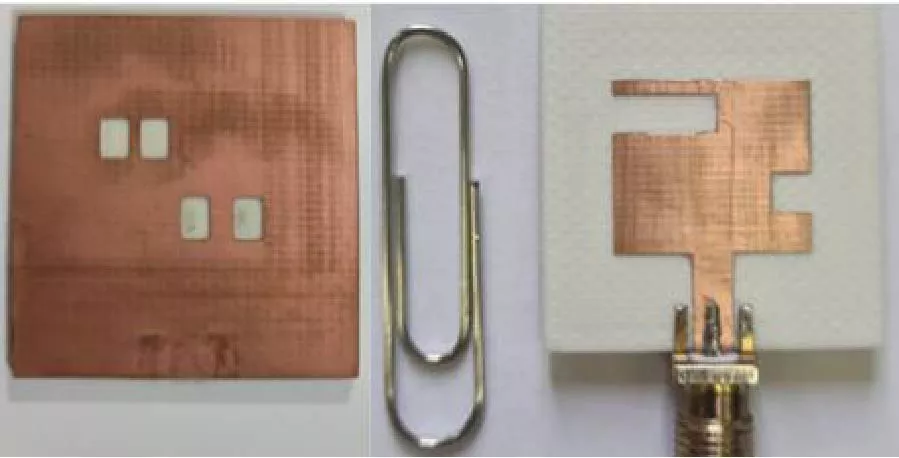
A compact wideband antenna with a multi-slot configuration is proposed for radar, military, and modern wireless communication systems. The antenna is fabricated on an FR-4 substrate with overall dimensions of 14 × 16 × 1.5 mm3, corresponding to a miniaturized electrical size of 0.163λ × 0.187λ × 0.017λ0 at 3.5 GHz. To achieve broad impedance bandwidth and improved matching, multiple slots are etched on both the patch and ground surfaces. Experimental validation shows that the antenna effectively covers the 3.5-14 GHz frequency range, offering nearly 120% fractional bandwidth. Within this spectrum, it delivers a peak gain of 5.1 dB and a maximum radiation efficiency of about 89%, ensuring stable and low-loss performance. The compact structure maintains consistent radiation characteristics, making it suitable for portable and defense-oriented devices. Its ability to support Sub-6 GHz and 5G bands further enhances its applicability in next-generation communication platforms.
Miniaturized High-Efficiency Wideband Multi-Slot Antenna for Radar, Military, and 5G Applications for SDG-9
2025-12-17
PIER C
Vol. 163, 120-127
Design of Cascaded Circular Ring Semicircular Cresent Shaped Multiband Antenna for UWB, WLAN, WiMAX and 5G Midband Applications
Chevala Rambabu , Kaza Srilakshmi , Vasudha Vijayasri Bolisetty , Udara Yedukondalu and Kottapadikal Vinodan Vineetha
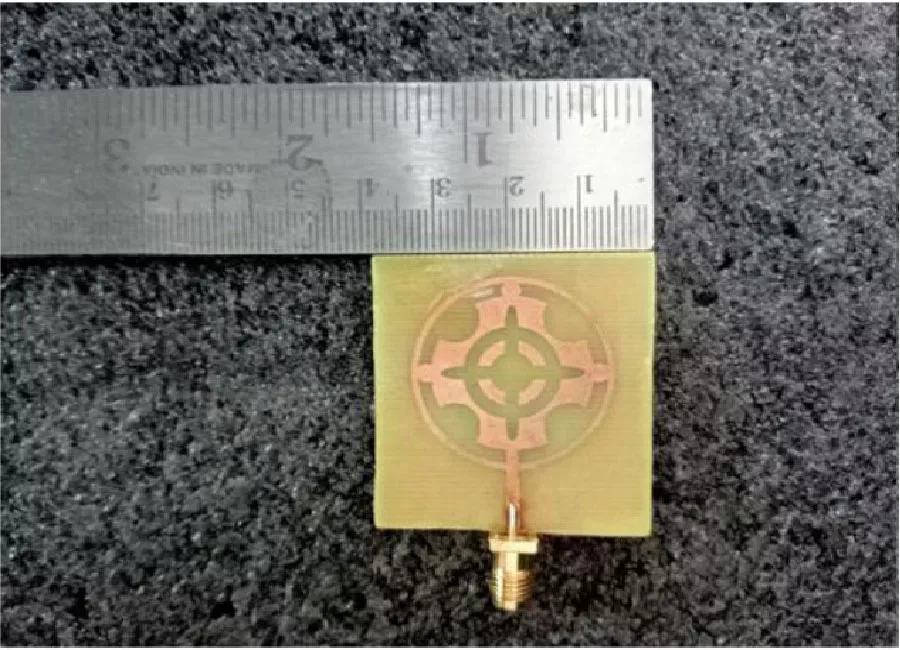
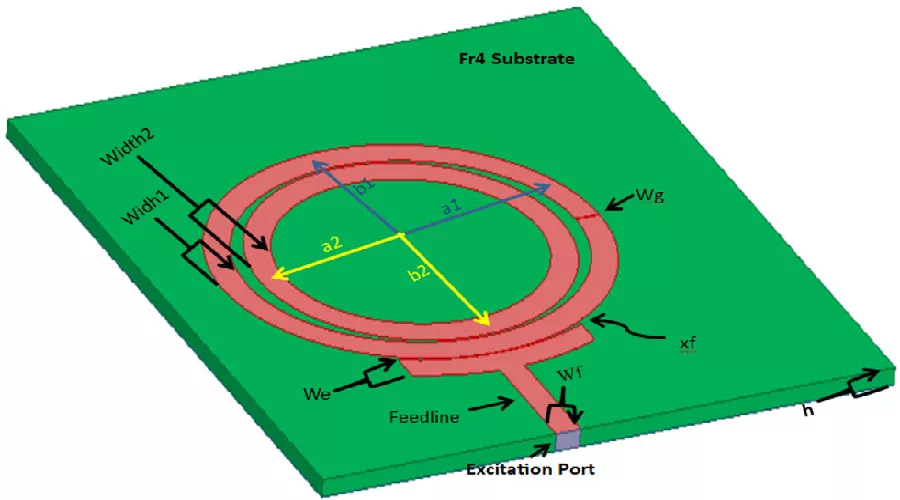
In this paper we report a cascaded circular ring antenna with semicircular C-shaped radiating slots for multiband applications. The novelty of this paper lies with three techniques as follows: cascading circular rings, semicircular C-shaped slots and complimentary split ring resonators embedded on the ground are included in the paper. The dimensions with optimised values are 35 × 35 × 1.61 mm3. The antenna operates from 2.124 GHz to 8.284 GHz, and it is deposited on a 1.6 mm thick FR-4 substrate. The radiating patch is built on the substrate; it is made by developing multiple circular ring structures to develop a cascaded ring-like pattern that provides the wideband response. The antenna successfully resonated with a wide bandwidth of 6.16 GHz in the span of 2.124 GHz to 8.284 GHz. The ground features a half hexagonal slot that is embedded within the larger etched rectangular slot. An equivalent circuit with R-L-C elements is developed. The resonating bands are obtained at 3.0 GHz, 5.89 GHz, and 7.07 GHz with reflection coefficients of -21.3 dB, -19.7 dB, and -26.7 dB, respectively. The optimised design operates at UWB, WLAN, WiMAX, and 5G midband applications.
Design of Cascaded Circular Ring Semicircular Cresent Shaped Multiband Antenna for UWB, WLAN, WiMAX and 5G midband Applications
2025-12-17
PIER C
Vol. 163, 113-119
Frequency- and Phase-Tunable Coupler Based on Three-Line and Four-Line Coupled Lines
Bo Huang , Yongle Wu , Shuchen Zhen , Weimin Wang and Jinchun Gao
This paper proposes a reconfigurable 3-dB coupler with tunable phase and frequency characteristics based on triple-line loaded varactor diodes. The core structure employs a four-line coupling configuration to ensure strong coupling characteristics and stability. Through integrated theoretical analysis and experimental verification, the coupler demonstrates a center frequency tuning range of 1.8-2.4 GHz with continuous phase difference adjustment from 40° to 140°. Measured results indicate that high isolation (> 20 dB) and low return loss (< -20 dB) can be obtained.
Frequency- and Phase-Tunable Coupler Based on Three-Line and Four-Line Coupled Lines
2025-12-17
PIER M
Vol. 136, 57-67
High Gain and Bandwidth Enhanced Microstrip Patch Antenna with Defective Ground Structure Loaded with Metamaterial Unit Cells for Intelligent Transportation Systems
Sunil K. Dubey , Ashok Kumar Shankhwar , Nand Kishore and Alkesh Agrawal
In the manuscript a novel design of microstrip patch antenna with moderate degree of complexity is proposed in terms of metamaterial based unit cells as radiating patch on the top as well as metamaterial based periodic structure as defected ground structure at the bottom (MRPMGS) for Intelligent Transportation System (ITS) applications. The novel design of patch antenna exhibited multibands with broad-band transmission patterns, improved high gain and compact structure. The MRPMGS has a three layered structure with overall dimensions of 32 mm × 28 mm × 1.6 mm. The top layer with radiating patch has unit cell(s) with dimensions of 3.6 mm × 3.6 mm, and at the bottom the defective ground structure (DGS) has unit cell(s) with dimensions of 4 mm × 4 mm. The middle layer is of FR4 substrate with 1.6 mm thickness. The MRPMGS has experimental (simulated) transmission frequencies at 11.54 GHz (11.24 GHz), 12.91 GHz (12. 98 GHz), and 13.20 GHz (13.48 GHz) with reflection coefficients of -20.91 dB (-25.16 dB), -26.19 dB (-29.36 dB), and -18.94 dB (-26.02 dB) respectively. The VSWR varies between 1 and 3. The radiation efficiency reaches 80%, and high gain varying between 2.35 and 5.5 is achieved at the desired frequencies.
High Gain and Bandwidth Enhanced Microstrip Patch Antenna with Defective Ground Structure Loaded with Metamaterial Unit Cells for Intelligent Transportation Systems
2025-12-16
PIER C
Vol. 163, 108-112
Compact Millimeter-Wave Microstrip Dual-Band Filter Using the Ring Type Structure
Wei Zhao , Mingen Tian , Ziyan Lu , Hailong Wang , Yiming Zhang and Huali Zhu
A compact microstrip dual-band filter using stepped-impedance resonators (SIRs) is proposed. The ring-type structure is used to minimize the size of the filter, and the location of the input/output excitation port is used to adjust the filter's performance. A dual-band filter has been fabricated and measured to verify the performance of the proposed configuration. The results show that the filter exhibits two passbands, centered at 30.5 GHz and 35.9 GHz, with fractional bandwidths of 7.2% and 5.6%, respectively. The corresponding insertion losses at the center frequencies are 2.7 dB and 3.3 dB. The proposed filter configuration shows great potential for applications in next-generation 5G and satellite communication systems requiring compact and high-performance multi-band filters.
Compact Millimeter-Wave Microstrip Dual-Band Filter Using the Ring Type Structure
2025-12-16
PIER C
Vol. 163, 100-107
Dielectric Response and Transient Potential Characteristics of Grounding Electrodes Considering the Frequency Effect of Frozen Soil
Wei Shen , Mingxi Zhu , Xinmin Li and Ziming He
This study investigates the electrical characteristics of grounding electrodes in seasonal frozen soil through experimental and simulation approaches. Experimental measurements reveal the variation patterns of soil resistivity and dielectric constant within the frequency range of 100 Hz-10 MHz at different temperatures. The results indicate that decreasing temperature leads to increased resistivity and decreased dielectric constant, with both parameters tending to stabilize at high frequencies. Computations based on the method of moments demonstrate that accounting for the frequency dependence of frozen soil reduces the impedance magnitude by 20%-40% in the high-frequency range and results in more complex resonant behavior. When the length of the grounding electrode is less than the freezing depth, the high-frequency capacitive effect is significantly enhanced. Time-domain analysis shows that under lightning impulse conditions, the potential reduction is approximately 22% during the first return stroke and can reach up to 42% in subsequent return strokes. The study concludes that the frequency dependence of the electrical parameters of frozen soil has a considerable influence on the response of grounding electrodes and should be considered in modeling and lightning protection design.
Dielectric Response and Transient Potential Characteristics of Grounding Electrodes Considering the Frequency Effect of Frozen Soil
2025-12-16
PIER M
Vol. 136, 46-56
Auto-Calibration of Near-Field Microwave Measurements for Complex Permittivity Estimation
Andrei Ludvig-Osipov , Simon Stenmark , Thomas Rylander and Tomas McKelvey
This paper presents a numerical study of a novel method for auto-calibration of scatteringparameter measurements in a near-field microwave sensor system. The here proposed method is applied to estimation of the average complex permittivity in a measurement domain from the scattering parameters, corrupted by gain uncertainties in the measurement instruments. Simultaneously with the average complex permittivity, the gain uncertainties are also estimated. The characteristic property of the proposed method is that no simplified mathematical model of the measurement domain is assumed, and instead a set of a-priori calibrated measurements is used. Numerical studies demonstrate the performance of the method in noiseless and noisy settings with and without nuisance stochastic perturbations in the measurement domain. An approach to compensate for the stochastic perturbations in the measurement domain permittivity is proposed, and it demonstrates an improved performance of the method in numerical examinations.
Auto-calibration of Near-field Microwave Measurements for Complex Permittivity Estimation
2025-12-15
PIER
Vol. 184, 43-61
Radio-Frequency Subwavelength Time-Reversal Imaging and Focusing: A Review of Theory, Methods, and Applications
Elias Le Boudec , Hamidreza Karami , Farhad Rachidi , Marcos Rubinstein and Felix Vega
Time reversal is an established wave imaging and focusing method that has proved to be robust and compatible with super-resolution imaging and focusing, i.e., to provide images and foci with subwavelength features beyond the diffraction limit. The method has been applied to numerous wave systems. We propose a systematic review of super-resolution time reversal applied to electromagnetic waves in the radio-frequency regime. We examine the theoretical foundation, the methods and the applications of radio-frequency super-resolution time-reversal. We explain a seeming contradiction between a widely used model of resolution due to the time-reversal cavity, and a common approach of Fourier optics highlighting the significance of evanescent waves for super-resolution. We also present an application of one of the algorithms of time-reversal imaging (known as TR-MUSIC) to measurements in a highly reflective environment, such as a resonant cavity. Finally, we outline open questions and applications.
Radio-frequency Subwavelength Time-reversal Imaging and Focusing: A Review of Theory, Methods, and Applications
2025-12-15
PIER C
Vol. 163, 91-99
Optimization of a Multi-Function Car-Roof Antenna Using Deep Learning Method
Dingwen Tan , Hexue Liu , Bing Xu , Xiaoming Liu , Shuo Yu and Lu Gan
This paper presents a dual-band car-roof antenna, which holds potential applications for 5G-MIMO, WLAN and V2X. The proposed antenna is installed within a shark-fin room on the roof of vehicles. The proposed design consists of two parts, the diversity antenna and the main antenna. To mitigate spatially selective fading and ensure coverage, both the diversity and main antennas have omnidirectional radiation patterns in the azimuth plane. To reach a multi-function design, deep learning method is used for optimization based on MATLAB-HFSS-API. Notably, the optimized antenna reaches a compact size of 27 mm × 30 mm × 2 mm. The antenna have two bands (-10 dB), including 3.35-3.75 GHz and 4.76-7.19 GHz, covering China Telecom (3.4-3.5 GHz), China Unicom (3.5-3.6 GHz), China Mobile (4.8-4.9 GHz), WLAN (5.15-5.35 GHz, 5.725-5.850 GHz), unlicensed Wi-Fi (5.850-5.895 GHz), V2X (5.895-5.925 GHz) and Wi-Fi 6E (5.925-7.125 GHz). The full-wave simulation results are in satisfactory consistency with the measured ones.
Optimization of a Multi-function Car-roof Antenna Using Deep Learning Method
2025-12-15
PIER C
Vol. 163, 81-90
Shorted Microstrip Line Fed Wideband Design of E-Shape Microstrip Antenna Loaded with Printed Rectangular Resonator
Venkata A. P. Chavali and Amit A. Deshmukh
The shorted microstrip line fed design of an E-shape microstrip antenna loaded with a printed rectangular loop resonator is presented for wideband response on a thinner substrate. Wideband response is attributed to the optimum inter-spacing between the TM1/2,0 resonant mode of shorted microstrip line feed, with respect to TM10 and modified TM02 modes on rectangular patch and TM20 mode on the printed rectangular loop. The design on a substrate of thickness 0.046λg achieves bandwidth of 227 MHz (23.56%) with a peak broadside gain of 7.1 dBi. The selection of microstrip line feed achieves wideband response on thinner substrate and harmonic rejection to the higher band frequencies. A methodology to design similar antennas as per specific wireless application is presented that yields similar result. An experimental verification has been carried out in the proposed design, which shows close agreement with the simulation.
Shorted Microstrip Line Fed Wideband Design of E-Shape Microstrip Antenna Loaded with Printed Rectangular Resonator
2025-12-14
PIER C
Vol. 163, 73-80
Metasurface-Driven Improvement in MIMO Antenna Performance by Addressing Mutual Coupling
Safia Jaouad , Chaymae Chahboun , Mohamoed Ali Ennasar , Otman El Mrabet , Jesus Ramon Perez Lopez , Mohsine Khalladi and Mariem Aznabet
In this paper, a metasurface is proposed as an effective solution to enhance the performance of MIMO antennas by reducing mutual coupling. This reduction is attributed to the metasurface's negative permeability at the resonant frequency, which helps to block waves propagating between the two adjacent structures. The designed metasurface consists of a 2D array of omega-shaped resonators placed over two linearly polarized patch antennas. Measurement results show a 15 dB reduction in coupling when the metasurface is positioned 0.14λ0 above two closely spaced antennas separated by 0.06λ0 at a resonant frequency of 2.85 GHz. Additionally, improvements in other characteristics of the whole structure, such as gain and radiation efficiency, were also observed. Such an achievement has not been reported in the literature on previous metasurface-based decoupling methods. This technique can be useful for massive multiple input multiple output (mMIMO) systems for wireless communications.
Metasurface-driven Improvement in MIMO Antenna Performance by Addressing Mutual Coupling
2025-12-14
PIER B
Vol. 116, 65-80
Rainfall DSD Modelling Using Supervised Learning Techniques for Rain Attenuation Prediction in South Africa
Tsietsi Condry Ramatladi and Akintunde Ayodeji Alonge
Reliable modelling of rainfall-induced attenuation is crucial for designing and operating high-frequency communication systems, particularly those operating above 10 GHz, in regions with severe rainfall conditions such as subtropical climates. This study offers a comparison of supervised machine learning (ML) models - k-nearest neighbours (KNN), decision trees (DT), and random forests (RF) - against traditional statistical methods such as the lognormal and gamma distributions for estimating raindrop size distribution (DSD) and specific attenuation. Rainfall measurements taken between 2018 and 2019 were obtained from 1-minute disdrometer at the measurement location in Durban, South Africa (29.8651°S, 30.9734°E). The investigated models were then tested across four different rainfall regimes processed from the dataset: drizzle, widespread rain, shower, and thunderstorm. An adaptive tuning method for selecting the best k-value in KNN was introduced to enhance prediction accuracy across various rainfall intensities. Model performances are evaluated using error metrics of root mean square error (RMSE), mean absolute error (MAE), and the coefficient of determination (R2). The results show that KNN outperforms RF and DT, providing the highest accuracy and lowest prediction errors across all rainfall regimes. The confidence interval (CI) analysis confirms that KNN delivers more precise and stable estimates, while RF and DT exhibit greater variability and uncertainty in performance. Additionally, specific attenuation estimations from these ML models are compared at different rain rates with the ITU-R P.838-8 estimations for frequencies up to 100 GHz. These findings highlight the superiority of data-driven model, particularly the adaptive KNN, in capturing complex rainfall microstructures and improving attenuation predictions. This has direct implications for planning and deploying rain-resilient wireless networks in variable climatic regions.
Rainfall DSD Modelling Using Supervised Learning Techniques for Rain Attenuation Prediction in South Africa
2025-12-13
PIER C
Vol. 163, 60-72
Matrix Square Root Based Differentiable Rcwa Implementation for High-Performance Parallel Computing
Frank Van der Ceelen , Yifeng Shao and Wim M. J. Coene
Rigorous Coupled-Wave Analysis (RCWA) is a semi-analytical method, used to determine the optical response of nanostructures, such as meta-materials. Recently, the ability to combine RCWA with automatic differentiation for optical response optimization has been demonstrated. We seek to build upon this use by attempting to address RCWA's poor performance on parallel computer architecture, stemming from the presence of an eigendecomposition. We do this by outlining an alteration of RCWA, which replaces the eigendecomposition with a matrix square root and matrix exponential evaluation. Furthermore, we demonstrate that these matrix functions can be evaluated using algorithms which are both differentiable and readily evaluated in parallel. Finally, we show that replacing the eigendecomposition with these matrix functions resolves the bottleneck and paves the way for higher-accuracy parameter retrieval using RCWA approaching real-time performance, without compromising stability.
Matrix Square Root Based Differentiable RCWA Implementation for High-Performance Parallel Computing
2025-12-12
PIER C
Vol. 163, 50-59
Integral Sliding Mode Speed Control of PMSM Based on Novel Fuzzy Exponential Reaching Law
Zhonggen Wang , Jinpeng Ma and Wenyan Nie
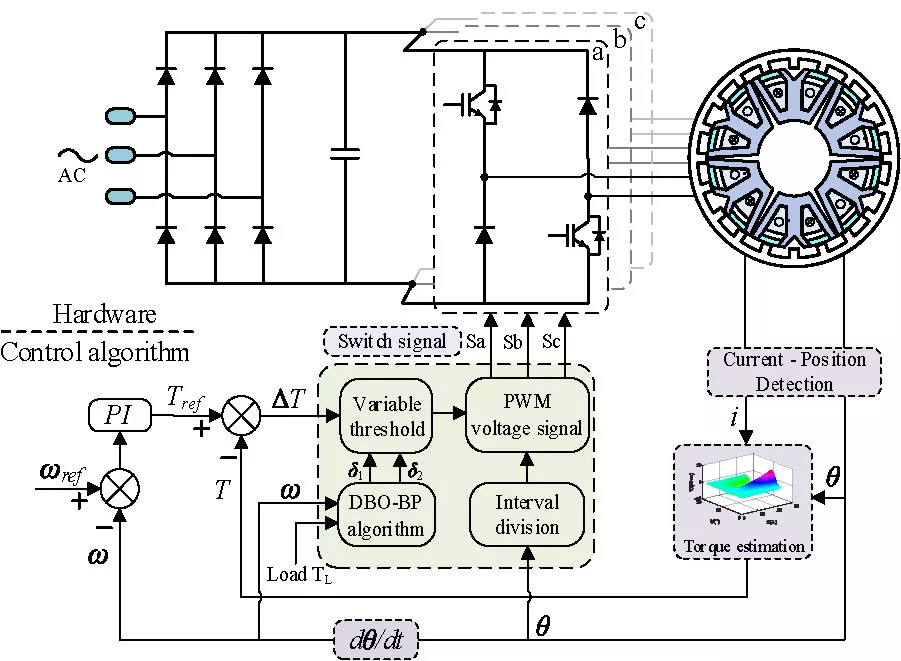
To enhance the speed control performance of permanent magnet synchronous motor (PMSM) drive systems, a novel sliding mode control (SMC) strategy based on a new fuzzy exponential reaching law (NFERL) is proposed. The law enhances the traditional exponential reaching law by introducing a system-state-dependent power term and a fuzzy term that adapts the reaching speed based on the sliding mode function. A hyperbolic tangent function replaces the high-frequency switching term to suppress chattering. This control strategy helps reduce current ripples and torque pulsations, and improves the stability and response speed of system operation. Additionally, to address the issue that the system is susceptible to unknown disturbances, a sliding mode disturbance observer (SMDO) is designed to estimate the total disturbance of the system, and the estimated disturbance is fed forward into the composite speed controller. Finally, the introduced control strategy is validated using MATLAB/Simulink simulations and a motor experimental platform. Both simulated and experimental results demonstrate that the new reaching law effectively reduces the startup speed overshoot of the PMSM compared to the traditional law, while also achieving faster convergence, reduced chattering, and superior anti-disturbance performance.
Integral Sliding Mode Speed Control of PMSM Based on Novel Fuzzy Exponential Reaching Law
2025-12-12
PIER C
Vol. 163, 43-49
Improvement of Isolation and Bandwidth of Notch Ultra-Wideband MIMO Antenna on Metamaterial Wall
Shuming Liu , Jingchang Nan and Yifei Wang
This paper presents a novel notch-based ultra-wideband (UWB) MIMO antenna with a metamaterial wall (MLB-MW) designed to significantly enhance the isolation and operational bandwidth between antenna elements. The antenna adopts a 2 × 1 notch UWB structure, integrating a metamaterial wall made of metallic lines, with an overall size of 20 × 40 × 1.6 mm3, and utilizes an FR-4 dielectric substrate (εr = 4.4, tanδ = 0.02). By leveraging the μ-negative characteristics of the MLB-MW, the antenna achieves a 10 dB improvement in isolation across the C, X, and Ku frequency bands. Its impedance bandwidth (|S11| < -10 dB) extends from 6.09-13.07 GHz to 5.51-15 GHz, with a relative expansion rate of 36%. Additionally, key performance parameters of the MIMO antenna are comprehensively evaluated: the envelope correlation coefficient (ECC) remains below 0.01 across the entire frequency band; the diversity gain (DG) is close to 10 dB; and the total active reflection coefficient (TARC) stays below -10 dB across the entire operating band, indicating excellent channel independence and diversity performance. Experimental results verify the feasibility and effectiveness of this antenna in 5G base station applications.
Improvement of Isolation and Bandwidth of Notch Ultra-Wideband MIMO Antenna on Metamaterial Wall
2025-12-12
PIER C
Vol. 163, 35-42
Design and Analysis of High Isolation Four Port MIMO Antenna for N77 Band 5G Communication
Ramesh Manikonda , Govindarao Tamminaina and Subhashini Gulla
This paper proposes a four-port multiple-input multiple-output (MIMO) antenna for 5G communication. The reference hexagonal antenna with WI-FI slots is designed on FR-4 substrate. Next, four reference antennas are arranged orthogonal to each other for reduction of isolation. The overall dimensions of WI-FI slot four port MIMO antenna is 60×60×1.6 mm3, and it is implemented on an FR-4 substrate with defective ground structure. With an impedance bandwidth of 1 GHz(Giga Hertz), the suggested MIMO antenna operates in the frequency range of 3.3 to 4.3 GHz. The mutual coupling is more than 23 dB among all ports. Furthermore, the MIMO antennas' channel capacity loss (CCL), diversity gain (DG), and envelope correlation coefficient (ECC) are estimated. The parameters are measured using anritsu MS2037C Vector Network Analyzer(VNA).
Design and Analysis of High Isolation Four Port MIMO Antenna for N77 Band 5G Communication
2025-12-12
PIER Letters
Vol. 128, 48-53
Single-Fed Dielectric Resonator Antenna with Large Frequency Ratio Based on Metasurface
Wenhan Wan , Wu-Sheng Ji , Zhaoyi Wang and Xing-Yong Jiang
This paper proposes a single-fed antenna with large frequency ratio. The antenna integrates a metasurface antenna and a dielectric resonator antenna (DRA), capable of simultaneous operation in both microwave and millimeter-wave bands with single-port feeding. The microwave band achieves resonance through the metasurface antenna, while the millimeter-wave band resonates by exciting the HEM12δ higher-order mode of the DRA. The proposed metasurface antenna achieves 24% (5.6 GHz-7.13 GHz) impedance bandwidth, 10% (6.2 GHz-6.9 GHz) axial ratio bandwidth, and 6.07 dBi peak gain in the microwave band; the DRA provides 13.4% (27.47 GHz-31.43 GHz) impedance bandwidth and 6.4 dBi peak gain in the millimeter-wave band. With simple structure and excellent performance, this antenna achieves a frequency ratio of 5.2, making it suitable for 5G communication scenarios requiring concurrent Sub-8 GHz and FR2 operation.
Single-fed Dielectric Resonator Antenna with Large Frequency Ratio Based on Metasurface
2025-12-12
PIER Letters
Vol. 128, 41-47
A Touch Sensing Method Using EIT-Based Microstrip Structure for Interactive Applications
Jiyou Jiang and Jiangtao Huangfu
Touch interaction is an important function in various electronic systems. In this paper, a touch sensing method based on an electromagnetically induced transparency (EIT) microstrip structure is proposed. The design consists of a U-shaped two-port microstrip transmission line with four open stubs oriented in four directions. Two transmission narrow bands are generated by the proposed structure at around 1.8 GHz and 3.5 GHz, corresponding to the EIT effect. When finger-like objects approach the terminals of these open stubs, their transmission characteristics change significantly, as indicated by variations in the S-parameter response. To precisely determine the touch position, a shifting vector method is introduced based on the variations of S-parameters at different touch positions on the board plane. Both simulation and experimental results demonstrate a touch localization accuracy of 94.4% with a spatial resolution of 3 mm. The proposed design offers a low-cost and compact platform that integrates touch interaction and RF communication, showing strong potential for future interactive electronic and communication systems.
A Touch Sensing Method Using EIT-Based Microstrip Structure for Interactive Applications
2025-12-11
PIER
Vol. 184, 32-42
Magneto-Optical Driven Topological Polarization Singularities Modulation in the Photonic Crystal Slab
Bo Yang , Wanhua Zheng and Anjin Liu
The modulation of topological polarization singularities in momentum space in photonics has attracted much attention due to their relations with bound states in the continuum (BICs), unidirectional guided resonances, and chirality. Current modulation strategies that rely on structural symmetry breaking or phase-change materials are challenging to achieve dynamic and flexible modulation of polarization singularities. Recently, magneto-optical (MO) modulation of light provides a promising theoretical strategy for the dynamic modulation of polarization singularities. However, the dynamics of transverse electric (TE)/transverse magnetic (TM)-mode singularities under varying magnetic fields remain elusive in the MO photonic crystal (PhC) slab. Herein, we systematically investigate the dynamic modulation of topological polarization singularities in the PhC slab based on the MO effect. In-plane (x/y) magnetic fields have no effect on the TE mode of the MO PhC slab. However, the fields induce splitting and separation of vortex polarization singularity (V point) of the TM mode into a pair of circular polarization points (C points), enabling extrinsic chirality without breaking the structural symmetry. A magnetic field along the z direction enables near-unity circular dichroisms (CDs) over a broad angular range when circular polarizations are formed at off-Γ points for the TE and TM modes. Furthermore, by introducing single symmetry breaking (in-plane symmetry breaking for TE, out-of-plane symmetry breaking for TM) with magnetic field tuning, one of the C points can be shifted to the Γ point, resulting in intrinsic chiral quasi-BICs (QBICs) with ultra-high Q-factors and near-unity CDs. This study provides a dynamic and flexible modulation approach for polarization singularities, which enhances light-matter interactions for applications in advanced chiral photonic devices and tunable optoelectronic devices.
Magneto-optical Driven Topological Polarization Singularities Modulation in the Photonic Crystal Slab
2025-12-11
PIER C
Vol. 163, 20-34
Multilayer Waveguide Bandpass Filters Based on Subwavelength CSRR and Omega Type Inclusions
Ivan Eduardo Diaz Pardo , Juan Domingo Baena Doello , Carlos Arturo Suarez Fajardo and Hector Guarnizo
This paper presents the design, modeling, and experimental validation of multilayer waveguide bandpass filters employing two subwavelength resonator topologies: complementary split-ring resonators (CSRRs) and Ω-type cells. A hybrid methodology is adopted, combining equivalent circuit models, polarizability extraction from scattering parameters, and full-wave simulations. Mirrorsymmetric configurations are introduced to suppress frequency splitting and improve band uniformity. For both CSRR and Ω arrays, equivalent LC parameters are derived and incorporated into a transmission-matrix framework, enabling accurate prediction of resonant behavior in cascaded layers. Numerical simulations in WR340 waveguides demonstrate that CSRR arrays achieve narrowband responses with high selectivity, while Ω-cells provide wider passbands and improved tolerance to interlayer spacing. Prototypes fabricated on high-purity aluminum sheets were measured using a vector network analyzer, confirming the theoretical and simulation results. The experimental data show close agreement with the proposed model, validating the scalability of the approach to multilayer designs. Quantitatively, the mirror-symmetric CSRR filter exhibits a center frequency of 2.49 GHz, a fractional bandwidth of 1.8%, and an insertion loss of 1.26 dB, whereas the proposed Ω-based configuration achieves a 2.41 GHz center frequency, 5.6% fractional bandwidth, and only 0.27 dB insertion loss. These results show that the Ω topology attains a wider fractional bandwidth and the consequently lower insertion loss predicted by fractional-bandwidth theory, rather than a reduction of intrinsic resonator loss. The proposed framework thus provides a systematic and efficient route for metamaterial filter synthesis, bridging analytical models, numerical simulations, and experimental validation.
Multilayer Waveguide Bandpass Filters Based on Subwavelength CSRR and Omega Type Inclusions