Search Results(13783)

2025-09-08
PIER C
Vol. 159, 218-226
Multi-Mechanism Fusion Based 1D U-Net Models for Antenna Forward and Inverse Design
Ximin Yang , Jingchang Nan and Minghuan Wang
This study investigates the relation between the physical parameters and the scattering parameter (S11) curves of antennas, and proposes two deep-neural-network-based frameworks respectively for antenna forward and inverse designs, improving the design efficiency compared to the conventional electromagnetic (EM) simulation approaches. In this study, a one-dimensional (1D) U-Net is utilized as the backbone of the two models and is enhanced with multiple mechanisms - the diffusion mechanism, channel attention, and spatial attention. Therefore, the models more effectively capture the sequential features of data. In the forward design, the model quickly predicts the S11 curves from given physical parameters with an accuracy improvement of at least 63% RMSE and 70% MAE compared to the improved one-dimensional convolutional neural network (1D-MCNN) and deep multi-layer perceptron (DMLP), thus realizing the surrogate model of conventional methods to some extent. In the inverse design, another model directly infers the physical parameters corresponding to the target S11 curves with an accuracy improvement of at least 21% RMSE and 38% MAE compared to the baseline models (1D U-Net and MLP), thereby eliminating the iterative process of traditional methods and accelerating the antenna design. The experimental results demonstrate the significant advantages of the proposed deep neural network frameworks in terms of accuracy and efficiency for both forward and inverse designs of antennas, offering a powerful alternative to conventional electromagnetic simulation-based approaches.
Multi-mechanism Fusion Based 1D U-Net Models for Antenna Forward and Inverse Design
2025-09-08
PIER C
Vol. 159, 210-217
A High Selectivity and Steep Stopband Suppression Tunable Low-Pass Filter Using Series-Parallel Capacitive Compensation and Split-Ring Stepped-Impedance DGS
Wei Tang and Hao-Ran Zhu
This paper presents a varactor-tuned low-pass filter (LPF) with high sharpness-factor and steep stopband suppression at different tunable frequencies using defected ground structure (DGS). By periodic loading four series-parallel capacitive compensation DGS units with high quality factor Q and the varactor diodes in shunt, a central filter is formed. To suppress the spurious passband and improve the rejection of stopband, four extra units in the form of split-ring stepped-impedance DGSs also with high Q factor were introduced and loaded at both ends of the central filter. The prototype of the proposed LPF is designed, fabricated and measured. Simulation and measurement results exhibit a good agreement. The measured results demonstrate a continuous tuning range of 12-13.5 GHz for the cut-off frequency, with an insertion loss in the passband better than 0.8 dB and a sharpness factor less than 1.08 across the entire range. The stopband rejection level is better than 30 dB and can be extended up to 40 GHz.
A High Selectivity and Steep Stopband Suppression Tunable Low-pass Filter Using Series-parallel Capacitive Compensation and Split-ring Stepped-impedance DGS
2025-09-08
PIER C
Vol. 159, 202-209
A Miniaturized CPW-Fed Flexible Antenna Sensor for Implantable Breast Tumour Detection with Wireless Powering
Samuelraj Chrysolite , Suresh Dhanu Shree and Guruvayurappan Venika
Early detection of breast tumour is crucial for reducing the likelihood of mastectomy. To monitor the dielectric changes in breast tissue caused by the formation of tumorous cells, a novel biocompatible implantable antenna sensor is proposed. This flexible implant, measuring just 5 mm × 5 mm × 0.25 mm, operates in the ISM band at 2.45 GHz for real-time breast tumour detection. It is wirelessly powered via Wireless Power Transfer (WPT) operating in the mid-band range of 1.2-1.4 GHz. The antenna achieves an ultra-compact volume of 12.5 mm3 through closed-loop structures and meandered strips that enhance radiation efficiency. Inside abnormal breast tissue with a relative permittivity (εr) of 52.7, the antenna demonstrates a reflection coefficient of -17 dB and offers a -10 dB bandwidth of 330 MHz. The sensor is activated when the tissue permittivity rises above 15, achieving a maximum gain of -10 dBi. The antenna has been fabricated, and the simulated results have been validated in-vivo. This design enables proactive detection of tumour cell formation within breast tissue, allowing treatment before it spreads. It is particularly suitable for individuals with a genetic predisposition to breast tumour, offering continuous monitoring for early intervention.
A Miniaturized CPW-fed Flexible Antenna Sensor for Implantable Breast Tumour Detection with Wireless Powering
2025-09-08
PIER B
Vol. 115, 95-109
Joint Beam Tracking Algorithm Research Based on RIS Selection
Chenwei Feng , Zhenzhen Lin , Yawei Sun , Yangbin Huang and Yinhua Wu
Reconfigurable Intelligent Surface (RIS), as one of the potential key technologies for 6G, can effectively solve the problem of millimeter-wave links being obstructed by constructing an intelligent and controllable wireless communication environment. In this paper, a joint beam tracking algorithm based on RIS selection is proposed for the scenario of multi-RIS-assisted millimeter-wave vehicle-to-infrastructure (V2I) communication. The aim is to select as few RISs as possible to aid communication while the performance of beam tracking can be maximized. Firstly, the beam tracking model jointly composed of line-of-sight paths and virtual line-of-sight paths constructed by multiple RISs is derived based on the multiple-input-multiple-output model in a 3D road scene, and the beam tracking under this combined path is realized based on the Extended Kalman Filter (EKF) algorithm. Second, for the RIS-assisted millimeter-wave V2I scenario, a new metric to quantify the beam tracking performance is comprehensively designed based on the received signal-to-noise ratio, the beam angle variation, and the distance variation from the RIS to the vehicle. Finally, based on this metric, the joint beam tracking is realized by the RIS selection strategy and the EKF algorithm under the combined path. Simulation results show that the joint beam tracking algorithm based on RIS selection proposed in this paper has lower beam tracking error than the traditional signal-to-noise ratio based beam tracking algorithm.
Joint Beam Tracking Algorithm Research Based on RIS Selection
2025-09-07
PIER C
Vol. 159, 193-201
A Non-Destructive Technique for Asphalt Compaction Measurement Using Dual-Ring Resonator Sensor
Mohammed K. Abbas , Raaed Thaaban Hammed , Ali J. Salim and Aduwati Sali
Traditional ways of measuring compaction of asphalt, which involve destructive coring, are labor-intensive, time-consuming, and cause permanent damage to the road. This paper presents a non-destructive alternative using a dual-ring resonator sensor (DRRS) integrated with a Vector Network Analyzer (VNA) to evaluate asphalt compaction. The sensor design takes advantage of the electric field that forms between the first and second rings. This field can penetrate the asphalt layer to a depth of up to 50 mm and responds to changes in compaction levels. By putting asphalt samples of different densities on the sensor and measuring scattering parameters (S-parameters), changes in the resonant frequency are shown. These shifts were correlated with asphalt's physical properties through empirical equations. The results showed that the resonant frequency and the reflection coefficient (S11) were -25.5 dB and 1.38 GHz, respectively, at a 75% compaction level. The frequency changed to 1.17 GHz at 100% compaction, and S11 was -17.6 dB. Increasing the compaction of asphalt makes the air gaps in the material smaller, which makes its permittivity higher. Calibration was performed to mitigate the influence of temperature on permittivity measurements, thereby improving compaction. Overall, this method provides a fast, precise, and non-destructive way to check the quality of asphalt, significantly enhancing road construction and maintenance processes.
A Non-destructive Technique for Asphalt Compaction Measurement Using Dual-ring Resonator Sensor
2025-09-06
PIER C
Vol. 159, 182-192
Analysis of a Novel Flux Switching Consequent Pole Pseudo-Direct-Drive Machine in Multi-Physics Field
Kunwei Hong , Zhangwu Huang and Libing Jing
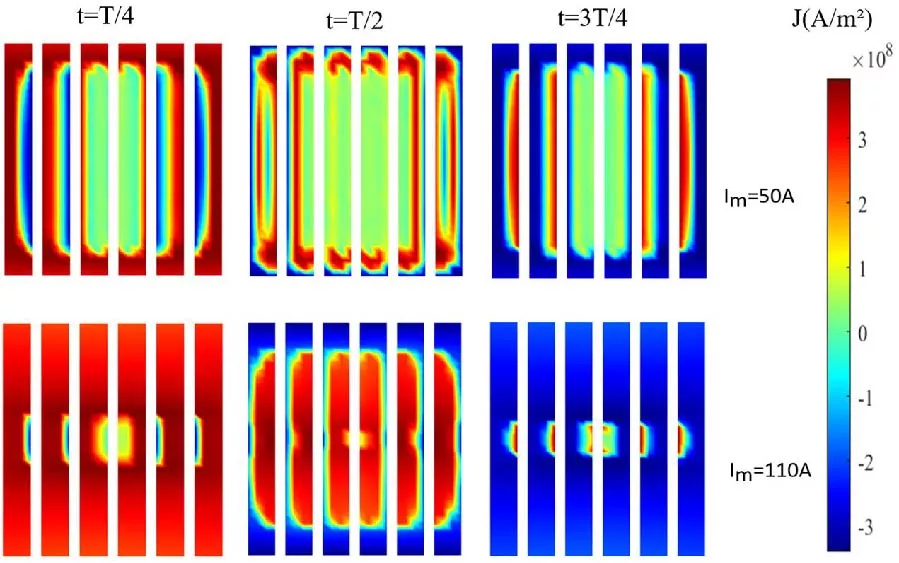
Pseudo-direct-drive (PDD) machine is a new type of permanent magnet machine with high torque density and efficiency. PDD with consequent poles can reduce the influence of outer PM on electromagnetic torque, but it has the disadvantage of high eddy current loss which will limit the range of speed. By transferring PMs from high-speed rotor to low-speed rotor, the eddy current loss in PMs is reduced, and the high-speed rotor is more robust. In this paper, a flux-switching consequent pole PDD (CP-PDD) machine is built. After optimization through a multi-objective genetic algorithm, the superiority of the proposed machine to regular CP-PDD is demonstrated by comparing it through the finite element method. The output torque of the proposed machine is greatly affected by the direct drive torque. A prototype is built and tested to verify the proposed machine. Results show that the proposed machine is more suitable for high-speed operation due to the reduction of loss and robustness of the high-speed rotor. The working temperature of the proposed machine is analyzed, and there is almost no irreversible demagnetization.
Analysis of a Novel Flux Switching Consequent Pole Pseudo-direct-drive Machine in Multi-physics Field
2025-09-05
PIER C
Vol. 159, 169-181
Magnetic Density Analysis and Performance Optimization of Hybrid Excitation Starter Generator
Hui Zhu , Wenjing Hu , Wei Wang , Shiqiang Liu , Xia Zhang , Jiewen Li and Xingxu Jin
Hybrid excitation starter generator (HESG) has an increased number of magnetic potential sources, leading to issues such as complex magnetic circuits, numerous structural parameters, and low space utilization. These factors cause traditional analysis methods to have long cycles and low accuracy. In this paper, a new type of salient pole electromagnetic and permanent magnet composite pole HESG is proposed, and an analysis method combining hierarchical optimization and Taguchi method to analyze the influence of different structural parameters of composite pole rotor on the HESG performance is proposed. Response surface method was used to simulate the stator groove with multiple objectives, analyze the electromagnetic characteristics of HESG, complete the performance optimization, prototype, and conduct experiments. The results show that the amplitude of the air gap magnetic density base of HESG is increased by 7.4%; the distortion rate is reduced by 10.6%; the output voltage is increased to 127.68 V; the output performance and magnetization ability are significantly improved; and the overall performance of the HESG is improved.
Magnetic Density Analysis and Performance Optimization of Hybrid Excitation Starter Generator
2025-09-05
PIER B
Vol. 115, 78-94
Advanced Numerical Approaches for Magnetic Force Calculations: A Comprehensive Review
Yuxin Yang , William Robertson , Azadeh Jafari and Maziar Arjomandi
Magnetic forces play a significant role in modern engineering applications, from medical imaging, data storage to transportation and industrial machinery. Accurate and efficient computational methods for magnetic force are necessary for engineering design and optimisation. However, different methods are typically based on distinct assumptions and are suited to different application scenarios. To assist researchers and engineers in selecting the most appropriate method for their specific needs, this review provides a comprehensive overview of various numerical approaches for calculating magnetic forces across different magnetic systems. Several key methods such as The Dipole Method, Filament Method, Finite Element Method (FEM), Energy Method, Maxwell Tensor Method, Integral Method and Boundary Element Method (BEM) are discussed in detail, demonstrating their fundamental theories, applicable scenarios, advantages, and limitations. Recent advancements and improved versions of these methods are also covered, demonstrating their enhanced accuracy and efficiency. In addition, the potential solutions of these methods and future directions of developing advanced magnetic force computation techniques are also discussed in this paper.
Advanced Numerical Approaches for Magnetic Force Calculations: A Comprehensive Review
2025-09-04
PIER C
Vol. 159, 159-168
A Four Port Super-Wideband MIMO Antenna with Improved Inter-Port Isolation and Dual-Band Interference Suppression Capability
Chanprit Kaur , Raghvenda Kumar Singh and Kiran Kumar Verma
In this paper, a 4-port multiple input multiple output (MIMO) antenna with dual-notched bands and high interference rejection features is presented for ultra-wideband and beyond. The total volume of the intended antenna, computed at 2.63 GHz, is 0.52λ × 0.52λ × 0.014λ. The basic radiating element consists of a spatula-shaped patch etched with a U and an inverted U-shaped slots printed on the top of a dielectric substrate, which is backed by defected partial ground plane. With the goal of achieving good polarization diversity and high isolation, four identical basic elements are arranged in orthogonal way to form the MIMO configuration. The inter-element isolation has been improved by a swastik-shaped decoupling structure with its arms extended in the form of meander-lines. As a result, the isolation between diagonal and orthogonal elements is better than 20 dB and 25 dB, respectively with envelope correlation coefficient < 0.012 and diversity gain > 9.94 dB. The suggested antenna attains an impedance bandwidth of 2.63-18.44 GHz with ability to shield interferences from 3.38-3.90 GHz and 4.65-6.45 GHz, specifically targeting frequencies associated with WLAN/ISM and Wi-MAX/LTE bands, respectively. Moreover, it exhibits maximum radiation efficiency and gain of 97.88% and 5.94 dBi, respectively in the working band.
A Four Port Super-wideband MIMO Antenna with Improved Inter-port Isolation and Dual-band Interference Suppression Capability
2025-09-04
PIER C
Vol. 159, 154-158
A Substrate Integrated Half-Coaxial Line (SIHCL) and Its Application in Low-Pass Filter with Low Crosstalk
Yufan Chi , Yang-Qing Xu , Qing-Cheng Zhang , Wen-Xuan Shen , Yan He , Yan-Yan Kong and Lin Li
To achieve compact size and high electromagnetic shielding performance in RF systems, a substrate integrated half-coaxial line (SIHCL) structure is proposed. A new approximate synthesis method for the SIHCL is proposed using the equivalent capacitor. Subsequently, two fifth-order Chebyshev low-pass filters (LPFs) with a 0.1 dB ripple factor were designed and fabricated: the first implemented in the SIHCL structure and the second in microstrip technology. A comparison of the measured S-parameters between these two low-pass filters demonstrates that both near-end and far-end crosstalk is suppressed for the proposed SIHCL LPF, which is significant for high-speed and high-density integrated systems.
A Substrate Integrated Half-Coaxial Line (SIHCL) and Its Application in Low-pass Filter with Low Crosstalk
2025-09-03
PIER C
Vol. 159, 143-153
A Class of Asymmetric Microstrip Hybrid Couplers with Enhanced Bandwidth and Isolation Using Multi Section Phase Shifters for Modern Microwave Systems
Shubham Tirmanwar and Debapratim Ghosh
This paper presents a class of wideband hybrid couplers with enhanced isolation, based on an N-section phase shift filter network integrated into an unequal-split, multi-section branch-line hybrid architecture. The key innovation lies in the incorporation of the N-section phase shift network, which significantly enhances the fractional bandwidth with each increase in section and isolation performance compared to conventional designs. A detailed design methodology applicable for any N is developed and validated through the fabrication and testing of two microstrip prototypes for N = 3 and N = 4 at a center frequency of 1 GHz. Both simulated and measured results confirm consistent tight coupling, insertion loss better than 6 dB, and isolation exceeding 15 dB across all prototypes. Furthermore, N = 3 and N = 4 hybrids shows peak isolation of 87.4 dB, 96.8 dB in simulation and 66.5 dB, 72.7 dB in measurement respectively, at the center frequency of 1 GHz. Notably, the designs demonstrate a progressive improvement in the fractional bandwidth, achieving 73.68% and 91.89% for N = 3 and N = 4, respectively. This scalable and frequency-flexible design approach makes the proposed class of hybrid couplers highly suitable for modern microwave systems such as vector network analyzer (VNA) test set, applications in radar, communication receivers, and phased array antennas.
A Class of Asymmetric Microstrip Hybrid Couplers with Enhanced Bandwidth and Isolation Using Multi Section Phase Shifters for Modern Microwave Systems
2025-09-02
PIER C
Vol. 159, 132-142
Injection Damage Analysis of PHEMT Low-Noise Amplifier Circuit Under Electromagnetic Pulse
Shaqi Tian , Fan Wu , Ruiqi Su , Ying Li and Yuan'an Liu
The low-noise amplifier(LNA) is the most vulnerable device in the front-door coupling path of the wireless communication link. When the electromagnetic pulse(EMP) is injected into the LNA circuit, it first generates the electromagnetic response with peripheral components, and then is transmitted further. This affects the pulse value transmitted to the internal semiconductor device and its degree of damage. The pseudomorphic high electron mobility transistor(pHEMT) type transistors are widely used in modern RF circuits because of their good stability and wide frequency characteristics. However, the frequency-selective characteristics of the front-end system exacerbate the electromagnetic coupling damage of the LNA circuit in some frequency bands. Therefore, in this paper, the vulnerable frequency points of the pHEMT LNA circuit under repetitive pulses are analyzed by injection experiment. It is found that both in-band and out-of-band lead to permanent damage to the LNA. For the more vulnerable 3 GHz frequency point, the electromagnetic response under injection withstand and absorption conditions was measured, determining that the gate external resistance offset follows a power-law relationship with the input power. Furthermore, the energy threshold was obtained, which assesses the energy that, after electromagnetic loss by an external 100 Ω resistor, is transmitted to the gate input and causes permanent damage to the LNA transistor. The breakdown damage mechanism of the gate-source of the LNA transistor is verified by failure analysis.
Injection Damage Analysis of pHEMT Low-noise Amplifier Circuit under Electromagnetic Pulse
2025-08-31
PIER C
Vol. 159, 124-131
Compact Multi-Port Millimeter-Wave MIMO Antenna with 360° Radiation Coverage
Jingchang Nan , Licong Fan , Shuming Liu and Yifei Wang
In order to meet antenna requirements for vehicular communication, a compact multiport MIMO antenna design is proposed for the n261 frequency band in 5G millimeter-wave communication. The 3D size of the antenna is 16 × 16 × 17 mm3. By optimizing the radiation patches and layout, a four-port MIMO antenna is developed, with adjacent antenna elements positioned on both sides of the dielectric substrate to minimize coupling between antenna units. Additionally, optimization is performed to achieve 360° radiation coverage for the multiport MIMO antenna. The simulation and measurement results show that the proposed antenna covers the n261 frequency band with an operational bandwidth. The overall isolation between ports of the multiport MIMO antenna is also relatively high. The 12-port MIMO antenna operates in the frequency range of 27.08 to 28.70 GHz, with a gain of 6.25 dBi, and its radiation pattern demonstrates diversity, providing complete 360 ° coverage in both elevation and azimuth planes. Therefore, the proposed antenna not only has a compact size and simple structure but also supports radiation propagation across multiple planes, reducing multipath propagation losses and enhancing communication quality and reliability. It satisfies the requirements of vehicular communication for 5G millimeter wave MIMO antennas.
Compact Multi-port Millimeter-wave MIMO Antenna with 360° Radiation Coverage
2025-08-31
PIER C
Vol. 159, 111-123
Enhancement and Optimization of High-Power Ku-Band Metallic Waveguide Radar Array Antenna: Large Efficiency, Wide Band and Low Side Lobe Level
Ibrahim Samy Mohamed and Mahmoud Abdalla
In this paper the design of a cavity-backed slot antenna array with wideband operation and low sidelobe levels is introduced. A High gain metallic antenna array is designed using rectangular waveguides in both the feeding network and cavity-back slots, where a 16×16 array antenna is built with 8×8 subarrays. The antenna is fabricated using direct laser sintering (DLS) and computer numerical control (CNC) milling technology on both sides of each layer to guarantee no field leakage between antenna layers. For the sake of achieving a wide bandwidth in such array, a 1-to-64-way corporate feeding network is used to distribute the power in the lower feeding layer to excite the coupling apertures beneath the subarrays. The excited power coefficients through the array aperture are tapered using quasi-Taylor synthesis, with an even phase so the modified uneven power waveguide-splitter is designed to taper the field amplitudes within the feeding network till reaching the radiating slots. The array achieved a 14% bandwidth, a gain of more than 31.25 dBi over 1.85 GHz, sidelobe levels higher than 23 dB, and cross-polarization levels better than -40 dB, according to measured data.
Enhancement and Optimization of High-power Ku-band Metallic Waveguide Radar Array Antenna: Large Efficiency, Wide Band and Low Side Lobe Level
2025-08-31
PIER B
Vol. 115, 63-77
Wireless Dual-Hand Motion Perception Based on Millimeter-Wave FMCW MIMO Radar
Haipeng Wang , Zhongfang Ren , Wei Pan , Zheng Xiao and Yunbo Li
Radar-based hand gestures recognition have played an important role in developing human-computer interaction (HCI). However, when radar-based hand gesture recognition techniques are applied to multi-target scenarios, the challenges mainly involve problems of mutual interference and inaccurate recognition of hand motion when both hands move within the same plane. Here, we propose a dual-hand trajectory perception prototype based on a 60 GHz frequency-modulated continuous-wave (FMCW) multiple-input multiple-output (MIMO) radar sensor platform with an L-shaped virtual antenna array. To address the challenges, the approach involves estimating azimuth and elevation angles separately from the two data components derived from the L-shaped array through multiple signal classification (MUSIC) algorithm, incorporating spatial division techniques combined with digital beam formation (DBF). The dual-hand applications mainly include angle targets at two distinct distances or dual-angle targets at the same distance. Therefore, the target distances are first determined using range fast fourier transform (range FFT). If a single target distance is identified, we proceed to solve for the angles of two targets. Alternatively, if two distinct target distances are distinguished, we individually solve for the single-angle target corresponding to each distance. Furthermore, to mitigate noise inherent in the raw data of visualization, a frame point removal and smoothing algorithm is devised to refine the trajectories. Experimental verifications prove that the proposed multi-target motion perception algorithm by using a MIMO FMCW radar sensor platform can realize accurate recognition of air-writing gestures and enable tracking the trajectories of both single-handed and dual-handed targets in three-dimensional space. It also gives a new option for controlling the HCI.
Wireless Dual-hand Motion Perception Based on Millimeter-wave FMCW MIMO Radar
2025-08-29
PIER C
Vol. 159, 103-110
Compact Arrow-Shaped Half-Mode Substrate Integrated Waveguide (SIW) Self-Diplexed Antenna for X/Ku-Bands
Bhim Sain Singla , Ashish Kumar , Mohammad S. Zidan , Zahriladha Zakaria and Ahmed Jamal Abdullah Al-Gburi
This article presents a compact, triple-band half mode substrate integrated waveguide (HMSIW) based self-multiplexing antenna (SMA) designed for various X-/Ku- band applications. The proposed SMA comprises a compact HMSIW with slots of unequal widths excited with three different ports resembling the anatomy of an arrow. These three slots are driven by a 50 Ω microstrip line feed, facilitating radiations at 10.82, 12.28, and 13.95 GHz with good isolation between the ports. Independent functioning at three different frequency bands is made possible by the remarkable versatility of the proposed SMA design method. With the isolation of nearly 20 dB between ports and gains of 3.97, 4.62, and 7.55 dBi at ports resonating at three distinct frequencies, the SMA-HMSIW element's total arrangement allows for a small antenna size of 0.44λg2 at the lowest frequency of operation. The proposed SMA structure has been fabricated, and the results are measured which show good agreement with simulated ones.
Compact Arrow-shaped Half-mode Substrate Integrated Waveguide (SIW) Self-diplexed Antenna for X/Ku-bands
2025-08-29
PIER C
Vol. 159, 91-102
A MIMO Ultra-Wideband Antenna with High Isolation and Triple Notches
Rongjiaxu Tu , Han Lin and Zhonggen Wang
This paper proposes a four-port ultra-wideband (UWB) MIMO antenna with high isolation and three notch bands. A cross-shaped decoupling structure (CSDS) is synergistically integrated with an improved L-shaped ground plane to achieve high port isolation. Composite resonant slots (CRSs) are introduced on the radiating patch, and two L-shaped slots are etched on the feed line to suppress interferences from WiMAX (3.19 GHz), C-band (4.45 GHz), and X-band (7.95 GHz). Simulation and measurement results verify that the Voltage Standing Wave Ratio (VSWR) at the center frequencies of the notched bands is greater than 6.8, 8.1, and 4.3, respectively. In the operating frequency band of 2.7-12 GHz (excluding the notched bands), the isolation is > 24.3 dB, envelope correlation coefficient (ECC) < 0.0045, diversity gain (DG) > 9.9990 dB, total active reflection coefficient (TARC) < -10 dB, and channel capacity loss (CCL) < 0.4 bps/Hz. It fully meets the requirements of high-performance MIMO systems for channel independence and transmission efficiency. Compared with similar studies, this work has significant advantages in core indicators such as bandwidth, number of notched bands, and isolation, providing new ideas for the design of UWB-MIMO systems in complex electromagnetic environments.
A MIMO Ultra-wideband Antenna with High Isolation and Triple Notches
2025-08-29
PIER Letters
Vol. 127, 39-44
Dynamically Tunable Helical Antenna System for Robust Quadrotor Communication Systems
Ethan Chien and Jan Steckel
Unmanned aerial FPV systems demand ultra-low latency, high-reliability communication. At high speeds and in cluttered environments, Doppler shifts and rapid multipath changes significantly increase packet error rates (PER). This paper introduces a novel solution: real-time geometry tuning of a circularly polarized helical antenna array to mitigate these effects in ExpressLRS (ELRS) long-range FPV control links. Using full-wave simulations (Ansys HFSS) and blind field trials, we validate system performance. A new analytical framework integrates Doppler-induced frequency offset into the antenna's radiation pattern and PER model. The adaptive array autonomously adjusts coil pitch and diameter based on velocity and attitude, reducing PER by 20% at speeds over 150 mph. It also maintains near-unity VSWR, preventing reflection spikes, and halves RSSI variation, indicating improved link stability. These results demonstrate that tunable helical antennas can effectively mitigate Doppler and multipath impairments in high-mobility UAV environments, informing future antenna designs and supporting the development of AI-integrated, adaptive RF systems for drone racing and autonomous swarms.
Dynamically Tunable Helical Antenna System for Robust Quadrotor Communication Systems
2025-08-27
PIER B
Vol. 115, 51-62
Performance Analysis of Breast Phantom Layers Using UWB Antenna and Dimensionality Reduction Techniques
Sonal Amit Patil and Ashwini Naik
This work explores the data-driven approaches for breast tumor detection and analysis of different breast tissues by using microwave sensing technique. Microwave sensing offers a promising trade-off in tissue penetration depth and is prominent dielectric disparity between healthy and tumorous tissues at microwave frequencies. Tumor cells exhibit unique properties, such as increased water content and different ionic composition, which create distinct dielectric traits compared to healthy tissue. This frequently shows variations in loss characteristics compared to normal tissue and can exploit those differences for detection. The key parameter used is Specific Absorption Rate for the determination of tumor location. The differential absorption between healthy and tumor tissue is potentially aided in identifying the presence of lesion. The five sets of reflection characteristics are recorded with the system comprising UWB antenna with breast phantom by using VNA with a gap of 4-5 days. Further, the dimensionality reduction technique is applied to extract the features using PCA and tSNE. In order to enhance the detection accuracy, dimensionality reduction techniques are used in tandem with the supervised machine learning approach. Among the four supervised algorithms, including SVM, KNN, RF and MLP, the random forest was found to be the most optimal for the data with an auc score of 99.97%.
Performance Analysis of Breast Phantom Layers Using UWB Antenna and Dimensionality Reduction Techniques
2025-08-26
PIER C
Vol. 159, 79-90
Bandpass Type Negative Group Delay Design of CMOS RC-Network Integrated Circuit
Long Wang , Mathieu Guerin , Sonia Moussa , Ali Hamada Damien Fakra , Fayrouz Haddad , Fayu Wan , Lagouge Tartibu , Wenceslas Rahajandraibe and Blaise Ravelo
Nowadays, microelectronic integrated circuit (IC) design constitutes the biggest challenge of negative group delay (NGD) electronic engineering research. Bandpass (BP) type NGD circuits are generally designed with resonant and not-integrable inductive large size network-based topology. However, BP-NGD circuit integrability is delimited by the inductor design. A design solution for fully resistive-capacitive (RC) network-based BP-type IC in 130-nm CMOS technology is the purpose of the present research work. The theory expressing the design equations of RC-network based BP-NGD circuit is developed. The design feasibility is verified with a proof-of-concept (POC) represented by a 130-nm CMOS RC-network passive IC with 0.68 mm × 0.72 mm physical size simulated by Cadence®. The obtained results of S-parameters confirm the BP-NGD behavior of the CMOS IC POC with 21.9-MHz NGD center frequency and -0.99-ns NGD value over 68-MHz NGD bandwidth. The BP-NGD characterization results are in excellent agreement with the theoretical model. The robustness of 130-nm CMOS BP-NGD RC passive IC is explored by 2000 trials Monte Carlo statistical analysis with respect to the uncertainty of component parameters.
Bandpass Type Negative Group Delay Design of CMOS RC-network Integrated Circuit