Search Results(13783)

2025-08-26
PIER C
Vol. 159, 70-78
Design and Analysis of a Novel Dual-PM Flux-Reversal Machine with Halbach Array
Yeming Zhu , Longxiang Han , Mingji Yin , Yuhui Huang and Libing Jing
Flux-reversing machines (FRMs) have the advantages of high torque density and wide speed range. However, their disadvantage is the low utilization rate of permanent magnets (PMs). To enhance PM utilization, a novel dual-PM FRM (DPFRM) with Halbach arrays is proposed in this paper. Halbach arrays are applied to both the stator interlayer and half of the rotor teeth, forming a consequent-pole structure together with iron cores. This layout significantly reduces the number of rotor magnets used. With the use of Halbach arrays, this design effectively reduces magnetic flux leakage. It also achieves higher torque density under low current conditions, demonstrating enhanced electromagnetic performance. To achieve better overall performance, both the conventional FRM and the proposed DPFRM are globally optimized. Their no-load and load performances are evaluated through finite element analysis (FEA). The analysis verifies that the DPFRM achieves higher back electromotive force (Back-EMF) and torque density, and also exhibits lower torque ripple. Therefore, the proposed design significantly improves PM utilization, effectively mitigating the primary limitation of conventional FRMs.
Design and Analysis of a Novel Dual-PM Flux-reversal Machine with Halbach Array
2025-08-25
PIER C
Vol. 159, 65-69
Innovative Design of a Miniaturized Wideband Port-Multiplexing Microstrip Circuit
Run-Lin Zhang , Tao Fang and Tao Tang
This paper presents a miniaturized broadband port-reuse microstrip circuit to address the challenges of bulky volume, excessive insertion loss, and parameter deviation superposition caused by discrete port design and discrete circuit design in the interconnection between active phased array antennas and T/R components. Based on an integrated design methodology, the circuit achieves bandpass filtering, bidirectional power coupling output, DC power supply port functionality, and RF/DC isolation through a single-port interconnection. Experimental results demonstrate that the implemented circuit in Ku-band exhibits 13.5-15.18 GHz bandpass filtering characteristics, bidirectional signal power monitoring capability, 0-12 V/2.5 A DC power supply functionality, and effective RF/DC signal isolation. The measured results align well with theoretical predictions. This architecture demonstrates exceptional adaptability and seamless integration capability, showing significant potential for large-scale deployment in various transceiver architectures such as satellite communication systems.
Innovative Design of a Miniaturized Wideband Port-multiplexing Microstrip Circuit
2025-08-24
PIER C
Vol. 159, 56-64
Torque Ripple Reduction of the Anti-Disturbance Sliding Mode Deadbeat Control for Switched Reluctance Motors
Shining Lin , Aide Xu , Xiong Su and Lidong Dong
To improve the current and torque regulation performance of the traditional deadbeat predictive current control (DPCC) for switched reluctance motors under model parameter mismatch, this article proposes an improved DPCC method based on the sliding mode strategy. First, a dedicated torque-current converter is formulated to achieve precise transformation of electromagnetic torque into corresponding q-axis current references. Second, a unified anti-disturbance sliding mode control compensation scheme is introduced into both the torque-current converter and the deadbeat controller to mitigate the negative effects of model parameter mismatch on current and torque control. This integration achieves indirect torque control through phase current modulation, effectively reducing torque ripple. Furthermore, the stability of the controller under model parameter mismatch conditions is rigorously demonstrated through Lyapunov stability analysis. Finally, the effectiveness of the proposed control method is demonstrated through simulation results, and its significant superiority in current control performance and torque ripple suppression is shown.
Torque Ripple Reduction of the Anti-disturbance Sliding Mode Deadbeat Control for Switched Reluctance Motors
2025-08-24
PIER C
Vol. 159, 48-55
1-Bit Reconfigurable Reflectarray for Short-Range Wireless Systems
Juwanto , Said Attamimi , Umaisaroh and Mudrik Alaydrus
This paper presents the design, simulation, and experimental validation of a 1-bit reconfigurable reflectarray. Each unit cell is equipped with a single PIN diode, enabling binary phase control (0˚ and 180˚) for dynamic beam steering. The reflectarray employs a compact and cost-effective architecture, with digitally reconfigurable elements that allow real-time control of the reflected wavefront. The integration of PIN diodes ensures fast switching and low power consumption while maintaining good reflection efficiency and phase performance. Without limiting the applicability of the method, a reflectarray antenna consisting of 9×9 element array operating at 5.8 GHz was designed. Full-wave electromagnetic simulations and measurements demonstrate beam steering capability up to ±15˚, with minimal gain degradation and acceptable side-lobe levels. The proposed reflectarray design is a promising solution for low-complexity, reconfigurable antenna systems in applications such as wireless communications, radar, and IoT systems operating in the 5.8 GHz ISM band.
1-bit Reconfigurable Reflectarray for Short-range Wireless Systems
2025-08-24
PIER M
Vol. 134, 87-98
Low-Frequency Dual-Port Microwave Sensor Based on CSRR and Electric Field Coupled for Precise Permittivity Detection in Biological Samples
Muhammad Nugrah Kusumah , Syah Alam , Indra Surjati , Lydia Sari , Yuli Kurnia Ningsih , Fitri Kurnia Sari , Teguh Firmansyah , Noor Azwan Shairi and Zahriladha Zakaria
This paper presents the development of a low-frequency dual-port microwave sensor designed for permittivity detection in both solid and biological materials. The sensor integrates a circular split-ring resonator (CSRR) with an electric field coupled (ELC) structure on a planar dielectric substrate, resulting in a compact and simple architecture that supports ease of fabrication and low-cost implementation. Operating at a resonant frequency of 0.86 GHz, the sensor is particularly suitable for characterising biological samples such as meat, fish, squid, and chicken, as lower frequencies offer deeper penetration and better interaction with high-loss biological tissues. Validation through full-wave simulation and experimental measurement confirms the sensor's capability to detect permittivity variations across a wide range of materials. A polynomial fitting model is employed to extract permittivity values based on resonance frequency shifts, achieving accurate results with a maximum error below 7% and overall accuracy exceeding 93%. The device demonstrates reliable performance in estimating permittivity values from εr = 1-9.8, including unknown biological samples with normalized sensitivity of 0.02% and frequency detection resolution 0.019 GHz. Measurements show clear frequency shifts that correlate with dielectric changes, and the experimental results align closely with the simulation data. The simple structure of the sensor also supports straightforward integration with common measurement instruments such as vector network analysers, making it practical for real-time monitoring and portable applications. The low operating frequency combined with the straightforward design provides an effective solution for applications requiring permittivity detection of lossy, heterogeneous, or biological materials. This work contributes a feasible and efficient sensor platform for use in medical diagnostics, food quality inspection, and other industrial contexts where reliable, low-cost dielectric sensing is essential.
Low-frequency Dual-port Microwave Sensor Based on CSRR and Electric Field Coupled for Precise Permittivity Detection in Biological Samples
2025-08-22
PIER C
Vol. 159, 38-47
Compact MSL-Fed CWG Polarizer Using Corner-Truncated Patch
Ir-Ving Tseng and Chun-Long Wang
In this paper, a compact microstrip line (MSL)-to-circular waveguide (CWG) transition using a rectangular patch is introduced. As the rectangular patch is placed 2.68 mm (0.043 λg) away from the short-circuited plane of the CWG, the transition is very compact. By truncating the rectangular patch of the compact MSL-to-CWG transition, a compact MSL-fed CWG polarizer using the corner-truncated patch is proposed. The proposed polarizer has a compact size and a phase difference of -90.97° at 9.65 GHz. The axial ratio is within ±1 dB from 8.5 GHz to 10 GHz. The reflection coefficient is smaller than -10 dB from 9.03 GHz to 10.5 GHz. In addition, as the corner-truncated patch is adopted, the proposed polarizer does not require a complex manufacturing process on the waveguide. Moreover, as the microstrip line feeds the polarizer, it can be easily integrated with other planar circuits. To verify the simulation results, the MSL-fed CWG polarizer using the corner-truncated patch is fabricated and measured. The simulation and measurement results are in good agreement.
Compact MSL-fed CWG Polarizer Using Corner-truncated Patch
2025-08-22
PIER C
Vol. 159, 27-37
A Compact UWB Wearable Textile Antenna with Machine Learning Approach for IoT Applications
Khemchandra Anuragi and Pinku Ranjan
This article presents a compact and flexible ultra-wideband (UWB) antenna with a defected ground structure (DGS) for IoT applications. The antenna is fabricated on a 0.7 mm thick jeans substrate to ensure high flexibility and take advantage of its universal availability. Machine learning techniques are applied to optimize the antenna's performance. A ring-shaped patch with DGS and C-type stubs is used to achieve a large bandwidth and reduce size. The total dimension of the proposed flexible antenna is 38 × 26 × 1.7 mm3. The primary aim of this article is to design a flexible UWB antenna with a remarkable impedance bandwidth of 131.45%, which covers frequencies from 2.56 GHz to 12.38 GHz. It operates at 3, 8, and 11.32 GHz frequencies with 99%, 98.30%, and 96.71% radiation efficiencies, respectively. The realized gain is 2.51, 3.70, and 5.46 dBi at frequencies 3, 8, and 11.32 GHz, respectively, with a peak gain of 5.46 dBi at 11.32 GHz. Specific absorption rate (SAR) values were tested using a human phantom and met FCC limits, confirming suitability for wearable and flexible IoT applications. The design was optimized using machine learning (ML), with KNN performing best, achieving 99.5% accuracy in S-parameter prediction. The measured and simulated results are correlated with each other for flat and bent antennas.
A Compact UWB Wearable Textile Antenna with Machine Learning Approach for IoT Applications
2025-08-22
PIER B
Vol. 115, 38-50
A New Spatial Detection Technique Using New RF Codes for Microwave-Based Object Localization System
Mohd Adzimnuddin Mohd Nor Azami , Mohamad Zoinol Abidin Abd Aziz , Abd Shukur Ja'afar , Mohd Riduan Bin Ahmad and Mohd Sufian Abu Talib
Microwave-based object localization system is a noninvasive technique that uses microwave signals to detect, map, and analyze the properties of materials. This approach provides information about hidden objects within materials. However, the localization process can be complex, requiring sophisticated algorithms to interpret the signals accurately. This study proposes a new technique for microwave-based object localization system using Radio Frequency (RF) Codes to perform spatial detection with four pairs of RF Code sensors representing bits of ``111,'' ``110,'' ``101,'' and ``011.'' The system incorporates four identical RF Code paths arranged symmetrically around a circular container, improving spatial coverage and enabling accurate detection of hidden objects located at eight different spatial positions. Steel is used as the hidden object, while Stone serves as Material X in this system. The system achieved an average detection accuracy of 70% and a detection efficiency close to 100% across all spatial positions. Additionally, the RF Code performance chart is designed to interpret the detection accuracy results, making the analysis more accessible and practical. The proposed system has potential applications in nondestructive testing, material analysis, industrial inspection, and security systems, offering a reliable and efficient solution for detecting hidden or embedded objects.
A New Spatial Detection Technique Using New RF Codes for Microwave-based Object Localization System
2025-08-21
PIER C
Vol. 159, 17-26
Modal Analysis of Underground Cables in Stratified Frequency-Dependent Soils Using a Derivative-Free Iterative Method
Yahia Serbouti and Abderrahman Maaouni
This paper examines the impact of soil stratification and the frequency dependence (FD) of the Earth's electrical parameters on the transient response of underground cable systems, accounting for both earth-return admittance and impedance. A derivative-free iterative approach is proposed to overcome issues of discontinuous modal transformation matrices that occur at certain frequencies when using conventional diagonalization algorithms. This method ensures smooth and continuous eigenvector tracking. Transient voltages and currents along cables are computed using a modal-domain-based transmission line model combined with Numerical Inverse Laplace Transform (NILT). Simulation results validate the proposed method's accuracy and stability, and highlight the significant influence of the stratified frequency-dependent (SFD) ground under various operating conditions. Finally, a reduced equivalent model of the three-phase underground system is established to facilitate further analysis.
Modal Analysis of Underground Cables in Stratified Frequency-dependent Soils Using a Derivative-free Iterative Method
2025-08-21
PIER C
Vol. 159, 10-16
Minkowski Island Fractal Monopole Antenna with CPW-Feed for Wide-Band Wireless Systems
Vanilakshmi Venugopal , Rohith K. Raj , Aswin Shiju , Janardhanan Linesh and Thomaskutty Mathew
This paper presents a CPW-fed Minkowski island fractal monopole antenna with wideband characteristics. The Minkowski island fractal geometry is applied on the radiating patch of the monopole antenna to make it compact and enhance bandwidth performance. The measured return loss values indicate a fractional bandwidth of 114% from 2 GHz to 7.3 GHz. The simple structure and wideband characteristics make this antenna suitable for various wireless communication applications, including WLAN, Wi-Fi, Wi-Max, 5G, and sub-6 GHz band services.
Minkowski Island Fractal Monopole Antenna with CPW-feed for Wide-band Wireless Systems
2025-08-21
PIER B
Vol. 115, 25-37
SDF-Net: A Space-Frequency Dynamic Fusion Network for SARATR
Xinlin He , Chao Li , Kaiming Li and Ying Luo
With the development of deep learning networks, convolutional neural network (CNN) and other techniques provide effective detection methods for synthetic aperture radar automatic target recognition (SAR ATR), and have been widely used. However, due to the objective factors such as complex scene interference inherent in SAR images, the recognition rate of traditional time-domain processing of SAR images is not high enough, which is still a key problem to be solved urgently. To solve this problem, we propose a space-frequency dynamic fusion network (SDF-Net). The network consists of four space-frequency joint processing (SJP) modules connected in series, each comprising convolutional layers and unbiased fast fourier convolution (UFFC) units at different scales to achieve joint feature extraction in the spatial and frequency domains. Building on a four-level series structure, residual paths from the original image features are introduced into the inputs of SJP2, SJP3, and SJP4. Additionally, residual paths from the features output by SJP1 are introduced into the inputs of SJP3 and SJP4, and from SJP2 into the input of SJP4. By incorporating residual paths of features from different stages, the network facilitates cross-stage information interaction, effectively integrating long-distance contextual information. At each fusion node, dynamically generated weights are used for feature fusion, followed by sequential progressive processing through spatial-frequency joint processing, ultimately leading to classification and recognition results. Experimental results on the MSTAR dataset and the FUSAR-Ship1.0 dataset show that compared to traditional methods, this network algorithm achieves a higher recognition rate.
SDF-Net: A Space-frequency Dynamic Fusion Network for SARATR
2025-08-20
PIER C
Vol. 159, 1-9
Snail-Like Golden Spiral Triboelectric Nanogenerator for All-Directional Wave Energy Harvesting
Yuxuan Tong , Xin Zhou , Xiaobing Niu and Xinhua Ye
In recent years, harvesting abundant, clean and renewable wave energy from the ocean has become one of the most promising ways to obtain electricity. However, the multi-directional nature of waves and the low frequency of the movement pose a current challenge. We designed and fabricated an all-directional triboelectric nanogenerator (AD-TENG) with a biomimetic snail golden spiral. It consists of an electric energy collector in the vertical direction and another in the horizontal direction, and mainly operates through the contact separation method. The AD-TENG converted mechanical energy into electrical energy with the swinging of the pendulum and folding movements. The spiral structure of AD-TENG can harvest energy in all horizontal directions, and the wiring is simple, requiring only two positive and negative wires. In a water wave environment, the AD-TENG charged a capacitor of 100 μF to a voltage of 3 V in 2 min, lighting up 150 LED bulbs. The experiment measured the peak-to-peak voltage (Vpp) from 15 different angles and calculated the error ``e'' as 4.6%. The multi-degree-of-freedom energy harvesting and adaptability to various water wave motions of the AD-TENG offer great potential for the development of self-powered marine sensors.
Snail-like Golden Spiral Triboelectric Nanogenerator for All-directional Wave Energy Harvesting
2025-08-20
PIER C
Vol. 158, 269-276
Imaging Radar Performance: A Comparative Analysis of Multistatic and Monostatic Configurations for Enhanced Detection
Hanane Taourite , Sidi Mohammed Chouiti and Lotfi Merad
This paper presents a comparative study evaluating the influence of monostatic and multistatic microwave imaging (MWI) configurations on imaging performance. Localization accuracy and Signal-to-Noise Ratio (SNR) are evaluated as key performance metrics for both configurations. Numerical simulations are conducted using CST Studio Suite, considering various scenarios involving circular antenna arrays surrounding embedded metallic rebars of different sizes within concrete pillars of varying geometries. Image reconstruction is performed using the Delay-and-Sum Integration (DASI) algorithm, an enhanced version of the conventional Delay-and-Sum (DAS) technique. The simulation results show the performance of the proposed reconstruction technique in terms of localization accuracy.
Imaging Radar Performance: A Comparative Analysis of Multistatic and Monostatic Configurations for Enhanced Detection
2025-08-19
PIER C
Vol. 158, 261-268
A Multiband Planar Antenna with Asymmetric CPW Feeding for WLAN, UAV Communications, and 5G
Wei Ding , Ziyi Su and Weina Liu
A multiband planar antenna fed by an asymmetric coplanar waveguide (ACPW) is proposed and fabricated. The design incorporates branched stubs within the split-ring resonator (SRR) and integrates this modified SRR with the ACPW structure, thereby expanding the antenna's operational bandwidth and improving gain performance. The antenna has dimensions of 60 mm × 58 mm × 0.813 mm, which are equivalent to 0.48λ0 × 0.46λ0 × 0.0065λ0 at 2.4 GHz. Simulation and measurement results demonstrate close agreement. The antenna exhibits |S11| < -10 dB in the frequency bands of 2.23-2.51 GHz, 3.54-4.47 GHz, and 5.01-6.29 GHz, with a maximum gain of 7.07 dBi at 5.1 GHz and over 2.5 dBi gain across all bands. This antenna meets the requirements for WLAN, UAV communications, and 5G applications.
A Multiband Planar Antenna with Asymmetric CPW Feeding for WLAN, UAV Communications, and 5G
2025-08-17
PIER C
Vol. 158, 253-260
ML-Based Hybrid Approach for Improved Indoor Source Localization
Soma Simritha Rao , Madhireddy Sumana , Achanta Dattatreya Sarma , Tunguturi Sridher and Kuruva Lakshmanna
The field of navigation has been relentlessly evolving to fulfil its long-standing objective of building a highly accurate universal navigation system. However, in highly urban and indoor locations, line-of-sight signals cannot be guaranteed, and conventional terrestrial-based and satellite-based techniques cannot perform optimally. This paper strives to establish navigation via signals of opportunity (NAVSOP) by proposing a Wireless Fidelity (Wi-Fi)-based indoor localization method using the Received Signal Strength Indicator (RSSI) technique. This proposed method employs the fingerprinting along with the K-Nearest Neighbour (KNN) and again KNN with Inverse Distance Weighting (IDW) approach to offer superior position estimation accuracy. In this paper, we have developed a new neighbourhood dataset by expanding target neighbourhood locations by random point generator algorithm, thereby propounding the utility of NAVSOP for indoor environments to enable future navigation applications in real-world civilian and military domains. The results obtained via the novel IDW approach give a reduced uncertainty in position error estimation of 0.68 m as compared to the traditional approaches of fingerprinting with KNN (1.13 m) and trilateration (2.3 m).
ML-Based Hybrid Approach for Improved Indoor Source Localization
2025-08-16
PIER B
Vol. 115, 15-24
Admittance and Impedance Relations at Moving Boundaries
Vito Lancellotti
Admittance and impedance (Leontovich) matching conditions at the boundary of a good conductor find widespread usage in the formulation and (numerical) solution of electromagnetic problems. Starting with the known relationships at a stationary interface, we derive manifestly covariant admittance and impedance relations in a flat space-time for a conducting body which moves with uniform velocity in free space. Explicit formulas (in the ordinary space, that is) are given for both isotropic and anisotropic conductors. Under the same hypotheses, we also derive, at the conducting interface, the surface density of four-force by means of the normal component of the relevant energy-momentum tensor. The low-velocity limit of the formulas is also presented because it is of particular interest for practical applications. Moreover, since the covariant admittance and impedance relations as well as the matching condition of the energy-momentum tensor require the unitary four-vector perpendicular to a surface in motion, we outline, in the appendices, the derivation of unitary four-vectors tangential to a hyper-line and perpendicular to a hyper-surface in the Lorentz space.
Admittance and Impedance Relations at Moving Boundaries
2025-08-15
PIER
Vol. 183, 91-106
Antenna-on-Display (AoD) for Wireless Mobile Devices: Retrospect and Prospect
Huan-Chu Huang , Jie Wu , Shuang Cui and Dua-Chyrh Chang
This article presents the first comprehensive retrospect on an innovative and emerging antenna technology termed antennaon-display (AoD) for wireless mobile devices of 5G and beyond 5G (B5G, including 6G). The main backgrounds, benefits, stack-ups, ingredients, performance requirements, and various representative types of AoD are systematically introduced, analyzed, and discussed. Beyond its original role in wireless communication applications, AoD is also highly suitable for radar-based sensing or even for integrated sensing and communication (ISAC) to enable and enrich human-device interactions for more powerful artificial intelligence (AI) devices. Furthermore, the prospect of integrated millimeter-wave and microwave AoD designs is proposed as a promising development trend for AoD. Finally, an on-site demonstration of a smartphone featuring an AoD solution for real-time wireless video transmission at 28.0 GHz is presented.
Antenna-on-Display (AoD) for Wireless Mobile Devices: Retrospect and Prospect
2025-08-15
PIER Letters
Vol. 127, 29-37
Continuous High-Order Sliding Mode Optimization Control of PMSM Based on STSMO
Junqin Liu , Zhentong Wang , Feng Deng , Kaihui Zhao and Xiangfei Li
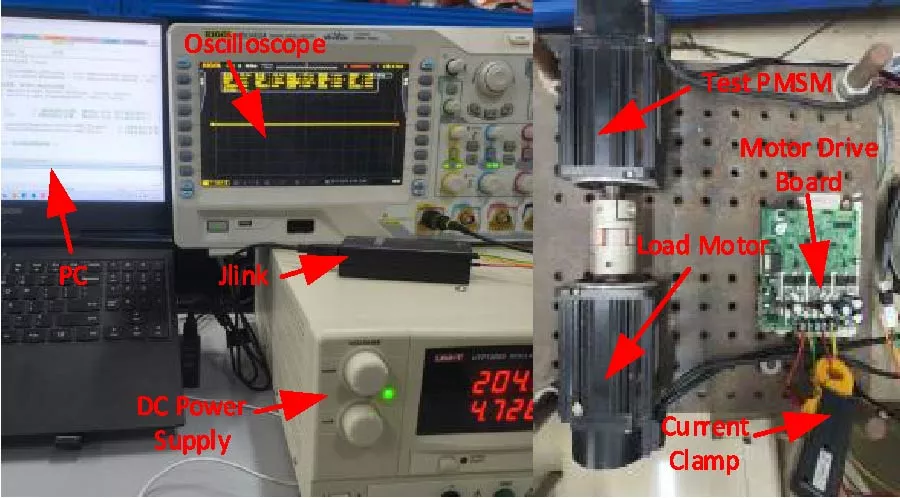
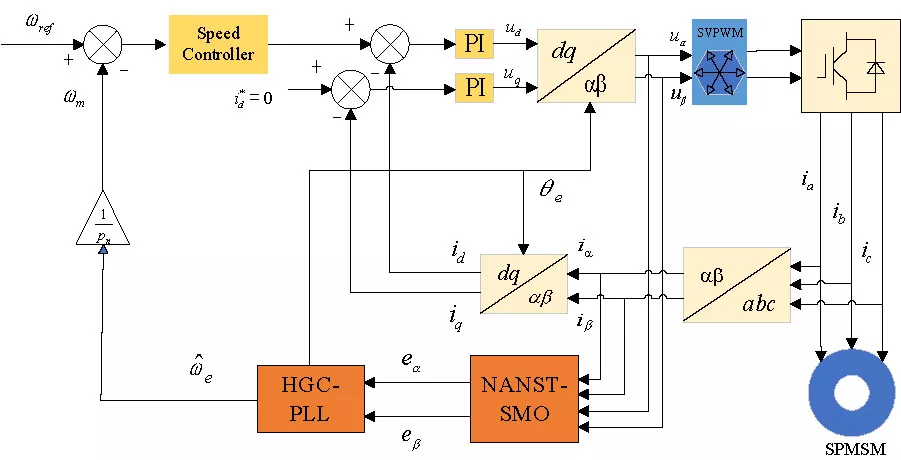
Improving only the speed-loop controller in a PMSM drive system is insufficient to address limitations in the current loops, such as integral saturation and severe oscillations. To achieve high-performance current control across the speed-current loop structure, this paper proposes an improved non-singular fast terminal sliding mode continuous composite control (INFTSMC) method, integrated with a fast super-twisting sliding mode observer (STSMO). First, a state-space model of the PMSM speed-current loops is established. Then, the speed and current loop controllers are designed using the STSMO within the INFTSMC framework. The fast super-twisting control law is adopted to reduce the number of observer parameters and to mitigate the severe oscillations caused by high gains in conventional sliding mode observers. Finally, the proposed composite control strategy is compared with conventional PI and SMC+SMO controllers through both simulation and RT-LAB experiments. The results demonstrate that the proposed approach significantly enhances the dynamic response performance of the PMSM drive system.
Continuous High-order Sliding Mode Optimization Control of PMSM Based on STSMO
2025-08-14
PIER C
Vol. 158, 243-251
A Quasi-Yagi Antenna with Low Sidelobe and High Gain for the X-Band
Zhian Wang , Yunqi Zhang , Jianxiao Wang , Shanzhe Wang , Wenjia Zhou , Xinwei Wang , Leiyuan Wang and Rong Zou
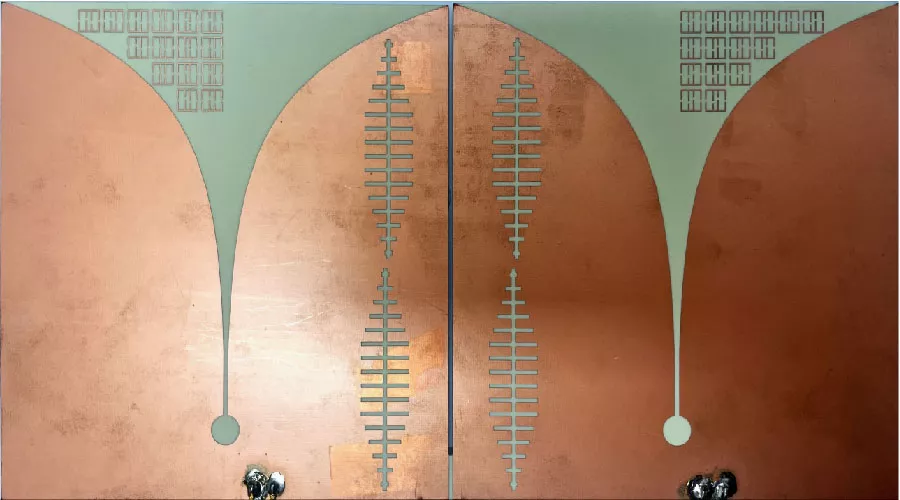
A compact quasi-Yagi antenna with ultra-wideband and high-gain characteristics is proposed. The design incorporates a conical dielectric cover, a horn reflector, and gradient-shaped Yagi elements. The conical dielectric cover and horn reflector work together to enable high-gain performance, while the arcuate gradient dipole provides a bandwidth of 62% (6.9-13.1 GHz). Measured results indicate a peak gain of 17.5 dBi and a maximum sidelobe level (SLL) of -13.5 dBi. Compared to conventional printed Yagi antennas of similar length, this integrated antenna offers wider bandwidth, higher gain, and lower SLL. It is particularly suitable for tunnel communication and radar detection systems.
A Quasi-Yagi Antenna with Low Sidelobe and High Gain for the X-band
2025-08-14
PIER C
Vol. 158, 235-242
Reconfigurable Flexible Hybrid Antenna for Body Area Networks
Bendalam Alekhya and Lokam Anjaneyulu
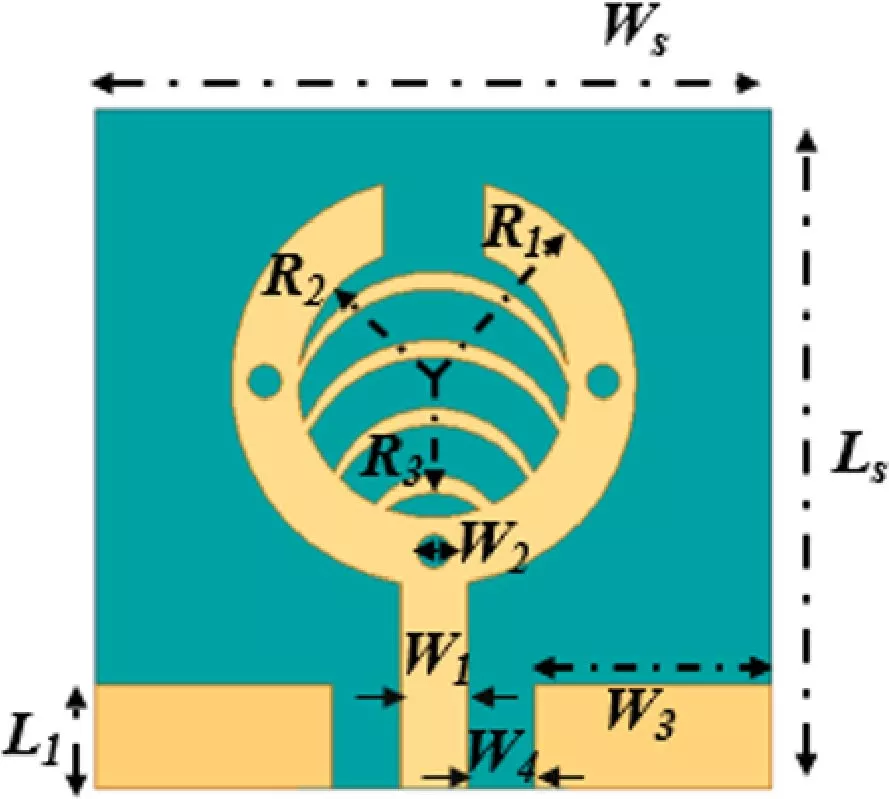
This paper presents a simple Liquid Crystal Polymer (LCP) substrate material-based frequency and pattern reconfigurable antenna for body-centric communication applications. The designed antenna is circular in shape with multiple spars in the radiating element. PIN diodes are arranged on either side of the lower portion at the concentric circular arc of the feed line for external switching. The upper portion of the radiating structure is connected with inductor and capacitor for proper impedance matching to attain the desired band of frequency. The constructed LCP substrate-based antenna is flexible in nature and conformal to the congregation surface in body area network applications. Frequency reconfigurability with switching between PCS (1.8-1.9 GHz) to WLAN (5.1-5.3 GHz) and ISM band (5.7-5.8 GHz) makes the model more appropriate for wearable applications with low specific absorption rate (SAR) less than 1.6 w/kg, which is in the standards. Additionally, the projected design demonstrates pattern reconfigurability with a 30-degree tilt at different switching conditions.
Reconfigurable Flexible Hybrid Antenna for Body Area Networks