Search Results(13783)

2025-08-04
PIER C
Vol. 158, 93-101
A Defected Ground Structure Design for Reducing Coupling in Dual-Band MIMO Antennas
Junhao Xu and Yafei Wang
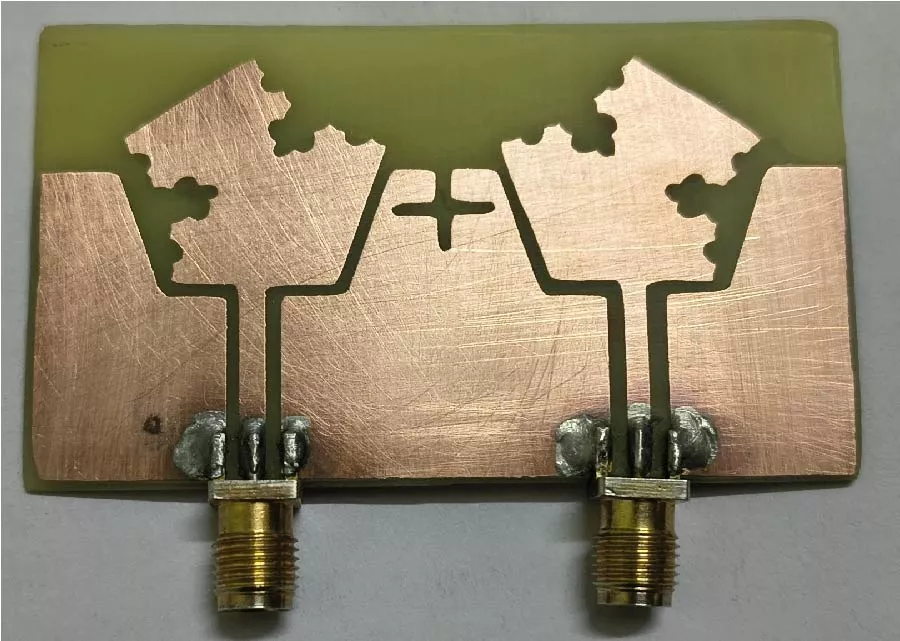
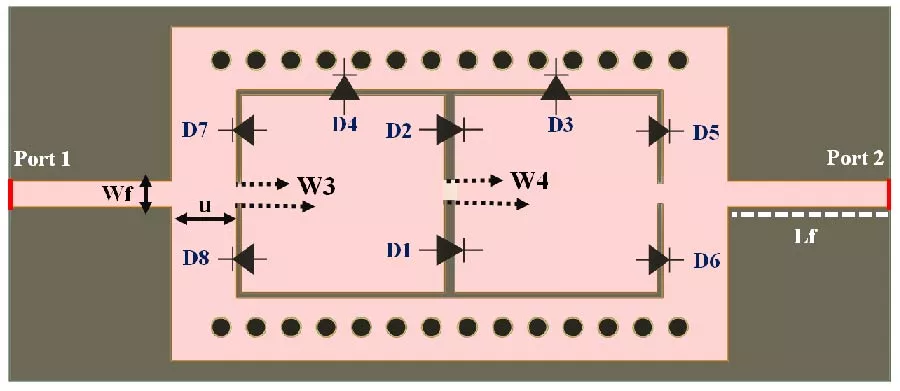
This paper presents a compact multiple-input multiple-output (MIMO) microstrip antenna system covering the 2.4 GHz and 5 GHz wireless local area network (WLAN) bands. By etching rectangular slots on the microstrip patch and adjusting the dimensions of both the antenna and the rectangular slots, the antenna system can radiate at the operating frequencies of 2.44 GHz and 5.3 GHz simultaneously. To achieve high port isolation across the two distinct WLAN bands, a ``WM''-shaped defected ground structure (DGS) is etched on the ground plane to reduce mutual coupling in the 2.44/5.3 GHz frequency bands. Simulation results demonstrate that within the frequency ranges of 2.41-2.49 GHz and 5.22-5.39 GHz, the isolation of the two dual-band antenna systems achieves maximum coupling suppression of 26.7 dB and 14 dB, respectively. This DGS can serve as a potential solution for decoupling in WLAN MIMO antennas.
A Defected Ground Structure Design for Reducing Coupling in Dual-band MIMO Antennas
2025-08-04
PIER B
Vol. 114, 77-88
Twelve-Element MIMO Antenna System Using Open-Slots for 5G Smartphones at Sub-6 GHz Band
Tanishk Thakur and Naveen Jaglan
This research offers a 12-element antenna array optimized for MIMO utilization in fifth-generation (5G) mobile phones. The antennas operate in the sub-6 GHz long-term evolution (LTE) frequency range, specifically between 3.4 and 3.6 GHz. To fulfil the growing demand for faster data speeds and reliable connection in 5G networks, the presented MIMO antenna setup offers a balance between compact size and high performance, making it well suited for integration into smartphones. Every radiating element in the array is tuned to approximately 3.5 GHz and features an open-slot structure, which effectively reduces mutual coupling and enhances isolation. Antenna arrangement has been constructed on an FR-4 substrate of dimensions 150 mm × 80 mm × 0.8 mm, corresponding to the layout restrictions of standard 6-inches smartphones. A prototype was developed to validate the design through measurements. The results demonstrate excellent impedance matching (return loss > 10 dB), high isolation (> 20 dB), strong radiation efficiency (exceeding 66%), and a low envelope correlation coefficient (< 0.03) covering the target frequency range.
Twelve-element MIMO Antenna System Using Open-slots for 5G Smartphones at Sub-6 GHz Band
2025-08-04
PIER B
Vol. 114, 67-75
A Novel Machine Learning Supported Compact, High Sensitivity EBG Based Microwave Sensor for Dielectric Characterization of Liquids
Tulshidas R. Mane , Reena Sonkusare , Pramod Bhavarthe and Kompella S. L. Parvathi
In this paper, machine learning supports a compact electromagnetic band gap structure (EBG) based dual band microwave sensor which is proposed for dielectric characterization of liquids with high sensitivity. Two edges, located via metalized holes, are electrically coupled with a suspended microstrip line. Two channels are placed in the electric field region of each EBG patch. Therefore, the change in frequency shift and quality factor are observed, which will help to describe the dielectric characterization of Liquid Under Test (LUT). A matrix-based mathematical model, and machine learning based prediction model are developed for the calibration and validation of the sensor. The results are experimentally verified through fabricated prototype for the binary mixture of water and ethanol. The proposed sensor achieved a compactness with size of 0.164λ2.47GHz × 0.164λ2.47GHz, an average sensitivity of 0.931, 0.243, and a quality factor of 170, 230 for band-1 and band-2, respectively. The calculated dielectric constant of different samples shows good agreement with the values reported in the literature. The machine learning based model is developed using the Support Vector Regression algorithm and achieves the high value of coefficient determination (R2) which is 99.01, and the less root mean square error (RMSE) value is 0.009.
A Novel Machine Learning Supported Compact, High Sensitivity EBG Based Microwave Sensor for Dielectric Characterization of Liquids
2025-08-03
PIER B
Vol. 114, 51-66
Improved Model Predictive Torque Control for PMSM Based on Anti-Stagnation Particle Swarm Online Parameter Identification
Yang Zhang , Ping Yang , Chenhui Liu , Sicheng Li , Kun Cao , Ziying Liu and Zhun Cheng
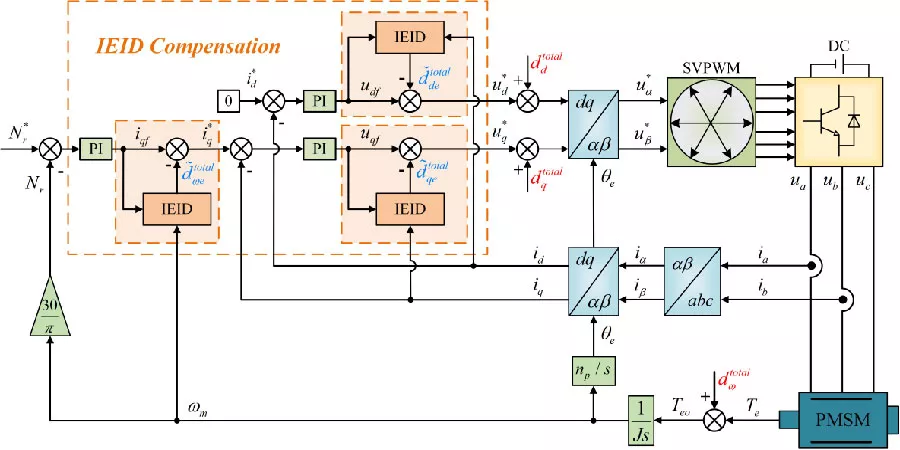
To address the problem that the control performance of permanent magnet synchronous motor (PMSM) in model predictive torque control (MPTC) is highly sensitive to motor parameters, an improved model predictive torque control scheme for PMSM based on anti-stagnation particle swarm online parameter identification (ASPSO-IMPTC) is proposed. First, an improved MPTC strategy based on inductance and magnetic chain parameter compensation is proposed. Compared with conventional MPTC, the proposed method can acquire accurate motor parameters in real-time, thereby enhancing both the control performance and parameter robustness of PMSM. Second, a review mechanism is proposed to enhance traditional PSO parameter identification. This method prevents particle swarm stagnation, enhances the parameter identification ability of the traditional method, and improves the real-time accuracy of the motor parameters. The parameter robustness of the motor is further enhanced. Finally, the experimental results show that the proposed ASPSO-IMPTC strategy can effectively improve the control performance and parameter robustness of PMSM when parameters mismatch occurs in PMSM.
Improved Model Predictive Torque Control for PMSM Based on Anti-stagnation Particle Swarm Online Parameter Identification
2025-08-03
PIER B
Vol. 114, 37-50
A Racket-Shaped UWB MIMO Antenna Based on Characteristic Mode Analysis
Zhonggen Wang , Fukuan Zhang , Wenyan Nie , Ming Yang and Chenlu Li
In this paper, a racket-shaped ultra-wideband (UWB) multiple-input multiple-output (MIMO) antenna is analytically designed using characteristic mode analysis. The antenna has an overall size of 60 × 60 × 1.6 mm3 and consists of four racket-type radiating elements, four ground planes shaped like the number 6, and a cross-shaped decoupling structure between the radiating units. In the single antenna configuration, the feed position is determined by analyzing the current and electric field distributions of its characteristic modes. The bandwidth and current distribution are optimized by integrating seven small rings, L-shaped branches, and etched slots to ensure the simultaneous excitation of six characteristic modes, thereby enabling its UWB performance. In the MIMO setup, four elements are orthogonally arranged, and a cross-shaped decoupling structure along with a defected ground structure is employed to reduce mutual coupling, achieving over 20 dB isolation between any two elements. Simulated and measured results confirm that the antenna operates over the 3-21 GHz range, fully encompassing the UWB range of 3.1-10.6 GHz. Furthermore, the antenna achieves up to 77% radiation efficiency, a peak gain of 5.75 dBi, and a low envelope correlation coefficient (ECC).
A Racket-shaped UWB MIMO Antenna Based on Characteristic Mode Analysis
2025-08-02
PIER C
Vol. 158, 85-91
Compact Self-Decoupled MIMO Antenna Based on Current Cancellation for UAVs
Yangyang Guan , Peng Zhang , Xulong Wang and Jie Bai
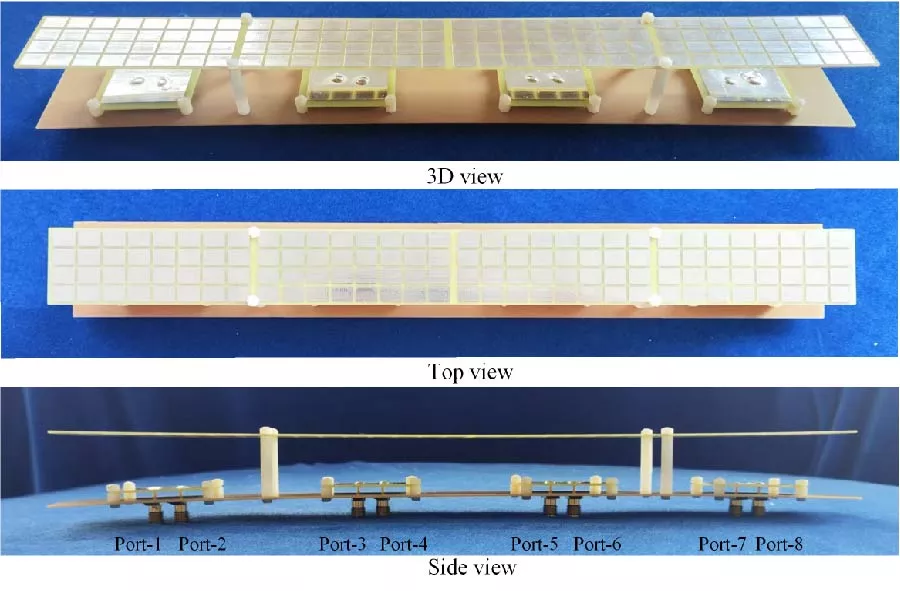
In this paper, a compact multiple-input multiple-output (MIMO) antenna is proposed for unmanned aerial vehicles (UAVs). By simultaneously exciting common mode (CM) and differential mode (DM) from a T-shaped slot, wideband coverage is achieved. Four such slot antennas are used to form a four-antenna module operating in the N79 band (4.4-5.0 GHz). The size of the four-antenna module is merely 43 × 8 mm2, demonstrating excellent miniaturization and integration. The dominant coupling between adjacent elements occurs through currents of the same mode. When CM and DM currents coexist, partial cancellation of coupled currents at the feed point enables high isolation without ex-ternal decoupling structures. Two modules are symmetrically positioned along the longer edges of the frame, forming an 8-element MIMO antenna. The antenna achieves isolation greater than 11 dB and an envelope correlation coefficient (ECC) below 0.04. The measured total efficiency is better than 52%, with an average of 56%. Featuring compact footprint, zero-clearance constraint and high isola-tion, the proposed antenna is a promising candidate for 5G UAVs.
Compact Self-decoupled MIMO Antenna Based on Current Cancellation for UAVs
2025-08-01
PIER C
Vol. 158, 73-83
Switched Reluctance Motor Based on Expanded State Observer Lehuy Model Predictive Current Control
Xiong Su , Aide Xu and Shining Lin
Aiming at the issues of large current ripple and significant torque pulsation in switched reluctance motor (SRM) model predictive current control (MPCC) under varying operating conditions, this paper innovatively proposes a novel SRM model predictive current control method integrating an Extended State Observer (ESO) and the Lehuy model. By constructing a nonlinear current prediction framework based on the Lehuy model, the data dependency on traditional Look-Up Table (LUT) methods is significantly reduced. Meanwhile, the real-time compensation of system disturbances is achieved by introducing the ESO, resolving parameter mismatch issues under dynamic operating conditions. Simulated and experimental results demonstrate that this method, implemented on a 12/8-pole SRM prototype, achieves a current ripple reduction of 41.5% and torque pulsation suppression of 32.7% compared to traditional LUT-MPCC. This research provides new insights into the robust control of SRMs in high-precision servo scenarios.
Switched Reluctance Motor Based on Expanded State Observer Lehuy Model Predictive Current Control
2025-08-01
PIER C
Vol. 158, 63-72
Enhanced Spiral Antenna Performance by Multistep Ground Plane Reflector for 2-18 GHz Applications
Abhay Madhukar Morey , Avinash R. Vaidya and Sandeepak S. Kakatkar
This paper proposes a multistep reflector backing for compact spiral antennas to provide a consistent unidirectional pattern over a wide frequency band with improved gain, Axial Ratio (AR), and efficiency for 2-18 GHz applications. The effect of the variation of step number and step sizes of the reflector on antenna parameters has also been studied in the proposed work. The fabricated prototype antenna provides good impedance matching and circular polarization over the entire frequency range and is compact in size with a height of 0.078 wavelengths (λm) at lowest frequency. The antenna exhibits a rotating radiation pattern with frequency in azimuth direction providing almost a constant beamwidth of 117° with the variation in gain limited to only 0.75 dBic above 8 GHz, yielding a flat gain response at higher frequencies. The compact size and improved parameters of the designed wideband antenna with a stepped reflector makes it a suitable candidate for electronic warfare applications.
Enhanced Spiral Antenna Performance by Multistep Ground Plane Reflector for 2-18 GHz Applications
2025-08-01
PIER C
Vol. 158, 57-61
Design and Analysis of Wideband Circularly Polarized Antenna Loaded with Ring Structure
Nagidi Sivanagaraju and Manchikalapudi Satya Sai Ram
In this design, a wideband circularly polarized slot antenna loaded with square ring is designed and validated. The square slot antenna is etched on an FR4 substrate with the calculated dimensions at the resonant frequency of 5 GHz. The square slot antenna is truncated in its corners to obtain two degenerative modes which are orthogonal to each other, and they are required to produce circular polarization. The truncation is optimized to obtain the circular polarization. The wide CP bandwidth is achieved by selectively spacing the degenerative modes far in frequencies and loading the ring on the slot antenna. The ring and the truncated slot antenna dimensions are optimized to achieve broad axial ratio bandwidth. The design is fabricated and experimentally verified. The measured impedance bandwidth of 47.53% is achieved at the center frequency of 5.68 GHz. The measured axial ratio bandwidth of 39.27% is obtained at the center frequency of 5.55 GHz. The peak gain of the antenna is 3.8 dBi with variation of 1-2 dBi over the entire bandwidth. The simulated radiation efficiency of more than 80% is obtained in the entire bandwidth with a cross polarization level of -20 dB with respect to co-polarization. The proposed design is compact and best suitable for NR46, NR47, NR79, N102, and N104 bands of 5G and C band wireless applications.
Design and Analysis of Wideband Circularly Polarized Antenna Loaded with Ring Structure
2025-08-01
PIER C
Vol. 158, 47-55
Design of a Single-Layer Filtering Patch Antenna with High Gain
Zhonggen Wang , Hao Gui , Wenyan Nie , Ming Yang and Chenlu Li
This paper presents a novel and compact single-layer patch filtering antenna with excellent out-of-band rejection performance. The antenna adopts a simple structure consisting of a single-layer substrate, a slot-loaded radiating patch, and a ground plane, and is fed by a coaxial probe. The rectangular radiating patch and the ground plane are loaded with Г-, anti-Г-, and U-shaped slots to form the final design. The introduction of these slots successfully generates two resonance points, which extend the operating bandwidth. It also produces two out-of-band radiation nulls that enhance the out-of-band rejection performance. To validate the proposed design, antenna prototypes were fabricated and measured. The simulation and measurement results are consistent. The antenna exhibits stable realized gain and excellent bandpass response. It achieves a peak realized gain of 8.82 dBi, an impedance bandwidth of 12.8%, and out-of-band rejection greater than 21.26 dB. These characteristics make the proposed patch antenna highly suitable for various wireless communication applications.
Design of a Single-layer Filtering Patch Antenna with High Gain
2025-07-31
PIER B
Vol. 114, 27-35
Fundamental GDOP Bounds and Base Station Deployment in 2D TDOA Positioning Systems
Shaohan Feng , Weiguang Shi , Yongtao Ma , Wanru Ning and Zihang Meng
This paper investigates the theoretical bounds of geometric dilution of precision (GDOP) in two-dimensional time difference of arrival (TDOA) positioning systems. The corresponding base station (BS) deployment for a single mobile terminal (MT) is subsequently derived. Considering the correlation of time difference measurements, a simplified closed-form expression for GDOP is first derived, and it is shown that GDOP is independent of the selection of the reference BS. Theoretical bounds for GDOP are rigorously established, along with the conditions under which these bounds are valid. Based on these boundary conditions, the study demonstrates that optimal deployment occurs when BSs are grouped, and the azimuths of BSs within each group are evenly distributed around a circle centered at the MT. For systems with up to five BSs, the optimal deployment is proven to be unique, whereas non-unique solutions emerge for larger configurations. In contrast, the complete solution set for the worst-case deployment occurs when BSs are collinear and symmetrically aligned along a specific coordinate origin or axis. Numerical simulations validate the theoretical findings, highlighting the superiority of uniform angular distributions. These results provide actionable guidelines for enhancing positioning accuracy in cellular networks and a foundational framework for multi-BS deployment optimization.
Fundamental GDOP Bounds and Base Station Deployment in 2D TDOA Positioning Systems
2025-07-30
PIER C
Vol. 158, 37-45
Highly Isolated Self-Quadplexing Antenna Based on Quarter-Mode Substrate Integrated Waveguide Cavity
Shaik Mahaboob Subani , Satya Nagakishore Bhavanam , Vasujadevi Midasala and Mallarapu Gopi Krishna
In this paper, a substrate integrated waveguide based self-quadplexing antenna with modified U-shaped slots is presented. The quadplexing antenna resonates at four distinct frequencies 4.02 GHz, 4.37 GHz, 4.78 GHz and 5.26 GHz by adjusting the length of U-shaped slots. The antenna shows a minimum port isolation of >34 dB between any two ports. The self-quadplexing antenna gives the frequency tunability and shows an unidirectional radiation pattern at the corresponding operating frequencies. The simulated (measured) gains of the antenna are 5.18 dBi (5.24 dBi), 5.51 dBi (5.57 dBi), 5.03 dBi (5.14 dBi), and 5.12 dBi (5.19 dBi). The proposed antenna is independent of frequency tunability by the excitation of four ports with an antenna size of 0.12 λ02, where λ0 is the free space wavelength at the lowest resonant frequency. These features make the proposed antenna suitable for WLAN, ISM, INSAT C, Wi-Fi applications.
Highly Isolated Self-Quadplexing Antenna Based on Quarter-Mode Substrate Integrated Waveguide Cavity
2025-07-30
PIER C
Vol. 158, 27-35
Highly Isolated Compact Dual-Band MIMO Antenna Using Stubs, Slots and Neutralization Line for 5G Wi-MAX and WLAN Applications
Amit A. Deshmukh , Shankar D. Nawale , Vijay Ramesh Kapure , Shubhangi A. Deshmukh , Mahadu Trimukhe and Rajiv Kumar Gupta
A highly isolated MIMO antenna is designed using a neutralization line (NL), stubs, and slots for 5G, Wi-MAX, and WLAN operations. A quarter circular ring monopole is modified to have a circular outer shape and a polygon inner shape. Thickness of the monopole is reduced to decrease the electromagnetic (EM) coupling between the higher order modes and to obtain dual band characteristics. A two-element MIMO antenna is designed. High isolation is achieved by combining isolation techniques of neutralization line with stubs and slots. Isolation >20 dB is achieved with stubs and slots in ground plane. Without altering the overall dimensions, isolation is improved from 20 dB to 30 dB by using an NL in the MIMO structure that uses slots and stubs in the ground plane as isolation techniques. S11 < -10 dB over 2.9-3.9 GHz and 5.6-6.2 GHz and S12 < -30 dB over 3.3-3.9 GHz, and S12 < -40 dB over 5.6-6.2 GHz covering 5G, Wi-MAX, V2X, and WLAN bands are obtained. The antenna has stable radiation patterns. ECC (Envelope Correlation Coefficient) < 0.002, DG (Diversity Gain) close to 10 dB, and MEG (Mean Effective Gain) about 0 dB satisfy MIMO specifications. The compact, low-cost antenna on a 30 × 50 mm FR4 substrate is simple to design and fabricate. These features make it a suitable candidate for 5G, Wi-MAX, and WLAN applications.
Highly Isolated Compact Dual-band MIMO Antenna Using Stubs, Slots and Neutralization Line for 5G Wi-MAX and WLAN Applications
2025-07-30
PIER M
Vol. 134, 69-77
Design and Development of Multiband Double T Shaped Frequency Reconfigurable Antenna for 5G Wireless Communication
Annu Tiwari , Gaurav Kumar Soni , Dinesh Yadav , Swati Varun Yadav and Manish Varun Yadav
The rapid development of wireless technology has increased interest in multiband reconfigurable antennas, especially as devices and satellites move toward miniaturization. Reconfigurable antennas must be capable of adapting to their environment by dynamically altering their operating frequency, polarization, and/or radiation pattern. The fifth generation (5G) of wireless communication represents a significant advancement over 4G networks, aiming to meet the growing demand for data and connectivity in today's digital world. To achieve the performance required for supporting a wide range of use cases across both local and global markets, 5G must integrate various existing communication technologies. This work presents a multiband double T shaped frequency reconfigurable antenna for 5G wireless communication on a Rogers RT5880 substrate, designed and simulated using the CST Microwave Studio. In this antenna, two MA4SPS402 PIN diodes are used to make the antenna reconfigurable. By using these PIN diodes, the antenna works on four different modes based on both the diodes ON/OFF conditions. By using this configuration of the PIN diodes, the presented antenna operates at five different operating frequencies 10.8 GHz, 16.47 GHz, 17.03 GHz, 17.07 GHz and 21.2 GHz. The presented antenna provides the best reflection coefficient |S11| value which is -24.76 dB at 21.2 GHz, and peak gain is 7.81 dBi at 16.47 GHz. The measurements of the fabricated antenna are done using a Vector Network Analyzer (VNA) and an anechoic chamber, confirming its reflection coefficient (|S11|) and gain, making it a reliable option for 5G applications.
Design and Development of Multiband Double T Shaped Frequency Reconfigurable Antenna for 5G Wireless Communication
2025-07-30
PIER Letters
Vol. 127, 23-28
Classification of Severe Bacterial Pneumonia Based on CT Images and Deep Learning
Ke Cui , Dawei Gong , Xiaobo Chen , Youzu Xu , Haiyan Li , Yefei Zhu , Julian Evans , Xin Gong , Zhenzhan Shi , Yinghe Xu and Sailing He
Severe bacterial pneumonia is a serious respiratory disease caused by bacteria, which is mainly transmitted through the respiratory tract. To achieve early recognition of severe pneumonia patients through images, this study collected the CT images of 180 patients diagnosed with bacterial infection in the lungs on the day of emergency admission to a large regional medical center (a Top-Tier (Grade 3 A) hospital). After classification by two deputy chief physicians of the respiratory department, 93 cases of severe bacterial infection were obtained and the rest 87 cases were identified as mild bacterial infection. The CT sequences were then preprocessed and annotated to obtain 599 images with annotated lung infection areas. Together with 107 normal (non-infected) images, these bacterial infection images were randomly divided into a training set of 447 and a test set of 259. In the experiment, four deep learning methods, namely, FCN, PSPNet, deeplabv3, and deeplabv3plus, were used for training and three-class classification (severe bacterial infection, mild bacterial infection, and normal). Deeplabv3plus showed the best performance, with an overall accuracy of 96.91% (including a sensitivity of 95.25%, a specificity of 97.24%, an accuracy of 86.96%, a recall rate of 95.24%, and an F1 score of 90.91%) for severe bacterial infection. Using deep learning technology to diagnose severe pneumonia as early as possible can produce valuable treatment time for patients, thereby significantly reducing mortality and complication rates.
Classification of Severe Bacterial Pneumonia Based on CT Images and Deep Learning
2025-07-29
PIER C
Vol. 158, 19-25
Parameters Optimization of the Chemical Reaction Hysteresis Model Using Genetic Algorithms and the Artificial Bee Colony Method
Yasmine Gabi , Kevin Jacob and Klaus Szielasko
This paper presents the application of both genetic algorithm (GA) and artificial bee colony (ABC) method for parameter identification for the chemical hysteresis model. This model is known to be based on physics approaches, and it is characterized by nine parameters, which describe the reversible and irreversible magnetization mechanisms. Splitting the parameter optimization in two parts using hysteresis curves at various amplitudes offers a more efficient way of solving the optimization problem. Based on the root mean squared error between modeled and experimental B-H loops, it has been shown that GA delivers lower errors in shorter time.
Parameters Optimization of the Chemical Reaction Hysteresis Model Using Genetic Algorithms and the Artificial Bee Colony Method
2025-07-29
PIER B
Vol. 114, 13-25
Parameter-Adaptive Composite Active Disturbance Rejection Control for Permanent Magnet Synchronous Motor Drives
Yanguo Huang , Yingmin Xie , Weilong Han and Ling Liang
This paper proposes an sensorless control strategy to improve rotor position estimation accuracy and system robustness for permanent magnet synchronous motors (PMSMs) under dynamic conditions. By integrating a surface-mounted PMSM (SMPMSM) model with a super-twisting sliding mode observer (STA-SMO), the study achieves reductions in position estimation errors and enhanced noise attenuation capabilities. The system's performance under saturation and cross-coupling effects was validated through element simulations and experimental testing. Furthermore, the integration of parameter identification and computing models demonstrates the system's adaptability in high-noise and non-stationary environments. Results indicate that the proposed method achieves precision rotor position estimation with superior dynamic response and robustness, laying a solid foundation for subsequent research.
Parameter-adaptive Composite Active Disturbance Rejection Control for Permanent Magnet Synchronous Motor Drives
2025-07-27
PIER
Vol. 183, 67-79
Spatiotemporal Encoding Metasurface Based on BPSO-GA Optimization Method (Invited Paper)
Xueyan Wang , Rui Xi , Xinan Hou , Huanran Qiu , Zihui Liu , Dexiao Xia , Xiaokui Kang , Shiyun Ma , Yuanhao Zhang , Long Li , Lan Lan and Guisheng Liao
This paper introduces a spatiotemporal encoding method based on metasurface that enables precise frequency control and functional switching of radiation beams. The metasurface is configured with subarrays, and each subarray is designed to reflect a specific frequency, thereby achieving unique multi-target signal diversity. By manipulating the spatiotemporal phase of subarray elements, the metasurface can generate far-field radiation patterns with beam characteristics of consistent beam angle at different distances, or beam characteristics of consistent distance with different beam angles. The radiation energy distribution at harmonic frequencies is verified to remain symmetry under various 1 bit spatiotemporal encoding matrices, while the symmetry is verified to be broken by 2 bit spatiotemporal encoding matrices. An optimization method of genetic algorithm (GA) improved binary particle swarm optimization (BPSO) based on 2-bit-coding is thus developed to optimize the spatiotemporal modulation of the metasurface subarray. The GA with the advantage of the crossover mutation operation is utilized to enhance population diversity and thus prevent the algorithm from falling into local optimality with improved search efficiency in high-dimensional discrete space. The optimization method balances different performance parameters and can achieve unique multi-target signal diversity, thereby improving the metasurface's ability to dynamically control and manipulate energy distribution. Using a 1-bit cross-switching mechanism with a duty cycle of 50%, the metasurface can suppress specific harmonic frequencies on the line of sight to less than -60 dBi while keeping the sidelobes below -20 dBi. The technology can precisely control the harmonic energy distribution while allowing beam at specific harmonic frequencies to be absorbed or reflected, which realize advanced breakthrough for effective selective stealth. Simulation results validate the proposed digital encoding optimization method, and the mainlobe gain of the metasurface harmonics is obtained to be more than 20 dBi. This paper algorithmically improves the beam gain of the metasurface and explores the versatile applications of spatiotemporal metasurfaces.
Spatiotemporal Encoding Metasurface Based on BPSO-GA Optimization Method (Invited Paper)
2025-07-26
PIER C
Vol. 158, 9-18
Permanent Magnet Assisted Switched Reluctance Motor DITC Control Based on Current-Torque Synergy
Junjie Zhang , Junxin Xu , Chaozhi Huang , Ziyang Liu , Yiqiang Yu and Pengpeng Wei
Permanent magnet-assisted reluctance motors (PMa-SRM) feature high energy efficiency, high power density, and a wide speed regulation range. However, traditional direct instantaneous torque control (DITC) strategies for these motors are limited by issues such as high exciting phase current peaks and large torque ripple, which hinder their development and application. To address this, this paper proposes a novel DITC strategy based on current-torque collaborative control. First, commutation intervals are divided according to inductor curve characteristics, with adaptive hysteresis methods applied in different intervals. Then, to tackle high exciting current peaks, current chopping control is introduced, and an adaptive reference current adjustment algorithm is designed to control exciting phase current at the initial commutation stage based on motor speed and load, suppressing current peaks during commutation. Finally, simulations and prototype experiments are conducted on a three-phase 6/20 PMa-SRM. Results show that the proposed strategy effectively reduces current peaks and enhances torque output capability and dynamic response during commutation.
Permanent Magnet Assisted Switched Reluctance Motor DITC Control Based on Current-torque Synergy
2025-07-24
PIER M
Vol. 134, 59-67
Characterization of Inhomogeneous FDM Manufactured Materials: Comparison of Free-Space and Mixing Laws
Chloé Scotti , Stefan Enoch , Max Groisil and Nicolas Malléjac
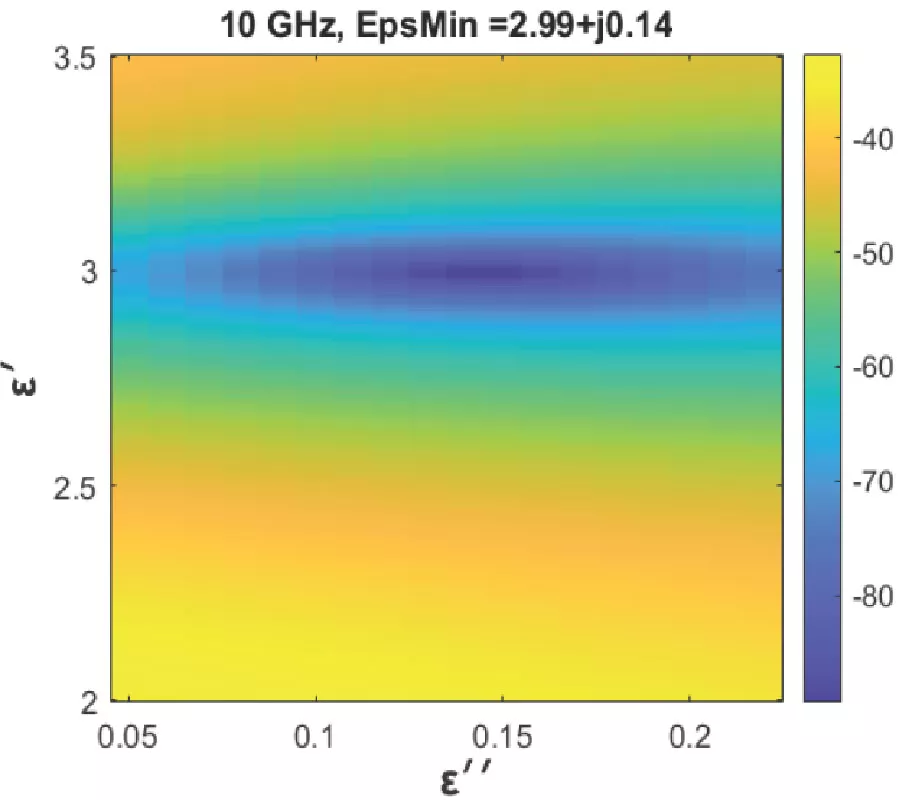
The use of additive manufacturing for the manufacturing of complex materials requires suitable characterization methods. A free-space measurement method is used for the real permittivity characterization. Depending on the considered printing pattern, the experimental result shows good agreement with theoretical values calculated using mixing laws. The setup gives promising results with characterizations of the permittivity, and it highlights the importance of taking into account the printing pattern used according to the desired effective permittivity.
Characterization of Inhomogeneous FDM Manufactured Materials: Comparison of Free-space and Mixing Laws