Search Results(13783)

2025-08-14
PIER C
Vol. 158, 225-234
Design of UWB Monopole Antenna with Ring Structure Based on Characteristic Mode Theory
Zhen Xiang , Zhonggen Wang , Chenlu Li and Rui You
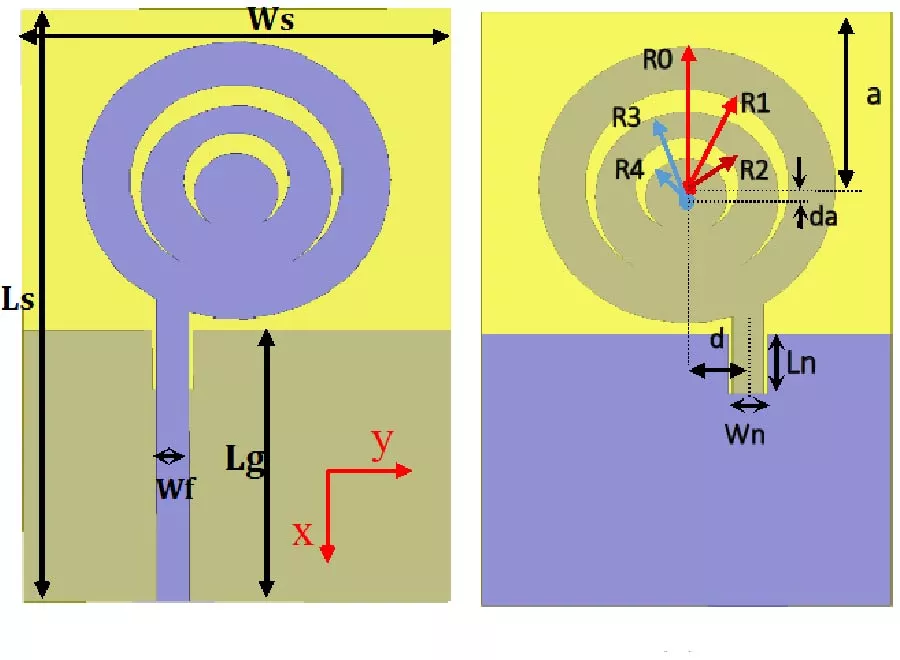
In this paper, an ultra-wideband monopole antenna for wireless communication is designed and fabricated based on characteristic mode theory. The antenna is mainly composed of a metal main body and a circular metal patch and the antenna dimensions are 35×30×1.6 mm3. In order to enhance its matching performance, a circular groove is made in the center of the circular metal patch, and an outer ring is added to the outside. In order to expand the covered bandwidth and reduce the reflection loss, an isosceles right triangle is cut off from each side of the ground plane. The length of the ground plane and the side length of the ground plane cut angle are optimized. The key modes are determined through the analysis of the characteristic mode theory. The simulation and measurement results show that this antenna covers the frequency band of 3.03-11.75 GHz, with a maximum return loss of -42.26 dB and excellent radiation performance.
Design of UWB Monopole Antenna with Ring Structure Based on Characteristic Mode Theory
2025-08-13
PIER C
Vol. 158, 215-223
A Novel Broadband Cross-Loop Dipole Antenna with Coupling Slots
Yanzheng Chen
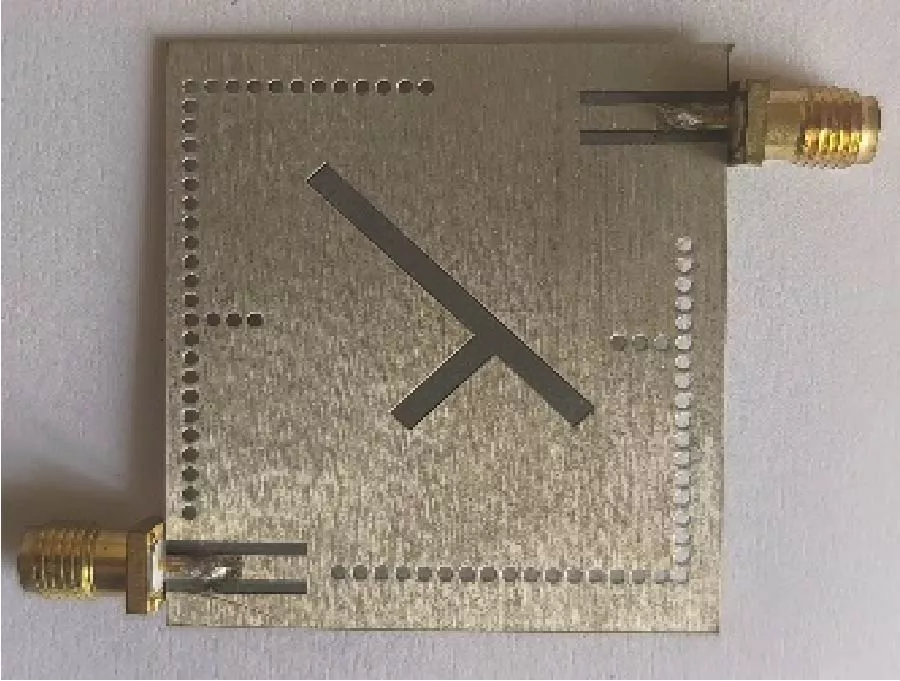
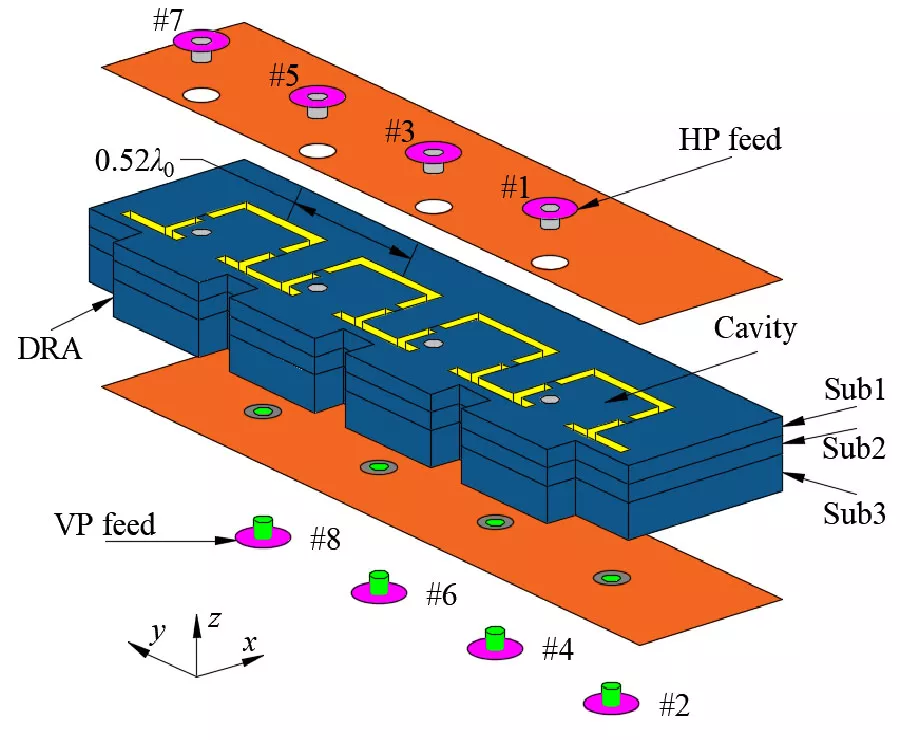
A novel broadband ±45˚ dual-polarization antenna is presented. By introducing coupling slots on the loop dipole arms of the antenna, multi-resonance performance occurs so that the impedance bandwidth is greatly widened. An enhanced impedance bandwidth about 92.5% with VSWR < 2 is obtained at two ports, corresponding to the frequency region of 1.61-4.38 GHz. In the frequency range of 1.61-3.8 GHz, a gain of 8.2 ± 2.2 dBi is obtained. For the frequencies beyond 3.8 GHz, the gain drops sharply and goes down to 1.1 dBi at 4 GHz. Within the operating frequencies, a port-to-port isolation > 22.5 dB is achieved. Especially, the proposed antenna has a very simple configuration and is easy to be fabricated. A mechanical prototype of the antenna has been manufactured and measured. The measurement results have good agreement with the simulations. The work principle and detailed descriptions of the antenna are presented in the paper.
A Novel Broadband Cross-loop Dipole Antenna with Coupling Slots
2025-08-13
PIER M
Vol. 134, 79-86
CAMO-Net: A Channel Attention and Multi-Factor Optimized U-Net for Electromagnetic Inverse Scattering Problems
Tianhao Pan and Jianfa Liu
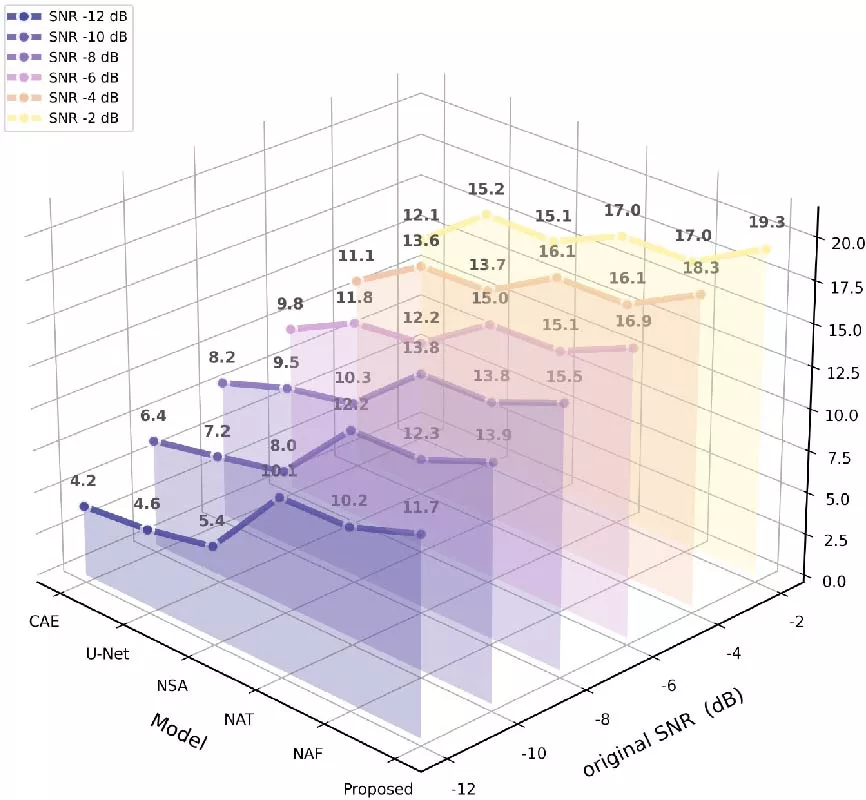
Electromagnetic inverse scattering (EIS) problem is challenging due to its properties of strong nonlinearity and ill-posedness, where existing deep learning approaches often lack systematic network refinement and comprehensive analysis of key factors affecting performance. This work introduces CAMO-Net, a U-Net-based framework for EIS that integrates a channel-attention mechanism and systematically optimizes architectural and training factors to address these limitations. By integrating channel attention into skip connections, adopting a multi-scale channel configuration, and fine-tuning key hyperparameters through controlled experiments, CAMO-Net achieves superior accuracy and robustness. Experimental results demonstrate that it reduces the mean relative error (MRE) by 32.5% and the mean squared error (MSE) by 34.1% compared to the baseline U-Net. Our results demonstrate that joint channel attention and multi-factor optimization provide an effective, reproducible pathway for high-precision EIS imaging, offering new insights for robust reconstruction in EIS problems.
CAMO-Net: A Channel Attention and Multi-factor Optimized U-Net for Electromagnetic Inverse Scattering Problems
2025-08-12
PIER C
Vol. 158, 205-213
Design of an Ultra-Miniaturized Meandered Patch Antenna for Scalp Applications
Marwah Malik Hassooni , Jabir S. Aziz and Ashwaq Q. Hameed
This paper introduces the development of an antenna model with a meandering shape in the industrial, scientific, and medical band (i.e., 2.4-2.48 GHz) proposed for biomedical applications. This design is specifically tailored for stimulation applications, where size and form factors are critical. The design of the meandering patch antenna seeks to optimize performance while ensuring compatibility with the unique requirements of stimulation devices. A Rogers RO3010 (loss tangent = 0.0022, relative permittivity = 10.2) is used in the design as a substrate. The miniaturized antenna (2.5 mm × 2 mm × 0.12 mm), featuring a 400 MHz bandwidth, was engineered to mitigate detuning effects caused by electronic interference and biological tissue heterogeneity. The smaller dimensions of this antenna not only facilitate easier integration within device structures but also aim to enhance characteristics such as impedance matching and bandwidth, addressing the challenges posed by the confined space within the human body. The proposed antenna also exhibits a -33 dB gain and a lower specific absorption rate (SAR) of 272 w/kg. These attributes position it as a promising solution for biomedical implantation.
Design of an Ultra-miniaturized Meandered Patch Antenna for Scalp Applications
2025-08-11
PIER
Vol. 183, 81-90
Global Designed Angle-Multiplexed Metasurface for Holographic Imaging Enabled by the Diffractive Neural Network
Dashuang Liao , Chan Wang , Xiaokang Zhu , Liqiao Jing , Min Li and Zuojia Wang
Diffractive optical elements, including holograms and metasurfaces, are widely employed in imaging, display, and information processing systems. To enhance information capacity, various multiplexing techniques such as wavelength, polarization, and spatial multiplexing have been extensively explored. However, the angular optical memory effect induces strong correlations in the diffracted output under varying angles of incidence, thereby fundamentally limiting the use of illumination angle as an independent degree of freedom in multiplexing strategies. Here, we propose and experimentally demonstrate a globally designed angle-multiplexed metasurface hologram enabled by a diffractive neural network (DNN). Angular multiplexing in the DNN is realized by harnessing illumination angle-dependent phase delays across local units, rather than relying on complex local designs with intrinsic angular dispersion. The DNN is trained using the complex electric field distributions and corresponding target images for each incident angle, enabling end-to-end optimization of the entire metasurface phase profile to encode multiple angular channels simultaneously. Besides, phase modulation of circularly polarized transmitted waves is achieved via geometric phase engineering, using a single-layer and fabrication-compatible meta-atom design without relying on multilayer stacking or inter-resonator coupling. Experimental measurements validate the high-fidelity reconstruction of both images at their respective angles, consistent with numerical simulations. Furthermore, robustness studies confirm that the proposed metasurface can tolerate reasonable variations in incident magnitude, angle, and frequency, as well as fabrication-induced phase errors, while preserving imaging fidelity. The proposed metasurface and design strategy offer a scalable platform for high-density information encoding and multiplexed optical systems, with potential applications in augmented reality, secure communication, and multi-view display technologies.
Global Designed Angle-multiplexed Metasurface for Holographic Imaging Enabled by the Diffractive Neural Network
2025-08-11
PIER C
Vol. 158, 197-203
Wideband Circularly Polarized Dielectric Resonator Antenna Based on Double-Layer Metasurface
Wenhan Wan , Wu-Sheng Ji , Zhaoyi Wang and Xing-Yong Jiang
This paper presents a single-fed wideband circularly polarized high-gain dielectric resonator antenna (DRA) for KU-band applications. The proposed antenna consists of a cylindrical dielectric resonator on top, a double-layer metasurface structure in the middle, and a feeding substrate at the bottom. An asymmetric X-shaped slot coupling feed on the substrate enables the circular polarization characteristic. The DRA incorporates a double-layer metasurface to broaden the 3 dB axial ratio bandwidth and enhance gain. Simulation results show that the antenna achieves a -10 dB impedance bandwidth of 24.2% (13.69-17.46 GHz), a 3 dB axial ratio bandwidth of 20.01% (14.05-17.2 GHz), with a peak gain of 9.89 dBi. The designed antenna operates in the KU-band and is suitable for wireless communication applications including satellite communications and global positioning systems.
Wideband Circularly Polarized Dielectric Resonator Antenna Based on Double-layer Metasurface
2025-08-11
PIER B
Vol. 115, 1-14
Compact Mechanically Reconfigurable DMS-BPF Filtenna with MIMO Configuration for Wide-to-Narrowband Conversion in Sub-6 GHz and X-Band Applications
Amany A. Megahed , Rania Hamdy Elabd , Ahmed Jamal Abdullah Al-Gburi and Marwa E. Mousa
This paper introduces a novel, compact, frequency-reconfigurable multiple-input multiple-output (MIMO) filtenna that integrates a defected microstrip structure (DMS)-based bandpass filter (BPF) with a wideband circular patch antenna to support dynamic tuning across sub-6 GHz and X-band applications. The antenna operates efficiently as a wideband system while enabling mechanically controlled narrowband filtering through a reconfigurable BPF structure embedded in the feedline. Tunability is achieved using discrete switching mechanisms, allowing frequency selection from 5.9 GHz up to 12 GHz, with a peak gain of 6 dBi and high radiation efficiency. A two-port MIMO configuration with orthogonal element placement and an embedded decoupling structure ensures superior isolation (< –48 dB), extremely low envelope correlation coefficient (ECC < 0.0035), and diversity gain (DG) approaching 9.998 dB. The proposed antenna demonstrates excellent performance metrics with a compact footprint of 80 × 45 mm², making it well-suited for compact wireless applications in environments with limited spectral availability.
Compact Mechanically Reconfigurable DMS-BPF Filtenna with MIMO Configuration for Wide-to-Narrowband Conversion in Sub-6 GHz and X-Band Applications
2025-08-09
PIER C
Vol. 158, 187-196
Engineering an Electronic Shark Deterrent System Based Acoustic and EM Waves
Hesham Abd El-Hakim , Abdelrhman Ehab Ayad , Mahmoud Fathy Mahmoud , Hesham Abd Elhady Mohamed and Mohamed Hussien Moharam
Acoustic/Electromagnetic (EM) waves are at the heart of numerous scientific tools and inventive technologies for plentiful state-of-the art applications. This study describes the design and implementation of a portable and effective acoustic/electromagnetic shark shield electronic system. In order to support the shark deterrent technologies, a double-layer printed circuit board (PCB) circuit that includes a signal generator, pulse width modulation, and power amplifier modules has been designed. The 4-ohm, 3-watts loudspeaker was used in the construction of the acoustic shark shield system as a radiation element, while the EM system uses two electrodes and a wire antenna to produce EM wave radiation. The suggested design has then been subjected to a numerical analysis using the Multisim live demonstration circuit simulator. Lastly, a comparison between the experimental and numerical results was made. According to the findings, maximum peak-to-peak pulse amplitude of nearly 100 V and 55 Hz frequency was attained in a zero-meter distance deterrent system. These values are reduced to 53.2 V at approximately 55 Hz in the case of an EM shark system and with an artificial saltwater tank at 2 m distance, while the obtained peak amplitude for the acoustic shark deterrent system achieved peak-to-peak pulse amplitude value of almost 120 V at 55 Hz.
Engineering an Electronic Shark Deterrent System Based Acoustic and EM Waves
2025-08-09
PIER B
Vol. 114, 107-118
Development of a Half-Sphere Microwave Absorber with Enhanced Performance
Aya Raad Thanoon and Khalil Hassan Sayidmarie
The paper proposes a microwave absorber in the form of half-spheres placed on a base layer as an alternative to the conventional pyramidal shape. The performance of the absorber is investigated, focusing on the influence of the diameter of the half-sphere, permittivity, loss tangent, and angle of the incident waves. The study also evaluates the case when the absorber is backed by a conducting plate that is required for shielded anechoic chambers. Simulation results using the CST Microwave suite indicate that increasing loss tangent enhances absorption while decreasing permittivity reduces reflectivity. The proposed absorber offers low sensitivity of reflection concerning the angle of incidence due to the symmetry of the spherical surface. The results show that the proposed absorber has a comparative performance to the pyramidal absorber of the same total thickness.
Development of a Half-sphere Microwave Absorber with Enhanced Performance
2025-08-08
PIER C
Vol. 158, 179-186
Research on the Improvement Strategy of Initial Sampling Point Selection in Bayesian Optimization-Based Uncertainty Analysis Method
Jinjun Bai , Xiangrui Ji , Qing Liu , Yujia Song and Zhongjiu Zheng
In recent years, uncertainty analysis methods have become a research hotspot in the field of Electromagnetic Compatibility (EMC), and non-intrusive uncertainty analysis methods are widely used in the field of EMC due to their advantages such as easy solver generalization and easy programming. The proposal of Bayesian optimization-based uncertainty analysis method further enhances the competitiveness of non-intrusive uncertainty analysis methods in solving complex EMC simulation problems. However, in traditional Bayesian optimization-based uncertainty analysis methods, Latin hypercube sampling strategy is used to construct the initial Gaussian process model, which lacks adaptive adjustment capability, and the quality of the initial Gaussian process model has a significant impact on the efficiency of subsequent calculations and the accuracy of the final results. This defect limits the computational efficiency and accuracy of Bayesian optimization methods in uncertainty analysis applications. In response to this issue, this paper proposes an active sampling strategy based on the Stochastic Reduced Order Model (SROM) method. This strategy improves the fitness function used by the SROM method in clustering to enhance the representativeness of the training set to the sampling space. By using this active sampling strategy instead of Latin hypercube sampling strategy, a higher quality initial Gaussian process model can be constructed, and the accuracy of Bayesian optimization method uncertainty analysis calculation is improved in the example, verifying the effectiveness of the proposed initial sampling point selection improvement strategy.
Research on the Improvement Strategy of Initial Sampling Point Selection in Bayesian Optimization-based Uncertainty Analysis Method
2025-08-08
PIER B
Vol. 114, 99-106
Transfer Matrix Method for General Bianisotropic Layers
Morgan Alecsandre Blankenship , Edgar Bustamante and Raymond C. Rumpf
The transfer matrix method (TMM) with scattering matrices has been a valuable tool, facilitating the rapid characterization of multilayer devices in a very fast, stable, and memory-efficient manner. This paper presents a generalization of TMM with improved scattering matrices capable of simulating devices with full nine-element material tensors for the layers and any combination of signs for the real and imaginary parts of the isotropic external regions. The formulation of the bianisotropic transfer matrix method (BTMM) algorithm is covered in detail, and notes on implementation are provided. Example devices found in literature were used to benchmark the accuracy of the algorithm. The simulation of the bianisotropic device was corroborated with a bianisotropic finite-difference frequency-domain (FDFD) algorithm and a finite-element method (FEM).
Transfer Matrix Method for General Bianisotropic Layers
2025-08-06
PIER C
Vol. 158, 171-177
X/Ku-Band Antenna with Integrated Back Cavity for Directional Radiation
Jiawei Wang , Tao Tang , Thamer S. Almoneef and Maged A. Aldhaeebi
This paper presents a dual-band antenna design for X/Ku bands, featuring asymmetrical feed ports, slot-loaded radiating patches, and a reconfigured defect ground structure (DGS) integrated with a back air cavity to achieve 32.11% reduced patch area and directional radiation. By coplanar waveguide (CPW) feeding and vertical interconnect accesses (VIAs) connecting all metal layers, the antenna miniaturizes via extended surface current paths and broadens bandwidth via DGS. Simulation and measurement show operating bands of 8.30-12.29 GHz (38.75% fractional bandwidth) and 12.91-14.21 GHz (9.58%), with measured gains aligning well with simulations. Compared to traditional dual-band designs, this work reduces physical size by over 30% while maintaining high gain, making it suitable for compact satellite communication, radar, and microwave energy systems.
X/Ku-band Antenna with Integrated Back Cavity for Directional Radiation
2025-08-06
PIER C
Vol. 158, 161-169
Stackable Wearable Antenna for Sub-6 GHz Applications: Enhanced Gain and SAR Assessment
Muhammad Fitra Zambak , Ismahayati Adam , Mohd Najib Mohd Yasin , Safpbri Johari and Ping Jack Soh
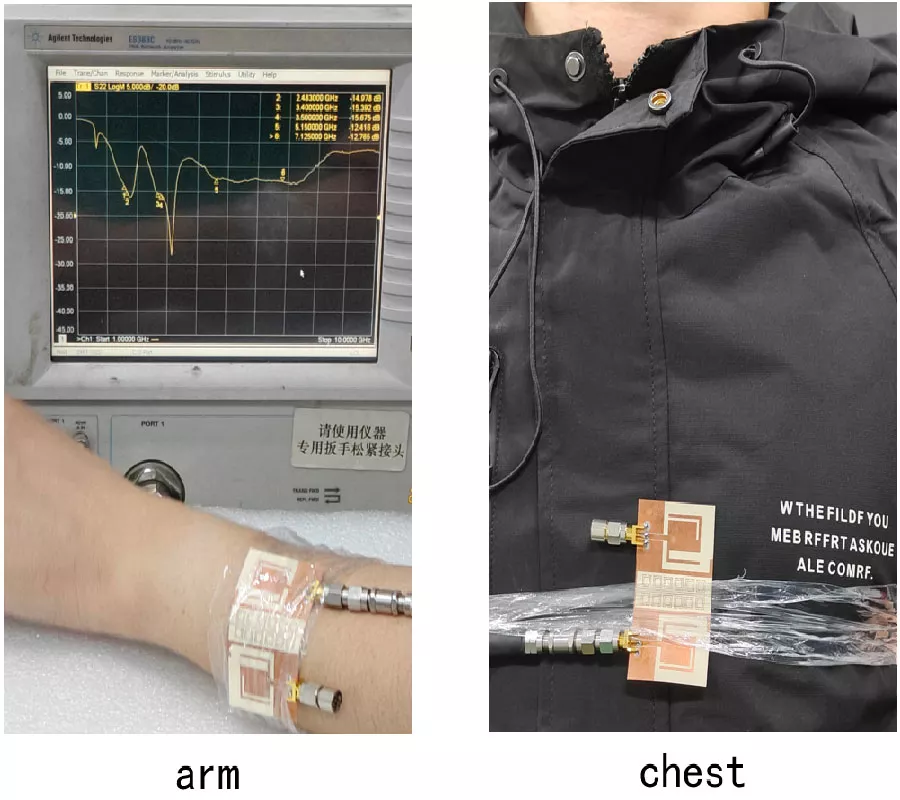
This paper presents the design and performance evaluation of a flexible, multilayer wearable antenna optimized for sub-6 GHz 5G applications at 3.5 GHz. The proposed antenna introduces a fabrication-ready stackable design using textile-compatible materials, including Felt, a 2 mm EVA foam layer, and Shieldit Super. A key innovation lies in the use of low-permittivity EVA foam as an intermediate spacer, which enhances gain and impedance matching without requiring additional structural elements, thus maintaining a compact and mechanically flexible profile. The antenna achieves a peak realized gain of 7.81 dBi and a wide impedance bandwidth of approximately 15.7%, within a total thickness of just 4.34 mm. The design remains robust under bending and close-body scenarios, with specific absorption rate (SAR) analysis confirming compliance with international safety standards. Experimental and simulated results validate the antenna's consistent performance, underscoring its suitability for wearable and Wireless Body Area Network (WBAN) applications in future 5G systems.
Stackable Wearable Antenna for Sub-6 GHz Applications: Enhanced Gain and SAR Assessment
2025-08-06
PIER C
Vol. 158, 151-159
Energy-Based Adaptive Krylov Subspace Basis Functions Method for Solving Bistatic Scattering Problems
Jianhao Xiang , Zhonggen Wang , Haoran Yuan and Wenyan Nie
To address the convergence inefficiency of the conventional CS-Krylov-block method in solving electromagnetic scattering problems, this paper presents an adaptive Krylov subspace basis function method (AKSBFM) based on spectral energy thresholds. In this method, Krylov subspace basis functions (KSBFs) are first generated within each extended subdomain using localized self-impedance matrices. Singular value decomposition (SVD) is performed on the candidate basis set to evaluate energy contributions, and only the dominant components exceeding a predefined energy threshold are retained. As a result, the number of basis functions per subdomain is automatically adjusted, and a compact, well-conditioned reduced matrix system is constructed. This energy-guided truncation significantly eliminates redundant modes, yielding improved numerical stability and reducing the condition number by up to two orders of magnitude. Numerical experiments demonstrate that, compared with the traditional CS-Krylov-block method, AKSBFM improves computational efficiency while ensuring computational accuracy.
Energy-based Adaptive Krylov Subspace Basis Functions Method for Solving Bistatic Scattering Problems
2025-08-06
PIER B
Vol. 114, 89-98
A Physics-Assisted Learning Method Based on the Improved U-Net for Reconstructing 2-d Dielectric Objects
Zhangyue Zhao and Chunxia Yang
In the past few years, deep learning has emerged as a transformative force in tackling challenges within the realm of electromagnetic inverse scattering, driving remarkable advances and reshaping conventional approaches. Among them, the physics-assisted learning method that combines traditional inverse scattering algorithms with deep neural networks has demonstrated excellent real-time inversion capability and lower computational complexity. For two-dimensional inverse scattering problems, an approximate solution of the target is first obtained using a linear approximation algorithm, followed by mapping learning from low to high precision with a neural network. To enhance both precision and generalizability, this study integrates a Transformer module into a CBAM U-Net framework, giving rise to a refined architecture aptly named TransAtten U-Net. By retaining certain positional information while enhancing the correlations between features, the overall feature extraction effect is improved. Through simulation experiments, the paper compares the performance of the proposed TransAtten U-Net two-step method, TransAtten U-Net direct method, and CBAM U-Net two-step method. Experimental results demonstrate that the proposed TransAtten U-Net two-step method not only achieves higher accuracy than the other two approaches, but also exhibits a stronger generalization capability across diverse scenarios, along with enabling real-time imaging.
A Physics-assisted Learning Method Based on the Improved U-net for Reconstructing 2-D Dielectric Objects
2025-08-05
PIER C
Vol. 158, 139-149
Single-Port Microwave Sensor Using Defected Ground Structure Complementary Split Ring Resonator for Solid Material Characterization
Rayan A. Ba Amer , Noor Azwan Shairi , Maizatul Alice Meor Said , Zahriladha Zakaria , Mohamad Harris Misran , Adib Othman , Syah Alam and Sharul Kamal Abdul Rahim
This paper proposes a single-port microwave sensor for solid material characterization, based on defected ground structures (DGSs) with complementary split-ring resonators (CSRRs). Fabricated on an RO5880 substrate, the sensor was analyzed through both simulation and experimental measurement. Electromagnetic simulation and optimization were conducted using CST Studio Suite within the 1.5-3.0 GHz frequency range. The sensor's performance was evaluated with three materials of known permittivity: RO5880, RO4350, and FR-4. Results show that the two proposed configurations, one with a DGS CSRR (Design A) and the other with an added slot on the DGS CSRR (Design B) yielding Q-factors of 332 and 357, respectively. The higher Q-factor in Design B indicates increased sensitivity across all tested materials compared to Design A. For example, Design B achieved the highest sensitivity of 4.71% for RO5880 material compared to Design A. Thus, the added slot enhanced field coupling, improving measurement sensitivity and confirming the sensor's suitability for microwave-based solid material characterization.
Single-port Microwave Sensor Using Defected Ground Structure Complementary Split Ring Resonator for Solid Material Characterization
2025-08-05
PIER C
Vol. 158, 131-137
Analysis of Vertically Polarized Plane Wave Scattering by Multi-Story Buildings with Windows
Cuong Manh Bui and Hiroshi Shirai
An analysis of electromagnetic scattering by multi-story, multi-window buildings is presented by utilizing the Kirchhoff Approximation method. This investigation specifically analyzes scattering characteristics for vertically polarized incident plane waves. Scattering fields are calculated via radiation integrals associated with equivalent current sources induced on the building's exterior and across virtually closed window apertures by the incident wave. Fields within window regions are represented using rectangular waveguide modes, enabling the conversion of reflected fields from window glass into equivalent currents. The formulation's validity is established through comparisons with the physical optics method and scale model measurements. Discussions address the influence of window glass and polarization on wave propagation in wireless communication scenarios like 4G LTE operating at 700 MHz.
Analysis of Vertically Polarized Plane Wave Scattering by Multi-story Buildings with Windows
2025-08-04
PIER C
Vol. 158, 123-129
Limitations of Low-Frequency Magnetic Field Immunity Testing with Small Radiating Loop
Yasaman Ardeshirpour , Joshua Guag and Howard I. Bassen
Use of a small radiating loop (12 cm diameter) is recommended in EMC standards (Mil-Std-461G:2015(RS101) and IEC 61000-4-39:2017) for immunity testing with low-frequency magnetic fields. We investigated the limitations of this method using finite-element simulations. We studied the effects of fields from radiating loops with different radii and their induced voltages in different diameter receiver loops that represented wiring of equipment under test (EUT). We also studied the windowing-method recommended in those standards. It involves positioning the loop successively over all locations on each face of the EUT. Our results show that this radiating loop can only simulate exposure to larger real-world EM fields when the EUT's wiring area is smaller than the radiating loop. Another limitation is that the magnetic field from the radiating loop drops significantly with distance perpendicular to the loop surface. Therefore, the windowing-method with a small radiating loop is only suitable for simulating exposures to real-world sources with fields that do not extend a large distance from the loop. In addition, the field distribution (width and depth) of the real-world EM source must be accounted for before deciding to use a small radiating loop for immunity testing of an EUT.
Limitations of Low-frequency Magnetic Field Immunity Testing with Small Radiating Loop
2025-08-04
PIER C
Vol. 158, 113-122
Adding of Metacell Units for Efficient Performance of Circular Patch Antenna
Rusul Mohsin Hashim and Mohammed Taih Gatte
This work is motivated by the recently domination of mobile and wireless communications technologies, in addition to the fast evolution of the new generation of mobile and wireless communication that leads to the successive mobile generations XG 3G, 4G, 5G, and in near future 6G. Currently, the fifth generation (5G) technologies still need more development for a compact and efficient device. In this manuscript, Meta cells units (metamaterial and metasurface) are employed for improving the main parameters of antenna performance like gain (G), bandwidth (BW), reflection coefficient ($S_{11}$), and radiation efficiency. The proposed antenna design shows multiple resonant frequencies which means that the design is able to operate at multiband of frequencies, including 6\,GHz band that considers the main targeted band of 4G and 5G mobile communication technologies. The simulation results, for the different models via adding meta cells to the proposed design model, show excellent improvement for the performance parameters that are improved excellently in comparison with the conventional circular patch (CCP) and previous literature. In addition, the use of meta cells reduced the resonant frequency which means that it can serve a lower frequency with small size of substrate, and it is half size of CCP, making it suitable for many applications that require a compact antenna design.
Adding of Metacell Units for Efficient Performance of Circular Patch Antenna
2025-08-04
PIER C
Vol. 158, 103-111
Quadband Octagon Patch Antenna to Broadband MIMO Antenna Conversion by Using Defective Ground Structure
Katari Manjunath and Sanam Narayana Reddy
In this paper, a Quadband Octagon Patch Antenna is designed whose operating frequencies are 20.22 GHz, 23.64 GHz, 27.35 GHz, 28 GHz, 28.37 GHz which achieved return losses of -19.67 dB, -19.14 dB, -19.66 dB, -19.04 dB, -19.04 dB, -20.41 dB and gain of 6.1 dB, respectively. The substrate employed in this antenna is FR4, which features a dielectric constant value 4.4 and a loss tangent value of 0.002. With a radiation efficiency of 90.85%. This antenna is small, measuring only 15 × 25 × 1.6 mm3 dimensions. Multiple slots of different lengths are inserted in an antenna to form a 5G Quadband Octagon Patch Antenna in order to accommodate more operating frequencies. Later, a 2*2 MIMO octagon patch antenna having a 3.6 mm radius, 50 × 30 × 1.6 mm3 of dimensions, 4.4 dielectric constant, and 1.6 mm thickness with defective ground structure is designed. Here this single quad band antenna was turned to a broadband MIMO antenna by means of a defective ground structure.
Quadband Octagon Patch Antenna to Broadband MIMO Antenna Conversion by Using Defective Ground Structure