Search Results(13783)

2025-12-19
PIER M
Vol. 136, 77-85
Design of Near-Field Focusing Optical Transparent Metasurface for Millimeter-Wave Communication
Licong Fan , Yuan Yao , Jingchang Nan and Yifei Wang
Low-emissivity glass, commonly employed in building curtain walls strongly reflects and weakly transmits millimeter-wave signals, thereby hindering signal propagation. To address this issue, this paper introduces a novel method that leverages the low-emissivity film itself to design a metasurface for enhanced signal transmission. Two specific metasurface designs are presented. The simulation results validate the proposed method. For the design targeting linearly polarized waves, a 23 dB enhancement in the transmitted electric field is achieved compared to that of uncoated glass. The design for circularly polarized waves achieves a 22 dB enhancement. Both metasurfaces exhibit excellent wide-angle performance, maintaining single-point focusing up to a 30° incidence angle with an electric field enhancement exceeding 15 dB. The proposed millimeter-wave transparent metasurface features a simple structure, supports wide-angle incidence, and can be deployed over large areas with adjustable focal points to meet communication requirements. This work provides a reliable solution for mitigating millimeter-wave transmission loss through low-emissivity glass.
Design of Near-Field Focusing Optical Transparent Metasurface for Millimeter-Wave Communication
2025-12-19
PIER M
Vol. 136, 68-76
Machine Learning-Based RCS Prediction for Metasurface-Integrated Cavity Structures
Xi Liu , Peng Nian , Yu Zhang , Yi Ren , Yi-Xin Guo , Yang-Chun Gao and Bing Chen
Conventional full-wave methods face prohibitive computational costs for far-field scattering optimization of metasurface-integrated cavity structures. To address this limitation, a lightweight residual neural network is introduced within a two-stage scattering prediction framework. This framework effectively mitigates model degradation. The first stage employs shallow convolutional networks to extract local phase-coupling features. The second stage integrates residual layers with fully connected layers to refine cross-scale scattering responses. A compact CNN-ResNet surrogate model is developed for rapid cavity scattering prediction. With only 2.5×10⁴ parameters and training on 500 full-wave samples spanning 6.0-16.0 GHz, the model achieves high computational efficiency. The proposed approach directly maps binary phase-coded matrices to far-field electromagnetic characteristics. Extensive validation on a cavity structure across 6.0-16.0 GHz demonstrates excellent accuracy. The per-sample runtime is reduced from hours to milliseconds while maintaining prediction errors below 3 dB. These results confirm the effectiveness of the approach in enabling fast and accurate electromagnetic scattering prediction for complex cavity environments. The approach provides a practical solution for metasurface-integrated cavity optimization.
Machine Learning-Based RCS Prediction for Metasurface-Integrated Cavity Structures
2025-12-18
PIER C
Vol. 163, 149-160
A Novel Wideband Coaxial-to-Rectangular Waveguide Transition Integrated with a Septum Horn Antenna for C-Band Satellite
Ajitesh and Manoj Kumar Meshram
In this paper, a novel wideband coaxial-to-rectangular waveguide transition integrated with a septum horn antenna is proposed for C-band satellite communication applications. The design employs a modified supershape excitation probe, derived from an extended superformula, to achieve smooth impedance transformation and broadband performance. Initially, the probe geometry is optimized through parametric simulations to validate its effectiveness within a rectangular waveguide structure. The transition is then effectively incorporated into a stepped septum horn antenna that facilitates dual circular polarization through a compact dual-feed mechanism. The septum structure ensures efficient conversion of linearly polarized modes into left-hand and right-hand circularly polarized waves, while maintaining high isolation and low axial ratio. An equivalent circuit model is developed to provide analytical insight into the impedance behavior. A prototype antenna is fabricated, and its performance is validated through measurements. The measured results confirm reflection coefficients below -10 dB across 4.6-8.6 GHz, peak gain of 15.8 dBi, and inter-port isolation exceeding 20 dB. Furthermore, the antenna achieves a 3 dB axial ratio bandwidth of 76.9%. A comparison with state-of-the-art designs demonstrates the superior performance and design efficiency of the proposed antenna architecture.
A Novel Wideband Coaxial-to-Rectangular Waveguide Transition Integrated with a Septum Horn Antenna for C-Band Satellite
2025-12-18
PIER C
Vol. 163, 139-148
Inertial Forces from Relativistic and Thermal Effects of Electromagnetic Frequency Sweeps
Roberto Bernardo Benedicto Ovando
We investigate the thermal and relativistic effects produced when an electrically conductive object is moving in tandem with a source of a variable electromagnetic field. First, we derive an energy–frequency relation to quantify the temperature rise induced by such a field. This relation is then combined with the Lorentz-Fitzgerald contraction and time dilation from special relativity to identify a force, Fc, required to reconcile energy conservation between stationary and moving observers. We further relate Fc to the relativistic energy of a moving mass, extending the analysis to objects without electrical conductivity. This connection leads to the prediction of an inertial force Fcf generated by the frequency sweep of an electromagnetic wave (whether caused by relative motion or by internal modulation) that interacts with mass regardless of its electrical properties.
Inertial Forces from Relativistic and Thermal Effects of Electromagnetic Frequency Sweeps
2025-12-18
PIER Letters
Vol. 129, 1-8
Compact Gap-Coupled Circularly Polarized Broadband Metasurface Antenna Based on Characteristic Mode Analysis
Xuemei Zheng and Ao Gui
In response to the demand for broadband antennas in satellite communications, this paper sets out the proposal of a broadband circularly polarised metasurface antenna. Based on the theory of characteristic mode analysis of super surface, a pair of characteristic modes with the potential to realize circular polarization broadband are obtained and used as the modes to be excited. At the same time, the metasurface current is analyzed; the position of the floor gap is determined according to the results; and the shape of the floor gap is designed to better stimulate the characteristic mode. Subsequently, the power is transmitted through the microstrip line gap coupling feeding structure to excite the selected mode. Finally, an MTS antenna with dimensions of 0.9λ0 × 0.9λ0 × 0.076λ0 at a centre frequency of 5 GHz was determined. The antenna was modeled using CST, a 3D electromagnetic simulation software, and then physically tested for verification. The experimental findings indicate that the impedance bandwidth of the antenna in question is 4.20-5.83 GHz (relative bandwidth of 32.6%). Furthermore, the 3 dB axial ratio bandwidth is 4.38-5.97 GHz (relative bandwidth of 30.7%).
Compact Gap-Coupled Circularly Polarized Broadband Metasurface Antenna Based on Characteristic Mode Analysis
2025-12-18
PIER Letters
Vol. 128, 67-73
Design of a Compact High-Temperature Superconducting Bandpass Filter with Mixed Electromagnetic Coupling
Chenhao Xu , Chenchen Wang , Yiqiuzi Shen and Liguo Zhou
This paper systematically analyzes the electromagnetic coupling characteristics between microstrip resonators and proposes a novel structure that enables mutual cancellation of electromagnetic coupling, effectively reducing the spacing between resonators. Based on this approach, a 14th-order compact high-temperature superconducting (HTS) microstrip bandpass filter is designed and implemented. By constructing a folded symmetric resonator structure to minimize the total electromagnetic coupling energy, and by optimizing the non-uniform coupling gaps in conjunction with the coupling characteristics, precise control of the coupling paths is achieved, leading to a significantly enhanced compactness. The filter is fabricated using double-sided YBCO HTS thin films and tested at liquid nitrogen temperature (77 K). Both simulation and measurement results show that the filter operates within the 0.96~1.06 GHz frequency band, exhibits an insertion loss below 0.4 dB, an out-of-band rejection better than 78 dB, and a passband edge roll-off rate exceeding 60 dB/MHz, demonstrating excellent performance in terms of low loss, wide bandwidth, and high suppression.
Design of a Compact High-Temperature Superconducting Bandpass Filter with Mixed Electromagnetic Coupling
2025-12-18
PIER Letters
Vol. 128, 61-66
Robust Adaptive Array Beamforming Using Generalized Sidelobe Canceller and Zero-Forcing Equalizer Under Array Mutual Coupling
Cheng-Jie Wang and Ju-Hong Lee
Generalized sidelobe canceller (GSC) based adaptive beamformer possesses a main advantage of superior interference rejection due to its capability in tracking the interference characteristics. However, its performance is very sensitive to even a small mismatch in array scenarios. For example, the mismatch due to mutual coupling between array sensors is a common phenomenon in practical environments. Two common problems considered are as follows. (1) The existing adaptive array beamformers are very sensitive to MCE. (2) The existing robust methods inevitably suffer from the problems, including additional computational complexity and estimate accuracy. In this paper, we present an efficient method to deal with the performance degradation induced by the MCE to achieve robust beamforming. The proposed method simply utilizes a well-known scheme, namely the zero-forcing (ZF) equalizer. The ZF equalizer simply preprocesses the data vector received by the antenna array and then inputs the processed data vector into a GSC based adaptive array processor. The combination of a ZF equalizer and a GSC based adaptive array processor results in an adaptive array beamformer providing satisfactory beamforming performance in the presence of the MCE. The performance analysis regarding the proposed method is analyzed. Simulation results are also presented for confirmation and comparison. The simulation results show that the ZF equalizer alleviates the MCE and the GSC based adaptive beamformer can subdue the background noise enhanced by ZF equalizer.
Robust Adaptive Array Beamforming Using Generalized Sidelobe Canceller and Zero-Forcing Equalizer under Array Mutual Coupling
2025-12-18
PIER Letters
Vol. 128, 54-60
Innovative Design and Investigation on Resistive and Capacitive Network Based NGD Topology
Runtao Song , Sonia Moussa , Nathan B. Gurgel , Nicolas Waldhoff , Ali Hamada Damien Fakra , Dmitry Kholodnyak , Mathieu Guerin , Glauco Fontgalland , Fayu Wan and Blaise Ravelo
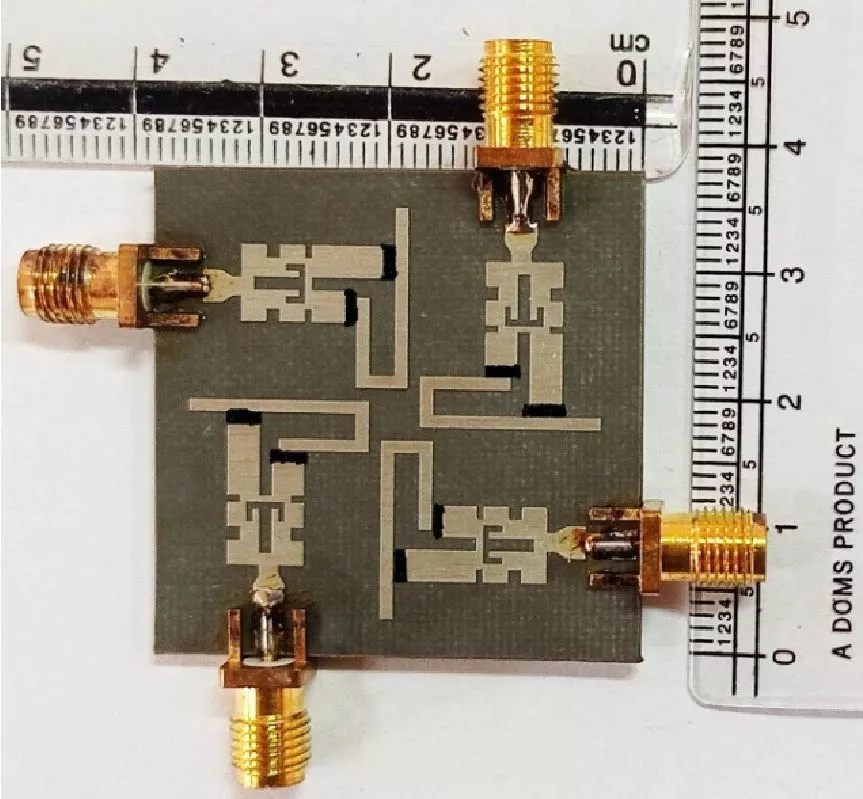
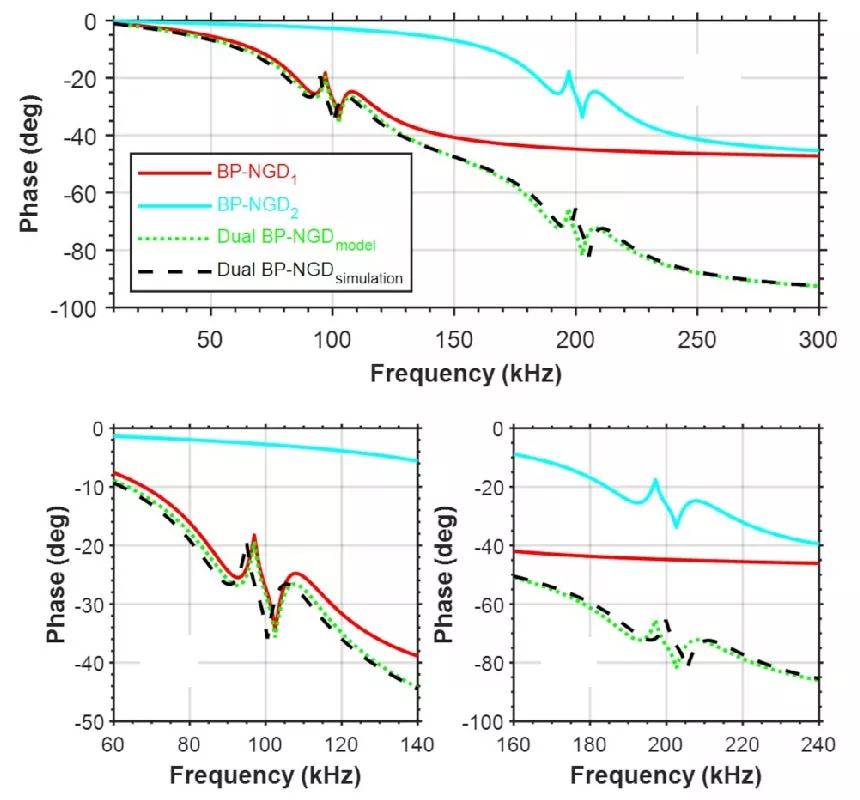
This paper investigates the circuit theory of elementary passive topology exhibiting reconfigurable positive/negative delay (RPND) effect. This novel evaluated framework enables identification of the first-order L-topology constituted by RC-network operating under RPND effect. The investigated passive L-cell can operate in both negative and positive group delay (NGD or PGD) mode depending on the RC-network parameter. After establishing the NGD existence condition, the design equations versus the RPND effect including the target parameter values are formulated. To validate the theory, an RC-circuit representing a RPND Proof-of-Concept (PoC) was designed, implemented and tested especially in the time-domain by verifying the time-advance signature corresponding to the NGD operation mode. By tuning a PoC resistor, experimentation of pulse and arbitrary waveform signals confirm the feasibility to observe RPND reconfigurability. In the NGD mode, it is observed that outputs in time-advance of their own inputs about -3 ms. The RPND circuit is particularly useful for adjusting delay effect and signal synchronization in the communication system.
Innovative Design and Investigation on Resistive and Capacitive Network Based NGD Topology
Engineering Chance --- Planning for the Unplanned as a Modern Discovery Paradigm
Miniaturized High-Efficiency Wideband Multi-Slot Antenna for Radar, Military, and 5G Applications for SDG-9
Swati Varun Yadav , Manish Varun Yadav , Himanshu Gupta and Vikas Gupta
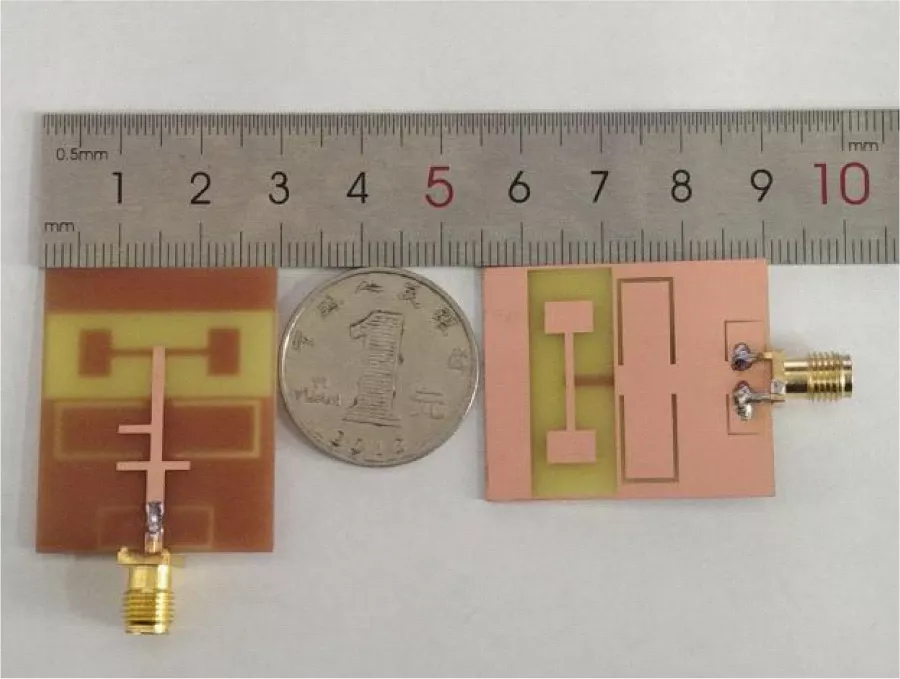
A compact wideband antenna with a multi-slot configuration is proposed for radar, military, and modern wireless communication systems. The antenna is fabricated on an FR-4 substrate with overall dimensions of 14 × 16 × 1.5 mm3, corresponding to a miniaturized electrical size of 0.163λ × 0.187λ × 0.017λ0 at 3.5 GHz. To achieve broad impedance bandwidth and improved matching, multiple slots are etched on both the patch and ground surfaces. Experimental validation shows that the antenna effectively covers the 3.5-14 GHz frequency range, offering nearly 120% fractional bandwidth. Within this spectrum, it delivers a peak gain of 5.1 dB and a maximum radiation efficiency of about 89%, ensuring stable and low-loss performance. The compact structure maintains consistent radiation characteristics, making it suitable for portable and defense-oriented devices. Its ability to support Sub-6 GHz and 5G bands further enhances its applicability in next-generation communication platforms.
Miniaturized High-Efficiency Wideband Multi-Slot Antenna for Radar, Military, and 5G Applications for SDG-9
2025-12-17
PIER C
Vol. 163, 120-127
Design of Cascaded Circular Ring Semicircular Cresent Shaped Multiband Antenna for UWB, WLAN, WiMAX and 5G Midband Applications
Chevala Rambabu , Kaza Srilakshmi , Vasudha Vijayasri Bolisetty , Udara Yedukondalu and Kottapadikal Vinodan Vineetha
In this paper we report a cascaded circular ring antenna with semicircular C-shaped radiating slots for multiband applications. The novelty of this paper lies with three techniques as follows: cascading circular rings, semicircular C-shaped slots and complimentary split ring resonators embedded on the ground are included in the paper. The dimensions with optimised values are 35 × 35 × 1.61 mm3. The antenna operates from 2.124 GHz to 8.284 GHz, and it is deposited on a 1.6 mm thick FR-4 substrate. The radiating patch is built on the substrate; it is made by developing multiple circular ring structures to develop a cascaded ring-like pattern that provides the wideband response. The antenna successfully resonated with a wide bandwidth of 6.16 GHz in the span of 2.124 GHz to 8.284 GHz. The ground features a half hexagonal slot that is embedded within the larger etched rectangular slot. An equivalent circuit with R-L-C elements is developed. The resonating bands are obtained at 3.0 GHz, 5.89 GHz, and 7.07 GHz with reflection coefficients of -21.3 dB, -19.7 dB, and -26.7 dB, respectively. The optimised design operates at UWB, WLAN, WiMAX, and 5G midband applications.
Design of Cascaded Circular Ring Semicircular Cresent Shaped Multiband Antenna for UWB, WLAN, WiMAX and 5G midband Applications
2025-12-17
PIER C
Vol. 163, 113-119
Frequency- and Phase-Tunable Coupler Based on Three-Line and Four-Line Coupled Lines
Bo Huang , Yongle Wu , Shuchen Zhen , Weimin Wang and Jinchun Gao
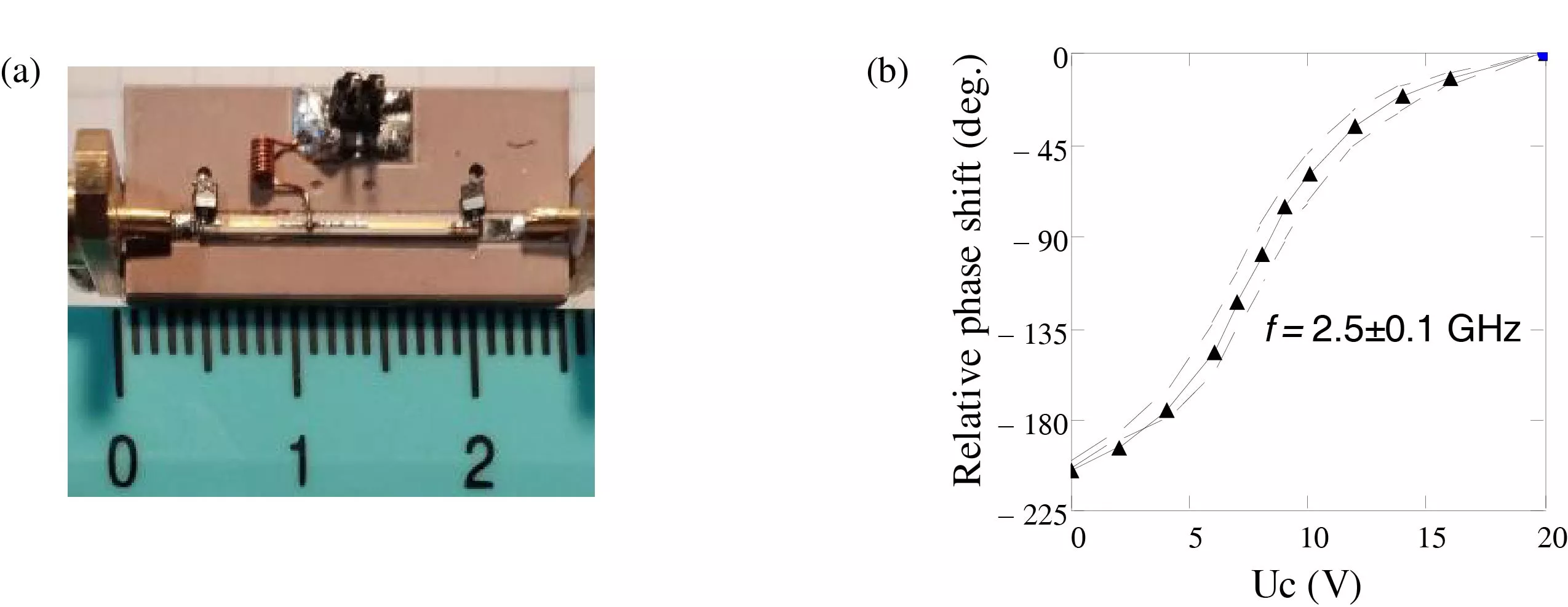
This paper proposes a reconfigurable 3-dB coupler with tunable phase and frequency characteristics based on triple-line loaded varactor diodes. The core structure employs a four-line coupling configuration to ensure strong coupling characteristics and stability. Through integrated theoretical analysis and experimental verification, the coupler demonstrates a center frequency tuning range of 1.8-2.4 GHz with continuous phase difference adjustment from 40° to 140°. Measured results indicate that high isolation (> 20 dB) and low return loss (< -20 dB) can be obtained.
Frequency- and Phase-Tunable Coupler Based on Three-Line and Four-Line Coupled Lines
2025-12-17
PIER M
Vol. 136, 57-67
High Gain and Bandwidth Enhanced Microstrip Patch Antenna with Defective Ground Structure Loaded with Metamaterial Unit Cells for Intelligent Transportation Systems
Sunil K. Dubey , Ashok Kumar Shankhwar , Nand Kishore and Alkesh Agrawal
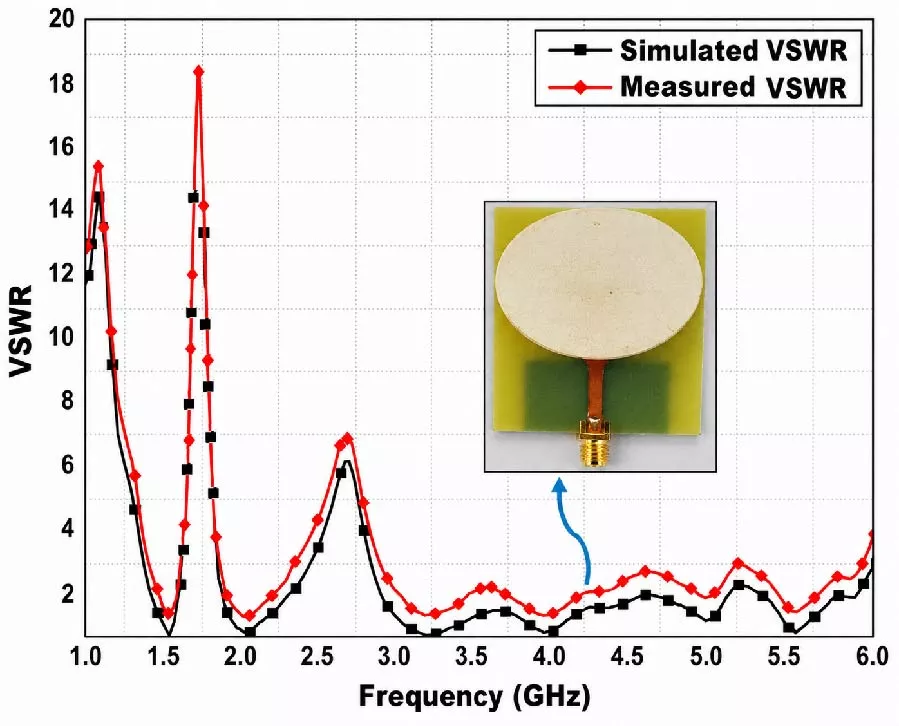
In the manuscript a novel design of microstrip patch antenna with moderate degree of complexity is proposed in terms of metamaterial based unit cells as radiating patch on the top as well as metamaterial based periodic structure as defected ground structure at the bottom (MRPMGS) for Intelligent Transportation System (ITS) applications. The novel design of patch antenna exhibited multibands with broad-band transmission patterns, improved high gain and compact structure. The MRPMGS has a three layered structure with overall dimensions of 32 mm × 28 mm × 1.6 mm. The top layer with radiating patch has unit cell(s) with dimensions of 3.6 mm × 3.6 mm, and at the bottom the defective ground structure (DGS) has unit cell(s) with dimensions of 4 mm × 4 mm. The middle layer is of FR4 substrate with 1.6 mm thickness. The MRPMGS has experimental (simulated) transmission frequencies at 11.54 GHz (11.24 GHz), 12.91 GHz (12. 98 GHz), and 13.20 GHz (13.48 GHz) with reflection coefficients of -20.91 dB (-25.16 dB), -26.19 dB (-29.36 dB), and -18.94 dB (-26.02 dB) respectively. The VSWR varies between 1 and 3. The radiation efficiency reaches 80%, and high gain varying between 2.35 and 5.5 is achieved at the desired frequencies.
High Gain and Bandwidth Enhanced Microstrip Patch Antenna with Defective Ground Structure Loaded with Metamaterial Unit Cells for Intelligent Transportation Systems
2025-12-16
PIER C
Vol. 163, 108-112
Compact Millimeter-Wave Microstrip Dual-Band Filter Using the Ring Type Structure
Wei Zhao , Mingen Tian , Ziyan Lu , Hailong Wang , Yiming Zhang and Huali Zhu
A compact microstrip dual-band filter using stepped-impedance resonators (SIRs) is proposed. The ring-type structure is used to minimize the size of the filter, and the location of the input/output excitation port is used to adjust the filter's performance. A dual-band filter has been fabricated and measured to verify the performance of the proposed configuration. The results show that the filter exhibits two passbands, centered at 30.5 GHz and 35.9 GHz, with fractional bandwidths of 7.2% and 5.6%, respectively. The corresponding insertion losses at the center frequencies are 2.7 dB and 3.3 dB. The proposed filter configuration shows great potential for applications in next-generation 5G and satellite communication systems requiring compact and high-performance multi-band filters.
Compact Millimeter-Wave Microstrip Dual-Band Filter Using the Ring Type Structure
2025-12-16
PIER C
Vol. 163, 100-107
Dielectric Response and Transient Potential Characteristics of Grounding Electrodes Considering the Frequency Effect of Frozen Soil
Wei Shen , Mingxi Zhu , Xinmin Li and Ziming He
This study investigates the electrical characteristics of grounding electrodes in seasonal frozen soil through experimental and simulation approaches. Experimental measurements reveal the variation patterns of soil resistivity and dielectric constant within the frequency range of 100 Hz-10 MHz at different temperatures. The results indicate that decreasing temperature leads to increased resistivity and decreased dielectric constant, with both parameters tending to stabilize at high frequencies. Computations based on the method of moments demonstrate that accounting for the frequency dependence of frozen soil reduces the impedance magnitude by 20%-40% in the high-frequency range and results in more complex resonant behavior. When the length of the grounding electrode is less than the freezing depth, the high-frequency capacitive effect is significantly enhanced. Time-domain analysis shows that under lightning impulse conditions, the potential reduction is approximately 22% during the first return stroke and can reach up to 42% in subsequent return strokes. The study concludes that the frequency dependence of the electrical parameters of frozen soil has a considerable influence on the response of grounding electrodes and should be considered in modeling and lightning protection design.
Dielectric Response and Transient Potential Characteristics of Grounding Electrodes Considering the Frequency Effect of Frozen Soil
2025-12-16
PIER M
Vol. 136, 46-56
Auto-Calibration of Near-Field Microwave Measurements for Complex Permittivity Estimation
Andrei Ludvig-Osipov , Simon Stenmark , Thomas Rylander and Tomas McKelvey
This paper presents a numerical study of a novel method for auto-calibration of scatteringparameter measurements in a near-field microwave sensor system. The here proposed method is applied to estimation of the average complex permittivity in a measurement domain from the scattering parameters, corrupted by gain uncertainties in the measurement instruments. Simultaneously with the average complex permittivity, the gain uncertainties are also estimated. The characteristic property of the proposed method is that no simplified mathematical model of the measurement domain is assumed, and instead a set of a-priori calibrated measurements is used. Numerical studies demonstrate the performance of the method in noiseless and noisy settings with and without nuisance stochastic perturbations in the measurement domain. An approach to compensate for the stochastic perturbations in the measurement domain permittivity is proposed, and it demonstrates an improved performance of the method in numerical examinations.
Auto-calibration of Near-field Microwave Measurements for Complex Permittivity Estimation
2025-12-15
PIER
Vol. 184, 43-61
Radio-Frequency Subwavelength Time-Reversal Imaging and Focusing: A Review of Theory, Methods, and Applications
Elias Le Boudec , Hamidreza Karami , Farhad Rachidi , Marcos Rubinstein and Felix Vega
Time reversal is an established wave imaging and focusing method that has proved to be robust and compatible with super-resolution imaging and focusing, i.e., to provide images and foci with subwavelength features beyond the diffraction limit. The method has been applied to numerous wave systems. We propose a systematic review of super-resolution time reversal applied to electromagnetic waves in the radio-frequency regime. We examine the theoretical foundation, the methods and the applications of radio-frequency super-resolution time-reversal. We explain a seeming contradiction between a widely used model of resolution due to the time-reversal cavity, and a common approach of Fourier optics highlighting the significance of evanescent waves for super-resolution. We also present an application of one of the algorithms of time-reversal imaging (known as TR-MUSIC) to measurements in a highly reflective environment, such as a resonant cavity. Finally, we outline open questions and applications.
Radio-frequency Subwavelength Time-reversal Imaging and Focusing: A Review of Theory, Methods, and Applications
2025-12-15
PIER C
Vol. 163, 91-99
Optimization of a Multi-Function Car-Roof Antenna Using Deep Learning Method
Dingwen Tan , Hexue Liu , Bing Xu , Xiaoming Liu , Shuo Yu and Lu Gan
This paper presents a dual-band car-roof antenna, which holds potential applications for 5G-MIMO, WLAN and V2X. The proposed antenna is installed within a shark-fin room on the roof of vehicles. The proposed design consists of two parts, the diversity antenna and the main antenna. To mitigate spatially selective fading and ensure coverage, both the diversity and main antennas have omnidirectional radiation patterns in the azimuth plane. To reach a multi-function design, deep learning method is used for optimization based on MATLAB-HFSS-API. Notably, the optimized antenna reaches a compact size of 27 mm × 30 mm × 2 mm. The antenna have two bands (-10 dB), including 3.35-3.75 GHz and 4.76-7.19 GHz, covering China Telecom (3.4-3.5 GHz), China Unicom (3.5-3.6 GHz), China Mobile (4.8-4.9 GHz), WLAN (5.15-5.35 GHz, 5.725-5.850 GHz), unlicensed Wi-Fi (5.850-5.895 GHz), V2X (5.895-5.925 GHz) and Wi-Fi 6E (5.925-7.125 GHz). The full-wave simulation results are in satisfactory consistency with the measured ones.
Optimization of a Multi-function Car-roof Antenna Using Deep Learning Method
2025-12-15
PIER C
Vol. 163, 81-90
Shorted Microstrip Line Fed Wideband Design of E-Shape Microstrip Antenna Loaded with Printed Rectangular Resonator
Venkata A. P. Chavali and Amit A. Deshmukh
The shorted microstrip line fed design of an E-shape microstrip antenna loaded with a printed rectangular loop resonator is presented for wideband response on a thinner substrate. Wideband response is attributed to the optimum inter-spacing between the TM1/2,0 resonant mode of shorted microstrip line feed, with respect to TM10 and modified TM02 modes on rectangular patch and TM20 mode on the printed rectangular loop. The design on a substrate of thickness 0.046λg achieves bandwidth of 227 MHz (23.56%) with a peak broadside gain of 7.1 dBi. The selection of microstrip line feed achieves wideband response on thinner substrate and harmonic rejection to the higher band frequencies. A methodology to design similar antennas as per specific wireless application is presented that yields similar result. An experimental verification has been carried out in the proposed design, which shows close agreement with the simulation.
Shorted Microstrip Line Fed Wideband Design of E-Shape Microstrip Antenna Loaded with Printed Rectangular Resonator
2025-12-14
PIER C
Vol. 163, 73-80
Metasurface-Driven Improvement in MIMO Antenna Performance by Addressing Mutual Coupling
Safia Jaouad , Chaymae Chahboun , Mohamoed Ali Ennasar , Otman El Mrabet , Jesus Ramon Perez Lopez , Mohsine Khalladi and Mariem Aznabet
In this paper, a metasurface is proposed as an effective solution to enhance the performance of MIMO antennas by reducing mutual coupling. This reduction is attributed to the metasurface's negative permeability at the resonant frequency, which helps to block waves propagating between the two adjacent structures. The designed metasurface consists of a 2D array of omega-shaped resonators placed over two linearly polarized patch antennas. Measurement results show a 15 dB reduction in coupling when the metasurface is positioned 0.14λ0 above two closely spaced antennas separated by 0.06λ0 at a resonant frequency of 2.85 GHz. Additionally, improvements in other characteristics of the whole structure, such as gain and radiation efficiency, were also observed. Such an achievement has not been reported in the literature on previous metasurface-based decoupling methods. This technique can be useful for massive multiple input multiple output (mMIMO) systems for wireless communications.
Metasurface-driven Improvement in MIMO Antenna Performance by Addressing Mutual Coupling