Search Results(13783)

2026-01-20
PIER C
Vol. 165, 48-60
Design and Fabrication of a New Triple-Band Bandpass Filter with Adjustable Bandwidth Passbands Depending on Coupling
Obaida Oulad Haddar , Mohammed Boulesbaa and Tarek Djerafi
In this research, a simple design with a compact size of a triple-band bandpass filter (BPF) based on SIW is proposed. The proposed design consists of a main SIW cavity combined with two others-secondary SIW cavities. The three passbands of the proposed BPF are formed based on the center frequencies (CFs) of the four modes given by the main SIW cavity and two transmission poles (TP1 and TP2) achieved with the secondary SIW cavity. The SIW modes achieved with the main SIW cavity are TE101, TE201, and TE301 addition to the suppressed mode, and those modes are realized by the perturbation of seven metallic vias. The coupling of the TP1 with the suppressed mode realizes the first passband of the filter proposed with a bandwidth of 0.53 GHz. Vertical CPW slots are etched at the main SIW cavity for coupling TE101 and TE201 to form the second passband with a bandwidth of 1.3 GHz. Horizontal CPW slots are etched in the two rectangular secondary SIW cavities to join the TP2 with TE301 mode for realizing the third passband with a bandwidth of 1.2 GHz. Finally, an adjustable bandwidth filter with CFs of 6.9/10.1/13.3 GHz, respectively, has been achieved. Also, six transmission zeros (TZs) are achieved in the operation frequency range (6-16 GHz), which improves the selectivity of the filter. The proposed filter is modeled with an approximate equivalent circuit, and the prototype of the filter is fabricated and tested to demonstrate its excellent performance. A good agreement was realized among simulation, equivalent circuit LC model, and measurement S-parameters, which proves and validates the operation of the proposed triple-band BPF. The multiple advantages of the proposed filter, such as a simple structure, compactness (1.29λg × 1.62λg), selectivity, and high performance, make it a promising candidate for multi-tasking communication systems.
Design and Fabrication of a New Triple-Band Bandpass Filter with Adjustable Bandwidth Passbands Depending on Coupling
2026-01-20
PIER C
Vol. 165, 35-47
Corporate-Fed Inclined Patch Arrays for Meteorological Direct Broadcast Reception
Paramasivam Jothilakshmi and Rajendran Mohanasundaram
This work codesigns and validates a compact microstrip patch array with a corporate feed for meteorological direct broadcast at 7.5 GHz, comparing 1×4 to 1×64 arrays. Square patches with rounded corners are rotated 45° to suppress modes, reduce coupling, and preserve broadside radiation. The feed network delivers equal amplitude to four ports. A neural network surrogate trained on full-wave samples accelerates exploration of edge length, corner radius, spacing, rotation, and feed-line dimensions while enforcing limits on S11 and coupling. The 1×4 prototype uses Rogers RT Duroid 5880, εr 2.2, thickness 0.787 mm, with a substrate size of 120 mm by 75 mm. Photolithography and anechoic measurements confirm a 7.5 GHz center frequency, broadside radiation, peak gain above 14 dBi, and a 450 MHz bandwidth. Scaling to 1×64 shows 3 dB gain per doubling, reduced beamwidth, stable bandwidth, and coupling; sensitivity studies verify robustness.
Corporate-fed Inclined Patch Arrays for Meteorological Direct Broadcast Reception
2026-01-18
PIER C
Vol. 165, 25-34
Optimized NCP MIMO Antenna with Dual Diamond Slots for Enhanced Isolation in 5G Applications
Rama Lakshmi Gali and Madhavi Tatineni
This research paper presents a novel two-element Notched Circular Patch (NCP) antenna tailored for n78 5G NR band communication, resonating at a frequency of 3.5 GHz. The primary focus of this study is to enhance isolation using a simple antenna design with advanced optimization techniques. The proposed NCP antenna incorporates two diamond-shaped slots within a circular patch, designed to operate at n78 band or C-band. Through meticulous design and fabrication processes, the antenna achieves an inter-element spacing that is optimized with GA algorithm, and 1/4 of the ground structure is considered at the center of the patch, significantly improving its performance at 3.5 GHz, maintaining a VSWR of 1.1. The proposed 60 × 30 mm2 NCP antenna exhibits remarkable characteristics, including > -30 dB isolation, a reflection coefficient of -27 dB, and a gain of 4 dBi. These results underscore the effectiveness of the antenna design in reducing mutual coupling and enhancing isolation, which are essential for achieving reliable and efficient communication in 5G. The NCP MIMO antenna is thoroughly analyzed using characteristic mode analysis (CMA), and CMA parameters' influence on antenna performance is discussed. The design further highlights its practicality and potential for implementation in various wireless communication systems.
Optimized NCP MIMO Antenna with Dual Diamond Slots for Enhanced Isolation in 5G Applications
2026-01-18
PIER C
Vol. 165, 18-24
Transmission-Line Dual-Band Absorptive Bandstop Filter with Two Input Lossy Step-Impedance Stubs
Jiapei Dong , Xiaoying Zuo , Mengxin He , Yajian Li , Juntao Cao and Zelin Sun
In this paper, a novel planar dual-band absorptive bandstop filter (ABSF) based on transmission lines is proposed. The filter structure is composed of multiple transmission lines and two chip resistors, which endows it with distinct advantages including multiple transmission zeros, high-selectivity dual-bandstop performance. Through formula derivations, the specific positions of the four transmission zeros within the operating frequency are precisely determined. Experimental measurement results demonstrate that the -10 dB fractional bandwidth of the first stopband is 50.27% (from 0.7 GHz to 1.17 GHz), while that of the second stopband reaches 13.18% (from 3.33 GHz to 3.8 GHz). Across the entire frequency, the insertion loss S21 achieves a minimum of -45.20 dB at 1 GHz, and the return loss S11 attains a maximum of -10.27 dB at 3.94 GHz. The physical dimensions of the filter are 102 mm × 26 mm (0.77λ0 × 0.20λ0).
Transmission-line Dual-band Absorptive Bandstop Filter with Two Input Lossy Step-impedance Stubs
2026-01-16
PIER C
Vol. 165, 11-17
An Asymmetric Miniaturized Single-Layer Bandpass Filter Based on Interdigital Capacitors and Microstrip Inductors
Juntao Cao , Xiaoying Zuo , Mengxin He , Yajian Li and Jiapei Dong
This paper proposes an asymmetric miniaturized single-layer bandpass filter based on interdigital capacitors and microstrip inductors with miniaturization and a wide bandwidth. It is composed of three series of LC resonator pairs and two parallel LC resonator pairs, and this asymmetric structure enhances design flexibility. The measured results indicate that the center frequency is 1.48 GHz, and the passband covers 0.88~2.08 GHz, with a return loss better than 12.6 dB, whereas the insertion loss is less than 0.58 dB. The physical size is 31 mm × 13 mm, which is smaller than that of traditional LC filters.
An Asymmetric Miniaturized Single-Layer Bandpass Filter Based on Interdigital Capacitors and Microstrip Inductors
2026-01-16
PIER C
Vol. 165, 1-10
Design and Experimental Evaluation of a Compact Half-Shaped Printed-Monopole Antenna with Short Stub for UWB Systems
Nobuyasu Takemura
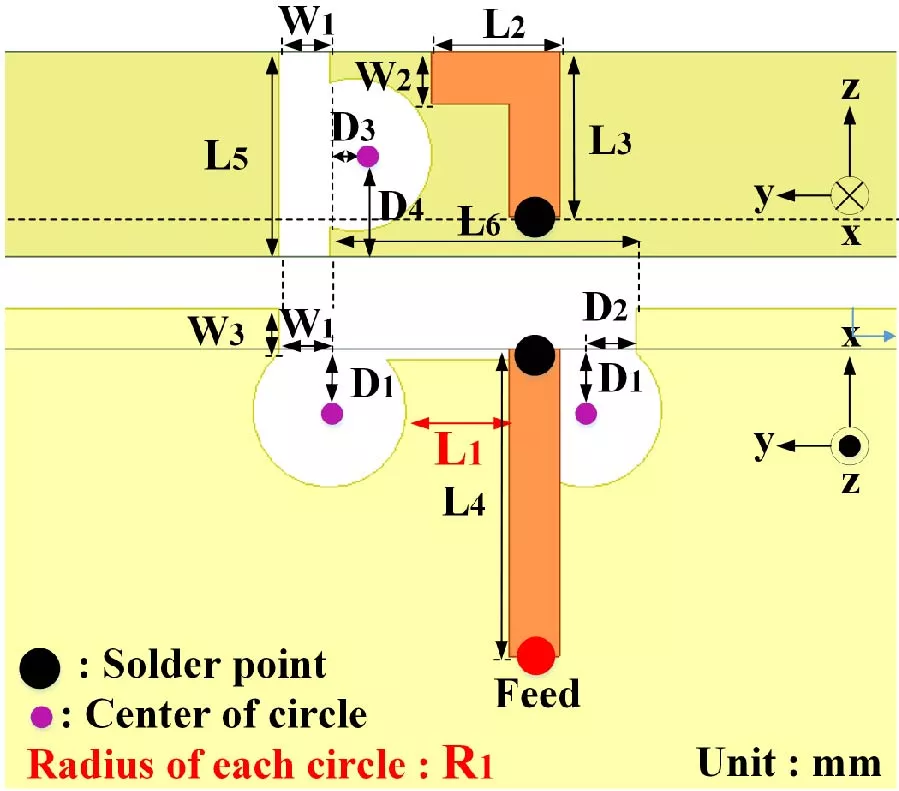
A compact, half-shaped, planar-monopole antenna optimized for ultra-wideband (UWB) communication systems was proposed, numerically analyzed, and experimentally validated. The proposed antenna is configured as a bell-shaped monopole structure fabricated on an FR-4 dielectric substrate, which is bisected along its axis of symmetry to achieve a reduced footprint. To ensure broadband impedance matching, a short-circuited stub is integrated between the monopole and the ground conductor through a plated via. The antenna dimensions are 30 × 12 × 1.6 mm3, which represent a significant reduction compared with those of conventional UWB monopole antennas. Full-wave electromagnetic simulations demonstrate that the antenna covers the FCC-authorized UWB band of 3.1-10.6 GHz with a voltage standing-wave ratio (VSWR) of ≤ 2. Experimental measurements of properties of a fabricated prototype of the proposed antenna agree well with the simulation results. In addition to the analysis of frequency-domain performance, time-domain analysis is conducted using two identical antennas in both face-to-face and side-by-side arrangements. According to the results of the time-domain analysis, the calculated correlation coefficient between signals received by the proposed antenna is 0.986, which confirms high waveform fidelity. Group-delay analysis of the proposed antenna verified stable temporal characteristics with an average delay of approximately 0.2 ns across the UWB range. These results demonstrate that the proposed antenna is a promising candidate for compact and high-performance integration in short-range, high-speed, wireless-communication devices.
Design and Experimental Evaluation of a Compact Half-shaped Printed-monopole Antenna with Short Stub for UWB Systems
2026-01-16
PIER C
Vol. 164, 271-278
Wide-Angle Scanning Phased Array Based on Phase Mode Antenna Element
Ming-Qi Yi and Shen-Yun Wang
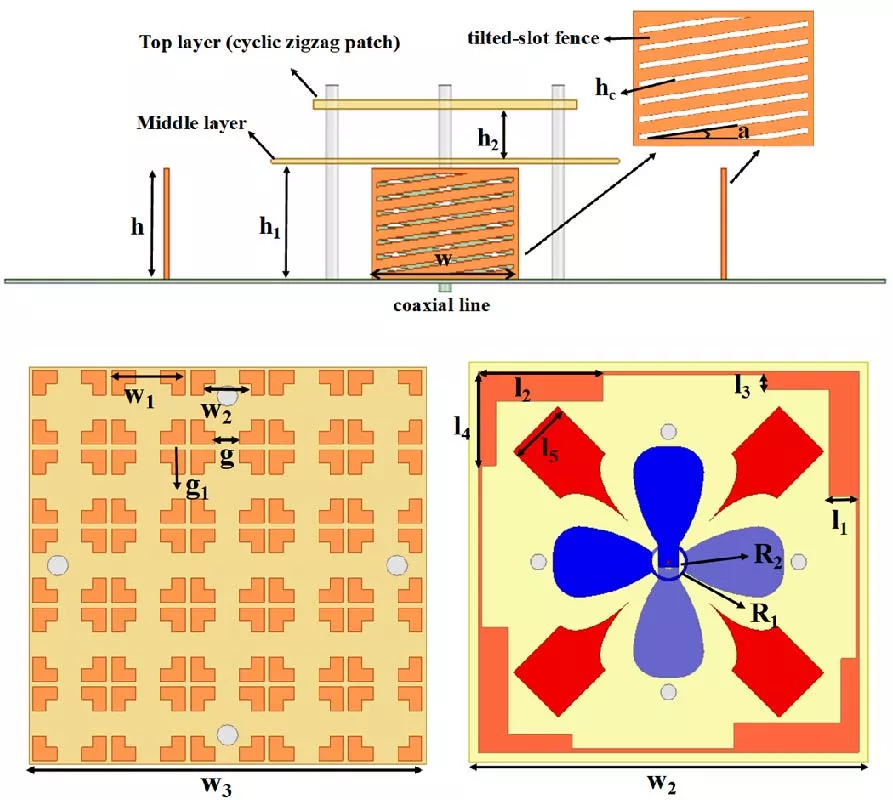
To address the significant gain degradation that conventional phased arrays suffer during wide-angle scanning, a linear antenna array based on phase mode antenna elements is proposed. The phase mode antenna element is three-layer structure with two feeding ports. It can operate in odd mode, even mode, and hybrid mode by using different excitation strategies, and continuous beam scanning is achieved using hybrid mode, which results in a wide-angle beam scanning performance of the antenna array. The maximum beam gain can be obtained by using the method of maximum power transmission efficiency (MMPTE) compared with the traditional beam scanning method. The optimal excitation distributions calculated by MMPTE lead to a significant improvement in wide-angle beam scanning for the phase mode antenna array.
Wide-Angle Scanning Phased Array Based on Phase Mode Antenna Element
2026-01-15
PIER C
Vol. 164, 263-270
A Compact Time-Domain Reflectometry (TDR)-Based Microwave Nondestructive Testing Circuit
Nadine Adnan Shaaban and Ghassan Nihad Jawad
This paper proposes a proof-of-concept circuit of a time-domain reflectometry (TDR)-based non-destructive testing (NDT) circuit. The circuit consists of a broadband six-port reflectometer with an end-fire antenna probe. The broadband operation is achieved by a reduced-size six port reflectometer that uses a special algorithm to extend the frequency of operation beyond the limits between which a normal reflectometer usually used. In addition, a highly-directive antenna probe is proposed to provide a near-constant gain across the bandwidth of operation. By operating the circuit within the frequency range 2.5-7 GHz, it is used to detect gaps of various widths between the back of a polystyrene sample and a metallic plate. Results show clear indication of the gaps' existence in addition to a shift that is associated with the gap width. The proposed circuit proves the possibility of implementing the TDR-based microwave NDT system using a low-cost and compact circuit without the need for bulky and expensive vector network analyzers. This paves the road towards utilizing this technology in real-life scenarios.
A Compact Time-Domain Reflectometry (TDR)-based Microwave Nondestructive Testing Circuit
2026-01-15
PIER C
Vol. 164, 253-262
Design of a High Gain Low SAR Microstrip Antenna Array with AMC Structure for Wearable Applications
Jialin Zhang , Chengzhu Du and Xu Wu
In this paper, a novel wearable antenna array backed by an AMC reflector is presented for high gain and low side-lobe levels. The presented antenna consists of a four-element array. The impedance bandwidth (≤ -10 dB) of the proposed antenna is from 5.6 to 6.8 GHz. After adding an AMC structure on the back side of the antenna array, the maximum measured gain reaches 13.8 dBi at 6.7 GHz; the front-to-back ratio (FBR) value is raised by 25.3 dB; and the sidelobe level is less than -20.51 dB. When the antenna array is on the human body model, the simulated SAR value is only 0.05 W/Kg/10 g, significantly lower than the international standard. These good measured results demonstrate that the proposed antenna is suitable for modern wearable applications.
Design of a High Gain Low SAR Microstrip Antenna Array with AMC Structure for Wearable Applications
2026-01-14
PIER C
Vol. 164, 243-252
A Wearable CPW-Fed Quad-Band-Notched Two-Port MIMO Antenna for IoT Applications
Jiali Wang , Chengzhu Du , Jun Chu and Ruomeng Li
This paper introduces a wearable quad-band-notched two-port Multiple Input Multiple Output (MIMO) antenna with coplanar waveguide (CPW)-fed for 5G applications. The antenna uses a liquid crystal polymer (LCP) flexible substrate with dimensions of 30 mm * 54 mm * 0.1 mm. The proposed antenna achieves four notched bands by etching four C-shaped slots on the patch and introduces a fence structure in the middle to enhance the isolation between the antenna elements, which ultimately achieves a band coverage of 3.26-10.8 GHz, with the notched-band coverage of 4.0-4.57 GHz (C-band radar Note7), 4.8-5.0 GHz (N79 mobile), 5.62-6.0 GHz ( WLAN downlink), and 8.08-8.79 GHz (ITU-R), peak gain of 6.9 dBi, radiation efficiency of above 70%, and isolation greater than 20 dB. In addition, the important performance parameters of the designed MIMO antenna include envelope correlation coefficient (ECC), diversity gain (DG), channel capacity loss (CCL) and total active reflection coefficient (TARC). The antenna is subjected to bending and human body experiments, and all the results show that the antenna has the advantages of small size, multiple notched bands, and high isolation, which has a good prospect of application in the field of wearable antennas for the Internet of Things (IoT).
A Wearable CPW-fed Quad-band-notched Two-port MIMO Antenna for IoT Applications
2026-01-14
PIER B
Vol. 117, 16-28
Multispectral Optical Emission Modeling of Sprites Using Plasma Streamer Simulations: A Computational Electromagnetics Approach for Remote Sensing Applications
Carlos Antonio Gómez Vargas and Francisco José Román Campos
We present a computational framework for the multispectral synthesis of optical emissions in Transient Luminous Events (TLEs), specifically sprites, based on plasma fluid simulations obtained with the Afivo Streamer tool. Using the simulated electric field and electron density, we compute quasi-stationary excitation, quenching, and radiative emission rates for four key spectral bands: first positive 1PN2 and second positive 2PN2 band systems of nitrogen, Lyman-Birge-Hopfield (LBH) band system, and Optical emission images OI (Ionized Atomic Oxygen) at 777.4 nm (OI 777.4 nm). The model incorporates electron-impact excitation coefficients k(E/N), non-radiative losses due to collisional quenching Q = Σiαini, and atmospheric attenuation (especially relevant for LBH). It also produces 2D emission maps and vertical brightness profiles, showing the spatial localization of each band as a function of the reduced electric field, electron density, and non-radiative losses. The results capture the temporal evolution of the discharge, from the early propagation phase to advanced branching, enabling direct comparisons with spaceborne instrumentation (e.g., ASIM). The developed scheme provides a reproducible diagnostic tool that links plasma physical variables with observed signals across multiple spectral bands.
Multispectral Optical Emission Modeling of Sprites Using Plasma Streamer Simulations: A Computational Electromagnetics Approach for Remote Sensing Applications
2026-01-13
PIER C
Vol. 164, 232-242
Electromagnetic Performances Comparison of Partitioned Stator Flux Modulation Machines with Different Auxiliary Rotor Structures
Yifei Hu , Meimei Xu , Zhijian Ling , Wenxiang Zhao and Zhaowei Wang
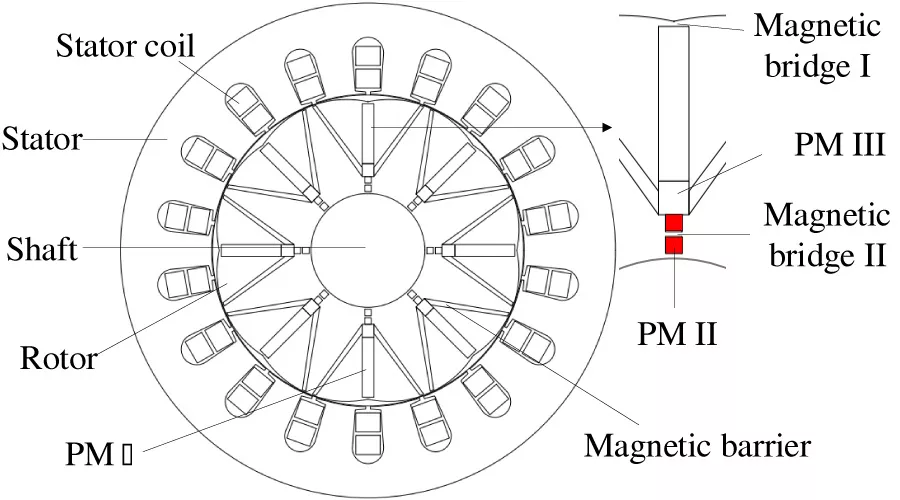
In this paper, the electromagnetic performances of partitioned stator flux modulation (PSFM) machines with different rotor structures are compared to highlight the advantages of the auxiliary rotor structures. Two novel auxiliary rotors are proposed to suppress electromagnetic vibration in PSFM machine. First, the PSFM machine topology and the analytical models for the outer air-gap permeance of the different rotors are introduced. Furthermore, a comparative analysis of the electromagnetic and vibrational performance between the different auxiliary rotor machines and the conventional rotor machine are conducted to validate the advantages of the proposed designs. Finally, machines with different auxiliary rotors are mounted onto the experimental platform for testing to validate the effectiveness of the theoretical analysis.
Electromagnetic Performances Comparison of Partitioned Stator Flux Modulation Machines with Different Auxiliary Rotor Structures
2026-01-13
PIER C
Vol. 164, 224-231
Compact Wideband Antenna Design Incorporating DGS, Slots and Tiny Reflectors for Wireless Applications
Nirav Jashvantkumar Chauhan , Chandulal Harilal Vithalani and Jagdish M. Rathod
To achieve wideband operation while maintaining a small overall footprint (26 mm × 27 mm × 1.6 mm) and electrical size of 0.46λ × 0.47λ × 0.03λ, this paper presents a compact wideband MPA (Microstrip Patch Antenna) that uses a DGS (Defected Ground Structure) and internal slots on a radiating patch and ground plane. The proposed antenna was designed on FR-4 with loss tangent = 0.02, εr = 4.4 & h = 1.6 mm, which achieves a wide bandwidth covering key wireless bands (sub-6 GHz 5G, Wi-Fi, WiMAX) with acceptable gain and radiation stability. The upper and lower edges of the band were tuned by the slot geometry and DGS, as demonstrated by parametric analysis. Full-wave electromagnetic simulation results are reported, and the fabrication and measurement procedure is described. The stated antenna achieves a peak radiation efficiency of 95.46%, a fractional bandwidth of 64.39%, a maximum gain of 4.8 dB, and an S11 below -10 dB over the range of frequency 3.57-6.96 GHz, all in a small size similar to a coin. The antenna is particularly suitable for compact wireless devices, IoT modules, and sub-6 GHz applications.
Compact Wideband Antenna Design Incorporating DGS, Slots and Tiny Reflectors for Wireless Applications
2026-01-12
PIER C
Vol. 164, 214-223
ADMM-Based Sparse SAR Imaging Algorithm with Cholesky Decomposition and Dual-Momentum Coupling
Enchen Wang , Xuechen Zhang , Daming Lin and Shumao Qiu
To address the challenges of high computational complexity in linear system solving and slow convergence of the Alternating Direction Method of Multipliers (ADMM) for compressed sensing Synthetic Aperture Radar (SAR) imaging, this study proposes a precomputation strategy based on Cholesky decomposition. Specifically, the system matrix is decomposed once during the initialization phase and reused across subsequent iterations, substantially reducing the computational overhead associated with the primal variable update. Furthermore, a novel dual-momentum coupling mechanism is designed, and building on Nesterov extrapolation, this mechanism integrates cross-momentum interactions between the real and imaginary components of dual variables, along with the historical variation trends of primal variables, thereby effectively accelerating overall convergence. Both simulated and measured data results demonstrate that the proposed method achieves a significant improvement in computational efficiency while ensuring high imaging quality.
ADMM-Based Sparse SAR Imaging Algorithm with Cholesky Decomposition and Dual-Momentum Coupling
2026-01-12
PIER C
Vol. 164, 208-213
Solution of One-Hop Sky-Wave Field of Arbitrarily Oriented LF Electric Dipole in the Planar Stratified Earth-Ionosphere Waveguide
Xinyue Hu , Lili Zhou , Zhonglin Mu , Ying Zhang and Jinsheng Zhang
In this paper, a method is proposed for solving the one-hop sky-wave propagation problems of an arbitrarily oriented lowfrequency (LF) electric dipole within a planar layered Earth-ionosphere waveguide. The purpose of this study is to clarify the relationship between the radiation field and the direction of the electric dipole source in a planar-layered Earth-ionosphere waveguide. In deriving the specific formulas, we employed the ideal far-field approximation idea for an arbitrarily oriented electric dipole in free space and the method of images in layered media. The reflection characteristics of different polarized plane waves at the interface were also taken into account. Based on the improved wave-hop theory, the expressions for the one-hop sky-wave field excited by dipole sources with different directions suitable for an irregular surface are further derived. Using the proposed method, we calculated the sky-wave fields of electric dipoles operating at 100 kHz with various orientations at different receiver altitudes. The results show that the proposed method can be conveniently used to analyze the one-hop sky-wave field of the electric dipole sources with various orientations in a planar stratified Earth-ionosphere waveguide and provides an efficient modeling tool for LF communication system design and signal prediction over complex terrain.
Solution of One-Hop Sky-Wave Field of Arbitrarily Oriented LF Electric Dipole in the Planar Stratified Earth-Ionosphere Waveguide
2026-01-12
PIER B
Vol. 117, 1-15
Bandwidth Reconfigurable Circularly Polarized Antenna with Beam Steering Ability Using Phase Gradient Metasurface
Naveen Jacob , Muralidhar Kulkarni and Krishnamoorthy Kandasamy
A bandwidth tunable, circularly polarized (CP) patch antenna, with complementary split ring resonator (CSRR), embedded on the ground plane is presented in this paper. The antenna is capable of switching between ultra-wide band (UWB) frequency response, spanning through 2.6 GHz to 12 GHz and a narrowband (NB) frequency response at 6 GHz. Excitation of CSRR results in negative permittivity medium, producing notch band response at its designed frequency. This notch band is shifted by varying the arm length of CSRR using PIN diodes. This will result in tuning the bandwidth (BW) of the NB response of antenna, spanning from 1 GHz to 4.4 GHz, by retaining the central frequency at 6 GHz. The fractional bandwidth can be varied in a range of 16% to 73.3%, exhibiting an increase by a factor of 4.58. The antenna also exhibits switchable circular polarization (LHCP/RHCP) at 6 GHz for both UWB as well as narrowband responses. A compact tunable multiband Artificial Magnetic Conductor (AMC) unit cell is also designed and is used to construct a Phase Gradient Metasurface (PGM). The radiating beam of the antenna is steered using the PGM as a reflector to obtain a beam steering angle of +36° for LHCP and -44° for RHCP radiations. The antenna is a promising solution for applications which demand bandwidth switching & beam steering, such as cognitive radio services.
Bandwidth Reconfigurable Circularly Polarized Antenna with Beam Steering Ability Using Phase Gradient Metasurface
2026-01-11
PIER B
Vol. 116, 138-157
An Overview of Advanced Control Technologies for Marine Propulsion Motors
Qingcheng Meng , Jingwei Zhu , Yonghan Liu , Shukuan Zhang and Yechi Zhang
With the ongoing transformation of the global energy structure and the growing demand for environmental sustainability, transportation electrification has been rapidly advancing and is becoming a key pathway toward achieving carbon neutrality. Maritime transportation accounts for a significant share of carbon emissions, where conventional fuel-based propulsion remains dominant. Consequently, marine electrification is experiencing a transformative opportunity driven by both energy and environmental imperatives. As the core component of the propulsion system, the electric motor places increasingly stringent requirements on control performance and reliability. This paper reviews recent advances in marine propulsion motor control technologies, focusing on three major areas: model predictive control (MPC), fault-tolerant control (FTC), and position sensorless control. In MPC, multi-plane modeling and virtual voltage vector regulation for six-phase permanent magnet machines have substantially improved dynamic response and control accuracy. Additionally, multi-objective optimization can be achieved through the design of weight factors, while the introduction of observers or data-driven approaches can enhance robustness against parameter variations. In FTC, the development from optimal current compensation to post-fault subspace reconstruction topologies has provided a theoretical foundation for robust control under complex operating conditions. In position sensorless control, medium- and high-speed sliding-mode observation combined with low-speed high-frequency signal injection enables accurate position estimation over the full speed range. Future research is expected to integrate the feature extraction and modeling capabilities of machine learning to enhance observer design and fault-tolerant strategies, promoting the intelligent and data-driven evolution of marine propulsion motor control technologies.
An Overview of Advanced Control Technologies for Marine Propulsion Motors
2026-01-10
PIER C
Vol. 164, 195-207
Quantitative Comparison Study on the Impulse Characteristics of Typical Radial Grounding Electrodes in Transmission Lines
Wen Cao , Jiarui Zhang , Wei Shen and Yasong Cao
To reveal the impulse behavior of radial grounding electrodes with different geometries, a comparative analysis was performed on three typical types: cross-shaped, Y-shaped, and rectangular ray-shaped electrodes. Existing research often examines only a single lightning waveform or influencing factor without addressing the coupled effects of electrode shape and soil resistivity. In this work, CDEGS simulation software was used to analyze the lightning transient characteristics of the grounding electrodes. Multiple lightning current waveforms and soil resistivity levels were considered to quantitatively compare the power frequency resistance, impulse resistance, ground potential rise, step voltage, and frequency-domain response. The results indicate that the rectangular ray-shaped electrode exhibits better impulse performance in low-resistivity soils (150 Ω·m), whereas the cross- and Y-shaped electrodes performed more effectively in high-resistivity soils (2000 Ω·m). For mountainous regions with high lightning density, a cross-shaped configuration is preferred owing to its smaller footprint and lower inductive effect. In high-resistivity areas with infrequent lightning, a Y-shaped electrode provides a more favorable overall protection
Quantitative Comparison Study on the Impulse Characteristics of Typical Radial Grounding Electrodes in Transmission Lines
2026-01-10
PIER B
Vol. 116, 125-137
Frequency-Dependent Electromagnetic Response of Argon, Krypton, and Xenon Plasmas: A Theoretical and Simulation Study
Ayoub El Jaouhari , Abdelhak Missaoui , Moussa El Yahyaoui , Majid Rochdi and Morad El Kaouini
In this paper, the frequency-dependent electromagnetic response of argon, krypton, and xenon plasmas is investigated using a fluid approach, the Drude model and the Transfer Matrix Method (TMM). The key plasma properties, electron density, collision frequency and plasma frequency, of a Capacitively Coupled Plasma (CCP) were obtained using a drift-diffusion fluid model within the COMSOL Multiphysics. These properties were then used to predict how the plasma would react to electromagnetic waves in the 0 to 200 gigahertz band. The obtained results demonstrate that the reflective and transmissive characteristics of each gas depend on its plasma frequency. Argon acts as an efficient reflector below 20 GHz and becomes highly transparent above 30 GHz. In contrast, Krypton maintains strong reflection up to 85 GHz, while xenon remains reflective up to 140 GHz before it becomes transmissive. The observed differences are caused by the variations in each gas's plasma frequency and electron-neutral collision rates. The TMM results show excellent agreement with Finite-Difference Time-Domain (FDTD) simulations. The comparison between the two methods demonstrates that TMM is a faster and equally accurate approach for wideband electromagnetic analysis and for the design of adaptive plasma-based frequency-selective devices, including plasma antennas, plasma reflectors and intelligent reflective surfaces (IRS).
Frequency-Dependent Electromagnetic Response of Argon, Krypton, and Xenon Plasmas: A Theoretical and Simulation Study
2026-01-09
PIER C
Vol. 164, 186-194
Design and Performance Evaluation of a Narrow-Band Metasurface Radomes for Reduction of RCS in Stealth Applications
Pandigunta Aruna Kumari , Madhavareddy Venkata Narayana , Govardhani Immadi , Yogesh Solunke and Kanaparthi Venkata Phani Kumar
A compact Meta-surface absorber based on a novel combination of concentric split-ring resonators (SRRs) and arc dipoles is presented in this work. The proposed CSAD unit cell is a copper structure consisting of Quad dipoles and SRRs with a substrate with a dielectric constant of 4.3 and the tangent loss will be 0.02. The design resonates,17 GHz with a bandwidth of 300 MHz and 99.9% absorption. The symmetric single-band meta-surface allows for polarization-independent, angle-stable absorption up to 60°. The unit cell size for the proposed design is 10.375 × 10.375 × 1.6 mm3. It can be used for reducing the radar cross-section for stealth applications, such as UAVs that require selective frequency absorption. Simulations closely match observations, verifying the meta-surface's high stability and demonstrating its usefulness for practical electromagnetic validations.
Design and Performance Evaluation of a Narrow-Band Metasurface Radomes for Reduction of RCS in Stealth Applications