Measurement and Prediction of Signal Strength of Wireless Sensor Network
Li Yang Foong ,
Soo Yong Lim and
Kheong Sann Chan
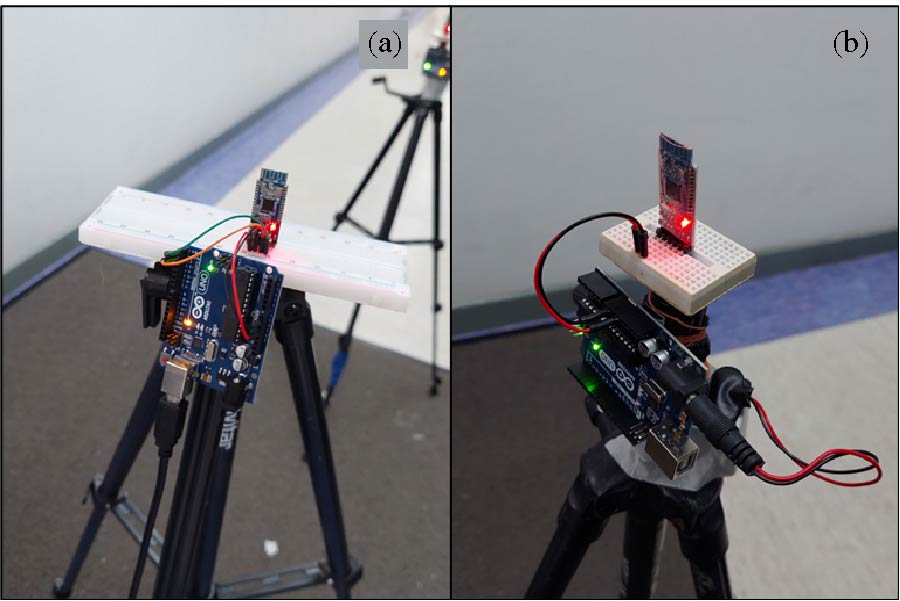
This paper utilizes an efficient prediction model using the concept of ray-tracing based on the Theory of Geometrical Optics (GO) to predict the signal strength between two wireless sensor nodes within an indoor environment, which can provide aid to designers in the implementation of Wireless Sensor Networks (WSNs). WSN is a technology that is widely used for functions such as collecting and processing data, then transmit it wirelessly within the network. WSNs are typically autonomous and self-organizing networks of nodes that communicate wirelessly with each other and collaborate to perform tasks such as data processing, sensing, aggregation, and forwarding. With the increasing prevalence of WSNs in indoor environments, installations of numerous sensor nodes are necessary to collect and transmit data in certain areas, which builds up to a single network. Thus, to ensure the functionality of the WSNs, it is of utmost importance to ensure a reliable connection between the nodes, which is directly affected by its location and placement. The prediction model developed in this work is built using MATLAB software, which is then implemented into a Graphical User Interface (GUI) using MATLAB App Designer, which allows modifications to be made to the prediction model as to fit the user’s environment. The results of our prediction model are compared against experimental ones obtained through physical measurements using wireless communications technologies such as ZigBee and Bluetooth Low Energy (BLE).