Search Results(13783)

2028-01-26
PIER C
Vol. 165, 118-130
Design and Execution of Miniaturized Multi-Band Antenna for Next-Generation Wireless Communication System
Prasanna L. Zade , Sachin S. Khade , Deveshree Marotkar , Vaishali Dhede , Pravin Tajane , Pranjali M. Jumle and Prabhakar Domaji Dorge
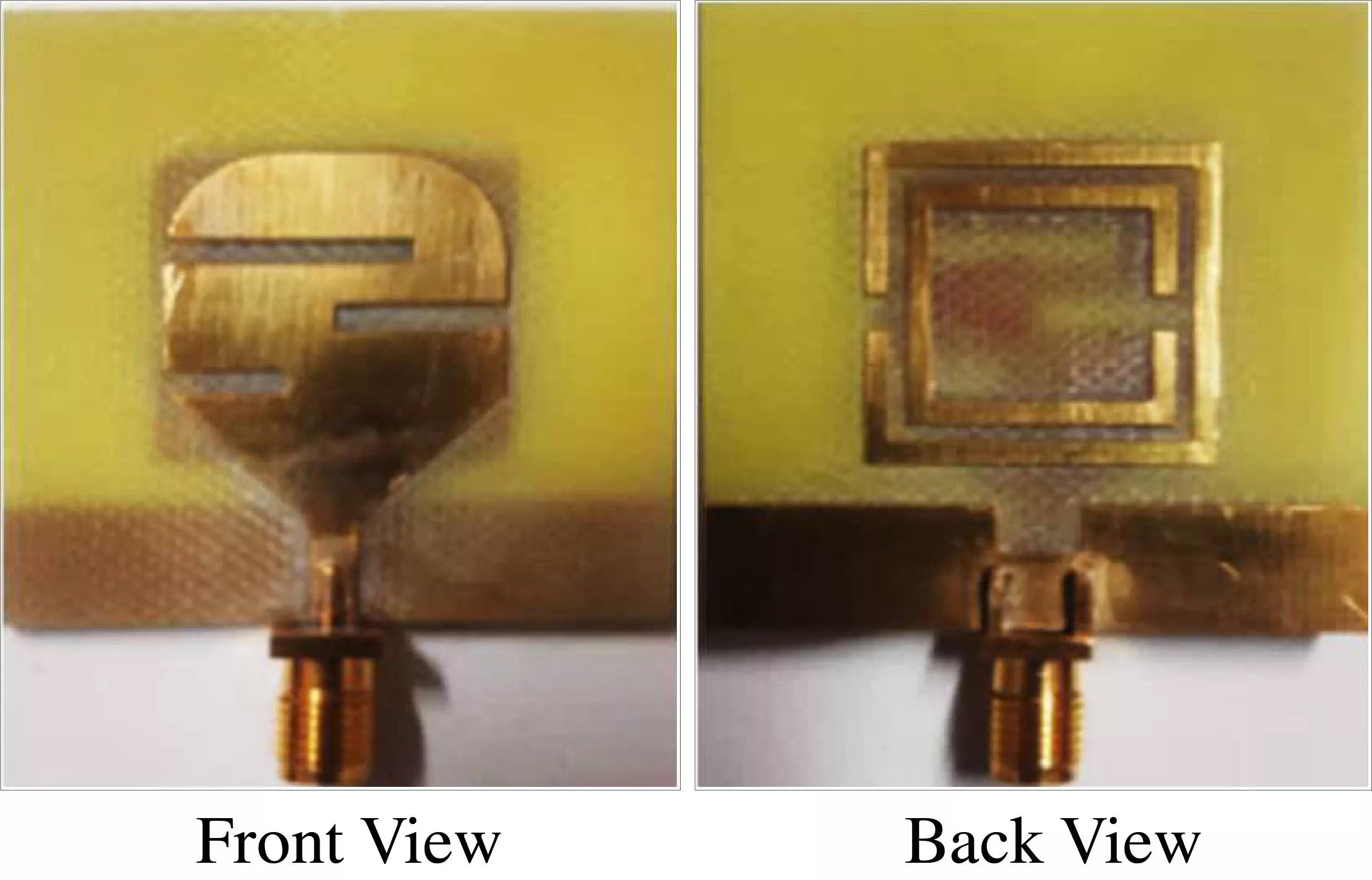
This paper describes the design methodology of a compact multiband microstrip patch antenna intended for next-generation wireless communication applications. The proposed antenna operates over seven distinct frequency bands: 1.25-1.32 GHz, 2.30-2.44 GHz, 2.50-2.75 GHz, 2.92-3.25 GHz, 3.40-3.65 GHz, 3.70-4.23 GHz, and 4.70-6.0 GHz. These operating bands support a wide range of wireless services, including LTE, 5G communications, Wi-MAX, ISM applications, radar systems, and broadband wireless communications. Multiband performance is achieved through the incorporation of three strategically placed slits in the radiating patch along with a square split-ring resonator (SSRR). By adjusting the dimensions of the slits and the position of the SSRR, the operating frequency bands can be effectively tuned. The proposed antenna occupies a compact footprint of 40 × 40 mm2 and consists of a radiating patch, a partial ground plane, and an SSRR structure. Simulation results demonstrate resonant frequencies at 1.3, 2.38, 2.66, 3.0, 3.5, 4.2, 4.9, and 5.7 GHz. Owing to its compact size, multiband capability, and simple structure, the proposed antenna offers advantages in terms of reduced cost, lower system complexity, and miniaturization, making it suitable for modern wireless communication systems.
Design and Execution of Miniaturized Multi-Band Antenna for Next-Generation Wireless Communication System
2026-12-19
PIER C
Vol. 163, 168-180
Experimental Results and Analysis of a 2-Receiver Midrange Wireless Power Transfer System in Seawater
Xiaoliang Li , Wangqiang Niu and Xianwen Zhou
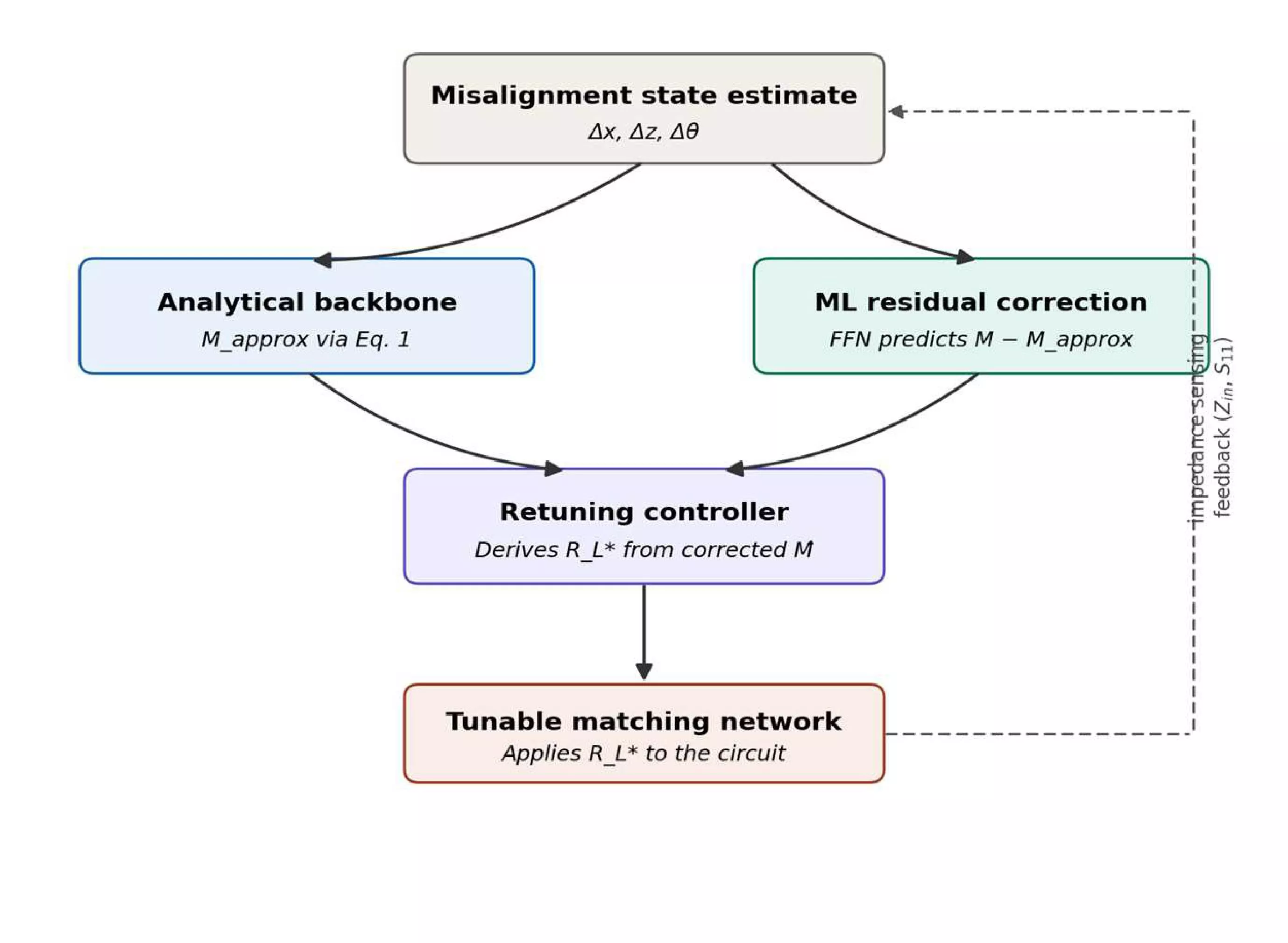
Due to the high electrical conductivity, relative permittivity, and magnetic permeability of seawater, the propagation behavior of electromagnetic fields differs significantly from that in air. The conductive nature of seawater causes strong eddy current loss and magnetic field attenuation, thereby reducing the effective coupling coefficient and resulting in frequency detuning between the transmitter and receiver coils. Moreover, the marine environment introduces parasitic impedance paths and additional energy dissipation due to the conductive medium, which further decreases transmission efficiency. These unique electromagnetic characteristics make the design and optimization of wireless power transfer (WPT) systems in seawater more complex and challenging than in air, motivating this study to develop and analyze a dual-receiver WPT architecture that improves midrange transmission efficiency under underwater conditions. To address this issue, a single-transmitter dual-receiver (1TX-2RX) WPT system operating in the 300-550 kHz frequency range is designed and implemented. Experimental results demonstrate that, under midrange transmission in seawater, the efficiency of the proposed 2RX architecture improves markedly from 12% in the 1RX system to 25%, while maintaining stable output performance under various receiver coil misalignment conditions. In addition, compared with operation in air, the optimal operating frequency of the 2RX system in seawater shifts leftward from approximately 460 kHz to 410 kHz. To better characterize the impact of seawater on transmission performance, complex impedance and mutual inductance parameters are incorporated into the conventional circuit model, enabling effective representation of the additional losses and coupling attenuation induced by the conductive medium. The predicted load voltage is consistent largely with the experimental measurements, validating the accuracy and applicability of the proposed modeling approach. Overall, this study not only verifies experimentally the feasibility of improving midrange transmission efficiency through a dual-receiver architecture but also establishes theoretically a circuit modeling method suited better for seawater environments, providing useful insights for the design and optimization of marine WPT systems.
Experimental Results and Analysis of a 2-Receiver Midrange Wireless Power Transfer System in Seawater
2026-03-12
PIER C
Vol. 167, 50-60
Enhanced Gain Ultra-Wideband Antenna with Different Notch Response
Mohammed Fadhel Hasan , Hussein Al-Jeshami , Hussam Al-Saedi , Hussain A. Hammas , Muhannad Y. Muhsin and Jawad K. Ali
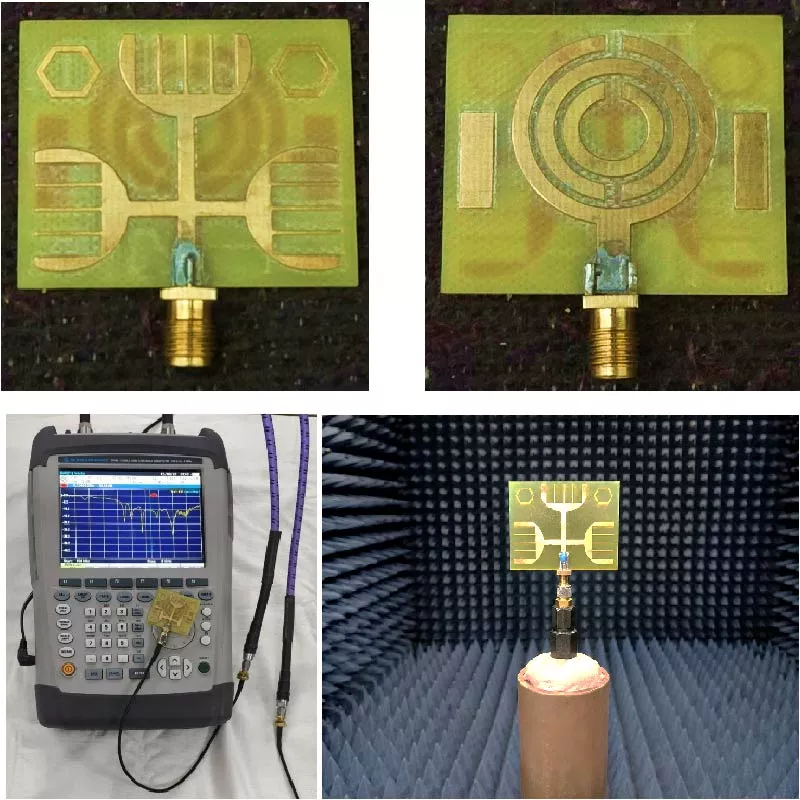
This article presents an enhanced-gain ultra-wideband (UWB) antenna with multiple notch responses to suppress the effects of coexisting wireless systems. The proposed antenna is developed in two stages. In the first stage, a reduced-ground U-shaped monopole with parasitic patches was designed to obtain a wide bandwidth between 3.02 and 10.76 GHz while maintaining a peak realized gain higher than 7 dB. In the second stage, selective frequency-rejection capabilities are tuned using split-ring structures (SRSs) for dual and higher-order notch responses. Two configurations are studied: dual-set SRS, which gives rise to low and high region notches centered at 5.73 GHz and 8.31 GHz, respectively, and higher-order SRS notch configuration providing a broad notch about 6.78 GHz with a 5.45% fractional rejection bandwidth. Parametric analysis indicated that the notch depth, notch bandwidth, and center frequency were independent and could be controlled via geometric tuning. The simulated results, supported by measurements from Keysight's PNA-X, corroborate the reflection coefficient, gain behavior, and notch performance; any deviations are attributed to variations experienced during the fabrication. The proposed approach achieves a UWB, increased gain, and flexible interference suppression, qualifying it for modern UWB communication systems that require a compact design.
Enhanced Gain Ultra-Wideband Antenna with Different Notch Response
2026-03-12
PIER Letters
Vol. 129, 59-66
A Low-Profile Polarization Conversion Metasurface Array Antenna with Broadband RCS Reduction
Jinhua Tian , Xutong Wang , Zixin Liang , Yuzhen Gao , Chunting Wang and Liping Han
A novel integration method of a polarization conversion metasurface (PCM) and an array antenna for radar cross-section (RCS) reduction is presented. This method combines the PCM with a slot array antenna operating at 11.5 GHz for reducing RCS. The metasurface is composed of polarization conversion units arranged in a checkerboard pattern, and each PCM unit cell is made up of two symmetrical fork-shaped structures. The polarization conversion units can achieve a polarization conversion rate of over 90% in the frequency band of 10.12-19.93 GHz (65%). The measurements demonstrate that the antenna attains over 10 dB RCS reduction in the frequency range of 9.9-20.7 GHz (71%). Meanwhile, the radiation performance of the antenna is effectively preserved.
A Low-Profile Polarization Conversion Metasurface Array Antenna with Broadband RCS Reduction
2026-03-11
PIER C
Vol. 167, 39-49
Mode Analysis for Prediction of Heating Patterns in Microwave Cavities Powered by Magnetron
Freda Carvalho , Ashwini Kotrashetti and Kaustubh Bhattacharyya
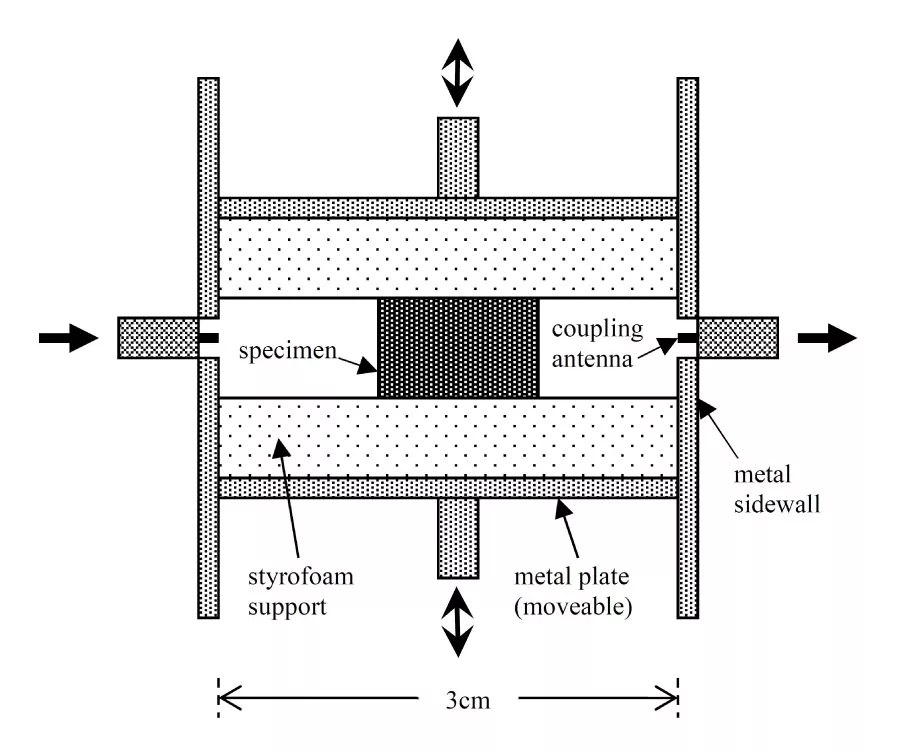
Microwave heating, widely employed in the food industry, offers significant advantages due to its volumetric heating capabilities. However, its efficiency is often hindered by non-uniform heating patterns. This study aims to analyse heating patterns in a rectangular, single-fed domestic microwave oven, leveraging cost-effective methodologies. Theoretical analyses, electromagnetic simulations, and experimental measurements were conducted to characterise the resonant modes within an empty cavity and with a load. The mathematical computation of multiple mode superposition within the cavity was performed for two domestic microwave ovens. Mathematical and experimental analyses demonstrate a close agreement in results. The findings reveal that mode distribution, influenced by cavity dimensions, load properties, load placement, and magnetron characteristics, significantly impacts heating patterns. This study helps us understand that in spite of the dynamic nature of magnetron, it is important to superimpose multiple resonant modes prevalent within the cavity to understand influences on microwave heating pattern of any food materials.
Mode Analysis for Prediction of Heating Patterns in Microwave Cavities Powered by Magnetron
2026-03-10
PIER B
Vol. 117, 78-93
Energy Efficiency Maximization for IRS-Assisted UAV-D2D Cooperative MEC Offloading
Chenwei Feng , Haojun Xing , Jun Zhou , Zhenzhen Lin , Huangjie Guo and Ruilong Chen
With the rapid development of technologies such as Big Data, Cloud Computing, Artificial Intelligence (AI), and Internet of Things (IoT), there is an increasing demand for real-time computing and low-latency data transmission. Mobile Edge Computing (MEC) technology has been proposed to reduce data transmission latency and alleviate the burden on the core network, but MEC still faces the problem of limited computational resources and bandwidth in high-density device environments. To address these issues, this study proposes a joint optimisation energy-efficiency maximisation strategy for Intelligent Reflective Surface (IRS)-based Unmanned Aerial Vehicle (UAV) and Device-to-Device (D2D) collaborative Mobile Edge Computing (MEC) systems. The strategy integrates optimisation of task offloading decisions, UAV trajectory planning, computational resource allocation and IRS phase regulation to maximise the energy efficiency of the system. The highly coupled and non-convex optimisation problem is solved iteratively by designing a twoloop iterative optimisation framework combining Dinkelbach's algorithm with the block coordinate descent (BCD) method using the Lagrange multiplier method and the successive convex approximation (SCA) technique. Simulation results show that the optimisation strategy in this study significantly improves the energy efficiency of the system compared to the conventional scheme, especially in IRS phase optimisation and UAV trajectory adjustment.
Energy Efficiency Maximization for IRS-Assisted UAV-D2D Cooperative MEC Offloading
2026-03-08
PIER C
Vol. 167, 32-38
Design of a π-Type Broadband Flat Negative Group Delay Circuit
Aixia Yuan , Zhiyang Feng , Junzheng Liu , Yuwei Meng , Niannan Chang and Hongjun Zhang
This study proposes a novel π-type circuit topology designed to achieve broadband and flat negative group delay (NGD) characteristics. Featuring a simple structure composed entirely of passive lumped elements, the proposed design offers significant advantages in terms of ease of fabrication, low cost, and seamless integration into larger microwave systems. First, a comprehensive theoretical analysis was conducted to establish the operational principles and derive the design equations. We then systematically investigated the sensitivity of the circuit's performance to variations in individual component values, which provides crucial guidelines for practical implementation. To validate our theoretical findings, a physical prototype with compact dimensions of 32 mm × 35 mm was designed and fabricated. Experimental results demonstrate that at the center frequency of 107.5 MHz, the circuit achieves an NGD of -2.27 ns with an insertion loss of 19.5 dB. Notably, the circuit maintains a wide flat NGD bandwidth of 151 MHz, exhibiting a group delay fluctuation of merely 4.1% across the band. These results confirm the effectiveness and robustness of the proposed circuit for broadband microwave applications.
Design of a π-type Broadband Flat Negative Group Delay Circuit
2026-03-06
PIER C
Vol. 167, 21-31
Optimized Hierarchical Nested Array for Enhanced Uniform Degrees of Freedom in Sparse Array DOA Estimation
Guibao Wang , Keyi Yu , Xianghui Wang and Shuzhen Wang
Sparse arrays have been extensively investigated for their capability to enhance degrees of freedom (DOFs). However, conventional nested array configuration is susceptible to strong mutual coupling (MC), while its achievable uniform DOFs (uDOFs) remains limited. To address these challenges, this paper proposes two optimized hierarchical nested arrays, designated as OHNA-I and OHNA-II. OHNA-I reconstructs the spatial arrangement of subarrays through a hierarchical shifting operation, effectively extending the continuous segment of the difference co-array (DCA). Building on this, OHNA-II further optimizes the subarray geometry via sensor displacement, achieving a better balance between uDOF enhancement and MC suppression, thereby maintaining higher uDOFs while reducing inter-sensor coupling interference. Numerical simulation results demonstrate that, under the same number of physical sensors, the proposed structures - particularly OHNA-II - achieve a greater number of uDOFs than existing classical sparse arrays. Furthermore, in scenarios with strong MC, the proposed structure exhibits superior robustness and lower root mean square error (RMSE) in DOA estimation.
Optimized Hierarchical Nested Array for Enhanced Uniform Degrees of Freedom in Sparse Array DOA Estimation
2026-03-06
PIER C
Vol. 167, 15-20
Ac Losses Modeling in ReBCO Superconducting Coils Using the Volume Integral Method
Sara Fawaz and Hocine Menana
This paper presents a fast and efficient modeling approach based on the volume integral method for the characterization of AC losses in high-temperature superconducting coils made of second-generation Rare-earth Barium Copper Oxide (ReBCO) tapes. Three modeling strategies are investigated and compared, considering the detailed multilayer tape configuration, the homogenized tape configuration, and the simplified single-layer superconducting tape representation. These approaches aim to evaluate the impact of geometrical and electromagnetic simplifications on the accuracy of the results while significantly reducing computational time. In particular, the homogenization of the electromagnetic properties of the tape is explored to accelerate simulations without compromising the accuracy of key physical quantities such as AC losses and current density distribution. The modeling results are compared to measurements.
AC Losses Modeling in ReBCO Superconducting Coils Using the Volume Integral Method
2026-03-05
PIER M
Vol. 137, 45-55
Optimized Low-Profile Coding Metasurface for Broadband and Wide-Angle RCS Reduction
Ke Wang , Wei Li , Chao Zhang , Yichao Zhou and Shijie Xie
This study proposes a broadband, wide-angle metasurface for bistatic radar cross-section (RCS) reduction by integrating a low-profile bent-line unit design with an Adaptive Binary Particle Swarm Optimization algorithm enhanced by Array Pattern Synthesis (ABPSO-APS). The optimized metasurface achieves over 10 dB of bistatic RCS reduction across 8.4-21 GHz (86.7% fractional bandwidth), with a peak reduction of 22 dB, outperforming conventional checkerboard, genetic algorithm, and particle swarm optimization layouts by 22.82%, 15.27%, and 7.91%, respectively. The design also exhibits angular stability up to 30° and polarization insensitivity under both TE and TM incidences, while maintaining an ultrathin profile of only 0.1λ (where λ is the wavelength at the center frequency). These results demonstrate its strong potential as a compact and efficient solution for advanced electromagnetic stealth and radar signature control applications.
Optimized Low-Profile Coding Metasurface for Broadband and Wide-Angle RCS Reduction
2026-03-05
PIER Letters
Vol. 129, 54-58
Dual-Rotor Electromagnetic Energy Harvester Using PCB Coils for Shaft-Mounted Wireless Sensor Applications
Van Ai Hoang and Young Chul Lee
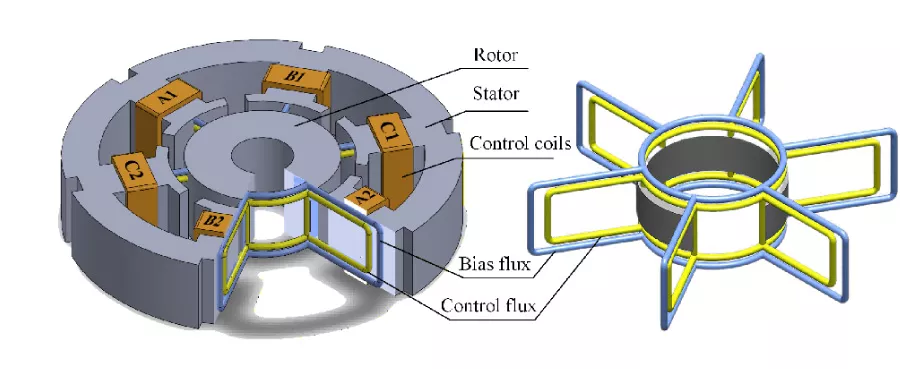
Supplying battery-free power to wireless sensor systems (WSS) mounted on rotating shafts remains a major challenge due to limited installation space, low rotational speed, and the requirement for long-term autonomous operation. This paper presents a compact dual-rotor energy harvester (EH) based on multilayer printed circuit board (PCB) sheets, designed for powering WSSs installed on ship propulsion shafts. Stacked multilayer PCB coils forming a three-dimensional structure are arranged on both the inner and outer rotors to enhance magnetic flux linkage and power density. The experimental results show that the EH generates power levels up to 959 mW at a shaft speed of 300 rpm. The output power improved nonlinearly with increasing rotational speed, demonstrating its suitability for real-time monitoring applications. The proposed EH offers a promising solution for powering WSS in autonomous driving technologies, with the potential for further optimization and integration into various mobility systems.
Dual-Rotor Electromagnetic Energy Harvester Using PCB Coils for Shaft-Mounted Wireless Sensor Applications
2026-03-04
PIER C
Vol. 167, 4-14
High Gain Circularly Polarized Dual-Band Antenna Array Using Hybrid Couplers
Qurratul Ayn , Yuvaraj Sivasubramanian and Kiran Kumar Gurrala
This work presents a dual-band circularly polarized antenna array in which adjacent elements are excited with quadrature phase progression using a cascaded hybrid-coupler feeding network comprising one rat-race coupler and two branch-line couplers. Double-T monopole elements enable dual-band operation, achieving impedance bandwidths of 300 MHz (2.4-2.7 GHz) and 975 MHz (5.025-6 GHz) with corresponding axial-ratio bandwidths of 110 MHz and 525 MHz. The array provides peak gains of 9.19 dB and 9.49 dB with simulated radiation efficiencies of 90% and 87% in the respective bands. The array yields peak realized gains of 9.19 dBic and 9.49 dBic with simulated total efficiencies of 90% and 87% in the corresponding bands. Unlike sequential rotation or multilayer CP arrays, the proposed single-layer planar hybrid-coupler network ensures frequency-stable dual band circular polarization. An analytical formulation of the array factor and axial ratio sensitivity is provided to clarify the CP synthesis mechanism and its suitability for compact vehicular platforms.
High Gain Circularly Polarized Dual-band Antenna Array Using Hybrid Couplers
2026-03-04
PIER C
Vol. 167, 1-3
Phase Noise Experimental Characterization of CRLH Distributed Oscillators
Walter Ciccognani , Antonio Serino , Giancarlo Bartolucci , Lucio Scucchia and Stefan Simion
The phase noise levels of the output signals provided by two CRLH (Composite Right-/Left-Handed) distributed oscillator configurations are measured and compared. The first CRLH oscillator configuration provides two output signals, drain-line and gate-line output signals, available at the ends of the drain-line and gate-line that are not used for connecting the oscillator feedback. The second CRLH oscillator configuration is obtained by adding a Wilkinson power combiner to the first configuration that sums the drain-line and gate-line output signals for a single-output signal, a combined output signal. The experimental results show that the best performance in terms of output power and spectral purity can be obtained for the single-output CRLH oscillator.
Phase Noise Experimental Characterization of CRLH Distributed Oscillators
2026-03-04
PIER Letters
Vol. 129, 47-53
A Frequency and Linear Polarization Reconfigurable Printed Dipole Antenna
Yulian Ruan , Shixing Yu and Na Kou
In this letter, a frequency and linear polarization(LP) reconfigurable antenna is proposed. The antenna consists of two pairs of printed dipoles as the primary radiating patches. By independently controlling the direction of flowing current using loaded PIN diodes, the dynamic reconfiguration of both frequency and linear polarization (LP) can be realized. In addition, a dual-band artificial magnetic conductor (AMC) reflector is added under the radiator, which can effectively reduce the antenna profile to 0.1λ0 (12.4 mm, where λ0 is the wavelength at low operating frequency). Both simulated and experimental results show that the proposed antenna can operate in four modes: 0° LP low frequency (2.36-2.77 GHz) state, 0° LP high frequency (3.25-3.68 GHz) state, 90° LP low frequency state, and 90° LP high frequency state. The antenna exhibits stable radiation patterns, with gain values of 7.56 dBi in the low frequency state and 8.03 dBi in the high frequency state. This antenna is suitable for ISM band applications, such as Wi-Fi (2.4-2.48 GHz) and Bluetooth (2.4-2.48 GHz), as well as TDD Band 42, meeting the requirements of modern wireless communication systems.
A Frequency and Linear Polarization Reconfigurable Printed Dipole Antenna
2026-03-03
PIER C
Vol. 166, 278-284
A Compact Two-Layer Diplexer with High Isolation Using a Hybrid Filtering Approach for 5G Co-Site Applications
Hongyun Guo , Tao Tang , Xiangyan Zhao , Melad M. Olaimat and Wei Hu
This paper presents a compact two-layer diplexer based on a vertically stacked architecture with hybrid filtering, in which a dual-band bandpass power divider (PD) is integrated with low-pass (LPF) and high-pass filters (HPF). The design utilizes a double-layer dielectric substrate: the upper layer integrates a dual-band bandpass filter (BPF) and a Wilkinson PD, while the lower layer incorporates low-pass and high-pass filtering sections. Metallized vias and impedance-matching networks are employed to enable tight inter-layer coupling and ensure excellent electrical performance within a miniaturized footprint. The results indicate that the proposed diplexer achieves insertion losses below 4 dB and 4.5 dB in the two passbands (3.4-3.8 GHz and 4.7-5.0 GHz), respectively (including the inherent 3 dB loss of the power divider), input return losses exceeding 13 dB and 11 dB, respectively, approximately 45 dB out-of-band rejection at ±400 MHz from the passband edges, and inter-port isolation better than 30 dB. These characteristics satisfy the stringent requirements for multi-band co-site operation in 5G base stations and terminal devices.
A Compact Two-Layer Diplexer with High Isolation Using a Hybrid Filtering Approach for 5G Co-Site Applications
2026-03-02
PIER C
Vol. 166, 267-277
A Wideband Dual-CP Antenna with Low-Profile Based on Distributed Coupling for Coal Mine Communication
Lei Li , Xiaomeng Wang , Yuting Jia , Yanting Wang , Hongyu Zhang and Jingchang Nan
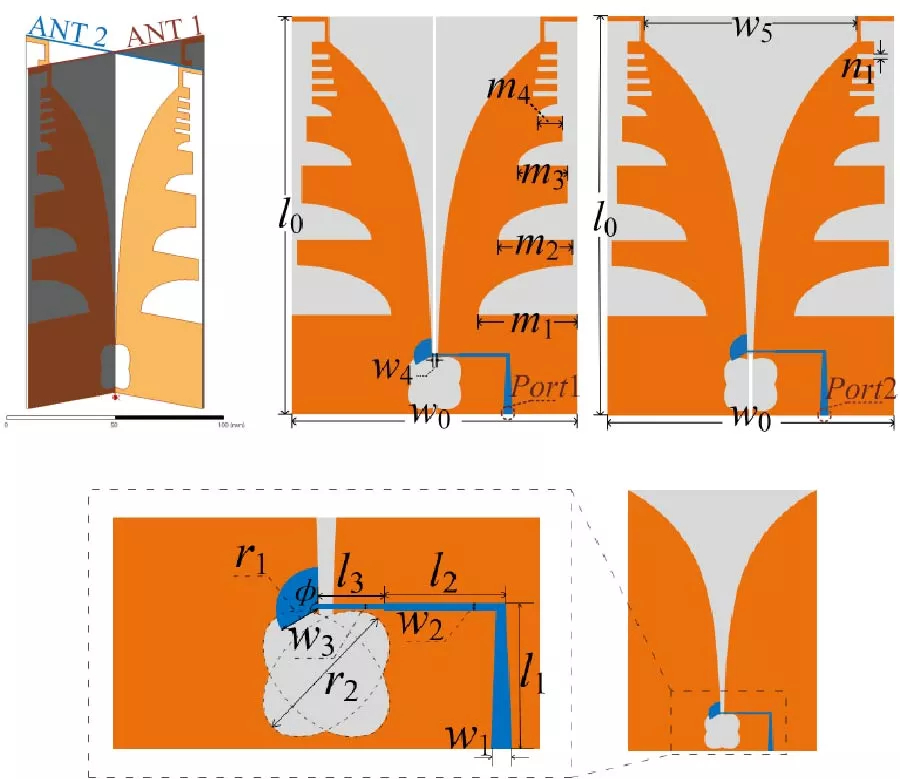
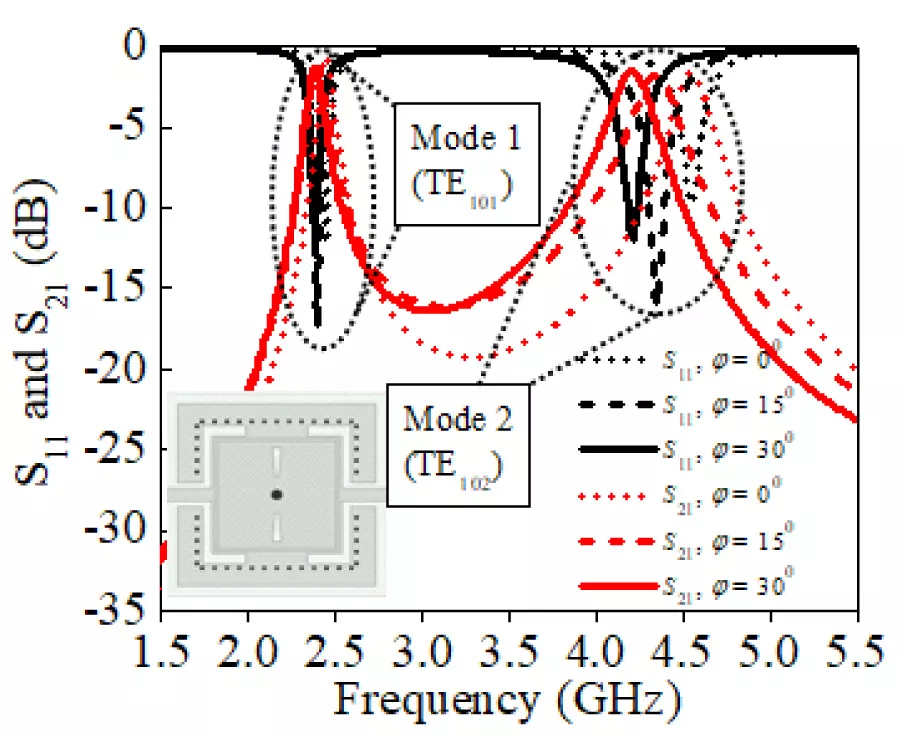
This study presents a wideband dual-circularly polarized (dual-CP) antenna based on a distributed electromagnetic coupling mechanism. The antenna employed a circular slot structure fed by dual L-shaped microstrip lines. By introducing a rectangular protrusion on the ground plane and splitting it with a narrow slit, multiple parallel radiating paths were formed, establishing a distributed coupling mechanism. This mechanism introduces multiple resonant points to extend the impedance bandwidth (IBW) and generates multiple orthogonal components to enhance the axial ratio bandwidth (ARBW). The dual-port, left-right symmetric configuration enables dual-CP operation. The narrow slit decouples the shared current paths between the feeding structures, further enhancing the port isolation. Owing to its single-layer structure, the fabricated antenna achieves a low profile of only 0.011λ0. Measured results show an IBW of 87.8% (2.98-7.65 GHz) and an ARBW of 66.9% (2.72-5.47 GHz). The proposed antenna achieves a wide bandwidth and low profile simultaneously, featuring a simple and easy-to-manufacture structure. Its operating band meets the requirements for coal mine communication systems.
A Wideband Dual-CP Antenna with Low-Profile Based on Distributed Coupling for Coal Mine Communication
2026-03-02
PIER C
Vol. 166, 257-266
Fault-Tolerant Direct Torque Control with Harmonic Suppression for Dual Three-Phase Synrms Using a Five-Leg Inverter
Ye Yuan , Yu Nan , Fan Yang , Yizhou Hua , Shusheng Li , Weiping Niu , Zhenzhen Kong , Xifeng Wang and Sichao Chen
High reliability and stability are essential for drive systems in intelligent inspection robots used in the power industry. To meet this requirement, this study investigates dual three-phase synchronous reluctance motors and proposes a five-leg fault-tolerant drive strategy based on direct-torque control (DTC). Unlike conventional dimension-reduction coordinate transformation methods that require isolating the faulty phase, which often leads to degraded system performance, the proposed approach introduces a bridge-arm sharing technique. By electrically coupling the faulty phase with a healthy phase, the spatial voltage vector distribution was reconstructed, enabling the reutilization of the faulty phase windings. Under single-phase fault conditions, the method effectively synthesizes the missing voltage vectors, preserves a circular flux linkage trajectory in the α-β subspace, suppresses 5th and 7th harmonics, and improves the current waveform quality. Simulation results verify that the strategy delivers superior harmonic suppression, reduced torque ripple, and enhanced system reliability, offering a novel technical pathway for fault-tolerant control of multiphase motors with strong potential for engineering applications.
Fault-Tolerant Direct Torque Control with Harmonic Suppression for Dual Three-Phase SynRMs Using a Five-Leg Inverter
2026-03-01
PIER C
Vol. 166, 244-256
On the Performance of CRLH Antenna Loaded with AMC Reflector for Direct Antenna Modulation Process
Yahiea Alnaiemy , Mariam Qutaiba Abdalrazak , Zainab Salam and Taha Ahmed Elwi
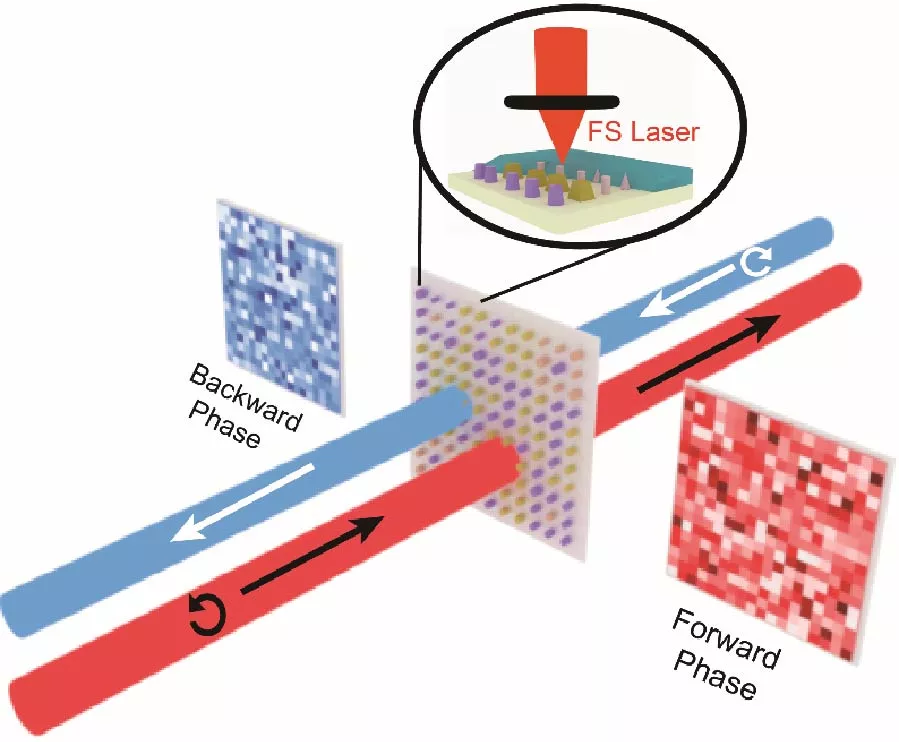
This paper introduces an innovative antenna design for direct antenna modulation (DAM) applications in the 5G sub-6 GHz band. The antenna has a composite right/left-handed (CRLH) structure, an electromagnetic bandgap (EBG) made of Hilbert inclusions, and an artificial magnetic conductor (AMC) reflector. The AMC reflector reflects light with no phase shift at the design frequency, boosting forward gain to a maximum of 20 dBi at 5.59 GHz and reducing back lobes. One important new idea is to use integrated light-dependent resistors (LDRs) for photonic reconfiguration. This lets one change the antenna's impedance and resonant characteristics in real time. Changing the LDR states dynamically changes the antenna's gain in real time. For example, at 5.5 GHz, it can go from 10.11 dBi to 19.85 dBi. This makes it possible to do direct amplitude modulation without any outside modulators. Experimental results validate the effective implementation of DAM, demonstrating quantifiable alterations in channel capacity and bit error rate (BER) associated with varying antenna gain states. The suggested system shows a practical, adaptable antenna solution for modern adaptive communication systems.
On the Performance of CRLH Antenna Loaded with AMC Reflector for Direct Antenna Modulation Process
2026-02-28
PIER C
Vol. 166, 235-243
A Semi-Analytical Method for Calculation of Electromagnetic Fields in Horizontal Multilayered Media with Full Anisotropy
Guibo Chen and Ye Zhang
In this paper, a semi-analytical method for the calculation of electromagnetic(EM) fields in horizontal multilayered media(HMLM) with full anisotropy is presented. First, the governing equation was obtained by plane wave decomposition to Maxwell's equations, and the EM fields in the wavenumber domain (WD) were solved by means of eigensystems. Subsequently, a more intuitive derivation of the spectral-domain propagation matrix method based on existing literature was employed for calculating WD's EM fields in the HMLM. Finally, the EM fields in the spatial domain (SD) were obtained by 2-D inverse Fourier transform. To accelerate the evaluation of SD's EM fields, 2-D infinite integrals were transformed into semi-infinite integrals including sine(cosine) functions by Euler's formula, and fast sine(cosine) transforms based on digital filters were introduced. It has been shown that the proposed semi-analytical method can be effectively used to calculate the EM fields in HMLM with full anisotropy through comparison with the existing numerical algorithm.
A Semi-analytical Method for Calculation of Electromagnetic Fields in Horizontal Multilayered Media with Full Anisotropy
2026-02-28
PIER C
Vol. 166, 227-234
Modified Inverted F-Shaped Microstrip Patch Antenna with Circular and Rectangular Slots and Partial Ground for Internet of Things (IoT) Applications
Md. Arifuzzaman and Md. Masud Rana
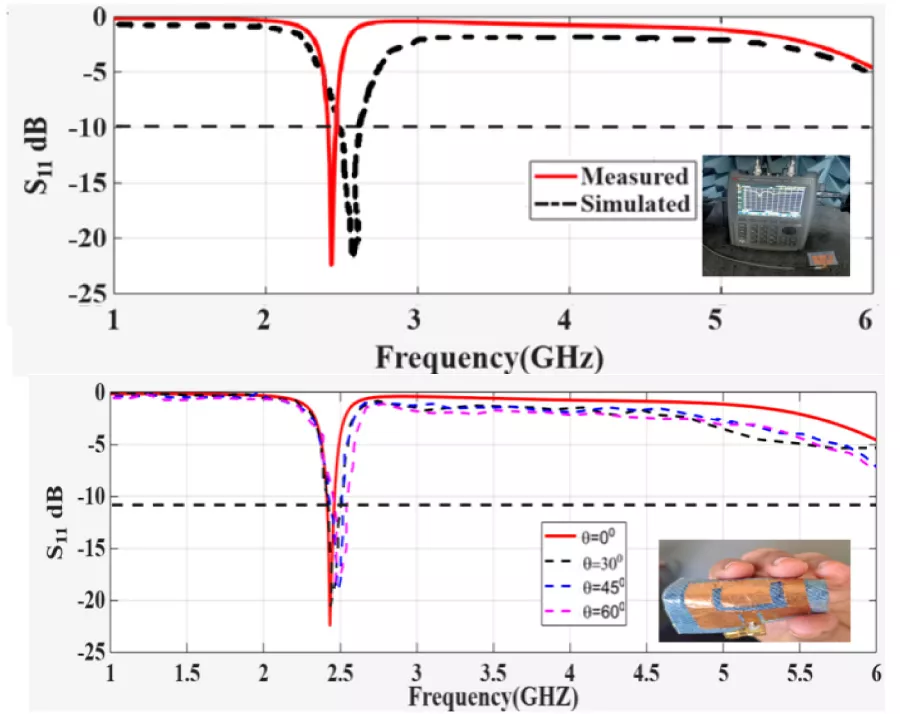
This paper presents an inverted F-shaped antenna with 40 × 25 × 1.6 mm3 dimensions designed for IoT applications. It can operate in the 2.45 GHz ISM (Industrial, Scientific, and Medical) band. This antenna was constructed on an FR-4 substrate, making it well-suited for wireless applications. The antenna consisted of a reverse F-shaped radiating structure with rectangular and circular slots to obtain enhanced bandwidth and suitable return loss. The proposed antenna achieved a simulated reflection coefficient of -19.17 dB at 2.45 GHz, with a bandwidth of 23.26 %. It also showed an acceptable radiation efficiency of 83.84% and a maximum gain of 3.40 dB.. This provided a bidirectional pattern of radiation which proves its quality in IoT applications. The antenna exhibited a slight difference between the simulation and measurement results, verifying its effectiveness. Moreover, the designed antenna is implemented in a home automation system to verify its validity in IoT application, and the results are highly significant.
Modified Inverted F-Shaped Microstrip Patch Antenna with Circular and Rectangular Slots and Partial Ground for Internet of Things (IoT) Applications