Search Results(13796)

2016-06-10
PIER C
Vol. 65, 11-22
Beam-Forming and Beam-Steering Capabilities of a Reconfigurable Plasma Antenna Array
Anuar D. J. Fernandez-Olvera , Davide Melazzi and Vito Lancellotti
We present the numerical parametric study of a reconfigurable plasma antenna array (PAA) composed of a metallic half-wavelength dipole and a set of cylindrical plasma discharges arranged in a planar square lattice. Our results, obtained with the linear embedding via Green's operators (LEGO) method, indicate that beam-forming and beam-steering functionality can be achieved and controlled by appropriately choosing the number and position of the active plasma discharges around the dipole. Furthermore, we show that an external static magnetic field and the plasma density have a noticeable effect on the radiation pattern of the antenna.
BEAM-FORMING AND BEAM-STEERING CAPABILITIES OF A RECONFIGURABLE PLASMA ANTENNA ARRAY
2016-06-09
PIER C
Vol. 65, 1-9
Broadband Flat Gain Enhancement of Planar Double-Dipole Quasi-Yagi Antenna Using Multiple Directors
Junho Yeo and Jong-Ig Lee
In this article, a method of broadband flat gain enhancement for a planar double-dipole quasi-Yagi antenna using multiple directors is proposed. The proposed antenna consists of two dipole drivers with different lengths, a truncated ground plane, and three parasitic strip directors. First, the length ratio of the two dipoles is adjusted to increase the gain in the low-frequency region. Next, three parasitic strip directors are employed to increase the impedance bandwidth and improve the gain of the antenna in the middle- and high-frequency regions. A detailed design procedure for the proposed antenna, covering a frequency band of 1.70-2.70 GHz with a gain > 8 dBi, is explained, along with a step-by-step analysis of the effects of placing each director on input impedance, voltage standing wave ratio (VSWR), and gain characteristics. Experiment results show that the proposed antenna has the desired impedance characteristics with a frequency band of 1.66-2.88 GHz (53.7%) for a VSWR < 2, and a stable flat gain of 8.0-8.4 dBi in the 1.70-2.70 GHz frequency range. Moreover, a measured front-to-back ratio > 11 dB within the band is achieved.
BROADBAND FLAT GAIN ENHANCEMENT OF PLANAR DOUBLE-DIPOLE QUASI-YAGI ANTENNA USING MULTIPLE DIRECTORS
2016-06-09
PIER M
Vol. 48, 155-162
ISAR Imaging Based on Iterative Reweighted Lp Block Sparse Reconstruction Algorithm
Junjie Feng and Gong Zhang
Sparse signal recovery algorithms can be used to improve radar imaging quality by using the sparse property of strong scatterers. Traditional sparse inverse synthetic aperture radar (ISAR) imaging algorithms mainly consider the recovery of sparse scatterers. However, the scatterers of an ISAR target usually exhibit block or group sparse structure. By utilizing the inherent block sparse structure of ISAR target images, an iterative reweighted lp(0 < p ≤ 1) block sparse signal recovery algorithm is proposed to enhance imaging quality in this paper. Firstly, an ISAR imaging signal model is established with the aid of sparse basis, and the imaging is mathematically converted into block reweighted cost function optimization problem. Then, an iterative algorithm is used to solve the reweighted function minimization problem. In each iteration, the weights are updated based on the closed form solution of the previous iteration. The proposed method is effective to exploit the underlying block sparse structures which does not need the prior knowledge of the number of the blocks. Real data ISAR imaging results are provided to verify that the proposed algorithm in this paper can achieve better images than the images obtained by several popular sparse signal recovery algorithms.
ISAR IMAGING BASED ON ITERATIVE REWEIGHTED LP BLOCK SPARSE RECONSTRUCTION ALGORITHM
2016-06-07
PIER C
Vol. 64, 169-177
A Compact GPS/WLAN Antenna Design for Mobile Terminal with Full Metal Housing
Zheqiang Wu , Hao Wang , Peng Chen , Wenhui Shen and Guangli Yang
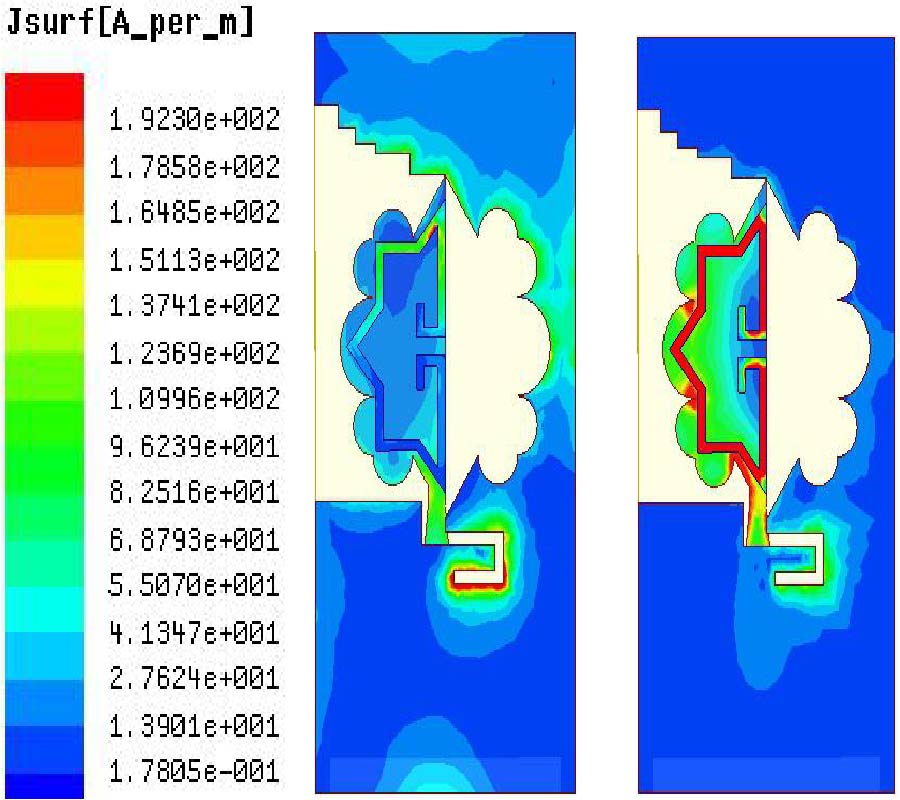
Miniaturization and metal-housing environment are the two most critical problems in the design of antennas, because they can highly deteriorate the performances of antenna, which not only affects the antenna efficiency, but also influences the bandwidth. In this paper, a compact size antenna with full metal housing for GPS/WLAN applications is studied. The proposed antenna can excite triple-band operation that covers the GPS (1.575 GHz), WLAN 2.45 GHz and WLAN 5.2/5.8 GHz bands, and its corresponding measured average efficiencies over these three desired bands were 40%, 41%, and 70%, respectively. The proposed antenna has a volume of 20.5×5×4 mm3, which is probably the smallest antenna in the industry for full metal housing applications.
A COMPACT GPS/WLAN ANTENNA DESIGN FOR MOBILE TERMINAL WITH FULL METAL HOUSING
2016-06-07
PIER Letters
Vol. 61, 13-18
Orbital Angular Momentum Radiation from Circular Patches
Fuchun Mao , Tinghua Li , Yu Shao , Jianfeng Yang and Ming Huang
Orbital angular momentum (OAM) with a huge potential application in multiplexing and coding has become the subject of intense research in recent years. This paper presents a method to generate radio beams carrying OAM based on a circular patch antenna. A 3 dB quadrature hybrid is employed in the design to enable the circular patch to reconfigure opposite OAM states of a radiated field. The results of numerical simulations are presented to show that the circular patch radiates two OAM modes with opposite rotation directions simultaneously. The proposed circular patch is believed to be significant to the wireless communication applications due to its simple geometry, low cost, and OAM mode reconfiguration.
ORBITAL ANGULAR MOMENTUM RADIATION FROM CIRCULAR PATCHES
2016-06-06
PIER Letters
Vol. 61, 7-12
Modified Extended Composite Right/Left-Handed Layout Loaded with CSRR for Quad Band Applications
Parya Fathi , Zahra Atlasbaf and Keyvan Forooraghi
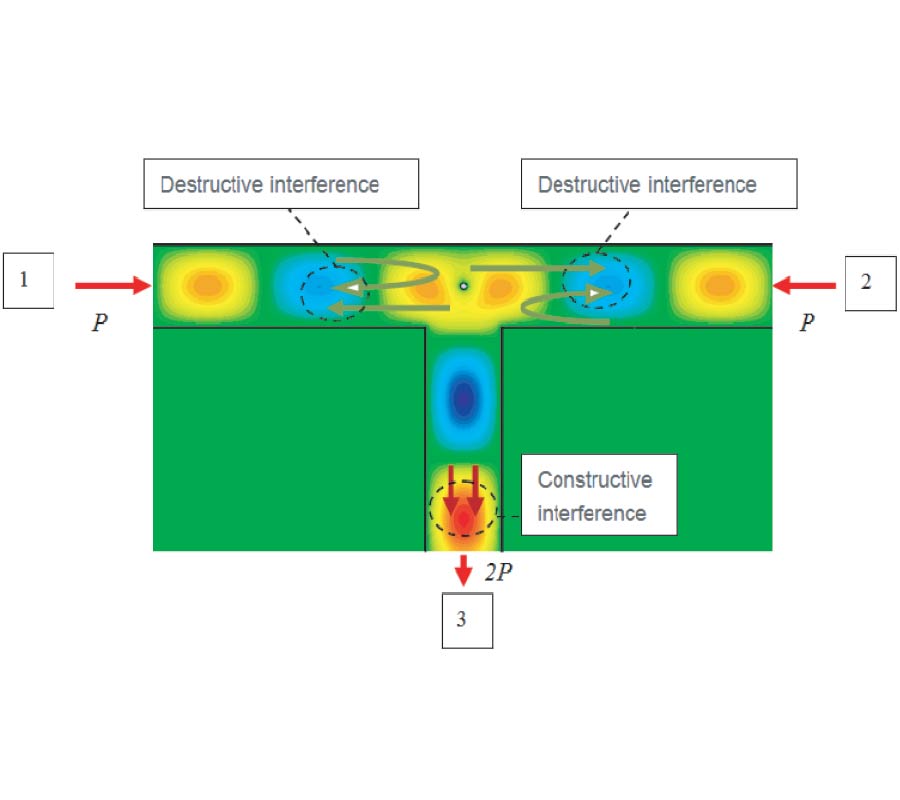
This paper presents the design and implementation of a novel fully planar modified, extended composite right/left-handed transmission lines (E-CRLH-TLs) utilizing a complementary split ring resonator (CSRR) loaded on the ground plane. The multiband behavior of the proposed layout is demonstrated by an equivalent circuit which in this case is distinct from the standard form of the equivalent circuits presented for an E-CTLH-TL; therefore, in order to design a quad band E-CRLH unit-cell, the design procedure is investigated. The main advantages of the proposed layout over other topologies are size reduction and fabrication simplicity which are proved by the design and fabrication of a quad-band Y power divider.
MODIFIED EXTENDED COMPOSITE RIGHT/LEFT-HANDED LAYOUT LOADED WITH CSRR FOR QUAD BAND APPLICATIONS
2016-06-06
PIER Letters
Vol. 61, 1-6
Dual-Band Printed Inverted-F Antenna with a Nested Structure
Takuichi Hirano and Junichi Takada
A dual band printed inverted-F antenna with a nested structure is proposed. In this antenna, matching can be controlled for both frequency bands by changing element lengths. The measured and calculated frequency characteristics of the antenna's reflection coefficient match very well, if the measurement cable connector is considered in the simulation. The measured -10 dB relative bandwidths of the reflection coefficient are 4.7% at 2.45 GHz (2.5 GHz to 2.62 GHz), and 9% at 5.5 GHz (5.28 GHz to 5.78 GHz). The calculated radiation efficiencies are 92% and 88%, at 2.45 GHz and 5.5 GHz, respectively, with calculated peak realized gains of 1.07 dBi and 3.36 dBi, respectively.
DUAL-BAND PRINTED INVERTED-F ANTENNA WITH A NESTED STRUCTURE
2016-06-06
PIER M
Vol. 48, 145-154
The Focusing Optimization of Transcranial Magnetic Stimulation System
Hui Xiong , Jin Hua Shi , Xiao-Wei Hu and Jin-Zhen Liu
The transcranial magnetic stimulation (TMS) technology development becomes a painless, noninvasive, green treatment and detection method in recent years. However, because of the difference in efficiency of the stimulation system, the technology is not widely used. The focality of the magnetic field is one of the key issues that affect the efficiency of magnetic stimulation. If the focusing problem cannot be solved, the development of TMS technology will be restricted. Therefore, research of focusing has become a hot spot in recent years. In this paper, we mainly carry out three meaningful works. First, a hybrid algorithm is proposed based on a simplified particle swarm optimization algorithm (sPSO) and simulated annealing (SA) algorithm. The convergence of those algorithms is tested. The current through the coils is optimized and solved. Second, the influence of discharge circuit parameters on the magnetic field distribution in the head model is analyzed. Finally, five array coils are established, and the related parameters are configured by using the results of above research. The simulation results show that the hybrid algorithm can improve focality performance. The hybrid algorithm is made up of sPSO and SA. The proposed optimization algorithm and the study to the parameters of the discharge circuit are useful to enhance the focality of the TMS technology in the further development.
THE FOCUSING OPTIMIZATION OF TRANSCRANIAL MAGNETIC STIMULATION SYSTEM
2016-06-03
PIER B
Vol. 68, 105-121
Bias Compensation in h/a/α Polarimetric SAR Decomposition and Its Implication for the Classification
Mohamed Yahia , Faten Khalfa , Marwa Chabir and Taoufik Aguili
Classification of land cover types is one important application of polarimetric synthetic aperture radar (PolSAR) remote sensing. There are numerous features that can be extracted from PolSAR images. Among them, eigenvalues λi, entropy H, alpha angle α, and anisotropy A are effective and popular tools for the analysis and quantitative estimation of the physical parameters. Nevertheless, the speckle noise appearing in PolSAR images reduces the accuracy of image classification. Consequently, it should be filtered correctly. Generally, filtering PolSAR data generate biased estimates of λi/H/A/α parameters. In this paper, we studied the effects of bias compensation on supervised and unsupervised PolSAR image classification. We applied the asymptotic quasi maximum likelihood estimator AQ-MLE and Yahia/Aguili's bias compensation methods. To improve the classification accuracies, we demonstrated that bias compensation must be associated with speckle reduction. The combination of the span with biased parameters reduced the effects of bias but did not eliminate it totally. Simulated and real data were used for validation.
BIAS COMPENSATION IN H/A/α POLARIMETRIC SAR DECOMPOSITION AND ITS IMPLICATION FOR THE CLASSIFICATION
2016-06-03
PIER Letters
Vol. 60, 127-132
A Novel Miniaturization Double Folded Quarter Mode Substrate Integrated Waveguide Filter Design in LTCC
Jian Zhou , Yong-Zhong Zhu and Zihao Liu
A novel double-folded quarter mode substrate integrated waveguide (DFQMSIW) filter is designed in low temperature co-fired ceramic (LTCC). This filter consists of multi-layer substrate integrated waveguide. More than 93.75% of the area of the filter is effectively decreased compared with original substrate integrated waveguide (SIW) filter for the technologies of Half-Mode and Folded are applied. Meanwhile, the dimensions are further obtained reduction because of the technologies of LTCC and the vertical dimensional cavities configuration. The fabricated insertion loss and return loss are 1.9 dB and 13.5 dB, respectively.
A NOVEL MINIATURIZATION DOUBLE FOLDED QUARTER MODE SUBSTRATE INTEGRATED WAVEGUIDE FILTER DESIGN IN LTCC
2016-06-02
PIER B
Vol. 68, 89-103
Modified RANSAC Method for Three-Dimensional Scattering Center Extraction at a Single Elevation
Qinglin Zhai , Jiemin Hu , Xingwei Yan , Ronghui Zhan , Jianping Ou and Jun Zhang
In this paper, we focus on the 3D SC model reconstruction from data with wide azimuthal aperture at a single elevation. Since the existing method is difficult to implement for high-frequency signal or large-size target, we propose a modified RANSAC method for the extraction. In our approach, the 3D positions of the SCs are estimated from the 1D SCs via a modified RANSAC method. Then the scattering coefficients are refined via a linear least squares algorithm. The approach is robust with noise because the RANSAC method is able to tolerate a tremendous fraction of outliers. Moreover, it does not suffer from limited accuracy caused by the discretization of the parameter space in [13]. Experiments demonstrate the effectiveness of the proposed approach.
MODIFIED RANSAC METHOD FOR THREE-DIMENSIONAL SCATTERING CENTER EXTRACTION AT A SINGLE ELEVATION
2016-06-01
PIER C
Vol. 64, 159-167
A Compact ACS-Fed Mirrored L-Shaped Monopole Antenna with SRR Loaded for Multiband Operation
Rengasamy Rajkumar and Usha Kiran Kommuri
In this paper, a compact asymmetric coplanar strip (ACS)-fed mirrored L-shaped monopole antenna is presented. The proposed design consists of three mirrored L-shaped branches and a split ring resonator (SRR) loaded beneath the substrate, which are responsible for achieving multiband characteristics, compactness and good impedance matching. The proposed antenna with a compact dimension of 22 × 16.08 × 1.6 mm3 fabricated and tested. The experiment result indicates that the proposed design, having -10 dB impedance bandwidth of 200, 670 and 530 MHz for 2.44, 5.3 and 8.2 GHz, respectively, covers 2.4/5.2/5.8 GHz WLAN, 5.5 GHz WiMAX and 8.2 GHz ITU band. It has good radiation characteristics for both E-plane and H-plane in all the desired frequency bands, very compact and produces good performances compared to the existing literature. The loaded SRR structure performance is validated through various parametric studies.
A COMPACT ACS-FED MIRRORED L-SHAPED MONOPOLE ANTENNA WITH SRR LOADED FOR MULTIBAND OPERATION
2016-06-01
PIER C
Vol. 64, 151-158
Design of Multi-Beam Rhombus Fractal Array Antenna Using New Geometric Design Methodology
Venkata Aditya Sankar Ponnapalli and Pappu Vankata Yasoda Jayasree
Fractal array antenna design methodology is an artistic type of design methodology. Hence fractal array antennas are also called as artistic array antennas. This article proposed a concentric elliptical ring sub array generator geometric design methodology for a methodical expansion of multi-beam fractal array antennas. Using this new geometric design methodology any polygon shape can be constructed. This geometric design methodology provides a systematic approach for multiple beams of fractal array antennas, with unit amplitude constriction, using multi-beam sub arrays and without any increase in hardware complication. In this paper, a four element rhombus fractal array antenna examined using a proposed design methodology up to four concurrent iterations and for different eccentric values. Due to the recursive nature of the proposed methodology, the rhombus fractal array antenna shows multi-beam performance with abatement of beam width and better side lobe level. In the third and fourth iterations of rhombus fractal array for expansion factor two, beam width reached to single digit values of 7.2˚, 3.6˚ with side lobe level angles of 15.5˚ and 8.1˚ respectively. The behavior of the proposed array shows better performance than four element fractal array antenna generated by concentric circular sub array generator. Proposed fractal array antennas are analyzed and simulated by MATLAB programming.
DESIGN OF MULTI-BEAM RHOMBUS FRACTAL ARRAY ANTENNA USING NEW GEOMETRIC DESIGN METHODOLOGY
2016-05-31
PIER B
Vol. 68, 73-88
Diffraction of Axially-Symmetric TM-Wave from BI-Cone Formed by Finite and Semi-Infinite Shoulders
Dozyslav B. Kuryliak and Oleksiy M. Sharabura
The problem of axially-symmetric TM-wave diffraction from a perfectly conducting bi-cone is analyzed. Bi-cone is formed by finite and semi-infinite conical shoulders and illuminated by ring magnetic source. The problem is formulated in a spherical coordinate system as a mixed boundary problem for Helmholtz equation. The unknown Hφ-diffracted field is sought as expansion in series of eigenfunctions for each region, formed by the bi-cone. The solution of the problem then is reduced to the infinite set of linear algebraic equations (ISLAE) of the first kind by means of mode matching technique and orthogonality properties of the eigen functions. The main parts of the asymptotic expressions of ISLAE matrix elements, determined for large indexes, identify the convolution type operator. The corresponding inversed operator is represented in an explicit form. Two of these operators are applied to reduce the problem to the ISLAE of the second kind and to determine the new analytical regularization method for the solution of wave diffraction problems for bi-conical scatterers. The unknown expansion coefficients can be determined from the ISLAE with the given accuracy by the reduction method. The particular cases such as low frequency approximation and transition from bi-cone to conical monopole and disc-cone scatterer are analyzed. The numerically obtained results are applied to the analysis of scattering properties of hollow conical monopoles and disc-conical scatterers.
DIFFRACTION OF AXIALLY-SYMMETRIC TM-WAVE FROM BI-CONE FORMED BY FINITE AND SEMI-INFINITE SHOULDERS
2016-05-31
PIER C
Vol. 64, 141-150
Design of 900 MHz SiGe Power Amplifier with Linearization Bias Circuit
Guiheng Zhang , Wei Zhang , Jun Fu and Yudong Wang
A single stage 900 MHz power amplifier (PA) with linearization bias circuit is designed with HHNEC 0.5 μm BIS500G power SiGe BiCMOS process. It is implemented by single-ended common emitter structure as a class AB power amplifier. The adopted active bias circuit is originally explained by using two virtue current sources, so that the mechanism of the improvement of linearity can be described more clearly. Then the mechanism is applied to guide the design of a power amplifier with an active bias circuit, which shows better linearity than resistor biased power amplifier by simulation. Through further design and measurement, the fabricated single stage power amplifier exhibits output power 1 dB compression point (OP1 dB) of 18.9 dBm, with power added efficiency (PAE) of 26.75% and power gain of 20.9 dB under 3.3 V voltage supply.
DESIGN OF 900 MHZ SIGE POWER AMPLIFIER WITH LINEARIZATION BIAS CIRCUIT
2016-05-31
PIER Letters
Vol. 60, 121-125
A Frequency Selective Surface with Polarization Rotation Based on Substrate Integrated Wavwguide
Tao Zhong , Hou Zhang , Rui Wu and Xue-Liang Min
A frequency selective surface (FSS) with polarization rotation which provides a quasi-elliptic bandpass response is presented in this paper. Based on substrate integrated waveguide cavity (SIWC), 90 degrees polarization rotation is obtained when electromagnetic wave passes through the frequency selective surface at specially appointed polarization in a range of 16.28-16.70 GHz. Moreover, TM120/TM210 dual-mode configuration appears in the cavity within the passband. The design has been proved with high stability to electromagnetic wave of different incident angles. And the measured results in anechoic chamber provide good agreement with those from commercial software simulations.
A FREQUENCY SELECTIVE SURFACE WITH POLARIZATION ROTATION BASED ON SUBSTRATE INTEGRATED WAVWGUIDE
2016-05-29
PIER C
Vol. 64, 133-140
Filtered Power Splitter Using Microstrip Square Open Loop Resonators
Amadu Dainkeh , Augustine O. Nwajana and Kenneth Siok Kiam Yeo
A microstrip power splitter with band-pass responses is presented in this paper. The design is based on square open loop resonator topology. This filtered power splitter does not require quarter wavelength transformers and will result in a smaller size than a conventional Wilkinson power divider with integrated band-pass filter. It is a two-way equal power splitter with fifth order band-pass filter characteristics. The power splitter is designed to have Chebyshev band-pass response function. A theoretical analytical circuit model will be presented. From the theoretical model, a microstrip filtered power splitter will be designed and simulated. The proposed filtered power splitter is small in size and reduces circuit complexity. The power splitter is simulated and measured, and the results are presented.
FILTERED POWER SPLITTER USING MICROSTRIP SQUARE OPEN LOOP RESONATORS
2016-05-29
PIER Letters
Vol. 60, 113-120
Genetic Algorithm Optimization for Microstrip Patch Antenna Miniaturization
Mohammed Lamsalli , Abdelouahab El Hamichi , Mohamed Boussouis , Naima Amar Touhami and Tajeddin Elhamadi
The miniaturization of the patch antenna has become an important issue in reducing the volume of entire communication system. This paper presents an improved method of size reduction of a microstrip antenna using the genetic algorithm. The shape of a typical rectangular patch is modified in order to reduce it resonance frequency keeping the physical volume of the antenna constant. Indeed, the initial patch is divided into 10 × 10 small uniform rectangles (Pixel), and the genetic algorithm searches, the optimal configuration for the desired goal. The resonance frequency of a micro-strip patch is shifted from 4.9 GHz to 2.16 GHz and a rate of miniaturization is up to 82%. To validate the procedure, an antenna prototype has been fabricated and tested with an FR4 substrate. The measurements results were in good agreement with simulation ones.
GENETIC ALGORITHM OPTIMIZATION FOR MICROSTRIP PATCH ANTENNA MINIATURIZATION
2016-05-28
PIER B
Vol. 68, 55-71
Design of Linear Antenna Arrays with Low Side Lobes Level Using Symbiotic Organisms Search
Nihad I. Dib
In this paper, low side lobe radiation pattern (i.e., pencil-beam pattern) synthesis problem is formulated for symmetric linear antenna arrays. Different array parameters (feed current amplitudes, feed current phase, and array elements positions) are considered as the optimizing variables. The newly proposed evolutionary algorithm, Symbiotic Organisms Search (SOS), is employed to solve such a pattern optimization problem. The design objective is to obtain radiation patterns with very low interference in the entire side lobes region. In this context, SOS is used to minimize the maximum side lobe level (SLL) and impose nulls at specific angles for isotropic linear antenna arrays by optimizing different array parameters (position, amplitude, and phase). The obtained results show the effectiveness of SOS algorithm compared to other well-known optimization methods, like Particle Swarm Optimization (PSO), Biogeography-based optimization (BBO), Genetic Algorithm (GA), Firefly Algorithm (FA), and Taguchi method. Unlike other optimization methods, SOS is free of tuning parameters; one just has to set the value of the population size and the number of iterations. Moreover, SOS is robust and is characterized by relatively fast convergence and ease of implementation.
DESIGN OF LINEAR ANTENNA ARRAYS WITH LOW SIDE LOBES LEVEL USING SYMBIOTIC ORGANISMS SEARCH
2016-05-28
PIER C
Vol. 64, 125-132
Compact 30:1 Bandwidth Ratio Balun for Printed Balanced Antennas
Xueqing Meng , Bo Wu , Zhixiang Huang and Xian-Liang Wu
A new compact 30:1 bandwidth ratio balun and its application to balanced antennas are presented in this paper. To realize the balun-type function, two different types of wideband transition structures are adopted for unbalanced and balanced outputs of the balun. Further, a Vivaldi antenna integrated with the proposed balun is designed and fabricated to validate the feasibility of the new approach. Results indicated that the proposed balun can operate from 0.2 GHz to 6 GHz (a bandwidth ratio of 30:1). And it exhibits a good balanced performance within 0.5 dB magnitude imbalance and less than 6 degree phase imbalance between the two balanced outputs. In addition, the antenna can operate from 0.9 GHz to 6 GHz with good unidirectional radiation patterns.
COMPACT 30:1 BANDWIDTH RATIO BALUN FOR PRINTED BALANCED ANTENNAS