Search Results(13796)

2016-05-13
PIER C
Vol. 64, 61-70
A Compact Dual-Band Dual-Polarized Antenna for Base Station Application
Guanfeng Cui , Shi-Gang Zhou , Gang Zhao and Shu-Xi Gong
A compact dual-band dual-polarized antenna is proposed in this paper. The two pair dipoles with strong end coupling are used for the lower frequency band, and cross-placed patch dipoles are used for the upper frequency band. Breaches are introduced at the ends of the dipoles of the upper band, which can benefit the compactness and bandwidth of the antenna. The ends of the dipoles for upper frequency band are cut off a corner, which also benefit the compactness and matching of the antenna. An antenna prototype was fabricated and measured. The measured results show that the antenna can cover from 790 MHz to 960 MHz (19.4%) for lower band and from 1710 MHz to 2170 MHz (23.7%) for upper band with VSWR<1.5. It is expected to be a good candidate design for base station antennas.
A COMPACT DUAL-BAND DUAL-POLARIZED ANTENNA FOR BASE STATION APPLICATION
2016-05-13
PIER Letters
Vol. 60, 45-51
Analysis of Wide Band Scattering from Objects Using the Adaptive Improved Ultra-Wide Band Characteristic Basis Functions
Wenyan Nie and Zhonggen Wang
The improved ultra-wide band characteristic basis function method (IUCBFM) is an efficient approach to analyze the wide-band scattering problems because the improved ultra-wide characteristic basis functions (IUCBFs) can be reused for any frequency sample in the range of interest. However, the number of the IUCBFs constructed at the highest frequency point is excessive, and the computational complexity will be increased when applying the same number of IUCBFs at the lower frequency points. To mitigate this problem, an adaptive IUCBFs construction method is presented which can decrease the computational complexity at the lower frequency points. In the proposed method, the given frequency band is adaptively divided into multiple sub-bands in consideration of the number of the IUCBFs. The adaptive IUCBFs are obtained at the highest frequency point in each sub-band, which leads to smaller number of IUCBFs and significant reduction of solver time at lower frequency band. The numerical results have demonstrated the accuracy and efficiency of the proposed method.
ANALYSIS OF WIDE BAND SCATTERING FROM OBJECTS USING THE ADAPTIVE IMPROVED ULTRA-WIDE BAND CHARACTERISTIC BASIS FUNCTIONS
2016-05-13
PIER
Vol. 156, 47-53
Design and Measurement of Multi-Frequency Antennas for RF Energy Harvesting Tags
Celine Leclerc , Matthieu Egels and Emmanuel Bergeret
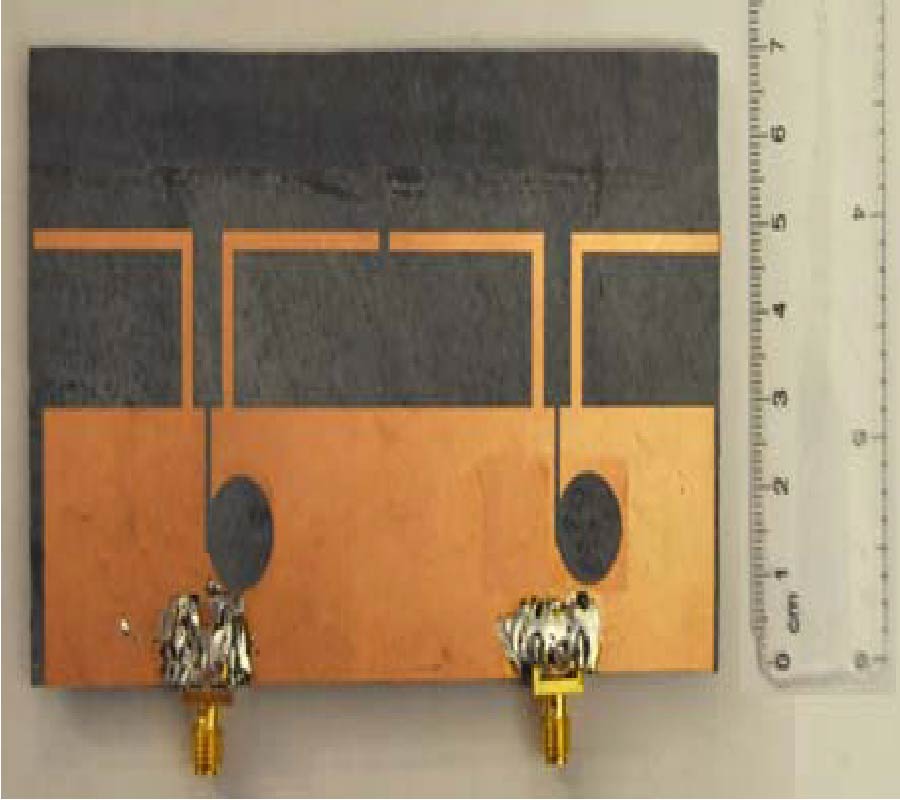
In this paper, a methodology to design non-50 Ω antennas for energy harvesting is presented. Two prototypes are simulated and realized on an epoxy substrate: one operating at 433 MHz and 900 MHz, the other at 900 MHz and 2.4 GHz. These antennas are designed to match the input impedances of an integrated radio-frequency harvester for an output voltage of 1 V, value chosen considering the voltage needed to power the new generation of micro-controllers and electronic circuits for the Internet of Things. The measurement results indicate a reflection coefficient below -10 dB at the frequencies of interest, validating the methodology.
DESIGN AND MEASUREMENT OF MULTI-FREQUENCY ANTENNAS FOR RF ENERGY HARVESTING TAGS
2016-05-12
PIER Letters
Vol. 60, 39-44
Estimating Termination Effect on Electric and Magnetic Field-to-Line Coupling for Radiated Immunity Tests Using a TEM Cell
Chunlei Shi , Changchun Chai , Yintang Yang and Wenxiao Fang
An analytic model of the field-to-line coupling in time domain for electrically small lines using a transverse electromagnetic (TEM) cell is proposed in this paper. This model uses mutual capacitance and mutual inductance to represent electric and magnetic field couplings which can be obtained based on voltage and current dividers. The measurement and calculation results validate the accuracy of the model. The termination effect on electromagnetic interference (EMI) responses and the separation of electric and magnetic field couplings are investigated by the model. The results indicate relevant suppressions for radiated immunity. This model is convenient for fast radiated immunity estimations.
ESTIMATING TERMINATION EFFECT ON ELECTRIC AND MAGNETIC FIELD-TO-LINE COUPLING FOR RADIATED IMMUNITY TESTS USING A TEM CELL
2016-05-12
PIER Letters
Vol. 60, 31-38
Low-Profile and Small Capacitively Fed VHF Antenna
Yaakoub Taachouche , Franck Colombel , Mohamed Himdi and Antoine Guenin
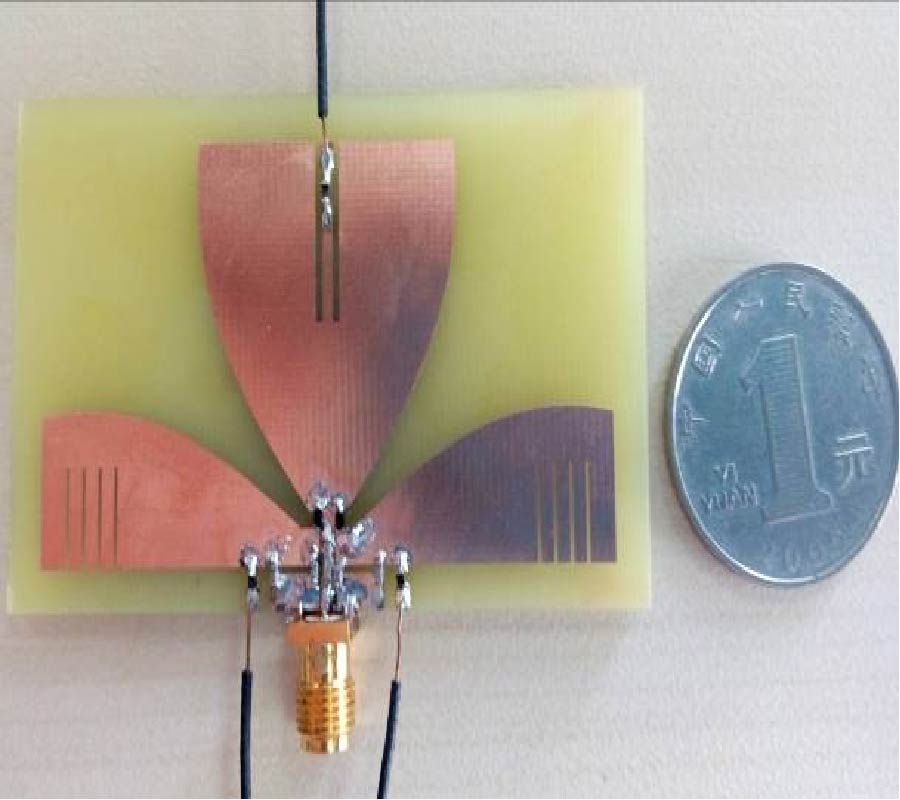
A low profile, compact antenna operating around 162 MHz with omnidirectional vertically polarized radiation is proposed. The antenna is a short monopole capacitively coupled to short-end quarter-wavelength printed line optimized at 162 MHz for Automatic Identification System (AIS) application. The antenna dimensions are less than λ/185 in height and λ/20 in lateral dimension, and the small size of antenna provides a narrow band of 0.34% and gain of -11.6 dBi. The simulated and measured results are in good agreement.
LOW-PROFILE AND SMALL CAPACITIVELY FED VHF ANTENNA
2016-05-11
PIER B
Vol. 68, 17-33
Design of Dual-Band Filters with Individually Controllable Passband Responses and Orders
Xiaofeng Sun and Eng Leong Tan
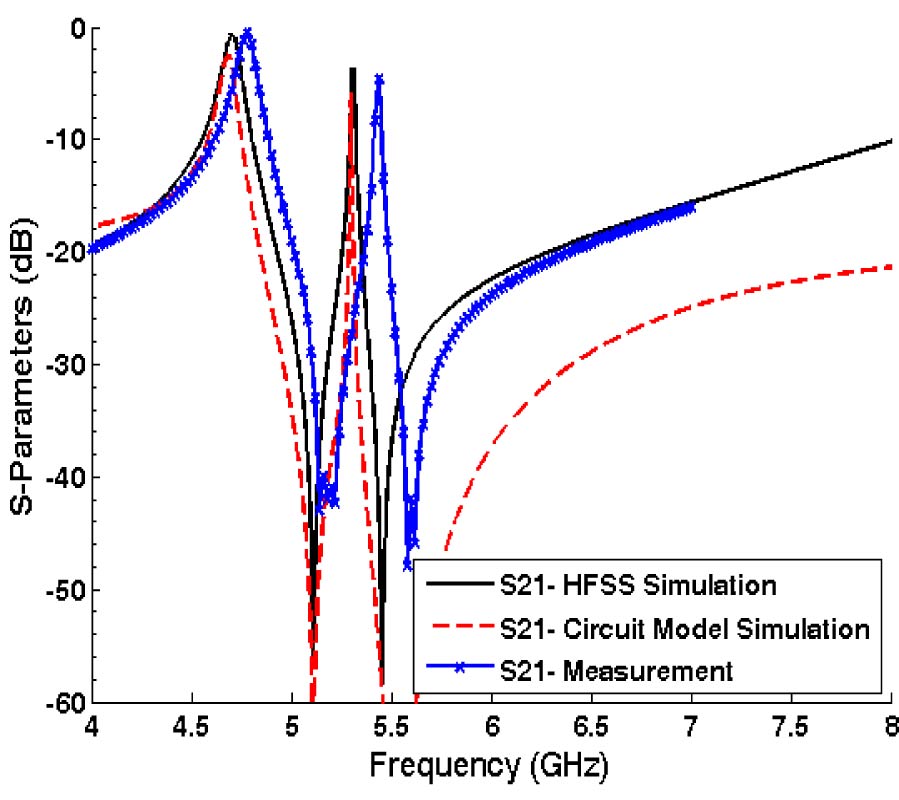
This paper presents a novel design of dual-band filters with individually controllable passband responses and orders. Besides the center frequency and bandwidth, the response and order of each passband can be different and controlled individually. The dual-band filter is formed by synthesizing each filter element (resonator, inverter) one by one, exploiting the corresponding individual single-band filters design tables/formulas for different prototype responses and orders. Trisection stepped-impedance resonators (TSSIR) are adopted with novel considerations as dual-band resonators, whose additional design parameters could help to realize the required in-band responses (resonances, slope parameters) and improve simultaneously the out-of-band performances (transmission zeros of TSSIR). Furthermore, they can be used to design a dual-band filter with far separation between two passbands. Meanwhile, stepped-impedance inverters are chosen as dual-band inverters with novel additional conditions to obtain symmetric passbands, which can also provide different inverter immittance parameters J/K at two center frequencies when the response or order of each passband is different. To illustrate the two passbands being controlled individually, two dual-band filters with different orders and responses are demonstrated.
DESIGN OF DUAL-BAND FILTERS WITH INDIVIDUALLY CONTROLLABLE PASSBAND RESPONSES AND ORDERS
2016-05-11
PIER Letters
Vol. 60, 23-30
Design of Multi-Stage Power Divider Based on the Theory of Small Reflections
Tongfei Yu , Dongping Liu , Zhiping Li and Jungang Miao
This paper presents a novel multi-way multi-stage power divider design method based on the theory of small reflections. Firstly, the application of the theory of small reflections is extended from transmission line to microwave network. Secondly, an explicit closed-form analytical formula of the input reflection coefficient, which consists of the scattering parameters of power divider elements and the lengths of interconnection lines between each elements, is derived. Thirdly, the proposed formula is applied to determine the lengths of interconnection lines. A prototype of a 16-way 4-stage power divider working at 4 GHz is designed and fabricated. Both the simulation and measurement results demonstrate the validity of the proposed method.
DESIGN OF MULTI-STAGE POWER DIVIDER BASED ON THE THEORY OF SMALL REFLECTIONS
2016-05-11
PIER Letters
Vol. 60, 17-21
A Broadband GCPW to Stripline Vertical Transition in LTCC
Bo Zhang , Dong Li , Weihong Liu and Lin Du
Vertical transition structure between grounded coplanar waveguide (GCPW) and stripline by Low Temperature Co-fired Ceramic (LTCC) technology is presented in this paper. In this structure, the top ground of the stripline is used as the GCPW lower ground, while the signal via goes through the middle ground plane. With increasing vertical signal via height, it can be more widely used in the higher height of multilayer System in Package (SiP) module packaging. The circular openings in the ground plane and additional shield vias around the transmission lines can provide great advantage in the radiation loss and decrease parasitic effects. The measurement results show that the return loss is less than -10 dB from 6 GHz to 35 GHz. Meanwhile, the insertion loss is better than -2 dB up to 28.4 GHz.
A BROADBAND GCPW TO STRIPLINE VERTICAL TRANSITION IN LTCC
2016-05-10
PIER B
Vol. 68, 1-16
Design and Simulation of Arbitrarily-Shaped Transformation Optic Devices Using a Simple Finite-Difference Method
Eric A. Berry , Jesus Gutierrez and Raymond C. Rumpf
A fast and simple design methodology for transformation optics (TO) is described for devices having completely arbitrary geometries. An intuitive approach to the design of arbitrary devices is presented which enables possibilities not available through analytical coordinate transformations. Laplace's equation is solved using the finite-difference method to generate the arbitrary spatial transforms. Simple techniques are presented for enforcing boundary conditions and for isolating the solution of Laplace's equation to just the device itself. It is then described how to calculate the permittivity and permeability functions via TO from the numerical spatial transforms. Last, a modification is made to the standard anisotropic finite-difference frequency-domain (AFDFD) method for much faster and more efficient simulations. Several examples are given at the end to benchmark and to demonstrate the versatility of the approach. This work provides the basis for a complete set of tools to design and simulate transformation electromagnetic devices of any shape and size.
DESIGN AND SIMULATION OF ARBITRARILY-SHAPED TRANSFORMATION OPTIC DEVICES USING A SIMPLE FINITE-DIFFERENCE METHOD
2016-05-10
PIER B
Vol. 67, 137-151
GPU Accelerated Discontinuous Galerkin Time Domain Algorithm for Electromagnetic Problems of Electrically Large Objects
Lei Zhao , Geng Chen and Wenhua Yu
In this paper, an efficient time domain simulation algorithm is proposed to analyze the electromagnetic scattering and radiation problems. The algorithm is based on discontinuous Galerkin time domain (DGTD) method and parallelization acceleration technique using the graphics processing units (GPU), which offers the capability for accelerating the computational electromagnetics analyses. The bottlenecks using the GPU DGTD acceleration for electromagnetic analyses are investigated, and potential strategies to alleviate the bottlenecks are proposed. We first discuss the efficient parallelization strategies handling the local-element differentiation, surface integrals, RK time-integration assembly on the GPU platforms, and then, we explore how to implement the DGTD method on the Compute Unified Device Architecture (CUDA). The accuracy and performance of the DGTD method are analyzed through illustrated benchmarks. We demonstrate that the DGTD method is better suitable for GPUs to achieve significant speedup improvement over modern multi-core CPUs.
GPU ACCELERATED DISCONTINUOUS GALERKIN TIME DOMAIN ALGORITHM FOR ELECTROMAGNETIC PROBLEMS OF ELECTRICALLY LARGE OBJECTS
2016-05-10
PIER C
Vol. 64, 51-59
A Compact, Wideband Waveguide Bandpass Filter Using Complementary Loaded Split Ring Resonators
Amit Bage and Sushrut Das
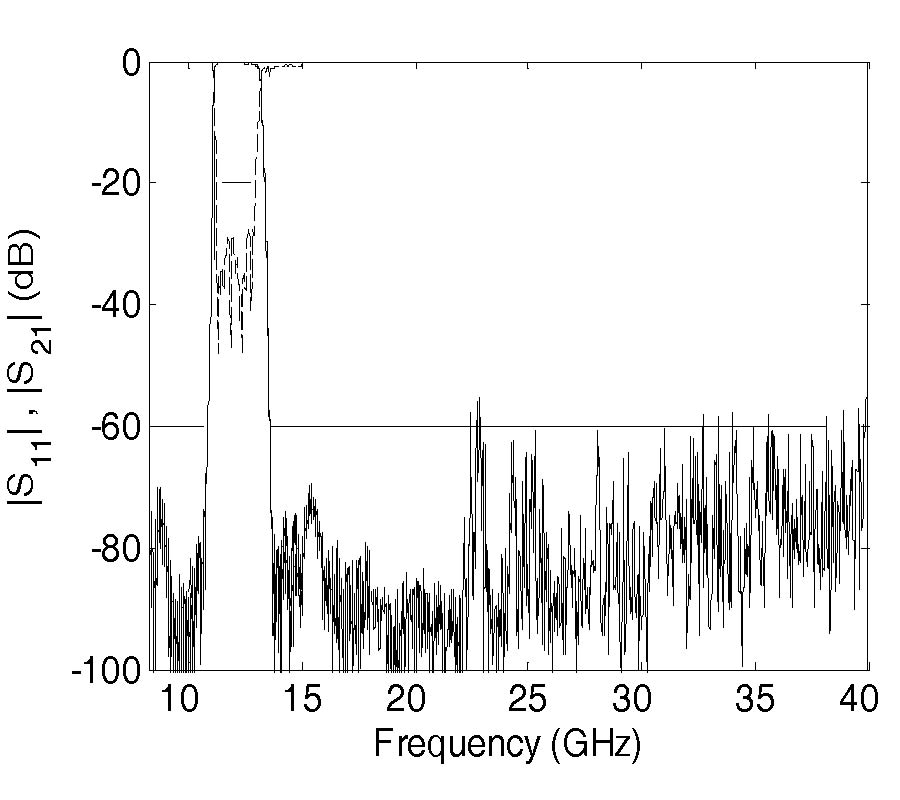
This paper presents a Complementary Split Ring Loaded Resonator (CLSRR) based compact, wideband, waveguide bandpass filter. Three identical CLSRRs were fabricated and placed on the transverse plane of a standard WR-90 waveguide at a quarter wavelength distance to form the filter. The proposed filter was initially simulated using Ansoft HFSS (version 14) and then fabricated and measured. The measured result shows a fractional bandwidth of 18.80% at 10.05 GHz. Total length of the filter is only 20.33 mm which is compact enough. Detailed design procedure has been presented along with the equivalent circuit of the filter. A table has been provided to compare the performance of the proposed filter with those already available in the literatures. The table shows that the proposed filter is compact and has higher bandwidth, lower insertion loss and higher return loss.
A COMPACT, WIDEBAND WAVEGUIDE BANDPASS FILTER USING COMPLEMENTARY LOADED SPLIT RING RESONATORS
2016-05-10
PIER C
Vol. 64, 43-50
Omnidirectional Conformal Patch Antenna at S-Band with 3D Printed Technology
Paula Paloma Sanchez Dancausa , Jose Luis Masa-Campos , Pablo Sanchez Olivares and Eduardo Garcia Marin
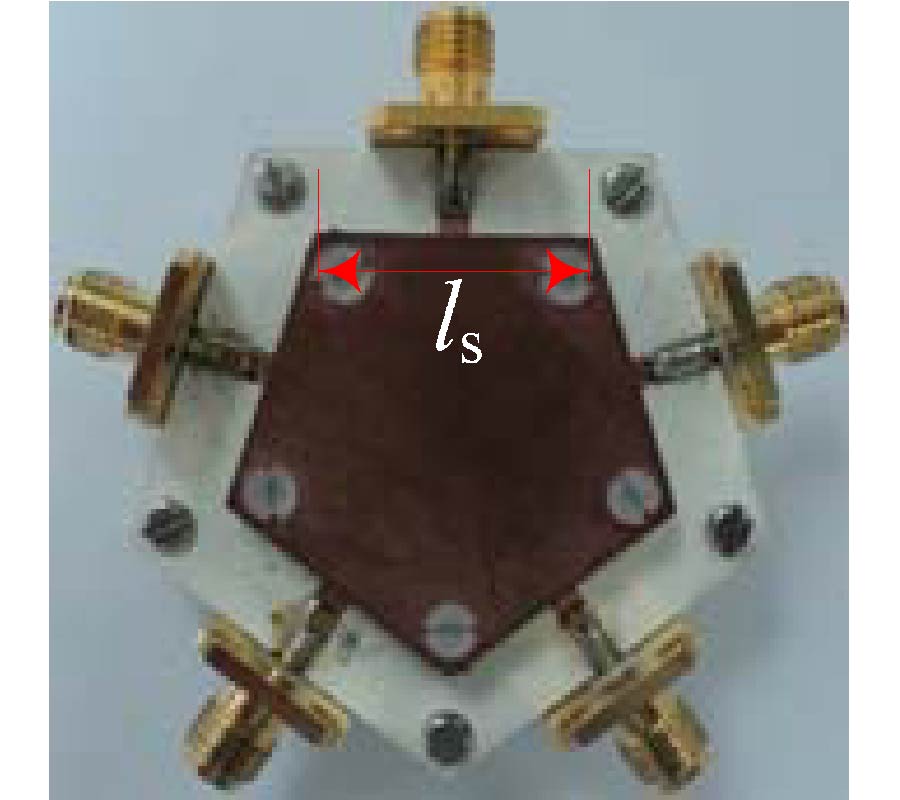
A conformal patch array antenna with omnidirectional pattern in the azimuth plane at S-band is presented. A theoretical study of the generated ripple in the omnidirectional radiation pattern according to the number of faces that conform the array has been computed. A six-faced regular prism 3D structure has been chosen following a maximum 3 dB ripple criteria in the omnidirectional radiation pattern. A rectangular microstrip patch fed by a microstrip line has been designed as single radiating element. An equal power divider has been designed as feeding network in microstrip technology to feed each radiating element. Several prototypes have been manufactured and measured to validate the theoretical and simulated results. The entire conformal array has been assembled on a hexagonal regular prism manufactured in PolyLactic Acid (PLA) material using a 3D printer. In spite of the complexity of the proposed antenna structure, the used manufacturing processes, such as microstrip and 3D printing, allows to perform a low cost, low weight and compact final antenna. A higher radiated field ripple than the expected one is generated due to small deviations between experimental and theoretical critical parameters such as the feeding network performance or the 3 dB beam-width of the single element radiation pattern. A maximum ripple value of 4 dB has been experimentally obtained in the omnidirectional radiating pattern.
OMNIDIRECTIONAL CONFORMAL PATCH ANTENNA AT S-BAND WITH 3D PRINTED TECHNOLOGY
2016-05-10
PIER C
Vol. 64, 33-41
A Miniaturized 90° Schiffman Phase Shifter with Open-Circuited Trans-Directional Coupled Lines
Yuan Cao , Zhongbao Wang , Shao-Jun Fang and Yuan'an Liu
A symmetrical open-circuited λ/4 trans-directional (TRD) coupled line is proposed to replace the 3λ/4 reference line of an existing 90° Schiffman phase shifter for miniaturization. The coupling factor of the TRD coupled line can be used to control input matching and phase ripple, which adds an additional optimization variable to the design of a Schiffman phase shifter. There are two transmission zeros near the operational frequency band, which can be used to suppress adjacent frequency interferences and accompanies two phase leaps so that the realizable bandwidth is about 28~42%. Simulated and measured results are given to verify the proposed method.
A MINIATURIZED 90° SCHIFFMAN PHASE SHIFTER WITH OPEN-CIRCUITED TRANS-DIRECTIONAL COUPLED LINES
2016-05-10
PIER M
Vol. 48, 95-102
''Double-Humped Effect'' in the Turbulent Collision Magnetized Plasma
George Jandieri
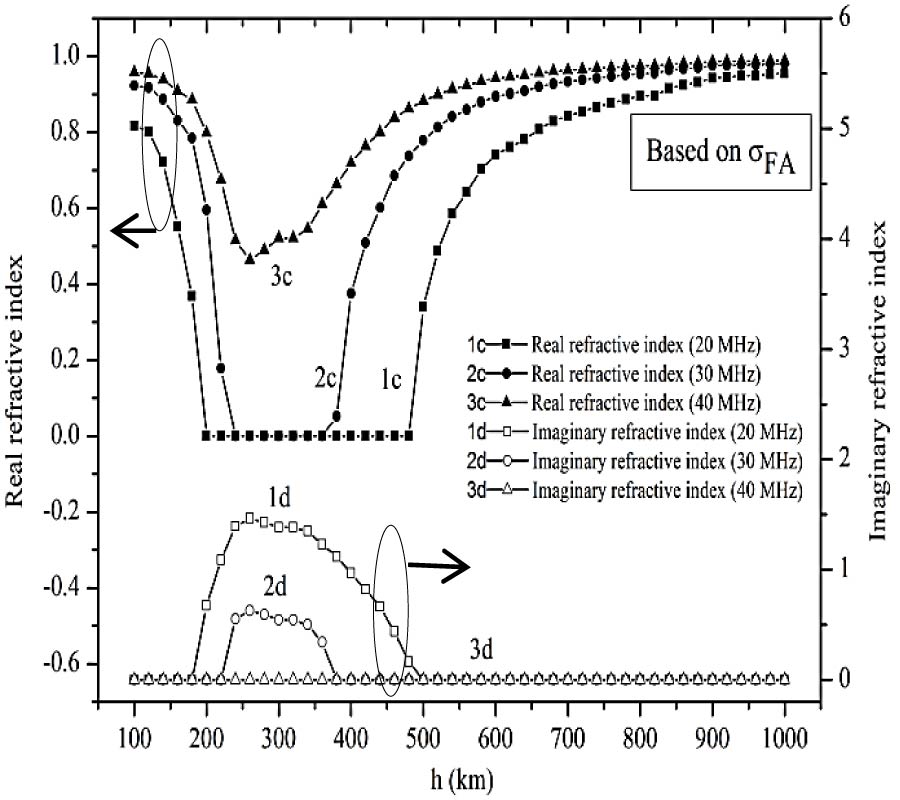
Statistical moments of the spatial power spectrum of multiple scattered ordinary and extraordinary waves in the turbulent collision magnetized plasma with aligned anisotropic electron density irregularities are investigated using modify smooth perturbation method taking into account diffraction effects. Correlation function and variances of the phase fluctuations are obtained for arbitrary correlation function of the electron density fluctuations. ``Double-humped Effect'' is investigated analytically and numerically using the anisotropic Gaussian spectral function of electron density irregularities for the polar ionospheric F-region applying the experimental data.
''DOUBLE-HUMPED EFFECT'' IN THE TURBULENT COLLISION MAGNETIZED PLASMA
2016-05-09
PIER B
Vol. 67, 121-136
Bistatic Scattering Characteristics of Wheat and Soybean by Radiative Transfer Model in L Band and C Band
Yuan-Yuan Zhang and Zhen-Sen Wu
Compared with the backscattering configuration, the bistatic scattering echoes can provide multidimensional information on land surface. Based on the Michigan Microwave Canopy Scattering (MIMICS) model, a first-order microwave bistatic scattering model for vegetations is developed in this paper. The dominant scattering mechanism for wheat and soybean in the L and C bands is analyzed by simulating the bistatic scattering echoes in multiple viewpoints, which can help us understand the interaction between incident wave and vegetation parameters. The influence of crop height, leaf size and moisture of vegetations and down layer soil on the scattering echoes is fully investigated. The simulations show that the bistatic scattering echoes are more sensitive to the vegetation parameters than that in backscattering configuration. There exist optimal scattering angles, in specular direction and in direction perpendicular to the incident plane, to improve the retrieval accuracy of vegetation parameters and moisture of soil surface. Moreover, the simulations demonstrate that bistatic scattering echoes in high frequency (C band) are a good choice to retrieve the vegetation parameters, and the echoes in low frequency (L band) are preferred to retrieve the soil parameters. This research can be used to provide reference for crop monitoring and future bistatic system design.
BISTATIC SCATTERING CHARACTERISTICS OF WHEAT AND SOYBEAN BY RADIATIVE TRANSFER MODEL IN L BAND AND C BAND
2016-05-09
PIER C
Vol. 64, 21-31
High Gain FSS Aperture Coupled Microstrip Patch Antenna
Niaz Muhammad , Hassan Umair , Zain Ul Islam , Zar Khitab , Imran Rashid and Farooq Ahmad Bhatti
This paper presents a high-gain cavity resonant antenna (CRA), consisting of an FSS layer placed above an aperture coupled microstrip patch antenna (ACMPA). Geometry of the proposed FSS superstrate is highly reflective with |Γ>0.9|. Ray-tracing method has been employed for determining the resonant condition of the antenna. ACMPA operating at S-band is serving as a feeding source. The coupling aperture of the antenna is of novel design, and several figures of merit have been presented for the proposed coupling aperture. Analysis of CRA has been carried out with the design parameters of the CRA. HFSS-13 has been utilized as simulation tool. Measured results are in good agreement with the simulated ones.
HIGH GAIN FSS APERTURE COUPLED MICROSTRIP PATCH ANTENNA
2016-05-06
PIER C
Vol. 64, 11-20
Compact Patch Antenna on Structurally Modified Magnetodielectric Substrate
Arunav Phukan , Kunal Borah and Nidhi Saxena Bhattacharyya
Magnetodielectric substrate gives a new dimension for reducing the size of the planar antennas. In this article, the patch size is reduced by taking a substrate with nano-sized nickel ferrite inclusions in LDPE polymer matrix. The antenna is made to operate in X- and Ku-bands by engraving T slots along the resonant length of the patch. Structural modification of the substrate geometry as a step profile is incorporated along the slotted patch edges to enhance performance. The T-slots, on both the radiating edges with the magnetodielectric stepped substrate show four resonant frequencies in both the X- and Ku-bands with S11 < -15 dB and a maximum -10 dB bandwidth of 22.4%. A miniaturization factor of 2.97 is obtained.
COMPACT PATCH ANTENNA ON STRUCTURALLY MODIFIED MAGNETODIELECTRIC SUBSTRATE
2016-05-06
PIER C
Vol. 64, 1-9
A Study of Composite Substrates for VHF and UHF Artificial Magnetic Conductors and Their Application to a SATCOM Antenna
Taulant Rexhepi and David Crouse
The bandwidth of artificial magnetic conductor structures based on the square patch geometry has been significantly increased by using composite ferrite particles. These magnetic composites are non-conducting materials which achieve extraordinarily high values of magnetic permeability in the VHF and UHF range. Two AMC designs are presented for two different bands: the lower VHF and the VHF/UHF bands. To realize the ultra-high bandwidth for those ranges two particular materials were considered; nickel zinc and bismuth strontium titanate based ferrites. The AMCs were designed and modeled via numerical simulations using real material parameters as reported in literature. A cross-dipole radiator was integrated with the AMC to create a wideband directive antenna for SATCOM applications.
A STUDY OF COMPOSITE SUBSTRATES FOR VHF AND UHF ARTIFICIAL MAGNETIC CONDUCTORS AND THEIR APPLICATION TO A SATCOM ANTENNA
2016-05-05
PIER B
Vol. 67, 107-120
Application of Facet Scattering Model in SAR Imaging of Sea Surface Waves with Kelvin Wake
Jia-Kun Wang , Min Zhang , Jun-Long Chen and Zhaohui Cai
The principal purpose of this work is the simulation of the ship wake in Synthetic Aperture Radar (SAR) imaging based on a facet scattering model. The hydrodynamic model of the surface waves mainly considers the Kelvin wake waves and the wind driven waves. For the prediction of radar returns from the composite surface, the semi-deterministic facet scattering model (SDFSM) is proposed, which is verified to have good performance through a comparison with the experiment by SASS-II. Then, the distributions of backscattering normalized radar cross section (NRCS) of facets are investigated for both VV and HH polarizations and characteristics of the wake pattern are shown with good visibility. On the basis of these, an application of velocity bunching (VB) imaging model is presented in detail for the simulation of SAR imaging of sea surface waves with Kelvin wake. Finally, several numerical results provide states of the effects of ship speed, wind speed and the ship sailing direction on the characteristics of Kelvin wake in SAR images. Thus, this simulation may enable us to provide a theoretical basis to the detection of ship wakes.
APPLICATION OF FACET SCATTERING MODEL IN SAR IMAGING OF SEA SURFACE WAVES WITH KELVIN WAKE
2016-05-05
PIER B
Vol. 67, 91-105
Uniform and Concentric Circular Antenna Arrays Synthesis for Smart Antenna Systems Using Artificial Neural Network Algorithm
Bilel Hamdi , Selma Limam and Taoufik Aguili
Recently, researchers were interested in neural algorithms for optimization problems for several communication systems. This paper shows a novel algorithm based on neural technique presented to enhance the performance analysis of beam-forming in smart antenna technology using N elements for Uniform Circular Array (UCA) and Concentric Circular Array (CCA) geometries. To demonstrate the effectiveness and reliability of the proposed approach, simulation results are carried out in MATLAB. The radiators are considered isotropic, and hence mutual coupling effects are ignored. The proposed array shows a considerable improvement against the existing structures in terms of 3-D scanning, size, directivity, HPBW and SLL reduction. The results show that multilayer feed-forward neural networks are robust and can solve complex antenna problems. However, artificial neural network (ANN) is able to generate very fast the results of synthesis by using generalization with early stopping method. Important gain in the running time and memory used is obtained using this latter method for improving generalization (called early stopping). To validate this work, several examples are shown.
UNIFORM AND CONCENTRIC CIRCULAR ANTENNA ARRAYS SYNTHESIS FOR SMART ANTENNA SYSTEMS USING ARTIFICIAL NEURAL NETWORK ALGORITHM