Search Results(13797)

2014-12-10
PIER C
Vol. 55, 105-113
Broadband Dual Polarized Space-Fed Antenna Arrays with High Isolation
Prashant Kumar Mishra , Dhananjay Ramchandra Jahagirdar and Girish Kumar
This paper presents a novel design of dual polarized space-fed antenna arrays with broad bandwidth and high isolation between two orthogonal ports. The dual polarized space-fed antenna arrays are designed with bottom radiating element electromagnetically coupled to two orthogonal open microstrip lines and top parasitic elements excited by the radiation from bottom radiating element, without any feed network for array elements excitation. Two space-fed antenna arrays with 7 and 19 parasitic elements, respectively, have been designed for 5.8 GHz frequency band and their performances are analyzed. The dual polarized space-fed array with 19 parasitic elements has been fabricated, and its performance is measured. The measured impedance bandwidth is 10.7%, isolation ≥32 dB between two orthogonal ports over entire bandwidth, maximum gain of 17.8 dBi and cross-polar levels ≤-29 dB.
BROADBAND DUAL POLARIZED SPACE-FED ANTENNA ARRAYS WITH HIGH ISOLATION
2014-12-10
PIER C
Vol. 55, 95-104
A Coupled-Line Based L-Section DC-Isolated Dual-Band Real to Real Impedance Transformer and Its Application to a Dual-Band T-Junction Power Divider
Mohammad A. Maktoomi and Mohammad S. Hashmi
This paper presents a dual-band impedance transformer for real source and load impedances that is capable of providing matching at two arbitrary frequencies. There are two possible configurations of the proposed technique, and both the configurations are simple and possess flexibility to cater to wide range of impedance environments. A very useful feature of the design is its inherent ability to provide DC isolation. A prototype, which works at 1 GHz and 2 GHz, fabricated using Roger's RO4350B laminate validates the proposed design with a good match between theoretical and experimental results. In addition, a dual-band T-junction power divider is reported to demonstrate the usefulness of the proposed impedance transformer.
A COUPLED-LINE BASED L-SECTION DC-ISOLATED DUAL-BAND REAL TO REAL IMPEDANCE TRANSFORMER AND ITS APPLICATION TO A DUAL-BAND T-JUNCTION POWER DIVIDER
2014-12-10
PIER Letters
Vol. 50, 79-84
Compact Dual-Band Microstrip BPF with Multiple Transmission Zeros for Wideband and WLAN Applications
Hong-Li Wang , Hong-Wei Deng , Yong-Jiu Zhao and Hao Liu
In this letter, a novel compact dual-band microstrip bandpass filter (BPF) with multiple transmission zeros is proposed using the third-order interdigital structure and dual-mode short stub center-loaded resonator (DSLR) for wideband and WLAN applications. The high impedance feedline for the filter with the folded DSLR can function as the quarter-wavelength resonator (QWR) for the third-order interdigital filter. Meanwhile, the folded DSLR can be adopted without an evident increase of the size of the compact interdigital filter. Three transmission zeros between two passbands and in the lower- and upper-stopbands can be created due to the cross coupling between two high impedance feedlines as well as between the input and output, and the intrinsic characteristic of the DSLR. Further, two inverse QWR coupling short stubs with different size loaded in the 50 Ω feedlines can generate four transmission zeros to improve the isolation and deepen the stopband. Finally, a compact dual-band BPF prototype is designed, and good agreement can be obtained between measured and simulated results.
COMPACT DUAL-BAND MICROSTRIP BPF WITH MULTIPLE TRANSMISSION ZEROS FOR WIDEBAND AND WLAN APPLICATIONS
2014-12-09
PIER M
Vol. 40, 57-67
Intra-Body Propagation Channel Investigation Using Electrically Coupled Loop Antenna
Ali Ibraheem and Majid Manteghi
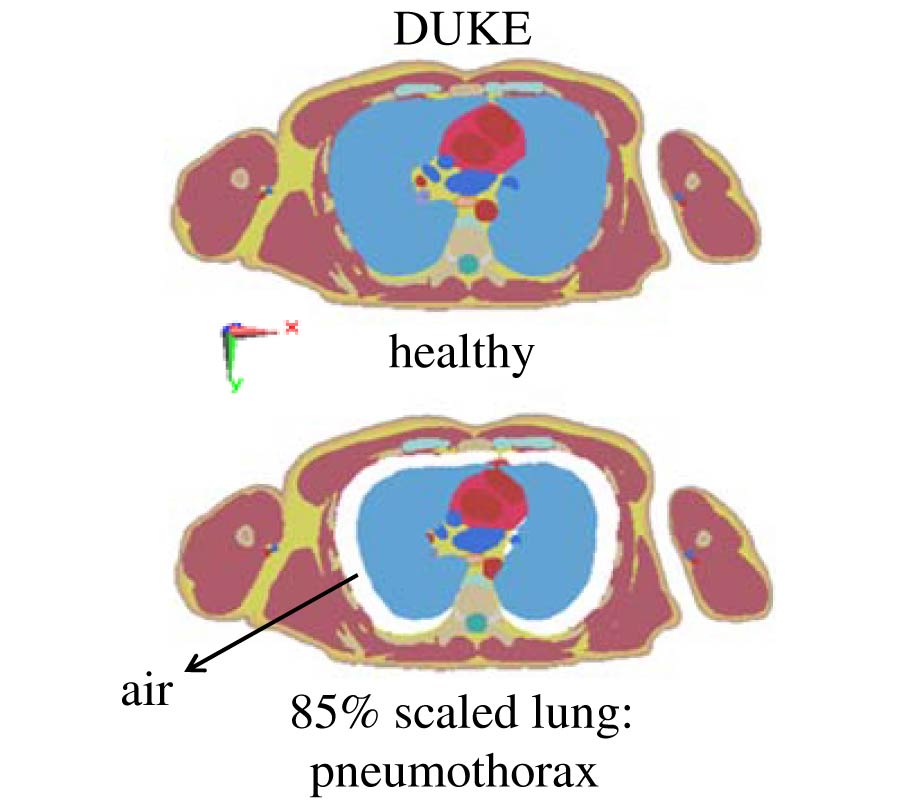
Knowledge of propagation media, typically gathered through physical experiments and simulations, is absolutely critical in successful transceiver design. In the case of medical implants, physical experiments are extremely difficult. Therefore, we rely on simulations in most studies. In this paper, Path Loss (PL) between implanted antennas, as a measure of propagation channel characteristics, is investigated using High Frequency Structure Simulator (HFSS) and Remcom's XFDTD 7 (XF7). An Electrically Coupled Loop Antenna (ECLA) is designed to study PL inside human body models at different frequency bands: Medical Implanted Communication Services (MICS) band (402-405 MHz), Industrial Scientific and Medical (ISM) band (2.4 2.5 GHz) and 3.5 GHz band (3.55-3.65 GHz). The ECLA has dimensions (5×5×3 mm3), (3×3×3 mm3) and (2×2×2 mm3) at MICS, ISM and 3.5 GHz respectively. ECLA performance inside human body models is studied at the allowed frequency bands. The effects of frequency bands, human model electrical properties, and distance between implants on PL are considered. Simulation results are validated with experimental work. Our results show that the ECLA at MICS band has the lowest Specific Absorption Rate (SAR) and the highest allowed input power. Also, the MICS band has the lowest PL inside the human body model, shown to be less than 90 dB in the worst case scenario.
INTRA-BODY PROPAGATION CHANNEL INVESTIGATION USING ELECTRICALLY COUPLED LOOP ANTENNA
2014-12-09
PIER M
Vol. 40, 45-56
Fourier-Domain Electromagnetic Wave Theory for Layered Metamaterials of Finite Extent
Kenneth J. Chau , Mohammed H. Al Shakhs and Peter Ott
The Floquet-Bloch theorem allows waves in infinite, lossless periodic media to be expressed as a sum of discrete Floquet-Bloch modes, but its validity is challenged under the realistic constraints of loss and finite extent. In this work, we mathematically reveal the existence of Floquet-Bloch modes in the electromagnetic fields sustained by lossy, finite periodic layered media using Maxwell's equations alone without invoking the Floquet-Bloch theorem. Starting with a transfer-matrix representation of the electromagnetic field in a generic layered medium, we apply Fourier transformation and a series of mathematical manipulations to isolate a term explicitly dependent on Floquet-Bloch modes. Fourierdomain representation of the electromagnetic field can be reduced into a product of the Floquet-Bloch term and two other matrix factors: one governed by reflections from the medium boundaries and another dependent on layer composition. Electromagnetic fields in any finite, lossy, layered structure can now be interpreted in the Fourier-domain by separable factors dependent on distinct physical features of the structure. The developed theory enables new methods for analyzing and communicating the electromagnetic properties of layered metamaterials.
FOURIER-DOMAIN ELECTROMAGNETIC WAVE THEORY FOR LAYERED METAMATERIALS OF FINITE EXTENT
2014-12-07
PIER C
Vol. 55, 83-94
A Simplified Implementation of Substrate Integrated Non-Radiative Dielectric Waveguide at Millimeter-Wave Frequencies
Jawad Attari , Halim Boutayeb and Ke Wu
The substrate integrated non-radiative dielectric (SINRD) guide presents a rather complicated process of design and implementation because of multiple interrelated design parameters involved in the definition of structures. In this work, the size of SINRD guide is halved by using a perfect electrical conductor (PEC) image plane. Consequently, the number of modes in the resulting image SINRD (iSINRD) guide is equally reduced since all even modes including the LSE10 mode are suppressed. Furthermore, a simple yet accurate design method is proposed that takes into account many parameters involved in the design of an SINRD guide, especially dimensions of perforation and dispersion effects. Three iSINRD prototypes are fabricated to test the proposed method over the W-band frequency range. Two of the prototypes are based on Alumina substrate with different perforation profiles, and both exhibit insertion loss around 1 dB while the return loss is around 16 dB. The third is based on RO6002 substrate and exhibits an insertion loss of around 3 dB and a return loss of around 14 dB. To test the leakage loss caused by periodic gaps in the PEC wall, two iSINRD lines with one and three gaps were fabricated. The insertion and return losses of the former case are respectively 1.2 dB and 17 dB compared to 2.5 dB and 18 dB of the latter case.
A SIMPLIFIED IMPLEMENTATION OF SUBSTRATE INTEGRATED NON-RADIATIVE DIELECTRIC WAVEGUIDE AT MILLIMETER-WAVE FREQUENCIES
2014-12-05
PIER B
Vol. 61, 253-268
Optical Theorem for Transmission Lines
Edwin A. Marengo and Jing Tu
We present the application to transmission line systems of a new theory of the optical theorem that describes the energy budget of electromagnetic scattering in lossless wave propagation media. The insight gained by exploring this, simplest of the electromagnetic wave propagation systems from the point of view of the optical theorem, is important for understanding power budget of electromagnetic scattering due to the presence of targets in a medium, and of changes of loads due to parasitics, faults, switching, and other reasons, in transmission lines, with applications to quality control in manufacturing, self-monitoring of microwave circuits, and the detection of load changes and faults in power transmission and distribution systems. The results also apply to more general electromagnetic propagation systems and are relevant for the development of novel electromagnetic (e.g., microwave, terahertz) and optical sensors.
OPTICAL THEOREM FOR TRANSMISSION LINES
2014-12-04
PIER B
Vol. 61, 241-252
Study of Human Exposure Using Kriging Method
Ourouk Jawad , David Lautru , Aziz Benlarbi-Delai , Jean Michel Dricot and Philippe De Doncker
This paper develops the kriging method to calculate the whole body Specific Absorption Rate (SAR) for any angle of incidence of a plane wave on any body model using a minimum number of Finite Difference Time Domain (FDTD) simulations. Practical application of this method is to study people's exposure. Thanks to kriging method, it will enable to answer to the challenge of studying the exposure in a realistic environment. This approach develops a new tool in order to improve the field of stochastic dosimetry. The kriging method is applied to a girl body model in order to determine the variogram model, then this model is validated on a boy body model. Thanks to only 40 numerical SAR values, kriging method enables to estimate any SAR value with a mean relative error under 3%.
STUDY OF HUMAN EXPOSURE USING KRIGING METHOD
2014-12-04
PIER C
Vol. 55, 73-82
Low RCS Microstrip Antenna Array with Incident Wave in Grazing Angle
Wen Jiang , Junyi Ren , Wei Wang and Tao Hong
In this paper, a novel microstrip antenna array with reduced radar cross-section (RCS) in grazing angle is proposed and studied. We define that the grazing angle θ of radar incident wave ranges from 80° to 90°. Under the condition that the incident wave is in grazing angle, a microstrip antenna designed by the techniques of miniaturization and ground-cut slots is given firstly. Compared with a traditional rectangle microstrip antenna, the RCS peaks of the proposed antenna are efficiently controlled over the frequency range of 4~16 GHz. Based on the design above, the proposed antenna is chosen as an element to design a 2×2 antenna array. Analysis and optimization of the arrangement of the array is made to achieve more RCS reduction. The measured results of radiation performance accord with the simulated ones, which indicate that the proposed method is feasible.
LOW RCS MICROSTRIP ANTENNA ARRAY WITH INCIDENT WAVE IN GRAZING ANGLE
2014-12-04
PIER Letters
Vol. 50, 73-77
Electromagnetic Characterization of Anisotropic and Weakly Conductive Materials by Using Resonant Circuits
Hocine Menana
This work deals with the electromagnetic characterization of the electrical conductivity of anisotropic and weakly conductive materials by using resonant circuits. Experimental results characterizing a carbon fiber reinforced polymer (CFRP) ply are presented.
ELECTROMAGNETIC CHARACTERIZATION OF ANISOTROPIC AND WEAKLY CONDUCTIVE MATERIALS BY USING RESONANT CIRCUITS
2014-12-04
PIER M
Vol. 40, 37-44
An Efficient Technique for Design of Electrically Thick Differentially-Driven Probe-Fed Microstrip Antennas
Cristiano Borges De Paula , Daniel Chagas do Nascimento and Ildefonso Bianchi
This paper presents a computationally efficient technique for designing electrically thick differentially-driven rectangular microstrip antennas with coaxial probe feed. It concerns the use of a transmission line model for probe positioning, along with a full-wave field simulator that yields accurate results with reduced number of required full-wave simulations. An electrically thick antenna was designed with the proposed technique to operate at 2442 MHz, having its radiation patterns and input impedance measured and compared against a single-feed rectangular microstrip antenna to demonstrate the advantages of using differential feed to reduce cross-polarization in H-plane.
AN EFFICIENT TECHNIQUE FOR DESIGN OF ELECTRICALLY THICK DIFFERENTIALLY-DRIVEN PROBE-FED MICROSTRIP ANTENNAS
2014-12-04
PIER M
Vol. 40, 27-35
An Efficient Magnetic Field Integral Equation Based Iterative Solver
Robert Brem and Thomas F. Eibert
An iterative solution scheme based on the magnetic field integral equation (MFIE) to compute electromagnetic scattering for arbitrary, perfect electrically conducting (PEC) objects is topic of this contribution. The method uses simple and efficient approaches for the computation of surface current interactions which are typically found in the well-known iterative physical optics (IPO) technique. However, the proposed method is not asymptotic, since no physical optics (PO) concepts are utilized. Furthermore, a least squares correction method is introduced, which is applied not on the complete current vector, but on individual groups of currents. This helps to quickly reduce the residual error and to improve convergence. The result is a simple method which is capable to improve the simulation results obtained by pure asymptotic methods such as PO or shooting and bouncing rays (SBR). The method can be regarded as a simplified iterative method of moments (MoM) technique. Numerical examples show that the proposed approach is advantageous e.g. in problem cases where the neglect of diffraction effects or currents in shadow regions would cause large errors. It also provides an improved prediction of the peak scattering contributions.
AN EFFICIENT MAGNETIC FIELD INTEGRAL EQUATION BASED ITERATIVE SOLVER
2014-12-03
PIER B
Vol. 61, 225-239
Design and Implementation of a Compact Practical Passive Beam-Forming Matrix for 3D S-Band Radar
Hamid Mirmohammad Sadeghi , Mehdi Moradianpour , Maziar Hedayati , Gholamreza Askari and Parisa Moslemi
In this paper a compact two-layer microstrip passive beam-forming matrix in the 2.9-3.1 GHz frequency band is designed, fabricated, and measured. This 13×6 matrix is a passive circuit that can transform the 13 patterns of an antenna array into six possible beams to decrease the complexity for multiplexing /demultiplexing operation in three dimensional Radar. The 90 degrees hybrid couplers with high isolation between two signals and phase shifters between the couplers are used to provide proper signals in outputs. The matrix structure consists of metal walls around transmission lines to eliminate the surface waves. Also, a coaxial to microstrip transition is used to extract accurate measurement results. A special box is designed to cover matrix which has many design considerations such as cutoff frequency, destructive effects on couplers and other parts of matrix, and all of these effects are analyzed and considered to achieve the optimum performance in this paper. The matrix is designed on a substrate Rogers RT5880 with εr=2.2, substrate height=0.787 mm, and loss tangent=0.0009. Also the thickness of the copper cladding layer is 17 um. The maximum amplitude and phase errors in outputs are 0.6 dB and 7˚, respectively and VSWRs are less than 1.35 in the matrix bandwidth with at least 20 dB isolation between all ports.
DESIGN AND IMPLEMENTATION OF A COMPACT PRACTICAL PASSIVE BEAM-FORMING MATRIX FOR 3D S-BAND RADAR
2014-12-03
PIER M
Vol. 40, 19-26
Profiling Boundary Layer Temperature Using Microwave Radiometer in East Coast of China
Ning Wang , Zhenwei Zhao , Leke Lin , Qing-Lin Zhu , Hong-Guang Wang and Tingting Shu
The boundary layer temperature profile is very essential for modeling atmospheric processes, whose information can be obtained using radiosonde data generally. Beside this, ground-based multi-channel microwave radiometer (GMR) offers a new opportunity to automate atmospheric observations by providing temperature, humidity and liquid water content with high time resolution, such as MP-3000A ground-based multi-channel radiometer. An experiment in east coast of China for profiling boundary layer temperature was performed at Qingdao Meteorological Station from 1 March to 23 April in 2014 using an MP-3000A radiometer. Three techniques have been applied to retrieve the boundary layer temperature profile by using the experimental data, namely the linear regression method, the back propagation (BP) neural network method and the 1-D Variational (1D-VAR) method. Elevation scanning is introduced to help improve the accuracy and resolution of the retrievals for each technique. These results are compared with the radiosonde data at the same time. The preliminary results achieved by each method show that the average day root-mean-square (rms) error for temperature is within 1.0 K up to 2 km in height. The 1D-VAR technique seems to be the most effective one to improve the precision of the boundary layer temperature profile.
PROFILING BOUNDARY LAYER TEMPERATURE USING MICROWAVE RADIOMETER IN EAST COAST OF CHINA
2014-12-03
PIER M
Vol. 39, 193-201
Rayleigh Fading Channel Characterization Using k-Band FMCW Radar in Reverberation Chamber
Yun-Seok Noh , Rao Shahid Aziz , Myunghun Jeong , Dae-Hwan Jeong , Ashwini Kumar Arya and Seong-Ook Park
This paper investigates the channel characterization of Rayleigh fading channel using K-band frequency-modulated continuous wave (FMCW) radar system. An IF (intermediate frequency) signal of K-band FMCW radar can be treated as time and frequency domain signals due to a unique property of linear frequency modulation (LFM). First, channel sounder FMCW radar stability has been confirmed by measuring power flatness of transmitted radio frequency signal and estimated range in anechoic chamber before conducting the experiment for channel characterization of Rayleigh fading channel. Next, the measurement setup has been conducted in reverberation chamber which emulates multipath fading phenomena. In reverberation chamber, four different cases have been examined by changing the boundary conditions inside it with and without flat microwave absorbers. This investigation leads to obtained scattered plots, normalized propagation delay profiles (PDPs), mean excess delay, root-mean-square (RMS) delay spread and envelope distribution of Rayleigh fading channel at about 24.591 GHz.
RAYLEIGH FADING CHANNEL CHARACTERIZATION USING K-BAND FMCW RADAR IN REVERBERATION CHAMBER
2014-12-01
PIER B
Vol. 61, 211-224
Amplitude-Aided Cphd Filter for Multitarget Tracking in Infrared Images
Changzhen Qiu , Zhiyong Zhang , Huanzhang Lu and Yabei Wu
The cardinalized probability hypothesis density (CPHD) filter is a powerful tool for multitarget tracking (MTT). However, conventional CPHD filter discriminates targets from clutter only via the motion information, which is not reasonable in the situation of dense clutter. In the tracking, the amplitude of target returns is usually stronger than those coming from clutter, so the amplitude information can be used to enhance the discrimination between targets and clutter. Based on this idea, this paper proposes an amplitude-aided CPHD filter for the MTT in distant infrared (IR) surveillance. First, we model the amplitude of targets and clutter in IR scenarios respectively. For distant IR scenarios, the point spread function (PSF) is used to model the imaging of the point target. The center intensity of the PSF is unknown in practice, and the maximum likelihood estimation (MLE) method is adopted to estimate the target center intensity via the intensities of the latest target detections. Then a likelihood function for MTT is established, and using this likelihood function, a new CPHD recursion is derived, which can distinguish different targets and clutter by the correspondence weight. In the implementation, we adopt the Gaussian mixture (GM) approach to implement the amplitude-aided CPHD filter to achieve efficient performance. In numerical experiments, the results show that the proposed method attains a significant improvement in performance over that only using location measurements.
AMPLITUDE-AIDED CPHD FILTER FOR MULTITARGET TRACKING IN INFRARED IMAGES
2014-11-28
PIER Letters
Vol. 50, 67-72
A Broadband Reflectarray Using Phoenix Unit Cell
Chao Tian , Yong-Chang Jiao and Wei-Long Liang
In this letter, a novel broadband single-layer reflectarray element composed of a circular patch and double circular ring is presented. The element in the reflectarray provides a nearly 360° linear phase range and has rebirth capability. The broadband characteristic of this reflectarray is obtained due to the sub-wavelength of the element space and the combination of two resonators of complementary size on a single layer. Then, a prime-focus 225-element microstrip reflectarray with this phoenix cell has been designed and implemented. The measured gain is 22 dBi with 1 dB drop within 29% bandwidth at the center frequency of 10 GHz.
A BROADBAND REFLECTARRAY USING PHOENIX UNIT CELL
2014-11-27
PIER C
Vol. 55, 63-72
Design of a Compact ACS-Fed Dual Band Antenna for Bluetooth/WLAN and WiMAX Applications
Praveen Vummadisetty Naidu and Raj Kumar
In this paper, a compact asymmetric coplanar strip (ACS)-fed printed monopole dual-band antenna for 2.4 GHz bluetooth, 5.2/5.8 GHz wireless local area network (WLAN) and 3.5/5.5 GHz worldwide interoperability for microwave access (WiMAX) applications is presented and investigated experimentally. The proposed antenna is composed of a ACS-fed monopole, an arc-shaped strip and an omega-shaped strip, which occupies a compact size of 18 x 22 mm2 including the ground plane. By properly selecting the positions and lengths of these strips, dual frequency operation with wide impedance bandwidth characterstics can be achieved. The proposed antenna has been validated experimentally and found to have nearly onmidirectional raiation patterns in the H-plane, nearly bi-directional behaviour in the E-plane and accepatable peak gain across operating bands.
DESIGN OF A COMPACT ACS-FED DUAL BAND ANTENNA FOR BLUETOOTH/WLAN AND WIMAX APPLICATIONS
2014-11-27
PIER Letters
Vol. 50, 61-66
Dual-Mode Resonator for the Dual-Band System of Wireless Energy Transfer with Simultaneous Data Transmission
Vladimir N. Yashchenko , Dmitry S. Kozlov and Irina Vendik
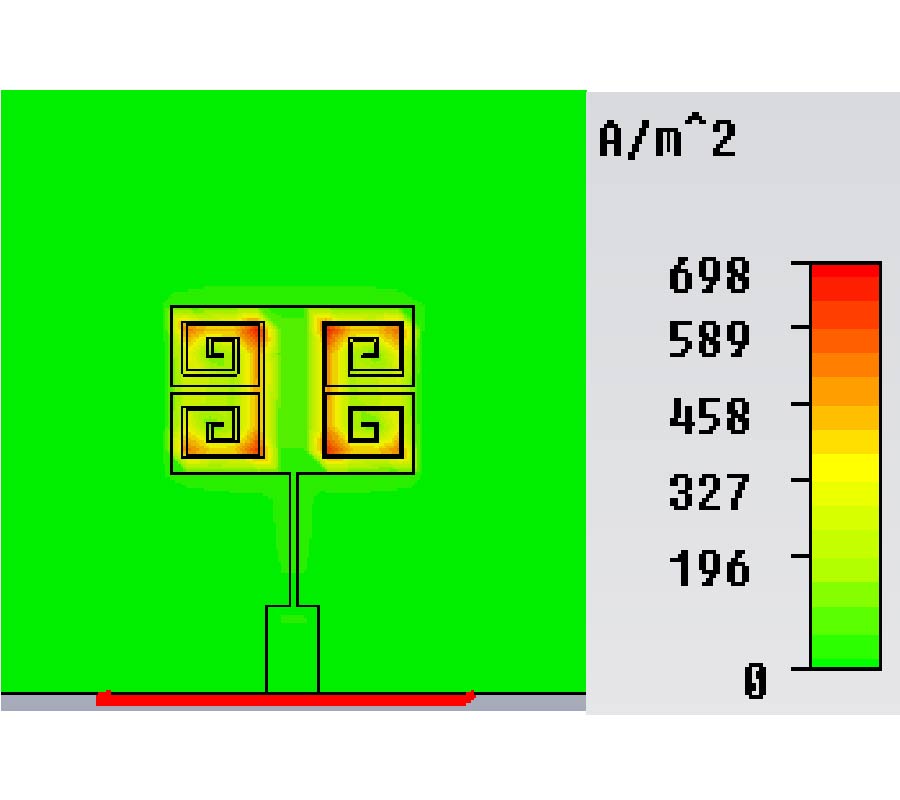
Original resonant structures for improving efficiency of wireless charging system with the possibility of data exchange are presented. Characteristics of two different dual-mode spiral resonators were obtained by electromagnetic and circuit simulations. Based on these results, an optimum design for highly efficient data and energy transfer was suggested.
DUAL-MODE RESONATOR FOR THE DUAL-BAND SYSTEM OF WIRELESS ENERGY TRANSFER WITH SIMULTANEOUS DATA TRANSMISSION
2014-11-26
PIER B
Vol. 61, 197-210
A New Hybrid MoM-GEC Asymptotic Method for Electromagnetic Scattering Computation in Waveguides
Mohamed Hajji , Samir Mendil and Taoufik Aguili
This paper presents a new hybridization between MoM-GEC and some asymptotic methods. In fact, a new hybrid current test function based on Physical Optic (PO) and a modal method is developed. The approach consists in approximating the total current on an invariant metallic pattern on two parts. The inside of metal is governed by PO method; however, the edges are modeled by infinite cylinders and described by Hankel functions (modal method). The considered single test function is required then by MoM method to replace a lot of sinusoidal or triangular test functions, in order to get a rapid convergence and less computational time. For validation purposes, the new developed hybrid approach is applied to compute scattering in different structures. The obtained input impedances, currents and fields distributions are in agreement with those obtained by MoM method. Considerable gain in computational time and memory resources is achieved.
A NEW HYBRID MOM-GEC ASYMPTOTIC METHOD FOR ELECTROMAGNETIC SCATTERING COMPUTATION IN WAVEGUIDES