Search Results(13805)

2010-01-01
PIER C
Vol. 12, 15-25
A Proposal Solution for Interference Inter-Operators
Abdelouahed Jraifi , R. Ahl Laamara , A. Belhaj and E. Saidi
With deregulation of telecom sector (law 24/96) in our country (Morocco), many operators of cellular network appear. Among the operators technology that operate, we find GSM9800 and CDMA900 that are used by two different operators. It turns out from the measurements of indicator of quality of service that the performance of GSM900 is degraded, and the major cause is the interference created by CDM800 which cannot be neglected. In this paper, we adopt a new approach in order to make GSM900 and CDMA800 operate in harmony. This method is based on a physical optimization of antenna systems and could be understood as a physical symmetry rotation in the space of parameters such that tilt and Azmit control the system. It independently reduces the interference effects on the distance between the base stations. Moreover, it allows us to improve client service without using hard installations and inexpensive technologies.
A PROPOSAL SOLUTION FOR INTERFERENCE INTER-OPERATORS
2009-12-21
PIER C
Vol. 12, 1-14
Design of a Novel Dual-Loop Gate Antenna for Radio Frequency Identification (RFID) Systems at Low Frequency Band
Supakit Kawdungta , Chuwong Phongcharoenpanich and Danai Torrungrueng
In this paper, a dual-loop gate antenna is designed to generate the magnetic field distribution in various directions. It is applied to Radio Frequency Identification (RFID) systems for animal identification operating at the low frequency (LF) band of 125 kHz and 134.2 kHz. The percentage of volume of magnetic field intensity is introduced and used as a figure of merit in the design. The optimum antenna parameters are also designed by the genetic algorithm (GA) in conjunction with the Numerical Electromagnetic Code (NEC). The prototype antenna was fabricated and tested to confirm the antenna performance in the LF-RFID system for animal identification. It is found that the dual-loop gate antenna can be efficiently used in the LF-RFID system.
DESIGN OF A NOVEL DUAL-LOOP GATE ANTENNA FOR RADIO FREQUENCY IDENTIFICATION (RFID) SYSTEMS AT LOW FREQUENCY BAND
2009-12-21
PIER C
Vol. 11, 237-243
A Compact UWB HMSIW Bandpass Filter Based on Complementary Split-Ring Resonators
Li Qiang , Yong-Jiu Zhao , Quan Sun , Wei Zhao and Bing Liu
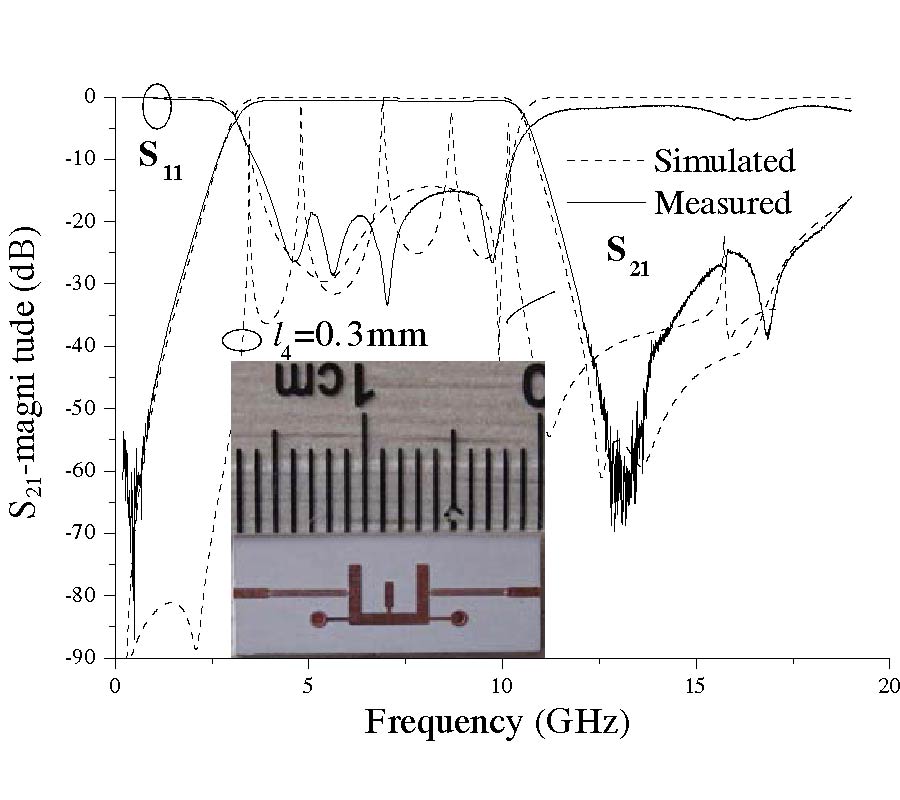
A novel complementary split ring resonators (CSRR) is applied to realize a compact Ultra-Wide Band (UWB) bandpass filter based on half-mode substrate integrated waveguide (HMSIW) in this paper. Sharpened rejection skirts and widened upper stopband are achieved due to the two resonant frequencies of the proposed CSRR. Very good agreement is observed between measurement and simulation results.
A COMPACT UWB HMSIW BANDPASS FILTER BASED ON COMPLEMENTARY SPLIT-RING RESONATORS
2009-12-17
PIER B
Vol. 19, 65-93
Single-Mode Propagation of Light in One-Dimensional All-Dielectric Light-Guiding Systems
Changbiao Wang
Numerical results are presented for single-mode guidance, which is based on photonic band gap (PBG) effect, in one-dimensional planar all-dielectric light-guiding systems. In such systems there may be two kinds of light-speed point (the intersection of a mode-dispersion curve and the light line of guiding region ambient medium): One is the intrinsic light-speed point that is independent of the guiding region width, and the other is the movable light-speed point that varies with the guiding region width. It is found that the intrinsic light-speed point plays an important role to form the single-mode regime by destroying the coexistence of the lowest guided TM and TE modes that are born with a degeneration point. A mode-lost phenomenon is exposed and this phenomenon suggests a way of how to identify PBG-guided fundamental modes. Quasi-cutofffree index-guided modes in the PBG guiding structures are examined, which appear when the higher-index layers are adjacent to the guiding region and the guiding region width is small. The transverse resonance condition is derived in the Maxwell optics frame, and it is shown that there is a significant revision to the traditional one in the ray optics model. A sufficient and necessary condition for intrinsic light-speed points is given, which provides strong support to the numerical results.
SINGLE-MODE PROPAGATION OF LIGHT IN ONE-DIMENSIONAL ALL-DIELECTRIC LIGHT-GUIDING SYSTEMS
2009-12-17
PIER
Vol. 100, 189-200
A Dual-Polarized Wide-Band Patch Antenna for Indoor Mobile Communication Applications
Mustafa Secmen and Altunkan Hizal
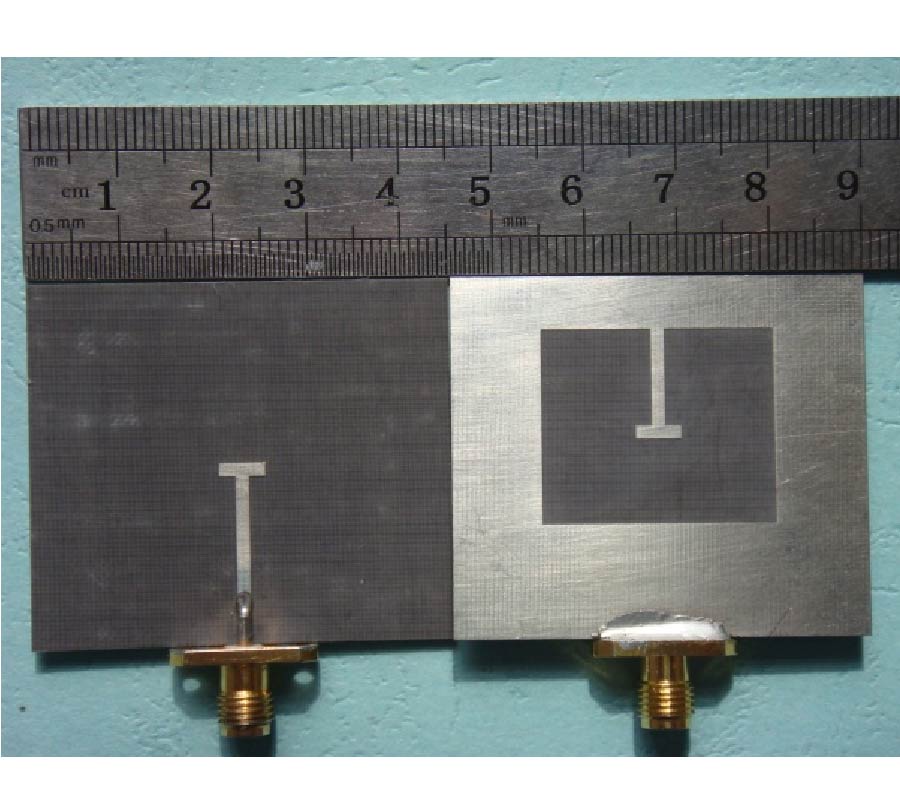
This paper proposes the configuration of a novel dual-polarized wide-band patch antenna system suitable for indoor mobile communication applications. This configuration consists of two compact patch antennas, which have different feed structures from classical patch antenna configuration. These antennas, which are separated by a thin absorber to have a good isolation, are fed independently to obtain dual polarization. The antenna structure is designed, simulated, manufactured and measured. The operation bandwidth spans 1900-2700 MHz covering Bluetooth, Wireless Local Area Networks (WLAN) and Universal Mobile Telecommunications System (UMTS) bands. The simulations show good agreement with the measurement results that the antennas have return losses higher 15 dB, and the coupling between two antennas is below -20 dB within the operation band.
A DUAL-POLARIZED WIDE-BAND PATCH ANTENNA FOR INDOOR MOBILE COMMUNICATION APPLICATIONS
2009-12-17
PIER M
Vol. 10, 83-91
Determination of the Complex Permittivity Values of Planar Dielectric Substrates by Means of a Multifrequency PSO-Based Technique
Renzo Azaro , Federico Caramanica and Giacomo Oliveri
In this paper, an innovative technique for the determination of the dielectric properties of planar substrates is presented. Starting from a set of impedance measurements performed on a section of a microstrip transmission line built on the planar dielectric substrate under test, the proposed technique formulates the reconstruction problem in terms of an optimization one successively solved by means of an effective stochastic algorithm. Such a method allows one the reconstruction of the permittivity values at multiple frequencies by simply using a vector network analyzer and a standard calibration procedure for the impedance measurement. The results of some representative experimental tests are shown for a preliminary assessment of the effectiveness of the proposed approach.
DETERMINATION OF THE COMPLEX PERMITTIVITY VALUES OF PLANAR DIELECTRIC SUBSTRATES BY MEANS OF A MULTIFREQUENCY PSO-BASED TECHNIQUE
2009-12-16
PIER Letters
Vol. 13, 41-49
A Circularly Polarized Rectenna with Low Profile for Wireless Power Transmission
Yan-Yan Gao , Xuexia Yang , Chao Jiang and Jian-Yong Zhou
A novel circularly polarized microstrip rectenna operating on C-band with low profile is proposed. The input and output match networks of the rectifying circuit are realized by λ/4 microstrip lines and open stubs with the harmonics being inhibited. The circularly polarized receiving antenna is a truncated-corner square patch fed by microstrip line with DGS (Defect Ground Structure) for suppressing high order harmonics further. The voltage of 4.34V on the load of 298 Ω is measured and the overall RF-DC conversion efficiency of 68.4% is obtained. This kind of rectenna can be extended to large arrays for wireless power transmission applications.
A CIRCULARLY POLARIZED RECTENNA WITH LOW PROFILE FOR WIRELESS POWER TRANSMISSION
2009-12-16
PIER Letters
Vol. 13, 29-40
Mutual Coupling Reduction Using Dumbbell Defected Ground Structure for Multiband Microstrip Antenna Array
Fitri Yuli Zulkifli , Eko Tjipto Rahardjo and Djoko Hartanto
A novel design of multiband microstrip antenna array with dumbbell shape defected ground structure (DGS) is presented. The DGS is inserted into the ground plane between the two elements of the antenna array in order to suppress mutual coupling. Both simulation and measurement results verified that the DGS had improved the radiation properties of the antenna array. Measurement results of the DGS antenna showed mutual coupling reduction of maximum 5 dB and gain enhancement to 3 dB.
MUTUAL COUPLING REDUCTION USING DUMBBELL DEFECTED GROUND STRUCTURE FOR MULTIBAND MICROSTRIP ANTENNA ARRAY
2009-12-16
PIER C
Vol. 11, 229-236
A Broadband Quadrature Hybrid Using Improved Wideband Schiffman Phase Shifter
Eslam Jafari , Farrokh Hojjat-Kashani and Reza Rezaiesarlak
In this paper, a broadband quadrature hybrid is presented. The hybrid comprises a Wilkinson divider, followed by an improved Schiffman phase shifter. An improved wideband Schiffman phase shifter on a single layer printed circuit board is accompanied by a lumped capacitor between two coupled lines. Lumped capacitor is in parallel with the odd-mode capacitance of the two coupled lines, hence, the odd-mode capacitance is increased and consequently the odd-mode impedance is decreased. Therefore, by this method we can control the ratio of the even mode impedance to the odd mode impedance which is critical in Schiffman phase shifter design. Compared with the cascading Microstrip multi-section coupled lines, our proposed single layer phase shifter is smaller in size. Also, the proposed phase shifter has the greater bandwidth compared to the patterned ground plane Schiffman phase shifter and its realization is simpler because of its single layer structure. As an example, a Schiffman phase shifter at frequency f0 =650 MHz is designed and simulated. With the proposed phase shifter a 90°hybrid is designed, simulated, fabricated and measured. Exprimental results show that the amplitude and phase imbalance between two paths at worth case are within 0.75 dB and 5°, respectively, over the frequency band from 362 MHz to 891 MHz, or around 84% bandwidth. The measured return loss is better than -10.8 dB over the operating frequency band.
A BROADBAND QUADRATURE HYBRID USING IMPROVED WIDEBAND SCHIFFMAN PHASE SHIFTER
2009-12-16
PIER
Vol. 100, 175-187
Modified Two-Element Yagi-Uda Antenna with Tunable Beams
Bao-Hua Sun , Shi-Gang Zhou , Yun-Fei Wei and Qi-Zhong Liu
A modified two-element Yagi-Uda antenna with tunable beams in the H-plane (including four significant beams: forward, backward, omni-directional, and bi-directional beams) is presented. These tunable beams are achieved by simply adjusting the short-circuit position of the transmission line connected to the parasitic element. The principle of operation is investigated by examining the current relations between the driven and parasitic elements. Measured results of a fabricated prototype are presented and discussed.
MODIFIED TWO-ELEMENT YAGI-UDA ANTENNA WITH TUNABLE BEAMS
2009-12-16
PIER
Vol. 100, 153-173
Design of the Compact Parallel-Coupled Lines Wideband Bandpass Filters Using Image Parameter Method
Chang-Sin Ye , Yan-Kuin Su , Min-Hang Weng , Cheng-Yuan Hung and Ru-Yuan Yang
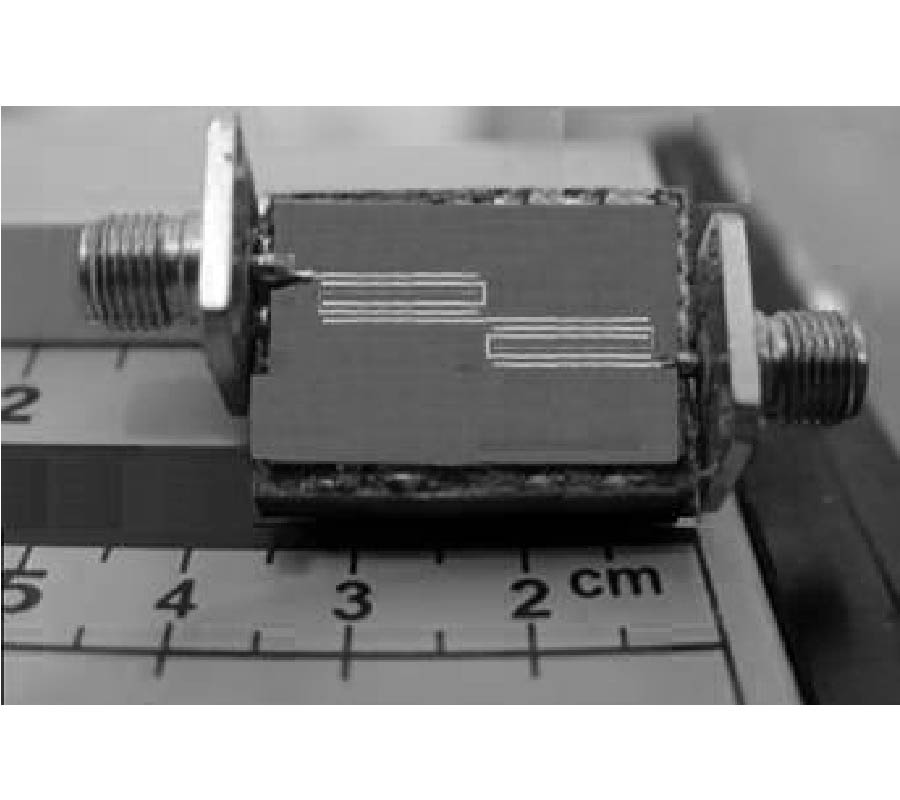
In this paper, the design of compact and high performance parallel coupled line wideband bandpass filter using image parameter method are proposed. The filter mainly comprising one-stage parallel coupled line and two open stubs are designed and implemented on commercial RT/Duroid 5880 substrate. The equivalent circuit of the proposed structure is initially derived by using the image parameter method. It is found that, the normalized bandwidth (NBW) of image impedance for the one-stage parallel coupled line has a relation to the electromagnetic (EM) simulated bandwidth. To further improve the selectivity, two open stubs are connected near the input/output (I/O) ports. The design procedures and their limitations are discussed in detail. The proposed filters are fabricated, measured and showing good characteristics of 87% fractional bandwidth as well as good insertion/return loss, flat group delay varies between 0.3-1.5 ns. High passband selectivity and wide stopband from 8-14 GHz are obseved. The measured results are also having a good agreement with the simulated results.
DESIGN OF THE COMPACT PARALLEL-COUPLED LINES WIDEBAND BANDPASS FILTERS USING IMAGE PARAMETER METHOD
2009-12-16
PIER
Vol. 100, 129-152
Critical Analysis of Microwave Specular Scattering Response on Roughness Parameter and Moisture Content for Bare Periodic Rough Surfaces and Its Retrieval
Gunjan Mittal and Dharmendra Singh
The main aim of this paper is to accentuate the sensitivity of correlation length 'l' as an important roughness parameter in quantifying the moisture content of bare soil surfaces with specular scattering. For this purpose, an indigenously designed bistatic scatterometer has been used to generate co-polarized specular data at X-band (10 GHz) with incidence angle varied from 30°-- 70°in steps of 10 degrees. The moisture and roughness conditions of the bare soil surface were changed under controlled conditions. Twenty seven experimental fields specified on the ground of different roughness and moisture conditions have been analyzed. Higher level of moisture content with larger correlation lengths was found to be more suitable for observing the effect of increasing rms height on specular scattering. Kirchhoff approach (KA) considered under the stationary phase approximation (SPA) has been used as an inversion algorithm with the application of genetic algorithm for the retrieval of soil parameters. A good agreement was observed between the experimental and retrieved values of soil moisture content (mν) and roughness parameters (s and l).
CRITICAL ANALYSIS OF MICROWAVE SPECULAR SCATTERING RESPONSE ON ROUGHNESS PARAMETER AND MOISTURE CONTENT FOR BARE PERIODIC ROUGH SURFACES AND ITS RETRIEVAL
2009-12-16
PIER
Vol. 100, 119-128
Subspace-Based Optimization Method for Reconstructing Perfectly Electric Conductors
Xiuzhu Ye , Xudong Chen , Yu Zhong and Krishna Agarwal
Reconstruction of perfectly electric conductors (PEC) with transverse magnetic (TM) illumination by a subspace-based optimization method (SOM) is presented. Apart from the information that the unknown object is PEC, no other prior information such as the number of the objects, the approximate locations or the centers is needed. The whole domain is discretized into segments of current lines. Scatterers of arbitrary number and arbitrary shapes are represented by a binary vector, and the descent method is used to solve the discrete optimization problem. Several numerical simulations are chosen to validate the proposed method. In particular, a combination of a line type object and a rectangular shape object is successfully reconstructed. The subspace-based optimization method for PEC scatterers is found to be more complex than its counterpart for dielectric scatterers.
SUBSPACE-BASED OPTIMIZATION METHOD FOR RECONSTRUCTING PERFECTLY ELECTRIC CONDUCTORS
2009-12-16
PIER M
Vol. 10, 71-81
Accurate Synthesis Formulas Obtained by Using a Differential Evolution Algorithm for Conductor-Backed Coplanar Waveguides
Sabri Kaya , Kerim Guney , Celal Yildiz and Mustafa Turkmen
In this paper, accurate synthesis formulas obtained by using a differential evolution (DE) algorithm for conductor-backed coplanar waveguides (CBCPWs) are presented. The synthesis formulas are useful to microwave engineers for accurately calculating the physical dimensions of CBCPWs. The results of the synthesis formulas are compared with the theoretical and experimental results available in the literature. A full-wave electromagnetic simulator IE3D and experimental results are obtained in this work. The average percentage error of the synthesis formulas obtained by using DE algorithm is computed as 0.67% for 1086 CBCPW samples having different electrical parameters and physical dimensions, as compared with the results of quasi-static analysis.
ACCURATE SYNTHESIS FORMULAS OBTAINED BY USING A DIFFERENTIAL EVOLUTION ALGORITHM FOR CONDUCTOR-BACKED COPLANAR WAVEGUIDES
2009-12-15
PIER
Vol. 100, 105-117
Design Optimization of a Bow-Tie Antenna for 2.45 GHz RFID Readers Using a Hybrid Bso-nm Algorithm
Korany Ragab Mahmoud
Recently the Bacterial foraging optimization algorithm (BFA) has attracted a lot of attention as a high-performance optimizer. This paper presents a hybrid approach involving Bacterial Swarm Optimization (BSO) and Nelder-Mead (NM) algorithm. The proposed algorithm is used to design a bow-tie antenna for 2.45 GHz Radio Frequency Identification (RFID) readers. The antenna is analyzed completely using Method of Moments (MoM), then the MoM code is coupled with the BSO-NM algorithm to optimize the antenna. The simulated antenna and the optimization algorithm programs were implemented using MATLAB version 7.4. To verify the validity of numerical simulations, the results are compared with those obtained using Feko Software Suite 5.3.
DESIGN OPTIMIZATION OF A BOW-TIE ANTENNA FOR 2.45 GHz RFID READERS USING A HYBRID BSO-NM ALGORITHM
2009-12-15
PIER
Vol. 100, 83-103
Optimum Design of Lumped Filters Incorporating Impedance Matching by the Method of Least Squares
Homayoon Oraizi and Mehdi Seyyedesfahlan
The method of least squares (MLS) is used to develop an algorithm for the optimum design of any type of filter under any design specifications for the realization of lowpass, bandpass, highpass and bandstop characteristics. The proposed filter design method can be used for any general filter network topology, which provides high flexibility for the selection of circuit configurations suitable for any desired application. The MLS filter design procedure also incorporates source and load impedance matching, which eventually leads to the simplicity of circuits. The proposed method of filter design may be used for lowpass prototype filters or directly for bandpass, highpass or bandpass filters. Several examples of MLS filter designs are given, which compare very well with the classical methods and indicate the advantages of the proposed method of filter design. The MLS filter design may realize any frequency response characteristics, such as spurious response elimination, multiband filter realization and enhancement of some desired behaviors.
OPTIMUM DESIGN OF LUMPED FILTERS INCORPORATING IMPEDANCE MATCHING BY THE METHOD OF LEAST SQUARES
2009-12-14
PIER B
Vol. 19, 41-63
Degree of Roughness of Rough Layers: Extensions of the Rayleigh Roughness Criterion and Some Applications
Nicolas Pinel , Christophe Bourlier and Joseph Saillard
In the domain of electromagnetic wave propagation in the presence of rough surfaces, the Rayleigh roughness criterion is a widely-used means to estimate the degree of roughness of considered surface. In this paper, this Rayleigh roughness criterion is extended to the case of rough layers. Thus, it provides an interesting qualitative tool for estimating the degree of electromagnetic roughness of rough layers.
DEGREE OF ROUGHNESS OF ROUGH LAYERS: EXTENSIONS OF THE RAYLEIGH ROUGHNESS CRITERION AND SOME APPLICATIONS
2009-12-14
PIER C
Vol. 11, 213-228
Implementation of Digital Radar Technology for Imaging and Remote Sensing in Intelligent Transport System
Nirmalendu Sinha , Manish Sonal , Rabindra Nath Bera and Monojit Mitra
With the growth of broadband wireless technology like code division multiple access (CDMA) and ultra-wideband (UWB), lots of development and efforts towards wireless communication system and imaging radar system are well justified. Efforts are also being imparted towards a convergence technology involving both communication and radar technology which will result in intelligent transport system (ITS) and other applications. The authors have tried to converge the communication technologies towards radar and to achieve the interference free and clutter free quality remote images of targets using DS-UWB wireless technology. In this paper, we propose a direct sequence spread spectrum (DSSS) radar for remote sensing in ITS system. We have successfully detected single target using 1D radar imaging, and also separated multiple targets and implemented DSSS radar using software defined radio (SDR) to get continuous connectivity of the system. Authors have sought down the limitations of DSSS radar which according to them can be solved by using adaptive equalizer and rake processing.
IMPLEMENTATION OF DIGITAL RADAR TECHNOLOGY FOR IMAGING AND REMOTE SENSING IN INTELLIGENT TRANSPORT SYSTEM
2009-12-14
PIER
Vol. 100, 69-82
A Wideband Wide-Strip Dipole Antenna for Circularly Polarized Wave Operations
Li-Pin Chi , Sheau-Shong Bor , Sheng-Ming Deng , Ching-Long Tsai , Peng-Hao Juan and Kuo-Wei Liu
A thin dipole antenna is a well-known antenna with linearly polarized wave operation. In this work, a wide-strip dipole antenna is proposed for circularly polarized wave operations. To obtain circularly polarized (CP) wave operations, there are two conditions to be satisfied. One is that the antenna must have two degenerated orthogonal modes with different resonant frequencies. The other is that the phase difference of two orthogonal modes is 90 degrees. To match the first condition, the slab width W is tuned to generate current distributions directed in two different directions. In addition, the second condition is matched by asymmetric feeding point by adjusting the overlapped square width C. The parametric study is completed by the Ansoft HFSS simulator. Simulated results reveal that the CP wave is mainly influenced by the slab width W. The influences of the parameters C and d on the performances of the proposed antenna are also investigated in this paper. Taking -8 dB as reference, there are two working bands for this proposed antenna and the measured center frequencies are 0.66 GHz and 2.04 GHz, respectively, and the corresponding bandwidths are 0.27 GHz (40%) and 1.78 GHz (87%), respectively. In addition, the measured center frequencies and bandwidths of the axial ratio are 1.94 GHz and 0.53 GHz (27%), respectively.
A WIDEBAND WIDE-STRIP DIPOLE ANTENNA FOR CIRCULARLY POLARIZED WAVE OPERATIONS
2009-12-14
PIER
Vol. 100, 37-54
Hybrid Method of Obtaining Degrees of Freedom for Radial Airgap Length in SRM Under Normal and Faulty Conditions Based on Magnetostatic Model
Hossein Torkaman and Seyed Ebrahim Afjei
In this paper, a new hybrid method of obtaining the degrees of freedom for redial airgap length in Switched Reluctance Motor operation under normal and faulty conditions based on magnetiostatic analysis is presented. At the beginning, this method goes through the magnetic design of the motor utilizing three dimensional (3-D) Finite Element Method (FEM) in order to consider the end effects as well as axial fringing field effects. The motor parameters, such as torque, flux linkage, flux density versus rotor position are precisely obtained. Then, a Multi Layered Perceptron Neural Network is designed by considering the nonlinear behavior of the motor parameters obtained under different modes of operatin. Using this network and the obtained parameters from FEM, an Objective Function (OF) for torque ripple with the aim of having a minimum mean square error is estimated. In addition, an improved Genetic Algorithm (GA) for the minimization the OF is also presented to determine the motor's operational regions. Finally, the legal intervals for different modes of motor operation are addressed.
HYBRID METHOD OF OBTAINING DEGREES OF FREEDOM FOR RADIAL AIRGAP LENGTH IN SRM UNDER NORMAL AND FAULTY CONDITIONS BASED ON MAGNETOSTATIC MODEL