Search Results(13805)

2010-01-27
PIER
Vol. 101, 75-96
Novel Low-Cost End-Wall Microstrip-to-Waveguide Splitter Transition
Hadi Aliakbarian , Amin Enayati , Guy Vandenbosch and Walter De Raedt
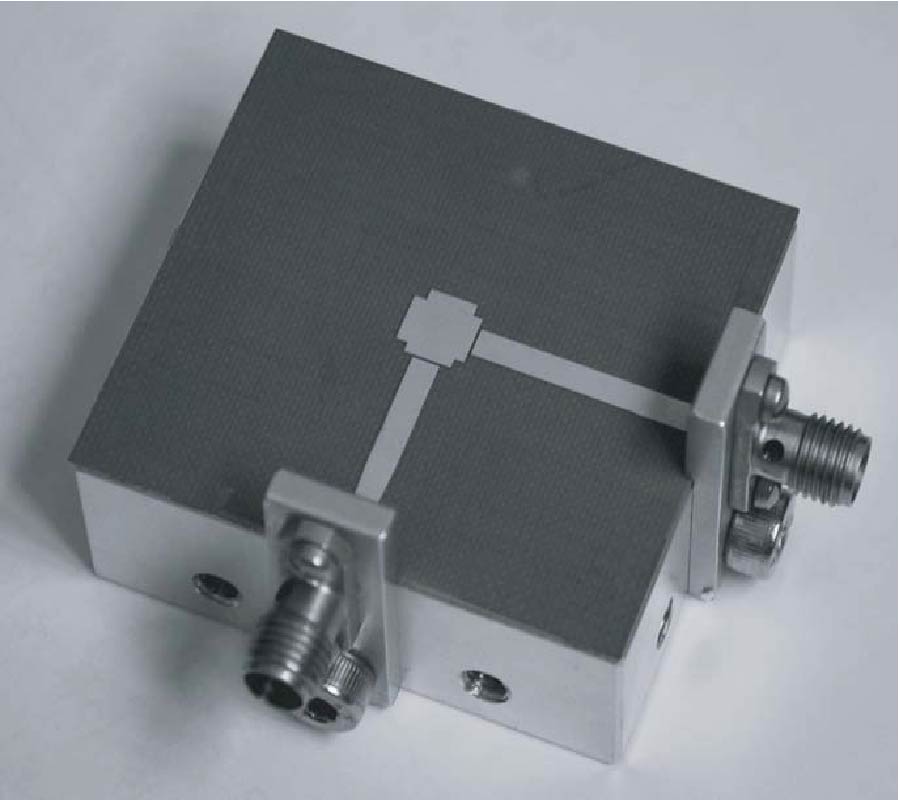
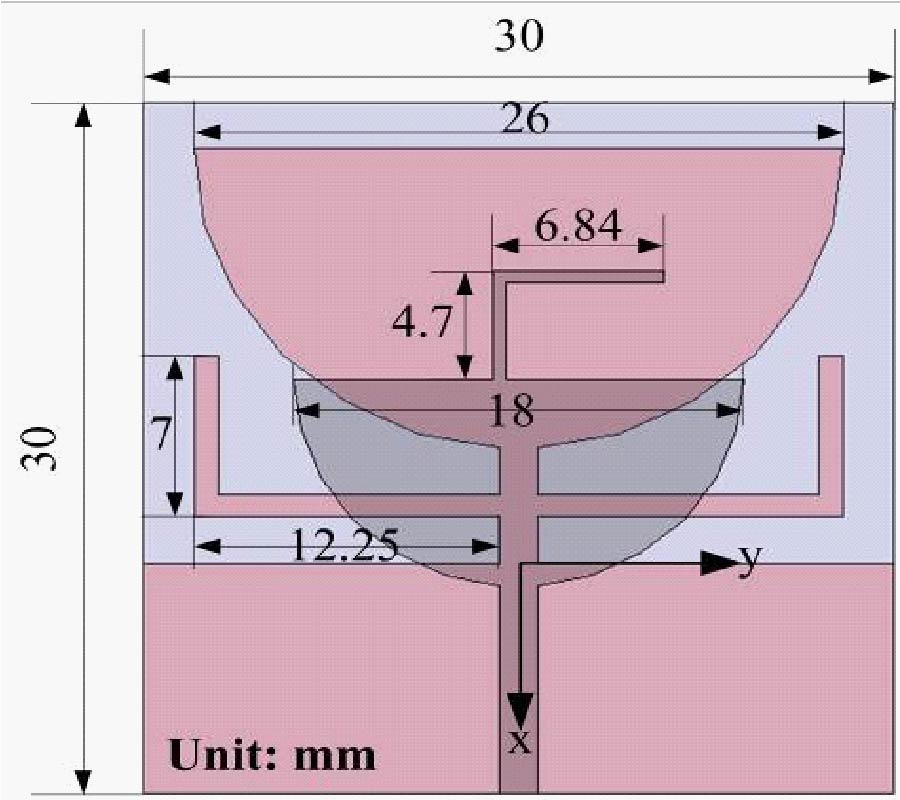
A novel configuration for an end-wall microstrip-to-waveguide splitter transition is presented suitable for use in series fed microstrip arrays. The low price, simplicity, manufacturability, low sensitivity, and also wideband operation, up to more than 37%, is the result of positive interaction between double slots and double stubs. The transition is applied to a dual band 1 × 2 array. A wideband non-tilted pattern is achieved.
NOVEL LOW-COST END-WALL MICROSTRIP-TO-WAVEGUIDE SPLITTER TRANSITION
2010-01-26
PIER B
Vol. 19, 285-303
Novel Method to Analyze and Design One-Dimensional Reciprocal Periodic Structures with Symmetrical Cells
Omid Zandi , Zahra Atlasbaf and Mohammad Abrishamian
The dispersion relation is derived for the most general configuration of a passive and reciprocal periodically loaded transmission line in a unique and simple form by introducing two novel parameters. Based on this relation, the phase and group velocities are determined and a simple condition for phase reversal propagation is obtained. The two above mentioned parameters help us to develop a polar diagram to model the behavior of any two-port network as a function of frequency. By this diagram, we can determine the direction of the phase velocity and also the value of the propagation constant. Then, symmetrical cells and thereof the periodic structures composed of them are analyzed. For such structures, it will be shown that the dispersion relation can be rewritten in a form similar to the Lorentz transformation. We design and analyze a bandstop filter to verify the method.
NOVEL METHOD TO ANALYZE AND DESIGN ONE-DIMENSIONAL RECIPROCAL PERIODIC STRUCTURES WITH SYMMETRICAL CELLS
2010-01-26
PIER C
Vol. 12, 53-64
Measurement of Properties of Copper Telluride Thin Films Using Holography
Vijay J. Fulari , Malekar Vibhavari Prakash and Satish Anna Gandawane
Holography is a technique employed to make three dimensional images using electromagnetic waves. Holographic interferometry is one of the most important applications of holography. It is concerned with the formation and interpretation of fringe patterns, which appears when a wave generated at some earlier time and stored in a hologram is later reconstructed by interfering with comparison wave. We report a technique, which uses double exposure holographic interferometry together with simple mathematical interpretation, which allows immediate finding of stress, mass, fringe width and thickness of thin film. We tested different normalities of solutions. It is observed that increase in deposition time increases thickness and mass of thin film but decreases stress to substrate. The thin films are prepared using electrodeposition technique. The structural, optical and surface wettability properties of the deposited films have been studied using X-ray diffraction (XRD), optical absorption and contact angle measurement, respectively.
MEASUREMENT OF PROPERTIES OF COPPER TELLURIDE THIN FILMS USING HOLOGRAPHY
2010-01-26
PIER M
Vol. 11, 25-36
Linear Array Synthesis Using Biogeography Based Optimization
Urvinder Singh , Harish Kumar and Tara Singh Kamal
This paper presents a novel optimization technique biogeography based optimization (BBO) for antenna array synthesis. BBO is a relatively new evolutionary global optimization technique based on the science of biogeography. It is capable of solving linear and non-linear problems. In this paper, BBO algorithm is used to determine an optimum set of amplitudes of antenna elements that provide a radiation pattern with maximum side lobe level reduction and/or null placement in the specified directions. The results obtained show the effectiveness of the BBO algorithm, and they are better than previous published results.
LINEAR ARRAY SYNTHESIS USING BIOGEOGRAPHY BASED OPTIMIZATION
2010-01-22
PIER
Vol. 101, 63-74
Wireless Communication in Boxes with Metallic Enclosure Based on Time-Reversal Ultra-Wideband Technique: A Full-Wave Numerical Study
Huiqing Zhai , Sungyong Jung and Mingyu Lu
In this paper, two full-wave simulators (one using finite difference time domain method and the other the method of moments) are developed, in order to analyze wireless communication in boxes with metallic enclosure based on time-reversal ultra-wideband (TR-UWB) technique. Impedance boundary conditions are exploited to model realistic metallic walls, and parallel computing is applied to relieve high computational resources requirements. Focusing on both space and time is exhibited by numerical results in arbitrarily shaped metallic boxes, which demonstrates the feasibility of TR-UWB communication in metallic boxes.
WIRELESS COMMUNICATION IN BOXES WITH METALLIC ENCLOSURE BASED ON TIME-REVERSAL ULTRA-WIDEBAND TECHNIQUE: A FULL-WAVE NUMERICAL STUDY
2010-01-20
PIER B
Vol. 19, 263-283
Novel Liquid Crystal Tunable Flat-Top Optical Interleaver
Shadi A. Alboon , Alaeddin Abu-Abed , Robert Lindquist and Hussein R. Al-Zoubi
In this paper, we propose tunable optical interleaver filters based on the combined Michelson interferometer (MI) and the Gires-Tournois interferometer (GTI) with polarization diversity. The tuning capability is achieved by integrating liquid crystals into the interleaver. In addition to the tunability, it is also shown that the response for this proposed interleaver has a flat-top. Various GTIMI LC-based interleaver structures are discussed in this paper and their performance, in terms of the flat-top and the pass band ripple, are judged. These structures have the advantages of low operation voltage requirements and design simplicity. A GTI-MI interleaver has been fabricated and tested. The experimental results show that the interleaver has tunable response.
NOVEL LIQUID CRYSTAL TUNABLE FLAT-TOP OPTICAL INTERLEAVER
2010-01-20
PIER Letters
Vol. 13, 83-92
Analysis on the Stealth Characteristic of Two Dimensional Cylinder Plasma Envelopes
Lai-Xuan Ma , Hou Zhang , Zhong Li and Chen-Xin Zhang
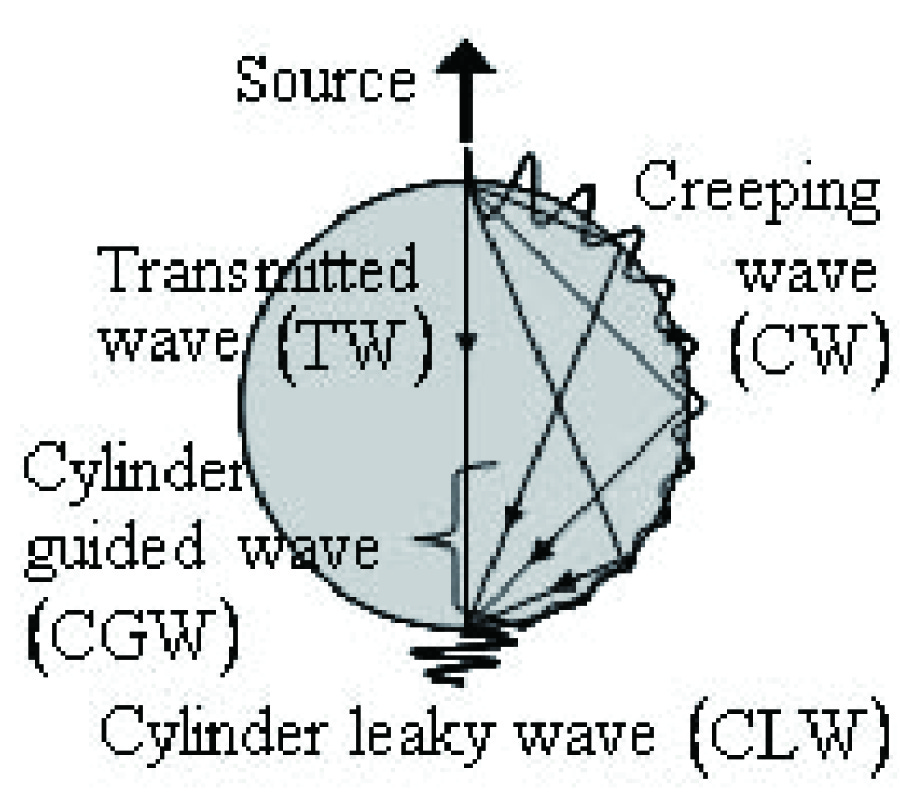
Stealth characteristic of two dimensional cylinder plasma envelopes is studied. Three cases about plasma refraction effect, reflection characteristic and attenuation by absorbing electromagnetic wave (EMW) are concerned synthetically. As for plasma refraction stealth, EMW traces equation in cylinder plasma is deduced; a novel concept of plasma refraction deviation angle is presented; the relation between refraction deviation angle and incidence angle of EMW is yielded; the relation between refraction deviation angle and plasma density distribution is made out. As for reflection stealth and attenuation stealth, reflection calculation of multi-layer plasma is presented first, and plasma collision frequency as well as corresponding collision absorption is taken into account simultaneously, then EMW reflectivity with double-path attenuation is obtained. It is shown that cylinder plasma envelopes considering the three cases above could make distinct stealth.
ANALYSIS ON THE STEALTH CHARACTERISTIC OF TWO DIMENSIONAL CYLINDER PLASMA ENVELOPES
2010-01-20
PIER C
Vol. 12, 37-51
A Modified Fractal Rectangular Curve Dielectric Resonator Antenna for WiMAX Application
Ravi Kumar Gangwar , Surya Singh and Devendra Kumar
This paper presents the simulation study of a wideband modified fractal rectangular curve iteration-1 (FRC-1) dielectric resonator antenna (DRA) along with conventional FRC DRAs of different iteration levels for WiMAX application. The simulation study has been carried out using CST Microwave Studio software. The design procedure and radiation performance characteristics of modified and conventional FRC DRAs are described and the simulation results for modified FRC-1 DRA are compared with those of a conventional FRC-1 DRA of identical outer dimensions. The simulation results for the material dielectric constant dependent radiation characteristics of both the FRC-1 DRAs are also presented. The results presented here may be useful in designing portable personnel communication device antennas and in analyzing the performance of these antennas for wireless communication.
A MODIFIED FRACTAL RECTANGULAR CURVE DIELECTRIC RESONATOR ANTENNA FOR WIMAX APPLICATION
2010-01-20
PIER M
Vol. 11, 13-23
Electric Equivalent Circuit for the Thickened Edge Load Solution in a Bulk Acoustic Wave Resonator
Jordi Verdu , Pedro de Paco and Oscar Menendez
With the aim to improve the performance of Bulk Acoustic Wave resonators, the thickened edge load can be included on the top electrode. Using this solution, the energy trapping concept is forced, and lateral unwanted resonances are not present in the electrical behavior of the resonator. The way to design such a thickened edge load entails, on one hand, the presence of a resonant mode given by the thickened edge load; on the other hand, the degradation of the electromechanical coupling coefficient of the main thickness mode. In order to study the previous phenomena, the electric equivalent circuit has been developed. The obtained results have been validated with the three-dimensional simulations and compared with manufactured resonators.
ELECTRIC EQUIVALENT CIRCUIT FOR THE THICKENED EDGE LOAD SOLUTION IN A BULK ACOUSTIC WAVE RESONATOR
2010-01-20
PIER
Vol. 101, 43-62
The Experimental Results of a Low Power X-Band Free Electron Maser by Electron Pre-Bunching
Mohd Fareq Bin Abd Malek , James Lucas and Yi Huang
We have developed a proof-of-concept low power free electron maser that is compact and low cost. The design, set-up and results of a novel (without wiggler) low power X-band rectangular waveguide pre-bunched free electron maser (PFEM) are presented in this paper. Our device operates at 10 GHz, with 10 mWatt seeding input power and employs two rectangular waveguide cavities (one for velocity modulation and the other for energy extraction). The electron beam used in this experiment is produced by Thoria coated Iridium filament which can operate at 3 kV and up to 5 mA beam current. The effect of the aperture on the power leaking out of the waveguide is also analyzed. The TE10 mode propagation of the EM standing wave is used to pre-bunch the electron beams in the input cavity. The bunched electron beams are in the same phase as the TE10 mode propagation of the EM wave in the output cavity. This free electron maser could be useful industrially, as it could be used with the commercially available accelerating voltage supplies.
THE EXPERIMENTAL RESULTS OF A LOW POWER X-BAND FREE ELECTRON MASER BY ELECTRON PRE-BUNCHING
2010-01-19
PIER B
Vol. 19, 233-261
Frequency Dispersion Limits Resolution in Veselago Lens
Robert Collin
The properties of a lossless Veselago lens is examined when the material parameters epsilon and mu are frequency dispersive. A complete solution is presented that is based on the use of Fourier transforms in the frequency domain and is obtained in terms of the residues at the poles and branch cut integrals. It is shown that for an incident field with a finite frequency spectrum the excited evanescent field consists of resonant even and odd surface wave modes that do not grow exponentially within the slab. For a lossless slab and a sinusoidal signal of finite duration, at a single frequency corresponding to that where the relative values of epsilon and mu equal -1, Pendry's solution is obtained along with excited surface wave modes and other interfering waves that makes it impossible to obtain a coherent reconstruction of the spatial spectrum of the object field at the image plane. If the slab material is lossy the excited interfering surface wave modes will decay away in a relatively short time interval, but as shown by other investigators the resolution of the lens will be reduced in a very substantial way if the losses are moderate to large.
FREQUENCY DISPERSION LIMITS RESOLUTION IN VESELAGO LENS
2010-01-19
PIER B
Vol. 19, 205-231
Nonlinear Pulse Propagation in a Weakly Birefringent Optical Fiber Part 1: Derivation of Coupled Nonlinear Schrodinger Equations (Cnlse)
Natarajan Kalyanasundaram and Palanivel Muthuchidambaranathan
A systematic derivation of the Coupled Nonlinear Schrodinger Equations (CNLSE) governing nonlinear pulse propagation in a weakly birefringent monomode optical fiber based on a multiple-scale perturbation solution of the semilinear vector wave equation for the electric field in a (randomly) birefringent fiber medium is presented. The analysis of the nonlinear propagation characteristics of optical pulses based on a numerical solution of the CNLSE is deferred to the second part of this contribution.
NONLINEAR PULSE PROPAGATION IN A WEAKLY BIREFRINGENT OPTICAL FIBER PART 1: DERIVATION OF COUPLED NONLINEAR SCHRODINGER EQUATIONS (CNLSE)
2010-01-19
PIER
Vol. 101, 33-42
Novel Planar Multimode Bandpass Filters with Radial-Line Stubs
Long Zhang , Zhi-Yuan Yu and Shao-Guo Mo
This paper presents a novel approach for designing planar multimode wideband bandpass filters with good selectivity. The multimode resonator is composed of an open-ended microstrip line with length of half-wavelength (λ/2) and several radial-line stubs. By using different kinds of radial-line stub-loaded, different kinds of responses including three-pole and four-pole bandpass filters can be realized. Depending on electric field distribution and equivalent circuit model, the characteristics of the filter are analyzed. To verify the proposed method, two filters are implemented. The measured results exhibit good agreement with the simulation.
NOVEL PLANAR MULTIMODE BANDPASS FILTERS WITH RADIAL-LINE STUBS
2010-01-18
PIER M
Vol. 11, 1-12
Gaussian Beam Modeling of SAR Enhancement in Paraxial and Non-Paraxial Regions of Biological Tissues
Mikaya L.D. Lumori
A polarized 3D-electromagnetic wave propagating from an aperture source into a lossy medium can be modeled by an astigmatic Gaussian beam model (GBM) of complex source coefficients that characterize a radiating antenna uniquely. The source coefficients are determined numerically from phantom experiments, and then used in simulations of specific absorption rates (SAR), in both homogeneous and layered biological media, resulting in good agreement with experimental data. This paper shows that for an x-polarized E-field the GBM simulations of SAR enhancement or focus in the axial, z-directed, paraxial region are accurate, but approximate in the transverse, y-directed, non-paraxial regions due to a focal shift.
GAUSSIAN BEAM MODELING OF SAR ENHANCEMENT IN PARAXIAL AND NON-PARAXIAL REGIONS OF BIOLOGICAL TISSUES
2010-01-17
PIER
Vol. 101, 17-32
Analysis of the Effects of GSM Bands to the Electromagnetic Pollution in the RF Spectrum
Ozgur Genc , Mehmet Bayrak and Ercan Yaldiz
In this study, electromagnetic (EM) pollution measurements in crowded residential areas were performed and statistical analysis of values recorded for the EM sources causing pollution was carried out. The actual measurement values and the estimated values by the analysis model obtained through the statistical analysis were compared. Also, amplitude fluctuations of the electromagnetic radiations from EM pollution sources were detected for a long time and statistical analyses were made. EM field levels were measured in the districts of Turkish capital, Ankara where cellular base stations and TV/Radio stations are densely populated. EM radiation levels were measured for the GSM900, GSM1800, FM, UHF4, VHF4 and VHF5 stations for certain spectrum ranges under far-field conditions by utilizing isotropic field probe and selective spectrum analyzer. The measurements were fulfilled by using NARDA SRM3000 radiation meter with isotropic antenna that can be utilized in 100 kHz-3 GHz frequency range. The obtained measurement levels were compared with the limit values given by International Commission for Non-Ionizing Radiation Protection (ICNIRP). The measurement results for each pollution sources were compared and their contributions to the combined radiation were analyzed. The values for the EM pollution in the measurement regions were embedded over the digital maps created for the related places. During this process, comparisons of the pollution maps were made by utilizing Natural Neighbour (NN) interpolation technique.
ANALYSIS OF THE EFFECTS OF GSM BANDS TO THE ELECTROMAGNETIC POLLUTION IN THE RF SPECTRUM
2010-01-17
PIER
Vol. 101, 1-16
Metal-Based 1×2 and 1×4 Asymmetric Plastic Optical Fiber Couplers for Optical Code Generating Devices
Abang Annuar Ehsan , Sahbudin Shaari and Mohd Kamil Abd-Rahman
An optical code generating device has been developed based on 1×2 and 1×4 asymmetric plastic optical fiber (POF) couplers. The code generating device provides a unique series of output power which are successively used as an optical code in a portable optical access-card system. The system is designed where the asymmetric POF coupler is embedded in an all passive portable unit. This device utilizes a tap-off ratio (TOFR) technique based on a simple variation of the tap width of an asymmetric Y-branch splitter design. A hollow-type waveguide structure is used where it eliminates the use of polymeric material for the waveguide core and allows simple fabrication and assembling of the device. The asymmetric POF coupler has been fabricated on metal-based materials using machining technique. The results for the simulated and fabricated 1×2 asymmetric couplers show the same linear characteristics between the TOFR and the tap width. The simulated devices shows a TOFR variation from 18.6% to 49.9% whereas the TOFR for the fabricated metalbased devices varies from 10.7% up to 47.7%, for a tap width of 500 um to 1 mm. The 1×4 coupler designed using simple cascading of a Y-branch splitter with two 1×2 asymmetric couplers has been fabricated and shows similar characteristics as that of the designed 1×4 devices. The insertion loss for the 1×2 asymmetric coupler at the tap line varies from 9 dB to 16 dB whereas for the bus line, the insertion loss is about 9±0.8 dB. The insertion loss for the 1×4 asymmetric coupler at the output ports varies from 14 dB to 22 dB.
METAL-BASED 1×2 AND 1×4 ASYMMETRIC PLASTIC OPTICAL FIBER COUPLERS FOR OPTICAL CODE GENERATING DEVICES
2010-01-17
PIER
Vol. 100, 397-415
Homogeneous and Heterogeneous Breast Phantoms for Ultra-Wideband Microwave Imaging Applications
Joshua Chong Yue Lai , Cheong Boon Soh , Erry Gunawan and Kay Soon Low
The paper discusses fabrication of homogenous and heterogeneous breast phantoms to simulate the dielectric properties of human breast over the microwave frequency range from 0.5 GHz to 13.5 GHz. The breast phantoms have stable mechanical configuration and dielectric properties suitable for microwave imaging experiments particularly ultra-wideband microwave imaging for breast cancer detection.
HOMOGENEOUS AND HETEROGENEOUS BREAST PHANTOMS FOR ULTRA-WIDEBAND MICROWAVE IMAGING APPLICATIONS
2010-01-15
PIER B
Vol. 19, 177-203
Electromagnetic Fields in a Cavity Filled with Some Nonstationary Media
Mariya S. Antyufeyeva and Oleg Tretyakov
The paper presents an analytical approach to treat the problem of transient oscillations in a cavity uniformly filled with nonstationary medium, which is characterized by time-varying permittivity and conductivity. Closed-form solutions are found for some transient excitations and medium parameters.
ELECTROMAGNETIC FIELDS IN A CAVITY FILLED WITH SOME NONSTATIONARY MEDIA
2010-01-15
PIER
Vol. 100, 381-396
The Anisotropic Cell Model in the Colloidal Plasmas
Qizheng Ye and Fei Lu
The anisotropic spherical Wigner-Seitz (WS) cell model --- introduced to describe colloidal plasmas --- is investigated using the linearized Poisson-Boltzmann (PB) equation. As an approximation, the surface potential of the spherical macroparicle expanded in terms of the monopole (q) and the dipole (p) is considered as an anisotropic boundary condition of the linear PB equation. Here, the "apparent" moments q and p are the moments 'seen' in the microion cloud, respectively. Based on a new physical concept, the momentneutrality, the potential around the macroparticle can be solvable analytically if the relationship between the actual moment and the "apparent" moment can be obtained according to the momentneutrality condition in addition to the usual electroneutrality. The calculated results of the potential show that there is an attractive region in the vicinity of macroparticle when the corresponding dipole part of the potential dominates over the monopole part, and there is an attractive region and a repulsive region at the same time, i.e., a potential well, when the corresponding dipole part of the potential just comes into play. It provides the possibility and the conditions of the appearance of periodic structure of the colloidal plasmas, although it is a result of a simple theoretical model.
THE ANISOTROPIC CELL MODEL IN THE COLLOIDAL PLASMAS
2010-01-14
PIER Letters
Vol. 13, 75-81
Design of a Novel Microstrip-Fed Dual-Band Slot Antenna for WLAN Applications
Shuo Gai , Yong-Chang Jiao , Ya-Bing Yang , Chun-Yan Li and Jin-Gang Gong
In this paper, a novel dual-band rectangular slot antenna for wireless local area network (WLAN) applications in IEEE 802.11b/g/a systems is presented. The proposed antenna, fed by a 50Ω microstrip line, has size of 32 mm×28 mm×1.6 mm. By introducing a pair of U-shaped strips, the proposed antenna can generate two separate impedance bandwidths. The prototype of the proposed antenna has been successfully constructed and tested. The low-band resonant frequency is located at about 2.4 GHz, with -10 dB impedance bandwidth from about 2.3 to 2.5 GHz. The high-band resonant frequency is located at about 5.7 GHz, with -10 dB impedance bandwidth from about 4.9 to 6.0 GHz. In addition, the measured results show good radiation characteristics at the two operating bands, proving the dualband operation of the proposed antenna.
DESIGN OF A NOVEL MICROSTRIP-FED DUAL-BAND SLOT ANTENNA FOR WLAN APPLICATIONS