Search Results(13789)

2022-08-12
PIER C
Vol. 122, 215-228
Design of High-Selectivity Compact Quad-Band BPF Using Multi-Coupled Line and Short Stub-SIR Resonators
Halah I. Khani , Ahmed S. Ezzulddin and Hussam Al-Saedi
This study presents a quad-band bandpass filter with high selectivity, compact size, and highly independent bands using a folded C-shape resonator, short stub-SIR resonator, and two folded L-shape resonators. The suggested structure consists of two separate filters. The upper filter is made up of a short stub-SIR resonator loaded on a C-shape resonator resonating at 2.59 GHz and 3.5 GHz, respectively. The lower filter is made up of two folded L-shape resonators resonating at 4.89 GHz and 6.15 GHz, respectively. The frequencies at which the filter resonates are designed and arranged with high independence. The proposed filter achieves insertion loss of -2.7 dB, -0.7 dB, 2.3 dB, and -0.4 dB, and return loss of -13.32 dB, -11.03 dB, -9.17 dB, and -17.89 dB, respectively. In addition, eight transmission zeros appeared. The proposed design has a compact size of 0.19λg×0.15λg and is built on an RO4350B substrate with a dielectric constant of 3.66, loss tangent of 0.0037, and thickness of 0.508 mm. Finally, the suggested filter is intended to be used in 5G mobile communications and international mobile telecommunications services.
DESIGN OF HIGH-SELECTIVITY COMPACT QUAD-BAND BPF USING MULTI-COUPLED LINE AND SHORT STUB-SIR RESONATORS
2022-08-12
PIER C
Vol. 122, 199-213
Tracking Model of Joint Electromagnetic Signals of Naval Targets Based on Small-Scale Platform
Qi Liu , Zhaolong Sun , Run Xiang Jiang , Jiawei Zhang and Kui Zhu
For the tracking problem of moving targets by small-scale platforms, this paper firstly proposed a ship target tracking model with joint electromagnetic signals based on point charge theory and point magnetic charge theory. Then, the target tracking was simulated and verified with the progressive update extended Kalman filter algorithm as the filtering unit and the small-scale platform as the sensor-carrying platform. Finally, the laboratory model validation was carried out, and the simulated source experiment and ship model experiment were conducted respectively. The simulation results show that the tracking method with the joint electromagnetic signal can achieve the tracking error less than 5 m in the range of 6 times the ship length. The results of the model experiments further verify the simulation results. When the signal-to-noise ratio is only 5, it can also achieve at least 2 times the ship's length of tracking, which can effectively solve the problem of poor tracking caused by the small size of the sensor carrying platform and the small number of sensors.
TRACKING MODEL OF JOINT ELECTROMAGNETIC SIGNALS OF NAVAL TARGETS BASED ON SMALL-SCALE PLATFORM
2022-08-12
PIER C
Vol. 122, 57-66
Dual-Band MIMO Antenna with Defected Ground Structure for Sub-6 GHz 5G Applications
Ahmed M. A. Sabaawi , Karrar Shakir Muttair , Oras Ahmed Shareef and Qusai Hadi Sultan
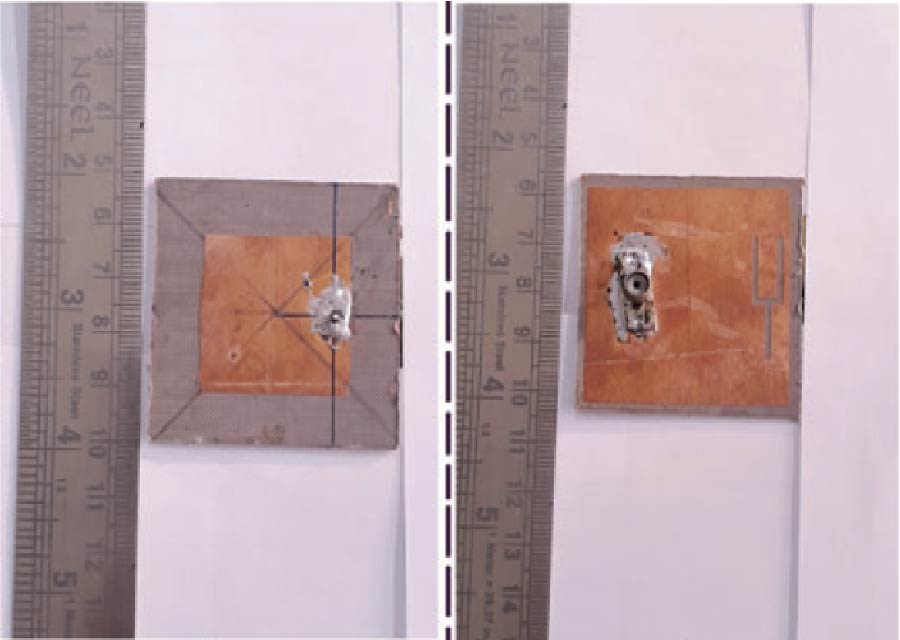
In this work, a dual-band compact MIMO antenna for sub-6 GHz 5G applications has been designed, simulated and implemented. Firstly, a single patch antenna was designed and simulated, and its dimensions were adjusted to exhibit a dual band performance at 3.6 GHz and 5.9 GHz. A two-element MIMO structure was then designed with a defected ground structure, and the S-parameters were recorded. The results showed that the designed MIMO antenna exhibited multiband performance at the sub-6G frequency band with almost omnidirectional radiation pattern and acceptable gain. The achieved results are promising, making the proposed antenna a good candidate for 5G applications. The proposed antennas were fabricated, and their basic parameters such as return loss and radiation pattern were tested experimentally and compared with simulation results. An acceptable agreement was achieved between measurement and simulation results.
DUAL-BAND MIMO ANTENNA WITH DEFECTED GROUND STRUCTURE FOR SUB-6 GHZ 5G APPLICATIONS
2022-08-11
PIER C
Vol. 122, 183-198
Wireless Power Supply Voltage Regulation Control of Implantable Devices Based on Primary Side MPC
Weihua Chen , Jiawei Song and Xiaoheng Yan
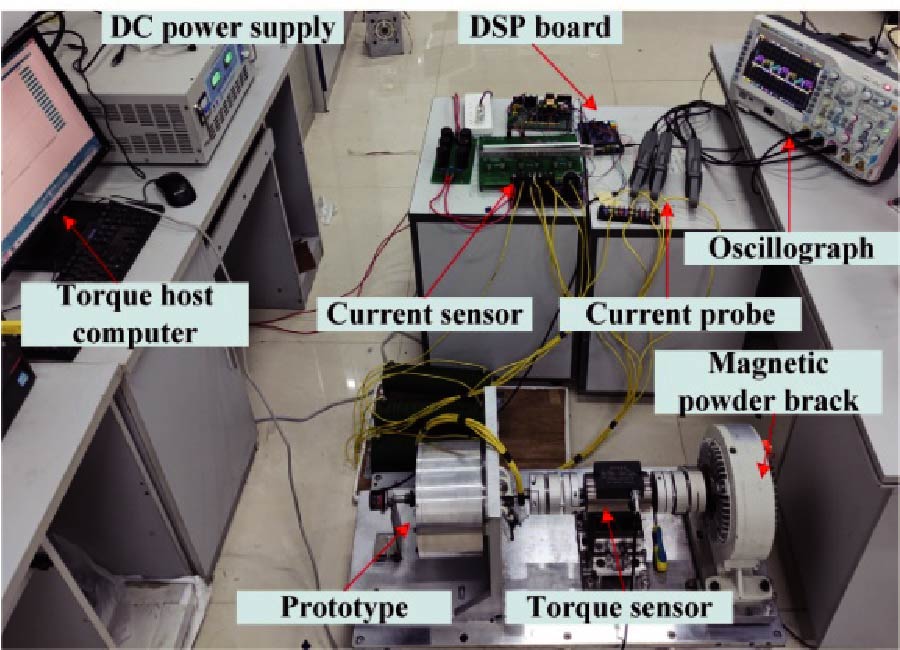
The wireless power transfer (WPT) system for implantable medical devices has the problem that the output voltage is difficult to adjust stably in real time without using additional composite compensation topology and dual-side communication. A primary side control method of WPT system based on a phase shifted full bridge inverter and continuous control set model predictive control (MPC) is proposed. First, the series-series (SS) structure parameters and fundamental harmonic analysis (FHA) are used to derive the estimated value of the output voltage and establish the output voltage prediction model of the system. Then, to obtain the best response of the system, the optimization problem in the controller is transformed into the problem of solving the minimum value of the cost function, and the optimal control variable is obtained limited below the gradient descent method. Simulated and experimental results show that the control system works at a frequency of 200 kHz to realize real-time voltage adjustment, and the steady-state error is within 2%. Compared with the traditional method, the method reduces the adjustment time by 5-10 ms, and voltage overshoot is reduced by 5.3-6.7% when interference factors are dealt with such as load interference and mutual inductance. The proposed method improves the performance of SS compensated WPT systems to be more suitable for the applications that require compact and light weight receiver. It provides an effective method to realize the real-time regulation of the system output voltage.
WIRELESS POWER SUPPLY VOLTAGE REGULATION CONTROL OF IMPLANTABLE DEVICES BASED ON PRIMARY SIDE MPC
2022-08-11
PIER M
Vol. 112, 205-215
Multibeam One-Third Radial Line Slot Array (RLSA) Antennas
Teddy Purnamirza , Rafiq Abdillah , Mulyono , Sutoyo , Rika Susanti , Imran Mohd Ibrahim and Depriwana Rahmi
This study aims to develop and evaluate the multibeam one-third Radial Line Slot Array (RLSA) antennas. The various techniques used include: a) slot implementation on the background surface for the design of multibeam, b) cutting the full circle of RLSAs for the simplification of the antenna size, and c) slot deletion for the formation of bandwidth. Approximately 40 multibeam one-third RLSA models were designed and simulated, with the best being fabricated and measured to verify the simulation. The results showed that the antenna had symmetrical beams regarding the gain, direction, and beamwidth at 9 dBi, 20 and 160°, as well as 38°, respectively. The antenna also had a low reflection of -22 dB at the centre frequency of 5.8 GHz, with a broad bandwidth of approximately 1.2 GHz, which was highly sufficient for Wi-Fi application. The gain of 9 dBi was 3 dB lower than that of a simulated single-beam antenna, which was suitable for the theory of splitting. Based on these findings, the agreement between measurement and simulation verified the design of the antenna.
MULTIBEAM ONE-THIRD RADIAL LINE SLOT ARRAY (RLSA) ANTENNAS
2022-08-10
PIER Letters
Vol. 106, 7-14
G-Band Sub-Harmonic Mixer with Broadband Bandwidth and Low Conversion Loss
Yang Xiong
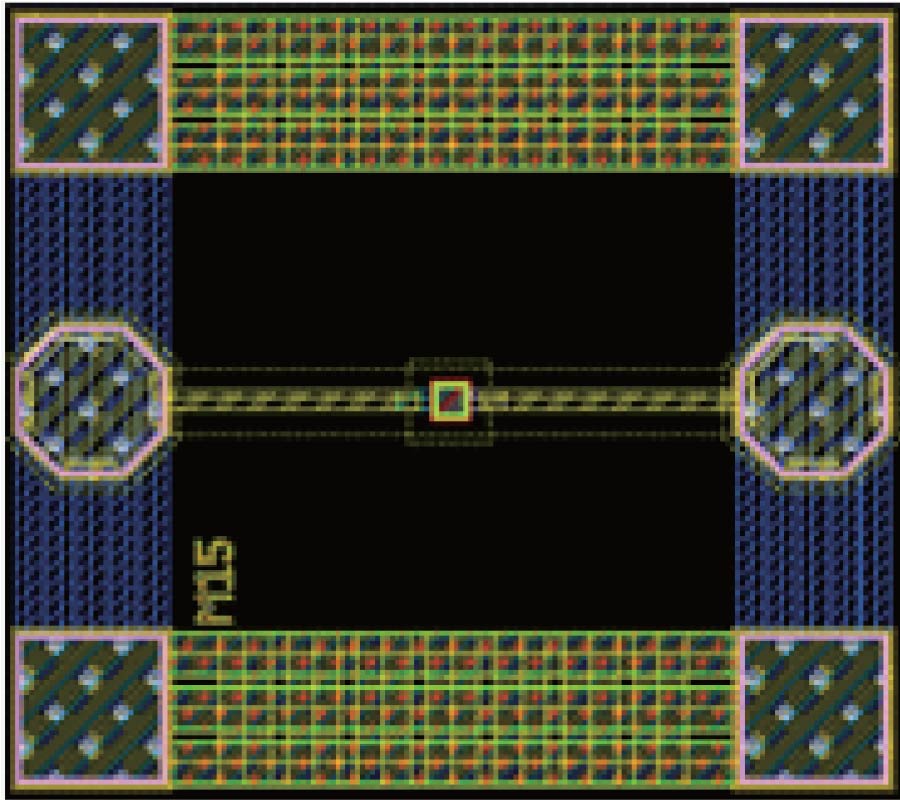
In this paper, two G-band sub-harmonic mixers based on planar antiparallel Schottky diodes are presented. The proposed type-I mixer is designed using the conversional THz Schottky diode mixer circuit architecture. In order to broaden the bandwidth further, a novel type-II sub-harmonic mixer based on new circuit topology is proposed. In type-II mixer, an antiparallel Schottky diodes chip is directly connected with metal ground using silver epoxy. The simulated results show that single-sideband (SSB) conversion loss of type-II mixer is less than 10 dB in the frequency range of 160-194.8 GHz. For validation, the type-I mixer is fabricated and tested. Measurement results show that single-sideband conversion loss of type-I mixer is basically less than 10.7 dB in the frequency range of 166-190 GHz.
G-BAND SUB-HARMONIC MIXER WITH BROADBAND BANDWIDTH AND LOW CONVERSION LOSS
2022-08-09
PIER
Vol. 175, 45-79
Machine Learning-Assisted Sensing Techniques for Integrated Communications and Sensing in WLANs: Current Status and Future Directions (Invited)
Siyuan Shao , Min Fan , Cheng Yu , Yan Li , Xiaodong Xu and Haiming Wang
Sensing is a key basis for building an intelligent environment. Using channel state information (CSI) from the IEEE 802.11 physical layer in the wireless local access networks, the CSIbased device-free sensing technique has become very promising to the current sensing solutions because of its non-invasion of privacy, non-contact, easy deployment, and low cost. In recent years, the integrated communication and sensing (ICAS) technology has become one of the popular research topics in both wireless communications and computer areas. Given the fruitful advancements of ICAS, it is essential to review these advancements to synthesize and give previous research experiences and references to aid the development of relevant research fields and real-world applications. Motivated by this, this paper aims to provide a comprehensive survey of CSI-based sensing techniques. This study categorizes the surveyed works into model-based methods, data-based methods, and model-data hybrid-driven methods. Some important physical models and machine learning algorithms are also introduced. The sensing functions are classified into detection, estimation, and recognition according to specific application scenarios. Furthermore, future directions and challenges are discussed.
MACHINE LEARNING-ASSISTED SENSING TECHNIQUES FOR INTEGRATED COMMUNICATIONS AND SENSING IN WLANS: CURRENT STATUS AND FUTURE DIRECTIONS (Invited)
2022-08-09
PIER C
Vol. 122, 165-181
An Metamaterial Inspired Antenna with CSRR and Rectangular SRR Based Flexible Antenna with Jeans Gap Filled for Wireless Body Area Network
Siddhant Goswami and Deepak C. Karia
In this paper, a flexible compact Jeans gap filled metamaterial inspired antenna is proposed to operate at 2.4 GHz in the Industrial Scientific and Medical (ISM) band. This designed antenna is flexible having size of about 27×23 mm2 with substrate of thickness 0.3 mm. The proposed antenna comprises two complementary split ring resonators at ground plane and one circular ring and complementary rectangular split ring resonator. The top patch consists of two rectangular split ring resonators etched inside the rectangular patch. The use of SRR and CSRR on top and bottom of patch has helped to reduce the size of antenna along with maintaining performance of antenna. Further enhancements are done to make it jeans gap filled antenna with jeans filled between main patch and superstrate. The superstrate top patch consists of a square EBG structure. The simulation results have shown an increase in return loss due to the use of square EBG structure on superstrate. The simulated directivity obtained on antenna is 2.0775 dB. The measured and simulated results are in a good agreement. The motivation of this work is to design a compact metamaterial based antenna for wireless body area network with gap coupled jeans material to nullify effects of human body. Effects of air gap coupled and jeans gap coupled are analyzed in terms of performance. While the final antenna (Antenna-4) is designed, several iterations are tried to optimize and maintain good performance. Step 1 (Antenna-1) consists of two complementary split ring resonators along with a circular ring placed in ground plane with thickness of polyamide substrate as 0.3 mm. Step 2 (Antenna-2) consists of two split ring resonators along with a circular ring placed in ground plane. An air gap coupled superstrate is designed having gap between main patch and superstrate as 1 mm. Step 3 (Antenna-3) has the same configuration as Antenna-2, and the only difference is the air gap between main patch and superstrate which is replaced by jeans material. Step 4 (Antenna-4) is the final designed antenna with miniaturized size of 27×23 mm2 as compared with previous antenna configurations. This research work has identified the challenges involved for designing an antenna in a wireless body area network. Practical aspect of design needs to consider: a) Bending effect on performance as movement and physiological changes might affect the performance. b) Performance degrades when antenna comes in contact with human body. Bending Effect: This work has also analyzed effect of bending on return loss. For final designed antenna (Antenna-4) maximum bending up to bend 30˚ is possible. Further bending would break the substrate. After maximum bending, the measured return loss is about -16.7071 dB at 2.28 GHz. Body area network: The designed final antenna (Antenna-4) is tested on different parts of human body such as human-arm and leg. No major difference is seen on return loss when it is tested on different parts of body. The designed final antenna (Antenna-4) is tested on direct contact with human-arm as well as with different cloths (cotton jeans, cotton, curtain cloth, floor cloth, polyester and Turkish cloth) having different permittivities with the distance between cloth and antenna as 0 cm and 1 cm. Wearable antennas should be carefully constructed to avoid causing harm to the human body when being worn. The Low Specific Absorption Rate is one of the criteria that should be considered while developing a wearable antenna. The maximum allowable SAR limit is 1.6 W/kg. The specific absorption rate for Antenna-4 is 0.2 W/kg when input power is 1 watt and is 0.036 W/kg when input power is 100 milli watt. The results obtained show that the proposed antenna is both safe and acceptable for use in compliance with the World Health Organization's ICNIRP requirements.
AN METAMATERIAL INSPIRED ANTENNA WITH CSRR AND RECTANGULAR SRR BASED FLEXIBLE ANTENNA WITH JEANS GAP FILLED FOR WIRELESS BODY AREA NETWORK
2022-08-09
PIER C
Vol. 122, 153-164
Synthesizing Radiation Properties of Dual-Band Dual-Mode High Gain Dielectric Resonator Antenna for Wireless Applications
Juin Acharjee , Shreya Chatterjee , Nipun Kumar Mishra , Gouri Shankar Paul and Kaushik Mandal
In this article, the radiation properties of a slot-loaded cylindrical dielectric resonator antenna (CDRA) have been synthesized strategically to realize a dual-band operation with a higher gain. A microstrip line based aperture coupled feed is adopted to excite dual modes at 4.8 GHz and 8.28 GHz with an impedance bandwidth of 5.84% (280 MHz) and 10.62% (880 MHz), respectively. A superstrate layer is placed at a suitable gap above the antenna structure to enhance the antenna gain by utilizing the principle of multiple reflections. For the further improvement of gain, a plus-shaped slot is incorporated on the superstrate that helps to concentrate the radiated field at the center of the superstrate, thereby the directivity of the CDRA has been enhanced on a large scale. The proposed structure is fabricated and measured for experimental verifications that demonstrate 3 dB augmentations in antenna peak gain in comparison to the conventional CDRA. The experimental result shows a good agreement with the simulated ones. Higher measured peak gains of 7.87 dBi and 7.91 dBi at two operating bands ensure the applicability of the proposed simple structure for C-band high gain wireless applications.
Synthesizing Radiation Properties of Dual-band Dual-mode High Gain Dielectric Resonator Antenna for Wireless Applications
2022-08-09
PIER C
Vol. 122, 141-151
A Planar Suspended Multiband Yagi Antenna for WLAN, LTE, and 5G Wireless Applications
Sarala S. Shirabadagi and Veeresh G. Kasabegoudar
A planar suspended multiband Yagi antenna suitable for WLAN, LTE and 5G wireless applications has been presented. The antenna presented here has been optimized to offer operating bands centered at 2.05 GHz, 2.75 GHz, 3.8 GHz, and 6.5 GHz. The proposed antenna has good front to back (F/B) ratios of 14 dB, 13 dB, 12 dB, and 19 dB corresponding to four resonant frequencies. Similarly, the corresponding gain values are 2 dB, 1.3 dB, 3.1 dB, and 3.3 dB. A prototype antenna was fabricated and tested. Except the first resonance which is a single frequency, the other three operating bands offer impedance bandwidths of 3.98% (2.71 GHz-2.82 GHz), 5.48% (3.73 GHz-3.94 GHz), and 19.27% (5.93 GHz-7.195 GHz). Measured results agree fairly with the simulated characteristics of the proposed antenna.
A PLANAR SUSPENDED MULTIBAND YAGI ANTENNA FOR WLAN, LTE, AND 5G WIRELESS APPLICATIONS
2022-08-09
PIER Letters
Vol. 106, 1-6
Multi-Probe Sensor for Water Content Diagnosis of Liquid Biofuels
Floriane Sparma , Bayan Tallawi , Eric Georgin and Pierre Sabouroux
A multi-probe sensor for water content analysis, in liquid biofuels, by using reflection and transmission measurements in microwave frequencies range, is proposed in this letter. As preliminary step and for a better understanding, the measurements were carried out with ethanol/water mixtures, which mimic bioethanol applications, at room temperature. In order to study water/alcohol mixtures, each of them was characterized using classical techniques like open ended coaxial probe or reflection/transmission coaxial line, before being tested in multi-probe sensors. At the end, the multi-probe sensor aims to be implemented in-line production in order to perform diagnosis of water in liquid biofuels.
MULTI-PROBE SENSOR FOR WATER CONTENT DIAGNOSIS OF LIQUID BIOFUELS
2022-08-08
PIER C
Vol. 122, 121-139
Research on Characteristics of Planar Coil Based on Grounding Grid Breakpoint Magnetic Coupling Detection Method
Weihua Chen , Zhiquan Ye , Shiwei Jin , Shuai Wang and Haitao Hou
Magnetic coupling detection method, as one of the methods of solving grounding grid breakpoint location problem, has the problem that the size of the transmitting coil is too large to be easily applied to the actual environment detection. In order to reduce the size of the transmitting coil and ensure the effect of breakpoints detection, this paper studies the characteristics of the planar coil based on the method of grounding grid breakpoint magnetic coupling detection. Firstly, a mathematical model of the planar coil magnetically coupled detection grounding grid breakpoint system under high frequency is established. After analyzing the model, factors of affecting the breakpoint detection effect and the high frequency characteristics of the system are derived. Secondly, a simulation model of the magnetically coupled detection grounding grid is established by using HFSS software. The influence of the line width, side length, number of turns and turn spacing of the transmitting coil on the detection effect is studied in detail. Besides, according to the law, the coil size optimization design is carried out. At last, the experimental platform is built to verify the reliability of the simulation and theory. The results show that the detection effect decreases as the line width and side length of the planar coil decrease, but the effect of line width change is small. Increasing the number of turns and turn spacing can improve the coupling coefficient to increase the detection effect, but when the distortion region is located after the parallel resonance point, the distributed capacitance will greatly inhibit the detection effect.
RESEARCH ON CHARACTERISTICS OF PLANAR COIL BASED ON GROUNDING GRID BREAKPOINT MAGNETIC COUPLING DETECTION METHOD
2022-08-07
PIER C
Vol. 122, 109-119
Axial Ratio Bandwidth Enhanced Proximity Fed Fractal MGS-Based Circularly Polarized Patch Antenna
Ramya Radhakrishnan and Shilpi Gupta
A triangle-shaped proximity-fed circularly polarized antenna with a modified fractal ground structure is introduced in this paper. The antenna's ground plane is employed with a fractal-shaped corporate feed type cut, which helps produce the circular polarization. The proximity feed is offset from the center to generate the orthogonal modes; furthermore, the fractal modified ground aids in enhancing the axial ratio bandwidth. Different iterations of the basic fractal unit improve the polarization purity and the axial ratio bandwidth. The designed antenna reflection coefficients below -10 dB at 2.45 GHz show an impedance bandwidth of 250 MHz (2.25 GHz to 2.50 GHz) and axial ratio bandwidth of 90 MHz (2.40 GHz to 2.49 GHz). The simulated and measured results show a good agreement.
AXIAL RATIO BANDWIDTH ENHANCED PROXIMITY FED FRACTAL MGS-BASED CIRCULARLY POLARIZED PATCH ANTENNA
2022-08-07
PIER M
Vol. 112, 191-203
InGaAs HEMT Broadband Microstrip Resistive-Terminated Low Noise Amplifier
Moustapha El Bakkali , Hanae Elftouh , Naima Amar Touhami , Imane Badaoui and Mohammed Lamsalli
This paper presents the design, co-simulation, and measurement of a two-stage broadband-cascaded low noise amplifier (LNA) using resistive terminated architecture. This architecture extends the bandwidth of a low-noise amplifier while maintaining a low NF and high flat gain S21. The LNA is designed with planar technology and mounted on an FR4 substrate. The used InGaAs HEMT MGF4918D transistor from Mitsubishi technology has very low noise and operates up to 18 GHz. The reflection coefficient results of the studied LNA are lower than -10 dB. The stability is unconditional over the entire operating band. The measured gain is 14 dB ± 0.75 dB with a minimum NF noise figure of 2.9 ± 0.4 dB. The group delay is 0.605±0.145 ns. The 1 dB compression point is 10.16 dBm, and the third order input intercept point IIP3 is 14.25 dBm. Two-stage cascaded LNA has a total power consumption of 164 mW and occupies an area of 7x1.3 cm2.
INGAAS HEMT BROADBAND MICROSTRIP RESISTIVE-TERMINATED LOW NOISE AMPLIFIER
2022-08-06
PIER Letters
Vol. 105, 149-154
Partially Excited Antenna Array for Near-Field Patterned Focusing
Yingjun Li , Na Kou and Shixing Yu
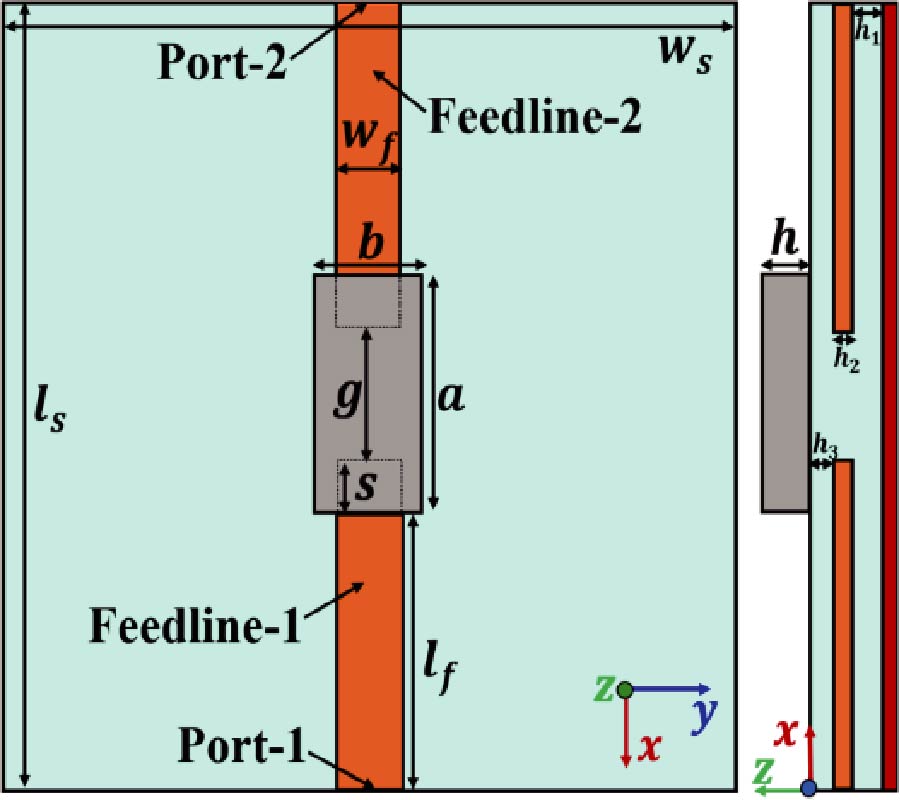
In this letter, a near-field focusing method for generating patterned focusing is studied. A partially excited planar array antenna is proposed for patterned focusing, which effectively suppresses the side lobes of the focusing pattern. The phase of the array antenna is adjusted by a digital phase shifter. A prototype was made and tested to verify the effectiveness of the method. Both the full planar array and the partially excited array realize the ``.'' pattern, and the partially excited array effectively reduces the side lobes. The experimental results show that the method can achieve focusing in any area. This study can provide a reference for wireless energy transfer and microwave hyperthermia.
PARTIALLY EXCITED ANTENNA ARRAY FOR NEAR-FIELD PATTERNED FOCUSING
2022-08-05
PIER C
Vol. 122, 95-108
Electromagnetic Wave Scattering Analysis by a Window Aperture on a Conducting Wall
Cuong Manh Bui , Khanh Nam Nguyen and Hiroshi Shirai
High frequency electromagnetic plane wave scattering by a large rectangular glass window on a conducting wall has been analyzed in this study. Scattering far-fields are formulated by means of the Kirchhoff approximation in which the fields are obtained from radiation integrals due to the equivalent current sources on the virtually closed window apertures. In order to consider the effect of the window glass, a dielectric slab layer has been inserted in the window hole, and the reflection and transmission through the slab are treated via waveguide modal theory. The validity of our formulation has been confirmed by the numerical comparison with another method for an empty window case. The effects of the window dimension, the glass layer, and the polarization have been discussed for practical high frequency mobile communications.
Electromagnetic Wave Scattering Analysis by a Window Aperture on a Conducting Wall
2022-08-05
PIER C
Vol. 122, 83-93
A Novel Cow-Head Shaped Multiple Input Multiple Output Antenna for 5G Sub: 6 GHz N77/N78 & n79 Bands Applications
Naveen Kumar Gollamudi , Yellapu Venkata Narayana and Avala Mallikarjuna Prasad
The present work proposes a novel cow-head shaped multiple input multiple output (MIMO) antenna for 5G sub: 6 GHz applications, which include N77/N78 (3.3-4.2 GHz/3.3-3.8 GHz) and N79 (4.4-5.0 GHz) bands. The proposed work is designed and developed on a 30 × 66 mm2 size FR4 substrate with a dielectric constant of 4.4 and loss of tangent of 0.002. The proposed design works in the region from 3.3 to 5 GHz, and an isolation above 18 dB is attained. The parametric analysis and surface current distribution are studied for the optimization of parameters, and the coupling between elements is analysed respectively. The performance of design is studied in terms of efficiency (≥ 91.5 %), peak gain (3.1-4.6 dBi) and radiation patterns (E & H fields). The diversity parameters (ECC, DG, TARC, CCL & MEG) are calculated and checked, the same as measured results. Then all the measured results of fabricated prototype is compared with simulated ones, and these are in good agreement.
A NOVEL COW-HEAD SHAPED MULTIPLE INPUT MULTIPLE OUTPUT ANTENNA FOR 5G SUB: 6 GHZ N77/N78 & N79 BANDS APPLICATIONS
2022-08-04
PIER B
Vol. 96, 67-86
Broadband Radar Cross Section Reduction of Microstrip Antenna Using Polarization Conversion Metasurface
Krunal Patel and Manjusha Joshi
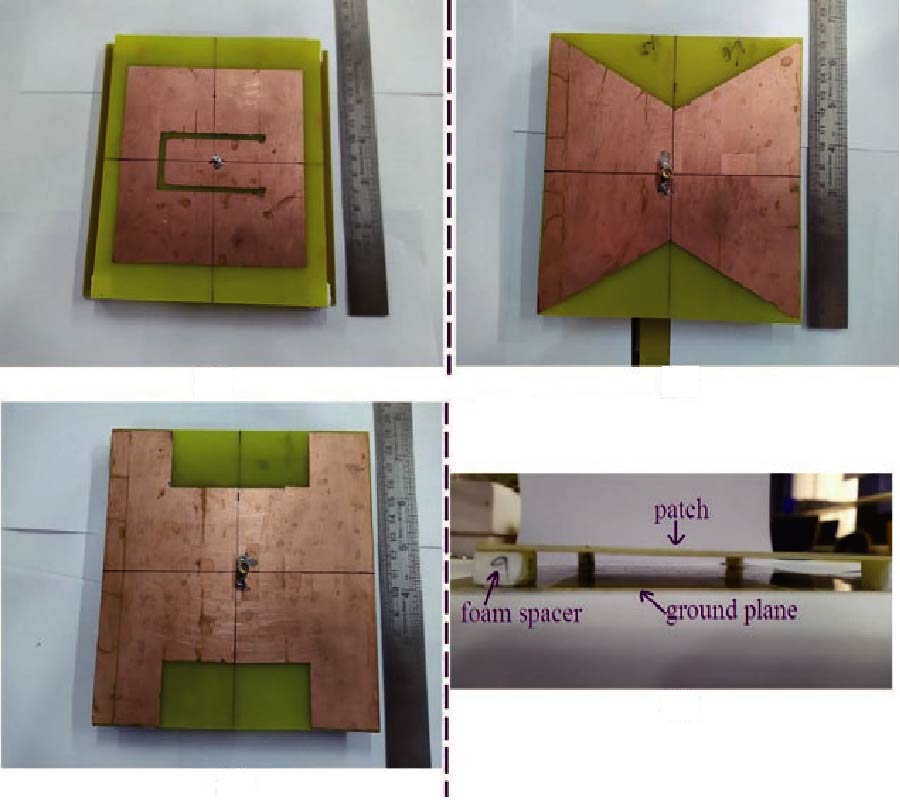
Low-Radar Cross Section antennas attract substantial attention in Stealth Technology. The Radar Cross Section reduction performance of the microstrip antennas should be improved since they contribute to the overall Radar Cross Section. A novel microstrip patch antenna with a polarization converter metasurface is proposed to extend the Radar Cross Section (RCS) reduction bandwidth. The metasurface uses metallic strip structures to obtain the required polarization conversion for Radar Cross Section reduction. The proposed patch antenna shows the overall RCS reduction bandwidth of 7.25 GHz-24.83 GHz (110%) as compared to the metal sheet and the Reference Patch antenna. 10 dB RCS reduction is obtained from 8.33 GHz-9.16 GHz (9.49%) and from 12.81 GHz-18.85 GHz (38.16%) as compared with the Reference Patch antenna. The RCS reduction of the antenna and the antenna radiation patterns are verified by numerical simulations and experimental observations. The main novelty of the proposed design is its wideband RCS reduction for Transverse Electric as well as Transverse Magnetic polarization with enhancement in antenna radiation pattern parameters. Significant RCS reduction can also be obtained for oblique incidence.
BROADBAND RADAR CROSS SECTION REDUCTION OF MICROSTRIP ANTENNA USING POLARIZATION CONVERSION METASURFACE
2022-08-04
PIER C
Vol. 122, 67-82
High Isolation Four-Port Wrench Shaped Compact UWB MIMO Antenna for 3.1-10.6 GHz Band
Gayatri Tangirala , Srinivasu Garikipati , Durbhakula Manikya Krishna Chaitanya and Virendra Kumar Sharma
This present article reports a high isolation four-port Wrench shaped compact UWB MIMO antenna with a novel decoupling network in the ground plane, and its step-by-step evolution is presented for 3.1-10.6 GHz. The proposed four-port MIMO antenna is fabricated on an FR4 substrate of size 44×44 mm2 (0.342λ0 × 0.342λ0), where λ0 is a free space wavelength at 2.33 GHz, with 7\,mm edge-to-edge spacing between the radiating elements. It consists of four orthogonal symmetrically placed identical radiating elements each of which has a Wrench-shaped circular patch with a rectangular slot cut in the partial ground. The performance characteristics of this MIMO antenna are reflection coefficients S11 ≤ -10 dB in the range from 2.33 GHz to 11.7 GHz, mutual coupling coefficients S21 ≤ -28.24 dB, and S31 ≤ -22.35 dB. The maximum peak gain is 5.15 dBi at 9.2 GHz, minimum is 1.27 dBi at 3.1 GHz. The maximum peak gain is 5.15\,dBi at 9.2 GHz, and minimum is 1.27 dBi at 3.1 GHz. The maximum efficiency is 98% at 4.66 GHz, and the minimum is 93% at 6 GHz. The diversity parameters of proposed four-port MIMO antenna are reported as ECC ≤ 0.2, DG ≤ 10, TARC ≤ -10 dB, the ratio of MEG between any two elements is near unity, and CCL < 0.38 bits/s/Hz in the band of interest. The design is fabricated and measured. The measured and simulated results are in good agreement and are within the permissible limits.
HIGH ISOLATION FOUR-PORT WRENCH SHAPED COMPACT UWB MIMO ANTENNA FOR 3.1-10.6 GHZ BAND
2022-08-04
PIER M
Vol. 112, 177-189
Design of a Wideband Spring Textile Antenna for Wearable 5G and IoT Applications Using Characteristic Mode Analysis
Bashar Bahaa Qas Elias and Ping Jack Soh
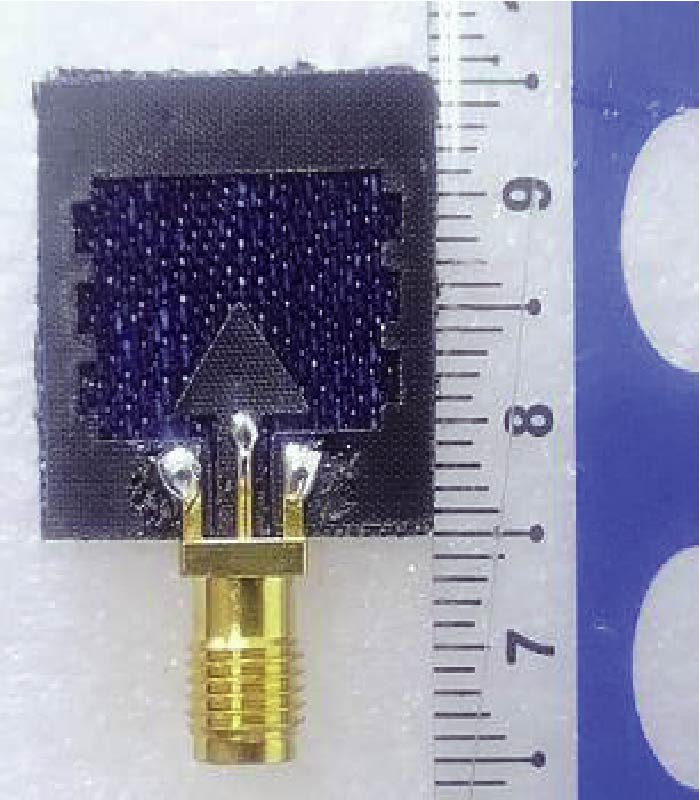
This paper presents the design and practical implementation of a wideband spring textile (WST) antenna for wearable communications. The antenna is designed on a felt substrate having a compact dimension of 32 × 42 × 3 mm3 (0.38λg × 0.5λg × 0.036λg). This antenna operates in the 3.14 to 5.45 GHz frequency range, has a bandwidth (BW) of around 2306 MHz, and has a peak realized gain of 6 dBi at 3.5 GHz. Due to a broad frequency coverage, this antenna can be used in a wide range of wireless applications, including 5G and IoT. The proposed design is analyzed in terms of reflection coefficient, radiation pattern, efficiency, gain, and surface current. Using the same electromagnetic simulation software, both characteristic mode analysis (CMA) and the method of moments (MoM) are applied in the design process. The simulated results on a human chest phantom demonstrate the -10-dB impedance bandwidths of 1461 MHz. The antenna prototype is fabricated for verification, and the simulated and measured results demonstrate that the proposed antenna is suitable for wideband on-body applications given its low-profile implementation and mechanical flexibility.
Design of a Wideband Spring Textile Antenna for Wearable 5G and IoT Applications Using Characteristic Mode Analysis