Search Results(13789)

2022-09-05
PIER C
Vol. 123, 237-251
Design of Ultra-Wideband MIMO Antenna with Dual Band Elimination Characteristics and Low Mutual Coupling
Ravindra Subhash Bakale , Anil Nandgaonkar , Shankar B. Deosarkar and Mahesh Munde
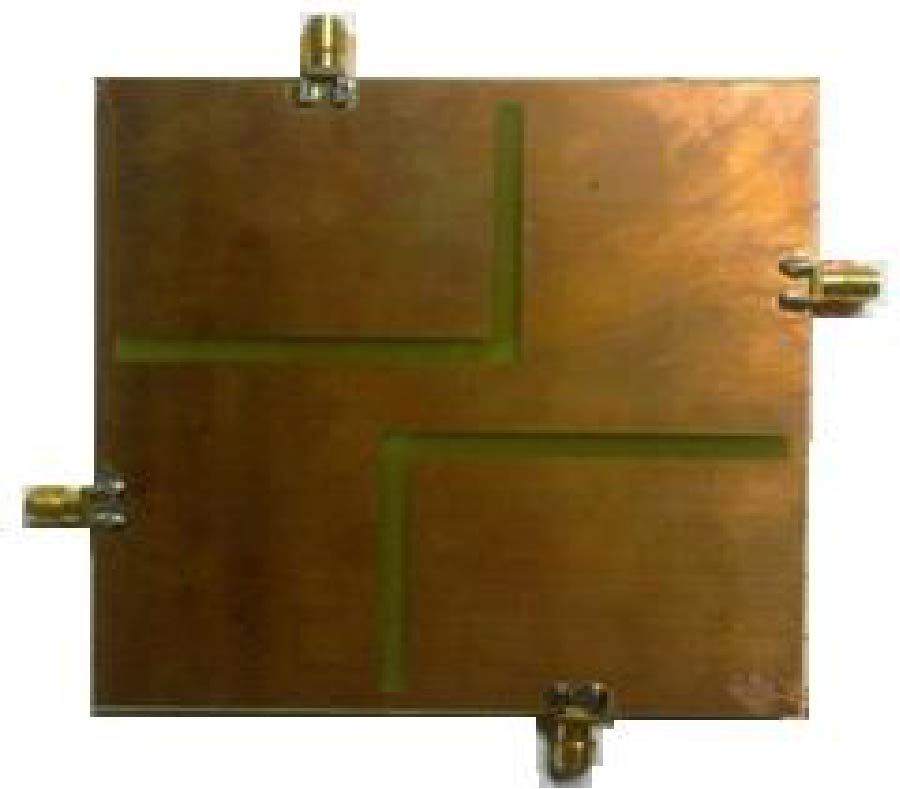
The paper proposes the design of an ultra-wideband MIMO antenna with low mutual coupling and dual-band elimination characteristics. The proposed structure consists of a microstrip-fed monopole antenna with a stub to enhance the isolation for ultra-wideband applications. The dual rejection bands corresponding to WiMAX and WLAN frequencies are designed using electromagnetic band-gap structures of mushroom-type and placed close to the microstrip transmission line of the designed antenna. The isolation enhancement of |S21| > 20 dB is achieved over the impedance bandwidth by adding two counter-facing F-pattern stubs to the ground. The impedance bandwidth of 9 GHz (2.65-11.65 GHz) for VSWR < 2.13 with the notch bands of 3.6-4.2 GHz and 5.15-5.87 GHz is obtained. The diversity gain, correlation coefficient, radiation pattern, TARC, and peak gain are also studied in the paper. The simulated and measured results are in close agreement with each other. Therefore, the proposed structure is a potential candidate for wireless communication.
DESIGN OF ULTRA-WIDEBAND MIMO ANTENNA WITH DUAL BAND ELIMINATION CHARACTERISTICS AND LOW MUTUAL COUPLING
2022-09-05
PIER C
Vol. 123, 227-236
Development of a Low Profile Wideband SIW Cavity-Backed I-Shaped Slot Antenna
Anil Kumar Katta and Praveen Babu Choppala
In this paper, a bandwidth improvement technique in substrate integrated waveguide (SIW) slotted antennas is presented. Here, wideband is achieved by using a single cavity mode (TE210) instead of multiple cavity modes, which is the most distinct approach as compared to other SIW based antennas. When the rectangle slot is loaded at bottom surface of the cavity, the TE210 cavity mode of the antenna is perturbed. As a result, two independent modes namely odd TE210 and even TE210 are successfully generated and merged in close proximity. Consequently, an impedance bandwidth of 12.8% is obtained. When a vertical slit is added at each end of the rectangle slot to make as an I-shaped slot, the impedance bandwidth is increased from 12.8% to 13.94%. The fabricated antenna shows the measured impedance bandwidth of 14.4% andexhibits a gain of 5 dBi to 7 dBi throughout the operating band. The proposed design still retains many features such as light weight, easy fabrication, and easy integration.
Development of a Low Profile Wideband SIW Cavity-backed I-shaped Slot Antenna
2022-09-02
PIER C
Vol. 123, 213-226
A Compact UWB DRA MIMO Antenna Realizing Band Notch Characteristics and Fractal Inspired Isolation Mechanism
Anindita Bhattacharjee , Anirban Karmakar and Anuradha Saha
In this communication, a new compact UWB dual port multiple-input multiple-output (MIMO) antenna is presented for wireless application. The design utilizes the property of dielectric resonator to achieve a bandwidth that ranges from 3.1 GHz to 18.5 GHz. The design has a compact size of 19×30×0.8 mm3. It consists of two rectangular shape monopole antenna elements with rectangular dielectric resonators sharing a similar ground plane. On the ground plane, a modified Hilbert curve with a meander line parasitic element was introduced to improve isolation between radiating elements which reduces mutual coupling issues. A band notch is achieved at WLAN band (5.09-5.8 GHz) by etching a pair of L-shape slots on each radiator. The gain of the antenna drops significantly at the centre of the notch band which indicates good interference suppression. Results show that the designed antenna provides a wide impedance bandwidth (below -10 dB) throughout the operating band of 3.1-18.5 GHz (142.6%). The antenna also produces nearly -20 dB isolation for the entire operating band. Results show that the simulated characteristics are in good agreement with the measured counterpart.
A COMPACT UWB DRA MIMO ANTENNA REALIZING BAND NOTCH CHARACTERISTICS AND FRACTAL INSPIRED ISOLATION MECHANISM
2022-09-02
PIER C
Vol. 123, 197-212
A Foam-Based Compact Flexible Wideband Antenna for Healthcare Applications
Kailash Vaijinath Karad and Vaibhav S. Hendre
In recent times, the study of flexible wireless devices has attracted ample attention in the fields of biomedicine and healthcare. Biomedical systems are becoming more popular and employed to find harmful elements within human bodies. A portable biomedical device makes use of a contacting or non-contacting way to find tumours inside the human body. In view of this, a compact two-slot hexagonal shape flexible wideband microstrip antenna for healthcare application is presented. The proposed antenna is designed using a low-cost, light-weight, and broadly accessible flexible foam material. The slots incorporated into the geometry have enriched the percentage bandwidth of 106.67% with a total gain of 4.67 dBi. The flexible wideband antenna of dimension 28×26×2 mm3 is fabricated using copper foil. The designed and fabricated antenna operates over the frequency of 2.94 to 9.66 GHz resulting in three different resonating frequencies; 3.8 GHz, 6.7 GHz, and 9.1 GHz. The flexible antenna is tested under different bending conditions and obtains good performance to substantiate flexibility. The Specific Absorption Rate (SAR) analysis is also performed over a three-layer tissue equivalent body model and observes a maximum SAR value of 1.9 W/Kg less than the safety limit of 2 W/Kg for 10 gm of tissue. A good agreement is observed between the simulated and measured results of the proposed antenna for free space and human proximity.
A FOAM-BASED COMPACT FLEXIBLE WIDEBAND ANTENNA FOR HEALTHCARE APPLICATIONS
2022-09-01
PIER M
Vol. 113, 35-45
A Microwave Displacement Sensor Based on SIW Double Reentrant Cavity with Ring Gaps
Jixu Ma , Yukang Chen and Jie Huang
In this study, a double reentrant cavity sensor (DRECS) loaded with ring gaps is proposed to characterize the displacement that the metal plate is inserted into the DRECS. The conventional substrate-parasitic-capacitance of DRECS in the substrate integrated waveguide (SIW) configuration, which has no contribution to the sensitivity, is successfully eliminated by using a symmetric double reentrant cavity. The ring gaps are introduced in SIW DRECS to effectively suppress the fringe electric field around the post, and enlarge the range of displacement measurements. Additionally, a displacement model, which is characterized by the quantitative relationship between the resonant frequency of DRECS and insertion depth inside DRECS, is theoretically established with the help of the electric field distribution and the equivalent circuit of the DRECS. A prototype of the designed sensor is fabricated and measured. The sensor work at 1.5-3.1 GHz and the measured results are in good agreement with the simulated ones from the displacement model. The measurement results indicate that the sensor has a displacement test range of 27 mm and Q-factor of over 150, and can achieve high sensitivity of 58 MHz/mm.
A Microwave Displacement Sensor Based on SIW Double Reentrant Cavity with Ring Gaps
2022-09-01
PIER M
Vol. 113, 23-33
Frequency Switchable and Tunable Negative Group Delay Circuits Based on Defected Microstrip Structures
Chithra Liz Palson , Rema Kunhikrishnan Sreelal , Deepti Das Krishna and Babita Roslind Jose
Group delay distortions are critical for high quality transmissions in today's communication system. In this paper, we have proposed design and analysis of defected microstrip line-based Negative Group Delay Circuits (NGDCs) to compensate for group delay distortions. Initially, a tunable pulse shaped defection based NGD structure is designed wherein a variable resistor connection allows group delay tunability. The proposed design is able to generate a group delay (GD) tuning from 0 to -4.8 ns at 2.7 GHz as the resistance is varied from 1 kΩ to 1 MΩ. Further, we embedded two stubs to implement the switchable multi-band feature on the proposed NGDC design. The NGDCs are fabricated, and the measured results confirm the proposed concept. Lastly, we designed a tunable compact NGDC with inverted-U stubs inscribed inside a microstrip line. It generated GD tunability at different frequency bands with the aid of a variable resistor and switched the frequencies as required.
Frequency Switchable and Tunable Negative Group Delay Circuits based on Defected Microstrip Structures
2022-09-01
PIER Letters
Vol. 106, 75-80
Miniaturized Lumped-Element LTCC Quadrature Hybrid with LC Stacked Structure
Jixi Lu , Jiyi Bian and Bo Zhou
A miniaturized lumped-element quadrature hybrid with a high density stacked structure is proposed in a 24-layer low temperature co-fired ceramic (LTCC) substrate. Stacking vertical-interdigital-capacitors (VICs) and vertically-spiral-inductors are for an entire size reduction. The transition between inductors realized in the inner space of the inductor further improves the utilization of three-dimensional space. The overall size of the quadrature hybrid is only 10.1×3.8×2.4 mm, or equivalently 0.0040×0.0015×0.0009λg3, which achieves a size reduction of 30.2%. Meanwhile, the proposed hybrid operates at 60 MHz with a fractional bandwidth (FBW) of 33.3%. The measured S11, S21, S31 and S41 are -14.5, -3.8, -3.7, and -14.2 dB within the operating frequency band, respectively, and both of the low phase imbalance and amplitude imbalance are achieved.
Miniaturized Lumped-element LTCC Quadrature Hybrid with LC Stacked Structure
2022-08-31
PIER M
Vol. 113, 11-22
Focusing of the Electromagnetic Field in Several Given Areas of Space
Denis Iuzvik and Maksim Stepanov
The article describes the problem of spatial separation of devices operating in the same frequency range. The possibility of focusing electromagnetic fields in several specified regions of space is considered. The proposed method for focusing the electromagnetic field can be an additional method for separation devices that operate in the same frequency range. The system under consideration, consisting of space, radiating antennas and focusing points, is represented as an abstract multipole with the number of inputs equal to the number of radiating antennas and with a set of outputs equal to the number of focusing points. A coordinate system has been introduced that makes it possible to calculate the distances between radiation and focusing points. A method for calculating complex transmission coefficients between emission points and reception points is described. An analytical expression is obtained, a system of linear algebraic equations, which makes it possible to calculate the necessary amplitudes and phases of signals supplied to radiating antennas. A model in a computer-aided design system containing 56 radiating antennas is presented. 9 focus points were set, and 4 of them should have maxima of the electromagnetic field. The simulation confirmed the theoretical calculations. A method for optimizing the calculations of the initial amplitudes and phases by eliminating the elements of the characteristic matrix is considered. This made it possible to reduce the number of elements in the characteristic matrix.
Focusing of the Electromagnetic Field in Several Given Areas of Space
2022-08-31
PIER M
Vol. 112, 243-253
A Miniaturized Wideband Wilkinson Power Divider for IoT Sub-GHz Applications
Shaimaa Abdelaziz Mahmoud Osman , Mohamed S. El-Gendy , Hadia El-Hennawy and Esmat A. F. Abdallah
This paper presents a single stage 2-way Wilkinson Power Divider (WPD) suitable for Internet of Things (IoT) low frequency applications in the band from 200 MHz to 1 GHz. It is realized using a meandered line, and an open shunt stub matching network is added to get a compact structure. Moreover, a Vertical Periodic Defected Ground Structure (VPDGS) is added below each arm in order to improve the performance at the center frequency without adding extra length to the divider. The size of the proposed power divider is 30 × 15.3 mm2 (0.082λg × 0.041λg). The fabricated power divider achieves a fractional bandwidth of 107%, an input return loss of better than 10 dB, an output return loss of 20 dB, an isolation of better than -10 dB and maximum exceeded insertion loss of 0.9 dB. The proposed compact power divider is implemented on Rogers RT/ Duroid 5880 with thickness 0.254 mm in order to bend on any conformal surface.
A Miniaturized Wideband Wilkinson Power Divider for IoT sub-GHz Applications
2022-08-31
PIER Letters
Vol. 106, 67-74
An Electrically Small All Metallic Probe-Fed Antenna for NavIC Applications
Prasanna Kushal Kumar , Gulur Sadananda Karthikeya and Prabhakar Parimala
In this paper, a novel all-metallic probe-fed antenna is proposed for L5, L1, and S bands for Navigation with Indian Constellation (NavIC) applications, and it can be used for tracking applications. The proposed antenna dimensions are 30 mm x 80 mm x 8 mm (0.11λ x 0.31λ x 0.03λ) electrical size calculated at 1176.45 MHz (L5). The radiating plane has a comb like structure where there are 8 slots which are of identical size 24 mm x 1 mm and a short slot with 6 mm x 1 mm. The ground plane is 30 mm offset with respect to the radiating plane (top plane). Usually, a high dielectric substrate antenna can resonate at lower frequencies keeping the size of the antenna electrically small, but without substrate the proposed antenna resonates at lower frequencies keeping the antenna size electrically small. The proposed design is electrically compact and economical, and the dielectric loss in the antenna is zero as the antenna is designed with copper alone, which gives a strong impression that a substrate free antenna can resonate at lower frequencies. So, from this method it can also make the antenna light weight.
AN ELECTRICALLY SMALL ALL METALLIC PROBE-FED ANTENNA FOR NAVIC APPLICATIONS
2022-08-30
PIER C
Vol. 123, 181-196
Statistical Analysis of Diffraction Loss in Outdoor Urban Microcells for 5G/6G Millimeter Wave Communications
Abdelbasset Bedda Zekri and Riadh Ajgou
Millimeter-wave (mmWave) frequencies are considered as candidate bands for 5G/6G mobile networks. Diffraction models are significant for predicting non-line-of-sight (NLOS) wireless channels while it is shown that the line of sight (LOS) path is usually blocked by buildings in urban area environments. A lot of investigations on the diffraction loss have been performed, and most of them just considered a one obscuring object and a short propagation distance. In this paper, we conduct a statistical analysis of the diffraction loss in the outdoor NLOS in Urban Micro Cell, considering a transmitter (TX) and a receiver (RX) which are located at an aggregation point on the roof of a building. We have focused on analyzing the diffraction loss suffered by mmWave signals when they hit one or two obscuring points located over rooftop of the buildings. The objects have different heights located at various distances between TX and RX. We have considered the bands: 28 GHz, 38 GHz, 60 GHz, 73 GHz and 100 GHz. The analysis is based on the diffraction model named the Knife Edge Diffraction (KED). We have strictly followed the ITU Recommendations ITU-R P.526-15 (10/2019). In this work, we use two schemes that characterize the KED model, namely Single KED (SKED) and Double Isolated KED (DIKED). Different scenarios are performed by varying different parameters of the channel between TX and RX. The results show that the diffraction loss is inversely proportional to the distance between the obscuring object and the transmitter, the wavelength, and the distance between the TX and RX.
STATISTICAL ANALYSIS OF DIFFRACTION LOSS IN OUTDOOR URBAN MICROCELLS FOR 5G/6G MILLIMETER WAVE COMMUNICATIONS
2022-08-30
PIER M
Vol. 113, 1-10
Electromagnetic Wave Propagation through Stratified Lossy Conductive Media
Igor I. Smolyaninov and Alexander B. Kozyrev
It is commonly believed that electromagnetic waves cannot propagate in lossy conductive media and that they quickly decay inside such media over short length scales of the order of the so-called skin depth. Here we prove that this common belief is incorrect if the conductive medium is stratified. We demonstrate that electromagnetic waves in stratified lossy conductive media may have propagating character, and that the propagation length of such waves may be considerably larger than the skin depth in homogeneous media. Our findings have broad implications in many fields of science and engineering. They enable radio communication and imaging in such strongly lossy conductive media as seawater, various soils, plasma and biological tissues. They also enable novel electromagnetic metamaterial designs by mediating the effect of losses on electromagnetic signal propagation in metamaterials. Our results demonstrate a new class of inherently non-Hermitian electromagnetic media with high dissipation, no gain, and no PT-symmetry, which nevertheless have almost real eigenvalue spectrum.
ELECTROMAGNETIC WAVE PROPAGATION THROUGH STRATIFIED LOSSY CONDUCTIVE MEDIA
2022-08-29
PIER C
Vol. 123, 167-179
Design and Analysis of a Novel Mechanical Variable Flux Interior Permanent Magnet Synchronous Motor
Jianwei Liang , Dabin Liu , Yun Gao , Hongwei Yuan and Xiping Liu
In this paper, a novel mechanical variable flux interior permanent magnet synchronous motor (MVF-IPMSM) is proposed. Based on the basic topology and operating principle of MVF-IPMSM, the effect of the special PMs structure in the new rotor topology on the air gap magnetic field and the design of the mechanical magnetic adjustment device of the proposed motor are analyzed, in which the finite element analysis (FEA) method is adopted. The electromagnetic characteristics of the MVF-IPMSM are analyzed including internal magnetic field distribution, air gap flux density, and torque characteristics. Furthermore, the ability of magnetic field regulation is also analyzed which can be reflected by the torque-speed and power-speed envelopes. Finally, a prototype is manufactured and tested. The measured results are compared with the FEA results, and the prototype experiments verify the effectiveness and feasibility of the design of the proposed MVF-IPMSM.
Design and Analysis of a Novel Mechanical Variable Flux Interior Permanent Magnet Synchronous Motor
2022-08-28
PIER C
Vol. 123, 151-166
A Charged Particle Model Based on Weber Electrodynamics for Electron Beam Trajectories in Coil and Solenoid Elements
Christof Baumgärtel and Simon Maher
To aid with the design, evaluation, and optimisation of charged particle instrumentation, computer modelling is often used. It is therefore of interest to obtain accurate predictions for trajectories of charged species with the help of simulation. Particularly for solenoids and coils, which are often used for guiding, deflecting or focusing particle beams, knowledge of the magnetic field is required, especially in the fringing field regions. A novel model, which is based on a direct-line-of-action force between interacting charges, is described in this paper which accurately predicts the deflection of an electron beam trajectory traversing through a coil and the fringe field region. The model is further compared with a standard field model and a commercially available software package. Additionally, a relatively straightforward experiment has been designed and implemented to verify the simulation results, where it is found that the presented direct-action model is equally as accurate as field-based simulations compared with the experimental results. Furthermore, the magnetic field of a solenoid is visualised and analysed in terms of its radial, axial, and total field strength and compared to a force map obtained from the direct-interaction model. This representation allows for further comparison of the field and force interaction models and it is found that they are qualitatively the same.
A Charged Particle Model based on Weber Electrodynamics for Electron Beam Trajectories in Coil and Solenoid Elements
2022-08-26
PIER C
Vol. 123, 135-150
Fast Predictive Switching Table-Based Model Predictive Torque Control for PMSM
Cheng Zhang , Zichen Xiong , Yang Zhang , Hao Xie and Pengcheng Zhang
To reduce the calculation time of traditional model predictive torque control (MPTC), lower torque ripple, and improve the dynamic characteristics of predictive control, a model predictive torque control strategy applied in permanent magnet synchronous motor (PMSM) based on fast predictive switching table is proposed. This paper presents the 12-sector division method first. Then, based on sector division MPTC, a fast predictive switching table is proposed to reduce the 14 candidate voltage vectors of the sector division MPTC to 5. In addition, the the Proportional Integral (PI)-based adjustable weight coefficient is designed, so that the two physical quantities in the cost function have different weights under different working conditions, which improves the dynamic response of the system. As the experiment shows, PMSM uses the control strategy of this paper to output smaller torque steady-state fluctuation and faster dynamic response.
FAST PREDICTIVE SWITCHING TABLE-BASED MODEL PREDICTIVE TORQUE CONTROL FOR PMSM
2022-08-26
PIER C
Vol. 123, 117-133
Improved Higher-Order Sliding Mode Controller for Model Predictive Current Control of PMSM
Qianghui Xiao , Zihao Liu , Yang Zhang , Zhe Li , Bing Luo and Tingting Wang
To improve the control accuracy of the model prediction current (MPC) loop of a permanent magnet synchronous motor (PMSM), a new high-order super-twisting sliding-mode controller combined with a sliding-mode disturbance observer is proposed as a speed control strategy. Firstly, the linear term is added to the scaling term based on the original algorithm, which enhances robustness while weakening jitter. In addition, load perturbations and parameter uptake in the system are considered. The perturbation observation error is introduced into the switching gain function, and an improved sliding-mode disturbance observer is designed as feedforward compensation. The disturbance immunity of the system is effectively enhanced. Simulated and experimental results verify the correctness and effectiveness of this control strategy.
IMPROVED HIGHER-ORDER SLIDING MODE CONTROLLER FOR MODEL PREDICTIVE CURRENT CONTROL OF PMSM
2022-08-26
PIER C
Vol. 123, 101-116
Analysis on the Spatial Impedance of the Wireless Power Transfer System in the Near Field
Jianwei Kang , Jie Lu , Deyu Zeng and Xiangyang Shi
In this paper, the spatial impedance of the wireless power transfer (WPT) system is analyzed, and a resistance tunnel is found. First, the definitions of the spatial impedance in the near field are discussed, and one definition is chosen. By using this definition, the concept of the resistance and the reactance are extended from a scaler form into a vector form. Under this definition and this concept, the spatial impedance is analyzed, and a resistance tunnel is found. The tunnel possesses an obvious direction which is from the receive coil to the transmit coil, and possesses a concave phenomenon on the resistance's magnitude curves. The reason for the forming of the tunnel is also analyzed by discussing the x- and z-components of the resistance. Second, the influences on the resistance tunnel by four factors are discussed. Only the current phase difference determines the existence of the resistance tunnel. The other factors only influence the magnitude and the distribution of the resistance. The correctness of the theoretical calculation is verified by implementing an electromagnetic simulation via FEM. Since the WPT system is one of the typical coupling systems in the near field, one can infer that the resistance tunnel not only exists in the WPT system, but also exists in other coupling coil systems in the near field.
ANALYSIS ON THE SPATIAL IMPEDANCE OF THE WIRELESS POWER TRANSFER SYSTEM IN THE NEAR FIELD
2022-08-26
PIER Letters
Vol. 106, 57-66
A Dual-Polarized, Direction Diagram Reconfigurable, Liquid Metal Antenna
Xia Bai , Shan Lv and Yanju Zhu
In this paper, we present a dual-polarized, pattern reconfigurable, liquid metal dipole antenna. The proposed design consists of a pair of ±45° polarized reconfigurable dipole antennas, two vertically placed feeding structures with filtering branches, and a resin frame for injecting liquid metal to adjust pattern. By introducing the U-shaped structure, a better impedance matching performance is achieved in two bands. The polarization can be switched by injecting liquid metal into different dipole microfluidic channels. By controlling the liquid metal reflector around the magnetic dipole, the reconfigurable pattern of +45° polarized antenna can be realized at 0°, 180° and 90° on the plane of phi=90°, and the reconfigurable pattern of -45° magnetic dipole antenna can be achieved at 0°, 90° and 270° on the plane of phi= 0°. The basic antenna operates with linear polarization around 4.8 GHz. The VSWR is less than 1.5. In the radiation pattern of the antenna, the port isolations of the two crossing ports are S12 and S21. S21 port isolation is more than 35 dB. The antenna has good pattern reconfigurable characteristics, and the simulation results of the antenna indicate good radiation directivity. Moreover, the height of the proposed antenna is 0.625λ at 4.8 GHz. The good performance of the antenna makes it a candidate for base station systems below 5G sub-6 GHz.
A DUAL-POLARIZED, DIRECTION DIAGRAM RECONFIGURABLE, LIQUID METAL ANTENNA
2022-08-26
PIER Letters
Vol. 106, 49-55
A Circular Quasi-Isotropic Dielectric Resonator Antenna for Bluetooth
Bo Chen , Yueyuan Zhang , Beibei Xing and Dan Tang
A quasi-isotropic dielectric resonator antenna (DRA) is proposed under the 5.8 GHz industrial, scientific, and medical (ISM) standard. The antenna consists of a hollow cylinder and and a coaxial probe which feeds electricity. By digging a large hole in the cylindrical dielectric resonator, the HEM11δ mode and the TM10 mode of the floor are excited, the two modes are orthogonal, and the radiation characteristics are equivalent to orthogonal magnetic dipoles and electric dipoles, so as to achieve quasi-isotropic radiation characteristics. The large hole can also reserve space for other electronic components for Bluetooth devices with small space, such as capsule endoscope, mobile phone and Bluetooth headset. The characteristics of the antenna are simulated and analyzed by HFSS, and the optimized antenna structure parameters are obtained. The antenna is made for experimental testing. The measured results demonstrate that the antenna exhibits a good -10 dB-impedance bandwidth at 5.38-5.68 GHz and has the characteristics of miniaturization, quasi-isotropy, and high gain.
A CIRCULAR QUASI-ISOTROPIC DIELECTRIC RESONATOR ANTENNA FOR BLUETOOTH
2022-08-25
PIER Letters
Vol. 106, 41-47
A Compact Patch Antenna with a Fractal Structure for BeiDou (Compass) Navigation System
Hu Chang , Mengxin Liu , Daming Lin and Jie Wang
A circularly polarized (CP) patch antenna with a fractal structure that can be applied to the BeiDou navigation satellite system (BDS) is proposed. Etching two incomplete rings of different sizes with the antenna center as the center on the radiation patch generates CP. By adding a periodic structure based on the Sierpinski Carpet fractal around it, the size can be reduced while the gain is further improved. The dimension of the antenna is 0.35λo × 0.35λo × 0.03λo. Measured results manifest that the impedance bandwidth (S11 < -10 dB) is wider than 40 MHz at 1.561 GHz; the gain in 3-dB axial ratio (AR) bandwidth can reach 3.33 dBi; the beamwidth exceeds 140° in the 3-dB AR bandwidth.
A COMPACT PATCH ANTENNA WITH A FRACTAL STRUCTURE FOR BEIDOU (COMPASS) NAVIGATION SYSTEM