Search Results(13789)

2022-07-19
PIER C
Vol. 121, 179-195
Optimal Duty Cycle Model Predictive Current Control Based on Internal Model Observer for PMSM
Dingdou Wen , Yanqin Zhang and Yang Zhang
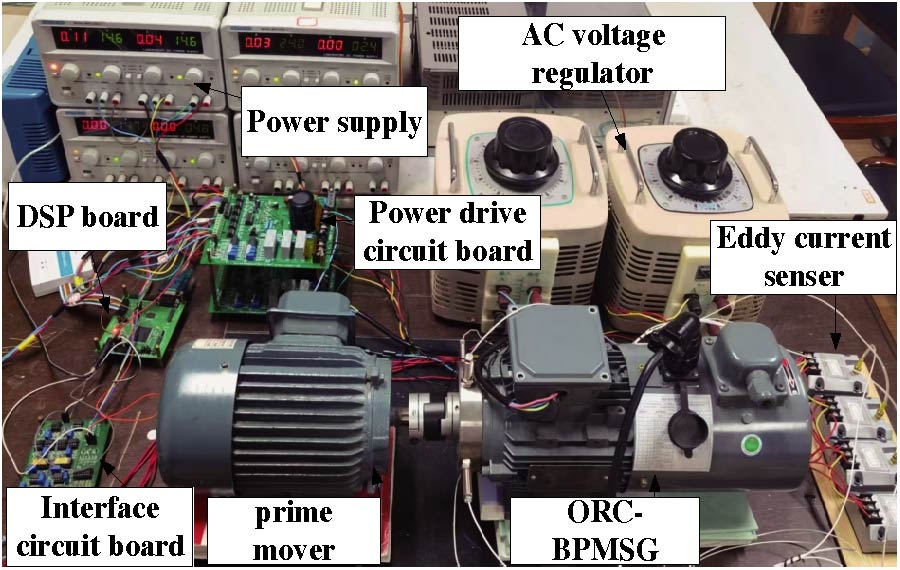
This paper presents an optimal duty cycle model predictive current control (ODC-MPCC) strategy based on the internal model observer (IMO) for permanent magnet synchronous motor (PMSM). First, in order to be able to control the current quickly and better, the partial derivative of the cost function with respect to the optimal duty cycle is directly used. On this basis, a five-segment algorithm is used to allocate the optimal duty cycle, and output voltage with arbitrary amplitude and direction. In addition, to reduce the current static error under parameter mismatch, the IMO is designed to estimate the system disturbance caused by parameters variation, which is used for feedforward compensation. Finally, experiments show that the proposed method can effectively reduce the current ripple and static error and improve the steady-state performance of the system.
OPTIMAL DUTY CYCLE MODEL PREDICTIVE CURRENT CONTROL BASED ON INTERNAL MODEL OBSERVER FOR PMSM
2022-07-19
PIER M
Vol. 111, 235-246
Design of a Microstrip Sensor Based on a CSRR-Derived Structure for Measuring the Permittivity and Permeability of Materials
Yun-Rui Wang and Honggang Hao
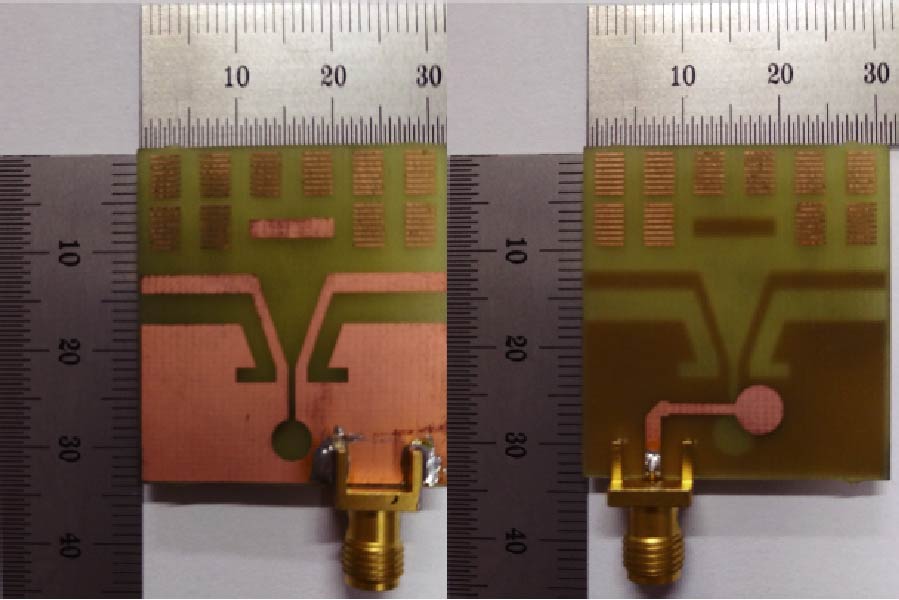
In this paper, a microstrip sensor based on a complementary split ring resonator (CSRR)-derived structure is proposed to characterize the permittivity and permeability of materials. By loading an etched meandered conductive ring and an interdigital capacitor structure, effective separation of the permittivity sensing area and permeability sensing area is realized, and the field strengths of the corresponding areas are improved. The relationship between the resonant response (resonant frequency and quality factor) of the sensor and the permittivity and permeability of the sample under test (SUT) is discussed, and the theoretical basis for measuring the material properties is given. By analyzing the measured resonant frequency and quality factor, the real and imaginary parts of the permittivity and permeability of the SUT can be determined. The sensor was fabricated on a Rogers 5880 substrate, and four standard dielectric and magnetodielectric (MD) samples were tested. The results show that the measured values of the real and imaginary parts of the permittivity and permeability are in good agreement with the reference data.
DESIGN OF A MICROSTRIP SENSOR BASED ON A CSRR-DERIVED STRUCTURE FOR MEASURING THE PERMITTIVITY AND PERMEABILITY OF MATERIALS
2022-07-19
PIER Letters
Vol. 105, 57-62
Design of High-Selective Wideband Bandpass Filter with a Notched-Band and Harmonic Suppression
Jie Liu , Yun Xiu Wang , Guangyong Wei , Rui Lin Jia and Yin Long Duan
A high-selective wideband bandpass filter (BPF) with a notched-band and harmonic suppression is proposed in this paper. Firstly, a uniform impedance resonator with an embedded open-circuited stub square loop is applied in the filter design. By adopting parallel-coupling structure at I/O ports, such a resonator can generate a notched-band within the passband due to the counter-phase cancellation of two dissimilar signal paths. The width of the square loop can be adjusted to select the location of the notched-band. Secondly, by introducing an L-shaped open-circuited stub to one input feed line, a transmission zero (TZ) is created. It can be used to suppress higher harmonic passband. The filter is designed and fabricated with the notched-band centered at 8.1 GHz, and two TZs are implemented at the both sides of the passband. Simulated and measured results show that the filter has a good selectivity and a wider stopband characteristic.
DESIGN OF HIGH-SELECTIVE WIDEBAND BANDPASS FILTER WITH A NOTCHED-BAND AND HARMONIC SUPPRESSION
2022-07-18
PIER M
Vol. 111, 221-234
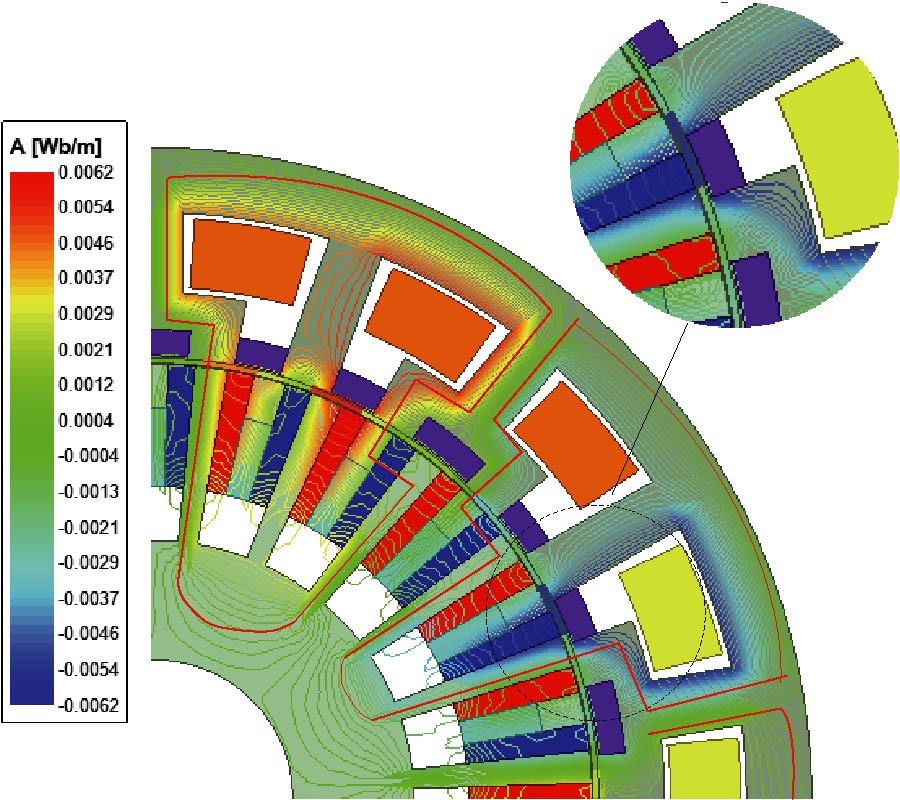
Maximum Torque Output Strategy of Bearingless Induction Motor in the Field-Weakening Region
Wenxin Fang , Zebin Yang , Xiaodong Sun and Guangxin Wang
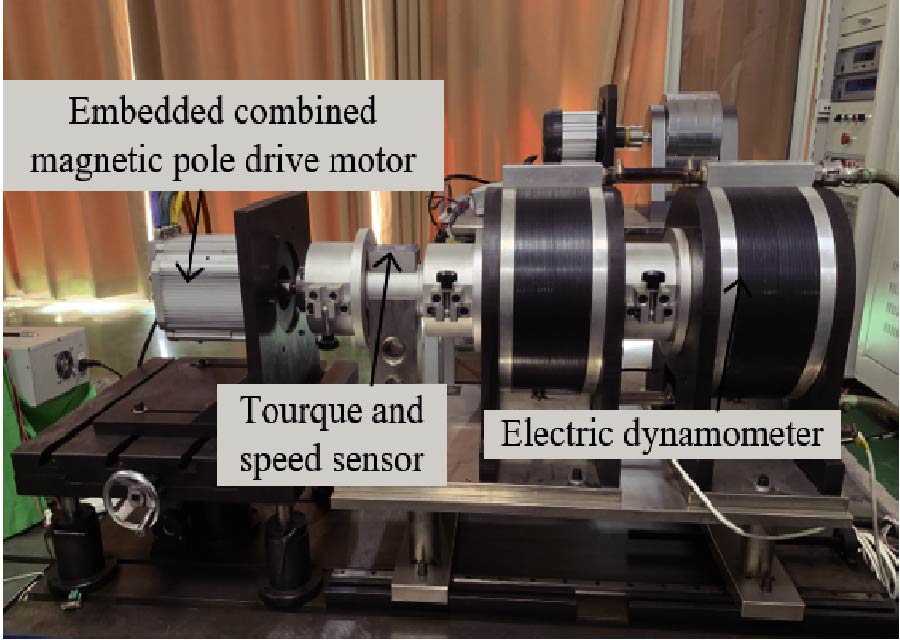
In order to realize the maximum torque output (MTO) in the field-weakening region for the bearingless induction motor (BIM) stator vector control, a flux feedforward control strategy was proposed. Firstly, based on the restrictions of the stator flux oriented control and the dynamic characteristics of the current in the BIM field-weakening region, the optimal distribution of the torque current and the excitation current and the dynamic model of the maximum torque output strategy are analyzed. Then the field-weakening region could be divided into two parts according to the change of slip, it can be proved that the BIM works under the voltage and current limitations in the field-weakening region I, and works under the voltage and torque limitations in the field-weakening region II. By this way, the optimal flux mathematical model of the motor can be obtained. Finally, the maximum torque output in the field-weakening region is proved. The simulation and experiment results show that the proposed flux feedforward control strategy in the field-weakening region can make the output torque and current tracking effect improve significantly when the BIM runs beyond the rated speed. At the same time, the suspended rotor has good suspension performance, and high efficiency and stability of the BIM is realized.
MAXIMUM TORQUE OUTPUT STRATEGY OF BEARINGLESS INDUCTION MOTOR IN THE FIELD-WEAKENING REGION
2022-07-18
PIER M
Vol. 111, 209-219
Switchable Active Metasurface for Dual Band Gain Enhancement
Arun Shaji B K and Anju Pradeep
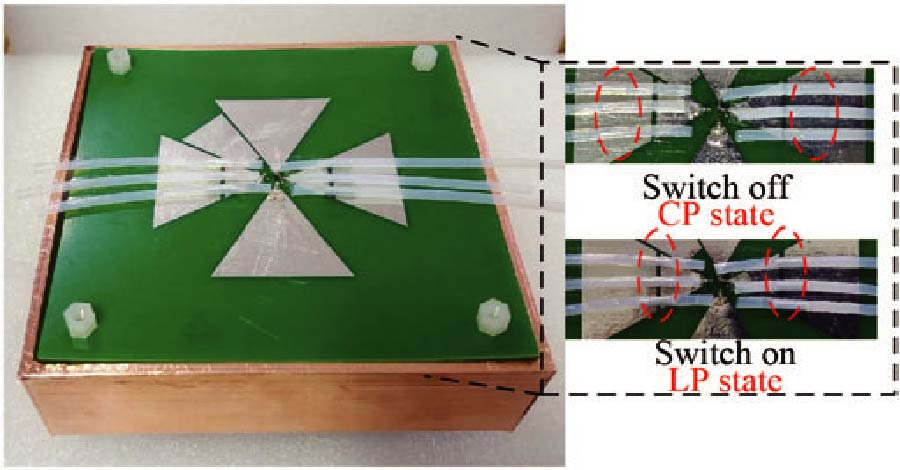
A novel active metasurface which is switchable to accomplish dual band gain enhancement is reported. The metasurface is used as a superstrate above the dual band patch antenna working at 2.4 GHz and 4.6 GHz. The gain of the antenna is enhanced by 3.5 dB at both frequencies. Switching between the frequencies is enabled by a p-i-n diode. When the p-i-n diode is in OFF state, gain is enhanced at 2.4 GHz, while gain is reduced at 4.6 GHz and when the p-i-n diode is in ON state, gain is enhanced at 4.6 GHz, but reduced at 2.4 GHz. The diode is controlled by biasing with a regulated DC source. The efficiency of the antenna is 70% at 2.4 GHz and 85% at 4.6 GHz. The simulated and measured results show good agreement. The distance between the antenna and the superstrate is 6 mm, which is 0.048λ at 2.4 GHz and 0.092λ at 4.6 GHz. This superstrate can be used in WLAN and Sub-6 GHz 5G applications.
SWITCHABLE ACTIVE METASURFACE FOR DUAL BAND GAIN ENHANCEMENT
2022-07-18
PIER Letters
Vol. 105, 49-56
A Filtering Dielectric Resonator Antenna Using CPW-Fed for Sub-6 GHz Applications
Chuanyun Wang , Lina Wang , Yonghua Zhang , Weikang Hu and Xiaofeng Jiang
A filtering dielectric resonator antenna (FDRA) using an inductive CPW (coplanar waveguide) feed structure is proposed. Simultaneously, a pair of slotline stubs are respectively loaded on the signal line and ground of the CPW feed structure, which is used to generate radiation nulls near the edges of the passband. Furthermore, the two radiation nulls can be controlled independently by adjusting the length of the loaded two pairs of slotline stubs. In addition, it is interesting that TE111 mode is split due to the different loading effects of slotline stubs in feed network, thereby three resonances in the passband are formed. Finally, an FDRA with quasi-elliptic function response is realized without additional filtering circuit. The prototype of the FDRA operating at 3.53 GHz was fabricated and measured to verify the design validity. The measured results show that the impedance bandwidth is 13.6% (3.29-3.77 GHz); the gain is basically stable at 5.7 dBi wihtin the passband; and the two radiation nulls are located at 3.05 GHz and 3.88 GHz, respectively.
A FILTERING DIELECTRIC RESONATOR ANTENNA USING CPW-FED FOR SUB-6 GHZ APPLICATIONS
2022-07-18
PIER Letters
Vol. 105, 41-47
Frequency- and Pattern-Reconfigurable Cone Antenna Based on Liquid Metal
Xia Bai , Yang Liu and Qingmin Wang
A frequency- and pattern-reconfigurable cone antenna utilizing liquid metal is investigated. It contains a cone antenna, four reflectors, and a circular ground plane. The transparent resin is processed into a mold for the cone and reflective poles to store the liquid-metal. By controlling the poles height in the mold, the proposed antenna can realize four radiation patterns. Meanwhile, the cone height could be adjusted by the reflective poles, thereby achieving frequency tuning. The simulation and measurement results show that, by tuning and switching the liquid-metal radiator and reflectors, a wide frequency tuning bandwidth of 43.2% is achieved, and a pattern reconfigurable with five types of beam steering over 360° coverage is realized. The prototype is fabricated, assembled, and measured, with good agreement between the simulated and measured results. The design of indoor coverage antenna system must have comprehensive measurement indexes such as multi-bands, multi-beams, high gain, and low cost.
FREQUENCY- AND PATTERN-RECONFIGURABLE CONE ANTENNA BASED ON LIQUID METAL
2022-07-18
PIER Letters
Vol. 105, 33-39
Compact Wideband Power Divider Based on Unequal-Width Three-Coupled-Lines
Hongmei Liu , Yihan Ma , Siran Zhang , Shao-Jun Fang and Zhongbao Wang
In the paper, a compact wideband power divider (PD) which consists of a λ/4 unequal width three-coupled-lines, four short-circuited stubs and an airbridge resistor is presented. By connecting the four short-circuited stubs to the input and output ports of the PD, two additional transmission poles are obtained, which results in enhanced bandwidth and improved selectivity. Rigorous design equations are given according to the even-odd mode analysis, and the design parameters are obtained based on particle swarm optimization. For validation, a prototype operating at 1 GHz is fabricated and tested. The experimental results indicate that the proposed power divider exhibits a return loss of more than 17.5 dB and an isolation of larger than 18.8 dB isolation in the fractional bandwidth of 91%.
COMPACT WIDEBAND POWER DIVIDER BASED ON UNEQUAL-WIDTH THREE-COUPLED-LINES
2022-07-17
PIER C
Vol. 121, 163-178
Synthesis of Planar Array Antenna for Wireless Power Transmission
Hua Guo , Huiliang Hao , Peng Song , Lijian Zhang and Xiaodan Zhang
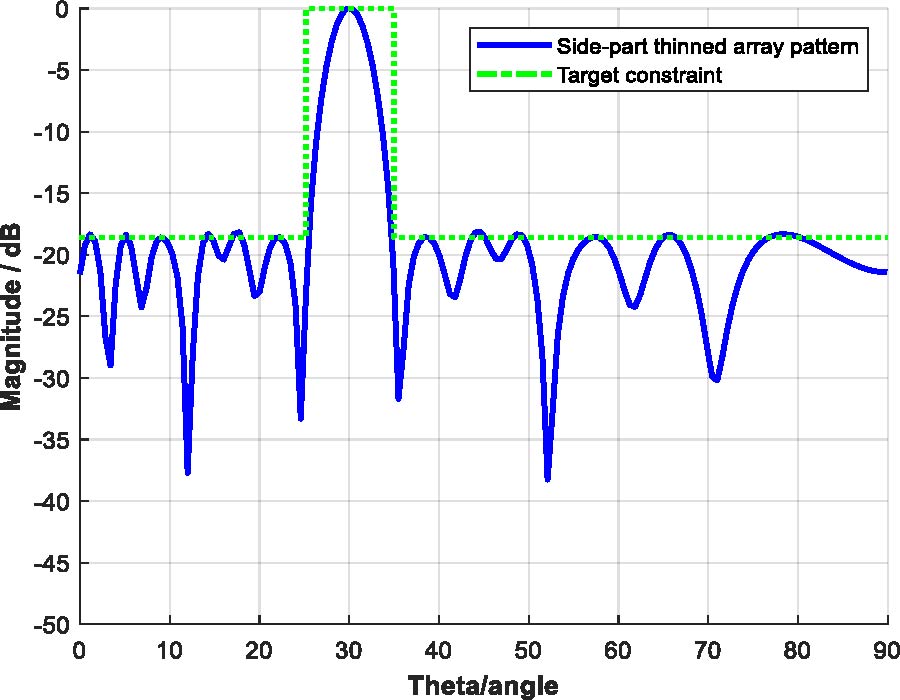
A newly synthesis method of planar array antenna for wireless power transmission (WPT) is introduced in this paper. The whole array aperture is divided into several subarrays which can reduce the complexity of the feed network and the cost of the array antenna. Invasive Weed Optimization (IWO) algorithmis used to optimize the subarray division and the excitation amplitude of each subarray. The maximum beam collection efficiency (BCE) and maximum sidelobe level outside the receiving area (CSL) are considered as the evaluation index. The synthesis results show that the proposed method can obtain higher BCE and lower CSL.
SYNTHESIS OF PLANAR ARRAY ANTENNA FOR WIRELESS POWER TRANSMISSION
2022-07-14
PIER
Vol. 175, 1-11
Machine-Learning-Enabled Recovery of Prior Information from Experimental Breast Microwave Imaging Data (Invited)
Keeley Edwards , Joe LoVetri , Colin Gilmore and Ian Jeffrey
We demonstrate the recovery of simple geometric and permittivity information of breast models in an experimental microwave breast imaging system using a synthetically trained machine learning workflow. The recovered information consists of simple models of adipose and fibroglandular regions. The machine learning model is trained on a labelled synthetic dataset constructed over a range of possible adipose and fibroglandular regions and the trained neural network predicts the geometry and average permittivty of the adipose and fibroglandular regions from calibrated experimental data. The proposed workflow is tested on two different experimental models of the human breast. The first model is comprised of two simple, symmetric phantoms representing the adipose and fibroglandular regions of the breast that match the model used to train the neural network. The second, more realistic model replaces the symmetric fibroglandular phantom with an irregularly shaped, MRI-derived fibroglandular phantom. We demonstrate the ability of the machine learning workflow to accurately recover geometry and complex valued average permittivity of the fibroglandular region for the simple case, and to predict a symmetric convex hull that is a reasonable approximation to the proportions of the MRI-derived fibroglandular phantom.
MACHINE-LEARNING-ENABLED RECOVERY OF PRIOR INFORMATION FROM EXPERIMENTAL BREAST MICROWAVE IMAGING DATA (Invited)
2022-07-14
PIER C
Vol. 121, 145-161
Modeling Dipole Arrays That Produce Synthesized Patterns Using NEC
Edmund K. Miller
Pattern synthesis usually involves determining the strengths of the current sources in a given array that yield a specified pattern. Demonstrating that this pattern can be produced by an actual array of physical elements is a step that is rarely included in the discussion. The purpose of this article is to examine how well a numerical model of these sources will match the desired pattern when mutual interactions between the array elements are taken into account. An investigation of this process is described here using NEC (the Numerical Electromagnetics Code), although any wire-antenna computer code could be used. Modeling wire antennas in codes like NEC typically involves specifying the input or exciting voltage of the antenna to find the induced current from which the far field can be obtained. The pattern-synthesis problem for a specified array geometry, by contrast, requires instead finding the exciting voltages that will induce the synthesized currents needed to produce the pattern of interest. The radiation pattern that results can then be compared with the desired pattern to determine how well the physical array performs. Several examples of this approach are included here to demonstrate the process.
MODELING DIPOLE ARRAYS THAT PRODUCE SYNTHESIZED PATTERNS USING NEC
2022-07-14
PIER M
Vol. 111, 199-208
A Novel Low Profile Circularly Polarized GNSS Antenna with Wide 3 dB Axial Ratio Beamwidth
Jingchun Zhai , Gengliang Chen , Wen Wang , Yiqing Liu , Luzhen Wang and Zhuopeng Wang
A novel low-profile GNSS microstrip circular polarization antenna is proposed and analyzed. Circular polarization is realized by asymmetric structure patch, and arc structure loaded on the main radiator can keep two modes orthogonal over a wide-angle range, so that the antenna has an extremely wide 3 dB axial ratio beamwidth (ARBW). The far-field AR beamwidths obtained are 232° and 212° respectively in the main plane of φ=0° and φ=90°. In φ=45° and φ=135°, 3 dB AR beamwidths are 241° and 244°, far exceeding the 120° required for satellite applications. In the whole CP band, 78.95% of the beam width exceeds 180°. The profile is only 0.0156λ0, which is suitable, especially, for portable wireless systems or devices. The return loss bandwidth of -10 dB is 5.13% (1.52 GHz-1.6 GHz), which covers BeiDou Navigation System B1 (1.561 GHz). The axial ratio bandwidth is 1.28% (1.55 GHz-1.57 GHz), and the in-band peak gain is 4.09 dBi.
A NOVEL LOW PROFILE CIRCULARLY POLARIZED GNSS ANTENNA WITH WIDE 3 DB AXIAL RATIO BEAMWIDTH
2022-07-13
PIER M
Vol. 111, 185-197
Pattern Reconfigurable End-Fire Antenna Array with High Directivity
Sruthi Dinesh , Chaluvayalil Vinisha , Deepti Das Krishna , Jean Marc Laheurte and Chandroth K. Aanandan
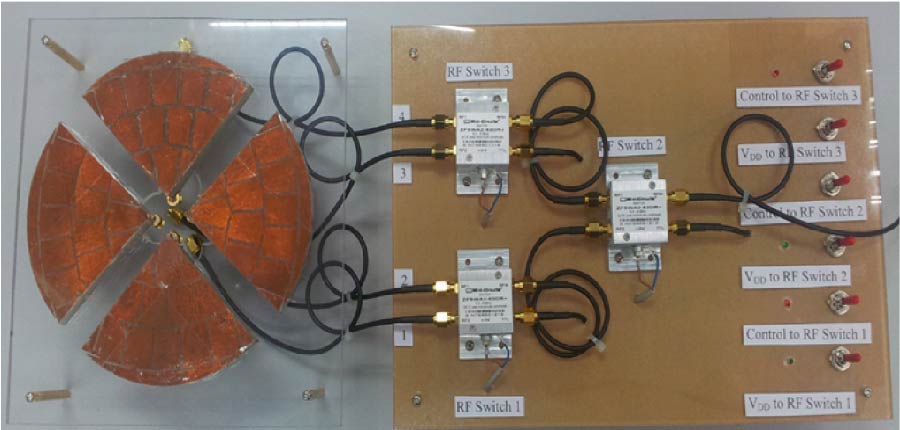
This paper presents a highly directive pattern reconfigurable antenna array capable of switching single or multiple beams of high directivity in multiple directions. Each element is individually capable of providing radiation pattern of directivity 12 dB and realized gain of 10.2 dB. Here, eight directive array elements are arranged in a circular fashion resembling a fan along with a switching arrangement to obtain beam switching in the horizontal plane. Two or more elements can be excited simultaneously to obtain patterns in multiple directions. In another configuration, the elements are arranged around a cylindrical support resembling an umbrella structure to obtain azimuthal switching at a desired tilt. The ability to reconfigure patterns in desired direction facilitates their usage as base station antennas providing desired angular coverage to intended users only, resulting in least signal interference.
PATTERN RECONFIGURABLE END-FIRE ANTENNA ARRAY WITH HIGH DIRECTIVITY
2022-07-13
PIER M
Vol. 111, 173-183
Refractive Index Sensing Performances of a Mid-Infrared Asymmetric MZI Based on Suspended GaAs Waveguides
Fang Wang , Shoudao Ma , Tao Ma , Xu Wang , Kun Yu and Lei Li
A novel mid-infrared (MIR) biochemistry sensor using two suspended GaAs waveguides based on an asymmetric Mach-Zender Interferometer (MZI) is proposed. The propagation properties and refractive index (RI) sensing performances of MZI are investigated by the finite element method (FEM). The simulation results show that the maximum waveguide sensitivities (Swg) of the TE and TM modes in the suspended GaAs waveguide are ~1.2 and ~1.0. This design of the GaAs waveguide using the suspension structure is to enhance the interaction between the vanishing field and the measured material. The RI sensitivity of the asymmetric MZI structure increases with the length of the sensing arm, which can reach 854.5 nm/RIU with a Q of 208.2 after parameter optimization. The two arms of the MZI are designed as width-asymmetric structures to make the sensor more sensitive to the measured material. The asymmetric MZI sensing structure has high RI sensitivity and compact structure, which provides a feasible scheme for biochemical sensing.
REFRACTIVE INDEX SENSING PERFORMANCES OF A MID-INFRARED ASYMMETRIC MZI BASED ON SUSPENDED GAAS WAVEGUIDES
2022-07-13
PIER M
Vol. 111, 159-171
A Miniaturized 2×2 Double Flare Horn Shaped MIMO Antenna with Enhanced Isolation for k and Ka Band Applications
Aditya Kumar Singh , Amrees Pandey , Piyush Kumar Mishra and Ram Suchit Yadav
The article presents a compact size and high isolation with 2×2 MIMO, double flare horn shaped antenna for K and Ka bands of mm-wave applications. The overall size of the MIMO antenna 0.19λ×0.19λ×0.01λ mm3 at a lower frequency has been designed, simulated, fabricated and tested. The proposed MIMO antenna components are arranged parallel with identical shaped to provide a high level of inter-element isolation and 50 W micro strip line feed. The antenna covers 18.61-20.01 GHz in the K-band (18-26.5 GHz) and 21.52-33.91 GHz in the Ka-band (26.5-40 GHz) with impedance bandwidths of 7.2% and 44.5% respectively at port-1 and port-2. Maximum peak gain of 6.5 dBi & 8.1 dBi respectively at port-1 and 6.5 dBi&7.9 dBi at port-2 is observed respectively. Diversity characteristics such as envelope correlation coefficient, diversity gain, total active reflection coefficient and channel capacity loss are determined to validate the considered MIMO antenna's work qualities. The isolation of more than 35 dB indicates that the proposed structure is suitable to use a dual-port MIMO antenna. The recommended structure's investigation revealed a steady performance and a high degree of agreement between simulated and measured findings.
A MINIATURIZED 2×2 DOUBLE FLARE HORN SHAPED MIMO ANTENNA WITH ENHANCED ISOLATION FOR K AND KA BAND APPLICATIONS
2022-07-13
PIER Letters
Vol. 105, 27-32
Guarantees of Minimum Performance Levels with Directed Energy Weapons
Graham V. Weinberg
The integration of directed energy weapons (DEWs) into modern military platforms is of considerable interest to those examining the impact of emerging technology on the future fighting force. Hence the performance prediction of DEWs is of importance. The purpose of this study is to develop a simple framework where the minimum number of DEWs deployed in an operational setting can be determined, to achieve a desired level of performance.
GUARANTEES OF MINIMUM PERFORMANCE LEVELS WITH DIRECTED ENERGY WEAPONS
2022-07-12
PIER C
Vol. 121, 127-144
A Mathematical Approach to the Effect of Mobile Position on Human Head Against RF Radiation
Pudipeddi Sai Spandana and Pappu V. Y. Jayasree
The proposed work focuses on the mathematical interpretation of Electromagnetic Shielding Effectiveness (ESE) of age-dependent human Head Models (HMs) of seven tissues (Skin, Fat, Bone, Dura, Cerebrospinal fluid (CSF), Gray matter, and White Matter) with the impact of the mobile phone holding position on the RF radiation absorption by the human head. The ESE is first simulated and estimated using the Transmission Line Method approach: a. for only layered human Head Models (HMs) in the absence of mobile position with variation in Oblique Angle of Incidence (OAI) in Transverse Electric Polarization (TEP) and Transverse Magnetic Polarization (TMP), b. in the presence of mobile phone position and Polarization. c. by incorporating the Transparent Conductive Metal Mesh Polyethylene terephthalate (PET) film (Copper grid PET Film) as a shielding material in the presence and absence of Polarization and mobile phone holding positions. The Copper grid PET Film is composed of optical PET film laminated with Copper (Cu) and Nickel (Ni) Transparent Conductive Mesh Coatings (TCMCs) to form a transparent laminated mesh. The radiation absorption characteristic, Specific Absorption Rate (SAR), is evaluated numerically at four Sub-6 GHz frequencies from the obtained ESE data to draw collation at the least SAR absorbed by the age-dependent HMs, considering the water contents of tissues. Out of adult and child HMs, the child HM absorbed the higher RF SAR. However, with the transparent PET/Cu/Ni Laminated Mesh (LM), at 5.47 GHz, the SAR by the brain's white matter in child HM is highest in TEP with no shield considered is 10 W/kg. With transparent LM, the SAR obtained is 2.8e-12 W/kg in TEP in no mobile phone tilt condition at 89˚ OAI. With the user mobile tilt at 15˚ and 30˚, the SAR absorbed by the brain WM is 2.62e-12 W/kg and 2.1e-12 W/kg, respectively at 89˚. Hence, the SAR absorption is the least in any direction (azimuth or elevation) when the mobile phone is tilted to 30˚ in TE Polarization using the transparent PET/Cu/Ni laminated mesh. Therefore, the usage of transparent PET/Cu/Ni laminated mesh in TE Polarization saw the least SAR absorbed, whether the mobile phone is tilted either towards or away from the head when the mobile phone is moved to 15˚ or 30˚ tilted position.
A MATHEMATICAL APPROACH TO THE EFFECT OF MOBILE POSITION ON HUMAN HEAD AGAINST RF RADIATION
2022-07-12
PIER Letters
Vol. 105, 17-25
A Dual-Band Compact Four-Port MIMO Antenna Based on EBG and CSRR for Sub-6 GHz Applications
Yufa Sun , Tao Pan , Qing Wang and Fei Huang
A compact Sub-6 GHz Multiple-input Multiple-output (MIMO) antenna based on a complementary split-ring resonator (CSRR) and electromagnetic bandgap (EBG) is proposed in this paper. The antenna has an interesting structure and a compact size of 38×38 mm2. Four identical antenna elements are deposited orthogonally to each other, using polarization diversity and adding decoupling structures, so that good isolation and miniaturized size can be obtained. The isolation is less than -17.5 dB in the operating bandwidth of 3.28-3.62 GHz and -19.5 dB in 4.78-5.04 GHz. The simulation results are consistent with the measured ones, indicating that the antenna is suitable for Sub-6 GHz communication equipments.
A DUAL-BAND COMPACT FOUR-PORT MIMO ANTENNA BASED ON EBG AND CSRR FOR SUB-6 GHZ APPLICATIONS
2022-07-11
PIER C
Vol. 121, 107-125
Wideband and Circularly Polarized Designs of Modified E–Shape Microstrip Antennas for GSM and GPS Applications
Venkata A. P. Chavali and Amit A. Deshmukh
Variations of modified E-shape microstrip antennas are proposed which realize wideband and circularly polarized responses inside the same impedance bandwidth but in separate frequency regions. The offset pair of slots in E-shape patch tunes the spacing in between TM02, TM10 and TM11 mode frequencies, and for the design in 900 MHz frequency band, it yields the total impedance bandwidth of 34.15%, in which circularly polarized bandwidth of 4.75% is present towards the higher frequency region. In comparison with the wideband E-shape or its circularly polarized variation, proposed configurations yield larger total impedance and same axial ratio bandwidth, but without overlapping bands for the wideband and circularly polarized regions. A compact half E-shape microstrip antenna is proposed, which yields total impedance bandwidth of 38.8%, with a circularly polarized bandwidth of 5.3%, present towards the higher frequency region. Further, the wideband E-shape variations are presented on a thinner substrate by using a bow-tie shape ground plane profile. Against the conventional ground plane design, it offers more than 12% increase in the bandwidth for 0.03λg reduction in the substrate thickness. Thus, as against the reported E-shape variations, proposed study presents a new design feature of traditional E-shape patch that provides separate regions for the wideband and circularly polarized responses, occupying the same impedance bandwidth.
WIDEBAND AND CIRCULARLY POLARIZED DESIGNS OF MODIFIED E–SHAPE MICROSTRIP ANTENNAS FOR GSM AND GPS APPLICATIONS
2022-07-08
PIER C
Vol. 121, 97-106
A Triple Band C-Shape Monopole Antenna for Vehicle Communication Application
Dong Sik Woo
A compact triple band monopole antenna with a simple modified C-shape structure for vehicle-to-everything (V2X) application is presented. The proposed multiband vehicle antenna with three C-shaped round stubs structure satisfies the worldwide interoperability for microwave access (WiMAX), wireless local area network (WLAN), and wireless access in vehicular environment (WAVE) bands. The three resonant frequencies are implemented with three C-shaped round stubs, and they are simply controlled by adjusting the round stub length without influence each other. The presented antenna demonstrated good impedance bandwidth and nearly omnidirectional radiation patterns over the whole operating bands. The field communication tests by connecting the vehicular communication module were also performed and verified in the view of automotive vehicle antenna application.
A TRIPLE BAND C-SHAPE MONOPOLE ANTENNA FOR VEHICLE COMMUNICATION APPLICATION