Search Results(13789)

2022-07-27
PIER C
Vol. 121, 255-264
A New Unterminating Method for DE-Embedding the Coaxial to Waveguide Transitions
Stefan Simion
A new unterminating method for coaxial to waveguide transitions is presented. The coaxial to waveguide transitions are modelled and the ABCD matrices of the transitions are obtained. The measured scattering parameters for the thru and short-circuit calibration standards match well the simulated scattering parameters computed from the ABCD matrices. To complete the validation of the proposed unterminating method, this method is applied to the measurement of complex relative permittivity for three different dielectric materials, by using the Nicolson-Ross-Weir (NRW) transmission/reflection method. The dielectric samples are inserted one by one into a waveguide section, which is connected between two coaxial to waveguide transitions. The two transitions are de-embedded from the measured scattering parameters of the embedded waveguide section, by using the method proposed in this paper. The values obtained for the complex relative permittivity are in good agreement with those reported by other authors, for all three dielectric materials. The results presented in this paper were obtained for a frequency band ranging from 25 to 40 GHz.
A NEW UNTERMINATING METHOD FOR DE-EMBEDDING THE COAXIAL TO WAVEGUIDE TRANSITIONS
2022-07-27
PIER M
Vol. 112, 93-104
Transient Thermal Analysis of Human Exposure to Electromagnetic Fields
Abdelmalek Laissaoui , Ammar Abdi , Mezoued Sabrina , Bachir Nekhoul and Dragan Poljak
The study of the thermal effect caused by exposure to electromagnetic fields is a focus of this research. To quantify the induced current and temperature distribution in the human body an assessment tool for the frequency range of 50 Hz to 110 MHz has been developed. The major contribution consists of providing a quantitatively accurate and relatively simple model. The formulation of the problem is based on a simplified cylindrical representation defined by the anatomical parameters of the human body. The bio-thermal modeling is carried out in two stages. Firstly, the electromagnetic analysis is based on the transmission lines (TL) theory. Secondly, a thermal modeling based on the thermal networks model (nodal method) is approached. This allows us to quantify the corresponding thermal gradients in the human body.
TRANSIENT THERMAL ANALYSIS OF HUMAN EXPOSURE TO ELECTROMAGNETIC FIELDS
2022-07-27
PIER Letters
Vol. 105, 85-93
A Wideband Compact Antenna for Vehicles Communication in Its Applications
Allam M. Ameen , Mohamed Ismail Ahmed , Hala Elsadek and Wagdy R. Anis
A wideband compact shark-fin antenna operating in a frequency band from 2.86 GHz to 7.68 GHz is presented. The proposed design is realized on a substrate material of ``Rogers 4003C'' with εr = 3.48, tanδ = 0.0027, and substrate thickness 0.81 mm. The antenna is designed to operate at a center frequency of 5 GHz with an operating bandwidth of 4.82 GHz (96.4%). The bandwidth covers the lower band and mid band of 5G at resonant frequencies of 3.5 GHz and 5.8 GHz, respectively. The realized gain of the proposed antenna is 4.1 dBi and 5.35 dBi in the lower band and mid band, respectively. The proposed antenna is designed and simulated. It is also fabricated using photolithography techniques and measured using an R&S vector network analyzer. Good agreement is obtained between the simulated and measured results.
A WIDEBAND COMPACT ANTENNA FOR VEHICLES COMMUNICATION IN ITS APPLICATIONS
2022-07-27
PIER Letters
Vol. 105, 79-84
A Standard Ray Tracing Technique for Predicting Signal Strength of Wireless Sensor Network in Smart Building
Hany M. El-Maghrabi
In this paper, a standard ray tracing model based on Geometrical Optics (GO) is proposed for predicting the signal strength of Wireless Sensor Network (WSN), ZigBee nodes, in an indoor environment. The signal strength is calculated analytically. The results are compared with numerical analysis implemented in FEKO computational electromagnetic software, and agreement is demonstrated. Also, the model is verified by a simple measurement campaign in a straight corridor section of commercial building, and results agreement is obtained. The results show that the proposed technique is capable of predicting the signal strength of WSN sensors in a corridor section of indoor environment with good accuracy, fast calculation time, and low computational resources and complexity. The proposed analytical model and measurement dataset can help WSN designers select the best locations of ZigBee nodes in a straight corridor section with good signal quality.
A STANDARD RAY TRACING TECHNIQUE FOR PREDICTING SIGNAL STRENGTH OF WIRELESS SENSOR NETWORK IN SMART BUILDING
2022-07-27
PIER Letters
Vol. 105, 71-78
Extending the Absorption Frequency Band Using Twisted Configuration in the GHz Region
Pham Van Dien , Pham Van Hai , Vu Minh Tu , Nguyen Thi Thuy , Do Hoang Tung , Pham Van Vinh and Tran Manh Cuong
The electromagnetic wave perfect absorption of metamaterial is focused on by scientists currently. Conventional studies typically use a basic unit cell and then develop the entire structure in production. In this paper, we study and use a full-sized twisted metamaterial structure with the expectation that this structure will reveal outstanding advantages and possess excellent electromagnetic absorption properties. The structure of the twisted metamaterial consists of two coincident layers of cyclic lattice stacked on top of each other. When one lattice layer rotates at a specified angle relative to the other, it generates a new lattice configuration and increases the absorption of the structure. Therefore, the frequency band widens up to 6 GHz.
EXTENDING THE ABSORPTION FREQUENCY BAND USING TWISTED CONFIGURATION IN THE GHZ REGION
2022-07-26
PIER C
Vol. 121, 243-253
Raindrop Size Distribution and Rainfall Attenuation Modeling from Disdrometer Measurement in Central Africa: Case of Cameroon
Patrick Herve Ntanguen , Armand Nzeukou Takougang and Alain Tchakountio Sandjon
Raindrop sizes were measured in Douala, Cameroon (4˚03N, 9˚42'E) using a Parsivel disdrometer. The data obtained are used for the analysis of the drop size distribution (DSD) and specific rain attenuation modeling in the 5-150 GHz frequency range. The Lognormal and gamma distribution models are employed using the method of moments estimation, considering the third, fourth, and sixth-order moments. The parameter fits for the two DSD models proposed here for different values of rain rates are investigated. The specific rainfall attenuation using the Douala DSD models is compared to the ITU-R models in vertical and horizontal polarisation and models for some countries with different climates such as semi-arid, tropical, and subtropical ones in Africa. The comparison with the ITU-R model shows significant differences occurring at high frequency with both high and low rainfall rates. The comparison with other regions of Africa also shows that Douala is characterized by equatorial climate, and Durban characterized by subtropical climate shows similar rainfall attenuation characteristics at operating frequency range 10 ≤ f ≤ 150 GHz, especially at a lower rain rate. At a higher rain rate, specific rain attenuation at Douala is always higher than in other African locations. The proposed models are very important for the determination of rainfall attenuation for terrestrial and satellite systems.
RAINDROP SIZE DISTRIBUTION AND RAINFALL ATTENUATION MODELING FROM DISDROMETER MEASUREMENT IN CENTRAL AFRICA: CASE OF CAMEROON
2022-07-26
PIER C
Vol. 121, 233-242
A Broadband CPW-FCL Gyrator
Mahmoud Abdalla and Zhirun Hu
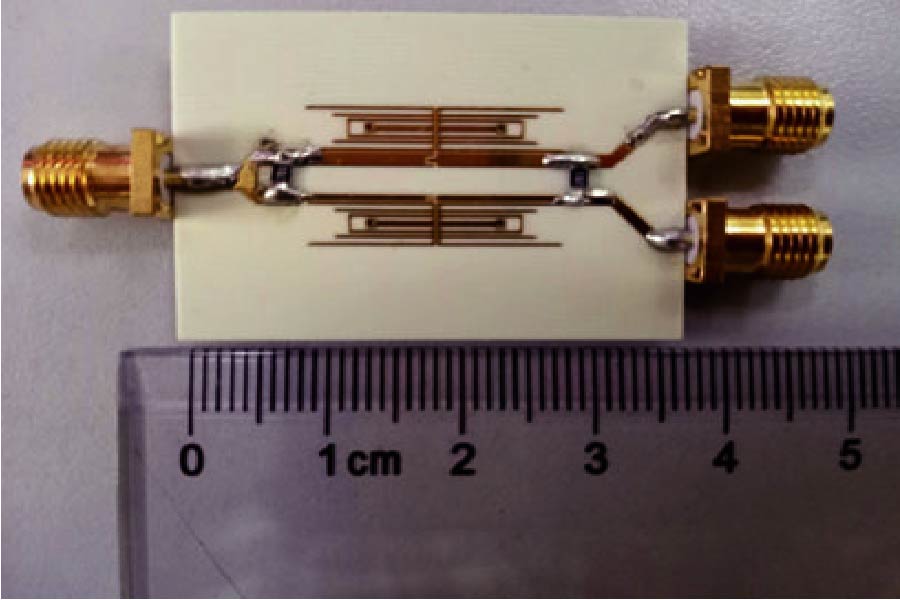
In this paper, a novel wideband gyrator based on a ferrite coupled line design approach and realized in coplanar waveguide configuration is presented. The ferrite coupled lines are proved to demonstrate typical unique properties. The design of the optimum coupled lines has shown an almost 1 dB/3 dB insertion loss for even/odd modes excitation, respectively. Also, for single excitation, the power is divided at output ports with insertion loss almost equal to 3 dB and 5 dB, good matching and isolation between output ports (less than -15 dB). The bandwidth of the designed coupler is proved over the bandwidth of 7 GHz-11 GHz. As an application, a novel gyrator is introduced and covers the same coupler bandwidth. The performance of the gyrator is optimized using full-wave simulations.
A BROADBAND CPW-FCL GYRATOR
2022-07-26
PIER M
Vol. 112, 81-91
Design and Analysis of a Mid-Infrared Ultra-High Sensitive Sensor Based on Metal-Insulator-Metal Structure and Its Application for Temperature and Detection of Glucose
Hocine Bensalah , Abdesselam Hocini and Hocine Bahri
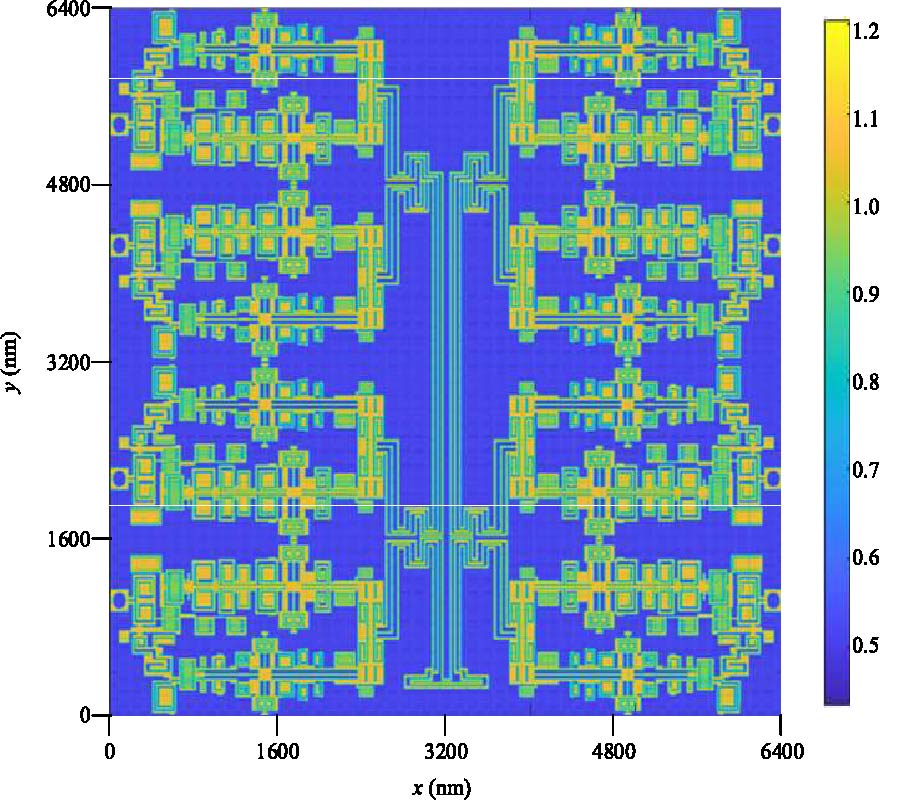
In this paper, a compact and highly sensitive refractive index plasmonic sensor, based on a metal-insulator-metal (MIM) waveguide coupled to double hexagonal ring-shaped resonators in the mid-infrared range, is proposed and analyzed using the finite-difference time-domain (FDTD) method embedded in the commercial simulator R-soft, where it has been found that the transmission peaks and dipspositions can be easily manipulated, by simply adjusting the structural parameters of the proposed design, such as the inner side length and the distance between the centers of the two hexagonal ring resonators. So, these parameters have a key role in the sensor's performances, and it is clearly noticed from the results, where a linear link between the refractive index of the material under testing and its wavelength resonances was established. Furthermore, the maximum achievable linear sensitivity was S = 4074 nm/RIU, with a matching sensing resolution of 2.45 x 10⁻⁶ RIU; the temperature sensitivity is around 1.55 nm/°C; and the highest linear sensitivity is S = 3910 nm/RIU in 0-200 g/L glucose concentration, making this proposed sensor an attractive one, to be implemented in high-performance nano and bio-sensing devices.
DESIGN AND ANALYSIS OF A MID-INFRARED ULTRA-HIGH SENSITIVE SENSOR BASED ON METAL-INSULATOR-METAL STRUCTURE AND ITS APPLICATION FOR TEMPERATURE AND DETECTION OF GLUCOSE
2022-07-26
PIER M
Vol. 112, 67-80
Experimental Feasibility Study of Using mm-Wave for Arterial Radial Displacement Monitoring
Somayyeh Chamaani , Teresa Slanina , Duy Hai Nguyen , Jochen Moll and Viktor Krozer
Doppler Ultrasound as the gold standard for noninvasive arterial pulsation monitoring has limitations such as dependency on the operator and absence of acoustic window in some patients. Recently, mm-wave has been propounded as an alternative modality for biomedical diagnostics. However, heartbeat monitoring using mm-wave modality has been experimentally investigated only for external carotid artery, and its usage for deeper arteries has not been proved, yet. This study investigates the feasibility of mm-waves in the monitoring of non-superficial arteries. A continuous-wave (CW) reflectometer sensor is used for sensing pulsations exploiting the Doppler effect. The artery mimicking tube passes through an artificial agar-oil skin phantom. A peristaltic pump circulates the liquid through a tube. An antenna is placed in direct contact with the phantom without any coupling liquid. First, we investigate the optimum frequency of the given antenna in its impedance bandwidth [16 GHz-20 GHz]. Using the optimum frequency, the pulsation of an ar-tery with a 1.6 mm diameter, placed in the depth of 16 mm, and has less than 0.02 mm radial oscillation amplitude was easily detectable.
EXPERIMENTAL FEASIBILITY STUDY OF USING MM-WAVE FOR ARTERIAL RADIAL DISPLACEMENT MONITORING
2022-07-25
PIER C
Vol. 121, 221-232
Dual-Band Semi-Hexagonal Slot Antenna Backed by SIW for WLAN/WBAN Applications
Devabhaktuni Madhavi and Dokuparthi Jagadeesh
A hexagonal cavity backed antenna based on HMSIW is proposed to operate at 5.2 GHz and 5.8 GHz frequencies. The TM010 and TM110 modes of the hexagonal cavity resonator have been chosen to excite the structure. Afterwards, an HMSIW hexagonal cavity is formed by splitting conventional hexagonal cavity resonator along a magnetic wall. This enables a 50% reduction in size without affecting the antenna operating frequency. A rectangular slot is etched at the centre of the magnetic wall to curtail TM110 mode operating frequency. The dimensions of the slot are optimized to adapt TM110 resonant frequency to the desired frequency. In free space, the resulting antenna accomplished a peak gain of 5.5 dB and 4.3 dB at centre frequencies of 5.2 GHz and 5.8 GHz respectively. In the vicinity of pork tissues, the antenna exhibits a peak gain of 4 dB at 5.8 GHz along with an efficiency of 87.2%.
DUAL-BAND SEMI-HEXAGONAL SLOT ANTENNA BACKED BY SIW FOR WLAN/WBAN APPLICATIONS
2022-07-25
PIER M
Vol. 112, 55-65
Spatiotemporal Localized Waves and Accelerating Beams in a Uniformly Moving Dielectric Medium
Ioannis Besieris
A study is presented of several types of nondiffracting and slowly diffracting spatiotemporally localized waves supported by a simple dielectric medium moving uniformly with speed smaller or larger than the phase speed of light in the rest frame of the medium. The Minkowski material relations are not independent in the case that the speed of motion equals the phase speed of the medium; hence, the electric displacement and magnetic induction vectors cannot be uniquely determined from them. Following, however, a waveguide-theoretic approach, separate equations can be written for the longitudinal and transverse (with respect to the direction of motion) electromagnetic field intensities. The fundamental solutions associated with these equations provide a uniform transition between the cases of ordinary and Čerenkov-Vavilov radiation. The equation satisfied by the longitudinal field components in the absence of sources is examined in detail. In the temporal frequency domain one has an exact parabolic equation which supports accelerating beam solutions. The space-time equation supports several types of nondiffracting and slowly diffracting spatiotemporally localized waves. Comparisons are also made with the acoustic pressure equation in the presence of a uniform flow.
2022-07-24
PIER M
Vol. 112, 41-53
Multi-Beam Forming and Optimization for Active Phased Array Antenna Using Genetic Algorithm
Ji-Hoon Bae and Won-Kyu Choi
In this paper, the optimized results of multi-beam forming for an active phased array antenna are presented. In the case of a horn radiator, to implement equal main beamwidths and a low side-lobe level in the principal planes, a circularly polarized dual-mode horn antennawith the gain over 14.5 dBi is designed and fabricated at the Ka-band, which is composed of a conical horn, polarizer, and transducer. In the case of multi-beam forming, when several main beams are simultaneously generated within a limited scanning range, large side-lobes can be observed among the main beams. To overcome this phenomenon, an evolutionary technique, such as a genetic algorithm is applied to the optimization of a multi-beam pattern. It is shown that the proposed method can significantly reduce the outer side-lobe level as well as the inner side-lobe level of the simultaneous multi-beam pattern.
MULTI-BEAM FORMING AND OPTIMIZATION FOR ACTIVE PHASED ARRAY ANTENNA USING GENETIC ALGORITHM
2022-07-24
PIER M
Vol. 112, 29-39
Performance of Ultrathin Amorphous Silicon Solar Cells: an Influence of Plasmonic Effect
Sigamani Saravanan and Raghvendra Sarvjeet Dubey
Compared to crystalline silicon solar cells, thin-film solar cells are inexpensive, but a weak absorption of sunlight at a longer wavelength is a significant issue. In this perspective, an efficient light trapping mechanism is needed to facilitate the light-guiding in enhancing light absorption. This paper presents a theoretical investigation of ultrathin amorphous silicon (a-Si) solar cells using the rigorous coupled-wave analysis (RCWA) method. We noticed broadband light absorption of the designed solar cell due to an efficient light trapping geometry. Our proposed design is composed of anti-reflection coating (ITO), an absorbing layer (a-Si), a back reflector (Ag-substrate), top-indium tin oxide (ITO), and bottom-silver (Ag) nanogratings. Using an Ag-back reflector with diffraction gratings demonstrated the improved diffraction and scattering of light, which enhanced light absorption within a 50 nm thick absorbing layer. Compared to the reference solar cell, the proposed ultrathin solar cell endorsed the enhanced photovoltaic conversion, i.e., 19% and 23%, corresponding to the transverse electric (TE) and magnetic (TM) polarization conditions. Furthermore, we explore the investigations of light absorption, current density, field distributions, reflection, transmission, and parasitic losses for the optimal design of ultrathin film (a-Si) solar cells.
PERFORMANCE OF ULTRATHIN AMORPHOUS SILICON SOLAR CELLS: AN INFLUENCE OF PLASMONIC EFFECT
2022-07-24
PIER M
Vol. 112, 15-28
A Neural Network Representation of Generalized Multiparticle Mie-Solution
Ying Li Thong and Tiem Leong Yoon
Generalized Lorentz-Mie Theory (GLMT) provides analytical far-field solutions to electromagnetic (EM) scattering of an aggregate of spheres in a fixed orientation. One of the computational codes that implements the GLMT calculation is that provided by Xu, dubbed GMM which returns EM responses such as the extinction cross section, σext, given the information of incident wavelength, particle arrangement, the common radius, and reflective indices of the aggregate. We have attempted to represent the GMM code in the form a neural network dubbed NNGMM. The NNGMM obtained was stress tested and systematically quantified for its accuracy by comparing the σext predicted against that produced by the original GMM code. The σext produced by the NNGMM for arbitrary aggregates at random wavelength yielded a good fidelity with respect to that calculated by the GMM calculator up to an R-squared value of above 99% level and mean squared error of ≈5.0. The realization of NNGMM proves the feasibility of representing the GMM code by a neural network. The optimally-performing NNGMM obtained in this work can serve as an alternative computational tool for calculating σext in place of the original GMM code at a much cheaper cost, albeit with a slight penalty in terms of absolute accuracy.
A NEURAL NETWORK REPRESENTATION OF GENERALIZED MULTIPARTICLE MIE-SOLUTION
2022-07-24
PIER Letters
Vol. 105, 63-69
Finsler Metric Method for Ship Detection in SAR Image
Huafei Zhao and Meng Yang
In this article, we focus on metric space in Finsler geometry and propose a method of ship detection in synthetic aperture radar (SAR) amplitude image based on Finsler information geometry. This provides deep unified perspectives of Finsler geometric application. The proposed method consists of three stages: The Weibull manifold model is used to represent the statistical information of intensity SAR images; then the Finsler metric is constructed to realize the distance measurement between probability distributions in Weibull manifold space; finally, Finsler metric space is used to achieve saliency representation and detection of ships. Theoretical analysis and comprehensive experimental results demonstrate the robustness and effectiveness of the proposed approach using typical real SAR images.
FINSLER METRIC METHOD FOR SHIP DETECTION IN SAR IMAGE
2022-07-22
PIER B
Vol. 96, 19-38
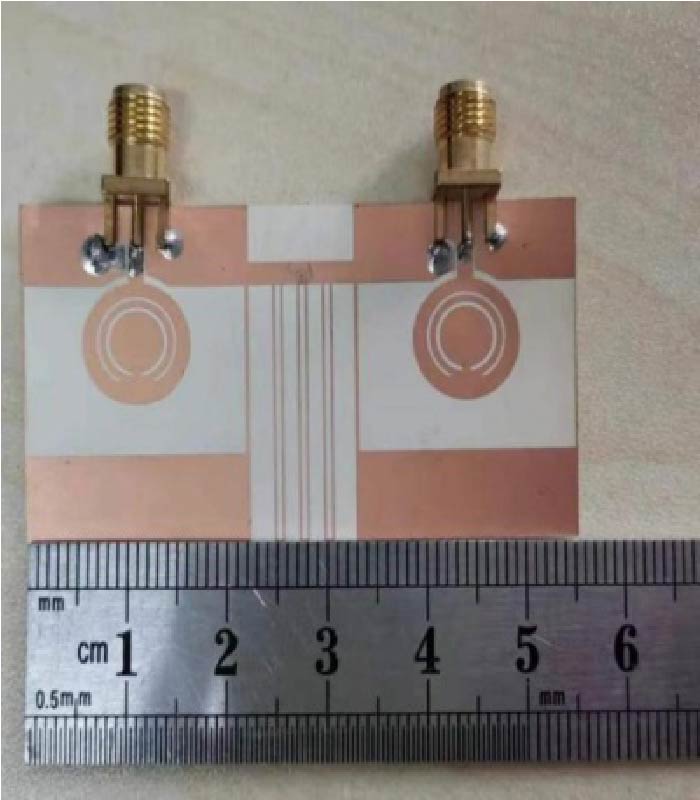
A Compact Two-Port MIMO Antenna with Suppressed Mutual Coupling for IoT Applications
Rashmi Roges , Praveen Kumar Malik , Sandeep Sharma and Anita Gehlot
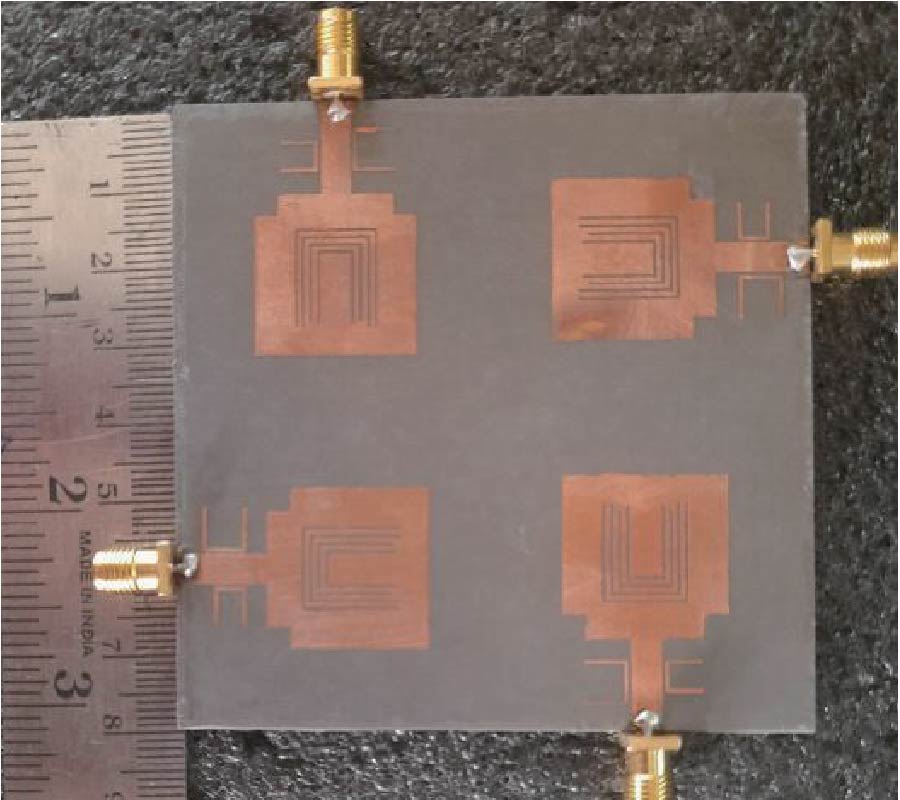
Compact antenna with good performance characteristics is always preferred for small IoT (Internet of Things) sensor nodes. The novelty of this proposed work is not in terms of design but in terms of application as Log-Periodic antennas has been so far used for UHF/VHF (Ultra High Frequency/Very High Frequency) and TV reception applications, and in this paper, the advantages of Log-Periodic structure have been exploited for IoT applications. This antenna design consists of two Log-Periodic like structured radiating elements on an FR4 substrate of 1.6\,mm thickness. The compact antenna of size of 15 mm×17 mm covers a bandwidth ranging from 2.01 GHz to 4.04 GHz including the WiMAX (2.3 GHz-2.4 GHz, 2.5 GHz-2.7 GHz and 3.4 GHz-3.6 GHz) and WLAN (2.4 GHz and 3.6 GHz) frequency bands. This system employs Defected Ground Structure (DGS) technique to obtain the required range of bandwidth of operation, for improving the isolation and obtaining mutual coupling suppression between the two individual elements. This miniaturized cheap antenna has a very low ECC (Envelope Correlation Coefficient) value and all other MIMO (Multiple Input Multiple Output) parameters in acceptable range. The isolation obtained over the entire range of operation is below -30 dB, and the performance efficiency is as good as 92.8% with a maximum gain of 2.9 dB. The simulated and measured results of the antenna system are also found to be in good agreement. The MIMO system can be considered as a good candidate for medium range IoT applications for its small size and good performance.
A COMPACT TWO-PORT MIMO ANTENNA WITH SUPPRESSED MUTUAL COUPLING FOR IOT APPLICATIONS
2022-07-22
PIER C
Vol. 121, 207-220
Self-Dual Integral Equation for Scattering Analysis from Bodies of Revolution with Multiple Impedance Boundary Conditions
Maryam Niknejad , Mojtaba Maddah-Ali , Ahmad Bakhtafrouz and Mohsen Maddahali
In this paper, electromagnetic scattering from multi-impedance body of revolutions (BORs) is formulated using self-dual integral equations (SDIEs) and is solved numerically by the method of moments using BOR basis functions. Using the axial symmetry advantage of BORs, a 3D problem is converted to a 2D one, and a significant reduction in unknowns is obtained. This in turn leads to an increase in the speed of scattering problem solving. Numerical results show that monostatic and bistatic RCS calculation with the proposed method is about 85 and 18 times faster than the commercial software, respectively.
SELF-DUAL INTEGRAL EQUATION FOR SCATTERING  ANALYSIS FROM BODIES OF REVOLUTION WITH MULTIPLE IMPEDANCE BOUNDARY CONDITIONS
2022-07-21
PIER
Vol. 175, 13-27
An Elliptically Polarized Wave Injection Technique via TF/SF Boundary in Subdomain Level DGTD Method
Xiaobing Han , Hang Li , Yuanguo Zhou , Lin Wang , Shangqing Liang and Fawad Javaid
This study presents an effective solution on the basis of Discontinuous-Galerkin Time-Domain (DGTD) scheme for the injection of elliptically polarized plane wave through total-field/scattered-field (TF/SF) boundary. Generally, the elliptically polarized wave can be resolved into two linearly polarized waves in phase quadrature with the polarization planes at right angles to each other, but the proposed methodology is focused to utilize the principle of wave field formation to induce left-handed or right-handed elliptically polarized waves by regulating the phase and amplitude of the incident waves. The outcome of the proposed technique is achieved by deriving the EB-scheme equations and employing the explicit fourth order Runge-Kutta (RK4) time integration scheme in the DGTD methodology. An anisotropic Riemann solver and non-conformal mesh schemes are introduced for domain decomposition to allow efficient spatial discretization. Additionally, the proposed work is extended from single frequency to broadband elliptical polarized plane wave injection in the DGTD method, and the significance of this study is observed in the results. The experimental outcomes reveal that the proposed method is consistent with the analytical solution in free space and expected to provide efficient numerical solutions for analyzing scattering characteristics generated by various elliptically polarized waves.
AN ELLIPTICALLY POLARIZED WAVE INJECTION TECHNIQUE VIA TF/SF BOUNDARY IN SUBDOMAIN LEVEL DGTD METHOD
2022-07-21
PIER C
Vol. 121, 197-206
Computational Approach of Designing Magnetfree Nonreciprocal Metamaterial
Swadesh Poddar , Md. Tanvir Hasan and Ragib Shakil Rafi
This article aims at discussing computational approach to design magnet-free nonreciprocal metamaterial. Detailed mathematical derivation on Floquet mode analysis is presented for Faraday and Kerr rotation. Non-reciprocity in the designed metasurface is achieved in the presence of biased transistor loaded in the gap of circular ring resonator. Based on the derived mathematical model, co- and cross-polarized components have been extracted, which helps find Faraday and Kerr rotation and compare/contrast the reciprocal and nonreciprocal systems.
COMPUTATIONAL APPROACH OF DESIGNING MAGNETFREE NONRECIPROCAL METAMATERIAL
2022-07-21
PIER M
Vol. 111, 247-259
Characterization of an Intra-Body Wireless Link in the UHF Band
Fatiha Mghar , Antoine Diet , Chadi Gannouni , Lionel Pichon , Olivier Meyer and Stavros Koulouridis
Recent advancement in ultra-low-power electronics and radio communications has significantly contributed to the development of miniaturized biomedical sensors capable of capturing and transmitting wirelessly physiological data. The characterization of signal and power transmission inside the human body is of great importance. This paper investigates the case of an intra-body wireless communication in the UHF frequency band. An implanted antenna (bent dipole) is designed to operate efficiently in a biological tissue model. Predictions of the performances obtained by 3D electromagnetic simulations are compared to measurements in a realistic environment (pork meat in a box of 18x10x7 cm3). The antennas show return loss matching of -12 dB at 1,2 GHz, in the presence of the meat. Then a characterization of the transmission link between two antennas is performed both numerically and experimentally at 1,2 GHz. At this frequency, the measured |S21|2 is around -35 dB at 6 cm, and -40 dB at 8 cm. The simulation of the |S21|2 highlights the impact of the conductivity of the tissues, driving to values of -25 to -55 dB at 6 cm, and -30 to -65 dB at 8 cm. The characterization of the pork meat is evaluated experimentally around 2 S/m. During the process of characterization, this value may be over-estimated due to the pressure applied on the sample. The simulations results are compared with measurements results, and also with retro-simulations results. The latter are considered as a worst case due to the losses implied by the over-estimated conductivity value.
CHARACTERIZATION OF AN INTRA-BODY WIRELESS LINK IN THE UHF BAND