Search Results(13789)

2022-06-19
PIER C
Vol. 120, 275-291
Research on Resonant Wireless Energy Supply Double-Layer Receiving Coupler for Portable Electronic Equipment
Weihua Chen , Kun Qian and Xiaoheng Yan
In order to reduce the electromagnetic interference on the receiving side of electronic equipment in the process of wireless energy supply, a magnetic coupling resonant wireless energy supply system for portable electronic equipment with double-layer PCB coil structure is designed under the condition of 100 kHz. Firstly, the circuit principle is analyzed, and the compensation circuit model of LCC-P is established; Then, the coil model is constructed and optimized, the effects of turns and wire diameter on the coil self inductance and coupling coefficient are analyzed. The best parameters are selected, and the magnetic field distributions of the three coil structures at different distances are simulated and studied. Finally, an experimental platform is built to study the transmission efficiencies of different receiving coils at different spacings. The magnetic field intensities at different positions are compared to further verify the performance of double-layer coils. The experimental results show that when the coil spacing is in the range of 4-16 mm, the efficiency can reach 40%-71%. The central magnetic field of the coil is increased by 16%, and the external magnetic field is reduced by more than 20%. The temperature rise of one hour charging is 5.34˚C, which is only 0.78˚C higher than that of other coils
RESEARCH ON RESONANT WIRELESS ENERGY SUPPLY DOUBLE-LAYER RECEIVING COUPLER FOR PORTABLE ELECTRONIC EQUIPMENT
2022-06-19
PIER M
Vol. 111, 77-88
A Novel Radar Waveform Design for Suppressing Autocorrelation Side-Lobe Based on Chaotic and Single Fusion Encoding Method
Ji Li , Min Liu , Jianping Ou and Wei Wang
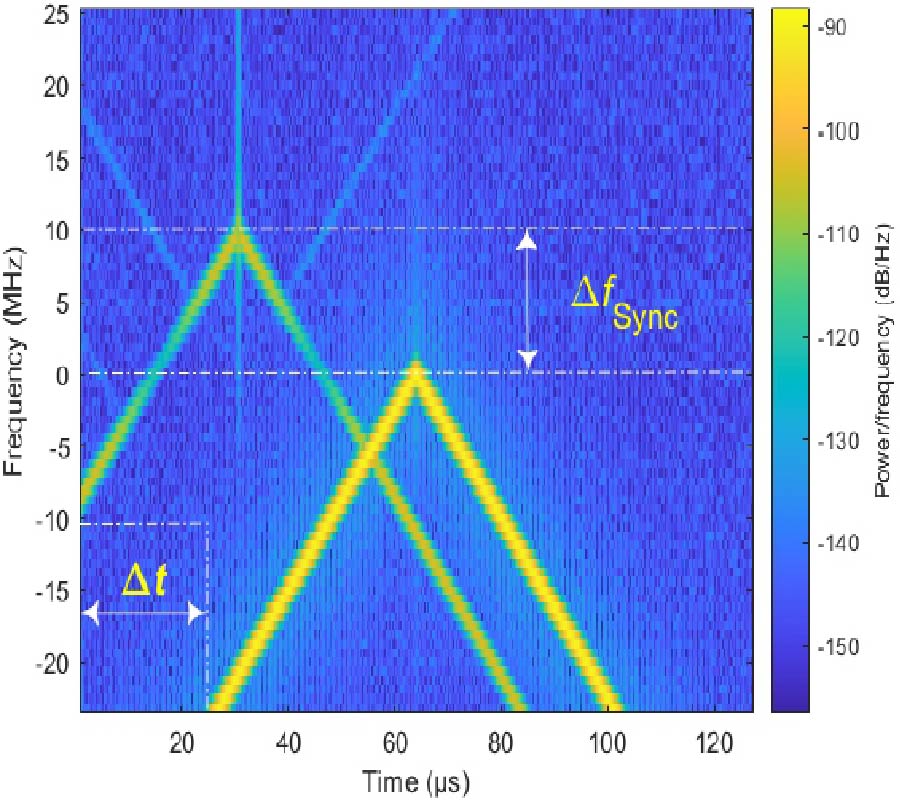
Multi-carrier Phase Coded (MCPC) signal has the advantages of large time-bandwidth product, low intercept, anti-jamming, digitization, flexible waveform, and high spectral utilization, and has become a hotspot in radar waveform research. However, MCPC signal has high-distance sidelobes which are difficult to suppress, after pulse compression processing. Excessive sidelobes will mask the existence of small and weak targets, thus losing the target signal, which limits the practical application of MCPC signals. Therefore, it is of great significance and practical value to study the sidelobe suppression of MCPC signals. From the point of view of waveform design, a multi-carrier phase-encoded signal combining chaotic encoding and single encoding (MCPC-CS) is designed by using chaotic sequence as phase encoding of MCPC signal and optimizing it. In this paper, peak sidelobe level ratio (PSLR) is used as a evaluation factor of the autocorrelation function. The simulation results show that MCPC-CS signal has a good autocorrelation peak sidelobe level ratio, and the autocorrelation sidelobe is reduced by more than 3 dB compared with the normal MCPC signal.
A NOVEL RADAR WAVEFORM DESIGN FOR SUPPRESSING AUTOCORRELATION SIDE-LOBE BASED ON CHAOTIC AND SINGLE FUSION ENCODING METHOD
2022-06-19
PIER M
Vol. 111, 65-76
Decoupling Control on Outer Rotor Coreless Bearingless Permanent Magnet Synchronous Motor Using LS-SVM Generalized Inverse
Zichen Zhang and Huangqiu Zhu
In order to solve the nonlinear couplings among speed and the radial displacement of the outer rotor coreless bearingless permanent magnet synchronous motor (ORC-BPMSM), a decoupling control strategy based on the least square support vector machine (LS-SVM) generalized inverse is proposed. Firstly, the basic structure and working principle of the ORC-BPMSM are introduced, and the mathematical model of torque and suspension forces are established. Secondly, the ORC-BPMSM system is proved reversible by establishing mathematical models and reversibility analysis, then the pseudo-linear subsystems are formed by connecting the generalized inverse system, which is identified by the LS-SVM, with the original system. Furthermore, additional closed-loop controllers are designed to improve the stability and robustness of the pseudolinear subsystems. Finally, the proposed method based on LS-SVM generalized inverse is compared with traditional inverse system method by simulations and experiments. The simulation and experiment results show that the proposed control strategy has good performance of decoupling and stability.
DECOUPLING CONTROL ON OUTER ROTOR CORELESS BEARINGLESS PERMANENT MAGNET SYNCHRONOUS MOTOR USING LS-SVM GENERALIZED INVERSE
2022-06-19
PIER M
Vol. 111, 53-63
High-Isolation Wide-Beam Dual-Polarized Antenna Utilizing Symmetrical Feeding
Le Thi Cam Ha , Son Xuat Ta , Nguyen Xuan Quyen , Khac Kiem Nguyen and Dao-Ngoc Chien
This paper presents a dual-polarized crossed-dipole antenna with high isolation and wide-beam radiation. The antenna comprises two orthogonal printed dipoles with single-ended and differential feeds, which are collocated on a square ground plane. The single-ended feed dipole is built on the peripheral sides of a two-layer substrate, and it is fed by a Г-shaped stripline sandwiched between the substrate layers. The differential-feed dipole is built on a single-layer substrate, i.e., the differential feed with a Π-shaped microstrip-line, and the dipole arms are printed on the top-side and back-side of the substrate, respectively. The high isolation feature is achieved by exploiting the symmetry of the design with one pair of differential feeds. The beamwidth is significantly broadened by incorporating parasitic monopole elements while keeping the design symmetrical. A realization of the design concept for the 5G NR n78 band (3.3-3.8 GHz) has been optimized, fabricated, and tested. The measured results demonstrate an impedance bandwidth of 28.6% (3.0-4.0 GHz) and port-to-port isolation of > 40 dB. Furthermore, the antenna achieves a peak half-power beamwidth of 150°/168° in the E/H planes, and a cross-polarization level of < -30 dB at the broadside direction. These features make the proposed antenna a good candidate for the 5G and in-band full-duplex applications.
HIGH-ISOLATION WIDE-BEAM DUAL-POLARIZED ANTENNA UTILIZING SYMMETRICAL FEEDING
2022-06-16
PIER M
Vol. 111, 41-52
Design of a Novel Fractal Quad-Band-Notched UWB Antenna with Bionic Structure
Lei Zhang and Quanyuan Feng
In this paper, we propose a quadruple band-notched ultra-wideband (UWB) antenna with a novel virus-mimicking structure. The proposed antenna is fed by coplanar waveguide in the FR4 material. It has a compact size of 27 × 29 × 0.8 mm3. In order to reject narrowband signal interference in ultra-wideband communication, the desired notches in WiMAX (3.3-3.6 GHz), WLAN (5.1-5.8 GHz), downlink X satellite communication system (7.25-7.75 GHz), and ITU 8GHz band (8.025-8.4 GHz) are realized. Except for these, impedance bandwidth of the designed antenna is less than -10 dB from 2.5 GHz to 15 GHz, with average gain of 3 dBi. At the same time, it basically meets the omnidirectional requirement. With low profile and compact structure, the proposed antenna can be integrated into the ultra-wideband system, which can meet the requirements of ultra-wideband communication and improve the anti-interference ability of ultra-wideband communication.
DESIGN OF A NOVEL FRACTAL QUAD-BAND-NOTCHED UWB ANTENNA WITH BIONIC STRUCTURE
2022-06-16
PIER M
Vol. 111, 27-40
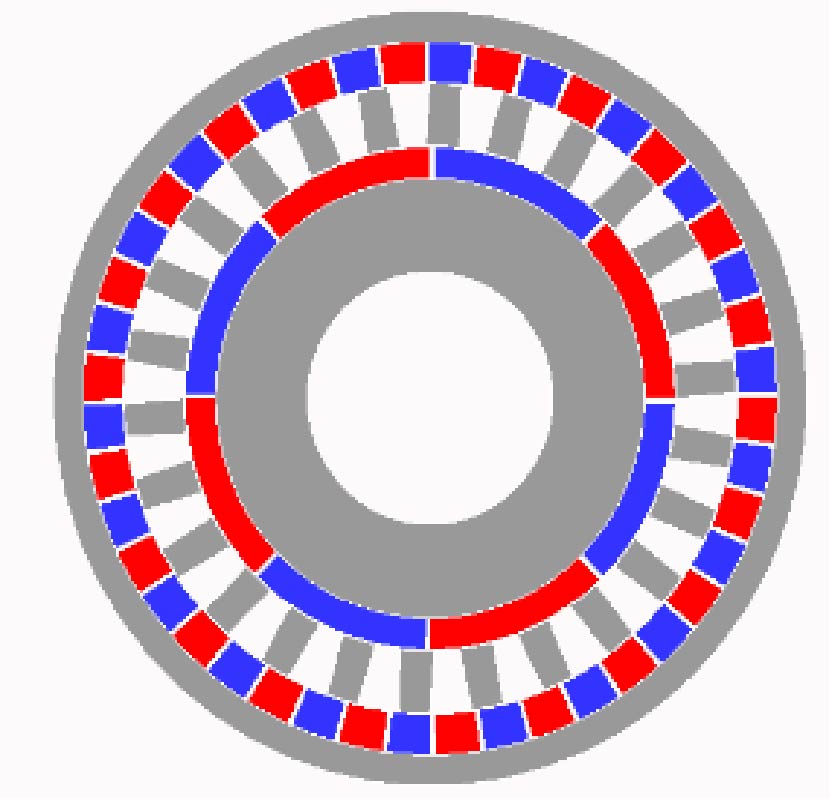
Comprehensive Analysis of a Novel Hybrid Excited Permanent Magnet Vernier Motor
Kai Zhang , Li Quan and Xu Zhong
This paper proposes a hybrid excited permanent magnet vernier motor for low-speed and high torque applications in electrical drive. Traditional PM vernier motors are with PM excitation field, and the air-gap magnetic field density is hard to adjust, which limit the wide speed range of PM motor. The hybrid excitation method is proposed in the PM vernier with excitation windings set in the region between modulation pole pieces. With the finite analysis method, the basic structure and the working principle of the proposed motor are introduced, and the low-speed and high-torque characteristics with wide speed range are revealed. Then, the drive control system of the motor is designed and applied with the prototype motor. Finally, the experimental results verify the reliability and effectiveness of the design theory and simulation results.
COMPREHENSIVE ANALYSIS OF A NOVEL HYBRID EXCITED PERMANENT MAGNET VERNIER MOTOR
2022-06-15
PIER C
Vol. 121, 19-28
Optimal Design of One-Dimensional Photonic Crystal Selective Filters with the Use of Computational Optimization Methods
Hichem Chaker , Hadjira Abri Badaoui and Mehadji Abri
This paper presents a comparative study that was done using genetic algorithm, improved particle swarm optimization and the hybrid technique genetical swarm optimizer approaches for the design of one-dimensional photonic crystal selective filters. The three evolutionary methods for synthesizing the geometrical parameters of a fiber Bragg grating structure from its layer thicknesses are proposed and demonstrated. The synthesis of the mono-band 1-D PhC selective filters is designed as a mono-objective problem, and these 1-D PhCs are composed of alternate Si and Air layers with thicknesses on the micron scale. The main contribution of this paper is formed by the solution to this kind of problems. According to the literature, this hybrid methodology genetical swarm optimizer has not been dealt with before, when 1-D PhCs selective filters are considered. Comparison of the GA, IPSO and GSO for the selected set of examples revealed an improvement of paramount importance in terms of error lowering and the number of iteration cycles diminution.
OPTIMAL DESIGN OF ONE-DIMENSIONAL PHOTONIC CRYSTAL SELECTIVE FILTERS WITH THE USE OF COMPUTATIONAL OPTIMIZATION METHODS
2022-06-14
PIER C
Vol. 121, 1-18
A Circularly Polarized Quad-Band Wearable Textile Antenna Integrated with Triple Band AMC Reflector for WBAN Applications
Anil Badisa , Boddapati Taraka Phani Madhav , Kantamaneni Srilatha , Myla Chimpiri Rao and Sudipta Das
A quad-band (3.5, 5.8, 7.5 & 8.08 GHz), low profile, low Specific Absorption rate (SAR), and circularly polarized (3.5, 7.5, 8.08 GHz) wearable textile antenna (50x30x1 mm3) integrated with a triple-band zero reflection phase Artificial Magnetic Conductor (AMC) surface is presented. The designed standalone antenna exhibits low SAR with 10 mm separation for 0.5 W input power and radiation performance with a gain of >5 dB and Front to Back Ratio (FBR) (<10 dB) at all operating frequencies. The AMC unit-cell is synthesized using PDMS (Polydimethylsiloxane) with footprint of 20×20×1 mm3 to operating at 3.5, 7.5, and 8.08 GHz respectively with in-phase reflection. The designed 3×3 AMC reflector is integrated to improve the radiation performance of the designed antenna with gain to >7 dB, FBR to >10 dB, and withstanding low SAR at increased input power compatibility at separation (d=3 mm) from the body surface. The designed AMC transforms the radiation pattern from omnidirectional to directional with improved FBR, reduced back radiation with low SAR (<0.504 W/kg). The proposed AMC integrated antenna also providing mechanical feasibility in terms of handling the frequency detuning due to bending and the human-body loading feature makes it suitable for wireless body area networks (WBAN) applications.
A CIRCULARLY POLARIZED QUAD-BAND WEARABLE TEXTILE ANTENNA INTEGRATED WITH TRIPLE BAND AMC REFLECTOR FOR WBAN APPLICATIONS
2022-06-14
PIER C
Vol. 120, 265-274
Design and Electromagnetic Loss Analysis of High Speed Permanent Magnet Synchronous Motor for an Air Compressor
Xiaojun Ren , Ming Feng and Jinliang Liu
Air compressors are widely used in various industrial fields. The motor of air compressor requires high power and high speed. This paper focuses on the structural design and loss analysis method of highspeed permanent magnet synchronous motor in air compressor. The structure of motor is designed. The key parameters are calculated. The influence of structural parameters on motor loss is analyzed. The analytical and design results are verified by finite element method (FEM). Finally, the prototype of motor has been manufactured. The performance of the motor is verified on the prototype.
DESIGN AND ELECTROMAGNETIC LOSS ANALYSIS OF HIGH SPEED PERMANENT MAGNET SYNCHRONOUS MOTOR FOR AN AIR COMPRESSOR
2022-06-14
PIER M
Vol. 111, 13-25
A Small Disk-Coupled Circularly Polarized Microstrip Ring Antenna for Microwave Energy Harvesting
Cheng Peng , Zhi-Hao Ye , Han Xiao , Jing Huang , Ning-Zhao Luo and Dong Wu
A small ring antenna working at 2.45 GHz was designed in this paper, a small disk-coupled structure was applied to feed an inner-hole-biased ring patch, contributing to not only improving the impedance characteristics of the antenna but also reducing the size. The simulation results show that the designed patch area is only 70.7% of that of the traditional circular microstrip antenna on the premise of ensuring good bandwidth and gain performance; the -10 dB bandwidth of S11 parameter is 62 MHz; the gain of the maximum direction is 7.11 dB; and the circular polarization of the antenna is also realized. This design has also been compared with several conventional designs, It is proved that the antenna has good comprehensive performance, and the antenna feed structure is simple, easy to process, very conducive to engineering applications. Finally, the feasibility of this technology was verified by contrasting the measured data with the simulation data.
A SMALL DISK-COUPLED CIRCULARLY POLARIZED MICROSTRIP RING ANTENNA FOR MICROWAVE ENERGY HARVESTING
2022-06-14
PIER Letters
Vol. 104, 149-154
A High Pass Filter Based on Half Mode Substrate Integrated Waveguide Technology for cm Waves
Nabil Cherif , Hichem Chaker , Mehadji Abri , Fellah Benzerga , Hadjira Abri Badaoui , Junwu Tao , Tan-Hoa Vuong and Sarosh Ahmad
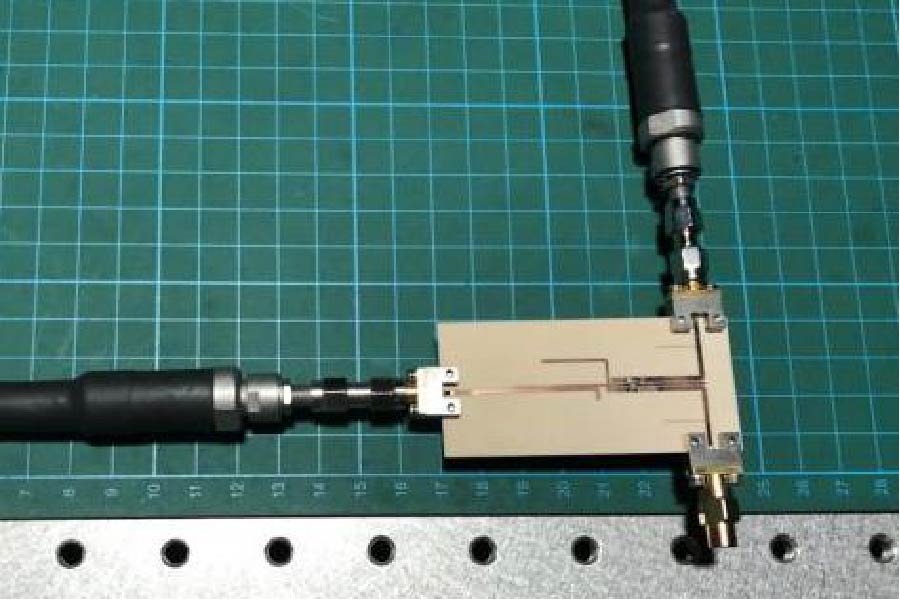
In this paper we present a high pass filter based on half mode substrate integrated waveguide HMSIW technology dedicated to the transmission of microwave signals range from 6 GHz to 18 GHz. The taper is used for microstripe to SIW transition. We designed SIW line transmission using CST and HFSS simulators on a Rogers RT5880 substrate with dielectric constant of 2.2 and thickness of 0.508 mm, and we used the half mode technique for miniaturizing the filter size and achieving a size reduction about of 50%. The fabricated filter size is 60 x 12 mm2. The lower measured return loss is about -51 dB. We compared the simulation results with measurement ones for validating our proposal. Good agreement between CST, HFSS and measurement results is observed.
A HIGH PASS FILTER BASED ON HALF MODE SUBSTRATE INTEGRATED WAVEGUIDE TECHNOLOGY FOR CM WAVES
2022-06-14
PIER Letters
Vol. 104, 139-148
A Novel Low-Profile Broadband Direct-Feed mm-Wave Antenna Array for 5G Smartphone Applications
Mohamed Marwan , Omar Khaled , Mohamed Akram , Zeyad Bassem and Ahmed Alieldin
In this paper, a novel low-profile direct feed antenna element is proposed to work across the mm-wave frequency band for 5G smartphone applications. The antenna covers the frequency band from 25-32 GHz achieving a wide fractional bandwidth of 24.5%. Contrary to most of the previously reported designs, the proposed antenna has a low-profile single-substrate structure and uses a conventional corporate feed. To improve the overall gain, a 16-element antenna array is formed based on the proposed antenna element. The total realized gain of the array is 15 dBi, and its size is 63×10×0.64 mm3 which fits inside a smartphone chassis. To validate the idea, a prototype is fabricated and measured. A study is also conducted, through simulations, on the beam steering capabilities of the antenna array using digital phase shifters. Having a simple structure and good performance makes the proposed antenna array an excellent candidate for 5G smartphone applications.
A NOVEL LOW-PROFILE BROADBAND DIRECT-FEED MM-WAVE ANTENNA ARRAY FOR 5G SMARTPHONE APPLICATIONS
2022-06-14
PIER Letters
Vol. 104, 131-137
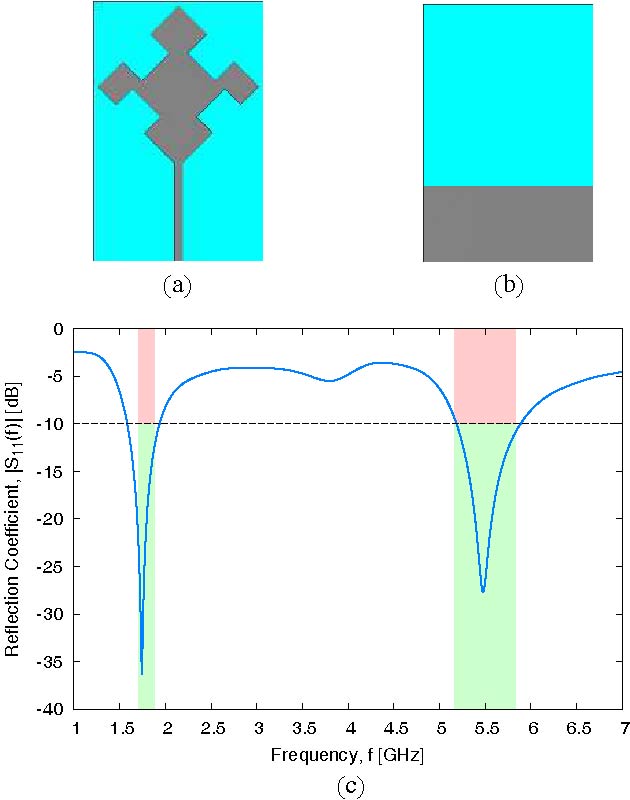
A Low-Profile Dual-Band Dual-Polarized Dipole Antenna for 5G Communication Applications
Shiqiang Fu , Xuehao Zhao , Chanjuan Li and Zhongbao Wang
A dual-band dual-polarized dipole antenna with an artificial magnetic conductor (AMC) reflector is proposed, which can be applied in 5G base stations. The antenna consists of a pair of ±45° crossed dipoles and a wideband AMC reflector. By adopting arrow-shaped dipoles and introducing slots, dual-band characteristic is achieved. The AMC is designed to operate with 90° reflection-phase bandwidth of 2.1-3.9 GHz (30%). Compared with using traditional reflector, the profile height can be reduced from 0.25λ0 to 0.11λ0 (where λ0 is the free-space wavelength at 2.6 GHz). The measurement results show that the impedance bandwidth with |S11| < -14 dB is about 15.5% (2.44-2.85 GHz) and 18.6% (3.17-3.82 GHz), covering the Sub-6 GHz bands. The average gain is 8.5 dBi in the lower band and 8.2 dBi in the upper band. At 2.6 GHz and 3.45 GHz, the half-power beamwidth of the antenna is 77° and 80°, respectively. In the two bands, the port isolation of the antenna is more than 28 dB, and the cross-polarization level is less than -20 dB.
A LOW-PROFILE DUAL-BAND DUAL-POLARIZED DIPOLE ANTENNA FOR 5G COMMUNICATION APPLICATIONS
2022-06-13
PIER C
Vol. 120, 253-263
Model Predictive Control of Permanent Magnet Synchronous Motor Based on Parameter Identification and Dead Time Compensation
Xin Liu , Yanfei Pan , Lin Wang , Jian Xu , Yilin Zhu and Zhongshu Li
A model predictive control method for permanent magnet synchronous motor based on parameter identification and dead time compensation is proposed to solve the problems of poor parameter robustness and large current errors. In this method, the prediction model is firstly established based on the mathematical model of the permanent magnet synchronous motor. After that, the current error caused by the parameter change in the prediction model and the current harmonics caused by the dead time effect are basically analyzed theoretically. Then, the adaptive linear neural network algorithm is proposed to identify the motor parameters and applied to the prediction model, and the harmonic components are filtered out using the adaptive linear neural network algorithm. The recursive least squares algorithm is used to quickly update the system weights to improve the dead time compensation control effect. Finally, the effectiveness and correctness of the proposed algorithm are verified on the experimental platform. The experimental results show that the predictive control method of permanent magnet synchronous motor model based on parameter identification and dead time compensation can effectively reduce the current error of the control system and accelerate the dynamic response of the speed.
MODEL PREDICTIVE CONTROL OF PERMANENT MAGNET SYNCHRONOUS MOTOR BASED ON PARAMETER IDENTIFICATION AND DEAD TIME COMPENSATION
2022-06-11
PIER C
Vol. 120, 243-252
Design of a Wideband ME Dipole Antenna with Wide Beamwidth
Haoyu Fang , Jianfeng Sun , Hao Zhang , Yiqing Liu and Zhuopeng Wang
A wideband and widebeam magneto-electric (ME) dipole antenna is designed in this paper. Based on the conventional magneto-electric dipole antenna, a bent vertical metal plate is added to the electric dipole, and the impedance bandwidth (IBW) and beamwidth of the antenna are widened together. Inclined metal walls are added on both sides of the metal ground to improve the gain at high frequency and make the antenna gain more steady in the operating bandwidth. To further broaden the IBW of the antenna, the conventional Γ-shaped feed is changed into a branch structure. The IBW of the finally designed antenna reaches 56.8% (2.91-5.22 GHz). In the whole operational bandwidth, the radiation pattern in E-plane realizes the half power beam width (HPBW) of more than 110°, and the H-plane radiation pattern realizes the HPBW of more than 160°. The maximum width of E-plane HPBW is 175°, and the maximum width of H-plane HPBW is 229°.
DESIGN OF A WIDEBAND ME DIPOLE ANTENNA WITH WIDE BEAMWIDTH
2022-06-11
PIER Letters
Vol. 104, 121-129
Design of a Wideband Antenna for 5G Indoor Base Station Application
Shihao Wu and Haoran Shi
This paper presents a broadband antenna for 5G indoor micro base station, which has a low profile and simple structure. The proposed antenna avoids the traditional high-cost multilayer technology and is a low-cost configuration. It consists of a center fed circular patch with four shorting pins to properly stimulate the radiation mode of TM01 and TM31 internally. Next, four equally sized fan-shaped slots are opened in the radiator to further expand the bandwidth and improve the input impedance. |S11| < -10 dB simulation impedance bandwidth is about 51% from 3.11 to 5.24 GHz and covers 5G n78 (3.3-3.8 GHz) and n77 (3.3-4.2 GHz) and the n79 (4.4-5 GHz). The voltage standing wave ratio (VSWR) < 1.8 in the whole operating frequency band, which has good matching characteristics.
DESIGN OF A WIDEBAND ANTENNA FOR 5G INDOOR BASE STATION APPLICATION
2022-06-10
PIER B
Vol. 95, 163-183
Numerical Full Inversion of Two Dielectric Cylinders Upon a Metallic Plane: A First Step Toward Forest Parameters Retrieval from VHF to P-Band Radar Data
Cyril Dahon , Alonso Cano , Mandiaye Fall , Guillaume Marrelec and Gilles Chardon
Radar remote sensing applied to forest covers is a domain of interest for a few decades, particularly in forest monitoring for the global carbon cycle. In this paper, we use a numerical electromagnetic scattering model to investigate the full-inversion of a simple case where two dielectric cylinders are lying upon a metallic ground seen as a theoretical representation of only one tree trunk and one primary branch. The presented process performs cylinders 3D-locations estimation using an Orthogonal Matching Pursuit (OMP) algorithm, then scattering coefficient is retrieved for each cylinder and each scattering mechanism separately and finally the cylinders biophysical parameters (height, radius, complex permittivity) inversion using a Particle Swarm Optimisation (PSO) algorithm. This process is based on target subspace decomposition and applied to noisy simulated radar data.
NUMERICAL FULL INVERSION OF TWO DIELECTRIC CYLINDERS UPON A METALLIC PLANE: A FIRST STEP TOWARD FOREST PARAMETERS RETRIEVAL FROM VHF TO P-BAND RADAR DATA
2022-06-10
PIER M
Vol. 110, 235-247
A Millimeter Wave Elliptical Slot Circular Patch MIMO Antenna for Future 5G Mobile Communication Networks
Suman Sharma and Mukesh Arora
This paper proposes a 4-port MIMO (Multiple-Input Multiple-Output) antenna operating at 28 GHz in the millimeter wave band for future 5G communications. The first design in this work is a single-element circular shaped microstrip patch antenna with an elliptical slot and a defected ground structure which is intended for 28 GHz band. This antenna is compact with a size of 6 mm × 7 mm. A complete analysis of single patch element antenna is presented with effect of slot and defected ground structure in Section 2. In Section 3, the second design, which is symmetric two-element MIMO slotted circular patch antennas, is analyzed with the dimension L x W as 7 mm x 6 mm. In Section 4, the final fabricated design is presented, which is a 4-port MIMO antenna operating at resonance frequency of 28 GHz along with the improved isolation between the elements due to appropriate spacing. The proposed 4 port MIMO antenna is designed on a Rogers Duroid 5880 substrate having a relative dielectric permittivity of 2.2 and thickness of 0.8 mm. The overall dimension of this designed MIMO antenna is 20×20×0.8 mm3. Simulated results for the S-parameters and radiation pattern are presented for all purposed designs using CST software. Measured results are also presented for the return loss using Rhode & Schwarz ZVA 40 vector network analyzer. Simulated and measured results show a good agreement. The simulation results demonstrate that the return loss at individual port is less than -10 dB in the frequency range of 26.867–28.975 GHz, and it provide a bandwidth of 2.1 GHz. The antenna has a high gain of 9.24 dB with unidirectional radiation pattern, and each element has a mutual coupling less than -20 dB.
A MILLIMETER WAVE ELLIPTICAL SLOT CIRCULAR PATCH MIMO ANTENNA FOR FUTURE 5G MOBILE COMMUNICATION NETWORKS
2022-06-09
PIER
Vol. 174, 75-88
Deep Insight into Channel Engineering of Sub-3 nm-Node P-Type Nanosheet Transistors with a Quantum Transport Model
Afshan Khaliq , Shuo Zhang , Jun Z. Huang , Kai Kang and Wen-Yan Yin
Based on a self-consistent Schrodinger-Poisson solver and top-of-the-barrier model, a quantum transport simulator of p-type gate-all-around nanosheet FET is developed. The effects of material (Si/Ge), stress, crystallographic orientation, and cross-sectional size are deeply explored by numerical simulations for the device performance at the sub-3 nm technology node. A strain-dependent 6-band k.p Hamiltonian is incorporated into the model for a more accurate calculation of E-k dispersion in the strain-perturbed valence band structure, where the curvature, energy shift, and splitting of subbands are investigated in detail for hole transport properties. Further, the effect of channel engineering is comprehensively analyzed, by evaluating density-of-states effective mass, average injection velocity, mobility, current density distributions, and the current-voltage characteristics. An effective performance improvement from 2GPa compressive stress is obtained in [100]/(001) and [110]/(001) channels, with a 7% enhancement of ON-current in Ge nanosheet FETs. While a wider channel cross-section improves the drive current by increasing the effective channel width, a smaller cross-sectional width yields an average increase up to 29% in the ON-state injection velocity due to stronger quantum confinement.
DEEP INSIGHT INTO CHANNEL ENGINEERING OF SUB-3 NM-NODE P-TYPE NANOSHEET TRANSISTORS WITH A QUANTUM TRANSPORT MODEL
2022-06-09
PIER M
Vol. 110, 223-234
Wireless Power Transmission System Based on Parity Time Symmetry for AUV
You Fu , Zhuoqun Shi , Yu Zhu and Zhouhua Peng
One of the main challenges in the application of wireless power transmission systems is to achieve stable power transmission and constant transmission power under dynamically changing coupling conditions. A parity-time symmetric model for AUV (autonomous underwater robot) is proposed. Based on the coupling mode theory, the robustness of the parity-time symmetric wireless transmission system is investigated. The theoretical analysis shows that the AUV wireless power transmission system based on parity time symmetry can automatically obtain constant output power and constant transmission efficiency when the coupling coefficient is varied. Based on this theory, the experimental prototype was built by simulating the effects of relevant parameters using LTspice. And the experiments were conducted in air medium and seawater medium respectively. The experimental results show that under the condition of parity time symmetry, the underwater wireless energy transmission voltage ratio is close to 1, and the transmission efficiency reaches 15%, in the range of 12.5 cm. The theoretical derivation has been verified.
WIRELESS POWER TRANSMISSION SYSTEM BASED ON PARITY TIME SYMMETRY FOR AUV