Search Results(13789)

2022-05-05
PIER C
Vol. 120, 1-10
A Novel Miniaturized Reconfigurable Microstrip Antenna Based Printed Metamaterial Circuitries for 5G Applications
Hayder H. Al-Khaylani , Taha Ahmed Elwi and Abdullahi Abdu Ibrahim
A novel reconfigurable sub-6 GHz microstrip patch antenna operating at three resonant frequencies 3.6, 3.9, and 4.9 GHz is designed for 5G applications. The proposed antenna is constructed from metamaterial (MTM) array with a matching circuit printed around a printed strip line. The antenna is excited with a coplanar waveguide to achieve an excellent matching over a wide frequency band. The proposed antenna shows excellent performance in terms of S11, gain, and radiation pattern that are controlled well with two photo resistance. The proposed antenna shows different operating frequencies and radiation patterns after changing the of photo resistance status. The main antenna novelty is achieved by splitting the main lobe that tracks more than one user at same resonant frequency. Nevertheless, the main radiation lobe can be steered to the desired location by controlling the surface current motion using two varactor diodes on a matching circuit.
A NOVEL MINIATURIZED RECONFIGURABLE MICROSTRIP ANTENNA BASED PRINTED METAMATERIAL CIRCUITRIES FOR 5G APPLICATIONS
2022-05-03
PIER M
Vol. 110, 83-96
A Circular Triangle Fractal Antenna for High Gain UWB Communications with Band Rejection Capability
Chellappa Muthu Ramya and Rajasekar Boopathi Rani
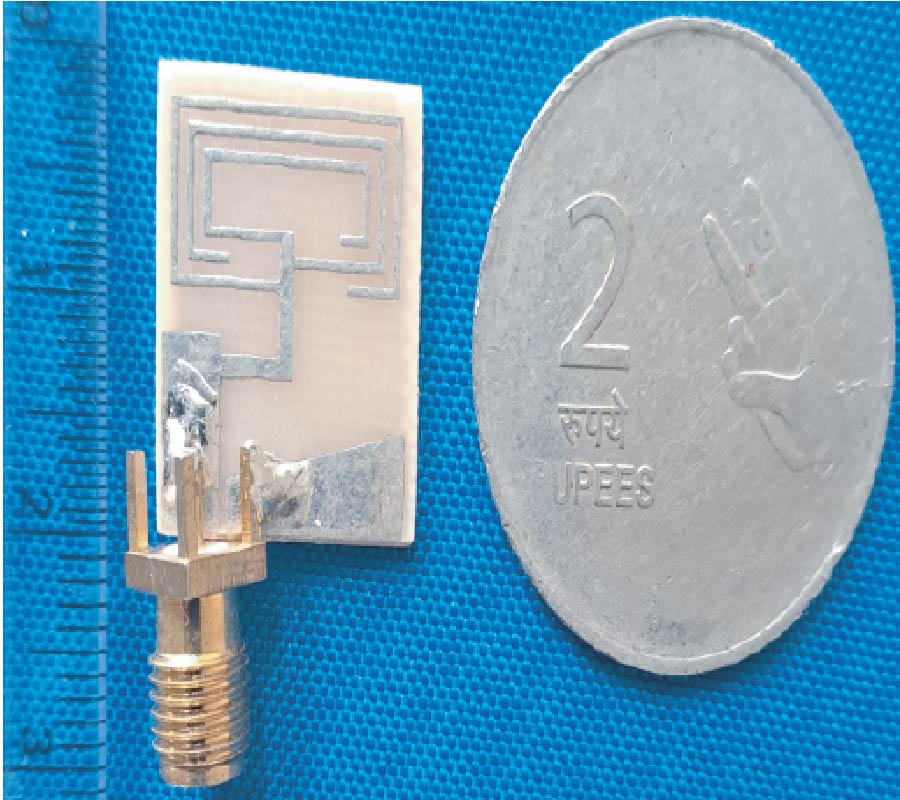
This paper proposes the design and implementation of a circular triangle fractal antenna for portable ultra-wideband (UWB) communication applications with band rejection at WLAN band. The presented antenna is made with iterative generation of a circular triangle shaped elements arranged in circular fashion with self-similarity and periodicity property with coplanar waveguide feed. The overall dimensions of the antenna are 28× 27 x 1.6 mm3. The fractal resonating plane and ground plane dimensions of the proposed antenna are optimized to obtain a resonance bandwidth of 2.39-12.28 GHz which corresponds to fractional bandwidth of 134.8% with notch band from 5.45 to 6.27 GHz to mitigate the problem of interference from WLAN. The peak gain detected is 11.16 dBi. The proposed prototype was fabricated on a 1.6 mm thick FR4 material with the relative permittivity of 4.4, and the sample was tested. The experimental results are in close agreement with the simulated ones. The time domain analysis indicates that the proposed antenna is not dispersive. The antenna radiates in a virtually omnidirectional pattern. Due to these merits, this proposed antenna can be used in UWB applications.
A CIRCULAR TRIANGLE FRACTAL ANTENNA FOR HIGH GAIN UWB COMMUNICATIONS WITH BAND REJECTION CAPABILITY
2022-04-30
PIER B
Vol. 95, 103-121
High Temperature Antennas: A Review
Bachir Younes , Md. Samiul Islam Sagar , Asif Iftekhar Omi , Noah Riley Allison , Danielle Gedlick and Praveen Kumar Sekhar
The advent of space exploration and space warfare along with the deployment of advanced missiles, unmanned aircraft systems, and modern nuclear reactors has reignited the field of high temperature antennas. In this context, this article surveys the field of antennas that operate under harsh environments that are often characterized by high temperature. In this context, this article surveys the field of high temperature antennas. The choice of the substrate and the conductor for antenna implementation are discussed with emphasis on their thermal and electrical properties. Further, the different fabrication techniques to realize the antenna are discussed. The performance comparison of the different types of high temperature antennas are presented. Finally, the future prospects and inherent challenges in advancing research on antennas for extreme environments are detailed. The article concludes with insights into the new developments in the field of flexible antennas operable in hostile conditions.
HIGH TEMPERATURE ANTENNAS: A REVIEW
2022-04-30
PIER
Vol. 174, 33-42
TDFA-Band Silicon Optical Variable Attenuator
Maoliang Wei , Hui Ma , Chunlei Sun , Chuyu Zhong , Yuting Ye , Peng Zhang , Ruonan Liu , Junying Li , Lan Li , Bo Tang and Hongtao Lin
TDFA-band (2-μm waveband) has been considered as a promising optical window for the next generation of optical communication and computing. Absorption modulation, one of the fundamental reconfigurable manipulations, is essential for large-scale photonic integrated circuits. However, few efforts have been involved in exploring absorption modulation at TDFA-band. In this work, variable optical attenuators (VOAs) for TDFA-band wavelengths were designed and fabricated based on a silicon-on-insulator (SOI) platform. By embedding a short PIN junction length of 200 μm into the waveguide, the fabricated VOA exhibits a high modulation depth of 40.49 dB at 2.2 V and has a fast response time (10 ns) induced by the plasma dispersion effect. Combining the Fabry-Perot cavity effect and plasma dispersion effect of silicon, the attenuator could achieve a maximum attenuation of more than 50 dB. These results promote the 2-μm waveband silicon photonic integration and are expected to the future use of photonic attenuators in crosstalk suppression, optical modulation, and optical channel equalization.
TDFA-BAND SILICON OPTICAL VARIABLE ATTENUATOR
2022-04-30
PIER C
Vol. 120, 11-26
Design and Implementation of Wearable Antenna Textile for ISM Band
Hasri Ainun Harris , Radial Anwar , Yuyu Wahyu , Mohamad Ismail Sulaiman , Zuhanis Mansor and Dwi Andi Nurmantris
Wearable antenna is one component needed for mid-range communication. It can be integrated into clothing, bags, or any other item worn. This paper presents the structure and performance of a wearable antenna used in place of the ESP8266 Wi-Fi module antenna in dresses. With a higher gain than 2 dBi, this replacement will provide greater signal coverage than the existing Wi-Fi antenna module. The proposed geometry utilizes rectangular patches with the inset feed method in the feedline segment, constructed using copper foil tape, 2.85 mm thick polyester as a substrate with a permittivity (εr) of 1.44, and Defected Ground Structure (DGS) technique. The operating frequency of the proposed antenna is at 2.4 GHz in ISM (Industrial, Scientific, and Medical) band. The whole process was used to optimize the structure, fabricated, and measured. As determined by simulation, the proposed antenna's return loss is -13.89 dB, whereas the measured value is -13.253 dB. The measurements scenario for the substitute and existing antenna are divided into two categories: line-of-sight (LoS) and non-line-of-sight (NLOS). Each of them experiences vertical and horizontal position of antenna. In LOS conditions, the vertical position has an average coverage of 9.84 meters more than the antenna module and the horizontal position is 13.84 meters. In NLOS conditions, the horizontal position has an average coverage of 9.22 meters more than the EP8266 antenna module, which in the vertical condition is about 17.06 meters. The obtained data successfully demonstrated that the proposed antenna could significantly increase the coverage of the ESP8266 module.
DESIGN AND IMPLEMENTATION OF WEARABLE ANTENNA TEXTILE FOR ISM BAND
2022-04-29
PIER
Vol. 174, 23-32
Squeezing of Hyperbolic Polaritonic Rays in Cylindrical Lamellar Structures
Lu Song , Lian Shen and Huaping Wang
We propose the squeezing of hyperbolic polaritonic rays in cylindrical lamellar structures with hyperbolic dispersion. This efficient design is presented through conformal mapping transformation by combining with circular effective-medium theory (CEMT) that is adopted to predict the optical response of concentric cylindrical binary metal-dielectric layers. The volume-confined hyperbolic polaritons supported in these cylindrical lamellar structures could be strongly squeezed when they propagate toward the origin since their wavelength shortens, and velocity decreases. To demonstrate the importance of using CEMT for engineering highly-squeezed hyperbolic polaritons, both CEMT and planar effective-medium theory (PEMT) are utilized to design the cylindrical lamellar structures. It is shown that the PEMT-based design is unable to achieve hyperbolic polaritons squeezing even with a sufficiently large number of metal-dielectric binary layers. Remarkably, this study opens new opportunities for hyperbolic polaritons squeezing, and the findings are promising for propelling nanophotonics technologies and research endeavours.
SQUEEZING OF HYPERBOLIC POLARITONIC RAYS IN CYLINDRICAL LAMELLAR STRUCTURES
2022-04-29
PIER M
Vol. 110, 73-82
Analysis of a Three-Coil Wireless Power Transfer System Operated Under Hybrid Resonant Frequency
Zhenyang Zhang and Meng Wang
To enhance transmission performance, a novel three-coil wireless power transfer system is proposed in this work. Unlike the traditional system in which three coils are resonant, the coils in the proposed system are hybrid resonant. According to theoretical calculation, it is found that output power is dependent on resonant frequency of the transmitting coil and the relay coil once the receiving coil is set to resonate at the operating frequency. Simulation work is conducted. Under various distance between transmitting coil and relay coil, resonant frequency of the two coils at which the output power is maximized is obtained. Compared with the traditional resonant system, the simulation result shows that output power of the proposed hybrid resonant system is higher especially at smaller distance. For further validation, experiments have been carried out which verify that better performance can be realized with the proposed hybrid resonant system.
ANALYSIS OF A THREE-COIL WIRELESS POWER TRANSFER SYSTEM OPERATED UNDER HYBRID RESONANT FREQUENCY
2022-04-29
PIER Letters
Vol. 104, 7-13
An Electronically 1-Bit Reconfigurable Beam-Steering Reflectarray Antenna of 12×12 Units Integrated with PIN Diodes
Weixiong Luo , Shixing Yu , Na Kou , Zhao Ding and Zhengping Zhang
An electronically reconfigurable reflectarray antenna of 12 × 12 units is presented in this paper. The element consists of a slotted square patch and a gapped metal square ring. PIN diodes are loaded on slotted square patches, which can be electronically controlled to produce two states with 180˚ phase difference. A reflectarray prototype is fabricated and experimentally studied. Experimental results agree well with the full-wave simulations by Ansys HFSS, and scanning beams within ±45˚ range are obtained with a maximum aperture efficiency of 14.9% at 5.8 GHz. 1-dB bandwidth is 9.9%, and 3-dB bandwidth is 19.1%.
AN ELECTRONICALLY 1-BIT RECONFIGURABLE BEAM-STEERING REFLECTARRAY ANTENNA OF 12×12 UNITS INTEGRATED WITH PIN DIODES
2022-04-29
PIER Letters
Vol. 104, 1-6
Design of Height-Adjustable Mechanically Reconfigurable Reflectarray
Weixiong Luo , Shixing Yu , Na Kou , Zhao Ding and Zhengping Zhang
This paper presents a mechanically reconfigurable reflectarray with height adjustment for phase compensation. We designed, fabricated, and measured a prototype of 11×11 elements with microcontrollers to verify the feasibility of the proposed reflectarray. Simulated results show that the phase curve of the unit has good linearity and exhibit broadband characteristics. The maximum phase shift of the unit reaches about 200° at a center frequency of 16 GHz, which meets the requirement of a reflectarray with 1-bit phase quantization. Experimental results show that the gain of the proposed reflectarray is 17.7 dBi, with beam scanning range of ±50°. The proposed configurations can be used for a low-cost beam scanning antenna in wireless communication.
DESIGN OF HEIGHT-ADJUSTABLE MECHANICALLY RECONFIGURABLE REFLECTARRAY
2022-04-27
PIER
Vol. 174, 1-22
On the Low Speed Limits of Lorentz's Transformation - How Relativistic Effects Retain or Vanish in Electromagnetism
Hao Chen , Wei E. I. Sha , Xi Dai and Yue Yu
This article contains a digest of the theory of electromagnetism and a review of the transformation between inertial frames, especially under low speed limits. The covariant nature of the Maxwell's equations is explained using the conventional language. We show that even under low speed limits, the relativistic effects should not be neglected to get a self-consistent theory of the electromagnetic fields, unless the intrinsic dynamics of these fields has been omitted completely. The quasi-static limits, where the relativistic effects can be partly neglected are also reviewed, to clarify some common misunderstandings and imprecise use of the theory in presence of moving media and other related situations. The discussions presented in this paper provide a clear view of why classical electromagnetic theory is relativistic in its essence.
2022-04-27
PIER M
Vol. 110, 61-72
Compressed T-Matrix Algorithm for Scalar and Electromagnetic Scattering from Multiple Objects and Multiple Incident Directions
Mark S. Haynes and Ines Fenni
A compression algorithm for the T-matrix scattering solution from multiple objects and incident fields is derived and examined which we call the Compressed T-Matrix Algorithm (CTMA). The CTMA is derived by applying the SVD and Woodbury matrix-inverse identity to compress the original T-matrix system of equations and simultaneously compress the matrix of right-hand side incident field vectors. This is suited for scattering problems with many incident directions. We quantify the compression rates for different collections of dielectric spheres and draw comparisons to the Characteristic Basis Function Method (CBFM) with which the CTMA shares many structural similarities.
COMPRESSED T-MATRIX ALGORITHM FOR SCALAR AND ELECTROMAGNETIC SCATTERING FROM MULTIPLE OBJECTS AND MULTIPLE INCIDENT DIRECTIONS
2022-04-27
PIER M
Vol. 110, 49-59
Performance Analysis of a Rain Fading Predicted Model in Tropical Areas for 5G Communication
Trilochan Patra and Swarup Kumar Mitra
The basic climatic characteristic of the tropical areas is abundant precipitation throughout the year. For such precipitation the radio signal (RF) power of these areas gets diminished in communicating any signaling information from a sender to a receiver i.e. rain fading occurs in these areas. Rain fading is one of the major causes which decline the characteristics of radio system in tropical areas. To reduce excessive rain fading various fade reduction techniques such as diversification techniques, adaptive power control technique and adaptive waveform technique have been used. Frequency diversification technique is an effective technique for diminishing rain fading. In this work in order to diminish rain fading a suggested model has been implemented. Frequency diversification improvement factor is accepted to heighten the performance of this suggested model. Besides, by adopting an experimental data sheet a comparison of this suggested model with a number of various existing rain attenuation predicted models has been depicted for validation of the suggested model. The experiment was performed by accepting two mm-Wave connectors acting on two frequencies of 26 GHz and 38 GHz, respectively, for observing which model renders better result in the tropical region with respect of various distances, frequencies, and elevation angles.
PERFORMANCE ANALYSIS OF A RAIN FADING PREDICTED MODEL IN TROPICAL AREAS FOR 5G COMMUNICATION
2022-04-26
PIER B
Vol. 95, 81-101
3D Transient Non-Linear Magneto-Thermal Analytical Model Calculation in PM Induction Heating Device
Ammar Abdi , Youcef Ouazir , Georges Barakat and Yacine Amara
This paper aims to develop a new 3D analytical model devoted to the study of nonlinear transient magneto-thermal coupled problems in permanent magnet transverse flux induction heating device (PMTFIHD). Firstly, a 3D analytical solution of magneto-dynamic field problem taking into account the transverse edge effect in the workpiece is derived using variables' separation technique. This transverse edge effect allows determining the exact resulting heating power density, which is the heat source of the transient thermal problem in the work-piece. Secondly, the 3D transient analytical solution of the temperature distribution is obtained by combining variables' separation technique and Green's function method. Then, the previous models are exploited in a transient simulations procedure of the magneto-thermal process allowing the nonlinear physical properties of the part to be taking into account. Finally, the performances of the studied PMTFIHD will be calculated, in order to validate the developed 3D coupled models. The simulation results from the developed models are validated with those obtained by the finite element method and the experimental results.
3D TRANSIENT NON-LINEAR MAGNETO-THERMAL ANALYTICAL MODEL CALCULATION IN PM INDUCTION HEATING DEVICE
2022-04-26
PIER
Vol. 173, 151-159
Millimeter-Wave Wideband High Effeciency Circular Airy OAM Multibeams with Multiplexing OAM Modes Based on Transmission Metasurfaces
Hui-Fen Huang and Hongming Huang
In this paper, wideband and high efficiency millimeter-wave circular Airy orbital angular momentum (OAM) beams, which have desired multiplexing OAM modes, directions and beam numbers, are generated by the proposed three metal layer transmission metasurfaces (TMSs) with size 12λ0×12λ0 based on the Airy-OAM phase superposition method. The measured results indicate non-diffracting propagation distance 31λ0, autofocusing property, high aperture efficiency 13.1%, and wideband 16.8% (28 GHz-33 GHz). The design method can be used for circular Airy OAM beam generation in point-to-point, point-to-multipoint wireless power transmission (WPT), and OAM mode multiplexing communication systems.
MILLIMETER-WAVE WIDEBAND HIGH EFFECIENCY CIRCULAR AIRY OAM MULTIBEAMS WITH MULTIPLEXING OAM MODES BASED ON TRANSMISSION METASURFACES
2022-04-26
PIER M
Vol. 110, 39-48
Optimal Design of Double-Sided Linear Flux Switching Permanent Magnet Motor
Qiankai Zhao , Cheng Wen , Xingqiao Zhao , Mingwei Li , Kailin Lv and Xin Wang
This paper studies the optimal design of a double-sided linear flux switching permanent magnet motor (DLFSPM) to improve the average thrust generated by motor operation and reduce the fluctuation range of thrust applying the Response surface methodology (RSM) and Particle Swarm Optimization (PSO). An analytical mathematical model of the electromagnetic thrust force of the DLFSPMs is developed. The functional model of the optimization parameters and objectives based on the RSM is constructed. The finite element analysis (FEA) is used to carry out numerical experiments on the geometric structure design variables. PSO is applied to an optimization tool for optimizing the DLFSPMs' mover structure parameters. Finally, the FEA comparison and analysis of the optimization results with the initial results reveal a significant improvement in the electromagnetic characteristics of the DLFSPMs. The feasibility and effectiveness of the optimization method are verified by the FEA results.
OPTIMAL DESIGN OF DOUBLE-SIDED LINEAR FLUX SWITCHING PERMANENT MAGNET MOTOR
2022-04-24
PIER M
Vol. 110, 25-38
Wavelet Denoising of Echo Signal of Unilateral Magnetic Resonance Sensor
Pan Guo , Chenjie Yang , Yunfeng Zhu , Jiamin Wu and Zheng Xu
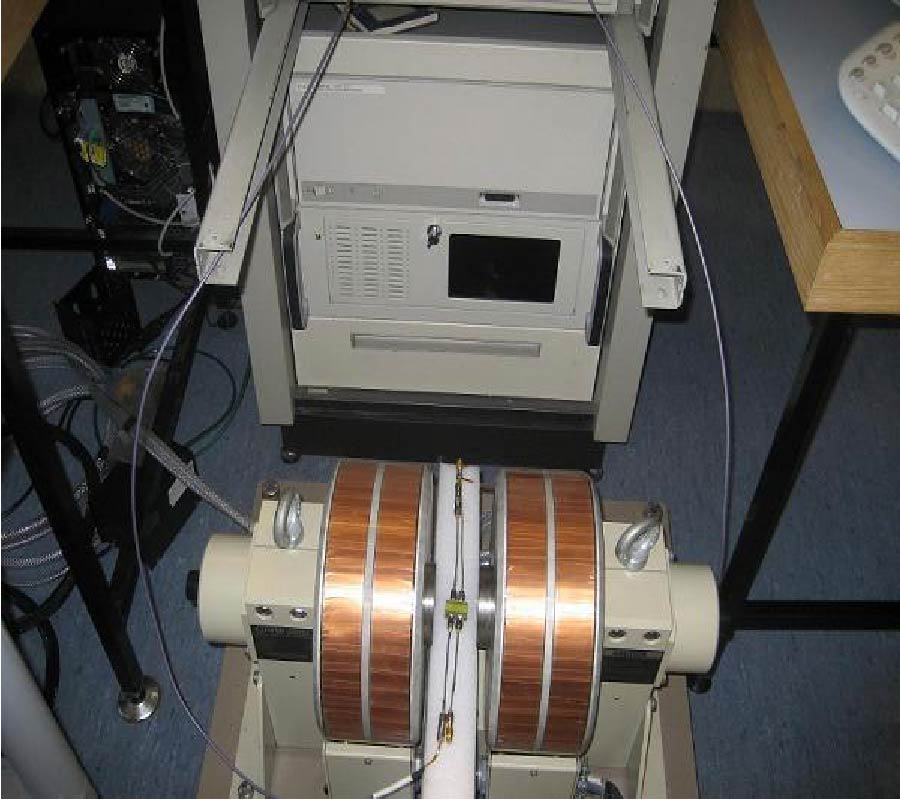
Carr-Purcell-Meiboom-Gill (CPMG) is generally used as the measurement sequence of unilateral NMR (UMR) sensors, and the NMR signals collected by the sequence are composed of a series of echo signals. In the traditional CPMG measurement signal, each echo peak value is first taken and then denoised, which would lead to the inaccuracy of the peak point taken, resulting in deviation. To ensure the measurement result more accurate, this paper proposes to employ wavelet technology to denoise the echo signal first, and then take the peak point to analyze the data. Firstly, a simplified model of the spin-echo signal without the influence of gradient magnetic field was established, and white noise was applied to a certain extent. Then, Signal to Noise Ratio (SNR) and Root Mean Square Error (RMSE) were used as evaluation indexes. The denoising effects under different wavelet bases and thresholds were compared. Finally, the Matlab simulation result showed that wavelet analysis had a good effect on the denoising of unilateral NMR spin echo signal.
WAVELET DENOISING OF ECHO SIGNAL OF UNILATERAL MAGNETIC RESONANCE SENSOR
2022-04-23
PIER C
Vol. 119, 275-285
Scattering of Electromagnetic Waves by Impedance Biconical Vibrators in А Free Space and in a Rectangular Waveguide
Mikhail Nesterenko , Andrey V. Gomozov , Viktor A. Katrich , Sergey L. Berdnik and Victor I. Kijko
A problem of scattering of electromagnetic waves by thin impedance biconical vibrators in а free space and in a rectangular waveguide is solved by an asymptotic averaging method and a generalized method of induced electromotive forces (EMF). An influence of the change of vibrator radius upon energy and spatial characteristics is numerically studied. Theoretical results are compared with the experimental data.
SCATTERING OF ELECTROMAGNETIC WAVES BY IMPEDANCE BICONICAL VIBRATORS IN А FREE SPACE AND IN A RECTANGULAR WAVEGUIDE
2022-04-22
PIER
Vol. 173, 141-149
Tamm States and Gap Topological Numbers in Photonic Crystals (Invited Paper)
Junhui Cao , Alexey V. Kavokin and Anton V. Nalitov
We introduce the concept of gap Zak or Chern topological invariants for photonic crystals of various dimensionalities. Specifically, we consider a case where Tamm states are formed at an interface of two semi-infinite Bragg mirrors and derive the formulism for gap Zak phases of two constituent Bragg mirrors. We demonstrate that gap topological numbers are instrumental in studies of interface states both in conventional and photonic crystals.
TAMM STATES AND GAP TOPOLOGICAL NUMBERS IN PHOTONIC CRYSTALS (INVITED PAPER)
2022-04-22
PIER C
Vol. 119, 255-273
UWB Compact Microstrip Patch Antenna with High Directivity Using Novel Star-Shaped Frequency Selective Surface
Rajesh Kumar and Devi Charan Dhubkarya
This paper presents a single element ultra-wideband (UWB) microstrip patch antenna with high directivity. In this work, techniques like partial ground and modification of the patch have been used to achieve the UWB. The designed antenna consists of a modified U-shaped radiating patch with a microstrip feed attached directly to it. The initial U-shaped radiating patch is modified by attaching an inverted trapezium on both sides of the feed line. Two parasitic patches are introduced near the feed structure of the antenna after etching away two rectangular slots with appropriate dimensions. Moreover, the proposed structure consists of a partial ground plane which contributes to the UWB nature. Modifications in the form of square and triangular slot etching are carried out in this part of the proposed structure. The proposed antenna is compact with dimensions of 16 mm × 19 mm × 1.6 mm. Finally, gain enhancement of the proposed structure is done by placing a Frequency Selective Surface (FSS) behind the proposed antenna with an air spacer in between the structures. A novel FSS unit cell is proposed, and its performances are checked experimentally. Later, FSS is combined with the antenna, and measured peak gain of 9.7 dBi is obtained experimentally. The overall size of the structure is 62.5 mm × 52 mm × 24.9 mm.
UWB COMPACT MICROSTRIP PATCH ANTENNA WITH HIGH DIRECTIVITY USING NOVEL STAR-SHAPED FREQUENCY SELECTIVE SURFACE
2022-04-22
PIER Letters
Vol. 103, 161-169
Broadband Phase Shifter with Constant Phase Based on Negative Group Delay Circuit
Yuwei Meng , Zhongbao Wang , Shao-Jun Fang and Hongmei Liu
A broadband phase shifter (PS) with a constant phase based on a negative group delay (NGD) microwave circuit is proposed. The presented broadband PS is composed of distributed microstrip lines and two resistors, which is based on the positive group delay compensation principle. By tuning the electrical length of the phase shift transmission line, the constant phase can be obtained in the range of -360° ~ 0°. For verification, three broadband PSs with the phase shift of -90°, -180°, and -270° (90°) are designed, fabricated, and measured at the center frequency of 1.0 GHz. The measurements show that the -90° PS can achieve a constant phase of -90°±3.0° with a fractional bandwidth (FBW) of 73.1%; the -180° PS can achieve a constant phase of -180°±5.0° with an FBW of 51.1%; and the -270° PS can achieve a constant phase of -270°±4.0° with an FBW of 40.4%. Besides, the return loss is greater than 13.6 dB in the flat-phase bands.
BROADBAND PHASE SHIFTER WITH CONSTANT PHASE BASED ON NEGATIVE GROUP DELAY CIRCUIT