Search Results(13887)

2022-07-01
PIER M
Vol. 111, 119-131
Study on the Propagation Characteristics of Gold-Silver Hybrid Chain Nanostructures
Shenxiang Yang , Dan Zhang , Huiwen Chen , Shuo Wang and Chun-Ping Chen
In this paper, the transport characteristics of gold/silver mixed chain nanostructures with different proportions of infinite length in the range of 270-810 nm are studied, and the corresponding band gap characteristics and other transport characteristics are analyzed. We introduced an analytical model to determine the complex dielectric constant of an arbitrary composition Au-Ag alloy, and combined this with the experimental data to study the propagation characteristics of the infinite-length gold-silver mixed-chain nanostructures with various compositions. As the gold content exceeds Au:Ag(1:2), the coupling coefficient between the forward and reverse waves becomes smaller, and the reverse wave cannot provide enough energy to transfer to the forward wave. The scattering ability of the scattering unit weakens, the frequency range of the propagation state widens, and it exhibits good propagation characteristics. By gradually increasing the proportion of metal in the alloy, we can explore the variation of the propagation characteristics of the alloy. At present, the change of metal propagation characteristics has not been studied from this point at home and abroad, so we found for the first time that frequency modulation can be realized through this method (regulating the attenuation or cutoff frequency range, namely the band gap range). We also studied a cylindrical finite array chain composed of 40 nanorods under five types of experimental data and discussed the wave guiding ability of the finite array chain under the excitation of a plane wave of a specific wavelength.
STUDY ON THE PROPAGATION CHARACTERISTICS OF GOLD-SILVER HYBRID CHAIN NANOSTRUCTURES
2022-06-30
PIER
Vol. 174, 115-125
Aging Monitoring of Bond Wires Based on EMR Signal Spectrum Characteristics for IGBT Module
Zhihui Ren , Ming-Xing Du , Jinliang Yin , Chao Dong and Ziwei Ouyang
Bond wires aging is one of the most common failure modes of insulated gate bipolar transistor (IGBT) module. Real-time monitoring of bond wires status is an important guarantee for the stable operation of power electronics system. In this paper, a method of monitoring the aging state of bond wires in IGBT module based on the spectrum characteristics of electromagnetic radiation (EMR) signature is proposed. Firstly, the turn-off process of IGBT module is analyzed, and the behavior model of IGBT module in the stage of rapid current change is established, which shows that EMR interference in buck converter mainly occurs during the turn-off process of IGBT module. Secondly, the relationship between the aging degree of bond wires and differential mode (DM) interference signal is deduced. Thirdly, the IGBT module is equivalent to a magnetic dipole, which proves that the change of DM interference signal will cause the change of EMR signal, thus demonstrating the feasibility of using EMR signal to monitor bond wires aging. Finally, a buck converter composed of IGBT module is used as the equipment to be tested. The EMR signal is extracted by the near-field probe, and the EMR signal spectrum is used to monitor the aging degree of the bond wires. The experimental results show that with the deepening of the aging degree of bond wires, the spectrum amplitude of EMR signal increases.
Aging Monitoring of Bond Wires Based on EMR Signal Spectrum Characteristics for IGBT Module
2022-06-30
PIER C
Vol. 121, 83-95
Correlation Between Elements of a Massive MIMO Antenna in a Sub-6 GHz Mobile Terminal
Ahmed Mohamed Elshirkasi , Azremi Abdullah Al-Hadi , Rizwan Khan and Ping Jack Soh
This work studies the correlation between 14-elements of a sub-6 GHz MIMO antenna for mobile terminal, operating in the 3.10 to 3.85 GHz frequency band. Envelope correlation coefficient (ECC) was used to assess the relationship between MIMO antenna elements. A total of 91 ECC values were considered at every frequency point for the 14-element antenna, which was performed under two propagation scenarios: (i) a uniform environment, and (ii) a Gaussian environment. For the latter, three angular spreads (AS) of 20˚, 30˚, and 40˚ and incident angle of every 10˚ in both elevation and azimuth coordinates are considered. The resulting ECC in the uniform environment is below 0.15 over the entire operating frequency band, indicating that the 14 elements are minimally correlated. However, in a Gaussian environment, the ECC is evaluated at 3.25 GHz. For the AS values of 20˚, 30˚, and 40˚. The average number of ECC values below the 0.3 threshold is 48, 67, and 81 out of 91 total ECC values, respectively. Finally, a relation is derived between the number of ECC values below 0.3 and the lowly-correlated number of antenna elements. It is seen that at a wider angular spread of 40˚, the number of equivalent lowly-correlated elements is 12 with 87% from all considered incident wave directions.
CORRELATION BETWEEN ELEMENTS OF A MASSIVE MIMO ANTENNA IN A SUB-6 GHZ MOBILE TERMINAL
2022-06-30
PIER C
Vol. 121, 65-82
Bandpass-Type NGD Design Engineering and Uncertainty Analysis of RLC-Series Resonator Based Passive Cell
Yves Constant Mombo Boussougou , Eric Jean Roy Sambatra , Antonio Jaomiary , Lucius Ramifidisoa , Nour Mohammad Murad , Jean-Paterne Kouadio , Samuel Ngoho , Frank Elliot Sahoa , Sahbi Baccar and Rivo Randriatsiferana
This paper investigates the design method, characterization, and innovative uncertainty analysis of bandpass (BP) type negative group delay (NGD) passive cell. The lumped passive topology under study consists of a resistor and a passive RLC-series network. The voltage transfer function (VTF) based circuit theory introducing the BP NGD specification analytical expressions is established in function of the R, L and C lumped component parameters. The BP NGD performance is evaluated by figure of merit (FOM) formula. To demonstrate the BP NGD function, the design method was applied to a proof-of-concept (POC) operating at 125-kHz RFID standard center frequency. The BP NGD theory is validated by both AC simulation and measurement of POC and discrete component-based circuit prototype. Experimental BP NGD results in good agreement with calculation and simulation are obtained with NGD value of -36.77 μs, 8% NGD bandwidth, and an attenuation lower than -9.6 dB. Innovative expressions of BP NGD parameter uncertainties are established versus the POC circuit parameters. The BP NGD specification variations are interpreted with respect to the influence of constituting component uncertainties via comparison between the established NGD uncertainty theory and co-simulated sensitivity analyses.
BANDPASS-TYPE NGD DESIGN ENGINEERING AND UNCERTAINTY ANALYSIS OF RLC-SERIES RESONATOR BASED PASSIVE CELL
2022-06-30
PIER Letters
Vol. 104, 169-177
Abnormal Circularly Polarized Propagation Over Terrain Profile with Gaussian Correlated Roughness
Xueyuan Chen , Peng Xu , Xinguo Ma , Yucheng Yao and Hui Lv
In application to active microwave remote sensing, the counterwise RL (left-hand circularly polarized transmitting and right-hand circularly polarized receiving) and LR polarized bistatic scattering are generally stronger than the likewise LL and RR ones, respectively. In this paper, we investigate the circularly polarized propagation over terrain profile at 1.575 GHz and 900 MHz in application to wireless communication. Completely different from common sense in remote sensing, however, numerical simulations show that field strengths for likewise polarizations are larger than those for counterwise polarizations. For further verification, circularly polarized bistatic scattering from terrain is also provided, which is consistent with previous conclusion that the counterwise LR polarized one is larger. Physical mechanism of such a contradictory behavior is explicated by local Fresnel reflections, and physical insights are offered for terrain propagation of circular polarizations. It is suggested that the likewise configuration be adopted in wireless communication, although the counterwise is adopted in microwave remote sensing.
ABNORMAL CIRCULARLY POLARIZED PROPAGATION OVER TERRAIN PROFILE WITH GAUSSIAN CORRELATED ROUGHNESS
2022-06-27
PIER C
Vol. 121, 49-63
Design and Analysis of Inscribed Fractal Super Wideband Antenna for Microwave Applications
Dipika Shivcharan Sagne and Rashmi Abhay Pandhare
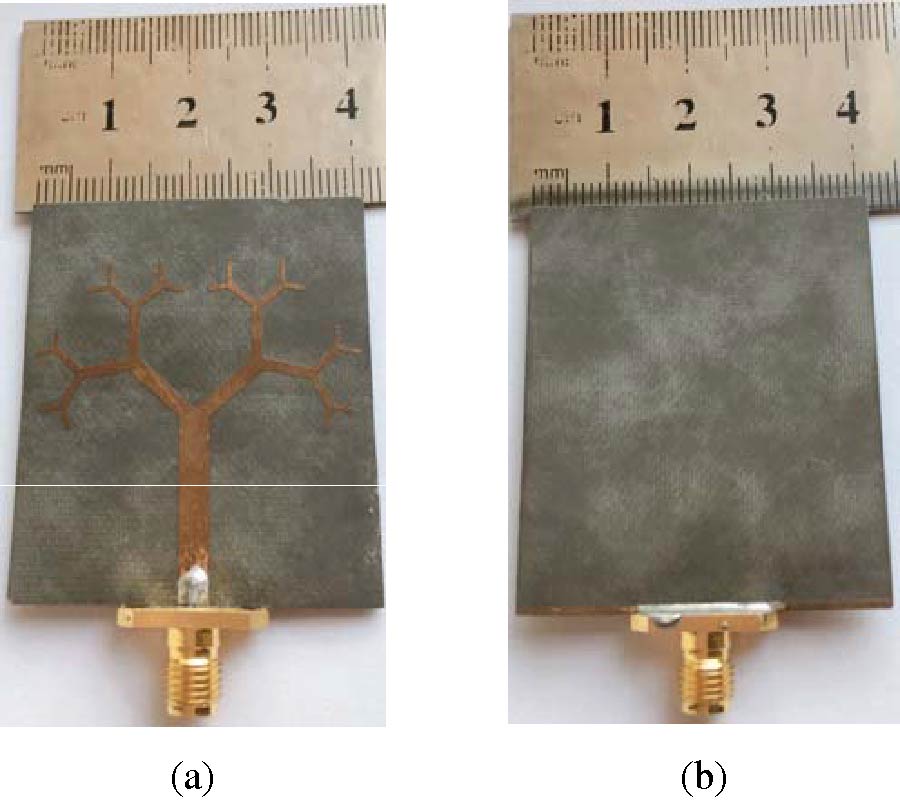
This paper presents the design of a Super Wideband (SWB) antenna with enhanced bandwidth for microwave application with a detailed parametric study of the methods used to enhance the bandwidth of the conventional antenna. The proposed SWB antenna has emerged from a traditional circular monopole antenna by experimenting with the inscribed fractal structure with a tapered feed line and partial ground plane with blended corners and achieved a super wideband frequency range from 2.31 GHz to 105.5 GHz with a fractional bandwidth 192.1%, Bandwidth Dimension Ratio (BDR) 2154.88. The antenna has a relatively small electrical dimension i.e. 0.33λ0x0.27λ0, where λ0 corresponds to the lower-end operating frequency and exhibits good gain and efficiency characteristics. In order to observe the signal correlation of the proposed antenna, the time domain analysis using similar antennas in face-to-face and side-to-side scenarios has been performed using the EM simulation tool CST-STUDIO. The simulated gain varies from 1.28 to 9.35 dBi. The proposed antenna can be used for S, C, X, Ka, Ku, V and W bands for microwave and millimetre wave applications. The simulated and measured results of the proposed antenna exhibit a good agreement.
DESIGN AND ANALYSIS OF INSCRIBED FRACTAL SUPER WIDEBAND ANTENNA FOR MICROWAVE APPLICATIONS
2022-06-26
PIER M
Vol. 111, 103-117
A Three-Interval PWM Duty Cycle Adaptive Method for Torque Ripple Suppression of Switched Reluctance Motor
Chaozhi Huang , Yuliang Wu , Wensheng Cao , Zhaoxin Zhu and Yongmin Geng
Aiming at the problem of excessive torque ripple of switched reluctance motor (SRM), a three-interval PWM duty cycle adaptive control strategy is proposed in this paper. The method changes the PWM duty cycle to adjust the voltage across the windings according to the torque error, divides the interval according to the inductance linear model, and adapts to different PWM duty cycles in different intervals, different speeds, and different torque errors. And the optimal PWM duty cycle group under different rotation speeds is obtained by trial and error, and this duty cycle group is used as the control method to adapt the PWM duty cycle group. Finally, through Matlab/Simulink simulation and motor platform experiments, the three-interval fixed PWM duty cycle control strategy and the three-interval PWM duty cycle adaptive control strategy in this paper are compared. The results show that the three-interval PWM duty cycle adaptive control strategy proposed in this paper has a good torque ripple suppression effect in a wide speed and wide load range.
A THREE-INTERVAL PWM DUTY CYCLE ADAPTIVE METHOD FOR TORQUE RIPPLE SUPPRESSION OF SWITCHED RELUCTANCE MOTOR
2022-06-23
PIER C
Vol. 121, 39-48
UWB Monopole Antenna with Dual Notched Bands Verified by Characteristic Mode Analysis (CMA)
Grandhi Venkata Subrahmanyam and Sri Rama Krishna Kalva
An ultra-wideband (UWB) antenna with dual band notched characteristics verified by characteristic mode analysis (CMA) is presented. The intended UWB radiator is etched on a Rogers RT5880 substrate with a size of 29×35×0.764 mm3, operating over a spectrum of 2.66-14.86 GHz with a fractional bandwidth (FBW) of 139%. Dual notched bands at WiMAX (3.01-3.63 GHz) and WLAN (4.48-5.85 GHz) are achieved by embedding L-shaped stubs in the notched rectangular patch. In addition, the two notched bands of the reported antenna are verified by using characteristic mode analysis (CMA) in terms of modal significance (MS) and characteristic angle (CA). The reported antenna's simulated and tested results are well matched to obtain S11, VSWR, stable radiation patterns, a stable peak gain of 2.65 to 3.6 dBi and the maximum radiation efficiency of 97.86% in frequency domain, which makes the intended radiator suitable for portable UWB applications.
UWB MONOPOLE ANTENNA WITH DUAL NOTCHED BANDS VERIFIED BY CHARACTERISTIC MODE ANALYSIS (CMA)
2022-06-23
PIER Letters
Vol. 105, 9-16
Dual-Band Filter Power Divider with Controllable Transmission Zero Based on Multimode Resonator
Chuanyun Wang , Xiqiang Zhang , Tingting Xia , Yonghua Zhang and Qilei Fan
A novel dual-band filter power divider (DB-FPD) with controllable transmission zeros (TZs) is designed using a slotline multimode resonator (SLMR) in this letter. Using the stub loading technology, each resonator mode of the SLMR can be easily controlled. Accordingly, a dual-band bandpass filter is realized. Four TZs are generated due to the loaded stubs on the SLMR and feeding network, which can improve the out-of-band selectivity. Finally, without introducing additional circuits, a DB-FPD with good performance is realized. For verification, a prototype operating at 2.01 and 4.79 GHz is fabricated and measured. The measured results are basically consistent with simulated ones. The 3-dB fractional bandwidths are 29.7% (1.72~2.32 GHz) and 7.99% (4.58~4.96 GHz), respectively, and the isolation in each band is better than 14 dB.
DUAL-BAND FILTER POWER DIVIDER WITH CONTROLLABLE TRANSMISSION ZERO BASED ON MULTIMODE RESONATOR
2022-06-22
PIER C
Vol. 121, 29-38
A Leading Angle Flux Weakening Control Method for PMSM Based on Active Disturbance Rejection Control
Yanfei Pan , Xin Liu , Yilin Zhu and Zhongshu Li
A flux weakening (FW) control method of leading angle for a permanent magnet synchronous motor (PMSM) based on active disturbance rejection control (ADRC) is proposed to solve the problem of large fluctuation of speed, current, and torque in the control process. Firstly, according to the mathematical model of PMSM and its voltage and current constraints, the leading angle FW control algorithm is introduced. Then, according to the ADRC theory and the mathematical model of PMSM, the speed loop ADRC and current loop ADRC are constructed. The controller parameters are combined with the control bandwidth, and the parameter variation ranges are obtained by analyzing the stability of the control system. Finally, the proposed ADRC methods are combined with the leading angle FW control method to realize the ADRC leading angle FW control for PMSM, and the proposed method is verified on the experimental platform. The experimental results show that the proposed method has less speed, current, and torque fluctuations than the proportional integral (PI) controller method, which can effectively improve the motor control performance. At the same time, the controller parameters are combined with the bandwidth, which is convenient for practical engineering application.
A LEADING ANGLE FLUX WEAKENING CONTROL METHOD FOR PMSM BASED ON ACTIVE DISTURBANCE REJECTION CONTROL
2022-06-21
PIER B
Vol. 96, 1-18
A Low-Cost Miniaturized Flower-Shaped Printed Antenna with Enhanced Bandwidth for UWB Applications
Nella Anveshkumar , Jai Mangal , Sudipta Das , Boddapati Taraka Phani Madhav and Wael Abd Ellatif Ali
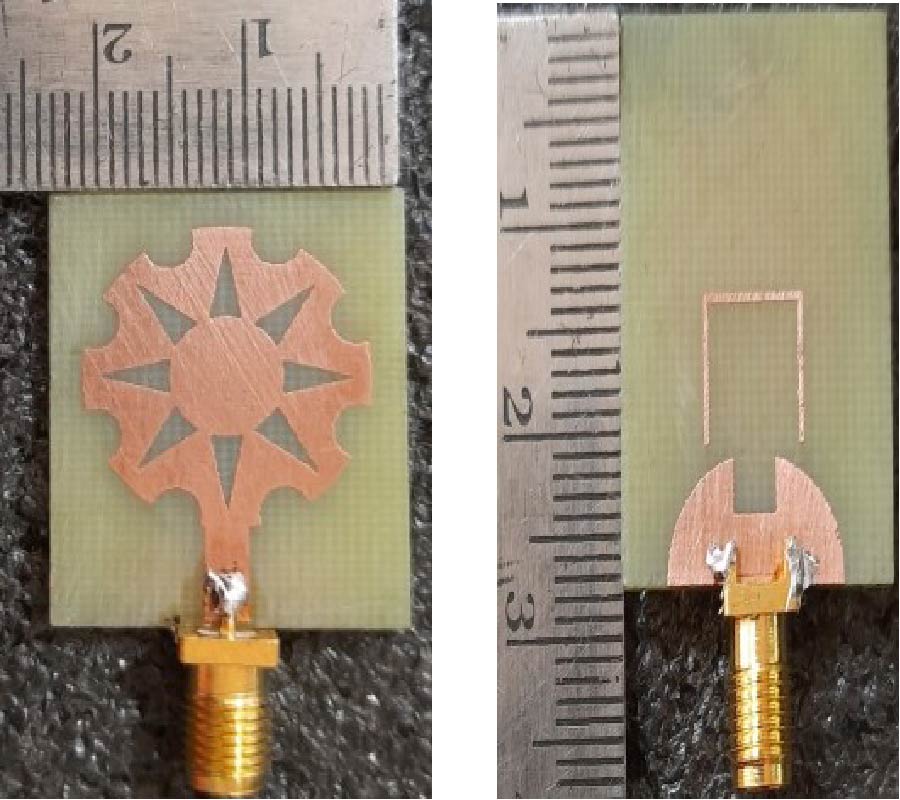
This paper reports a novel, cost effective, and compact ultra-wideband (UWB) antenna for applications in an unlicensed-frequency band of 3.1-10.6 GHz. To achieve the UWB operation, a novel concept of annular shapes, circular slot combinations, and partial ground is employed. Furthermore, the proposed antenna with novel configuration occupies an attractive size of only 18×12 mm2 which allows compatibility with portable UWB application devices. This flower-horn shaped UWB antenna is printed on a cost-effective FR-4 substrate, which exhibits a dielectric-constant of 4.4 and a loss-tangent of 0.019. The fabricated prototype is experimentally tested, and measured results validate the design approach of presented UWB antenna. The measured results confirm its UWB characteristics covering 3.1-11.2 GHz with S11 ≤ -10 dB. Also, a maximum peak-gain of 5.05 dBi at 9 GHz and a minimum radiation-efficiency of 94.35% are noted in the full operating-band. A good agreement has been obtained between the simulated and measured results in terms of reflection-coefficient, gain, radiation-efficiency, radiation patterns and group delay which confirm the suitability of suggested small printed antenna for the intended UWB applications.
A LOW-COST MINIATURIZED FLOWER-SHAPED PRINTED ANTENNA WITH ENHANCED BANDWIDTH FOR UWB APPLICATIONS
2022-06-21
PIER M
Vol. 111, 89-101
A Dual-Band Ultra-Wideband Conformal Antenna for WCE
Maohai Ran , Ming Ye and Bo Yin
In this paper, a dual-band ultra-wideband conformal antenna for Wireless Capsule Endoscopy is proposed. The antenna uses polyimide as a substrate of side wall to achieve conformality, leaving space for other components of the Wireless Capsule Endoscopy. The feeding network of the conformal antenna utilizes the circuit characteristics of Complementary Split-Ring Resonator to achieve dual-band operation at 1.4 GHz and 4.0 GHz. Based on the principle of wideband characteristics of spiral antennas, the conformal antenna radiation structure is improved. A short-pin is loaded at an appropriate position to improve the impedance matching of the antenna and achieve ultra-wideband without changing the resonant points of the antenna. The operating bandwidth of the antenna can reach 30.3% (1.20~1.63 GHz) and 53.3% (3.33~5.75 GHz), respectively. In addition, the antenna is placed in different simulation models to verify the stability of its operation. Minced pork is used to verify effectiveness of the conformal antenna. The measured results show that the proposed antenna is suitable for capsule endoscopy.
A DUAL-BAND ULTRA-WIDEBAND CONFORMAL ANTENNA FOR WCE
2022-06-21
PIER Letters
Vol. 105, 1-8
A Novel DGS-Based Substrate Integrated Coaxial Line Bandpass Filter with Three Transmission Zeros
Zhongbao Wang , Jian Ma , Shipeng Zhao , Hongmei Liu and Shao-Jun Fang
A novel high-selectivity bandpass filter based on a defected ground structure and substrate integrated coaxial line is proposed. Three transmission zeros near the passband are achieved by introducing a divergent-shaped resonator and two spindle-shaped defected ground structures, resulting in a high selectivity. To verify the proposed structure, one prototype with a center frequency of 4.94 GHz is designed and fabricated. The measured results show that three transmission zeros respectively located at 3.92, 4.36, and 6.00 GHz are obtained. The 3-dB passband bandwidth is 14.2% from 4.59 to 5.29 GHz. The upper stopband rejection is better than 20 dB from 5.71 to 11.31 GHz.
A NOVEL DGS-BASED SUBSTRATE INTEGRATED COAXIAL LINE BANDPASS FILTER WITH THREE TRANSMISSION ZEROS
2022-06-21
PIER Letters
Vol. 104, 161-168
A Triple Band Artificial Magnetic Conductor: Design & Analytical Model
Amina Fattouche , Lila Mouffok , Sami Hebib and Ali Mansoul
A triple band artificial magnetic conductor (AMC) featuring zero reflection phase at 1.18 GHz, 1.59 GHz, and 2.45 GHz is designed and modeled. A square patch is used to achieve the first resonance. The other two resonance frequencies are generated by two square slots inserted in the first patch. All the three resonant frequencies are adjusted independently of each other and easily predicted by the developed analytical model. A good agreement between electromagnetic simulation and analytical results is obtained with a resonance frequency shift lower than 120 MHz.
A TRIPLE BAND ARTIFICIAL MAGNETIC CONDUCTOR: DESIGN & ANALYTICAL MODEL
2022-06-20
PIER
Vol. 174, 107-114
A Simple Graphic Method for Analyzing the Polarization State of an Optical System with a Fixed Polarizer and a Rotating Elliptical Retarder
Nan Wang and Sailing He
The trajectory of the polarization state of a monochromatic beam passing through a fixed linear polarizer and a rotating elliptical retarder on the Poincaré sphere is found to be a three-dimensional 8-shaped contour, which is determined as the line of intersection of a right-circular cylinder with the Poincaré sphere. The cylinder is parallel to the S3 axis, and the projection of the contour on the S1S2 plane is a circle whose center and radius are determined. A method of projecting the three-dimensional geometric relationships to the two-dimensional S1S2 plane to locate the position of the polarization state of the emerging beam on the Poincaré sphere for a given azimuth of the elliptical retarder is presented, and applied to solve a problem of polarization optics. The proposed graphic method substantially simplifies the polarization state analysis involving elliptical retarders.
A SIMPLE GRAPHIC METHOD FOR ANALYZING THE POLARIZATION STATE OF AN OPTICAL SYSTEM WITH A FIXED POLARIZER AND A ROTATING ELLIPTICAL RETARDER
2022-06-20
PIER
Vol. 174, 89-106
Bessel Beam Generated by the Zero-Index Metalens
Fusheng Deng , Zhiwei Guo , Mina Ren , Xiaoqiang Su , Lijuan Dong , Yanhong Liu , Yun Long Shi and Hong Chen
Bessel beam is an important propagation-invariant optical field. The size and shape of its central spot remain unchanged in the long-distance transmission process, which has a wide application prospect. In this paper, we find that zero-index media (ZIM) metalen can be designed to realize the unique Bessel beam. On the one hand, based on the metal-dielectric multilayered structure with sub-wavelength unit cells, the anisotropic epsilon-near-zero media (ENZ) metalen is proposed for generating the robust Bessel beam, which is immune to the defects placed in the transmission path or the inside of the structure. The ZIM metalens uncover that ENZ media provide a new way to generate Bessel beams beyond the conventional convex prisms. On the other hand, with the help of the uniform field distribution of ZIM, enhanced (multi-channel) Bessel beams based on multiple point sources (exit surfaces) are studied in the isotropic ENZ metalens. In addition, the Bessel beam generated by the ZIM metalen has also been extend to the epsilon-mu-near zero metamaterial realized by two dimensional photonic crystals. Our results not only provide a new way to generate Bessel beam based on the ZIM metalens, but also may enable their use in some optical applications, such as in fluorescence microscopy imaging, particle trapping, and wave-front tailoring.
BESSEL BEAM GENERATED BY THE ZERO-INDEX METALENS
2022-06-20
PIER Letters
Vol. 104, 155-160
Miniaturizing Bandpass Filter Based on Half-Mode SIW for Sub-mm 5G Applications
Nabil Cherif , Mehadji Abri , Sarosh Ahmad , Adnan Ghaffar , Chahira Khial , Fellah Benzerga , Mohammed El Amine Chaib , Hadjira Abri Badaoui and Bouabdallah Roumeiça
A miniaturized half-mode substrate-integrated-waveguide (HMSIW) based bandpass filter with defected ground surface (DGS) for sub-5G applications is presented in this research. The novelty in this article is the proposal of an original configuration of an SIW Filter composed of a mix of DGS cells; each couple of C shapes is etched exactly beneath of two cross shapes, which give us long rejection. We have used six periodic cross-shaped slots as DGS in top of the cavity plane for disturbing the current and creating stopband rejection, and we have also used three couples of C-shaped DGS cells in the bottom plane to improve the performances of the proposed filter. This novel bandpass filter is developed on a 1.54 mm-thick FR-4 (with relative permittivity of 4.3 and the tangent loss of 0.025) operating in the band ranging from 3.4 GHz to 3.8 GHz with a bandwidth of 400 MHz and having the size of 13.5 × 38.6 mm2. The proposed HMSIW-based filter is simulated, fabricated, and measured. The measurement results are in decent agreement with the simulation results.
MINIATURIZING BANDPASS FILTER BASED ON HALF-MODE SIW FOR SUB-MM 5G APPLICATIONS
2022-06-19
PIER C
Vol. 120, 275-291
Research on Resonant Wireless Energy Supply Double-Layer Receiving Coupler for Portable Electronic Equipment
Weihua Chen , Kun Qian and Xiaoheng Yan
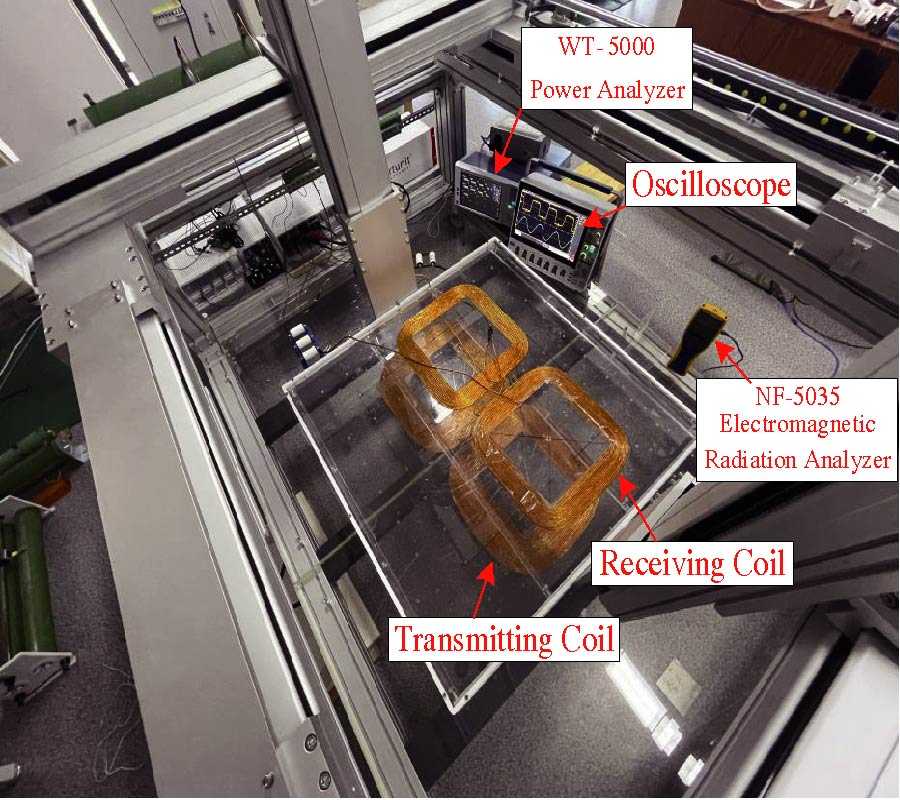
In order to reduce the electromagnetic interference on the receiving side of electronic equipment in the process of wireless energy supply, a magnetic coupling resonant wireless energy supply system for portable electronic equipment with double-layer PCB coil structure is designed under the condition of 100 kHz. Firstly, the circuit principle is analyzed, and the compensation circuit model of LCC-P is established; Then, the coil model is constructed and optimized, the effects of turns and wire diameter on the coil self inductance and coupling coefficient are analyzed. The best parameters are selected, and the magnetic field distributions of the three coil structures at different distances are simulated and studied. Finally, an experimental platform is built to study the transmission efficiencies of different receiving coils at different spacings. The magnetic field intensities at different positions are compared to further verify the performance of double-layer coils. The experimental results show that when the coil spacing is in the range of 4-16 mm, the efficiency can reach 40%-71%. The central magnetic field of the coil is increased by 16%, and the external magnetic field is reduced by more than 20%. The temperature rise of one hour charging is 5.34˚C, which is only 0.78˚C higher than that of other coils
RESEARCH ON RESONANT WIRELESS ENERGY SUPPLY DOUBLE-LAYER RECEIVING COUPLER FOR PORTABLE ELECTRONIC EQUIPMENT
2022-06-19
PIER M
Vol. 111, 77-88
A Novel Radar Waveform Design for Suppressing Autocorrelation Side-Lobe Based on Chaotic and Single Fusion Encoding Method
Ji Li , Min Liu , Jianping Ou and Wei Wang
Multi-carrier Phase Coded (MCPC) signal has the advantages of large time-bandwidth product, low intercept, anti-jamming, digitization, flexible waveform, and high spectral utilization, and has become a hotspot in radar waveform research. However, MCPC signal has high-distance sidelobes which are difficult to suppress, after pulse compression processing. Excessive sidelobes will mask the existence of small and weak targets, thus losing the target signal, which limits the practical application of MCPC signals. Therefore, it is of great significance and practical value to study the sidelobe suppression of MCPC signals. From the point of view of waveform design, a multi-carrier phase-encoded signal combining chaotic encoding and single encoding (MCPC-CS) is designed by using chaotic sequence as phase encoding of MCPC signal and optimizing it. In this paper, peak sidelobe level ratio (PSLR) is used as a evaluation factor of the autocorrelation function. The simulation results show that MCPC-CS signal has a good autocorrelation peak sidelobe level ratio, and the autocorrelation sidelobe is reduced by more than 3 dB compared with the normal MCPC signal.
A NOVEL RADAR WAVEFORM DESIGN FOR SUPPRESSING AUTOCORRELATION SIDE-LOBE BASED ON CHAOTIC AND SINGLE FUSION ENCODING METHOD
2022-06-19
PIER M
Vol. 111, 65-76
Decoupling Control on Outer Rotor Coreless Bearingless Permanent Magnet Synchronous Motor Using LS-SVM Generalized Inverse
Zichen Zhang and Huangqiu Zhu
In order to solve the nonlinear couplings among speed and the radial displacement of the outer rotor coreless bearingless permanent magnet synchronous motor (ORC-BPMSM), a decoupling control strategy based on the least square support vector machine (LS-SVM) generalized inverse is proposed. Firstly, the basic structure and working principle of the ORC-BPMSM are introduced, and the mathematical model of torque and suspension forces are established. Secondly, the ORC-BPMSM system is proved reversible by establishing mathematical models and reversibility analysis, then the pseudo-linear subsystems are formed by connecting the generalized inverse system, which is identified by the LS-SVM, with the original system. Furthermore, additional closed-loop controllers are designed to improve the stability and robustness of the pseudolinear subsystems. Finally, the proposed method based on LS-SVM generalized inverse is compared with traditional inverse system method by simulations and experiments. The simulation and experiment results show that the proposed control strategy has good performance of decoupling and stability.
DECOUPLING CONTROL ON OUTER ROTOR CORELESS BEARINGLESS PERMANENT MAGNET SYNCHRONOUS MOTOR USING LS-SVM GENERALIZED INVERSE