Search Results(13789)

2020-12-15
PIER Letters
Vol. 95, 55-61
Accurate Vortex Beam Mode Measurement Based on Rotational Antenna Method
Yuming Nie , Gaohua Ju , Jiarun Chen , Lu Ma and Yufei Zhao
For the application of electro-magnetic (EM) wave with orbital angular momentum (OAM), which is also called the vortex beam, it is essential to determine the real OAM mode of the transmit antenna, i.e., accurately measure the OAM mode of the manufactured antenna with systematic error. The traditional methods measure the OAM mode based on the OAM far-field approximation or the phase gradient in the transverse plane. The corresponding performance degrades when alignment error is not negligible or OAM modes increases. In this paper, an accurate OAM measurement of EM wave based on rotational antenna is proposed. Specifically, the EM beam with helical phase fronts can be well measured via frequency shift detection by rotating the OAM wave at the transmitter. The accuracy can be greatly improved compared with the traditional ways.
ACCURATE VORTEX BEAM MODE MEASUREMENT BASED ON ROTATIONAL ANTENNA METHOD
2020-12-15
PIER B
Vol. 89, 157-175
Modeling of Radiation Source Using an Equivalent Dipole Moment Model
Remya Ramesan and Deepa Madathil
To ensure better performance of modern electronic systems with electromagnetic compatibility (EMC) compliances, the reduction of electromagnetic interference (EMI) between modules or components of an integrated circuit (IC) is necessary. This can be achieved by developing a near field (NF) coupling model of radiating source and victim using analytical, experimental, or numerical simulation techniques. The accurate modeling of a radiation source can be performed using an array of elementary dipole moments obtained using near-field scanning measurement. This paper discusses the various techniques used in the equivalent dipole moment model to reduce the complexity and simulation time and at the same time increase the accuracy and reliability.
MODELING OF RADIATION SOURCE USING AN EQUIVALENT DIPOLE MOMENT MODEL
2020-12-14
PIER M
Vol. 99, 177-189
Li's Formula Extended to Determine Accurate Resonant Frequency of a Rectangular Patch Antenna in Multi-Dielectric Layers
Manotosh Biswas , Sourav Banik and Mihir Dam
In this article, the drawbacks of Li's formula is rectified and extended to compute accurately the resonant frequency of a rectangular patch antenna in multi-dielectric layers. Computed results employing the present model are compared with experimental and simulation results. The present model shows excellent improvement in accuracy compared to the previously reported investigations.
LI'S FORMULA EXTENDED TO DETERMINE ACCURATE RESONANT FREQUENCY OF A RECTANGULAR PATCH ANTENNA IN MULTI-DIELECTRIC LAYERS
2020-12-14
PIER Letters
Vol. 95, 43-53
SRR Loaded Compact Tri-Band MIMO Antenna for WLAN/WiMAX Applications
Venkatesan Rajeshkumar and Rengasamy Rajkumar
A multiband four-element multiple-input-multiple-output (MIMO) antenna configuration is proposed. The antenna consists of split ring resonators (SRRs) along with inverted L-shaped monopole antenna (ILA) structure on the top of the substrate and a slotted ground plane. The antenna without the SRRs exhibits resonances at 2.4 GHz, 3.66 GHz, and 5.5 GHz with with the impedance bandwidth (IBW) of 14.5%, 35.1%, and 9.6%, respectively. With the addition of SRRs the antenna exhibits additional resonance at 5.1 GHz with improved bandwidth and minimizes the reflections. Consequently, the impedance bandwidth at 5 GHz frequency band gets improved to 17.2%. Overall, the proposed antenna will cover the 2.4 GHz wireless local area network (WLAN) & industrial, scientific, medical (ISM) band, 3.5 GHz worldwide interoperability for microwave access (WiMAX), and 5 GHz WLAN 4G/5G applications. In spite of very compact area (0.094 λ02, for the highest operating wavelength) and presence of common ground, the antenna exhibits high inter-element isolation of ≥ −14 dB and S11 ≥ −10 dB. The proposed antenna design is fabricated, tested, and analyzed.
SRR LOADED COMPACT TRI-BAND MIMO ANTENNA FOR WLAN/WIMAX APPLICATIONS
2020-12-14
PIER C
Vol. 107, 183-201
CPW-Fed Dual-Band Compact Yagi-Type Pattern Diversity Antenna for LTE and WiFi
Naveen Kumar Maurya and Rajarshi Bhattacharya
This paper presents a compact generalized T-shaped printed pseudo-monopole antenna (GeT-PPMA) driven dual-band Yagi-type pattern diversity antenna. In contrary to the common practice, here impedance matching at the lower band is attained by increasing the quality factor (Q) through folding a monopole strip. Afterwards, a GeT-PPMA having relatively lower Q than that of the T-PPMA is proposed. Compared to the simple T-PPMA, the GeT-PPMA has 1.5 times more bandwidth (BW) at the lower band. The dual-band GeT-PPMA is 15.11% more compact than the corresponding straight PPMA(S-PPMA). A highly compact dual-band Yagi-type pattern diversity antenna of size 45.5×63 mm2 i.e. 0.35λ0 x 0.48λ0, where λ0 is the free space wavelength at the lowest frequency of operation, is designed by using a novel arrangement of two directors and two common folded reflectors. The compactness owes to the folding of the reflectors. The length of the reflector is optimized for providing good front-to-back-ratio (FBR) in the lower band. The length of the two directors is optimized to improve the FBR at the upper band. Usage of the folded reflector is found to degrade the isolation level in the lower band. Near-field analysis is carried out to investigate the mechanism of mutual coupling. Being guided by the near-field study, a λg/2 isolator, where λg is the guided wavelength at the lower band, is placed in the gap of the folded reflectors, and the mutual coupling is reduced by about 5 dB.
CPW-FED DUAL-BAND COMPACT YAGI-TYPE PATTERN DIVERSITY ANTENNA FOR LTE AND WIFI
2020-12-12
PIER
Vol. 169, 45-57
Rotman Lens Design with Wideband DRA Array
Mohammad Ranjbar Nikkhah , Manish Hiranandani and Ahmed A. Kishk
For rapid Rotman lens design, the symmetry plane is utilized to reduce the structure size by employing the odd and even mode characteristics. Solutions of half the structure for odd and even modes (short and open walls or electrical and magnetic walls, respectively) are much more efficient than the one-time solution for the whole structure. Then, s-parameters from both solutions are processed to obtain the s-parameters of the full lens. To support the wideband and wide scanning range, DRA array is used because of its ability to support these characteristics. Two examples are considered. The first example that employs four cylindrical DRA elements is built and measured to test the concept of terminating the dummy ports by absorbing materials instead of matching loads. This termination tremendously simplifies the structure and reduces the cost by saving the terminating connectors and the matching loads. Here, thin planar absorbing material is used on top of the microstrip lines of the dummy ports. The simulated and measured results are in good agreement. The second example utilizes 8 rectangular DRA array elements and is studied numerically.
ROTMAN LENS DESIGN WITH WIDEBAND DRA ARRAY
2020-12-10
PIER M
Vol. 99, 165-175
Bandpass Frequency Selective Surface Based on Square Waveguide Structure Using 3D Printing Technology
Zhengyong Yu and Cheng Wang
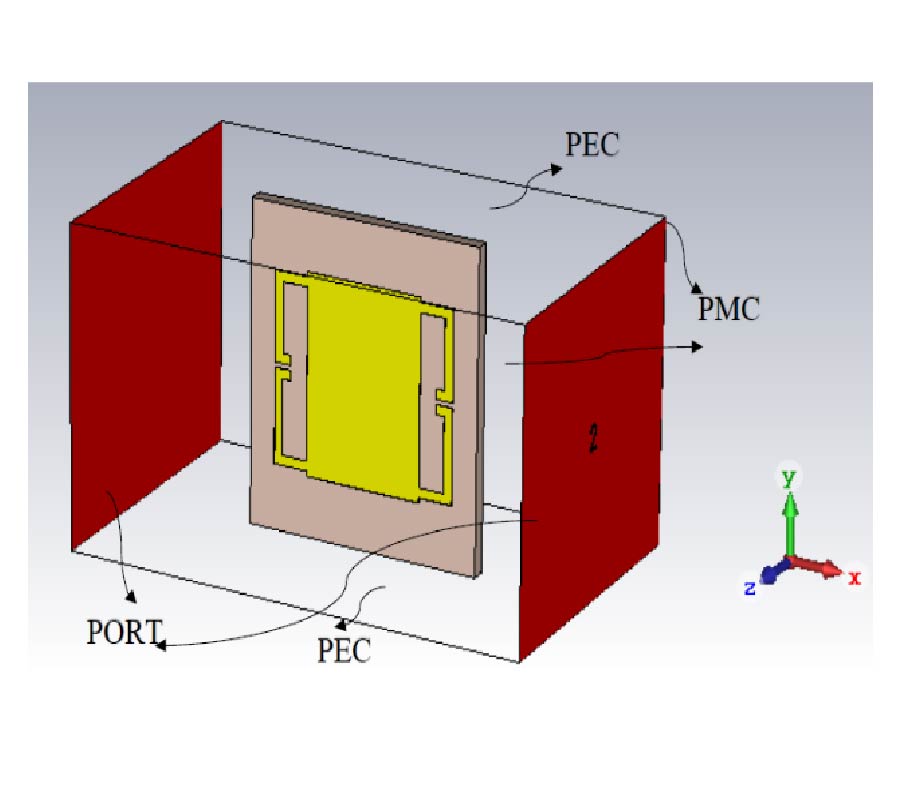
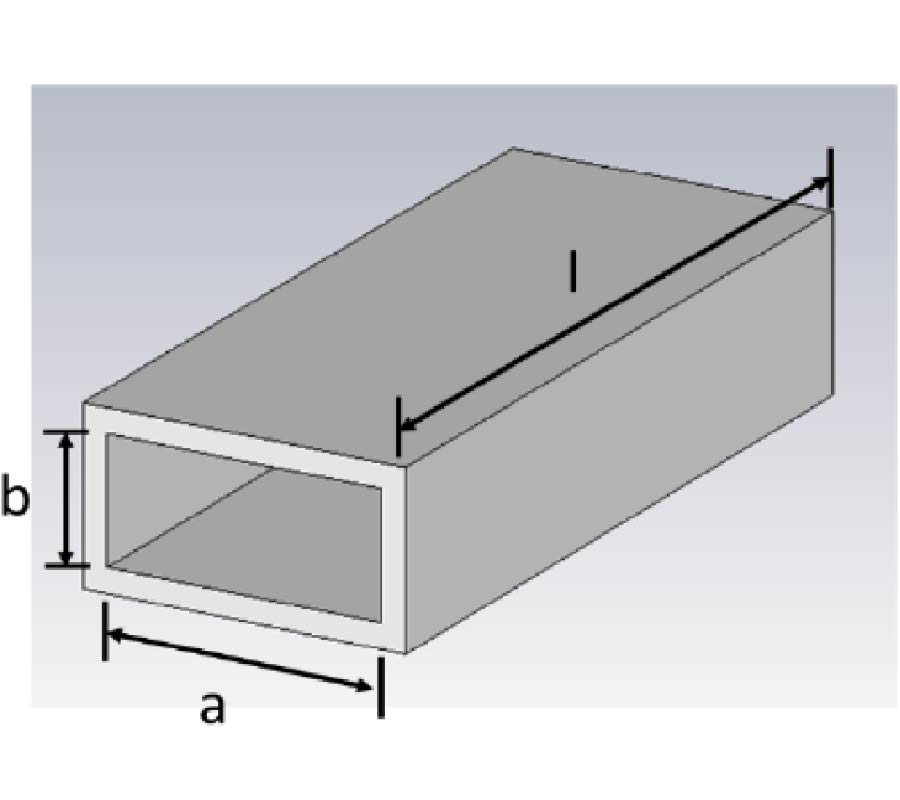
In this paper, a novel three-dimensional (3D) bandpass frequency selective surface (FSS) is presented based on a square waveguide structure using 3D printing technology. The proposed 3D FSS is composed of a periodic array of the square waveguides with dumbbell slots embedded in waveguide walls. The square waveguide of the unit cell provides a propagation path, which can excite two resonant modes, leading to a bandpass response with one transmission pole and one transmission zero below the cutoff frequency of the square waveguide. To explain the operating principle of the proposed 3D FSS, the electric field distributions at the frequencies of transmission pole/zero are analyzed, and an equivalent circuit model is also established. For validation, a practical example is manufactured simply and rapidly, by using 3D printing technology. To verify the performance of the proposed 3D FSS, the frequency selective characteristics of the implemented 3D FSS for both TE and TM polarizations under different incident angles are measured. The measurement results show that the proposed structure exhibits dual polarizations and provides good frequency stability under incident angles from 0° to 40°.
BANDPASS FREQUENCY SELECTIVE SURFACE BASED ON SQUARE WAVEGUIDE STRUCTURE USING 3D PRINTING TECHNOLOGY
2020-12-10
PIER M
Vol. 99, 153-163
Homogenization of Metal Grid Reinforced Composites for Near-Field Low Frequency Magnetic Shielding
Ghida Al Achkar , Lionel Pichon , Mohamed Bensetti and Laurent Daniel
The purpose of this paper is to provide simple analytical homogenization methods for composite materials containing a metallic wire grid. Estimating their effective electrical properties facilitates the numerical simulation of composite structures for shielding applications in the automotive industry. The presented methods are based on surface impedance approaches and effective media theory. The obtained results show that the shielding properties of the described wire grid composites can be accurately estimated and bounded, using the proposed theories in the low frequency range. The frequency limits vary according to the studied sample. For the presented materials, the validity of the results is shown to be up to a few megahertz. The experimental validation is done by measuring the shielding effectiveness of composite samples using a near-field test bench.
HOMOGENIZATION OF METAL GRID REINFORCED COMPOSITES FOR NEAR-FIELD LOW FREQUENCY MAGNETIC SHIELDING
2020-12-09
PIER Letters
Vol. 95, 33-42
A New Equivalent Circuit Scheme for Grounded Back-to-Back GCPW-MS-GCPW Transitions Fabricated on a Thin Low-k Substrate
Pierre-Vincent Dugue , Mohammed El-Gibari , Mathieu Halbwax , Stephane Ginestar , Vanessa Avramovic , Jean-Pierre Vilcot and Hongwu Li
We hereby present a new equivalent circuit model including both lumped and distributed elements for GCPW-MS transitions (GCPW for Grounded Coplanar Waveguide and MS for Microstrip). In order validating the modelling results, such transitions have been fabricated on a 20 µm-thick BCB (Benzocyclobutene resin) substrate using grounding pads including via-holes of different diameters. The study focuses on the impact of the via-hole design on the performance of the transition and more specifically on its bandwidth. The transitions were made using a simple technological process based on photosensitive polymer. ADS simulation data of the new equivalent circuit model were in very good agreement with measured S-parameters. Both theoretical and experimental results show that the bandwidth of such a transition can reach up to 100 GHz bandwidth using via-holes of 900 µm diameter.
A NEW EQUIVALENT CIRCUIT SCHEME FOR GROUNDED BACK-TO-BACK GCPW-MS-GCPW TRANSITIONS FABRICATED ON A THIN LOW-K SUBSTRATE
2020-12-09
PIER Letters
Vol. 95, 25-32
Augmented Quaternion MUSIC Method for a Uniform/Sparse COLD Array
Zhiwei Jiang , Zehao Zhang , Tianyi Zhao , Hua Chen and Weifeng Wang
The quaternion multiple signal classification (Q-MUSIC) algorithm reduces the dimension of covariance matrix, which would result in performance degrading of DOA estimation. An augmented quaternion MUSIC algorithm (AQ-MUSIC) based on concentered orthogonal loop and dipole (COLD) array is presented in this paper. The proposed algorithm uses an augmented quaternion formalism to model the completely polarized signals, which allows a concise and novel way to an augmented covariance matrix. The fact reveals that more accurate DOA parameters could be extracted from an augmented covariance matrix. Even compared with the long vector MUSIC (LV-MUSIC) algorithm whose dimension of covariance matrix is the same as AQ-MUSIC, the accuracy of DOA parameter estimation is also improved. Simulation results verify the performance promotion of the proposed approach.
AUGMENTED QUATERNION MUSIC METHOD FOR A UNIFORM/SPARSE COLD ARRAY
2020-12-08
PIER C
Vol. 107, 173-182
Wideband CPW-Fed Oval-Shaped Monopole Antenna for Wi-Fi5 and Wi-Fi6 Applications
Jayshri Kulkarni and Chow-Yen-Desmond Sim
A wideband coplanar waveguide (CPW) fed monopole antenna designed for Wi-Fi5 and Wi-Fi6 applications is proposed. The proposed antenna (main radiator) has a designed footprint of only 20 × 8.7 × 0.4 mm3, which is composed of an oval-shaped ring radiator with three concentric rings and a double-T structure loaded with a J-shaped slot. The main novelty of this work is that the measured wideband operation of 34.5% (5.15-7.29 GHz) is contributed by only a single resonance at 6.2 GHz, conforming to the bandwidth requirement of Wi-Fi5 (5.15-5.85 GHz) and Wi-Fi6 (5.925-7.125 GHz). Furthermore, the proposed antenna also exhibits good radiation characteristics, including a gain around 2.25 dBi, a radiation efficiency above 80%, a total efficiency above 70%, and omnidirectional radiation patterns with a low magnitude of cross polarization throughout the bands of interest.
WIDEBAND CPW-FED OVAL-SHAPED MONOPOLE ANTENNA FOR WI-FI5 AND WI-FI6 APPLICATIONS
2020-12-07
PIER M
Vol. 99, 139-152
Contrast in Specific Absorption Rate for a Typical Plant Model Due to Discrepancy Among Global and National Electromagnetic Standards
Ardhendu Kundu , Bhaskar Gupta and Amirul Islam Mallick
Different global and national electromagnetic regulatory standards have been developed based upon significantly diversified premises, developmental backgrounds and objectives to safeguard life. Some standards aim at minimizing short duration thermal effects, some try to mitigate non-thermal effects over prolonged duration and rest have adopted precautionary limits. As a consequence, these global and national electromagnetic standards substantially differ from each other. Moreover, in spite of lossy dielectric nature of plant tissues, electromagnetic energy absorption rate level estimations for a complete plant model have neither been reported in literature nor been considered while preparing safety standards. To this end, Specific Absorption Rate levels have been estimated for a typical Catharanthus roseus plant model --- typical geometric shape of the plant prototype has been modelled considering the most practical scenario. Detailed analyses on variation of Specific Absorption Rate levels due to wide discrepancy among the existing electromagnetic regulatory standards have been reported in a quantitative manner. This particular work encompasses dielectric properties measurement of different Catharanthus roseus plant samples, modelling a typical Catharanthus roseus plant containing leaves, flower and twig with appropriate dielectric properties defined, and finally the simulation-based investigations to estimate the variation in Specific Absorption Rate levels based on the contrasting electromagnetic exposure standards. Specific Absorption Rate levels have been reported at five different telecommunication bands as per two occupational and four public exposure scenarios. Variations among the estimated Specific Absorption Rate levels have been noted to be significant and presented in detail in this article. A total of thirty rigorous simulations have been carried out along with one hundred and twenty Specific Absorption Rate data evaluations to ensure accurate comparison among different electromagnetic standards. Noted vast variations among estimated Specific Absorption Rate levels based on contrasting electromagnetic standards over the frequencies indicate the necessity of re-evaluating all existing guidelines and also call for the need of maintaining a global uniformity among the existing electromagnetic standards worldwide.
CONTRAST IN SPECIFIC ABSORPTION RATE FOR A TYPICAL PLANT MODEL DUE TO DISCREPANCY AMONG GLOBAL AND NATIONAL ELECTROMAGNETIC STANDARDS
2020-12-07
PIER M
Vol. 99, 129-138
Scattering from a Rectangular Dielectric Cylinder by Mode Matching Technique
Muhammad Akbar and Saeed Ahmed
The propagated fields within and radiated fields outside a rectangular dielectric cylinder are represented as guided and radiation modes respectively. These fields of the cylinder are related with incident, backward scattered fields at x=0 and transmitted fields at x=a by Mode Matching technique. The expressions for guided and radiation mode amplitudes are derived by applying the orthogonal property of the modes. The unknown functions (mode amplitudes) in each of these equations that are defining discrete functions of the guided modes field and angular spectrum for the radiation field are determined numerically. The powers due to discrete guided modes (even and odd) are calculated. The integrals related with the backward and forward scattered fields and the powers associated with them are approximately evaluated by the method of steepest descents.
SCATTERING FROM A RECTANGULAR  DIELECTRIC CYLINDER BY MODE MATCHING TECHNIQUE
2020-12-07
PIER C
Vol. 107, 157-171
Mutual Coupling Reduction in Patch Antenna Array Using Combination of Shorting Pins and Metallic Walls
Irfan Ali Tunio , Yann Mahe , Tchanguiz Razban-Haghighi and Bruno Froppier
A method of loaded patch antennas with shorting pins and erected walls in between patch antenna arrays is introduced to reduce surface wave and free space wave coupling in both E and H-plane. This simple technique works equally well in both orientations by reducing coupling up to -19 dB and -15 dB (measured value) in E-plane and H-plane, respectively, as compared to a conventional patch antenna array. The scattering parameters are studied, and conclusions are made on amounts of mutually coupled power and the bandwidth of the rejection band (S12). A parametric study of the variation in the level of mutual coupling with respect to height of the wall has been carried out in both E and H-planes. The simulation results are well verified through measurements.
MUTUAL COUPLING REDUCTION IN PATCH ANTENNA ARRAY USING COMBINATION OF SHORTING PINS AND METALLIC WALLS
2020-12-07
PIER C
Vol. 107, 143-156
Fractal Minkowski-Shaped Resonator for Noninvasive Biomedical Measurements: Blood Glucose Test
Sarah Majid Obaid , Taha Ahmed Elwi and Muhammad Ilyas
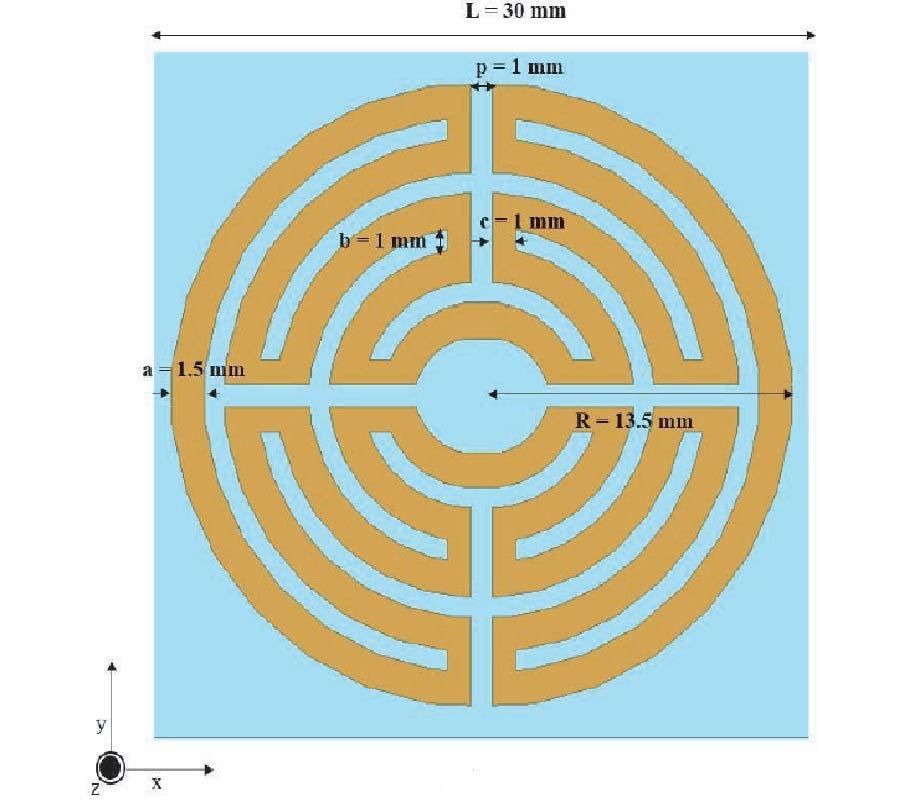
This work presents a noninvasive measurement technique to detect the blood glucose level for diabetic individuals using a fractal microwave resonator printed on an FR-4 substrate. The proposed fractal is based on the 1st order of Minkowski open loops (MOL) coupled with an open-stub transmission line (OSTL) to increase the resonator selectivity at 2.45 GHz. Moreover, an air gap in the middle path of the OSTL is filed with multi wall carbon nanotubes patch (CNT) to increase the field fringing at a specific region. The proposed resonator is designed numerically with CST Microwave Studio. The size limitations for biomedical devices are considered to account for wearable applications. Later, an analytical study is presented on the proposed resonator sensitivity. The detection technique is based on the resonant frequency tuning, bandwidth variation, impedance matching change, and phase displacement for the S-parameters in the S11 and S12 spectra. The sample under test is mounted on an CNT patch of the OSTL which employs the characterization of the specimen. The proposed design idea could be generalized for a wide variety of biomedical detection liquids.
FRACTAL MINKOWSKI-SHAPED RESONATOR FOR NONINVASIVE BIOMEDICAL MEASUREMENTS: BLOOD GLUCOSE TEST
2020-12-04
PIER M
Vol. 99, 115-127
Multiband Below-Cutoff Propagation in Rectangular Waveguides Filled with Multilayer Left-/Right-Handed Metamaterials
Qianru Weng , Qian Lin and Hai-Feng Wu
An accurate rigorous modal theory has been applied to investigate the propagation characteristics in a rectangular waveguide filled with multilayer left-handed and right-handed metamaterials. It is shown that such a waveguide supports different passbands below the waveguide's cutoff frequency, and the number of passbands is related to the corresponding layers of different left-handed metamaterials (LHMs) filled in the waveguide. The rigorous modal analysis of this structure reveals in detail how the waveguide geometry and left-handed metamaterial parameters may be selected to design rectangular waveguides supporting double or triple below-cutoff passbands. The efficient power transmissions in these below-cutoff passbands are validated by using the full-wave simulation software HFSS. These structures supporting multiple below-cutoff passbands could find applications in waveguide components requiring miniaturization and multiband properties, such as miniaturized multifunctional antennas and filters.
MULTIBAND BELOW-CUTOFF PROPAGATION IN RECTANGULAR WAVEGUIDES FILLED WITH MULTILAYER LEFT-/RIGHT-HANDED METAMATERIALS
2020-12-04
PIER M
Vol. 99, 103-113
Design of Metamaterial Based Multilayer Antenna for Navigation/WiFi/Satellite Applications
Aneri Pandya , Trushit K. Upadhyaya and Killol Pandya
Wireless communication plays a vital role in transmitting information from one point to another. Wireless devices have to be smart, intelligent, compact in size and cost effective to meet the demand of wireless communication. A multi-layered, Split Ring Resonator (SRR), negative permeability material inspired antenna has been designed, analyzed, fabricated, and measured. The developed antenna resonates at 1.13 GHz, 2.47 GHz, and 2.74 GHz frequencies with gain of 3.73 dBi, 6.18 dBi, 1.35 dBi, and bandwidth of 2.10%, 2.81%, and 2.09%, respectively. The structure utilizes FR4 material as a substrate. The engineered model has applications in navigation, WiFi, and satellite communication applications.
DESIGN OF METAMATERIAL BASED MULTILAYER ANTENNA FOR NAVIGATION/WIFI/SATELLITE APPLICATIONS
2020-12-02
PIER M
Vol. 99, 91-101
Model Based-Testing of Spatial and Time Domain Artificial Intelligence Smart Antenna for Ultra-High Frequency Electric Discharge Detection in Digital Power Substations
Lorothy Morrison Singkang , Kismet Anak Hong Ping , Herman Kunsei , Kumarasamy Senthilkumar , Kandasamy Pirapaharan , Ahmed M. A. Haidar and Paul Ratnamahilan Polycarp Hoole
This paper presents a fifth-generation (5G) wireless smart antenna for performing both power substation communication (in space domain beam-steering) and electrostatic discharge (in time domain Ultra-high Frequency ``UHF'' impulse) detection. The same smart antenna used to communicate with other wireless antennas in the switchyard, as well as with the control room is utilized to cyclically gather data from power apparatus, busbars and switches where electrostatic discharge (ESD) may occur. The ESD poses a major threat to electrical safety and lifetime of the apparatus as well as the stability of the power system. The same smart antenna on which beam rotation in space-domain is designed by implementing an artificial neural network (ANN) is also trained in time-domain to identify any of the received signals matching the ultra-high frequency band electrostatic discharge pulses that may be superimposed on the power frequency electric current. The proposed system of electrostatic discharge detection is tested for electrostatic pulses empirically simulated and represented in a trigonometric form for the training of the Perceptron Neural model. The working of the system is demonstrated for electrostatic discharge pulses with rising times of the order of one nanosecond. The artificial intelligence system driving the 5G smart antenna performs the dual role of beam steering for 5G wireless communication (operating in the space domain) and for picking up any ESD generated UHF pulses from any one of the apparatus or nearby lightning leaders (operating in the time domain).
MODEL BASED-TESTING OF SPATIAL AND TIME DOMAIN ARTIFICIAL INTELLIGENCE SMART ANTENNA FOR ULTRA-HIGH FREQUENCY ELECTRIC DISCHARGE DETECTION IN DIGITAL POWER SUBSTATIONS
2020-12-02
PIER C
Vol. 107, 127-141
Enhanced Anisotropic Scattering Targets Imaging in Wide-Angle SAR
Xin Wang , Guiqing Chang and Chenchen Chi
In wide-angle synthetic aperture radar (SAR), the scattering behavior of many illuminated objects might vary with the observation angle, which results in the degradation of the resolution and interpretability of the reconstructed imagery. To solve this problem, a sparse-based methodology is proposed in this paper to implement the separation of the anisotropic scattering target data and imaging processing simultaneously. The distinct reflection characteristics of the illuminated targets are employed to formulate a composite projection operator. Then, the sparse constraint is utilized to suppress cross-projection energy. Finally, the imagery of the anisotropic scattering targets could be derived with improved focal quality and interpretability. Numerical simulations could verify the validity of the proposed methodology.
ENHANCED ANISOTROPIC SCATTERING TARGETS IMAGING IN WIDE-ANGLE SAR
2020-12-01
PIER M
Vol. 99, 81-90
Liquid-Crystal Based, Beam-Steerable Quasi-Periodic Substrate Integrated Waveguide Leaky-Wave Antenna with Transverse Slots
Rodrigue B. Tchema and Anastasis C. Polycarpou
In this paper, a substrate integrated waveguide (SIW) quasi-uniform leaky-wave antenna (LWA) is proposed for a dynamically steerable beam design at a single frequency through the use of a thin layer of nematic liquid crystal (LC) underneath the substrate. The orientation of the LC molecules, and therefore the effective dielectric properties of the LC cell, is controlled via an externally low-frequency, low-strength bias voltage. The radiation occurs through a series of closely placed transverse slots etched on the top plane of the SIW. This antenna was designed to operate based on the fundamental space harmonic (n=0) in the frequency range between 24.25 GHz and 29 GHz, which covers one of the future 5G frequency bands to be deployed in some parts of the world. This novel antenna design concept was verified numerically using a commercial software based on the Finite Element Method (FEM), and the results are presented and discussed herein.
LIQUID-CRYSTAL BASED, BEAM-STEERABLE QUASI-PERIODIC SUBSTRATE INTEGRATED WAVEGUIDE LEAKY-WAVE ANTENNA WITH TRANSVERSE SLOTS