Search Results(13789)

2021-01-13
PIER Letters
Vol. 95, 147-153
Dual-Band Bandpass Filter Design Using Stub-Loaded Hairpin Resonator and Meandering Uniform Impedance Resonator
Yun Xiu Wang , Yuan Li Chen , Wen Hui Zhou , Wei Chao Yang and Jin Zen
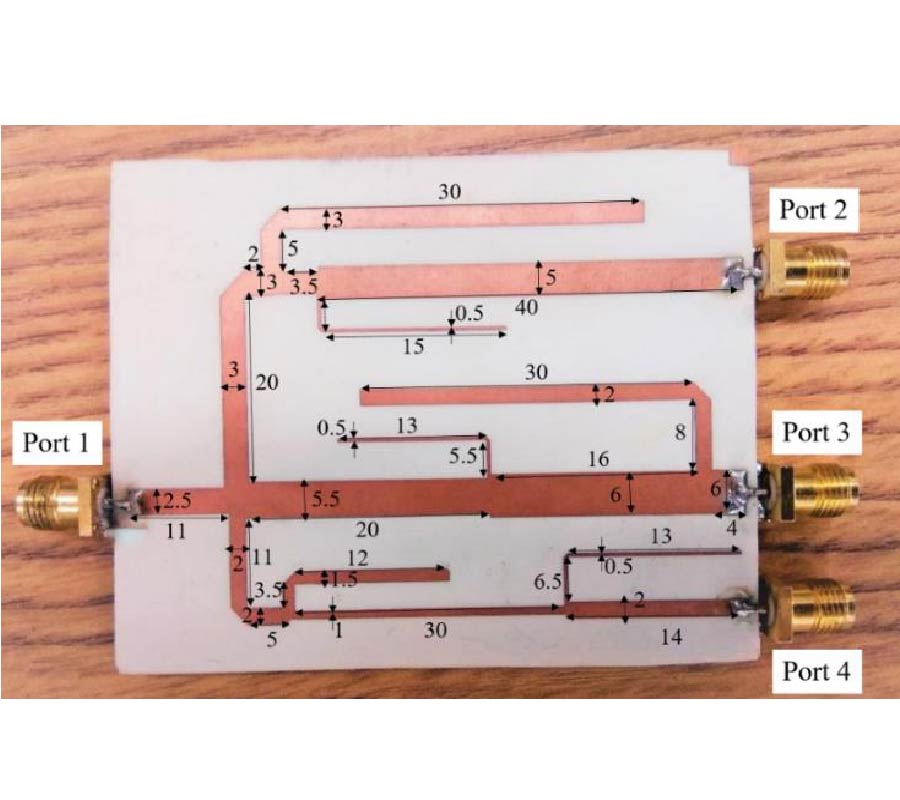
A novel microstrip dual-band bandpass filter (BPF) by coupling a stub-loaded hairpin resonator and two stub-loaded uniform impedance resonators (UIRs) is proposed. First, a open-ended stub is tap-connected to a meandering UIR at its centre, and these two stub-loaded meandering UIRs are further placed at symmetrical locations with respect to a stub-loaded hairpin resonator. Secondly, by introducing two parallel coupled lines at the two sides of the stub-loaded hairpin resonator, a dual-band BPF with two passbands at 2.4 GHz and 5.2 GHz is constructed. Finally, a prototype filter is designed and fabricated, and its measured results are provided to verify the predicted dual-band filter design.
DUAL-BAND BANDPASS FILTER DESIGN USING STUB-LOADED HAIRPIN RESONATOR AND MEANDERING UNIFORM IMPEDANCE RESONATOR
2021-01-13
PIER M
Vol. 100, 105-115
Optimization Design and Research on Vibration and Noise of Permanent Magnet Synchronous Motor for Vehicle
Jun Shen , Xuejun Chen , Zhixin Cui and Lin Ma
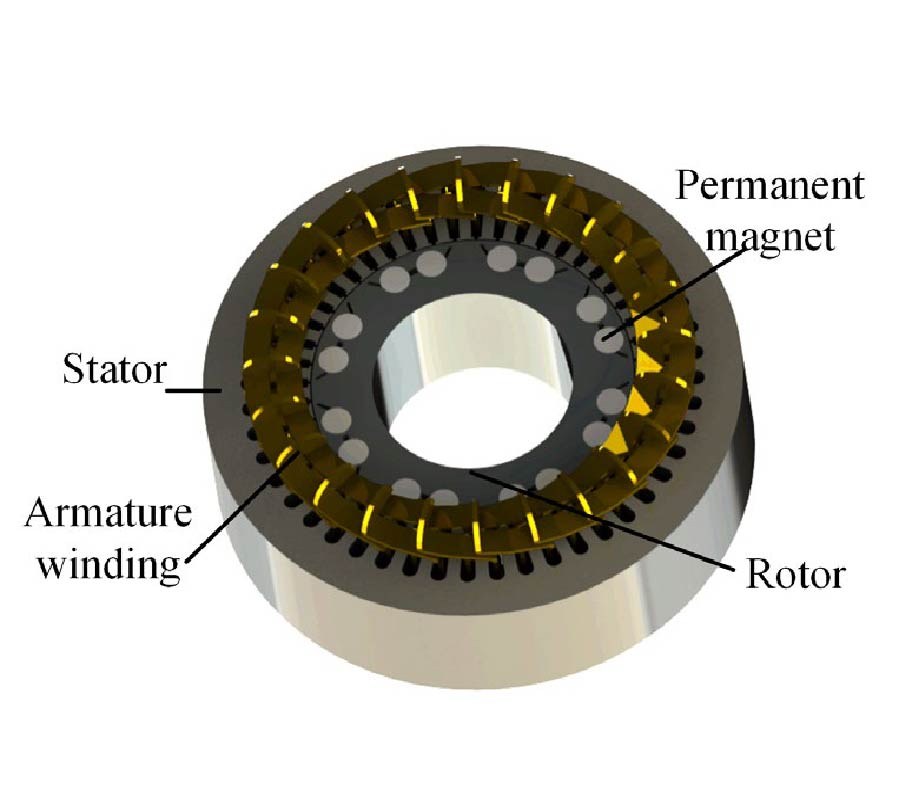
The electromagnetic vibration noise level of a permanent magnet synchronous motor (PMSM) directly affects the Noise, Vibration and Harshness (NVH) performance of an electric vehicle. Taking a permanent magnet synchronous motor (PMSM) for electric vehicle driving as an example, the electromagnetic noise characteristics were studied by combining ANSYS Workbench multi-physical field finite element analysis platform. The electromagnetic vibration force of the stator teeth of the motor is the main source of electromagnetic noise. The magnetic field of the motor can be optimized by changing the slot structure of the motor rotor, so as to improve the electromagnetic vibration force of the stator teeth and reduce the electromagnetic vibration noise of the motor. In order to optimize the magnetic field, three different rotor slot structures are proposed. The most suitable slot structure is found by comparing and analyzing the magnetic field, noise field and electromagnetic force with the structure before optimization. By comparing the results before and after optimization, it can be seen that the optimized motor can effectively reduce the vibration noise of the motor and ensure the electromagnetic performance of the motor.
OPTIMIZATION DESIGN AND RESEARCH ON VIBRATION AND NOISE OF PERMANENT MAGNET SYNCHRONOUS MOTOR FOR VEHICLE
2021-01-12
PIER Letters
Vol. 95, 143-146
A Novel Asymetric Structure for Photonic Crystal Based All Optical Silicon Logic or Gate
Shahram Hosseinzadeh , Mohammad Ali Tavakoli and Nastaran Saeedi
In this paper, a novel simple structure for all optical photonic crystal based logic gate is presented. The structure is based on coupling the input signals to a combiner and thresholding the output signal of the combiner. The unit cell of the structure is designed to achieve band gap around the communication wavelength (i.e. 1.5 μm). The presented structure reveals low cross couple between gate inputs. The structure has no symmetry between inputs, which enables realization of the gate on small footprint photonic crystal. The structure offers 0.1 μ bandwidth around the communication wavelength. The footprint of the structure is 25.59 μm × 25.31 μm.
A NOVEL ASYMETRIC STRUCTURE FOR PHOTONIC CRYSTAL BASED ALL OPTICAL SILICON LOGIC OR GATE
2021-01-12
PIER C
Vol. 108, 187-200
Miniaturized and Gain Enhancement of Tapered Patch Antenna Using Defected Ground Structure and Metamaterial Superstrate for GPS Applications
Kakani Suvarna , Nallagarla Ramamurthy and Dupakuntla Vishnu Vardhan
The main intention to present this work is to miniaturize and gain enhancement of a tapered microstrip patch antenna, which resonates for Global Positioning System (GPS) of L1 band at 1.575 GHz. To accomplish this, we present a new design configuration of a Tap-Shaped Defected Ground Structure (TSDGS). It has been utilized to switch the resonant frequency from 14.5 GHz to 1.575 GHz with no adjustment of areas of the actual Tapered Microstrip Patch Antenna (TMPA). The prototype antenna is fabricated on a Roger RT Duroid substrate merely 58 × 22 mm2. Conclusively, a miniaturization allowed up to 89.31%, with regard to the TMPA, is excellently accomplished. The gain of the proposed antenna is successfully enhanced with properly locating the metamaterial superstrate onto the basic patch antenna. A gain of 7 dBi improvement has been achieved. The proposed design process is done with two different solvers, ADS and HFSS.
MINIATURIZED AND GAIN ENHANCEMENT OF TAPERED PATCH ANTENNA USING DEFECTED GROUND STRUCTURE AND METAMATERIAL SUPERSTRATE FOR GPS APPLICATIONS
2021-01-12
PIER C
Vol. 108, 171-185
The Coefficient of Variation as a Performance Metric of MIMO Antenna Systems Under Arbitrary Handset Orientations
Abbas Al-Wahhamy , Hussain M. Al-Rizzo and Nicholas E. Buris
The Coefficient of Variation (CoV) is investigated, studied, and proposed as an alternative and important performance metric to describe the effects of handset orientation on the capacity of Multiple-Input-Multiple-Output (MIMO) systems. We combine 3-D simulated radiation patterns of a base station and handset and their associated scattering parameters in two anisotropic propagation environments. The capacity is evaluated as the handset rotates about the X-Y-Z axes using standard Euler's angles. The coefficient of variation is numerically derived by rotating the handset over the Euler angles (φ, θ, ψ) in each direction every 15° about each axis over a full sphere where each rotation involves the creation of numerous instances of the propagation environment depending on the statistical robustness of the results sought. Three antenna array geometries operating at a frequency of 2.45 GHz are examined using two different propagation channel models (TGnB and TGnF) to verify the validity of the proposed approach. The derived results suggest that the proposed CoV is an effective and practical reasonable metric in selecting the best antenna system design, where ``best'' here refers to the design with the ability to reach the highest throughput of the designs considered.
THE COEFFICIENT OF VARIATION AS A PERFORMANCE METRIC OF MIMO ANTENNA SYSTEMS UNDER ARBITRARY HANDSET ORIENTATIONS
2021-01-11
PIER C
Vol. 108, 159-169
A Tri-Band Negative Group Delay Circuit for Multiband Wireless Applications
Yuwei Meng , Zhongbao Wang , Shao-Jun Fang and Hongmei Liu
A tri-band negative group delay (NGD) microwave circuit for multiband wireless applications is proposed and self-matched without the need for external matching networks. The frequency range can be influenced by the characteristic impedance of the microstrip lines. Under the condition that the microstrip circuit can be implemented with the common printed circuit board (PCB) fabrication technology, the frequency ratio of the highest NGD band to the lowest NGD band can vary between 3.8 and 10.9. For verification, a 1.2/3.5/5.8-GHz tri-band NGD circuit for Beidou B2, WiMax, and WLAN application is designed, fabricated, and measured. From the measured results, the NGD times are -1.08 ns, -1.19 ns, and -1.09 ns at three NGD central frequencies with insertion losses of 16.4 dB, 24.6 dB, and 18.9 dB, respectively. And the measured NGD bandwidths are 12.40% for the lower band, 8.60% for the center band, and 3.59% for the upper band, in which the return losses are greater than 16 dB.
A TRI-BAND NEGATIVE GROUP DELAY CIRCUIT FOR MULTIBAND WIRELESS APPLICATIONS
2021-01-11
PIER C
Vol. 108, 147-158
Fully Metallic Dual-Band 3-D Wire Antenna for Wi-Fi and Wi-MAX Applications
Fateh Benmahmoud , Pierre Lemaitre-Auger and Smail Tedjini
A segmented three-dimensional wire monopole antenna is proposed and optimized to operate in both the Wi-Fi and Wi-Max frequency bands (2.4-2.48 and 3.3-3.7 GHz). The fabrication of the antenna employs both three dimension printing and foundry techniques. The design occupies a total volume of 33.8 mm × 30.4 mm × 37.4 mm, which is equivalent to 0.28λ0 × 0.25λ0 × 0.30λ0, where λ0 is the central wavelength of the lower band. The measurements agree with the simulations and show that the antenna has a -10 dB impedance bandwidth of 7.53% (2.36 to 2.55 GHz) and 53.87% (2.78 to 4.43 GHz) and a measured -3 dB axial ratio bandwidth of 19.06% (3.18 to 3.85 GHz) for the second band. For the first band, simulations indicate that the polarization is elliptical. The radiation pattern is a near hemispherical coverage toward the upper hemisphere. The measured maximum gain values are 5.6 and 7.3 dB for the lower and upper bands, respectively. The simulated radiation efficiency is higher than 98%.
FULLY METALLIC DUAL-BAND 3-D WIRE ANTENNA FOR WI-FI AND WI-MAX APPLICATIONS
2021-01-11
PIER M
Vol. 100, 93-103
Development of Humidity Monitoring System in Greenhouse with Electromagnetic X Band and Artificial Neural Networks
Prapan Leekul , Pitchanun Wongsiritorn and Pornpimon Chaisaeng
This paper presents a humidity monitoring system with X band electromagnetic transmission. The verification is performed by comparing the gain and phase difference of intermediate frequency between 10.2 GHz and 10.4 GHz. Measurement data are analyzed to classify relative humidity levels and make decisions with ANNs. The system is simulated with electromagnetic field simulation software to analyze the ability of humidity monitoring. The structure from the simulation is developed to be a prototype system, including transmitter and receiver modules. Each module consists of an antenna, a frequency synthesizer, and a frequency mixer. The different operation frequencies of the two modules are -200 MHz and +200 MHz. The obtained intermediate frequency by mixing signals from each module is introduced into the circuit to find the gain and phase difference to compare with a relative humidity level. Humidity monitoring experiment is set in a closed plastic box to control the environment. The relative humidity level is from 55% to 95%. The decrease in gain is associated with increased relative humidity. Results found that the phase difference decreases clearly at the relative humidity from 75% to 95%. Both gain and phase difference data are used to train ANNs to optimize ANNs structure. Data are divided into 50% for training and 50% for testing. The proposed ANNs structure with a learning rate of 0.05 provides 98.8% accuracy. The optimized ANNs structure is composed of two input nodes, eight hidden nodes, and four output nodes. The four output node represents the relative humidity in 11 levels. The simulated and experimental results show that the system is able to monitor humidity effectively for applying in the greenhouse.
DEVELOPMENT OF HUMIDITY MONITORING SYSTEM IN GREENHOUSE WITH ELECTROMAGNETIC X BAND AND ARTIFICIAL NEURAL NETWORKS
2021-01-10
PIER B
Vol. 90, 109-128
Radiation from a Dipole Antenna Located Outside a Cylindrical Density Depletion in a Magnetoplasma Under Resonance Scattering Conditions
Alexander V. Kudrin , Alexander V. Ivoninsky and Oleg M. Ostafiychuk
Resonance interaction between the electromagnetic radiation from a dipole antenna and a cylindrical density depletion aligned with an external static magnetic field in a magnetoplasma is studied in the case where the antenna is located outside such a density irregularity. A distinctive feature of the presented analysis is using a realistic distribution of the antenna current instead of the assumed one. It is shown that such an antenna can excite plasmon resonances of the density depletion, along with the resonance at the plasma frequency of the outer region. In addition, previously unrevealed resonances of the total field, which are related to excitation of complex modes of the cylindrical density depletion, are discussed. The results obtained can be helpful in understanding the basic properties of resonance interaction of the antenna fields with cylindrical density irregularities in a magnetoplasma and planning the related experiments in the ionospheric and laboratory plasmas.
RADIATION FROM A DIPOLE ANTENNA LOCATED OUTSIDE A CYLINDRICAL DENSITY DEPLETION IN A MAGNETOPLASMA UNDER RESONANCE SCATTERING CONDITIONS
2021-01-08
PIER B
Vol. 90, 91-108
Hardware Enabled Acceleration of Near-Field Coded Aperture Radar Physical Model for Millimetre-Wave Computational Imaging
Rahul Sharma , Okan Yurduseven , Bhabesh Deka and Vincent Fusco
There is an increasing demand in real-time imagery applications such as rapid response to disaster rescue and security screening to name a few. The throughput of a radar imaging system is mainly controlled by two parameters; data acquisition time and signal processing time. To minimize the data acquisition time, various methods are being tried and tested by researchers worldwide. Among them is the computational imaging (CI) technique, which relies on using coded apertures to encode the radar back-scattered measurements onto a set of spatio-temporarily incoherent radiation patterns. Such a CI-based imaging approach eliminates the requirement for a raster scan and can substantially simplify the physical hardware architecture. Equally important is the processing time needed to retrieve the scene information from the coded back-scattered measurements. In CI, the simplification in the hardware layer comes at the cost of increased complexity in the signal processing layer due to the indirect mapping and compression of the scene information through the spatio-temporally incoherent transfer function of the coded apertures. To address this particular challenge, this paper presents a hardware-based solution for CI signal processing using a Field Programmable Gate Array (an Xilinx Virtex-7 (XC7VX485T) FPGA chip) architecture. In particular, the proposed method consists of calculating the CI sensing matrix using the FPGA chip and storing it on the FPGA platform for image reconstruction. For the adjoint operation, the calculated sensing matrix is applied on the measured back-scattered waves from the target object. We demonstrate that the FPGA based calculation can reach 21.9 times faster speed than conventional brute-force solutions.
HARDWARE ENABLED ACCELERATION OF NEAR-FIELD CODED APERTURE RADAR PHYSICAL MODEL FOR MILLIMETRE-WAVE COMPUTATIONAL IMAGING
2021-01-08
PIER C
Vol. 108, 137-146
Corrugated SIW Based Bandpass Filter for Microwave Interferometer and ISM Band Application
Alpesh D. Vala , Amit Patel , Keyur Mahant , Jitendra P. Chaudhari , Hiren Mewada and Esraa Mousa Ali Ali
Corrugated substrate integrated waveguide (CSIW) based bandpass filter is designed and developed for the microwave interferometer (7.0 GHz) and ISM band (5.7 GHz-5.9 GHz) application. CSIW structure provides a cost-effective solution counter to substrate integrated waveguide (SIW). Initially, the CSIW structure is designed from the design methodology of SIW. Vias are replaced with a quarter wavelength open stub. A metallic inductive post is used for the realization of the bandpass filter from the CSIW structure. Computer simulation technology (CST) software is used for design and simulation of the proposed model. Two structures are implemented for the microwave interferometer and ISM band frequency application. The first structure resonates at the center frequency of 7.023 GHz with the fractional bandwidth of 5.26%. It provides an insertion loss value of less than 1.5 dB and a return loss better than 14 dB. Similarly, the second structure provides passband frequency, from 5.6 GHz to 6.0 GHz, with the insertion loss value less than 1.5 dB and return loss better than 18 dB at the center frequency. It can be used for the ISM band frequency application. The frequency tuning approach is also shown to change the resonance frequency for different applications. For the proof of concept, the proposed filter is fabricated and tested. The measured results are quite similar to the simulation results.
CORRUGATED SIW BASED BANDPASS FILTER FOR MICROWAVE INTERFEROMETER AND ISM BAND APPLICATION
2021-01-07
PIER C
Vol. 108, 127-136
Tri-Band Defected Ground Plane Based Planar Monopole Antenna for Wi-Fi/WiMAX/WLAN Applications
Aneri Pandya , Trushit K. Upadhyaya and Killol Pandya
Wireless technology plays a vital role in data transfer. There is an acute need of smart wireless devices which could respond effectively for specific applications. This paper presents a defected ground plane based planar antenna. The presented antenna has the potential to operate at 2.47 GHz, 3.55 GHz, and 5.55 GHz frequencies with gains of 3.88 dBi, 3.87 dBi, and 3.83 dBi having impedance bandwidths of 14.61%, 5.42%, and 5.40% respectively. Flame Retardant 4 (FR4) is employed as a substrate. The agreement between simulated and measured results points out the utilization of the presented structure for Wi-Fi/WiMAX/WLAN applications.
TRI-BAND DEFECTED GROUND PLANE BASED PLANAR MONOPOLE ANTENNA FOR WI-FI/WIMAX/WLAN APPLICATIONS
2021-01-07
PIER C
Vol. 108, 115-125
A Design of Multiband Nested Square Shaped Ring Fractal Antenna with Circular Ring Elements for Wireless Applications
Gurpreet Bharti and Jagtar Singh Sivia
This manuscript presents the design of an antenna based on nested square shaped ring fractal geometry with circular ring elements for multi-band wireless applications. The impedance bandwidth and reflection coefficient of the antenna are improved with the design of different iterations from the 0th to 2nd. The performance parameters of the antenna like reflection coefficient, VSWR, bandwidth, bandwidth ratio and current density are improved in the final iteration. It also achieves the enhanced bandwidth greater than 3 GHz at three resonant frequency bands and exhibits additional frequency band at 2.4 GHz. Likewise, the frequency band of designed fractal antenna shifts towards the lower end and helps in achieving the miniaturization of antenna. The proposed fractal antenna is designed and fabricated on a low-cost FR4 glass epoxy substrate and investigated using HFSS software. The proposed antenna is optimized for generating different parameters, and the last geometry is fabricated and tested. Further, these parameters are compared with the experimental results and found in good agreement with each other. Due to the multi-band behaviour and improved bandwidth, the proposed fractal antenna can be considered as a good candidate for several wireless standards.
A DESIGN OF MULTIBAND NESTED SQUARE SHAPED RING FRACTAL ANTENNA WITH CIRCULAR RING ELEMENTS FOR WIRELESS APPLICATIONS
2021-01-07
PIER M
Vol. 100, 81-91
Inductive Multi-Frequency Diversity Using Split Resonant Frequency
Hoang Nguyen and Johnson I. Agbinya
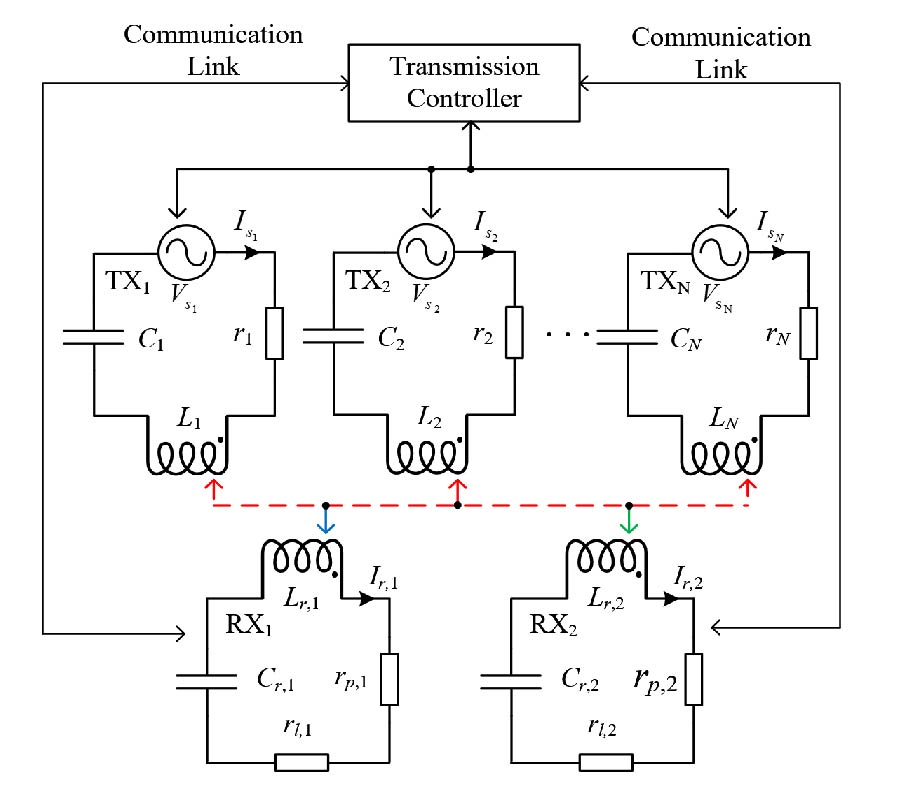
Although wireless power transfer systems suffer from splitting frequency conditions under strong coupling, this could create an opportunity for initiating other frequencies for power and data transfer. This paper introduces a model of an inductive transmitter containing a transmitter and many internal resonators to diversify the magnetic link to the receiver. Using the proposed architecture and solution, the efficiency and received power can be increased, and it also supports multiple frequency diversity.
INDUCTIVE MULTI-FREQUENCY DIVERSITY USING SPLIT RESONANT FREQUENCY
2021-01-06
PIER C
Vol. 108, 103-114
Reconfigurable Uniform Impedance Active Bandpass Filter Using Coupled Lines for L-Band Satellite Communication
Shikha Swaroop Sharma and Anjini Kumar Tiwary
This work presents the design and implementation of a four-section reconfigurable uniform impedance resonator (UIR) active filter. UIR active filter consists of λg/4 microstrip line resonators cascaded in series with parallel coupled lines (PCLs). An additional quarter wavelength section is added to the coupled line quarter wave resonator section and gives flexibility in the coupling length. The proposed active filter provides a gain as a means of compensation to loss incurred by passive circuitry. In addition, it gives high selectivity (-70 dB) and wide stopband. The wide stopband is the result of suppression of spurious frequencies which is accomplished by using shunt stub resonators at appropriate locations in the active filter. The bandwidth reconfigurability is achieved by varying the bias currents of the active devices as well as by tuning the varactor diodes. The UIR concept with active matching is implemented on an FR4 substrate (εr = 4.4), with passband gain of around 15 dB at 1.3 GHz, and out of band rejection is better than -35 dB at twice the centre frequency of 1.3 GHz.
RECONFIGURABLE UNIFORM IMPEDANCE ACTIVE BANDPASS FILTER USING COUPLED LINES FOR L-BAND SATELLITE COMMUNICATION
2021-01-06
PIER C
Vol. 108, 89-101
Joint Beamforming and Phase Shifts Design in Double Intelligent Reflect Surface Aided Secrecy MISO Channel
Jun Shao and Jinxin Zhu
In this paper, we study a double intelligent reflect surface (IRS) aided secrecy transmission design in multiple-input single-output (MISO) channel. Specifically, we investigate a joint active and passive beamforming design to maximize the secrecy rate, subject to multiple non-convex constraints. An alternating optimization (AO) method is proposed, where the unit modulus constraints are handled by the alternating direction of multipliers method (ADMM) and majorization-minimization (MM) methods. Simulation results show the superiority of the proposed design.
JOINT BEAMFORMING AND PHASE SHIFTS DESIGN IN DOUBLE INTELLIGENT REFLECT SURFACE AIDED SECRECY MISO CHANNEL
2021-01-06
PIER C
Vol. 108, 1-12
Air-Gap Correction for High Power Microwave Measurements of Conductive Materials
John Berns Lancaster , Daniel Chandler , Eun Ju Moon , Ahmed M. Hassan and Anthony N. Caruso
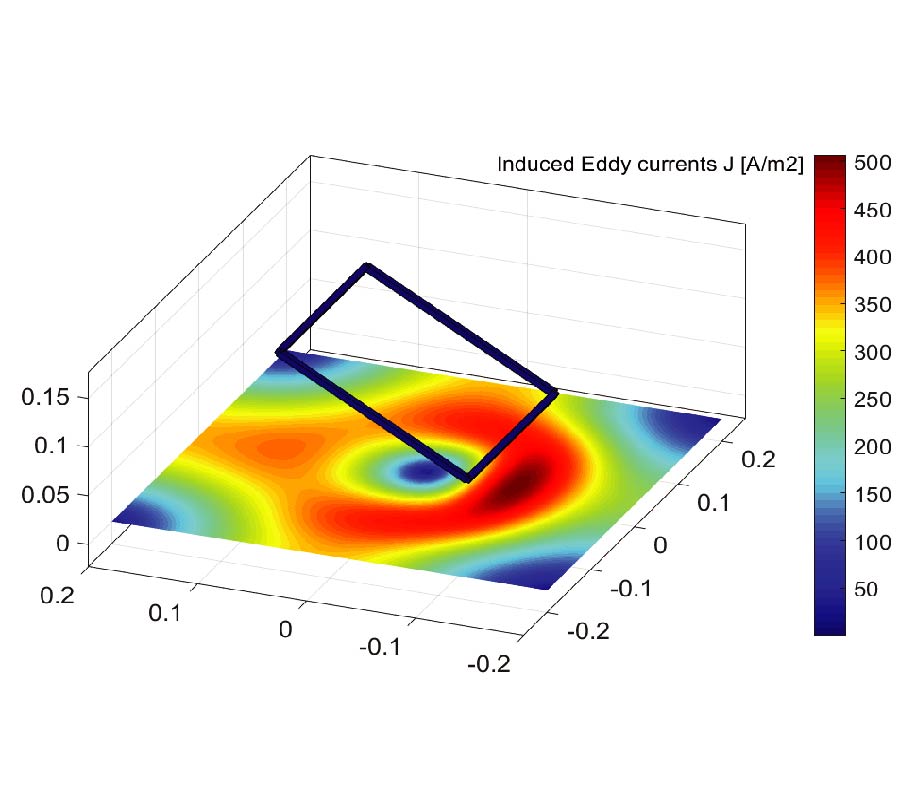
Measurements of the complex permittivity and permeability of solids at high electromagnetic field greater than 10 kV/m pose a significant challenge to RF connectors and input amplifiers of the measurement equipment. Specifically, difficulties arise in measuring materials with high imaginary permittivity or low impedance, which act as short circuits, either exceeding the measurement equipment damage threshold or that of the material under test, and/or inducing an unacceptable signal-to-noise in the collected data. In this work, we report the development of a new measurement technique where we introduce an outer air-gap between the material under test and the conductor of a coax airline. The introduced air-gap reduces the effective conductivity of the sample, mitigating damage to the materials under test and allowing for high power measurement. This study compares the ability of air-gap correction methods to recover the complex permittivity and permeability to within 10% of the value measured without an air-gap introduced.
AIR-GAP CORRECTION FOR HIGH POWER MICROWAVE MEASUREMENTS OF CONDUCTIVE MATERIALS
2021-01-05
PIER Letters
Vol. 95, 135-141
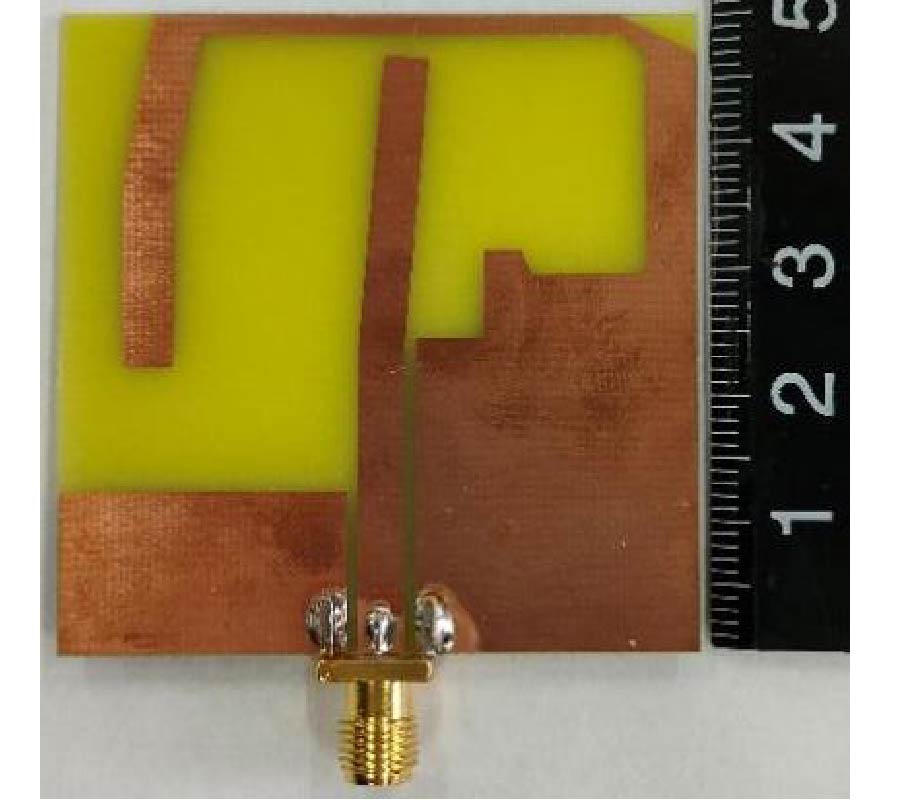
A Slotted Patch Antenna with Enhanced Gain Pattern for Automotive Applications
Stefano Maddio , Giuseppe Pelosi , Monica Righini and Stefano Selleri
A single-layer via-less rectangular patch antenna for automotive applications in C-band is proposed. To match the needs of a vehicular dedicated short range communication protocol, the resonant edge of the antenna is enlarged to narrow the beam-width in the H-plane, while at the same time a pair of thin slots serve as inhibitors for the higher modes, permitting adequate matching and polarization purity. The proposed single patch antenna presents a realized gain about 6.85 dB, H-plane beam-width narrower than ±32˚, E-plane beam-width larger than ±45.5˚, and return loss exceeding 20 dB with a 3 dB bandwidth of 500 MHz, with a minimum at 5810 MHz, hence suitable for coexistence of different communication standard in the C-band. Furthermore, its compact dimension permits the direct integration within a radio front-end.
A SLOTTED PATCH ANTENNA WITH ENHANCED GAIN PATTERN FOR AUTOMOTIVE APPLICATIONS
2021-01-05
PIER C
Vol. 108, 79-87
Differential-Fed Log-Periodic Dipole Array with High Isolation for Wideband Full-Duplex Communications
Tuan Nguyen and Tutku Karacolak
This study presents a differentially driven log-periodic dipole array system with high isolation between reception and transmission ports for wideband full-duplex applications. The antenna system is composed of two pairs of log-periodic dipole arrays operating in the X-band spectrum from 8 GHz to 12 GHz. The system offers a low cross-polarization between E-plane and H-plane (less than -25 dB). The simulation results show high isolation S21 < -60 dB through the entire X-band while the measured results reach S21 < -45 dB in a reflective lab room. Furthermore, in order to verify the measured values, a modified 180º out-of-phase wideband power divider is used to feed transmitting and receiving ports. The second measured outcomes also attain total isolation greater than 45 dB for the entire band of interest. The proposed design is able to cover both orthogonal transmitted and received directions with reasonable gain values, high efficiency, and good impedance matching.
DIFFERENTIAL-FED LOG-PERIODIC DIPOLE ARRAY WITH HIGH ISOLATION FOR WIDEBAND FULL-DUPLEX COMMUNICATIONS
2021-01-03
PIER B
Vol. 90, 63-89
State Space Modelling of Electromagnetic Responses --- a Practical Approach to Extract Parameters from Simulated or Measured Data
Krishna Naishadham
As computing power and algorithmic advances have evolved rapidly in the recent past, it is now feasible to solve complex electromagnetic (EM) problems involving scattering, radar cross section, antenna design, microwave circuit design, artificial EM materials etc., using full-wave numerical methods. Several general-purpose commercial software packages are routinely used in industry in all these domains for EM analysis or design. However, the task of processing large sets of data output from these design studies and analyses is generally beyond the realm of commercial software packages, and the designer spends many hours writing problem-specific computer programs to extract the desired performance parameters. Some examples where auxiliary processing is needed for the extraction of EM parameters of interest include determination of coupling coefficients or the unloaded quality factor of a dielectric resonator, de-embedding feed lines from antenna currents, removal of discontinuity effects, and the extraction of equivalent circuit models. The same considerations as simulated data apply to the parametric analysis of measured data in the presence of noise. This paper presents a versatile data-driven spectral model derived from a state-space system representation of the computed or measured EM fields, from which all the parameters of interest can be extracted. An attractive feature of the state space method is its ability to identify a small number of the system transfer function poles uniquely associated with a specific scattering mechanism or modal response, thereby enabling its isolation from the total response for detailed study. For example, using SSM, specular reflection and creeping waves on a smooth convex surface can be analyzed and the diffraction at the edges can be isolated from the composite RCS of a large body. The desired field parameter is extracted or estimated from synthetic or measured data using a linear system of a relatively small model order that characterizes the specific modal response of interest. Illustrative examples will be presented to demonstrate the usefulness of the proposed approach for parametric extraction.
STATE SPACE MODELLING OF ELECTROMAGNETIC RESPONSES --- A PRACTICAL APPROACH TO EXTRACT PARAMETERS FROM SIMULATED OR MEASURED DATA