Search Results(13789)

2021-01-22
PIER C
Vol. 108, 237-251
Novel Single/Dual Circularly Polarized Antennas Based on Polarization-Conversion Reflective Metasurfaces
Yufang Wang and Yuehe Ge
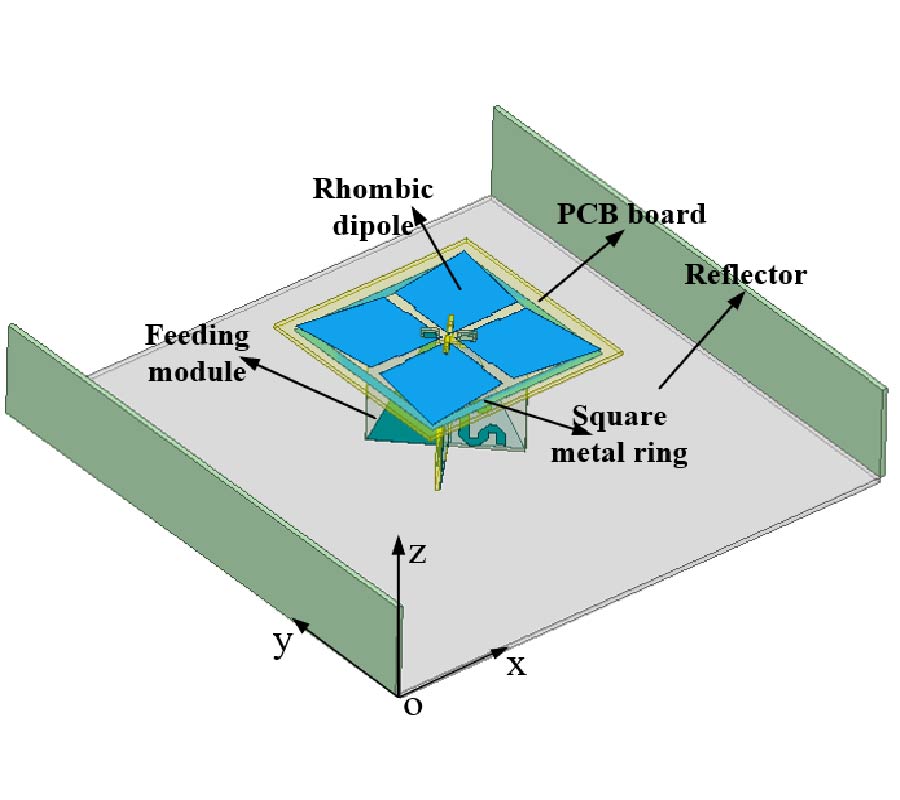
We propose single/dual circularly-polarized (CP) antennas based on reflective metasurfaces with cross-polarization conversion. By suspending a probe-fed printed bow-tie dipole or a crossed bow-tie dipole above the reflective polarization-conversion metasurface and appropriately tuning the distance between them, a single-CP or a dual-CP antenna is generated. The theoretical design principle on this novel CP antenna structure has been discussed. Simulations and experiments are conducted to validate the design principle. The measured results show that the proposed single-CP antenna has achieved a 3-dB axial ratio (AR) bandwidth of 8.0%, from 12.67 to 13.72 GHz, and a peak gain of 8.03 dBi, while the dual-CP antenna exhibits a dual-CP AR bandwidth of 7.1%, from 13.09 to 14.05 GHz, and peak gains of 8.49 dBi and 7.03 dBi for left-handed circular polarization (LHCP) and right-handed circular polarization (RHCP), respectively. The measured isolation between the two ports of the dual-CP antenna is less than -20 dB. The operating frequency of the proposed antennas can be easily scaled to other frequencies that are applied to some specific wireless applications.
NOVEL SINGLE/DUAL CIRCULARLY POLARIZED ANTENNAS BASED ON POLARIZATION-CONVERSION REFLECTIVE METASURFACES
2021-01-21
PIER Letters
Vol. 96, 1-6
An Independently Reconfigurable Upper and Lower Band Edge of Yagi Uda Antenna
Mohamed Lamine Seddiki , Mourad Nedil , Saifeddine Hadji and Farid Ghanem
In this letter, a novel design of independently reconfigurable upper and lower bands of a Yagi-Uda antenna is presented. The reconfiguration approach used in this antenna is based on keeping either the upper or lower band edge fixed with gradually increasing the bandwidth to the lower or upper ones. In this system, PIN diodes are used to control the length of the resonator and the slot-line of Yagi-Uda antenna to achieve upper and lower bandwidths limit reconfigurability. An antenna prototype was fabricated and tested in order to validate the design approach of the bandwidth reconfiguration. The proposed antenna has several different modes of operation with capability of tuning the fractional bandwidth (FBW) from 7% to 33% and 18% to 72% when using resonator and slot-line, respectively. This antenna can be a good candidate for cognitive radio applications that need adjusting the frequency bandwidth.
AN INDEPENDENTLY RECONFIGURABLE UPPER AND LOWER BAND EDGE OF YAGI UDA ANTENNA
2021-01-21
PIER Letters
Vol. 95, 163-169
New Theoretical Floquet Modal Analysis to Study 3-D Finite Almost Periodic Structures with Coupled Cells
Bilel Hamdi and Taoufik Aguili
This research letter offers a generalization character to our previous work [4, 5] to examine a 3-D almost periodic phased array antenna excited by arbitrarily located sources. An original modal formulation based on the Floquet analysis procedure is proposed utilizing the periodic walls along x, y, and z-axes, where the analysis region in the spectral domain is reduced to the Brillouin zone. Here, a good idea is provided to enforce the given boundary conditions for obtaining an integral equation formalism developed through Galerkin's method for solving periodic volumic structure (e.g. 3-D regular structure in the cubic grid). The interaction between cells in 3-D geometry (lattice) could be deduced using a novel expression of mutual coupling. However, it is possible to obtain it explicitly by the mean of Fourier transform and its inverse. Then, it is proven how Floquet analysis can be employed to study a 3D-finite array configuration with arbitrary amplitude and linear phase distribution along x, y, and z directions, including mutual interaction effects. To deal with the real hole 3D array configuration, a superposition theorem is suggested to describe the electromagnetic behavior in the spatial domain. For modeling the given 3D antenna array, one numerical method is adopted: The moment method combined with an equivalent circuit (MoM-GEC). An important gain in the running time and memory used would be achieved using Floquet analysis in comparison with other spatial conventional methods (especially, when the number of cells increases by adding the second and third directions).
NEW THEORETICAL FLOQUET MODAL ANALYSIS TO STUDY 3-D FINITE ALMOST PERIODIC STRUCTURES WITH COUPLED CELLS
2021-01-21
PIER
Vol. 170, 63-78
Computational Investigation of Nanoscale Semiconductor Devices and Optoelectronic Devices from the Electromagnetics and Quantum Perspectives by the Finite Difference Time Domain Method (Invited Review)
Huali Duan , Wenxiao Fang , Wen-Yan Yin , Erping Li and Wenchao Chen
In the simulation of high frequency nanoscale semiconductor devices in which electromagnetic (EM) fields and carrier transport are coupled, and optoelectronic devices in which strong interactions between EM fields and charged particles exist, both the Maxwell's equations and the time-dependent Schrödinger equation (TDSE) need to be solved to capture the interactions between EM and quantum mechanics (QM). One of the numerical simulation methods for solving these equations is the finite difference time domain (FDTD) method. In this review paper, the development of FDTD method applied in EM and QM simulation is discussed. Several widely used FDTD techniques, i.e., explicit, implicit, explicit staggered-time, and Chebyshev methods, for solving the TDSE are introduced and compared. The hybrid approaches based on FDTD method, which are used to solve the Poisson-TDSE and Maxwell-TDSE coupled equations for EM-QM simulation, are also discussed. Furthermore, the applications of these simulation methods for nanoscale semiconductor devices and optoelectronic devices are introduced. Finally, a conclusion is given.
COMPUTATIONAL INVESTIGATION OF NANOSCALE SEMICONDUCTOR DEVICES AND OPTOELECTRONIC DEVICES FROM THE ELECTROMAGNETICS AND QUANTUM PERSPECTIVES BY THE FINITE DIFFERENCE TIME DOMAIN METHOD (INVITED REVIEW)
2021-01-21
PIER C
Vol. 109, 13-26
A Feed-Forward Control Strategy for Compensating Rotor Vibration of Six-Pole Radial Hybrid Magnetic Bearing with Fuzzy Adaptive Filter
Huangqiu Zhu and Mingjie Tang
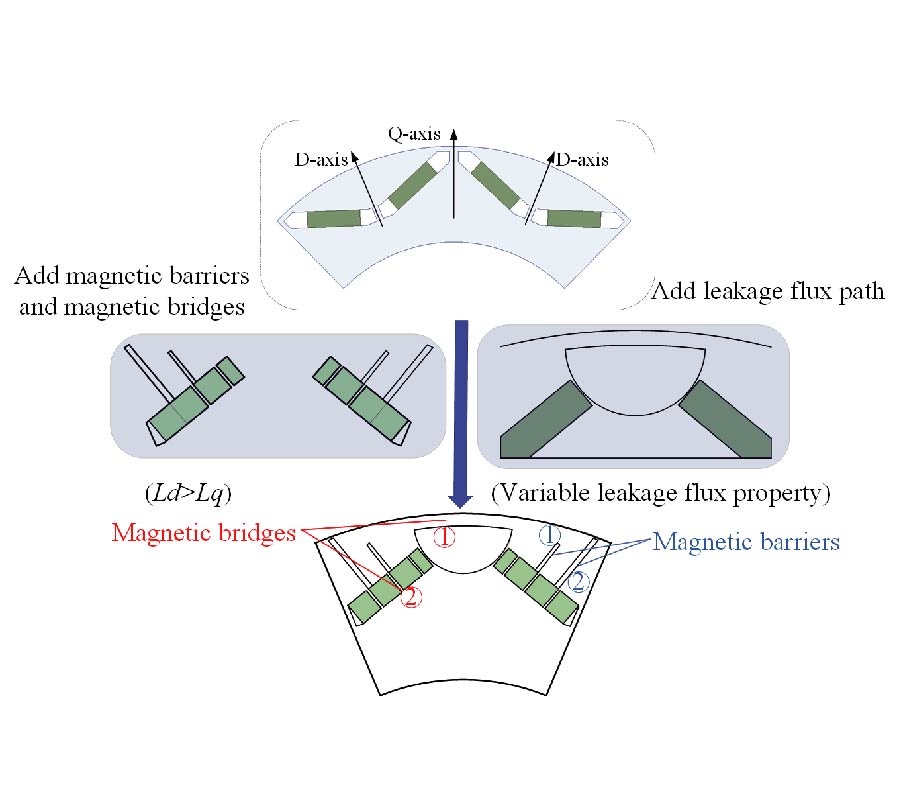
In order to solve the problem that the unbalance vibration caused by rotor mass eccentricity of the six-pole radial hybrid magnetic bearing (HMB) seriously affects stability and security of the system, a feed-forward compensation control strategy for rotor unbalance vibration based on fuzzy least-mean-square (LMS) algorithm is proposed. Firstly, the structure, operation principle and mathematical model of the six-pole radial HMB are introduced, and the cause of rotor vibration is analyzed and the dynamic equation of rotor deduced. Secondly, an LMS self-adapting filter is improved by using a fuzzy inference system, and the step size of the LMS algorithm is combined with the fuzzy control theory. By using the Takagi-Sugeno (TS) fuzzy inference machine system to adjust the step size of the algorithm, the filter output can approach the unbalance vibration signal smoothly and quickly, and realize the vibration compensation of the rotor. Finally, the simulations and experiments are carried out to verify that the proposed method can not only effectively suppress the unbalance vibration of the six-pole radial HMB rotor in real time but also have good compensation accuracy. The results show that the vibration compensation effect of fuzzy LMS algorithm is better than that of fixed step size filtering algorithm.
A FEED-FORWARD CONTROL STRATEGY FOR COMPENSATING ROTOR VIBRATION OF SIX-POLE RADIAL HYBRID MAGNETIC BEARING WITH FUZZY ADAPTIVE FILTER
2021-01-20
PIER M
Vol. 100, 163-173
Design of Filtering Coupled-Line Trans-Directional Coupler with Broadband Bandpass Response
Hongmei Liu , Xiaoting Li , Yongquan Guo , Shao-Jun Fang and Zhongbao Wang
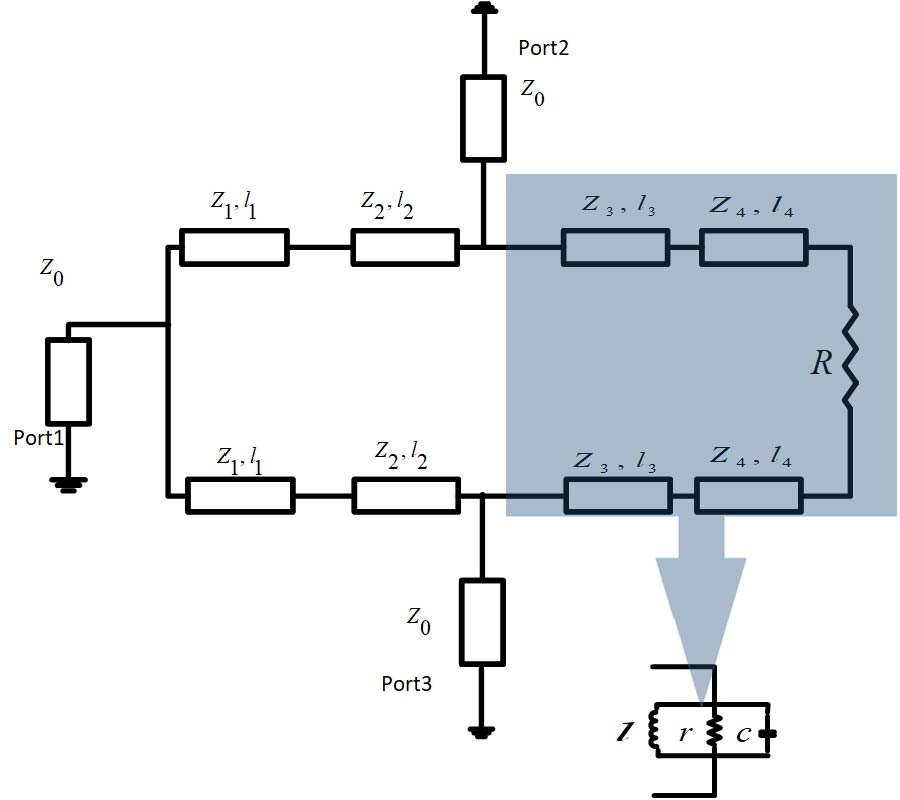
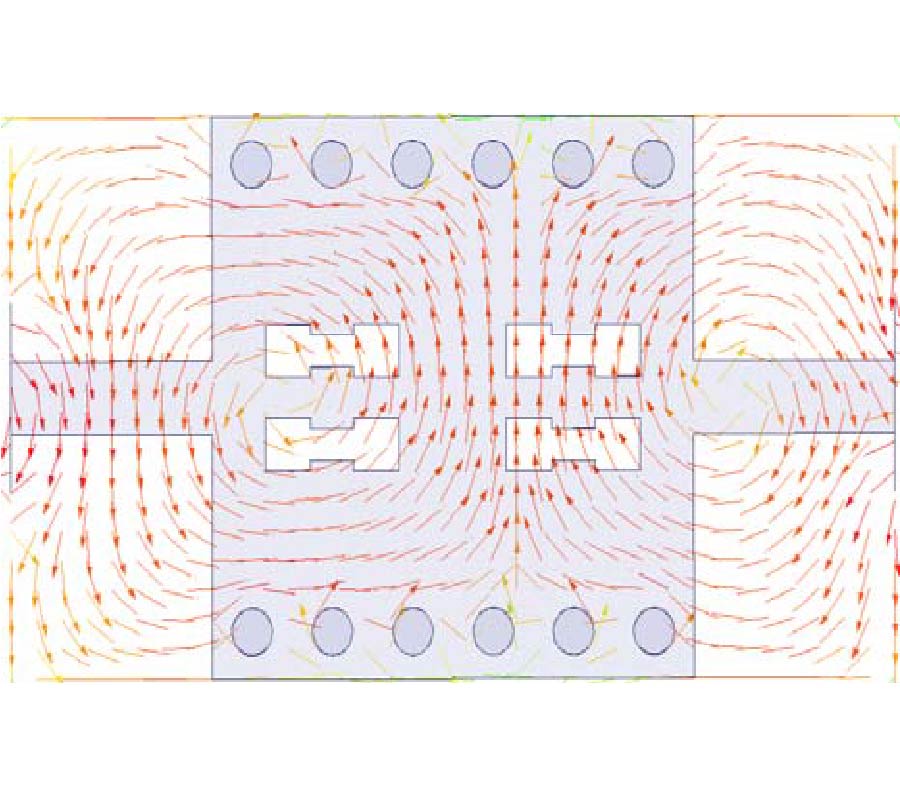
In the paper, a filtering coupled-line trans-directional (CL-TRD) coupler with broadband bandpass response is presented for the first time. It is composed of three sections of coupled lines, four transmission lines and four shunt stubs. Design equations of the proposed filtering CL-TRD coupler are derived using the even- and odd-mode analysis. For demonstration, a prototype operating at 2.4 GHz is designed, fabricated and measured. Under the criterion of |S11| < -10 dB, the measured bandpass bandwidth is 41.7 %. In this bandwidth, the output port phase difference is within 90° ± 5°. Besides, two stopbands (0.91 GHz ~ 1.89 GHz and 3.36 GHz ~ 4.3 GHz) are obtained on both sides of the passband with sharp rejection. The measurements and comparisons results show that smaller size, wider bandwidth and easier fabrication than the reported filtering couplers are exhibited by the proposed filtering CL-TRD coupler. It indicates that a good candidate for filtering-coupling applications can be served by the proposed coupler.
DESIGN OF FILTERING COUPLED-LINE TRANS-DIRECTIONAL COUPLER WITH BROADBAND BANDPASS RESPONSE
2021-01-19
PIER Letters
Vol. 95, 155-162
Conductivity Estimation by Characterization of the Anomalous Dispersion Region
Omar F. Siddiqui
Anomalous dispersion region is a resonance signature in the frequency response of resonators known as Lorentz resonators. It is identified by two consecutive slope reversals of the transmission phase response and a dip in the amplitude response. In this letter, we propose to exploit this unique resonant phase signature in characterization of the conductivity of solid and liquid material samples. The microwave resonator sensor consists of an open microstrip stub whose conductivity is designed to vary in response to an intruding sample. The transmission response of the resonator containing the material sample is measured using a vector network analyzer. The change of conductivity affects the Q-factor which can be detected by either the slope changes of the anomalous dispersive phase or the 3dB bandwidth of the amplitude spectrum. The hypothesis is practically demonstrated by detecting resistive changes of a saline solution whose conductivity depends on the amounts of additive salt.
CONDUCTIVITY ESTIMATION BY CHARACTERIZATION OF THE ANOMALOUS DISPERSION REGION
2021-01-19
PIER C
Vol. 108, 227-236
Efficient Isolation Modelling for Two-Port MIMO Antenna by Gaussian Process Regression
Kanhaiya Sharma and Ganga Prasad Pandey
This article present a synthesis modelling of isolation in a diamond-shaped fractal electromagnetic band gag (DSFEBG) based two-port multiple input and multiple-output (MIMO) antenna using the Gaussian Process Regression (GPR). A compact two-port MIMO antenna with 0.140λ inter-element spacing is considered for isolation improvement. To predict mutual coupling in two-port MIMO antenna supervised learning-based regression technique of GPR, the model is trained with 50 samples and tested on 125 samples. The model performs result prediction in less than 1 second with RMSE less than 0.0001%. For a better understanding of the isolation between elements of the MIMO antenna, the automatic relevance determination property of GPR is presented. The proposed model does faster computation and is efficient in predicting isolation in DSFEBG based antennas for lower and high-frequency bands of 5G communication system.
EFFICIENT ISOLATION MODELLING FOR TWO-PORT MIMO ANTENNA BY GAUSSIAN PROCESS REGRESSION
2021-01-19
PIER M
Vol. 100, 151-161
Addressing Grating Lobes in Linear Scanning Phased Arrays with Self-Nulling Elements and Optimized Amplitude Distributions
Zabed Iqbal and Maria Pour
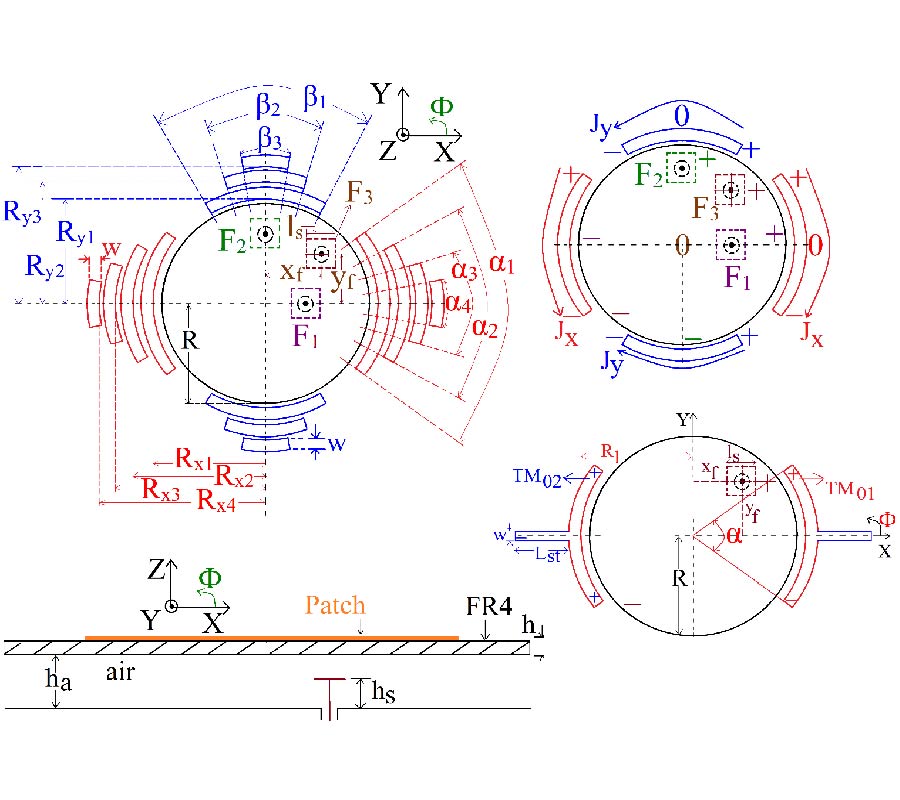
An effective method to reduce grating lobes in linear scanning phased array antennas with large element spacing of one wavelength is presented. The proposed technique is based on employing self-nulling antenna elements by simultaneously exciting the first two modes in a circular microstrip patch antenna to partially nullify the grating lobes. More importantly, a modified amplitude tapering is optimized in the array level to facilitate the grating lobe reduction for relatively wide scan angles up to ±60°. Analytical results of a 21-element linear array are fully presented, and a -22.5 dB grating lobe reduction for up to ±60° scan angles is reported using the proposed method, followed by the results of a smaller array for validation purposes.
ADDRESSING GRATING LOBES IN LINEAR SCANNING PHASED ARRAYS WITH SELF-NULLING ELEMENTS AND OPTIMIZED AMPLITUDE DISTRIBUTIONS
2021-01-18
PIER B
Vol. 90, 167-186
Datacube Parametrization-Based Model for Rough Surface Polarimetric Bistatic Scattering
Xueyang Duan and Mark S. Haynes
A datacube parametrization-based model for bistatic scattering coefficient estimation, and pattern reconstruction is presented in this work for electromagnetic wave scattering from rough surfaces with low to high subsurface dielectric constants. A datacube of bistatic scattering coefficients is simulated using the Stabilized Extended Boundary Condition Method (SEBCM). The polarization-combined bistatic scattering patterns of the datacube are fit with elliptical (or circular) contours that are parameterized across magnitude level, center location, and major axis length in normalized wavenumber space. These parameters depend on the surface roughness, dielectric contrast, as well as the angle of wave incidence. The polarimetric bistatic scattering patterns can be reconstructed through fast interpolation over the contours and projection onto the polarization unit vectors. Good agreement is achieved between the reconstructed bistatic scattering patterns compared with the original ones in the input datacube. Though not physics-based, this datacube parametrization-based model allows quick estimation and construction of the polarimetric bistatic scattering coefficients and patterns. The model development approach can also be adopted to parametrize datacubes from simulations with other configurations or targets, e.g., surface with different correlation functions, multilayer surfaces, surface covered with vegetation, etc.
DATACUBE PARAMETRIZATION-BASED MODEL FOR ROUGH SURFACE POLARIMETRIC BISTATIC SCATTERING
2021-01-18
PIER B
Vol. 90, 151-166
Lorentz Force Contribution to Thunderstorm's Electrical Characteristics
Babak Sadeghi , Amir Abbas Shayegani Akmal and Farahnaz Taghavi
In this paper, the exerted electric and geomagnetic forces on the electrified hydrometeors in thunderclouds are compared. The parameters of geomagnetic field are acquired from International Geomagnetic Reference Field (IGRF) model. First, the calculations showed that the magnitude of the electricforce exerted on a charged hydrometeor dominates the magnitude of the geomagnetic force in troposphere. These results revealed the significance of electricforce in the formation of thunderclouds' charge structure. Moreover, as the electric field increases in thunderstorm conditions, (regarding the dependence of the induction mechanism of cloud electrification to the intensity of the electric field) the increased electric field strengthens the induction mechanism of cloud electrification and influences the electrical properties of thunderstorm. Second, using satellite-based/ground-based data and reports, an inverse relation has been revealed between the totalgeomagnetic field and the mean annual lightningactivity in most of the hot spots on the Earth. Moreover, a comparison between the global annual thunder days' map and the map of global total geomagnetic field showed an inverse relation between these two maps. Furthermore, regarding the horizontal and vertical correlation coefficient matrices of the geomagnetic field and the global mean annual lightning activity (in the global tropics and subtropics), approximately in latitudes and longitudes with high lightning density, the reverse relation between the average annual lightning activity and the total geomagnetic field is stronger.
LORENTZ FORCE CONTRIBUTION TO THUNDERSTORM'S ELECTRICAL CHARACTERISTICS
2021-01-18
PIER C
Vol. 108, 211-225
Near-Field Focused Reflectarray Antenna and Reconfigurable Intelligent Surfaces: the Potential of Wave Propagation Control for Smart Radio Environment
Wael Elshennawy
Reconfigurable intelligent surfaces (RISs) have recently attracted attention in the implementation of smart radio environment. In this paper, RISs are realized by the near-field focused antennas (NFF). A near-field channel gain model of RIS-assisted wireless communications is developed for an NFF reflectarray antenna based on the physics and electromagnetic nature of the RISs. The developed model entails the computation of the reflectarray aperture efficiency. Also, it takes into account reflectarray reconfigurablility to cope with varying environment, physical factors like the physical dimensions of the RISs, and the radiation patterns of the unit cells. Moreover, it is characterised by a reduction in the complexity. This model is further used in computing the positioning performance bounds and estimating the RIS optimal beamformer weights. For a validation purpose, the model is simulated by using Matlab software, and the results are compared to the simulation results of a near-field model discussed in literature. The comparison shows a very good agreement. Finally, the reflectarray antenna is thinned to achieve a performance comparable to a fully populated reflectarray antenna case using the full wave 3D electromagnetic solver CST Microwave Studio (CST MWS).
NEAR-FIELD FOCUSED REFLECTARRAY ANTENNA AND RECONFIGURABLE INTELLIGENT SURFACES: THE POTENTIAL OF WAVE PROPAGATION CONTROL FOR SMART RADIO ENVIRONMENT
2021-01-18
PIER M
Vol. 100, 141-150
Ultra-Wideband Featuring Enhanced Delay and Sum Algorithm and Oriented for Detecting Early Stage Breast Cancer
Mohammed Sadoon Hathal , Suhair S. Salih and Alaa H. Hasan
In this study, we present the experimental results of ultra-wideband (UWB) imaging oriented for detecting small malignant breast tumors at an early stage. The technique is based on radar sensing, whereby tissues are differentiated based on the dielectric contrast between the disease and its surrounding healthy tissues. The image reconstruction algorithm referred to herein as the enhanced version of delay and sum (EDAS) algorithm is used to identify the malignant tissue in a cluttered environment and noisy data. The methods and procedures are tested using MRI-derived breast phantoms, and the results are compared with images obtained from classical DAS variant. Incorporating a new filtering technique and multiplication procedure, the proposed algorithm is effective in reducing the clutter and producing better images. Overall, the methods and procedures registered a signal-to-clutter ratio (SCR) value of 1.54 dB when imaging the most challenging example involving the heterogeneously dense model in 8-antenna geometry. The SCR is slightly increased to 3.12 dB when the number of sensors is increased to 16.
ULTRA-WIDEBAND FEATURING ENHANCED DELAY AND SUM ALGORITHM AND ORIENTED FOR DETECTING EARLY STAGE BREAST CANCER
2021-01-15
PIER
Vol. 170, 17-62
Advanced Progress on Χ(3) Nonlinearity in Chip-Scale Photonic Platforms (Invited Review)
Zhe Kang , Chao Mei , Luqi Zhang , Zhichao Zhang , Julian Evans , Yunjun Cheng , Kun Zhu , Xianting Zhang , Dongmei Huang , Yuhua Li , Jijun He , Qiang Wu , Binbin Yan , Kuiru Wang , Xian Zhou , Keping Long , Feng Li , Qian Li , Shaokang Wang , Jinhui Yuan , Ping-Kong Alexander Wai and Sailing He
χ(3) nonlinearity enables ultrafast femtosecond scale light-to-light coupling and manipulation of intensity, phase, and frequency. χ(3) nonlinear functionality in micro- and nano-scale photonic waveguides can potentially replace bulky fiber platforms for many applications. In this review, we summarize and comment on the progress on χ(3) nonlinearity in chip-scale photonic platforms, including several focused hot topics such as broadband and coherent sources in the new bands, nonlinear pulse shaping, and all-optical signal processing. An outlook of challenges and prospects on this hot research field is given at the end.
ADVANCED PROGRESS ON Χ<SUP>(3)</SUP> NONLINEARITY IN CHIP-SCALE PHOTONIC PLATFORMS (INVITED REVIEW)
2021-01-15
PIER C
Vol. 108, 201-210
Compact CPW-Fed Asymmetric UWB Antenna with Sufficient WLAN-Band Rejection
Rahul Kumar Garg , Maroor Vikraman Deepak Nair , Sarthak Singhal and Raghuvir S. Tomar
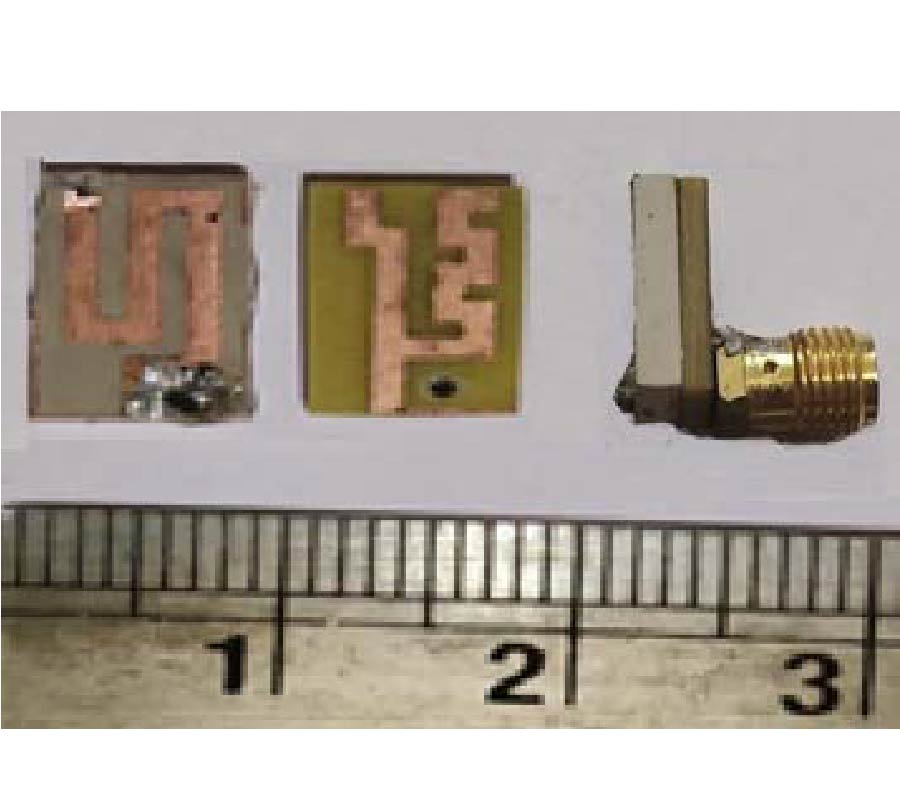
A coplanar waveguide fed asymmetric rectangular antenna with sufficient WLAN-band rejection is presented for ultra-wideband applications. The antenna uses an asymmetric rectangular patch, modified feedline, and defected coplanar ground plane for obtaining ultra-wideband performance. An inverted-L shaped slit in the radiating patch is used for realizing the WLAN band-rejection. The antenna is designed on 1.6 mm thick FR-4 substrate having an area of 12×16 mm2 (0.169λL×0.225λL). An impedance bandwidth of 11.49 GHz with a WLAN band-notch from 5.15-5.86 GHz is achieved. In addition to this, desirable radiation characteristics in terms of stable radiation patterns, peak realized gain of 4.5 dBi, and maximum total efficiency of 81% are achieved in the pass-band. In the notched-band, the peak gain and total efficiency reduces to -1.3 dB and 40%, respectively. Measured results agree well with simulated results. This antenna structure has fractional bandwidth of 115.18% and a bandwidth dimension ratio of 3029, which is comparable or better than that of similar structures available in the literature. The proposed antenna has desirable time domain performance in terms of fidelity factor, group delay, isolation and S21 phase.
COMPACT CPW-FED ASYMMETRIC UWB ANTENNA WITH SUFFICIENT WLAN-BAND REJECTION
2021-01-15
PIER M
Vol. 100, 127-140
Computation of Oscillation Frequency in a Plasma Filled Rectangular Cavity Resonator
Pragya Shilpi , Dharmendra Upadhyay and Harish Parthasarathy
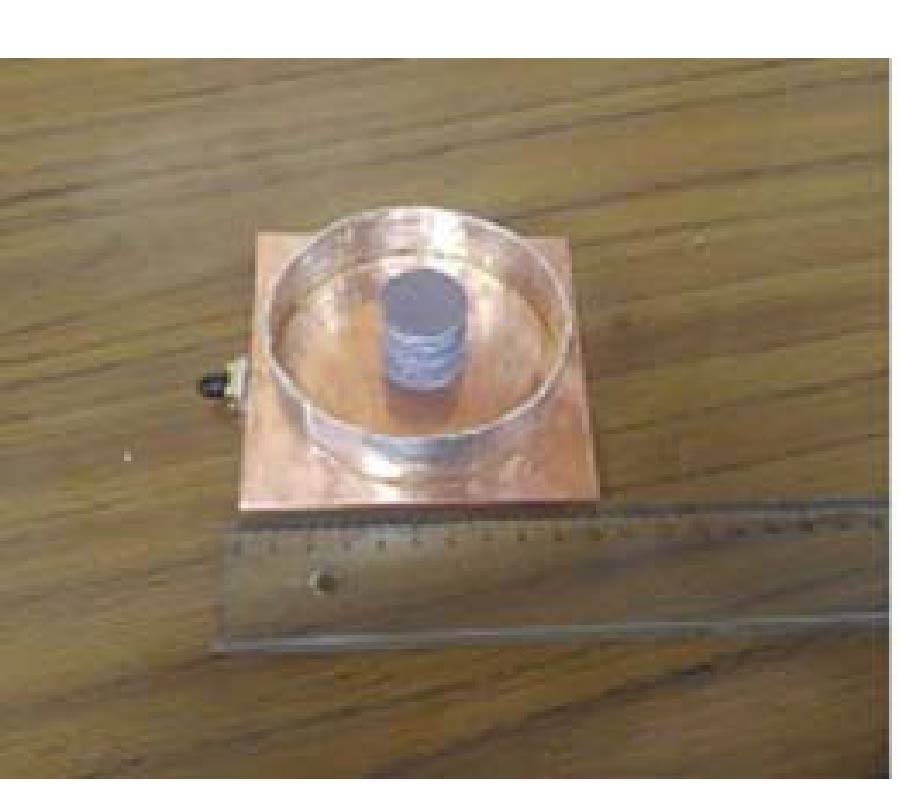
Oscillation frequency in a plasma filled rectangular dielectric resonator antenna is computed. Perturbation method for solving differential equation is applied to find oscillation frequencies of dielectric cavity resonator. Equilibrium distribution function of collisionless Boltzmann equation is slightly perturbed. Distribution function of plasma is perturbed by altering external applied electromagnetic field. Perturbed Boltzmann equation satisfies with the relaxation time approximation used for the collision. The resulting Maxwell equations are subjected to appropriate boundary condition. Multilinear algebra tensor decomposition technique is done to find eigenfrequincies of cavity resonator antenna considered in this paper. A simulation study of a ionized gas plasma antenna is done on HFSS. Numerically calculated oscillation frequency is cross verified with HFSS result and found in good agreement.
COMPUTATION OF OSCILLATION FREQUENCY IN A PLASMA FILLED RECTANGULAR CAVITY RESONATOR
2021-01-14
PIER B
Vol. 90, 129-150
Electromagnetic Simulation for Estimation of Forest Vertical Structure Using PolSAR Data
Shimaa Ahmed Megahed Soliman , Khalid Fawzy Ahmed Hussein and Abd-El-Hadi A. Ammar
A novel method for the estimation of a forest vertical structure using Polarimetric Synthetic Aperture Radar (PolSAR) data only without the need to interferometry data is proposed in the present paper. Electromagnetic (EM) simulation is used to develop the proposed method, where the SAR pulse is simulated as a plane wave incident in the direction of the side looking angle of the SAR. For this purpose, the forest canopy layer is modeled as clouds of randomly oriented thin straight dipoles which are randomly distributed within an inclined prism volume, whereas the forest soil surface is modeled as a random rough surface. This prism has a horizontal rectangular base and parallelogram sides parallel to the direction of the incident plane wave (side looking angle of the SAR). The proposed method aims to estimate the average height of the canopy layer above the soil surface, the canopy layer thickness and the roughness of the forest ground surface. The proposed method is based on the Radar Vegetation Index (RVI) and the normalized Radar Cross Section (RCS) calculated from the PolSAR data and their relevance to the parameters of the forest vertical structure. Some examples are presented to demonstrate the capability of the proposed method using some PolSAR images obtained through EM simulation of the scattering from forest regions and by applying the theorem of SAR target composition with the Multiple Component Scattering Model (MCSM). The phase differences between the components of scattering obtained from the solution of the SAR target decomposition problem are used in the estimation process. The accuracy of the proposed method is assessed by calculating the percentage error of the estimated vertical structure and ground roughness for each resolution cell of the simulated forest region. It is shown that the percentage errors of the estimated parameters are very low, which reflects the accuracy and efficiency of the proposed method.
ELECTROMAGNETIC SIMULATION FOR ESTIMATION OF FOREST VERTICAL STRUCTURE USING POLSAR DATA
2021-01-14
PIER
Vol. 170, 1-15
Designing Nanoinclusions for Quantum Sensing Based on Electromagnetic Scattering Formalism (Invited Paper)
Constantinos Valagiannopoulos
Quantum interactions between a single particle and nanoinclusions of spherical or cylindrical shape are optimized to produce scattering lineshapes of high selectivity with respect to impinging energies, excitation directions and cavity sizes. The optimization uses a rigorous solution derived via electromagnetic scattering formalism while the adopted scheme rejects boundary extrema corresponding to resonances that occur outside of the permissible parametric domains. The reported effects may inspire experimental efforts towards designing quantum sensing systems employed in applications spanning from quantum switching and filtering to single-photon detection and quantum memory.
DESIGNING NANOINCLUSIONS FOR QUANTUM SENSING BASED ON ELECTROMAGNETIC SCATTERING FORMALISM (INVITED PAPER)
2021-01-14
PIER C
Vol. 109, 1-12
Miniaturized Circularly-Polarized Patch Antenna Using an Artificial Metamaterial Substrate
Jamal Zaid and Tayeb Denidni
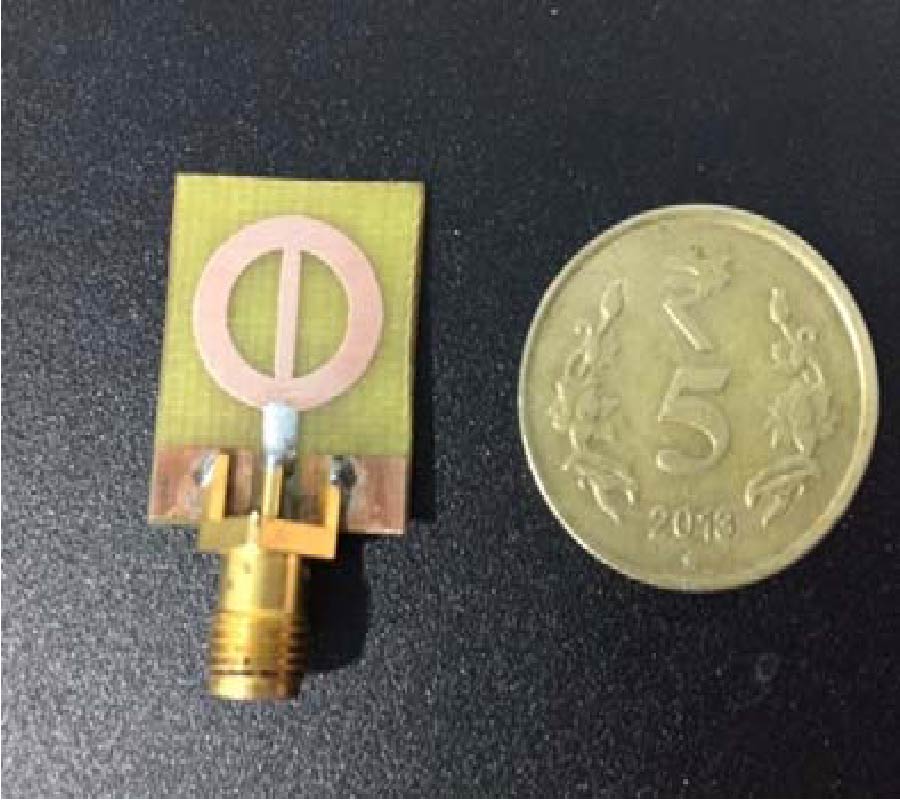
An artificially two-dimensional metamaterial (ATDM) substrate is proposed as an artificial metamaterial high-constitutive parameter substrate for miniaturizing of a circularly-polarized microstrip antenna. In a circularly-polarized antenna, the electric and magnetic field directions are changing, which requires a two-dimensional metamaterial unit cell. The presented ATDM substrate raises the permeability and permittivity of the underneath substrate for a circularly-polarized patch antenna, and it is constructed of periodically arranged split-ring resonator (SRR) circuits implemented in a low permittivity dielectric underneath substrate. The ATDM attains equal permittivity and permeability material (εr ≅ μr), which neutralizes the destructive effect of the increased permittivity on the bandwidth. In addition, the ATDM structure is implemented in printed circuit board technology. The area of the ATDM antenna at 2.45 GHz is approximately 75% smaller than a usual microstrip antenna. The proposed antenna bandwidth is enhanced compared to the antennas with high-permittivity substrates. The proposed ATDM substrate antenna is fabricated and measured, and comparisons show good agreements between simulated and measured results.
MINIATURIZED CIRCULARLY-POLARIZED PATCH ANTENNA USING AN ARTIFICIAL METAMATERIAL SUBSTRATE
2021-01-14
PIER M
Vol. 100, 117-125
Prediction of Electric Field in the Loaded Cavity Based on the Theory of Reverberation Chambers
Yan Chen , Xiang Zhou , Jingkang Ji , Shouyang Zhai and Dan Chen
The shielding cavity loaded with electronic equipment inside has a high Q value and is in overmode at relatively high frequency as a reverberation chamber (RC), but it does not have stirrers or paddles. However, the electromagnetic environment in the cavity is similar to that in the reverberation chamber working in frequency stirring mode or source stirring mode because of the certain bandwidth of the electronic equipment and the movement of the portable electronic equipment. Therefore, the electric field in the cavity can be predicted based on the theory of reverberation chamber. In order to predict the electric field in a given shielding cavity after loading additional electronic equipment, the determination method of the Q value of the cavity and the absorption cross section (ACS) of the electronic equipment, the influence of the ACS on the Q value of the cavity, and the relationship between the Q value and electric field are analyzed Firstly, the ACS and radiated emission power of the loading electronic equipment are measured in the RC. Then, the Q value of the cavity with the electronic equipment loaded inside is calculated by the known Q value of the cavity without the electronic equipment and the ACS of the electronic equipment. Finally, the electric field in the cavity loaded with electronic equipment is estimated by using the calculated Q value of the loaded cavity and the measured radiated emission power of the electronic equipment. The experimental results verify the effectiveness of the prediction method.
PREDICTION OF ELECTRIC FIELD IN THE LOADED CAVITY BASED ON THE THEORY OF REVERBERATION CHAMBERS