Search Results(13789)

2020-12-26
PIER B
Vol. 90, 1-20
The Magnetic Field Produced from a Conical Current Sheet and from a Thin and Tightly-Wound Conical Coil
Matthew Smith , Nikiforos Fokas , Kevin Hart , Slobodan Babic and Jerry P. Selvaggi
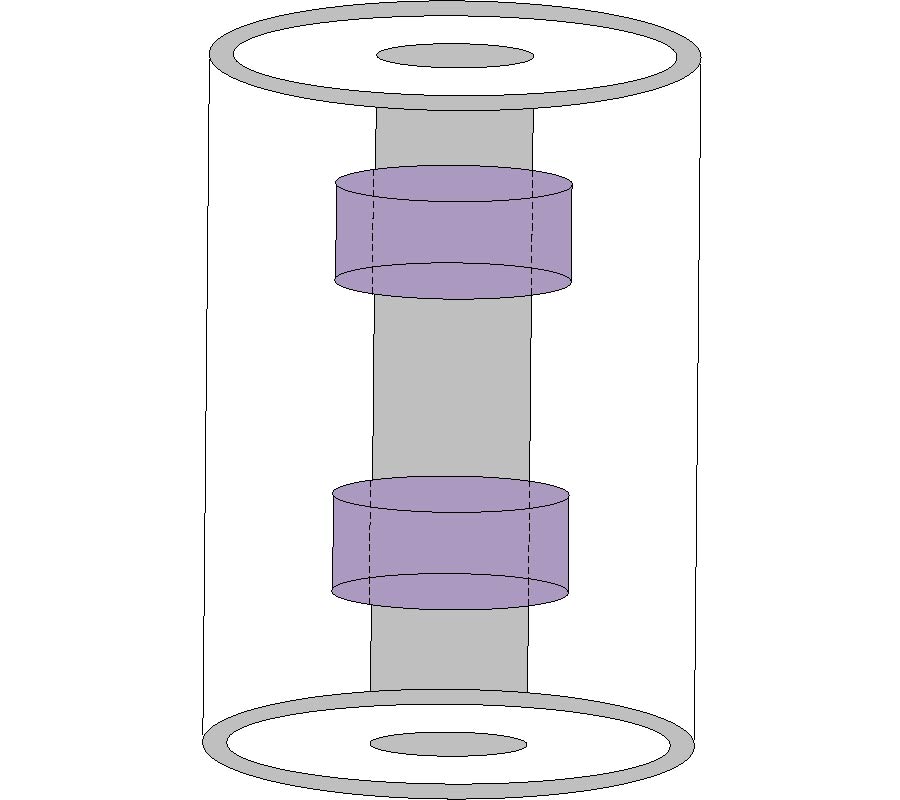
Mathematical expressions for the components of the magnetic field produced by a conically-shaped current sheet and by a tightly-wound conical coil are presented. The conical current sheet forms the frustum of a cone. In the limit as the top radius of the frustum approaches the bottom radius, a cylindrical current sheet is formed. Mathematical expressions for the magnetic field produced by a cylindrical current sheet are then compared to known and published results.
THE MAGNETIC FIELD PRODUCED FROM A CONICAL CURRENT SHEET AND FROM A THIN AND TIGHTLY-WOUND CONICAL COIL
2020-12-25
PIER M
Vol. 100, 23-34
Non-Contact Determination of Vital Signs Monitoring of Animals in Hemorrhage States Using Bio-Radar
Xiao Yu , Yue Yin , Hao Lv , Yang Zhang , Fulai Liang , Pengfei Wang and Jianqi Wang
With the rapid development and in-depth research of non-contact bio-radar-based detection technology, researchers have recently been putting more emphasis on target identification. Living status identification, a hotspot of target identification research, is particularly useful in search and rescue missions. During such missions, in order to rescue victims and provide corresponding medical support in a timely manner, it is necessary to acquire the survival information of victims, especially when they are injured. Hence, the vital signs extracted from a radar signal should be considered as the crucial parameters to reflect the living status. To determine living status through analyzing vital signs, this study utilized a bio-radar system to continuously monitor hemorrhagic animals, which simulated injured persons with hemorrhagic symptoms. Moreover, we defined and classified three survival periods based on changes in vital signs combined with a K-nearest neighbor algorithm (KNN) classifier. Experimental results show that we can approximately determine the current living status of animals with this method, which can aid in providing information for on-site rescue and follow-up medical treatment.
NON-CONTACT DETERMINATION OF VITAL SIGNS MONITORING OF ANIMALS IN HEMORRHAGE STATES USING BIO-RADAR
2020-12-25
PIER M
Vol. 100, 13-21
Monitoring the COVID-19 Diffusion by Combining Wearable Biosensors and Smartphones.
Mohammedhusen Manekiya and Massimo Donelli
The management of the current pandemic COVID-19 has been challenging and complex. The main and only successes have been achieved with non-pharmacological interventions (NPI). When tracking, monitoring, and early intervention at home have been delivered to citizens, the contagion can be controlled. In the current pandemic, various methods have been applied to track the COVID-19 virus, such as Korea's mobile phone tracking system. We propose a method based on a wearable bracelet prototype able to detect biomedical parameters, which can be very useful to monitor the virus infection when the patient develops symptoms, such as a high temperature or low blood oxygenation. In particular, the prototype bracelet can measure the blood oxygenation using an infrared optical sensor and measure the temperature of the patient. The bracelet can record the identification number of other bracelet devices that came in proximity. The bracelet is equipped with a built-in low power Bluetooth, aimed to send the recorded data to a smartphone or another device in order to connect them with proper geo-localization and to the web. The identification number of the patient device can be used to trace the number of people and whom he has been in contact with, immediately by the sanitary authorities. Moreover, the bracelet can be used for monitoring the patient's health at home, avoiding the hospital's overcrowding. The proposed system not only can effectively localize the trace path of patients positive to the COVID-19 virus or to other respiratory diseases, but also can provide an evolution of the patient symptoms and monitor people in-home quarantine. The system is simple and could be an efficient tool to track any other future pandemics.
MONITORING THE COVID-19 DIFFUSION BY COMBINING WEARABLE BIOSENSORS AND SMARTPHONES.
2020-12-24
PIER C
Vol. 107, 259-271
On Application of Taper Windows for Sidelobe Suppression in LFM Pulse Compression
Volodymyr G. Galushko
The efficiency of the standard tapered windows as applied to sidelobe suppression in compressed pulses with linear frequency modulation (LFM) or chirp pulses corresponds to the literature data only in the case of rather great values of the pulse duration-bandwidth product B≥100. With comparatively small values of B (several dozens or so) the side-lobe levels prove to be essentially greater than those announced in the literature. In the paper, the output signal of the chirp-pulse compression filter is analyzed in order to look into causes of discrepancy between the sidelobe level obtainable using standard tapered windows and the literature data. Expressions are derived for estimating the maximum number of zeros and maxima in the response of the optimum filter of chirp-pulse compression and separation between adjacent and ``like'' (with the same numbers) zeros and maxima in dependence on the signal duration-bandwidth product. The amount of loss in the signal-to-noise ratio due to application of smoothing functions is determined. The case of applying window functions in the form of cosine harmonics of the Fourier series, which describes a rather great number of the standard windows, is analyzed in detail. Analytical expressions are presented for the output signal of the chirp-pulse compression filter on the basis of such windows and the amount of loss in the signal-to-noise ratio. A comparative analysis of the Hamming and Blackman windows is made in dependence on the pulse duration-bandwidth product B. It is shown that application of the Hamming window is more efficient up to B≈80. For greater values of B, the Blackman window shows a higher efficiency. As B increases, the efficiency of both windows steadily increases asymptotically approaching the figure declared in the literature. Coefficients of window functions containing 2 cosine harmonics of the Fourier series have empirically been selected which made it possible to reduce the sidelobe level by approximately 0.34 dB for B=21 and by more than 1 dB for B=7 as compared with the Hamming window. The obtained results allow concluding that the optimization problem for the window function parameters in the case of small values of the pulse duration-bandwidth product should be solved individually for each specific value of B. Most likely it would be impossible to obtain the extremely low sidelobe level; however, a certain improvement of the characteristics of the chirp-pulse compression filter seems quite possible.
ON APPLICATION OF TAPER WINDOWS FOR SIDELOBE SUPPRESSION IN LFM PULSE COMPRESSION
2020-12-24
PIER C
Vol. 107, 245-258
An Electrically Small 3-D Folded Grounded Loop Antenna for Omnidirectional Connectivity
Harry Contopanagos
Electrically small antennas are of intense and increasing academic and industrial interest due to the advent of ubiquitous RFID devices and more generally within the Internet of Things (IoT) applications. For most of these applications antennas will have to be as small as possible, when being integrated within a transceiver, while maintaining significant efficiency values. Of particular interest are antennas that can radiate omnidirectionally along a planar surface, thus establishing optimal connectivity capabilities for devices surrounding the corresponding transmitter. Such antennas are important not only for energy harvesting but also for near-field wireless charging applications. In this paper, we report an electrically small antenna of size ka ≈ 0.25, where a is its effective radius and k the wave vector at operating frequency. The antenna geometry is a 3-dimensional folded meandering loop and contains its own ground, so that it becomes insensitive to the integration environment. The radiation efficiency of the antenna is 70%, and it radiates as a vertically polarized dipole. The operating frequency chosen in this paper targets RFID/IoT applications at 915 MHz, and the impedance matching bandwidth, as realized, is narrow but appropriate for such applications and may be further increased if appropriate matching networks are used.
AN ELECTRICALLY SMALL 3-D FOLDED GROUNDED LOOP ANTENNA FOR OMNIDIRECTIONAL CONNECTIVITY
2020-12-24
PIER M
Vol. 100, 1-11
Design of an Inductive Spiral-Loop Loaded Unit Cell in a Mushroom-Shaped High Impedance Surface for Sub-GHz Applications
Sungcheol Hong , Woo Seok Kim and Sung Il Park
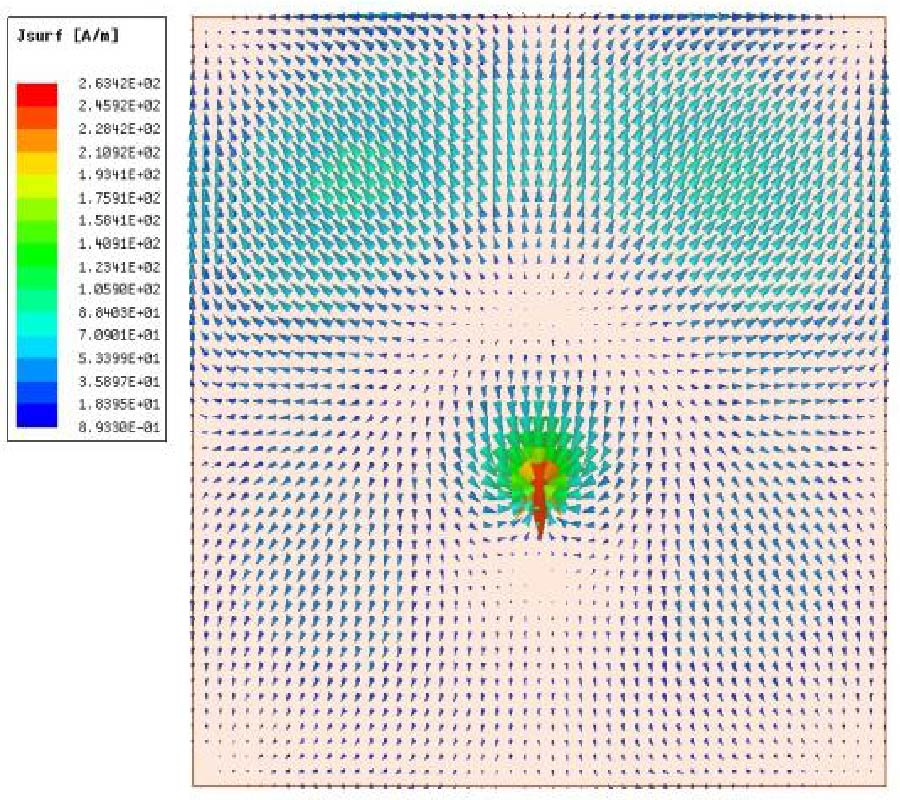
A high impedance surface has far-reaching potential in wireless applications, but realization of the surface operating at sub-GHz ranges is challenging due to its size limits in practical applications. Here, we present a novel inductive technique based on multi-turn square spiral loops. The introduction of the spiral loops to a mushroom-shaped high impedance surface provides additional current path, thereby results in a dramatic increase in its total inductance at given dimensions, and therefore leads to a significant reduction in a resonant frequency of a high impedance plane. Electromagnetic simulation results reveal that a resonant frequency shifts downward 1 GHz at a given dimension, and they are in good agreement with results from an analytical model for the proposed structure. Experimental measurements suggest the feasibility of the proposed approach.
DESIGN OF AN INDUCTIVE SPIRAL-LOOP LOADED UNIT CELL IN A MUSHROOM-SHAPED HIGH IMPEDANCE SURFACE FOR SUB-GHZ APPLICATIONS
2020-12-23
PIER Letters
Vol. 95, 99-105
An Efficient Technique for Wide Band RCS Reduction of Patch Antenna Array Using Rectangular Cavity Walls and Phase Cancellation Principle
Xiaoyuan Zhang , Xiaoxiang He , Yang Yang and Chenyue Xu
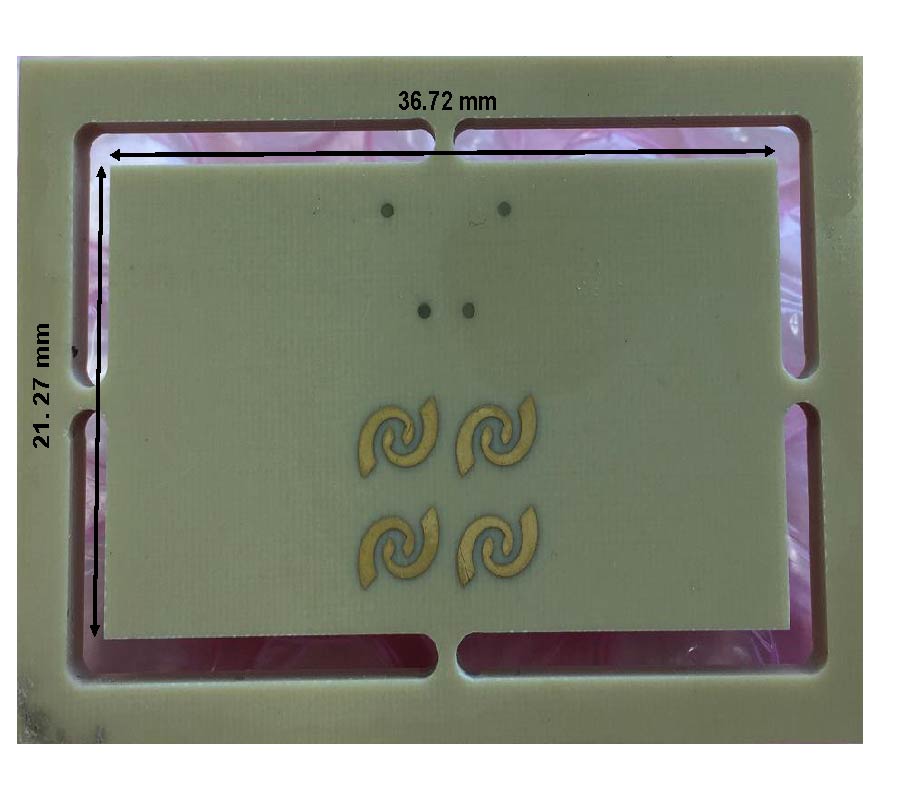
The rectangular cavity is investigated and applied in the field of the radar cross section reduction (RCSR) of patch antennas for the first time. An integrated and efficient design technique is presented which uses both a slotted rectangular cavity and reflective phase cancellation by a simple artificial magnetic conductor (AMC) element. On condition that ensuring the radiation performance of the patch antenna does not deteriorate, the in-band radar cross section (RCS) of the antenna can be reduced by 12.2 dB at 7.6 GHz just relying on a type of phase-regulated AMC elements. On this basis, the rectangular cavity walls were first loaded surrounding the above-mentioned low-RCS patch antenna. The relative bandwidth (in which RCS was reduced by more than 8 dB) went from 3.33% to 50% in the RCSR ohttps://www.baidu.com/?tn=62095104_43_oem_dgf the antenna. Meanwhile, the RCS could be reduced by an additional 5 dB at its working frequency (7.6 GHz).
AN EFFICIENT TECHNIQUE FOR WIDE BAND RCS REDUCTION OF PATCH ANTENNA ARRAY USING RECTANGULAR CAVITY WALLS AND PHASE CANCELLATION PRINCIPLE
2020-12-22
PIER Letters
Vol. 95, 91-97
Average BER Analysis of Free-Space Optical Communications with Adaptive Threshold Technique Over Exponentiated Weibull Distribution
Li Zhang , Jingyuan Wang , Liu Huang , Han Zhang and Ning Xu
Average bit error rate (BER) performance of on-off keying (OOK) modulation in a free space optical (FSO) system, which is based on adaptive threshold technique under atmospheric turbulence described by exponentiated Weibull (EW) distribution, is studied and compared with that of using fixed threshold technique. In order to solve the adaptive threshold, the equation is simplified by using the generalized Gauss-Laguerre polynomial function, which significantly improves the operational efficiency. The simulation results show that the adaptive threshold varies with the average transmitted power under different noise variances, receiving aperture sizes and turbulence conditions. Compared with the fixed threshold technique, the adaptive threshold technique can greatly improve the BER performance of FSO communication system.
AVERAGE BER ANALYSIS OF FREE-SPACE OPTICAL COMMUNICATIONS WITH ADAPTIVE THRESHOLD TECHNIQUE OVER EXPONENTIATED WEIBULL DISTRIBUTION
2020-12-22
PIER B
Vol. 89, 195-211
Improving Effectiveness of the Double Layer Method for Modeling of Three-Dimensional Magnetic Field of Electromagnetic Systems
Dmitriy M. Filippov , Alexandr A. Shuyskyy , Gennadiy P. Kozik , Dmitry V. Samokhvalov and Anatoliy N. Kazak
When solving the boundary integral equation with respect to the density of a double layer of fictitious magnetic charges in the case of using a piecewise constant approximation of double layer density, the interface conditions for the field vectors are not fulfilled at any point of the interface between ferromagnetic media. The article shows that these interface conditions are satisfied not discretely but integrally. Based on the proposed integral relations, which are derived from the Ampere's Circuital Law, a new system of linear equations is derived. The system of linear equations is obtained with respect to the piecewise constant approximation coefficients of double layer magnetic charge density. The resulting system of equations does not contain the scalar magnetic potential of free sources. Consequently, this numerical model can be directly applied to the analysis of magnetic field in any multiply connected domains without introducing impenetrable partitions or solving an additional boundary value problem for finding scalar magnetic potential.
IMPROVING EFFECTIVENESS OF THE DOUBLE LAYER METHOD FOR MODELING OF THREE-DIMENSIONAL MAGNETIC FIELD OF ELECTROMAGNETIC SYSTEMS
2020-12-22
PIER C
Vol. 107, 233-244
A Compact MIMO Antenna with Electromagnetic Bandgap Structure for Isolation Enhancement
Ravichandran Sanmugasundaram , Somasundaram Natarajan and Rengasamy Rajkumar
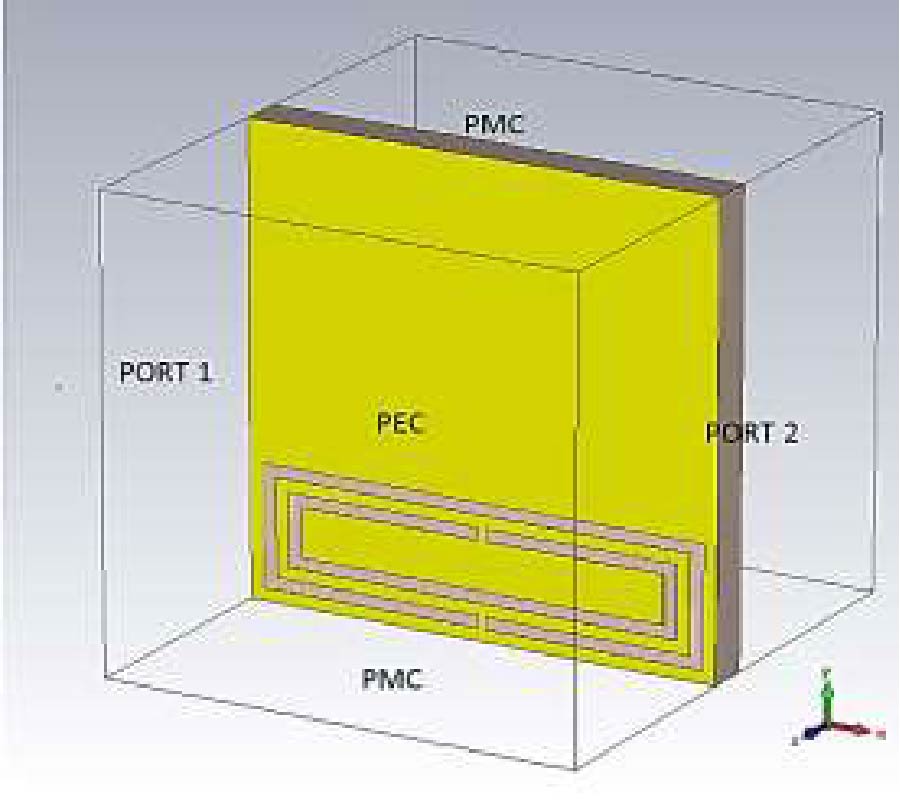
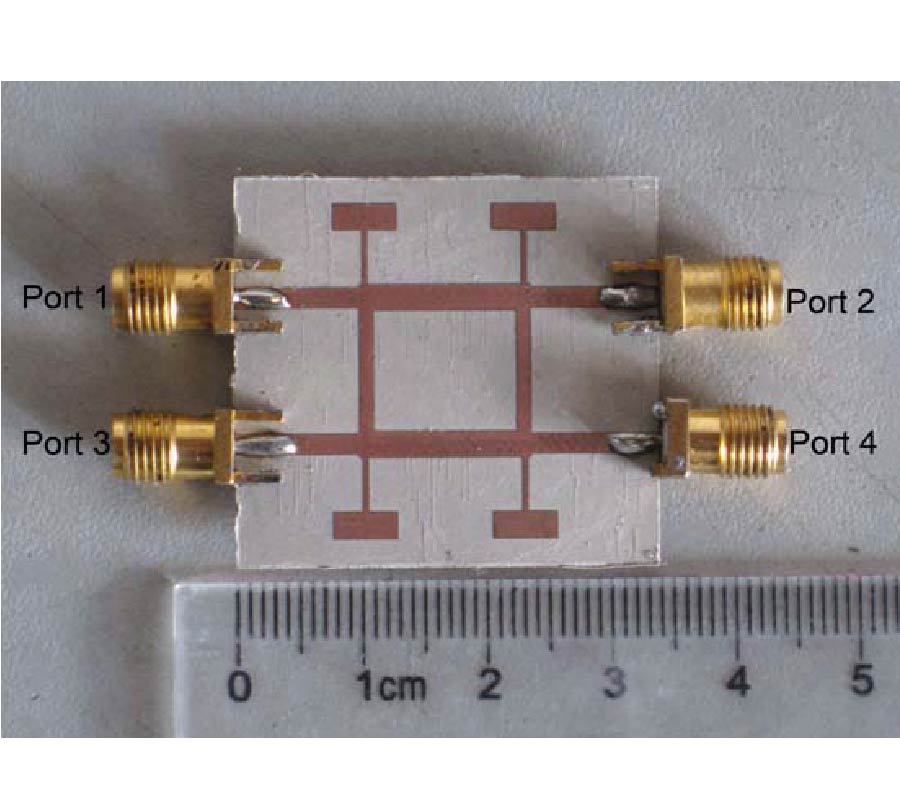
In this paper, a compact MIMO antenna with an electromagnetic bandgap structure is proposed for isolation enhancement. The proposed antenna design is coupled with an electromagnetic bandgap (EBG) structure to minimize mutual coupling between the antenna elements and to enhance the performance of the MIMO antenna configuration. The antenna is fabricated on an FR4 substrate having a dimension of (27.9×38×1.6 mm3). The EBG structure is analyzed, and the effect on antenna performance is studied using parametric analysis. The antenna is fabricated, and the measured results are compared with simulated ones. The antenna achieves a reduction in transmission coefficient |S21| ≥ 16 dB for simulated and |S21| ≥ 25 dB for measured results, and attains the minimum ECC of 0.09 which is very close to the ideal value of zero and hence makes it a better choice for MIMO applications.
A COMPACT MIMO ANTENNA WITH ELECTROMAGNETIC BANDGAP STRUCTURE FOR ISOLATION ENHANCEMENT
2020-12-19
PIER Letters
Vol. 95, 83-90
A Broadband UHF RFID Tag Antenna Design for Metallic Surface Using Module Matching
Fei You and Zhi Jiang
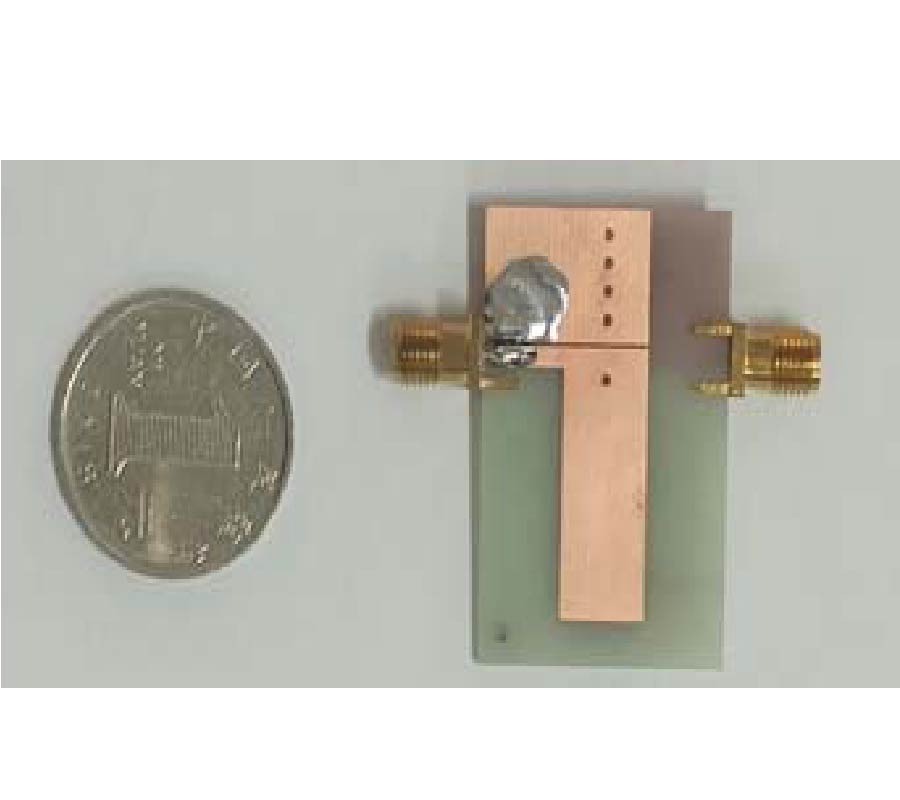
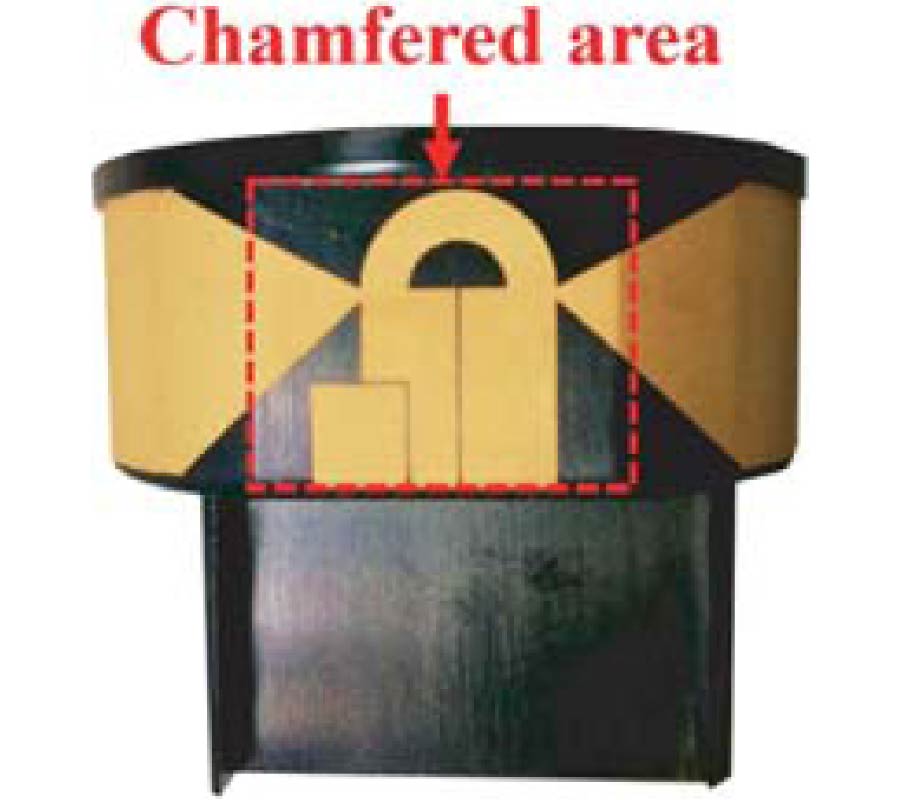
In this paper, a broadband RFID tag antenna based on module matching is proposed, which is suitable for metallic surface. The antenna's 10-dB effective bandwidth covers 820-980 MHz. In order to achieve a more appropriate impedance matching in a wideband, a new technique of module matching to reach a wide frequency band is studied, the consistent change of the tag antenna impedance and the chip impedance is fulfilled, and the frequency band is effectively widened. The feasibility of module matching to achieve maximum power transmission is analyzed. Further results demonstrate that the proposed tag antenna provides a stable gain when mounted on metal plates of various sizes. In addition, the proposed design is cost-effective since it does not require metallic vias and has a compact size. The maximum reading distance at 910 MHz on the metallic surface is 4.5 m.
A BROADBAND UHF RFID TAG ANTENNA DESIGN FOR METALLIC SURFACE USING MODULE MATCHING
2020-12-19
PIER Letters
Vol. 95, 73-81
Design of a Dual-Band 12-Element MIMO Antenna Array for 5G Mobile Applications
Vishakha Thakur , Naveen Jaglan and Samir Dev Gupta
This article presents a dual-band 12-designed to operate at LTE 42 and LTE 43 bands ranging from 3400-3600 MHz and 3600-3800 MHz respectively. The impact on the antenna parameters due to the user's hand is also explored. The isolation between antenna elements is better than 14.8 dB with a total efficiency of more than 74%. A small envelope correlation coefficient less than 0.05 and the channel capacity of 61.9 bps/Hz make the proposed array a viable solution for 5G smartphones.
DESIGN OF A DUAL-BAND 12-ELEMENT MIMO ANTENNA ARRAY FOR 5G MOBILE APPLICATIONS
2020-12-18
PIER Letters
Vol. 95, 63-71
Novel Monopole Microstrip Filtenna for UWB Applications
Md. Maqubool Hosain , Sumana Kumari and Anjini Kumar Tiwary
This manuscript proposes an Ultra-Wide band (UWB) Filtering Antenna (Filtenna) with application-based notches at Wi-MAX (3.3-3.7 GHz), WLAN (5.15-5.875 GHz) and ITU (7.725-8.275 GHz) bands. Initially, a monopole antenna is designed. To enhance bandwidth and bring about impedance matching, its ground plane is modified by introducing a triangular shaped defected ground structure (DGS) under the feedline, smoothening of upper edges of the ground plane and a rectangular DGS. Later, the triple notched band is created at 3.5 GHz, 5.5 GHz and 8 GHz by utilizing the notches generated by Inverted-U shaped defected microstrip structure (DMS) on the patch, U-type DMS on feedline, and C shaped resonator adjacent to the feedline respectively. The filtenna is an omnidirectional radiation pattern antenna which works within the proposed frequency band of operation having low insertion loss and good selectivity. Also, the VSWR is found to be <2, and peak gain is found to be 4 dBi. While studying the proposed filtenna, the simulated and measured frequency responses were observed to be in almost unison as if following each other.
NOVEL MONOPOLE MICROSTRIP FILTENNA FOR UWB APPLICATIONS
2020-12-18
PIER C
Vol. 107, 219-231
A Star-Wheel Design of Single Crystal Sapphire Optical Fiber Promoting Single Mode Operation in the Infrared Regime
Farhan Mumtaz , Yutang Dai , Muhammad Aqueel Ashraf and Wenbin Hu
In this study, a star-wheel design of single crystal sapphire optical fiber is proposed to achieve single mode operation in the infrared regime. In the azimuthal direction the structure retains a reduced core of higher refractive index. It is connected to the outer boundary viastar-wheel configuration of segments. The region of alternating symmetrical truncated cavities of lower refractive index is air. The enclosed alternating layers of sapphire and air cavities around the reduced core function as cladding. Fiber structure in the azimuthal directionis uniformly distributed in the radial direction. Finite element method is employed to analyze the modal characteristics of fundamental and higher order modes. Under strongly guided approximation, the structure can effectively eliminate the large modal interference. The proposed waveguides, at operating wavelength of ~1.55 µm, with the diameter of ~50 µm, 75 µm, 100 µm, and 125 µm diameter, exhibit confinement loss of ~0.0314 dB/m, 0.0072 dB/m, 0.0023 dB/m, and 0.0009 dB/m, respectively. It is anticipated that such fiber can be a potential candidate in addressing a wide range of optical sensors and communication systems, which unable to sustain in extremely harsh environments. COMSOL multi-physics ® is used to perform numerical investigations.
A STAR-WHEEL DESIGN OF SINGLE CRYSTAL SAPPHIRE OPTICAL FIBER PROMOTING SINGLE MODE OPERATION IN THE INFRARED REGIME
2020-12-17
PIER M
Vol. 99, 223-231
Aircraft Target Classification Method Based on EEMD and Multifractal
Junyong Hu , Qiusheng Li , Qianli Zhang and Yingjie Zhong
Due to the limitation of low-resolution radar system and the influence of background clutter in the detection process, it is hard for low-resolution radars to classify and identify aircraft targets. To solve the above problems, a classification method for aircraft based on Ensemble Empirical Mode Decomposition (EEMD) and multifractal is proposed, in which the intrinsic modes are obtained by EEMD, and the waveform entropy in the Doppler domain is used to screen and reconstruct the intrinsic modes. The multifractal feature of the target echo data is extracted from the reconstructed signal, and then the aircraft target classification and recognition experiment is carried out with support vector machine. The experimental results show that the feature data extracted by ensemble empirical mode decomposition and multifractal analysis can be used for the classification and identification of civil aircraft and fighter aircraft, and the accuracy rate is about 98.5%, which is higher than that of time-domain multifractal method.
AIRCRAFT TARGET CLASSIFICATION METHOD BASED ON EEMD AND MULTIFRACTAL
2020-12-17
PIER C
Vol. 107, 203-217
Mutual Coupling Reduction Between Slotted-T MIMO Elements for UWB Applications
Kudumu Vara Prasad and Makkapati Venkata Prasad
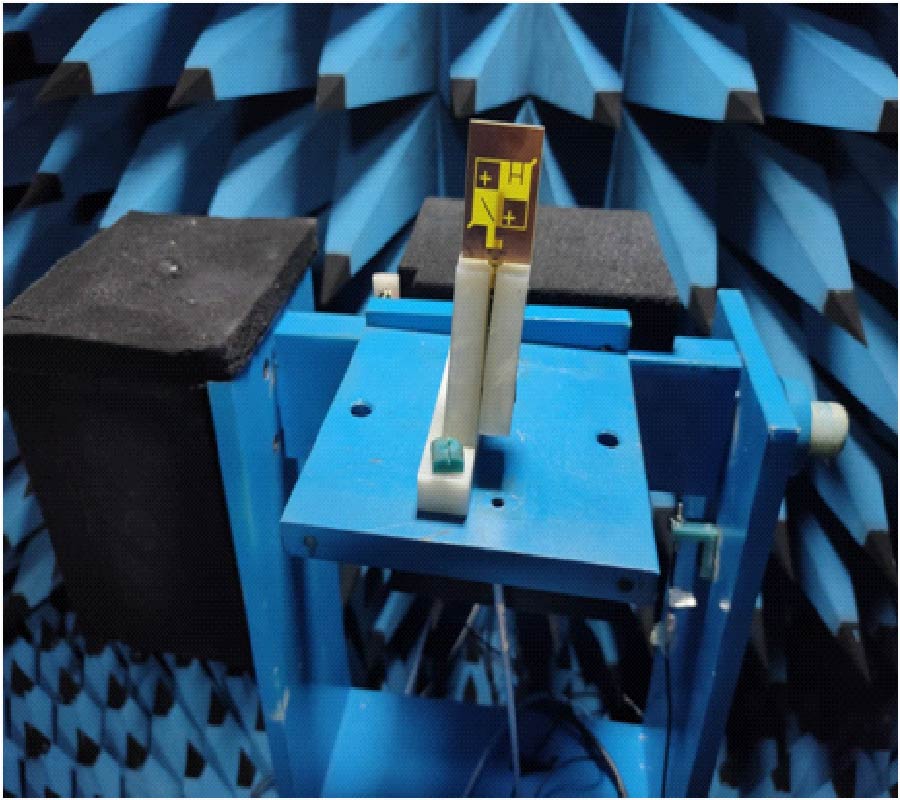
In the present scenario, multiple-input-multiple-output (MIMO) elements provide the capacity to generate more than one radiation pattern with different polarizations, which show a prodigious role in the modern telecommunication sector. A new two-element MIMO antenna with minimization in mutual coupling is presented in this paper. The proposed design reduces mutual coupling between antenna elements. The strip-line mechanism is used as a feed and is simulated using HFSS v 15. MIMO element design is done with four T-shaped slots in all directions of the patch, further enhancing the cross-correlation. MIMO antenna consists of two radiators on a 50 x 25 mm2 FR-4 substrate. A T-shape ground stub, along with a slot, reduces mutual coupling (MC) and Impedance Bandwidth (IBW) of the proposed design. The design provides multi-band characteristics in the entire UWB range with practical applications like WiMAX (3.5 GHz), WLAN (5.9 GHz), X-band SATCOM applications (7.9 GHz) and Radar, Mobile phones, and commercial WLAN (9.3 GHz). The spacing between elements is in the order of 0.215λ0. MC reduction of 20 dB is achieved at every resonant frequency.
MUTUAL COUPLING REDUCTION BETWEEN SLOTTED-T MIMO ELEMENTS FOR UWB APPLICATIONS
2020-12-16
PIER M
Vol. 99, 211-221
A Conformal Quasi-Isotropic Dielectric Resonator Antenna for Wireless Capsule Endoscope Application
Beibei Xing , Yueyuan Zhang , Hui Zou and Zhiwei Liu
A conformal quasi-isotropic dielectric resonator antenna (DRA) is first investigated for wireless capsule endoscope (WCE) application under the 5.8-GHz industrial, scientific, and medical (ISM) standard. The probe-fed hemispherical DRA (HDRA) is studied to match the shape of the spherical dome end, and the characteristic mode analysis (CMA) tool is applied to analyze the resonant modes of the proposed antenna to reveal the intrinsic behavior of the dielectric resonator. It is found that the quasi-isotropic radiation pattern can be achieved by combining HDRA's TE111sinφ mode which radiates like a magnetic dipole and a small ground plane's TM10 mode that radiates like an electric dipole. In order to reach the requirement of 5.8 GHz in ISM, a ceramic hemispherical dielectric resonator with dielectric constant of 21.984 is investigated. The radius of the hemisphere is set to 5.35 mm. In free space, the measurement results show that the proposed antenna achieves 3.25% bandwidth, 86% maximum efficiency and 7.2 dB gain deviation. The antenna is also measured in pork to approximate human body environment. The measurement results demonstrate that the antenna achieves 3.20% bandwidth, 8.15% maximum efficiency and 9.0 dB gain deviation. Accordingly, the proposed antenna is suitable for WCE application at 5.8 GHz ISM standard.
A CONFORMAL QUASI-ISOTROPIC DIELECTRIC RESONATOR ANTENNA FOR WIRELESS CAPSULE ENDOSCOPE APPLICATION
2020-12-16
PIER B
Vol. 89, 177-194
Design of Ultra-High Gain Optical Micro-Amplifiers via Smart Non-Linear Wave Mixing
Özüm Emre Aşırım and Alim Yolalmaz
Optical amplification by nonlinear wave mixing offers wideband high-gain amplification that is desirable for a variety of applications. When the wave mixing process occurs in an interaction medium with sufficient length, the attained gain per excitation pulse is usually higher than that can be attained by lasers. Furthermore, the bandwidth of amplification via nonlinear wave mixing is much higher than the bandwidth allowed by laser transitions of laser gain media. However, optical amplification by nonlinear wave mixing offers negligible gain in the micrometer scale, due to a very limited length of the interaction medium. In micro-resonators, such a short interaction length does not offer sufficient small signal gain to compensate the round-trip loss. In this study, we present a Fletcher-Reeves algorithm-based nonlinear programming of the wave mixing process that tunes the frequencies of the excitation pulses of the source device in order to provide an ultra-high optical gain in the micro-scale via maximizing the electric energy density in a micro-resonator. Using this smart wave mixing approach, we obtained a micro-resonator gain of 4.7x10⁷ for an input wave at 640 THz, and a gain of 1.5x10⁸ at 100 THz. The results of our mathematical formulation are compared with well-known experimental results, and a mean accuracy of 99% is observed. The study aims to show that optical amplifiers that are based on the principle of nonlinear wave mixing can be used in the micro-scale for wideband ultra-high gain operation.
DESIGN OF ULTRA-HIGH GAIN OPTICAL MICRO-AMPLIFIERS VIA SMART NON-LINEAR WAVE MIXING
2020-12-15
PIER M
Vol. 99, 201-210
RRT-MWF-MVDR Algorithm for Space-Time Antijamming
Fulai Liu , Ruiyan Du and Hui Song
Minimum variance distortionless response (MVDR) beamformer is an one of the well-known space-time antijamming techniques for global navigation satellite system (GNSS). It can jointly utilize spatial filter and temporal filter to suppress interference signals. However, the computational complexity is usually so high that it is difficult to apply in engineering problems. In order to solve this problem, a novel MVDR algorithm based on rank-reducing transformation (RRT) and multistage wiener filter (MWF) is proposed for reducing the computational complexity, named as RRT-MWF-MVDR algorithm. Via the characteristics of the oppressive jamming environment and the steering vector of satellite signal, a rank-reducing transformation is given. By the rank-reducing transformation, a rank reduction is realized for the high dimensional received data. Taking these received data with reduced rank as the input of the MWF, the forward decomposition and backward iteration are accomplished. Then the equivalent reduced rank matrix and equivalent weight vector of MWF can be given, respectively. Finally, the space-time two-dimensional antijamming weight vector is given by the mathematical relationship between the reduced-rank matrix and the weight vector.The proposed method can effectively avoid the inverse of high-dimensional matrix. The proposed method offers a number of advantages over the existing algorithms. For example, (1) it has less computational load and is easier to be executed in practical application. (2) It can maintain higher output signal-to-interference-noise ratio (SINR). Simulation results verify the effectiveness of proposed method.
RRT-MWF-MVDR ALGORITHM FOR SPACE-TIME ANTIJAMMING
2020-12-15
PIER M
Vol. 99, 191-200
AE-STAP Algorithm for Space-Time Anti-Jamming
Ruiyan Du , Fulai Liu , Xiaodan Chen and Jiaqi Yang
Space-time adaptive processing (STAP) algorithms can provide effective interference suppression potential in global navigation satellite system (GNSS). However, the performance of these algorithms is limited by the training samples support in practical applications. This paper presents an effective STAP based on atoms extension (named as AE-STAP) algorithm to provide better anti-jamming performance even if within a very small number of snapshots. In the proposed algorithm, a spatial-temporal plane is constructed firstly by the sparsity of received signals in the spatial domain. In the plane, each grid point corresponds to a space-time steering vector, named as an atom. Then, the optimal atoms are selected by searching atoms that best match with the received signals in the spatial-temporal plane. These space-time steering vectors corresponding to the optimal atoms are used to construct the interference subspace iteratively. Finally, in order to improve the estimation accuracy of interference subspace, an atoms extension (AE) method is given by extending the optimal atoms in a diagonal manner. The STAP weight vector is obtained by projecting the snapshots on the subspace orthogonal to the interference subspace. Simulation results demonstrate that the proposed method can provide better interference suppression performance and higher output signal-to-interference-plus-noise ratios (SINRs) than the previous works.
AE-STAP ALGORITHM FOR SPACE-TIME ANTI-JAMMING