Search Results(13789)

2021-01-30
PIER M
Vol. 101, 1-8
Straightforward EMDrive Setup with NASA-Like Cavities
Hugo Peyre , Jérôme Sokoloff , Olivier Pascal , Olivier Pigaglio and Nathalie Raveu
For replication concerns, this paper describes the work of the LAPLACE Electromagnetism Research Group to build NASA-like cavities in order to exploit the same electromagnetic configuration: the same resonant mode. These cavities are then implemented in our straightforward EMDrive experimental setup with a 0.1 mN sensitivity. Force measurement protocol is presented and discussed while more than 150 W of RF power is injected into the cavities. Results are compared to the NASA stated thrust to power ratio of 1.2±0.1 mN/kW.
STRAIGHTFORWARD EMDRIVE SETUP WITH NASA-LIKE CAVITIES
2021-01-29
PIER Letters
Vol. 96, 53-58
Efficient Evaluation of the Time-Harmonic Response in Central Loop Electromagnetic Sounding
Vincenzopio Tamburrelli and Marcello Salis
This work presents an efficient method that allows to accurately calculate the time-harmonic vertical magnetic field generated at the center of a large current-carrying coil of wire positioned above a layered ground. The method consists of evaluating the integral representation for the vertical magnetic field by using a hybrid procedure. At first, the direct and ideal reflected fields are extracted from the total magnetic field and expressed in explicit form. Then, the non-analytic part of the integrand of the remaining contribution is replaced with a sum of partial fractions, obtained by using a rational function fitting algorithm. Finally, the resulting sum of integrals is analytically evaluated and turned into a sum of modified Bessel functions of the second kind. The obtained expression for the magnetic field is then used to evaluate the voltage induced in a small receiving loop co-axial with the transmitting loop.
EFFICIENT EVALUATION OF THE TIME-HARMONIC RESPONSE IN CENTRAL LOOP ELECTROMAGNETIC SOUNDING
2021-01-29
PIER C
Vol. 109, 125-138
Magneto-Motive Force and Performance Comparative Analysis Research for a Novel Pentacle-Star Hybird Winding Five-Phase Induction Motor
Jinhong Li and Dawei Meng
In order to shorten design optimization cycle and reduce the influence of low-order harmonic for multi-phase induction motor, two kinds of five-phase motors - using either a star or pentacle-star hybrid winding - are proposed based on the Y160L-4 three-phase induction motor, which keep the structure size of the stator and rotor and rated power constant, redesign the winding, and adjust the match parameters of the stator and rotor slots. Based on the Fourier series expansion method, the time-space harmonic magnetomotive force (MMF) analytic function of pentacle-star winding was given based on star winding MMF. According to the analysis for the MMF table of three kinds of induction motors, pentacle-star winding with 19th-order harmonic has a better performance than star-winding with 9th-order harmonic and three-phase delta winding with 5th-order harmonic. Further analysis suggests that the harmonic torque generated by the harmonic MMF can be used to improve the electromagnetic torque, and the effective torque characteristics of the three forms of induction motors are given. Two kinds of five-phase motors with different winding configurations can be realized based on the three-phase motor, and some simulated and experimental resluts show that the method is feasible, which provids significant value in engineering applications.
MAGNETO-MOTIVE FORCE AND PERFORMANCE COMPARATIVE ANALYSIS RESEARCH FOR A NOVEL PENTACLE-STAR HYBIRD WINDING FIVE-PHASE INDUCTION MOTOR
2021-01-29
PIER M
Vol. 100, 237-245
Random Scattering by Rough Surfaces with Spatially Varying Impedance
Narinder Singh Basra , Mark Spivack and Orsola Rath Spivack
A method is given for evaluating electromagnetic scattering by an irregular surface with spatially-varying impedance. This uses an operator expansion with respect to impedance variation and allows examination of its effects and the resulting modification of the field scattered by the rough surface. For a fixed rough surface and randomly varying impedance, expressions are derived for the scattered field itself, and for the coherent field with respect to impedance variation for both flat and rough surfaces in the form of effective impedance conditions.
RANDOM SCATTERING BY ROUGH SURFACES WITH SPATIALLY VARYING IMPEDANCE
2021-01-29
PIER M
Vol. 100, 225-236
Dual-Mode Dual-Band Bandpass Filter with High Cutoff Rejection by Using Asymmetrical Transmission Zeros Technique
Jessada Konpang and Natchayathorn Wattikornsirikul
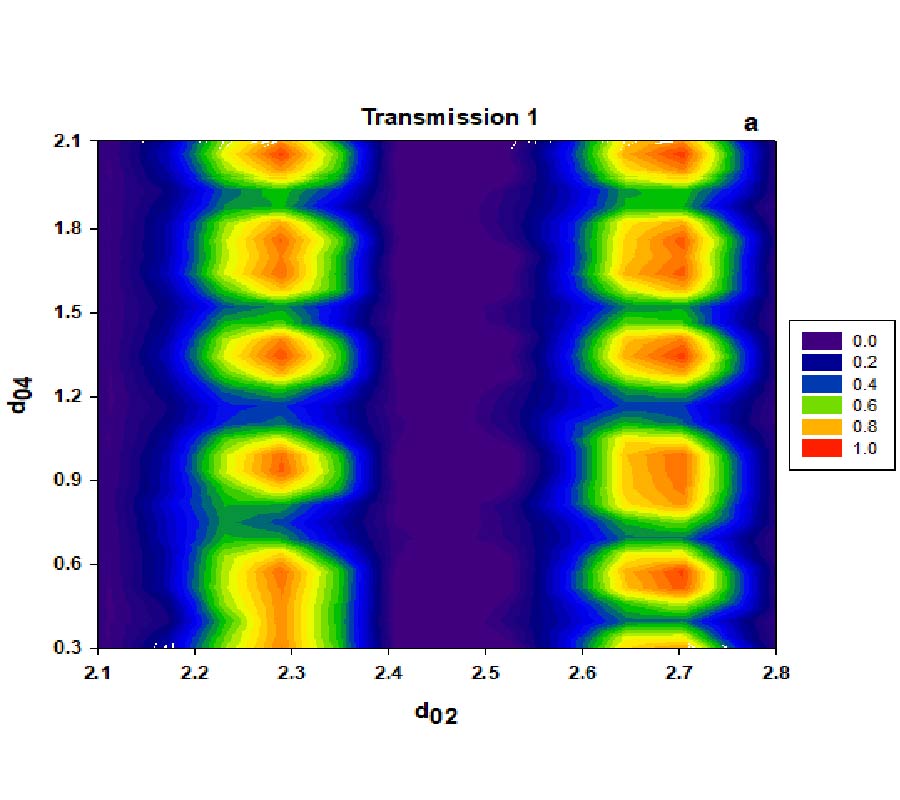
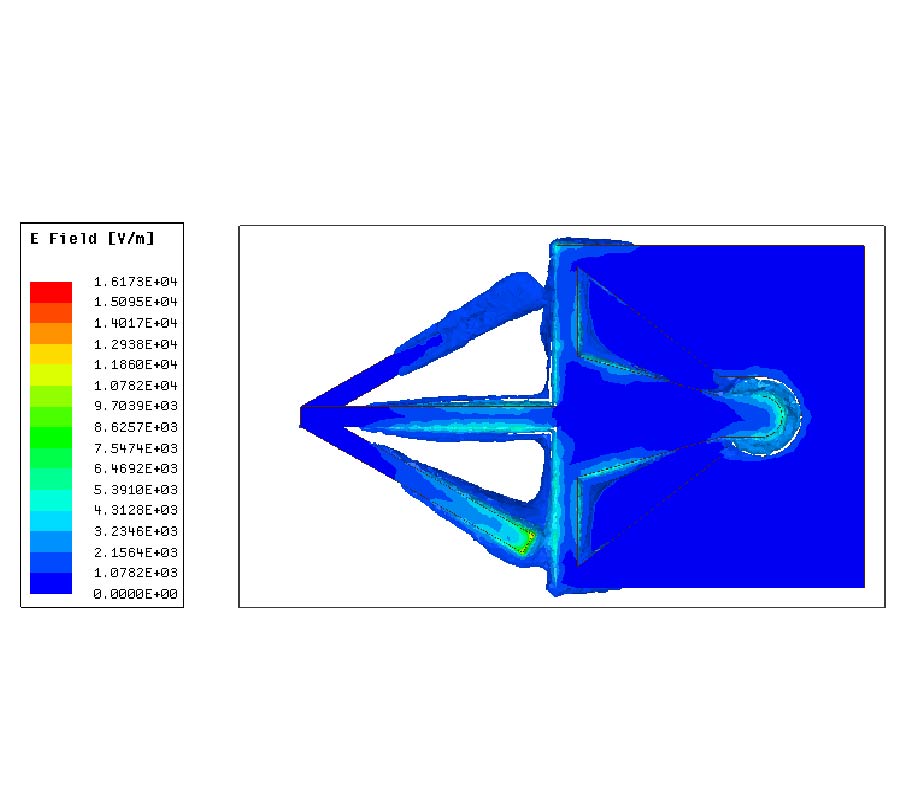
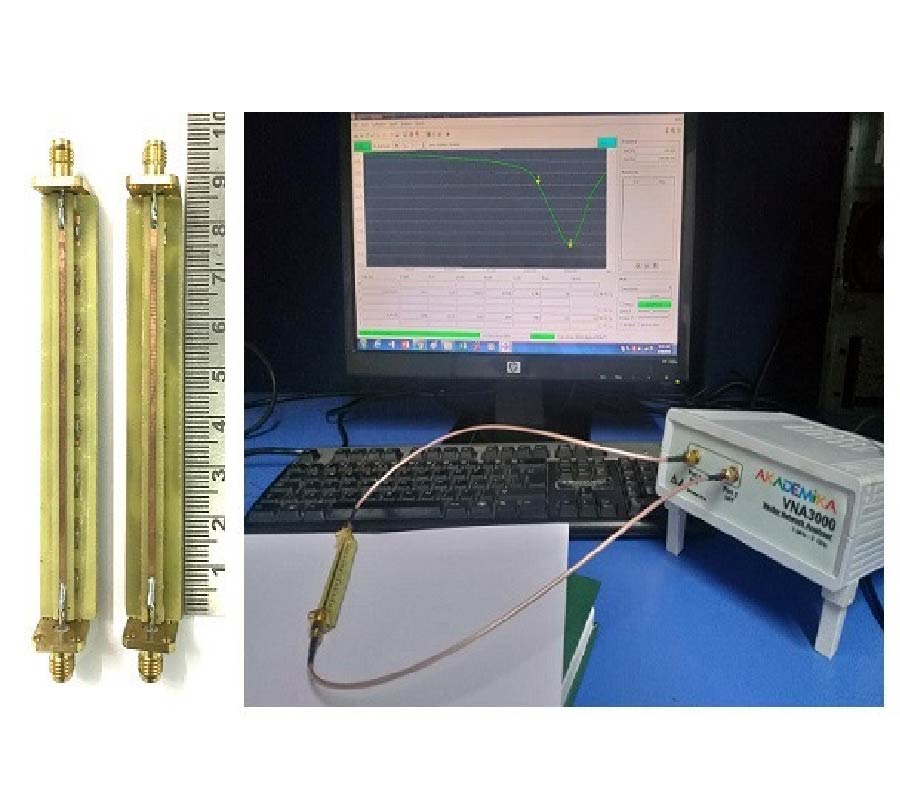
A dual-mode dual-band bandpass filter with high cutoff rejection using asymmetrical transmission zeros technique is presented here. Two dual-mode filters are combined to form a dual-band filter by sharing the input and output coupled-feed line, which is more flexibility-designed and maintains a small circuit size. Controllable asymmetrical transmission zeros (TZs) at lower- and upper-sideband locations of dual-band filters are designed to achieve the high-selectivity dual-mode dual-band bandpass filter. Unwanted signals are suppressed by the places of the TZs between the first and second passband, which give much-improved signal selectivity for the dual-band bandpass filter. The two passbands are centered at 1.8 and 2.4 GHz, respectively. The first and second passbands' insertion losses are only 0.9 dB and 1.1 dB, and the measured return losses are better than 20 dB. Three transmission zeros are located between both passbands, which achieve the rejection levels about 40 dB attenuations from 1.9 to 2.3 GHz.
DUAL-MODE DUAL-BAND BANDPASS FILTER WITH HIGH CUTOFF REJECTION BY USING ASYMMETRICAL TRANSMISSION ZEROS TECHNIQUE
2021-01-28
PIER M
Vol. 100, 213-223
Quasi-TEM Analysis of Symmetrical Shielded Broadside-Coupled Microstrip Lines
Ali Bououden , Mohamed Lahdi Riabi , Abdelhalim A. Saadi and Mustapha Yagoub
In this work, a numerical quasi-static approach is proposed to efficiently analyze symmetrical shielded broadside-coupled microstrip line (SBCML) structures. Based on the modified least squares boundary residual method combined with a variational technique, this approach allows accurate computation of the electrical/geometrical parameters of different SBCML configurations. The errors for the quasi-TEM electrical parameters range are less than 4%. The proposed technique was demonstrated through successful comparison with data from published works and results obtained from commercial EM simulators like CST-EMS and COMSOL.
QUASI-TEM ANALYSIS OF SYMMETRICAL SHIELDED BROADSIDE-COUPLED MICROSTRIP LINES
2021-01-28
PIER M
Vol. 100, 197-211
Investigation of Ionospheric Vertical Delay at S1 and L5 Frequencies, Based on Thick-Shell Model Using NavIC System, for Mid Latitude Region of India
Sharat Chandra Bhardwaj , Anurag Vidyarthi , Bhajan Singh Jassal and Ashish Kumar Shukla
To meet the growing requirements of Standard Positioning Services (SPS) and Precision Services (PS), more and more GNSS systems operating at conventional GPS frequencies and higher frequency bands are launched. The Indian NavIC system is one of such systems transmitting navigational signals at S1 (2492.028 MHz) and L5 (1176.45 MHz) frequencies. For GPS at L-band frequencies, comprehensive research work has been conducted to analyze the ionospheric delay to estimate precise user position, although very little research work is available in the public domain at the navigational S-band level. The NavIC program provides opportunities to explore the ionospheric delay effect on S-band navigational signals. The precise position determination demands accurate estimation of the vertical ionospheric delay which is generally obtained using Vertical Electron Content (VTEC) of the ionosphere. The VTEC can be obtained by multiplying a mapping function to the Slant Total Electron Content (STEC). Conventionally a thin shell (also known as a single shell) model is used to map STEC to VTEC, but it introduces error at low elevation angles. This error is significant for the NavIC receivers, located in the northern part of India, as they observe elevation angles below 50° for most of the time, and thus there is a need to investigate the suitability of the mapping function model for the NavIC system. As the ionospheric shell height modifies the mapping function and results in a change in VTEC, the height and thickness of the thick shell have been investigated based on the ionospheric data taken from IRI 2016 and were estimated as 300 km and 250 km, respectively. In the present work, the thick shell model has been compared to thin shell model mapping functions to improve the accuracy of VTEC estimation at the low elevation. The reduction in vertical delay using the thick shell mapping function at low elevation indicates its suitability for the locations like Dehradun, India, which lies in the mid-latitude region. Furthermore, the temporal variability of vertical delay at S and L band frequencies has also been investigated to understand the diurnal and seasonal characteristics of ionospheric vertical delay over a period of 12 months to cover all the seasons during the year 2017-18. The vertical delay at the S-band frequency was found to be less than that at the L-band frequency and is almost constant over a month. This finding will be beneficial for single-frequency users and could be used to develop the Grid Ionospheric Vertical Delay (GIVD) map for the NavIC system to enhance positional accuracy.
INVESTIGATION OF IONOSPHERIC VERTICAL DELAY AT S1 AND L5 FREQUENCIES, BASED ON THICK-SHELL MODEL USING NAVIC SYSTEM, FOR MID LATITUDE REGION OF INDIA
2021-01-27
PIER Letters
Vol. 96, 47-52
A Novel and Efficient Implementation of Higher Order CPML for Truncating the Unmagnetized Plasma
Jianxiong Li , Zhi Li and Xiaoming Zhao
A novel and efficient higher order convolutional perfectly matched layer (CPML) method is put forward and also applied to cut off the finite-difference time-domain (FDTD) computational domain full of the unmagnetized plasma. A Drude model can be used to represent the unmagnetized plasma, and the plasma can be solved by using the trapezoidal recursive convolution (TRC) method. In order to verify the validity of the presented method, a numerical example in three-dimensional computational domain is provided. The numerical example results show that the proposed formulations have better absorbing performance than the first-order CPML in terms of attenuating low-frequency and evanescent waves. Besides, by using the proposed method, computational time and memory can be reduced compared to the second order PML implemented by using the auxiliary differential equation (ADE) method.
A NOVEL AND EFFICIENT IMPLEMENTATION OF HIGHER ORDER CPML FOR TRUNCATING THE UNMAGNETIZED PLASMA
2021-01-26
PIER Letters
Vol. 96, 37-45
A Novel Miniaturized Circularly Polarized Antenna with Shorting Pins and Parasitic Strips for BeiDou Satellite Navigation System Applications
Ya-Bing Yang , Fu-Shun Zhang and Mu-Zhao Zheng
In this paper, a novel miniaturized circularly polarized (CP) antenna for BeiDou Satellite Navigation System (BDS) applications is presented. The proposed antenna is composed of three substrates with the same size, which are combined by four shorting pins. Parasitic strips are used to reduce the size, and the radiation patch is fed by two coupling feeding patches with the same amplitude and 90° phase difference. The overall dimension of the proposed antenna is only 18 mm x 18 mm x 23.5 mm (about 0.08λ0 x 0.08λ0 x 0.1λ0), and its weight is about 25 grams. The performance study with different geometric parameters has been conducted. A prototype based on optimized dimensions has been fabricated and measured, and the tested results exhibit a good impedance matching bandwidth ranging from 1.2 to 1.35 GHz centered at 1.268 GHz. This antenna also has stable hemispherical radiation patterns and good CP characteristics. Good agreement between analytical and experimental results is obtained.
A NOVEL MINIATURIZED CIRCULARLY POLARIZED ANTENNA WITH SHORTING PINS AND PARASITIC STRIPS FOR BEIDOU SATELLITE NAVIGATION SYSTEM APPLICATIONS
2021-01-26
PIER C
Vol. 109, 95-110
Quasi-Static Analysis of Scattering from a Metallic Sphere Coated by Radially Anisotropic Material
Muhammad Yousaf Iqbal , Aijaz Ali and Qaisar Abbas Naqvi
Theoretical investigation of optical properties of a metallic sphere coated with uniform layer of anisotropic dielectric material is conducted by studying its polarizability, scattering cross section, absorption and extinction cross section. The dispersive characteristics of metal (tungsten/silver/gold) are mathematically modeled through well known Lorentz-Drude model. A detailed analysis of the behaviors of polarizability, scattering cross-section, absorption and extinction cross section is carried out for different specific values of the radius and components of the tensor permittivity. The impact of variation of different parameters on location and magnitude of the surface plasmon resonance is highlighted.
QUASI-STATIC ANALYSIS OF SCATTERING FROM A METALLIC SPHERE COATED BY RADIALLY ANISOTROPIC MATERIAL
2021-01-26
PIER C
Vol. 109, 77-94
A Low-Profile Dual-Band Base Station Antenna with Antenna on Antenna Structure
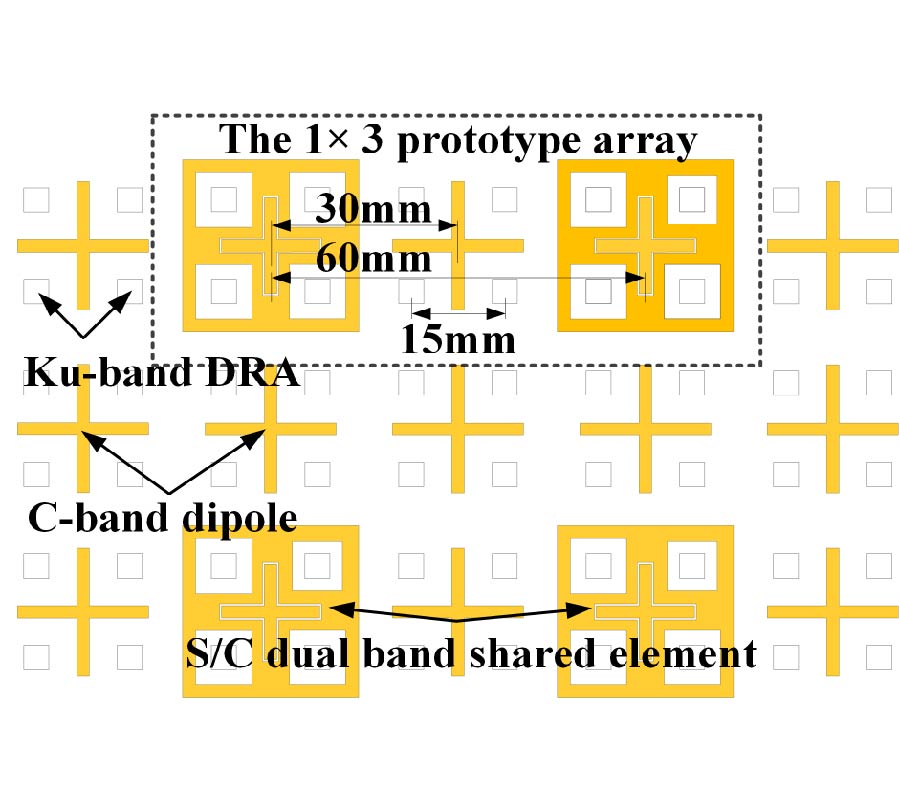
Wei Luo , Zhixiong Ni , Yuqi Yang , Bo Yin , Yi Ren and Wen Huang
A low-profile dual-band composite structure antenna is proposed for fifth generation mobile communication system (5G), which is named as Antenna on Antenna (AOA). Loaded with an artificial magnetic conductor (AMC) reflector, the proposed AOA element consists of a pair of dual-polarized lower band (LB) dipole antennas working in the 0.7-1.03 GHz band and four upper band (UB) patch antenna arrays working in the 24.25-27 GHz band, which covers LTE and 5G millimeter wave band. In order to reduce the size of base station antenna, the millimeter wave patch antenna arrays are parasitic on the LB dipoles. While the radiator of the LB antenna is utilized as the ground of the millimeter wave patch antenna array, LB and UB antennas share the same dielectric substrate. The profile height of the antenna is reduced by AMC reflector effectively. Meanwhile, the three-element AOA array loaded with AMC reflector is designed to validate the overall performance of base station antenna. The operation bands of the proposed AOA are 0.7-1.03 GHz (Snn<-14 dB) and 24.25-27 GHz (Snn<-10 dB) for the LTE and 5G millimeter bands respectively. Antenna prototype was fabricated and measured to verify the design solution. The measured results which are consistent with simulated results show that the AOA has good impedance matching, port isolation, and stable radiation pattern.
A LOW-PROFILE DUAL-BAND BASE STATION ANTENNA WITH ANTENNA ON ANTENNA STRUCTURE
2021-01-26
PIER C
Vol. 109, 65-75
Triple-Band Circular Polarized Antenna for WLAN/Wi-Fi/Bluetooth/WiMAX Applications
Izzat Fatima , Aqsa Ahmad , Saqib Ali , Mudassir Ali and Muhammad Iram Baig
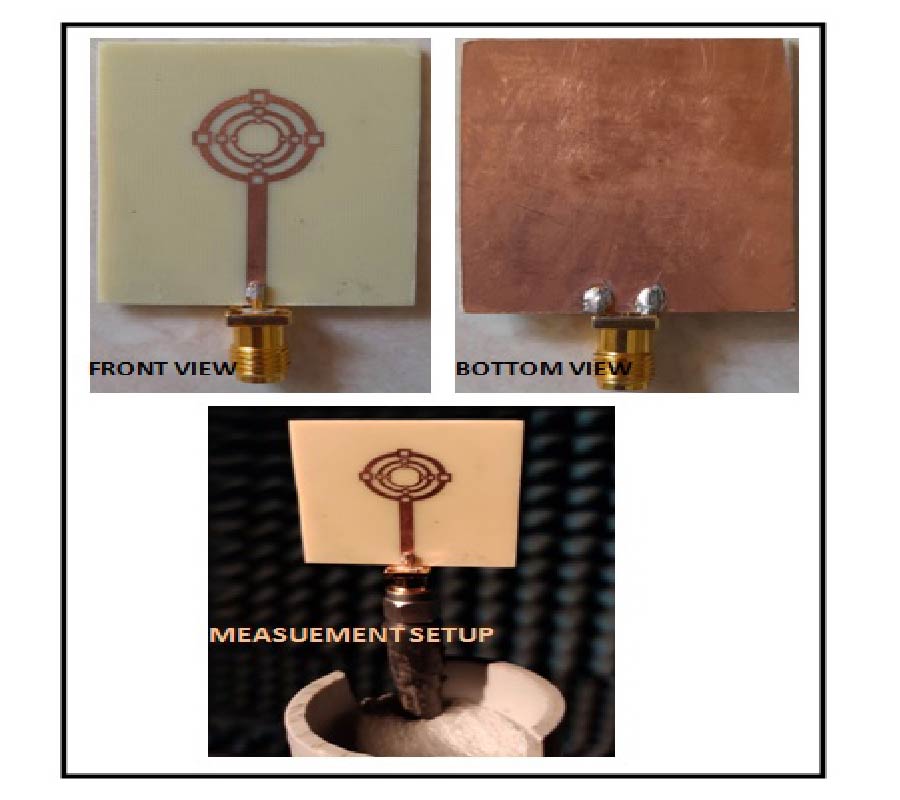
A planner geometry triple-band circularly polarized (CP) antenna is proposed for wireless applications. The antenna consists of rectangular strips on the upper surface along with rectangular slots on the ground plane. The 3dB axial-ratio of the antenna is achieved through a reformed ground plane. Through the aid of these features, a small, compact wideband circularly polarized antenna is fabricated with an area of 25×25×1.02 mm3. The -10 dB impedance bandwidth of the proposed antenna is 8.2% (2.4-2.58 GHz), 33% (3.2-3.9 GHz), and 41.1% (5.2-7.8 GHz). While the 3-dB axial ratio bandwidth achieved by the proposed antenna is 89.7% (2.17-5.8 GHz). The designed antenna is suitable for wireless applications such as WiMAX, WLAN, ISM, Bluetooth, and Wi-Fi.
TRIPLE-BAND CIRCULAR POLARIZED ANTENNA FOR WLAN/WI-FI/BLUETOOTH/WIMAX APPLICATIONS
2021-01-26
PIER C
Vol. 109, 53-64
Design and Optimization of Conformal Dielectric Resonator Antenna Array Based on Aperture-Coupled Series-Feeding Approach
Hongmei Liu , Yue Niu , Tielin Zhang , Shao-Jun Fang and Zhongbao Wang
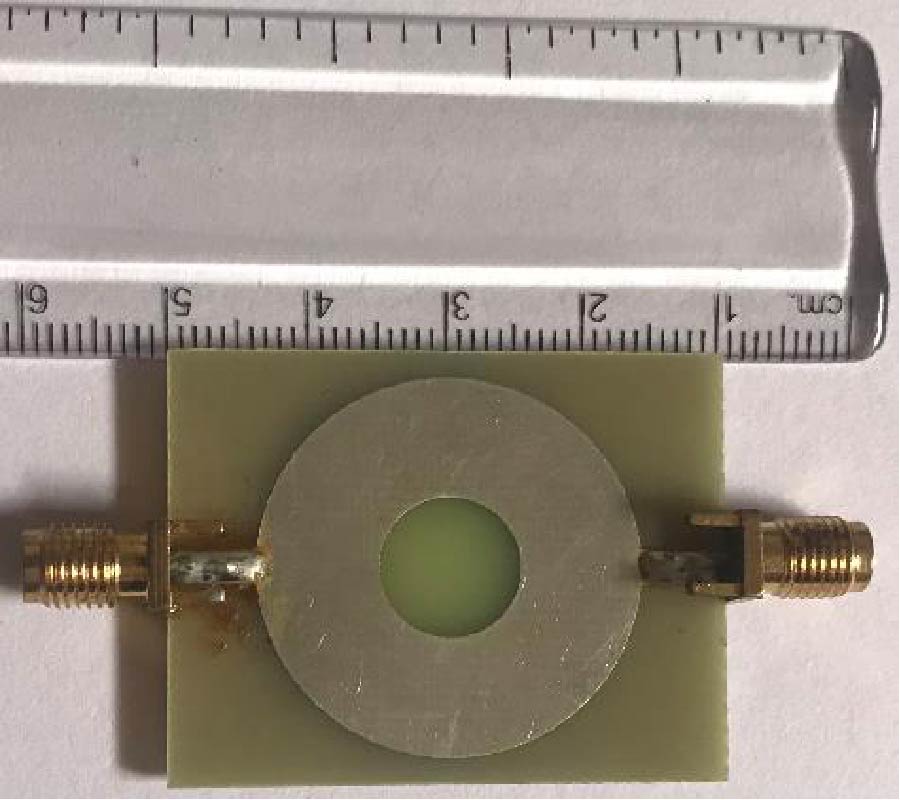
A novel conformal dielectric resonator antenna (DRA) array based on aperture-coupled series-feeding approach is presented for wireless communication. The antenna is composed of eight curved width-gradated DRA elements with a simple feeding structure. The proposed design presents a tapered current amplitude distribution by using DRA element width gradation method, and low side-lobe level (SLL) characteristic can be obtained. Besides, an extra matching line is inserted into the single feeding line to realize better impedance characteristic. To validate the performance of the proposed design, the conformal array is fabricated and measured in an anechoic chamber. The measured impedance bandwidth (|S11|<-10 dB) of the fabricated prototype is from 5.65 GHz to 5.9 GHz. At 5.8 GHz, the antenna offers a measured peak gain of 14.75 dBi and SLL of -19.8 dB. The polarization discriminations of the array on E- and H-planes are greater than 20 dB. The measured results of the fabricated prototype demonstrate that the proposed design has the potential to be applied to wireless communication system with curved surface.
DESIGN AND OPTIMIZATION OF CONFORMAL DIELECTRIC RESONATOR ANTENNA ARRAY BASED ON APERTURE-COUPLED SERIES-FEEDING APPROACH
2021-01-26
PIER M
Vol. 100, 187-195
High-Sensitive Thermal Sensor Based on a 1D Photonic Crystal Microcavity with Nematic Liquid Crystal
Haouari Charik , Mounir Bouras and Hamza Bennacer
In this study, 1D Photonic Crystal (PhC) with Nematic Liquid Crystal (N-LC) central microcavity is analyzed and discussed using Rigorous Coupled Wave Analysis (RCWA) method. A microcavity is inserted into the 1D PhC by the Air Defect, making it ideal for measuring the properties of an N-LC contained inside the microcavity. Here simulation is considered for N-LC (E7) as a thermal sensor. The principle of photonic crystal thermal sensor operation is studied in the TE mode of the incident beam. We conduct a detailed study of the thermal sensor with differences in the width of central microcavity of N-LC. The sensitivity and quality factor are evaluated. Compared to other photonic crystal sensors mentioned previously, this thermal optical sensor has a much simpler structure and higher sensitivity.
HIGH-SENSITIVE THERMAL SENSOR BASED ON A 1D PHOTONIC CRYSTAL MICROCAVITY WITH NEMATIC LIQUID CRYSTAL
2021-01-25
PIER C
Vol. 109, 39-52
Resonant High Quality Factor Translucent Lens/Monochromator with Adjustable Focus for Electromagnetic Absorbance Imaging of Micro-Biomolecules
Reza Dehbashi
Characterization of some biological materials relies on absorption imaging. In this paper, a highly translucent flat two-layer structure as part of an imaging system called spectrometer is proposed that has a very high numerical aperture (NA) and high quality factor (QF). The structure can be used to identify micro-biological materials with previously known absorption rate, under single-wavelength electromagnetic absorbance imaging. The proposed two-layer structure is composed of a double-near-zero (DNZ) slab coupled to a high-index dielectric slab with a specific thickness. In DNZ materials, both the permittivity and permeability are close to zero. The DNZ slab operates as a flat lens, and the very high-index dielectric slab functions as a high QF monochromator that at the same time increases NA of the lens without affecting translucidity of the two-layer structure. At the end, a transformation optics (TO) based nonlinear lens is introduced that can be replaced as the DNZ layer. The focus of the nonlinear lens can be tuned by tuning its material parameters.
RESONANT HIGH QUALITY FACTOR TRANSLUCENT LENS/MONOCHROMATOR WITH ADJUSTABLE FOCUS FOR ELECTROMAGNETIC ABSORBANCE IMAGING OF MICRO-BIOMOLECULES
2021-01-24
PIER Letters
Vol. 96, 27-36
Rectangular Grid Antennas with Various Boundary Square-Rings Array
Jafar Ramadhan Mohammed
Rectangular grid antennas are widely used in practice due to their advantages and versatility. This paper simplifies the design procedures of such antennas by optimizing their radiation characteristics using minimum number of the optimized elements while maintaining the same performance. The method consists of partitioning a fully square grid array into two unequally sub-planar arrays. The first one contains the inner and the most central elements of the initial planar array in which they are chosen to be non-adaptive elements, while the remaining outer and boundary elements which constitute L number of the square-rings are chosen to be adaptive elements. Then, the optimization process is carried out on those outer rings instead of fully planar array elements. Compared to a standard N×M planar array with fully adaptive elements, the number of optimized elements could be reduced from N×M to 2{2L(N-L)}, so as to significantly reduce the system cost without affecting the overall array performance. Results of applying the proposed method to optimize a small 9×9, medium 20×20, and large 40×40 size planar arrays with various values of L are shown.
RECTANGULAR GRID ANTENNAS WITH VARIOUS BOUNDARY SQUARE-RINGS ARRAY
2021-01-24
PIER Letters
Vol. 96, 17-25
A Magnetic Harmonic Gear with Double Fan-Shaped Halbach Arrays
Xiaocun Huang and Libing Jing
Compared with the conventional coaxial magnetic gear, magnetic harmonic gear (MHG) is a device with large transmission ratio. In order to improve the transmission torque, an MHG with double fan-shaped Halbach arrays is proposed in this paper. According to the theory of magnetic field modulation and the unique unilateral effect of Halbach array, both inner and outer permanent magnets (PMs) are arranged in a Halbach array. In addition, all PMs are fan-shaped. The air gap magnetic field and torque of MHG are analyzed by two-dimensional finite element method. Compared with the conventional MHG, the proposed MHG enhances the air-gap magnetic flux density, reduces the air-gap harmonic content, and increases the torque density.
A MAGNETIC HARMONIC GEAR WITH DOUBLE FAN-SHAPED HALBACH ARRAYS
2021-01-23
PIER C
Vol. 109, 27-37
Compact Active Duplexer Based on CSRR and Interdigital Loaded Microstrip Coupled Lines for LTE Application
Saeed Keshavarz , Rasool Keshavarz and Abdolali Abdipour
In this paper, a four-port compact active duplexer based on a complimentary split ring resonator (CSRR) and interdigital loaded microstrip coupled lines (CSRR-IL MCL) is presented. Interdigital capacitor is used on the top layer of the proposed structure and CSRR transmission lines are used on the bottom layer of the coupled lines in order to increase the coupling of the proposed circuit and create triple band resonances, respectively. The proposed active duplexer has one input port and three output ports operating in three distinct operation frequencies which are 1.4 GHz, 1.8 GHz, and 3.2 GHz. The active duplexer is designed to target LTE applications which are prevalent among the new technologies and devices. The input signal is split in terms of frequency into the three designed frequencies and is amplified by 13 dB gain of the amplifiers placed at the output ports. The fractional bandwidths of the proposed structure at 1.4 GHz, 1.8 GHz, and 3.2 GHz are 5.2%, 2.8%, and 9.4%, respectively. It is worth mentioning that the size of the proposed active duplexer is 0.29λ0×0.38λ0. The design guide of the proposed structure is presented, and it will be shown that the simulation as well as the measurement results of the proposed active duplexer have an acceptable agreement with each other. It should be noted that the VSWR of the proposed structure is less than 1.5 which means that the active duplexer has low return loss, and it is the plus point of it.
COMPACT ACTIVE DUPLEXER BASED ON CSRR AND INTERDIGITAL LOADED MICROSTRIP COUPLED LINES FOR LTE APPLICATION
2021-01-23
PIER M
Vol. 100, 175-186
Four Element Square Patch MIMO Antenna for DSRC, WLAN, and X-Band Applications
Usha Devi Yalavarthi , Ravi Teja Koosam , Monica Naga Sai Durga Venna and Bhargav Sai Thota
A novel 4-element MIMO (multi-input multi-output) array antenna is proposed for DSRC, WLAN, and X-band applications. The proposed antenna is a microstrip antenna that consists of a simple square patch as radiating element with a defected ground structure (DGS). Dimensions of the proposed antenna are very compact with size 40 x 48 x 0.8 mm3. It operates from 5.6-6.1 GHz (DSRC/WLAN) and 8.7-10.8 GHz (X-band) with impedance bandwidths (S11 < = -10 dB) of 500 MHz and 2.1 GHz, respectively. The isolation between elements of MIMO is also greater than 25 dB in the operating bands. Antenna performance parameters are investigated at 5.9 GHz and 10.5 GHz center frequencies and computer-simulated, and experimentally measured characteristics are found to be satisfactory. A peak gain of 4.8 dB is achieved, and radiation efficiency is also greater than 75% in operating bands. ECC (Envelope Correlation Coefficient) is less than 0.05, and DG (Diversity Gain) is very close to 10. Group delay among the MIMO elements is below 2.7 ns, and CCL (Channel Capacity Loss) is also below 0.4 bits/sec/Hz. Therefore, the proposed 4-element MIMO antenna is suggestible for DSRC/WLAN and X-band applications.
FOUR ELEMENT SQUARE PATCH MIMO ANTENNA FOR DSRC, WLAN, AND X-BAND APPLICATIONS
2021-01-22
PIER Letters
Vol. 96, 7-15
Surface Mountable Compact Printed Dipole Antenna for GPS/WiMAX Applications
Hitesh Patel and Trushit K. Upadhyaya
A low-profile, electrically compact, and cost-effective antenna for wireless communication is presented. The antenna comprises self-complementary dipole elements on each side of the resonator surface. The dipole is excited using co-axial feed for an efficient impedance matching. An electrically compact antenna has dimensions of 0.13λ × 0.26λ at the lower frequency. The dipole covers 1.57 GHz and 3.65 GHz frequencies offering the measured impedance bandwidth in the order of 1.83% and 2.30% respectively. The self-complementary structure of the dipole having multiple coupling elements permits adequate tuning of the antenna on target frequencies. The resonant modes of the antenna can be tuned by merely modifying the position of the complementary structure on each side of the dipole. The engineered slots in the dipole permit further fine-tuning. The antenna presents gain in the order of 0.71 dBi and 1.27 dBi and stable radiation patterns for the two frequencies.
SURFACE MOUNTABLE COMPACT PRINTED DIPOLE ANTENNA FOR GPS/WIMAX APPLICATIONS