Search Results(13789)

2021-03-03
PIER C
Vol. 110, 197-212
Dynamically Switched Dual-Band Dual-Polarized Dual-Sense Low-Profile Compact Slot Circularly Polarized Antenna Assisted with High Gain Reflector for Sub-6 GHz and X-Band Applications
Asutosh Mohanty and Bikash Ranjan Behera
A low-profile compact uni-planar slot antenna design of size 26 mm × 26 mm is proposed, assisted with a metallic bottom reflector at a height of λ/6 (λ is the lowest CP frequency). The dual-band dual-polarization is observed at 6.2 GHz and 9.3 GHz, and polarization sense (LHCP and RHCP) is dynamically switched by introducing a pair of RF p-i-n diodes mounted at the confluence of right-slot (RS) and left-slot (LS). The metallic reflector of size 60 mm × 60 mm helps to improve overall impedance matching, enhance antenna gain and asserts uni-directional dual-polarized radiation with good back-lobe suppression. The proposed antenna operates at dual bands (5.46-6.76 GHz) with 21.27% IBW and (8.18-10.48 GHz) with 24.65% IBW for S11 < -10 dB. The antenna gain reaches (7.82-8.75 dBi) for D1-OFF, D2-ON state with (9.2%, 15.63%) axial bandwidths and (6.42-7.0 dBi) for D1-ON, D2-OFF state with (7.53%, 16.04%) axial bandwidths with radiation efficiency ranging (75-87%). A prototype antenna is fabricated and measured, which shows good agreements with simulated performances and can be used for sub-6 GHz in 5G applications and X-band radar systems.
DYNAMICALLY SWITCHED DUAL-BAND DUAL-POLARIZED DUAL-SENSE LOW-PROFILE COMPACT SLOT CIRCULARLY POLARIZED ANTENNA ASSISTED WITH HIGH GAIN REFLECTOR FOR SUB-6 GHZ AND X-BAND APPLICATIONS
2021-03-01
PIER Letters
Vol. 97, 1-6
Microstrip Crossover on FR-4 Substrate
Takeru Inaba and Hitoshi Hayashi
This letter shows a compact planar microstrip crossover. The crossover design employs a microstrip to coplanar waveguide transition. The crossover is fabricated on a low cost and readily available FR-4 substrate, and simulation and measurement responses in the low frequency band have been shown. The number of GND vias forming a quasi-coaxial section that confined the electric field around the signal via was increased to improve impedance matching. The core size of the circuit is as compact as 20 mm × 10 mm even in the low frequency band. The crossover operates in the low frequency band with insertion loss of less than 1 dB, return loss of more than 10 dB, and isolation of more than 15 dB.
MICROSTRIP CROSSOVER ON FR-4 SUBSTRATE
2021-03-01
PIER Letters
Vol. 96, 147-152
Frequency Reconfigurable Antenna with Conical Radiation Pattern and Wide Tuning Range
Jun-Yan Chen and Jeen-Sheen Row
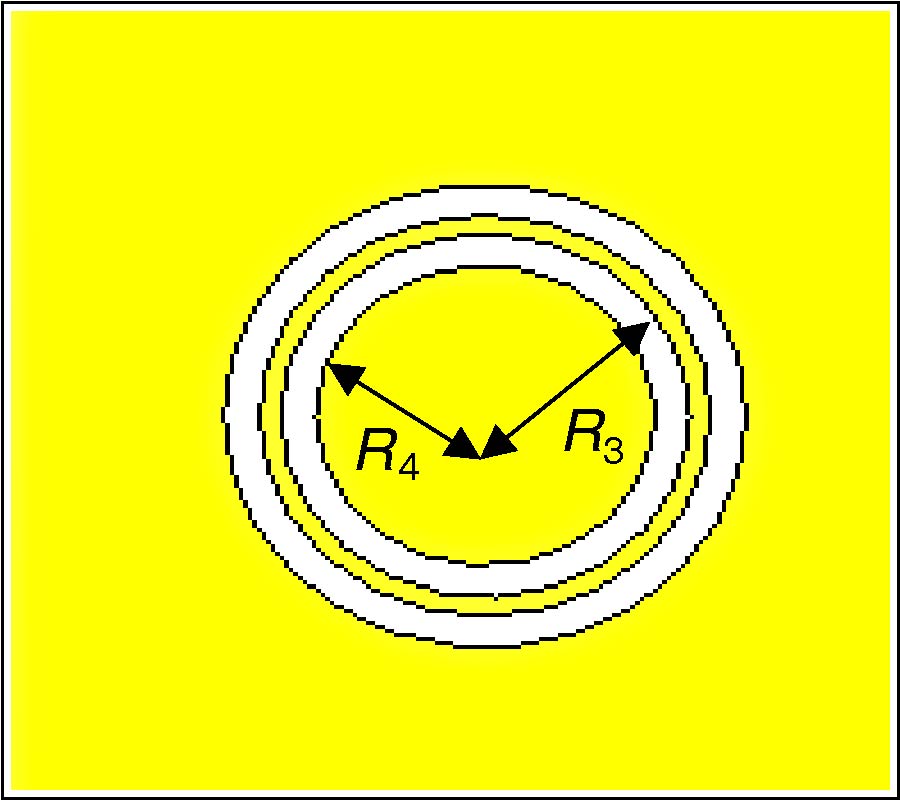
A frequency reconfigurable antenna with conical radiation pattern is presented. The antenna is mainly composed of a suspended circular patch, eight shorting posts, and a ground plane. The circular patch is loaded with two concentric annular slots, and four varactors are placed across the outer annular slot to vary the resonant frequency of the antenna. Simulated results show that the resonant frequency can be tuned from 3.25 to 5.7 GHz as the capacitance of the varactors is varied from 0.2 to 12 pF, and conical radiation patterns are obtained when the antenna is operated at each resonant frequency. In the simulation, the reversed-bias circuit of the varactor is also included, and it is found that a bias tee or an inductor is not necessary for the proposed reconfigurable antenna. Experiments are also realized using two different varactors, and the measured results indicate that the peak gains of the conical radiation patterns occur around θ = ±40˚, and they are about 4.5 ± 1.5 dBi when the constructed prototypes are operated in the frequency range from 3.1 to 5.7 GHz.
FREQUENCY RECONFIGURABLE ANTENNA WITH CONICAL RADIATION PATTERN AND WIDE TUNING RANGE
2021-03-01
PIER B
Vol. 91, 59-77
Reflection Budgeting Methodology for High-Speed Serial Link Signal Integrity Design
Richard J. Allred and Cynthia Furse
Reflective interference caused by impedance discontinuities in the interconnect is a serious impediment to high speed serial link designs. The reflections can be addressed either through expensive equalization circuits or through interconnect redesign. Here a new technique for determining the most significant places to make changes in an interconnect design is presented. Through linearizing the S-parameter cascading process three unique reflection budgets are created based on 1) frequency domain insertion loss deviation, 2) time domain peak distortion analysis and 3) time domain reflectometry. Example analysis of a 25.8 Gb/s NRZ system identifies the connectors as the primary contributors to reflective interference and estimates that the interactions with the rest of the interconnect with the connector impedance discontinuities reduces the system eye height by 84 mV.
REFLECTION BUDGETING METHODOLOGY FOR HIGH-SPEED SERIAL LINK SIGNAL INTEGRITY DESIGN
2021-03-01
PIER B
Vol. 91, 39-57
A Framework for Peak Power Exceedances of High Power Microwave Radiators Applied to a Vircator Surrogate Model
Mae AlMansoori , Ernesto Neira , Sebastien Lallechere , Felix Vega , Lars Ole Fichte , Zouhair Nezhi , Chaouki Kasmi and Marcus Stiemer
Uncertainty quantification and variability analysis are two domains of interest when looking at the efficiency of HPEM sources. Vircator is known to be a low efficiency high power microwave source subject to several generally volatile phenomena such as plasma expansion and shot-to-shot variability. In this study, a computationally low cost framework combining the Extreme Value Theory (EVT) and the Generalised Design of Experiments is proposed in order to study the peak power distribution of a Vircator obtained with a surrogate model. Following the pre-screening of random variables, the optimised parameters are introduced in 2.5D and 3D simulation tools, namely XOOPIC and CST-PS. It has been confirmed that the peak power output can reach a 40% increase. This shows that the EVT proves to be successful in classifying and quantifying random variables to influence the distribution tails.
A FRAMEWORK FOR PEAK POWER EXCEEDANCES OF HIGH POWER MICROWAVE RADIATORS APPLIED TO A VIRCATOR SURROGATE MODEL
2021-03-01
PIER M
Vol. 101, 149-159
Resonator Based Antenna Sensor for Breast Cancer Detection
Praveen Kumar Rao and Rajan Mishra
A compact ultra-wideband antenna is presented for detecting malignant cells in the breast. The dimension of the proposed circular resonator-based antenna is 20 mm x 30 mm x 1.6 mm. The antenna sensor operates within the 3.1 GHz to 6.8 GHz (105.71%) range with peak gain 4.8 dB, radiation efficiency 89.2%, and an omnidirectional radiation pattern. Three types of breast phantoms (i.e., phantom without tumor, a phantom with a single tumor, and phantom with two tumors) arealso fabricated. The electrical properties of the malignant cells differ from non-malignant breast cells. S-parameters have been measured with phantom, then with the help of Principal Component Analysis (PCA), and normal and malignant breast phantoms are identified. Further, the tumor's locations in the breast phantom are find out by using the specific absorption rate (SAR) values.
RESONATOR BASED ANTENNA SENSOR FOR BREAST CANCER DETECTION
2021-02-27
PIER C
Vol. 110, 181-195
Tunable Triple Band-Notched UWB Antenna Using Single EBG and Varactor Diode
Vijay Ramesh Kapure , Pramod P. Bhavarthe and Surendra S. Rathod
In this paper, a UWB monopole antenna with triple band-notch characteristics using single TBMV-EBG (Triple band multi-via electromagnetic bandgap) unit cell is proposed and demonstrated. The antenna with a fork-type radiating patch with TBMV-EBG is simulated using Ansys HFSS. Measurement results show triple band-notches at 3.39, 5.78, and 8.60 GHz, respectively, which are in good agreement with simulation results. The proposed antenna has bi-directional pattern in E-plane and omnidirectional pattern in H-plane. Moreover, tunable characteristics of the proposed antenna using a single varactor diode are also presented. By changing the capacitance of varactor, the band-notched antenna is effectively tuned from 2.69-3.46, 5.71-7.84, and 8.40-8.50 GHz. The same antenna structure can be operated at different band notching modes depending upon the varactor's capacitance. Therefore, the proposed UWB antenna will prove to be a promising candidate wherein multi-band rejections using single TBMV-EBG unit cell and reconfiguration using one varactor diode are desirable.
TUNABLE TRIPLE BAND-NOTCHED UWB ANTENNA USING SINGLE EBG AND VARACTOR DIODE
2021-02-27
PIER M
Vol. 101, 139-147
Near-Field Image Transmission and EVM Measurements in Rich Scattering Environment in Metal Enclosure
Mir Lodro , Gabriele Gradoni , Christopher Smartt , Ana Vukovic , David W. P. Thomas and Stephen Greedy
In this work we present near-field image transmission and error vector magnitude measurement in rich scattering environment in metal enclosure. We check the effect of loading metal enclosure on the performance of SDR based near-field communication link. We focus on the key communication receiver parameters to observe the effect of near-field link in presence of rich-scattering and in presence of loading with RF absorber cones. The near-field performance is measured by transmitting wideband OFDM-modulated packets containing image information. Our finding suggests that the performance of OFDM based wideband near-field communication improves when metal enclosure is loaded with RF absorbers. Near-field EVM improves when the enclosure is loaded with RF absorber cones. Loading of the metal enclosure has the effect of increased coherence bandwidth. Frequency selectivity was observed in an empty enclosure which suggests coherence bandwidth less than the signal bandwidth.
NEAR-FIELD IMAGE TRANSMISSION AND EVM MEASUREMENTS IN RICH SCATTERING ENVIRONMENT IN METAL ENCLOSURE
2021-02-27
PIER M
Vol. 101, 127-138
Direct Control of Bearingless Permanent Magnet Synchronous Motor Based on Prediction Model
Huangqiu Zhu and Mingcan Wu
The direct control for the bearingless permanent magnet synchronous motor (BPMSM) has problems of large ripples of flux linkage, torque, and suspension force due to sampling time delay. To solve above problems, a predictive direct control method is proposed based on the traditional direct control by adding prediction model. Firstly, the generation principle of radial suspension forces of the BPMSM is introduced. Secondly, the models of the predictive direct control method are given based on the traditional direct control, and the time-delay compensation model is deduced. Thirdly, the predictive direct control system is constructed, and the simulations are carried out. Finally, the proposed control strategy is applied to a prototype, and the related experimental results are given and analyzed. The results of the simulations and experiments show that compared with the traditional direct control of the BPMSM, the predictive direct control strategy can effectively reduce the ripples of flux linkage, torque, and suspension forces, and improve the static and dynamic performance of the BPMSM.
DIRECT CONTROL OF BEARINGLESS PERMANENT MAGNET SYNCHRONOUS MOTOR BASED ON PREDICTION MODEL
2021-02-26
PIER Letters
Vol. 96, 137-145
Study of Active Negative Group Delay Circuit Based on LNA and RLC-Parallel Network
Dan Chen , Taochen Gu , Xiang Zhou , Fayu Wan and Blaise Ravelo
This paper develops a circuit theory on bandpass negative group delay (NGD) topology. The NGD active lumped circuit uses a low noise amplifier (LNA). An S-parameter model is formulated. Unfamiliar, NGD function analysis is introduced by analytically defining the NGD value, bandwidth, and central frequency in function of the topology parameters. The synthesis formulas enabling the calculation of cell parameters as a function of the targeted bandpass function specifications. To validate the circuit theory, an NGD proof of concept (PoC) is designed, simulated and tested. As expected, simulations and measurements are in good agreement. Calculated model, simulated and measured results showing NGD level of about -10 ns around the centre frequency 0.5 GHz over the bandwidth 50 MHz validate are obtained.
STUDY OF ACTIVE NEGATIVE GROUP DELAY CIRCUIT BASED ON LNA AND RLC-PARALLEL NETWORK
2021-02-25
PIER M
Vol. 101, 117-126
Uncertainty Quantification and Parameter Estimation in the Finite-Difference Frequency-Domain Method Using Polynomial Chaos
Andrew C. M. Austin
A new numerical method is proposed for uncertainty quantification in the two-dimensional finite-difference frequency-domain (FDFD) method. The method is based on an intrusive polynomial chaos expansion (PCE) of the Helmholtz equation in terms of the material properties. The resulting PCE-FDFD method is validated against Monte-Carlo simulations for an electromagnetic scattering problem at 1.0 GHz. Good agreement is found between the statistics of the electric fields computed using the proposed method and the Monte-Carlo results, with a factor 15-120 reduction in the computational costs. The PCE-FDFD method is also applied to estimate the material properties from exterior measurements by formulating an objective function and applying constrained optimisation techniques. A maximum 1.7% error in the material properties was observed for a test geometry with six unknowns and 20 sample points.
UNCERTAINTY QUANTIFICATION AND PARAMETER ESTIMATION IN THE FINITE-DIFFERENCE FREQUENCY-DOMAIN METHOD USING POLYNOMIAL CHAOS
2021-02-24
PIER C
Vol. 110, 167-179
A Vibration Energy Recovery Method with Application to a Semi-Active Suspension System
Yiquan Sun , Qingzhang Chen , Wenye Wu and Linlin Gao
This paper proposes a method to recover vibration energy from a semi-active suspension system which is composed by a magneto rheological damper in parallel with a power regeneration mechanism. Central to the concept is a parity-time-symmetric (PT symmetric) circuit that is capable of providing high efficiency transmission of power and minimizing electromagnetic damping force of the power regeneration mechanism. Simulation results are presented to demonstrate the electromagnetic damping force of the power regeneration mechanism having little impact on suspension system and verify the possibility of energy recovery. The proposed control strategy pays close attention to inertial force of the power regeneration mechanism which produces indicator diagram hysteresis. To evaluate the performance brought about by the proposed method, the semi-active suspension utilizing the PT symmetric circuit is compared to the load resistance circuit. And the semi-active suspension system is implemented on a quarter car test bench to demonstrate its feasibility on a typical sine road surface.
A VIBRATION ENERGY RECOVERY METHOD WITH APPLICATION TO A SEMI-ACTIVE SUSPENSION SYSTEM
2021-02-23
PIER C
Vol. 110, 151-165
A Dynamic Wireless Power Transfer Using Metamaterial-Based Transmitter
Jiropast Suakaew and Wanchai Pijitrojana
Dynamic Wireless Power Transmission has attracted attention in the research area due to its safety, convenience, and automation. However, the major limitation in achieving this vision is its working distance. In this paper, the metamaterial (MM) based transmitter WPT with zero permeability is presented and compared with an inductive WPT system. The comparative simulations and experimental investigations validate the effectiveness of the proposed design. The system efficiencies are determined at the distances of 8 cm, 11 cm, and 16 cm between the transmitter and receiver (SAE J2954) with an operating frequency of 20 kHz. The power transfer efficiency (PTE) of the WPT system using an inductive transmitter and the WPT system using an MM-based transmitter is shown as 85/87%, 65/70%, 45/65%, respectively. The PTE of the MM-based transmitter is 64% higher than an inductive transmitter at a 16 cm distance. The robot without a battery moves dynamically along the track with the MM-based transmitter underneath. The results show that the power transfer efficiency of the MM-based transmitter is considerably higher than that of the inductive transmitter.
A DYNAMIC WIRELESS POWER TRANSFER USING METAMATERIAL-BASED TRANSMITTER
2021-02-23
PIER C
Vol. 110, 135-150
Millimeter-Wave Tightly-Coupled Phased Array with Integrated MEMS Phase Shifters
Anas J. Abumunshar , Kubilay Sertel and Niru K. Nahar
A low-loss electronic beam steering model is presented in this paper based on tightly-coupled dipole array topology for satellite communications applications for K through Ka-band (18-40) GHz. The array is low-profile having < 3.4 mm height and printed on an affordable single-layered PCB. As proof-of-concept, a 4 × 4-element, single polarized array is fabricated and measured showing (18-40) GHz (VSWR < 2) continual band coverage. A compact, low-loss electronic beam steering architecture for moderate bandwidth arrays is also utilized for beam steering. A 2-bits tunable phase shifter, spanning over (18-30) GHz with IL < 2.5 dB, is developed using micro-electro mechanical systems (MEMS) technology. The phase shifter is integrated at the array elements resulting in reduced size, cost, and complexity of the feeding network. A full-wave simulation of the 4 × Infinite array with the integrated MEMS phase shifter is conducted to prove the concept.
MILLIMETER-WAVE TIGHTLY-COUPLED PHASED ARRAY WITH INTEGRATED MEMS PHASE SHIFTERS
2021-02-23
PIER M
Vol. 101, 101-115
Full Wave Analysis of Multilayered Cylindrical Resonator Containing Uniaxial Anisotropic Media
Krzysztof Derzakowski
The method of evaluating the resonant frequencies of a multilayered cylindrical resonator containing uniaxial anisotropic materials is presented. The detailed solution of Maxwell's equations for such a structure by means of the radial mode matching method is given. The results of calculations using developed and launched computer program are given, and they are compared with those obtained by other methods and with measurements. These results are in close agreement, which proves the correctness of the method. The developed solution and the software program can be used to measure the permittivity tensor of materials.
FULL WAVE ANALYSIS OF MULTILAYERED CYLINDRICAL RESONATOR CONTAINING UNIAXIAL ANISOTROPIC MEDIA
2021-02-23
PIER M
Vol. 101, 89-100
Research on the Model and Characteristics of Underground Magnetic Induction Communication Channel
Bao Heng Liu , Yongbin Wang and Tianhui Fu
The traditional electromagnetic wave wireless communication in the underground environment has the problem of unstable channel path loss, large antenna size, high path loss, etc. To address these issues, the channel models of magnetic induction communication and magnetic induction waveguide communication based on quasi-static field coupling are proposed, and the characteristics of magnetic field strength, path loss, bandwidth, and channel capacity are analyzed in detail. The results show that the magnetic induction communication system channel is stable, compared with the ordinary induction communication, and the path loss of magnetic induction waveguide communication is reduced a lot, even in the case of high noise and transmission distance increased by more than 20 times. But the bandwidths of the two ways are small and similar. The path loss and bandwidth decide the system capacity, and system capacity is also affected by the number of turns, working frequency, coil resistance, and size.
RESEARCH ON THE MODEL AND CHARACTERISTICS OF UNDERGROUND MAGNETIC INDUCTION COMMUNICATION CHANNEL
2021-02-22
PIER C
Vol. 110, 119-133
Metasurface Superstrate Inspired Printed Monopole Antenna for RF Energy Harvesting Application
Bikash Ranjan Behera , Priya R. Meher and Sanjeev Kumar Mishra
In this paper, a metasurface superstrate-inspired broadband circularly polarized (CP) printed monopole antenna is investigated. To achieve broadband circular polarization and directional radiation pattern, a circle-shaped monopole radiator with asymmetrical staircased partial ground loaded with metasurface is introduced. It is fed by a 50-Ω microstrip feedline and is fabricated on an FR-4 substrate, having overall dimension of 1.25λ0 × 1.66λ0 × 0.02λ0 at f = 5 GHz. The metasurface antenna exhibits a measured impedance bandwidth of 5 GHz (1.85-6.85 GHz, 114.9%), axial bandwidth of 910 MHz (4.09-5 GHz, 20.02%) with average CP antenna gain of 6.82 dBic, directional radiation pattern and consistent antenna efficiency of > 85.65% in the desired frequency bands. Time domain characteristics i.e. group delay is obtained within 2 ns in the operating frequency bands. Due to its design process and attainment of broadband CP, higher antenna gain and directional radiation pattern in the broadside direction, it is extended for RF energy harvesting. The proposed metasurface antenna is integrated with a rectifier circuit, where RF-to-DC conversion efficiency (η0) and DC output voltage (Vout) are analyzed by using ADS circuit solver.
METASURFACE SUPERSTRATE INSPIRED PRINTED MONOPOLE ANTENNA FOR RF ENERGY HARVESTING APPLICATION
2021-02-22
PIER C
Vol. 110, 103-117
Triple Band Dual Sense Circularly Polarized Ceramic Based Antenna: Exploring Conceptual Design Methodology
Anand Sharma , Gourab Das and Ravi Kumar Gangwar
In this communication, conceptual design guidelines for a tri-band dual sense circularly polarized ceramic-based antenna is explored. An asymmetrical S-shaped aperture is used to stimulate the ring-shaped ceramic. Some exclusive features are obtained in the designed antenna: (i) creation of five different hybrid modes (HEM11δ, HEM11δ+2, HEM12δ-like, HEM12δ, and HEM13δ) is helpful for getting dual wideband impedance bandwidth; (ii) proposed aperture assists in achieving CP waves in three different frequency ranges with two different senses. Its experimental results confirm the simulated outcomes. The proposed antenna is operated within the dual-frequency ranges i.e. 2.2-4.19 GHz and 4.74-6.11 GHz, respectively. The measured 3-dB axial ratio is achieved in three different frequency ranges within the operating band i.e. 2.71-2.98 GHz, 3.6-3.79 GHz, and 5.5-5.81 GHz, respectively. The proposed antenna design is left-handed circularly polarized (LHCP) in the first and third frequency ranges, while it is right-handed in the second one. These features, along with broadsided far-field patterns, recommend the proposed antenna design for potential application in WLAN (2.4/5.5 GHz) and WiMAX (3.3/5.0 GHz) wireless networks.
TRIPLE BAND DUAL SENSE CIRCULARLY POLARIZED CERAMIC BASED ANTENNA: EXPLORING CONCEPTUAL DESIGN METHODOLOGY
2021-02-21
PIER C
Vol. 110, 91-102
Design of Dual-Band Conformal AMC Integrated Antenna for SAR Reduction in WBAN
Bidisha Hazarika , Banani Basu and Arnab Nandi
A wearable, miniaturized, dual-band, Artificial Magnetic Conductor (AMC) integrated antenna operating on ISM band (2.38-2.47 GHz) and WLAN band (5.11-5.31 GHz) is proposed for Wireless Body Area Network (WBAN). A dumbbell shaped unit-cell is designed to achieve zero reflection phase and modified material characteristics. When 2×2 array of dumbbell shaped AMC is put underneath the monopole, the antenna gain increases up to 9.5 dB and 8.1 dB at 2.43 GHz and 5.2 GHz respectively. Different bending conditions have been considered to confirm the robustness of the AMC antenna. Debye model is used to approximate the dielectric properties within phantom tissue model. Antenna shields most of the backward radiation and reduces the specific absorption rate (SAR) of the integrated antenna by more than 95% in 1-g of phantom hand tissues at both the frequencies. The acquired results exhibit that the AMC antenna is more secure for on body applications.
DESIGN OF DUAL-BAND CONFORMAL AMC INTEGRATED ANTENNA FOR SAR REDUCTION IN WBAN
2021-02-21
PIER M
Vol. 101, 79-88
G-Shaped Defected Microstrip Structure Based Method of Reducing Crosstalk of Coupled Microstrip Lines
Rui Li , Yafei Wang , Wei Yang and Xuehua Li
The suppression of crosstalk by combining the defected microstrip structure (DMS) with step-shaped transmission lines is proposed to address the problem of crosstalk between microstrip lines of the printed circuit board. This method suppresses the crosstalk between the microstrip lines by constructing two step-shaped coupled microstrip lines and etching the designed G-shaped DMS on one of the microstrip lines. Simulation and actual measurement results show that the combination of G-shaped DMS and step-shaped transmission line can effectively suppress crosstalk and reduce the far-end crosstalk by approximately 20 dB in the frequency range of 4-5 GHz. The actual measurement results in the vector network analyzer coincide with the high-frequency structure simulator simulation results.
G-SHAPED DEFECTED MICROSTRIP STRUCTURE BASED METHOD OF REDUCING CROSSTALK OF COUPLED MICROSTRIP LINES