Search Results(13789)

2021-03-16
PIER M
Vol. 101, 185-196
Polarimetric Parameters of Scattered Electromagnetic Waves in the Conductive Magnetized Plasma
George Jandieri and Akira Ishimaru
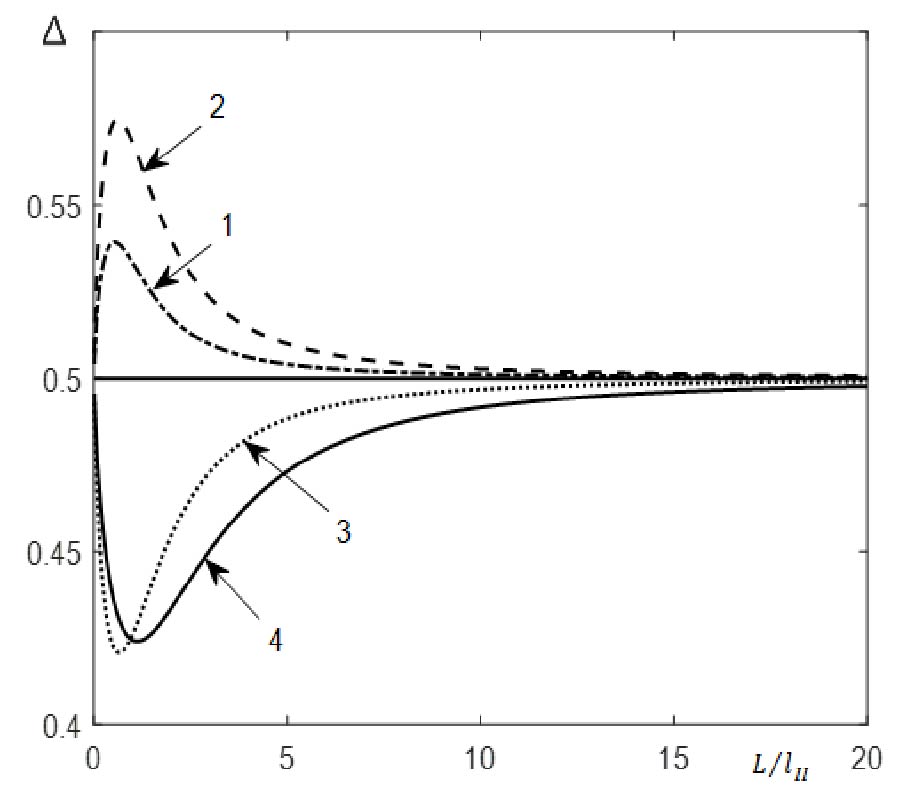
Electromagnetic waves propagation in both homogeneous and random magnetized conductive plasma is considered including longitudinal, Pedersen and Hall's conductivities. The second-order statistical moments of scattered electromagnetic waves in the conductive turbulent magnetized plasma slab with electron density fluctuations are investigated on the bases of the set of stochastic differential equation. Refractive index and polarization coefficients of both the ordinary and extraordinary waves are calculated for the polar terrestrial ionosphere. Using new spectral method and the boundary conditions, transversal components of scattered electromagnetic waves are calculated. Experimentally observed Stokes parameters describing the depolarization effects are calculated for the arbitrary correlation function of electron density fluctuations. Coherent matrix describing polarization features of non-plane waves generalizing the Stokes parameters is obtained.
2021-03-15
PIER Letters
Vol. 97, 21-26
Design of a Compact Lowpass-Bandpass Diplexer with High Isolation
Seda Elden and Ali Kursad Gorur
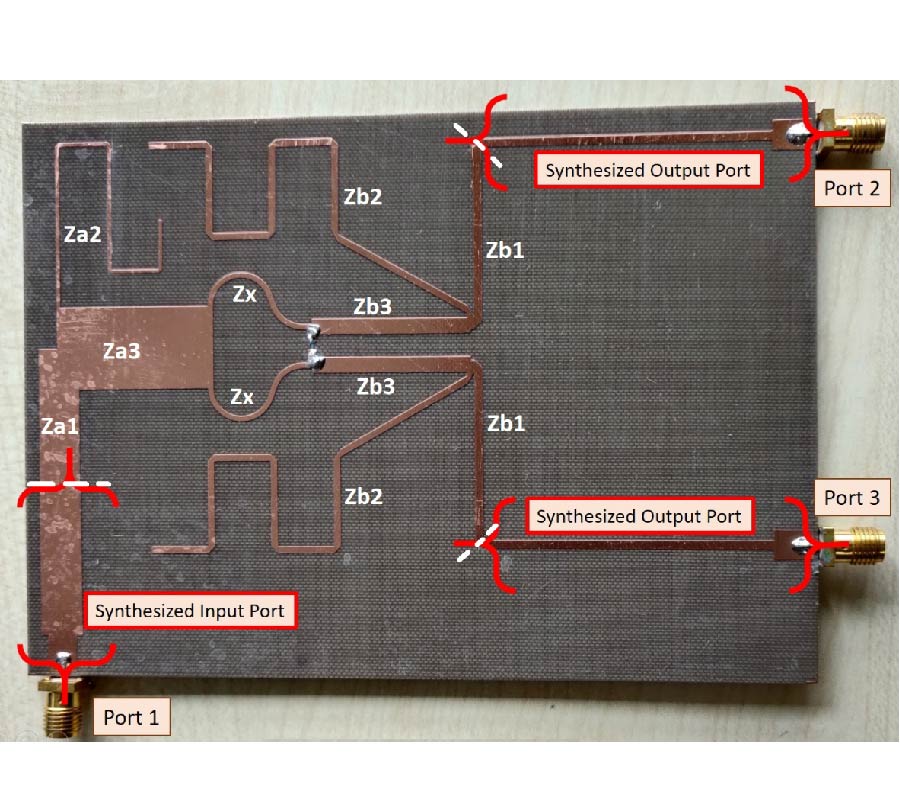
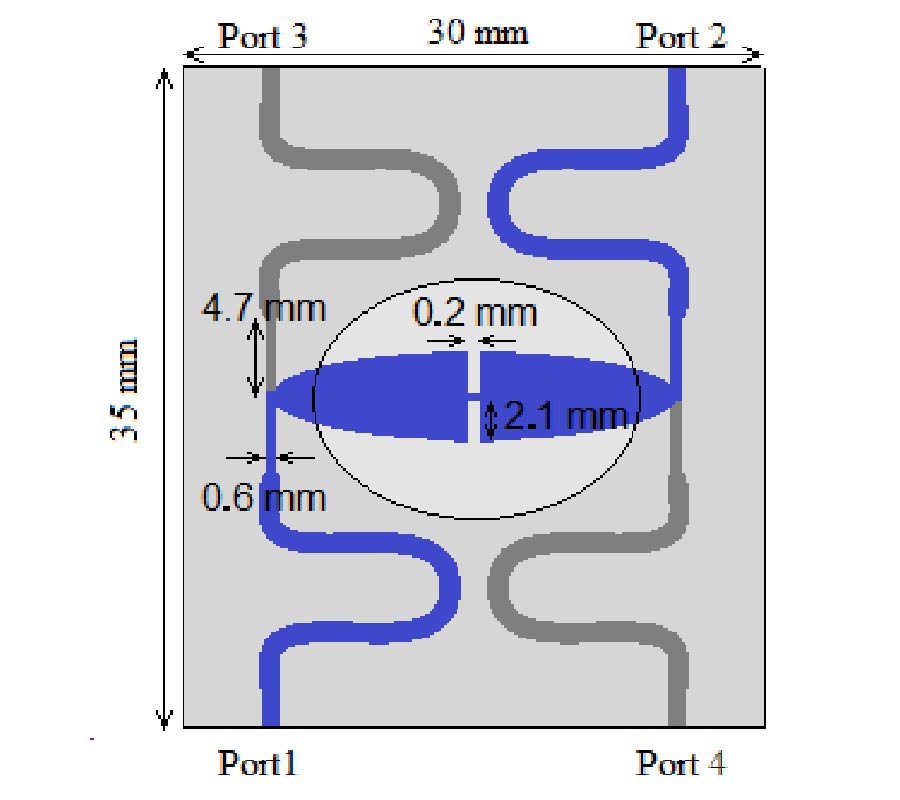
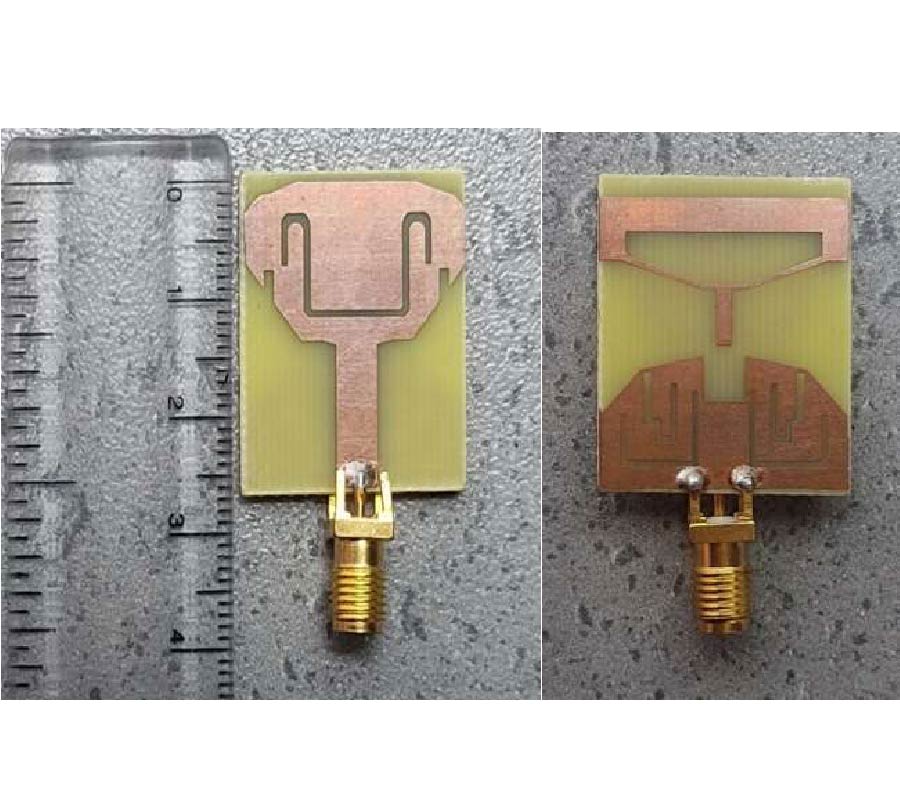
In this paper, a novel compact lowpass-bandpass microstrip diplexer with high isolation is proposed. The proposed structure consists of a lowpass filter section and a bandpass filter section. The lowpass filter section is designed at a cut-off frequency of 2 GHz with sixth order elliptic filtering characteristics. The bandpass filter section is designed at 3.5 GHz by using a meandered dual-mode loop resonator (MDMLR). The MDMLR is coupled to input port by open circuited feeding lines. The lowpass-bandpass diplexer is formed by combining lowpass and bandpass filter sections without using an additional matching circuit. The designed lowpass-bandpass diplexer has been fabricated and measured in a very good agreement with the simulated results. Isolation between the output ports has been measured as better than 40 dB.
DESIGN OF A COMPACT LOWPASS-BANDPASS DIPLEXER WITH HIGH ISOLATION
2021-03-15
PIER Letters
Vol. 97, 13-19
A Terahertz Demultiplexer Based on Metamaterials Applied to Terahertz Communication Systems
Wu Pan , Xuewen Zhang , Yong Ma , Zhen Zhang , Xi Wang , Tao Shen , Yi Li and Lihao Yang
This paper proposes a novel terahertz demultiplexer based on metamaterials. Its surface metal structure comprises double U-shaped structures and a rectangular wire. The demultiplexer can separate terahertz of 0.225 THz and 0.410 THz, with high isolations of 41 dB and 38 dB, low insertion losses of 0.07 dB and 0.11 dB, and stable group delays of 3.5 ps and 3.8 ps at the center frequency, respectively. The equivalent parameters of metamaterials are simulated, and the electric field, current, and power distribution characteristics at operating frequency points are analyzed. This metamaterial is easy to process and is expected to be applied in future 6G wavelength division multiplexing systems.
A TERAHERTZ DEMULTIPLEXER BASED ON METAMATERIALS APPLIED TO TERAHERTZ COMMUNICATION SYSTEMS
2021-03-13
PIER C
Vol. 111, 25-34
Design and Analysis of Rectangular Spiral Nano-Antenna for Solar Energy Harvesting
Fatma Moawad Abdel Hamied , Korany Ragab Mahmoud , Mohamed Hussein and Salah S. A. Obayya
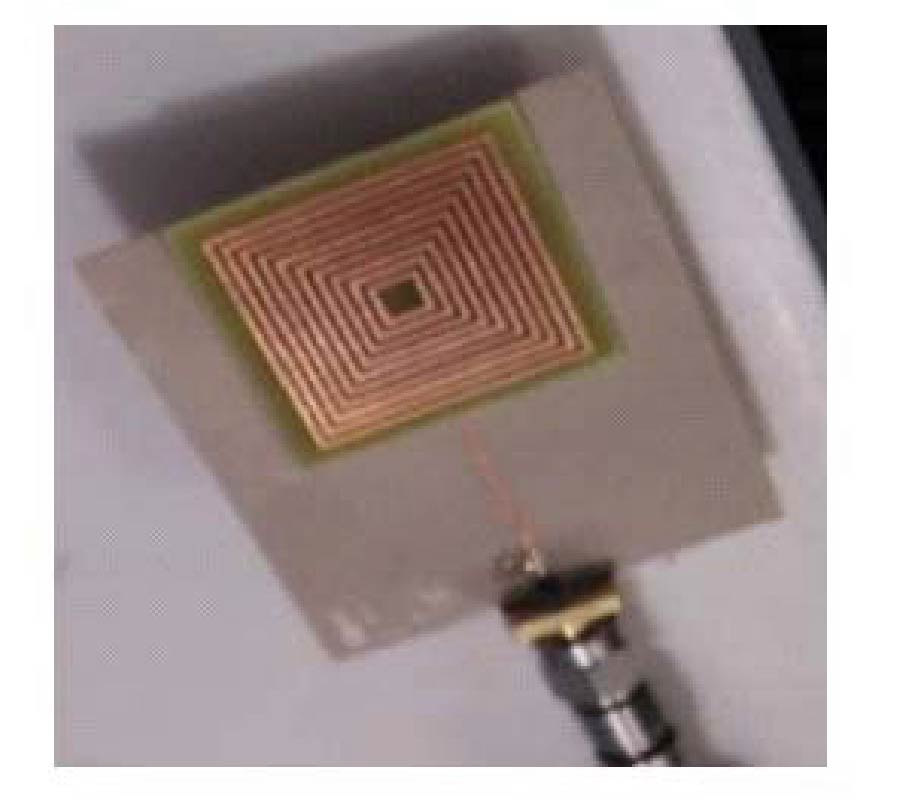
Recently, optical nano-antennas (NAs) have been introduced as an alternative approach for photovoltaics devices in solar power harvesting application. In this work, we introduce a new modification to the conventional Archimedean spiral NA to improve its radiation/harvesting efficiency and directivity. The proposed design is a rectangular spiral NA of two tip-to-tip opposing arms which are separated by an air gap. The reported design performance is investigated in terms of the radiation efficiency, directivity, polarization, radiation pattern and total harvesting efficiency. The numerical study is carried out using the finite integration technique (FIT) within the wavelength range 300-1600 nm. The presented design offers a maximum radiation efficiency of 88% in free space and 97.9% on top of silicon dioxide (SiO2) substrate at a wavelength of 500 nm where the maximum radiation of the sun occurs. In addition, the proposed design has a maximum directivity of 10.8 in free space which is increased to 19.1 on top of a substrate at 500 nm. It is found that the suggested rectangular design shows an enhancement in the radiation efficiency and directivity over the counterpart Archimedean nano-spiral antenna by 10% and 208%, respectively. The proposed rectangular design introduces total harvesting efficiencies of 96.2%, 98.1% in free space and on the substrate, respectively. Moreover, the effect of round edges that may appear in the fabrication process is also considered.
DESIGN AND ANALYSIS OF RECTANGULAR SPIRAL NANO-ANTENNA FOR SOLAR ENERGY HARVESTING
2021-03-12
PIER C
Vol. 110, 267-283
The Performance of Circularly Polarized Phased Sub-Array Antennas for 5G Laptop Devices Investigating the Radiation Effects
Korany Ragab Mahmoud , Abdullah Baz , Wajdi Alhakami , Hosam Alhakami and Ahmed Mohamed Montaser
In this paper, the performance of circularly polarized (CP) adaptive sub-arrays integrated into 5G laptop device is investigated in the presence of a whole-body human phantom model. In addition, the radiation effect of the steered beam patterns has been analyzed by calculating the specific absorption rate distribution and temperature rise. In this target, a single-feed CP antenna element has been firstly designed to resonate at 28 GHz with high realized gain and radiation efficiency. Then, 4 sub-arrays have been constructed in a rectangular configuration with four-elements for each sub-array. To let the study more realistic, a complete human model is considered to investigate the radiation effects. The measured reflection coefficient and realized gain results of the designed antenna element are found to be -30 dB and 7.82 dB, respectively, in the assigned frequency band. Likewise, the antennas sub-arrays have approximately kept the same impedance matching attitude with high insertion loss of -22 dB and a realized gain and radiation efficiency of 16.85 dB and 86%, respectively, on average. Furthermore, the sub-arrays scan patterns and coverage efficiency has been studied considering the existence of the human body in different scenarios. Regarding the RF exposure, the results show that the resultant maximum values of specific absorption rate and power density do not exceed 1.52 W/Kg and 3.5 W/m2, respectively, whereas, the maximum exposure temperature in such a case is less than 2.8°C after 30 minutes and decreases to 0.5°C after a penetration depth of 3 mm which reflects the possibility of safe use.
THE PERFORMANCE OF CIRCULARLY POLARIZED PHASED SUB-ARRAY ANTENNAS FOR 5G LAPTOP DEVICES INVESTIGATING THE RADIATION EFFECTS
2021-03-11
PIER C
Vol. 111, 15-24
Quantization-Aware Greedy Antenna Selection for Multi-User Massive MIMO Systems
Hasan Falah Mahdi , Ahmed Thair Alheety , Nather Abdulhakeem Hamid and Sefer Kurnaz
Using multiple-Input Multiple-Output (MIMO) configuration is not new in the field of wireless communication to increase the capacity of the system. This configuration is still valid to use nowadays with the modern wireless configuration such as the Fifth generation (5G). Massive MIMO is the key resource of the 5G systems due to its huge ability to increase the capacity of the network and on the other hand its ability to enhance both spectral and transmit-energy efficiency. The need for using Massive MIMO comes from the increase in using smartphones, tablets, and the rise of the Internet of Things. This increasing demand for the use of wireless applications requires networking and Internet infrastructures to meet the needs of current and future multimedia applications which massive MIMO satisfies. The key limitation of using massive MIMO is the cost of installation of these antennas and how to multiplex between them. In addition to this, the Radio Frequency (RF) links are also increased where this increase leads to high system complexity and hardware energy consumption. Because of this, reducing the required number of RF chains is essential to use by performing antenna selection which this paper aims to evaluate without significant performance loss which can be performed by employing low-resolution Analog-to-Digital Converter (ADC) to select an antenna with the best tradeoff between the additional channel gain and increase in quantization error. In this paper, Quantization-Aware Greedy Antenna Selection (QAGAS) algorithm has been proposed and compared with other antenna selection algorithms especially simple algorithms like random selection and Fast Antenna Selection (FAS) algorithm. The achieved capacity is compared with that of a very simple scheme that selects the antennas with the highest received power. The system capacity obtained from QAGAS is evaluated related to the transmit power of the Base Station (BS) and the quantization bits used in the low-resolution ADC. The simulation is also performed for different numbers of users served by the BS and with the number of antennas at the BS. The simulation results show that the proposed algorithm indicates a potential for significant reductions of massive MIMO implementation complexity, by reducing the number of RF links and performing antenna selection using simple algorithms.
QUANTIZATION-AWARE GREEDY ANTENNA SELECTION FOR MULTI-USER MASSIVE MIMO SYSTEMS
2021-03-11
PIER C
Vol. 111, 1-14
Investigating the Performance of a New Type of Preloaded Linear Stroke Length Magnetic Spring
Hossein Baninajar , Jonathan Bird and Victor Albarran
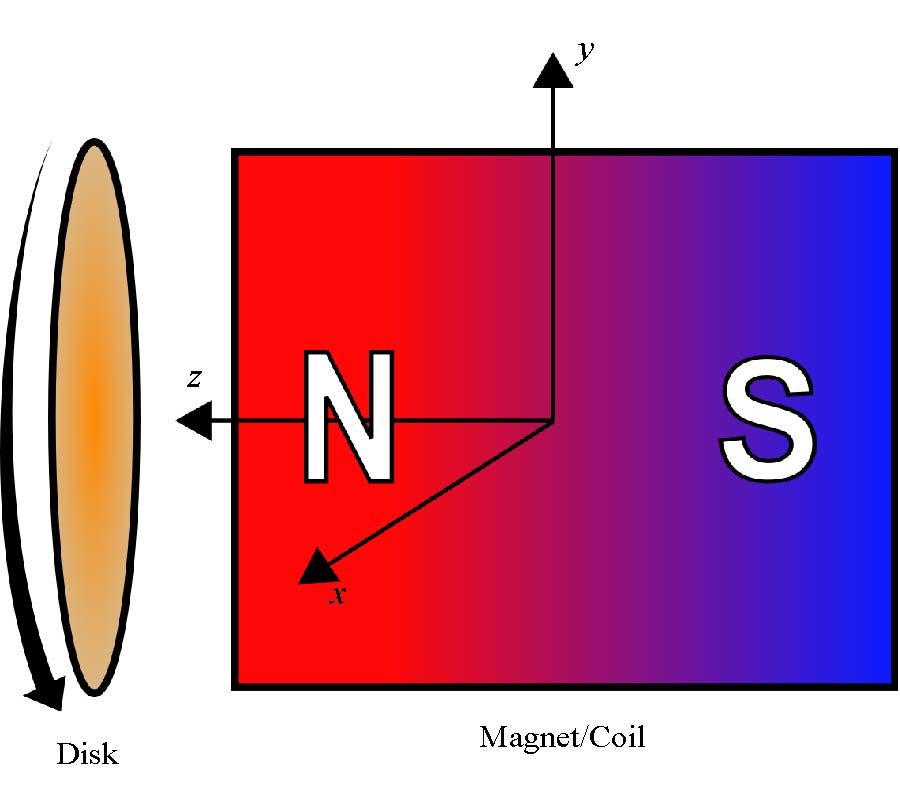
This paper presents the analytic analysis, and proof-of-principle prototyping of a new type of magnetic spring with preload and a linear stroke length. An analytic based magnetic charge modeling approach is utilized to investigate the magnetic spring's energy density, stiffness characteristics and linearity. It is shown that whilst the proposed magnetic spring has a lower mass and energy density than a mechanical spring, the magnetic spring offers several unique characteristics, such as contact-free operation, inherent preload as well as over-force failure protection. In addition, the operating principle of the presented magnetic spring can be extended to realize both positive and negative variable stiffness adjustment characteristics.
INVESTIGATING THE PERFORMANCE OF A NEW TYPE OF PRELOADED LINEAR STROKE LENGTH MAGNETIC SPRING
2021-03-11
PIER M
Vol. 102, 1-11
Quantification of Combat Team Survivability with High Power RF Directed Energy Weapons
Graham V. Weinberg
Modern combat teams face an increasingly complex battlefield, where threats may arise from a number of different sources. Examples include not only conventional attacks through rocket propelled grenades but also improvised explosive devices and weaponised unmanned aerial vehicles. Combat teams can now be equipped with sophisticated surveillance and reconnaissance capability, as well as automatically activated defences. The focus of this paper is to consider the utility of collaborative active protection systems, which are designed to provide an active defence against threats to a combat team. Specifically, a general statistical framework for the analysis of such systems is introduced, with a particular focus on high power radio frequency directed energy weapon countermeasures. The mathematical model allows for a subset of the combat team to be responsible for target detection and tracking, and a time-varying subset of team members with suitable countermeasures to be specified separately. The overall probability of threat defeat and team survivability is then derived. Some examples are provided to investigate the utility of such systems.
QUANTIFICATION OF COMBAT TEAM SURVIVABILITY WITH HIGH POWER RF DIRECTED ENERGY WEAPONS
2021-03-10
PIER Letters
Vol. 97, 7-12
Frequency Reconfigurable High Power GaN/AlGaN HEMT Based Self Oscillating Active Integrated Antenna
Rakhi Kumari , Ananjan Basu and Shiban Kishen Koul
This paper presents two circuits for a high power GaN/AlGaN HEMT based self oscillating Active Integrated Antenna (AIA) using feedback topology. The first circuit, a fixed frequency high power source, is designed using a two-port T-coupled patch antenna in parallel feedback of a device. This circuit radiates 41 dBm power at 2.34 GHz frequency when being biased at Vgs = -2.1 V and Vds = 25 V. The second circuit, a frequency reconfigurable high power source, is designed using a frequency reconfigurable T-coupled two-port patch antenna in parallel feedback of a device. Frequency reconfigurability is achieved in the second circuit by adding one more strip and two pin diodes at both sides of centre patch of the two-port patch antenna. Change of biasing voltage of pin diodes changes the frequency of oscillation of the circuit. This circuit radiates 32.4 dBm power at 2.1 GHz when pin diodes are off and radiates 32 dBm power at 2.7 GHz when pin diode is on. To the best of our knowledge, the first circuit implemented radiates the highest power using single device whereas the second circuit is the first implementation of reconfigurable oscillating AIA in GaN and also delivers the same power in both states. Each circuit measures 80 mm x 80 mm.
FREQUENCY RECONFIGURABLE HIGH POWER GAN/ALGAN HEMT BASED SELF OSCILLATING ACTIVE INTEGRATED ANTENNA
2021-03-10
PIER B
Vol. 91, 143-155
Diffraction Radiation Generated by a Density-Modulated Electron Beam Flying Over the Periodic Boundary of the Medium Section. III. Anomalous and Resonant Phenomena
Yuriy Sirenko , Seil S. Sautbekov , Nataliya Yashina and Kostyantyn Sirenko
The paper is focused on reliable analysis of the phenomena associated with the resonant and anomalous transformation of the field of a plane, density modulated electron beam, flying over the periodically rough boundary of a natural or artificial medium, in the field of bulk outgoing waves. The physical results presented here have been obtained as the result of numerical implementation of the rigorous mathematical models described in the two first papers of this series. The corresponding analytical constructions have been associated with the correct formulation of model problems and their algorithmization, with the provision of the possibility of a correct physical interpretation of the results of their numerical solution.
DIFFRACTION RADIATION GENERATED BY A DENSITY-MODULATED ELECTRON BEAM FLYING OVER THE PERIODIC BOUNDARY OF THE MEDIUM SECTION. III. ANOMALOUS AND RESONANT PHENOMENA
2021-03-10
PIER B
Vol. 91, 115-141
Efficient Elimination of False Detections Due to Sea Spikes in Coherent Radars
Anatolii A. Kononov , Dohyung Kim , Sung-Hyun Choi and Haksoo Kim
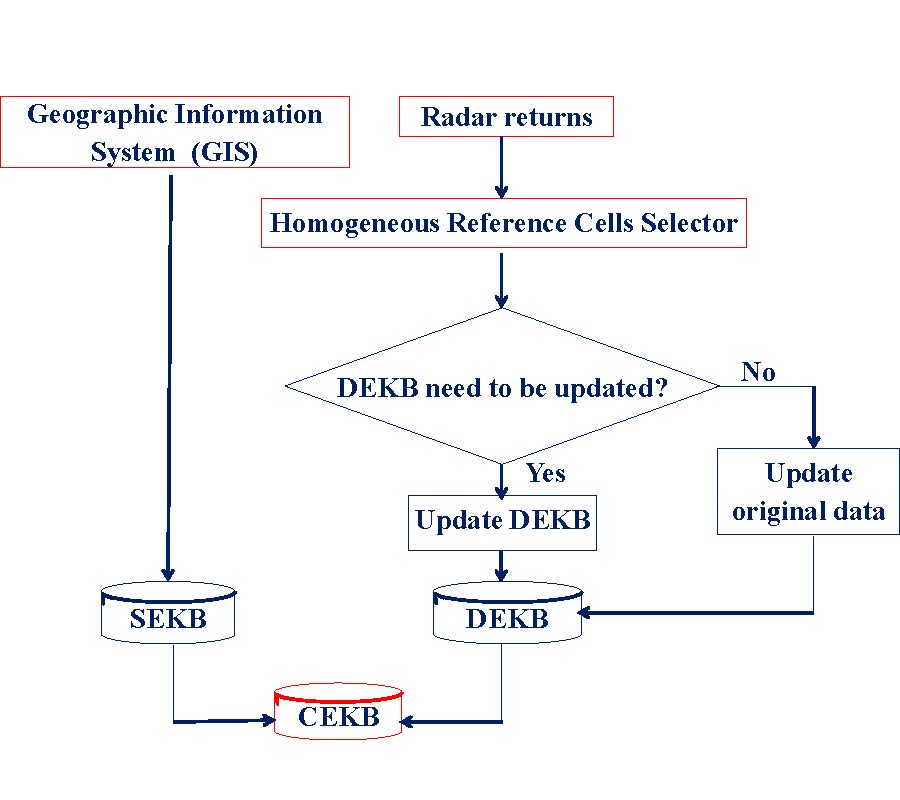
This paper introduces a method for efficiently eliminating false detections in coherent radar systems due to sea spikes. The proposed method employs scan-to-scan processing over a predefined number of successive antenna scans. Processing consists of matching estimated range-azimuth-velocity centroid associated with each radar plot extracted from a set of data detected within the current scan (initial plot) with centroids of radar plots generated in the previous scans. For each initial plot, the proposed method matches radar plots using a sequence of correlation windows generated in turn for each of the predefined previous scans. Each correlation window defines a range-azimuth region, with center and extent in range and azimuth adjusted from scan-to-scan. A group of matched plots is selected from all plots falling into a correlation window; these plots meet the velocity matching condition. Only the one radar plot, which minimizes the predefined overall matching criterion, is selected from the given group of matched plots for inclusion in the set of correlated plots associated with the initial plot. For each identified set of correlated plots, an overall correlation value is computed. If the correlation value exceeds a predefined threshold, the initial plot associated with that set of correlated plots is stored in memory for further processing and visualization. Otherwise, the initial plot is retained for plot rematching with modified velocity centroids. The modified velocities provide the detection of those targets of interest that may have been missed due to ambiguous radial velocity measurements. In contrast to known methods, the proposed method minimizes the correlation window area at a given probability of falling into the window for radar plots associated with a target corresponding to an initial plot. The proposed method efficiently eliminates the false detections while maintaining reliable detection performance for targets of interest; the detection performance is essentially improved compared to known methods. Additionally, the proposed method ensures reliable target detection when radial velocity measurements are ambiguous, a situation where known methods collapse.
EFFICIENT ELIMINATION OF FALSE DETECTIONS DUE TO SEA SPIKES IN COHERENT RADARS
2021-03-10
PIER C
Vol. 110, 253-265
A New Fast, Memory Efficient Wireless Electromagnetic Beamformer Antenna with Fast Tracking for 5/6G Systems
Herman Kunsei , Kandasamy Pirapaharan and Paul R. P. Hoole
The much-anticipated year of 5G deployment has lapsed, and yet much research is ongoing on the 5G New Radio (NR) interface. The quality of service and user experience is dependent on a stable and signal strength of the wireless communication link. To serve multiple users per sector accessing dedicated and unique services pose a challenge for passive antenna systems with omnidirectional beams. Smart 5G antenna technology with null forming and beamforming promises to serve mobile users well by offering a reliable wireless communication link. To address this need, we propose a 2 x 2 MIMO antenna capable of electronically forming electromagnetic beams in one direction and nullifying electromagnetic beams in any undesired direction. We demonstrate the usefulness of the proposed antenna by evaluating five cases that showed interesting insights, confirming the hypothesis that it is possible to implement beamforming in a 2 x 2 MIMO system with less computing power and minimum number crunching. What is novel and attractive about the proposed antenna are: (a) forming a beam with maximum directivity towards the desired user, while (b) simultaneously producing nulls towards an undesirable transmitter, and (c) a fast electromagnetic tracking module inbuilt into it so that the base station antenna may constantly track and maintain the communication link with the moving wireless transceiver or cell phone. While most wireless mobile systems use two separate software modules for beamforming and tracking the mobile station, the method presented here does electronic beamforming and tracking of the mobile user with a single low memory, computationally fast technique within the range of 10 ms to 19 s.
2021-03-10
PIER M
Vol. 101, 173-183
Compact Metal-Mountable UHF RFID Tag Antenna with Two Large C-Shaped Slots for on-the-Fly Tuning
Fwee-Leong Bong , Kunalen Thirappa , Eng Hock Lim and Kogulabalan Perumal
A compact folded-patch UHF RFID tag antenna (30 mm × 30 mm × 3 mm or 0.0912λ × 0.0912λ × 0.009λ) is proposed for metallic surface applications. Two large C-shaped slots, which can be easily tuned by adjusting their lengths, are incorporated into the folded-patch for providing tuning mechanisms that can be employed in the production line for tuning the tag resonant frequency on the fly. The slots are tactfully embedded into the patch structure so that they occupy no footprint. The slots are large enough so that their lengths can be easily adjusted by employing a penknife and some copper tapes. This provides an impromptu tuning mechanism so that the tag resonant frequency can be easily corrected in the production line. With reference to the effective isotropic radiated power of 4 W, the proposed tag antenna can be read from 10 m on metal. The read range is found to be able to go beyond 5.5 m when the tag is placed on a dielectric with permittivity ranging from 1 to 12.
COMPACT METAL-MOUNTABLE UHF RFID TAG ANTENNA WITH TWO LARGE C-SHAPED SLOTS FOR ON-THE-FLY TUNING
2021-03-09
PIER Letters
Vol. 96, 153-161
Direction Finding for Coherently Distributed Sources with Gain-Phase Errors
Ye Tian , Zhiyan Dong and Shuai Liu
Affected by multipath propagation as well as the receiving conditions of an actual array, a distributed source model considering array uncertainties/errors is more consistent with the realistic scenarios. In this paper, a new direction finding method for coherently distributed (CD) sources in the presence of array gain-phase errors is proposed. By exploiting partly calibrated uniform linear arrays (ULA), the gain-phase errors are first estimated according to the relationship of elements of array covariance matrix, and then a two-step iterative procedure is introduced to achieve a joint estimation of nominal DOA and angular spread from sparse recovery perspective. Performance analysis and related Cramér-Rao bound (CRB) are also provided. Numerical examples show that the proposed method can provide improved resolution and estimation accuracy, and performs almost independently of gain-phase errors.
DIRECTION FINDING FOR COHERENTLY DISTRIBUTED SOURCES WITH GAIN-PHASE ERRORS
2021-03-09
PIER B
Vol. 91, 97-114
Design of 10 × 10 Massive MIMO Array in Sub-6 GHz Smart Phone for 5G Applications
Tamer Gaber Mohammed Abouelnaga , Ibrahim Zewail and Mona Shokair
In this paper, a design of dual band 10 × 10 antenna array for 5G Massive Multi-Input Multi-Output (MIMO) applications in the mobile phone is presented. The designed array is proposed to cover the sub-6 GHz bands (LTE bands 42/43 and LTE band 46). To realize MIMO operation in these three LTE bands, ten ring loop antenna elements are integrated into a limited space cell phone circuit board. Due to the implementation of spatial diversity techniques on the antenna elements, better isolation can be achieved. The proposed array was simulated, fabricated and measured. It achieved good MIMO performances, such as ergodic channel capacities higher than 27.1 bps/Hz and 57.6 bps/Hz for LTE bands 42/43 and LTE band 46 respectively. Also, the achieved Envelope Correlation Coefficient (ECC) is lower than 0.006. Moreover, it exhibited good isolation below -26 dB. The effects of user's hand phantom on the proposed array performance are also studied in two scenarios: Single Hand Mode (SHM) and Dual Hands Mode (DHM). The simulated results indicate that the proposed MIMO array can still achieve good MIMO performances in the presence of DHM and SHM. The Specific Absorption Rate (SAR) are also presented.
DESIGN OF 10 × 10 MASSIVE MIMO ARRAY IN SUB-6 GHZ SMART PHONE FOR 5G APPLICATIONS
2021-03-09
PIER B
Vol. 91, 79-96
An Efficient Approximation of Frequency and Temperature-Dependent Dielectric Properties of Tissues
Mykola Zhuk and Jonathan Paradis
We here present a bivariate Chebyshev series method for the approximation of the experimental frequency and temperature dependent dielectric functions of materials. Within the framework of this method, the dielectric properties are modeled as a low-degree polynomial of the temperature variable (T), the coefficients of which have a frequency (variable f) dependency. This model is then rephrased in terms of the temperature coefficients which are given here as the rational functions of frequency. The principal merits of this method are that it produces a near-best polynomial approximation to the target function, rapidly improves with the order of approximation, and is easy to compute. The favorable features of our approach are demonstrated by considering the experimental wideband Cole-Cole models of animal tissues with the temperature-dependent parameters. The numerical results show the inferiority of the commonly used power-of-f representation of the polynomials concerned due to large rounding errors when the frequency range is large. This problem is ameliorated by expressing the appertaining coefficients as polynomials in the transformed frequency variable x(f) in the Chebyshev basis. Areas of application of the results of this article include the modeling of human exposure to radiofrequency fields, development of treatment and diagnostic procedures, and food processing technologies.
AN EFFICIENT APPROXIMATION OF FREQUENCY AND TEMPERATURE-DEPENDENT DIELECTRIC PROPERTIES OF TISSUES
2021-03-09
PIER C
Vol. 110, 243-252
Compact Self-Quadruplexing Antenna Based on SIW Cavity-Backed with Enhanced Isolation
Abhay Kumar Singh and Paras
A self-quadruplexing antenna based on substrate integrated waveguide (SIW) is presented. A slot is engraved on its top surface of the SIW cavity, which generates four different resonant frequencies (around 6.54, 7.64, 8.30, and 9.60 GHz) when it is excited by four 50 Ω microstrip feed lines. Also, each resonant frequency can be controlled independently. Due to a quarter mode (QM) cavity, the antenna size becomes compact. The measured results show that the isolation between any two ports ismore than 32 dB, and the estimated gain is more than 7.8 dBi at the operating frequencies. The proposed design is simple to fabricate, compact, and easy to integrate with the planner circuits.
COMPACT SELF-QUADRUPLEXING ANTENNA BASED ON SIW CAVITY-BACKED WITH ENHANCED ISOLATION
2021-03-08
PIER C
Vol. 110, 229-241
Antenna Using a Magnetic-Slab Located in the Principal Magnetic-Field Region Beneath the Patch
Ignacio J. Garcia Zuazola , Ashwani Sharma , Misha Filip and William G. Whittow
This paper presents an analysis of microstrip patch antennas with different dielectric/magnetic substrate profiles in an attempt to obtain operating frequency reduction. Initially, different ridge shapes in the substrate were examined. An in-depth investigation of the ridge shape and its dimensions on the antenna performance has been carried out. Subsequently an antenna with a magnetic-slab loaded in the prime magnetic-field region beneath the patch is proposed. The new magnetic loaded antenna design is aimed to reduce the resonant frequency of a conventional patch and reduce the profile of an earlier design with a substrate ridge. Various magnetic materials have been embedded within the original dielectric substrate of the patch antenna. Measured results validated the hypothesis that this frequency can be reduced by placing magnetic materials at the centre of the patch. The achieved gain is expected to be further enhanced by using forthcoming magnetic materials with improved performance.
ANTENNA USING A MAGNETIC-SLAB LOCATED IN THE PRINCIPAL MAGNETIC-FIELD REGION BENEATH THE PATCH
2021-03-07
PIER C
Vol. 110, 213-227
Simulation Study of a High-Order Mode BWO with Multiple Inclined Rectangular Electron Beams
Fengzhen Zhang , Weilong Wang , Zhaochuan Zhang and Dongping Gao
A backward wave oscillator (BWO) operating at the high-order mode (HOM) with multiple inclined rectangular electron beams (IRBs) is presented in this article. The BWO operating at the HOM with multiple IRBs (HOM IRB BWO) is driven by multiple IRBs. Compared with typical BWOs, the slow wave structure of the HOM IRB BWO is an overmoded metal-grating rectangular waveguide (OGRWG). The mode competition of the slow-wave device operating at the HOM is analyzed according to the ohmic losses of different modes of the OGRWG slow wave structure and multiple beams exciting. The analysis is verified by simulation. Two kinds of HOM-fundamental mode converters (MCs) are designed for converting the HOM generated by the HOM IRB BWO into the fundamental mode. The beam-wave interaction of the HOM IRB BWOs with the HOM-fundamental MC is studied. The results show that the mode competition does not occur; frequency spectrums of output signals are pure; the HOM is converted into the fundamental mode effectively.
SIMULATION STUDY OF A HIGH-ORDER MODE BWO WITH MULTIPLE INCLINED RECTANGULAR ELECTRON BEAMS
2021-03-06
PIER M
Vol. 101, 161-172
Design and Development of Radio Wave Absorber Using Eco-Friendly Materials
Odampilly Rahul Manohar , Anju Pradeep and Pezholil Mohanan
An investigation on using eco-friendly natural materials like coconut pith, rubber and charcoal powder for developing radio wave absorbers has been reported in this paper. Two absorbers named CoR (Combination of Coconut pith powder and natural Rubber latex) and CoRC (Combination of Coconut pith powder, natural Rubber latex and Charcoal powder) are made through proper mixing and drying. The absorptivity of these two absorbers (CoR and CoRC) is compared with the industrial standard polyurethane based absorber. The waveguide method is employed to measure the absorptivity of these absorbers in 3 different frequency bands. Band 1 (1.7-2.6 GHz) includes the mobile communication frequencies of 1.8 GHz and 2.4 GHz. Band 2 (4.9-7.05 GHz) is intended for sub 6 GHz band of 5G as well as WLAN frequencies while band 3 (8.2-12 GHz) is for higher frequencies of radar operation. The exact values of lower and upper frequencies of bands are determined by the physical dimensions of waveguides used. The absorption capability of the absorbers is found to increase as the frequency of operation increases. The CoR absorber has almost 63% average absorptivity in band 3, 56% in band 2 and 21% in band 1. The CoRC absorber has an average of 74% absorptivity in band 3, 63% in band 2 and 24% in band 1.
DESIGN AND DEVELOPMENT OF RADIO WAVE ABSORBER USING ECO-FRIENDLY MATERIALS