Search Results(13879)

2007-02-28
PIER
Vol. 71, 129-147
Homogenization of Metamaterial-LoadedSubstrates and Superstrates for Antennas
Andrey Semichaevsky and Alkim Akyurtlu
This article deals with an approach to the design of planar antennas that use metamaterial-loaded substrates based on the effective medium approximations. Metamaterials are structured composite materials with unique electromagnetic properties due to the interaction of electromagnetic waves with the finer scale periodicity of conventional materials. They may be used to modify the effective electromagnetic parameters of planar antenna substrates and to design antennas with the improved coupling to the feed, increased impedance matching bandwidths, miniaturized dimensions, and narrower beamwidths compared to those that use conventional dielectric materials for the same purposes. The electromagnetic analysis and optimization based on the effective medium approximations of metamaterials is very convenient since it deals with only a few bulk medium parameters instead of a large number of parameters describing a discrete structure. At the same time, the most common way of obtaining these effective medium parameters is transmission/reflection simulations or measurements in free space or in a homogeneous background medium. For a host medium which is not homogeneous, as for a grounded substrate, the effective medium parameters are different from the free space ones. The scattering losses in a metamaterial medium need to be accurately taken into account and included as parameters in full-wave bulk medium models. For this reason, in the effective medium approach for antenna substrates, one needs to use the appropriate effective medium approximations that take the coupling between inclusions into account and also to evaluate the effects of the scattering losses. In practice, this is done by finding the effective medium parameters inside an arbitrary substrate medium, and not in a homogeneous host medium or in free space. This paper presents the methodology and the results of FDTD analysis of planar antennas that have substrates with various metamaterial inclusion densities. The effective bulk medium approach presented in the article is analyzed by comparing the antenna return losses and radiation patterns to the ones computed for a discrete structure. The Green's function of the host medium (antenna substrate) is used to calculate the approximate bulk effective medium parameters of the MTM-loaded substrate.
HOMOGENIZATION OF METAMATERIAL-LOADED
SUBSTRATES AND SUPERSTRATES FOR ANTENNAS
2007-02-27
PIER
Vol. 71, 109-127
Signal Descriptions and Formulations for Long Range UHF RFID Readers
Zhiguang Fan , Shan Qiao , Jiangtao Huangfu and Li-Xin Ran
In this paper, signal descriptions and formulations for the radio frequency (RF) front-end of a passive backscatter radio frequency identification (RFID) reader working at ultra high frequencies (UHF) are discussed in detail, and a set of design considerations aiming to improve the read range are outlined. The reader's architecture is proposed and the design details of its RF frond-end are presented. The read range is formulated through calculating the time-averaging power absorbed by the tag and the signal-noise-ratio (SNR) of the demodulation, and accordingly RFID systems can be classified into tag-determining and reader-determining ones. It is concluded that the gain of the reader antenna, the phase noise of the local oscillation (LO) and the receive-transmit isolation coefficient dominate the demodulation output noise of the reader, and consequently the readerdetermining maximum operational distance. A prototype reader working at the frequency of 915MHz was built with off-the-shelf components and was evaluated with a commercial tag in an indoor environment. The measured results show that this RFID system is of tag-determining and has a read range of 8.4 meters, which are in good agreement with the calculated results.
SIGNAL DESCRIPTIONS AND FORMULATIONS FOR LONG RANGE UHF RFID READERS
2007-02-24
PIER
Vol. 70, 337-349
A Novel Dual-Band Reconfigurable Square-Ring Microstrip Antenna
Majeed Alkanhal and Abdel Sheta
A novel compact dual-band reconfigurable square-ring microstrip antenna is presented. The tuning is achieved using a single varactor diode connected to a small square patch attached to an inner corner of the square-ring. The square patch perturbs the symmetry and splits the two degenerate modes to create dual-band operation. The frequency ratio in the range of 1.04 to 1.4 can be achieved by the proper selection of the square patch size. The lower resonance frequency can be further decreased by loading the square patch at its corner by a reverse biased varactor diode. The diode has almost no effect on the upper resonance frequency. This technique is used to implement an electronically tunable dual-band antenna on FR4 material with εr = 4.5 and 1.5mm thickness. The size of the ring,the square patch,and the varactor used,are selected to yield a fixed upper resonance frequency at about 1.93 GHz. The resulting lower resonance frequency is tuned from 1.37 to 1.7 GHz in the voltage range from 0 to 30 V,resp ectively. The measurements agree well with simulation
A NOVEL DUAL-BAND RECONFIGURABLE SQUARE-RING MICROSTRIP ANTENNA
2007-02-22
PIER
Vol. 71, 95-107
Analysis of Nonuniform Transmission Lines Using the Equivalent Sources
Mohammad Khalaj-Amirhosseini
A new method is introduced to analyze arbitrary nonuniform transmission lines.In this method, the equations of nonuniform transmission lines are converted to the equations of uniform transmission lines, which have been excited by distributed equivalent sources.Then, the voltage and current distributions are obtained using an iterative method.The validity of the method is verified using a comprehensive example.
ANALYSIS OF NONUNIFORM TRANSMISSION LINES USING THE EQUIVALENT SOURCES
2007-02-22
PIER
Vol. 71, 85-94
Fractional Duality and Perfect Electromagnetic Conductor (PEMC)
Akhtar Hussain , Qaisar Abbas Naqvi and Musarat Abbas
Using fractional curl operator, impedance of the surface which may be regarded as intermediate step between the perfect electromagnetic conductor (PEMC) and dual to the perfect electromagnetic conductor (DPEMC) has been determined. The results are compared with the situation which is intermediate step ofp erfect electric conductor (PEC) and perfect magnetic conductor (PMC).
FRACTIONAL DUALITY AND PERFECT ELECTROMAGNETIC CONDUCTOR (PEMC)
2007-02-20
PIER
Vol. 71, 59-83
Effect of Cylindrical Scatterer with Arbitrary Curvature on the Features of a Metamaterial Slab Antenna
Constantinos Valagiannopoulos
The metamaterial slab with low refractive index exhibits directive properties which make it suitable to work as antenna. The characteristics of such a device are affected under the presence of a conducting rod of arbitrary shape placed over the slab. A qualitative and quantitative approach is presented which is possible by implementing the method of auxiliary sources. For the evaluation of the far field quantities the method of stationary phase is employed. A validation example considering a circular rod is solved rigorously with use of the method of moments. Several numerical results are shown and discussed.
EFFECT OF CYLINDRICAL SCATTERER WITH ARBITRARY CURVATURE ON THE FEATURES OF A METAMATERIAL SLAB ANTENNA
2007-02-20
PIER
Vol. 71, 41-57
Efficient Treatment of 3D Time-Domain Electromagnetic Scattering Scenes by Disjointing Sub-Domains and with Consistent Approximations
Vincent Mouysset , P. Mazet and Pierre Borderies
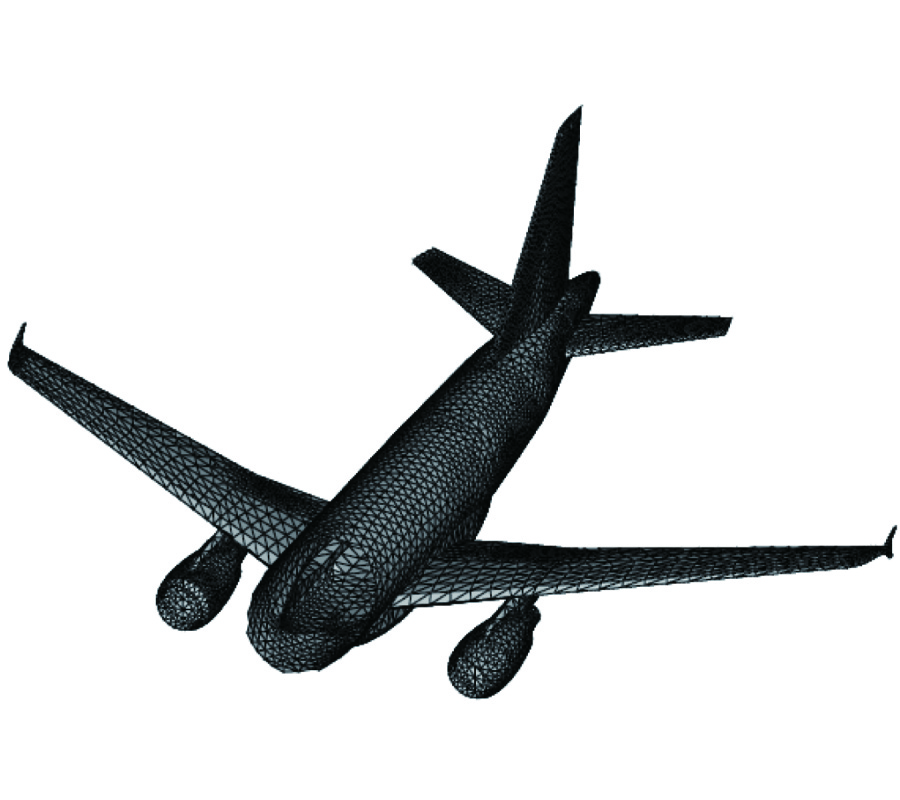
Aim of this paper is to present an efficient scheme of domain decomposition to study, in the time domain, multiple scattering by separated obstacles and sources with any composition and geometry, in an homogeneous media. A method of decomposition into disjointed sub-domains is proposed, resting onto an homogeneous and adaptable approximation of coupling terms and leading to a natural parallelized and hybrid numerical schema. It permits to significantly lower the cumulative error of dissipation and/or dispersion introduced by classical scheme. It also leads to a suitable answer for a wide class of problems involving large scattering scenes limiting for classical time domain methods. Numerical examples are given to illustrate it.
EFFICIENT TREATMENT OF 3D TIME-DOMAIN ELECTROMAGNETIC SCATTERING SCENES BY DISJOINTING SUB-DOMAINS AND WITH CONSISTENT APPROXIMATIONS
2007-02-20
PIER
Vol. 71, 19-39
Classification of Multi-Temporal SAR Images for Rice Crops Using Combined Entropy Decomposition and Support Vector Machine Technique
Chue-Poh Tan , Jun-Yi Koay , Ka-Sing Lim , Hong-Tat Ewe and Hean-Teik Chuah
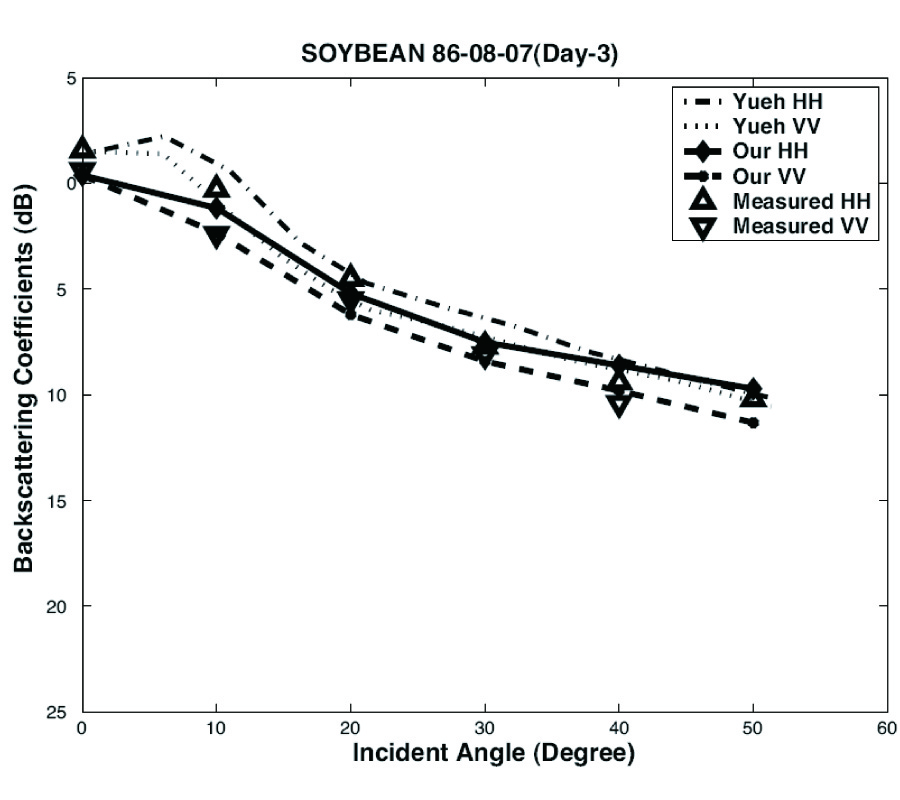
This paper presents a combined Entropy Decomposition and Support Vector Machine (EDSVM) technique for Synthetic Aperture Radar (SAR) image classification with the application on rice monitoring. The objective of this paper is to assess the use of multi-temporal data for the supervised classification of rice planting area based on different schedules. Since adequate priori information is needed for this supervised classification, ground truth measurements of rice fields were conducted at Sungai Burung, Selangor, Malaysia for an entire season from the early vegetative stage of the plants to the ripening stage. The theoretical results of Radiative Transfer Theory based on the ground truth parameters are used to define training sets of the different rice planting schedules in the feature space of Entropy Decomposition. The Support Vector Machine is then applied to the feature space to perform the image classification. The effectiveness of this algorithm is demonstrated using multi-temporal RADARSAT-1 data. The results are also used for comparison with the results based on information of training sets from the image using Maximum Likelihood technique, Entropy Decomposition technique and Support Vector Machine technique. The proposed method of EDSVM has shown to be useful in retrieving polarimetric information for each class and it gives a good separation between classes. It not only gives significant results on the classification, but also extends the application of Entropy Decomposition to cover multi-temporal data. Furthermore, the proposed method offers the ability to analyze single-polarized, multi-temporal data with the advantage of the unique features from the combined method of Entropy Decomposition and Support Vector Machine which previously only applicable to multipolarized data. Classification based on theoretical modeling is also one of the key components in this proposed method where the results from the theoretical models can be applied as the input of the proposed method in order to define the training sets.
CLASSIFICATION OF MULTI-TEMPORAL SAR IMAGES FOR RICE CROPS USING COMBINED ENTROPY DECOMPOSITION AND SUPPORT VECTOR MACHINE TECHNIQUE
2007-02-20
PIER
Vol. 71, 1-18
Alternative Sub-Domain Moment Methods for Analyzing Thin-Wire Circular Loops
Panagiotis Papakanellos
An alternative sub-domain formulation is presented, in two variants, for the analysis of thin-wire circular loops via moment methods. Curved piecewise sinusoids are used as basis functions, while both point matching and reaction matching (Galerkin's method) are examined as testing schemes. The present study is primarily focused on frill-driven loops, but some of the essential similarities and differences between them and gap-driven ones are also discussed in brief. Numerical results are presented to verify the two variants of the proposed formulation and demonstrate their capabilities for analyzing small and large loops. Special attention is drawn to the behavior of the solutions as the number of basis/testing functions grows. Finally, a complexity analysis is attempted and the potential savings in execution times that may be attained by taking advantage of certain features of the proposed numerical schemes are discussed.
ALTERNATIVE SUB-DOMAIN MOMENT METHODS FOR ANALYZING THIN-WIRE CIRCULAR LOOPS
2007-02-15
PIER
Vol. 70, 329-336
Multiband CPW-Fed Triangle-Shaped Monopole Antenna for Wireless Applications
Yue Song , Yong-Chang Jiao , Gang Zhao and Fu-Shun Zhang
A multiband CPW-fed triangle-shaped monopole antenna for wireless applications covering 2.4- and 5 GHz WLAN bands and 3.4 GHz WIMAX band in IEEE 802.16 is proposed. Prototype of the proposed antenna have been constructed and tested. The experimental results show that the antenna can provide two separate impedance bandwidths of 140MHz (about 5.8% centered at 2.43 GHz) and 3100MHz (about 61.4% centered at 4.91 GHz), which meet the required bandwidths specification of 2.4/5 GHz WLAN and 3.4 GHz WIMAX standard. Good omnidirectional radiation in the desired frequency bands has been achieved. The proposed antenna with relatively low profile is suitable for multiband wireless applications.
MULTIBAND CPW-FED TRIANGLE-SHAPED MONOPOLE ANTENNA FOR WIRELESS APPLICATIONS
2007-02-14
PIER
Vol. 70, 307-328
Model Computations of Angular Power Spectra for Anisotropic Absorptive Turbulent Magnetized Plasma
George Jandieri , Akira Ishimaru , Vakhtang Jandieri , A. Khantadze and Zh. Diasamidze
Electromagnetic waves scattering in turbulent anisotropic collision magnetized ionospheric plasma is investigated using complex geometrical optics approximation. Correlation function of the phase fluctuations of scattered radiation is obtained taking into account both electron density and magnetic fields fluctuations. The features of the angular power spectrum of scattered radiation are investigated analytically and numerically. The expressions of broadening of the spatial spectrum have been obtained for both powerlaw and anisotropic Gaussian correlation functions of electron density fluctuations. Gaussian spectral function takes into account the axial ratio of the field-aligned irregularities and the angle of inclination of prolate irregularities with respect to the external magnetic field. The variance of the phase and scintillation level of scattered radiation are calculated numerically for F-region irregularities of the ionosphere. The conditions of non-fully and fully developed diffraction patterns have been determined.
MODEL COMPUTATIONS OF ANGULAR POWER SPECTRA FOR ANISOTROPIC ABSORPTIVE TURBULENT MAGNETIZED PLASMA
2007-02-14
PIER
Vol. 70, 297-306
Analysis and Design of Multiple-Band Bandstop Filters
Shihu Han , Xi-Liang Wang and Yong Fan
A new transversal coupling network is proposed to design of multiple-band bandstop filters. The resonators in the proposed transversal coupling network have a few of center frequencies and some of them have similar or the same resonating frequency to realize multiple-band bandstop suppression, which are applied to reject pulse signals or bandwidth signals in broadband technique applications. A triple-band bandstop filter is designed by adopting substrate integrated waveguide to demonstrate the feasibility of this proposed network.
ANALYSIS AND DESIGN OF MULTIPLE-BAND BANDSTOP FILTERS
2007-02-09
PIER
Vol. 70, 281-296
A Comparison of Marching-on in Time Method with Marching-on in Degree Method for the TDIE Solver
Baek-Ho Jung , Zhong Ji , Tapan Kumar Sarkar , Magdalena Salazar-Palma and Mengtao Yuan
One of the most popular methods to solve a time-domain integral equation (TDIE) is the marching-on in time (MOT) method. Recently, a new method called marching-on in degree (MOD) that uses Laguerre polynomials as temporal basis functions has been developed to eliminate the late time instability of the MOT method. The use of an entire domain basis for the time variable eliminates the requirement of a Courant condition, as there is no time variable involved in the field calculation. This is possible as in the procedure the time and the space variables can be separated analytically. A comparison is presented between these two methods from the standpoint of formulation, stability, cost, and accuracy. Numerical results are presented to illustrate these features in the comparison.
A COMPARISON OF MARCHING-ON IN TIME METHOD WITH MARCHING-ON IN DEGREE METHOD FOR THE TDIE SOLVER
2007-02-08
PIER
Vol. 70, 269-280
Lowpass Filter Design of Hilbert Curve Ring Defected Ground Structure
Jun Chen , Zibin Weng , Yong-Chang Jiao and Fu-Shun Zhang
Abstract-In this paper,a novel Hilbert curve ring (HCR) fractal defected ground structure (DGS) and its equivalent circuit are investigated. Furthermore,an improved HCR DGS cell model with open stubs loaded on the conductor line is then presented to improve the out-band suppression. By employing three cascaded improved HCR DGS cells,an L-band microstrip low-pass is designed and fabricated. This lowpass filter achieves a quite steep rejection property; a low in-band insertion loss of below 0.5 dB and a high out-band suppression of more than 33 dB.
LOWPASS FILTER DESIGN OF HILBERT CURVE RING DEFECTED GROUND STRUCTURE
2007-02-08
PIER
Vol. 70, 247-256
Permeability Measurement of Ferromagnetic Materials in Microwave Frequency Range Using Support Vector Machine Regression
Yunqiu Wu , Zong-Xi Tang , Biao Zhang and Yuehang Xu
A newmetho d based on supported vector regression (SVR) approach is proposed for permeability measurement. The microstrip transmission-line is used as measurement cell, and supported vector machine (SVM) is introduced to extract permeability of ferromagnetic materials. Experiment results showthat thanks to SVM's good ability of generalization, permeability of ferromagnetic materials can be extracted accurately and easily.
PERMEABILITY MEASUREMENT OF FERROMAGNETIC MATERIALS IN MICROWAVE FREQUENCY RANGE USING SUPPORT VECTOR MACHINE REGRESSION
2007-02-04
PIER
Vol. 70, 257-267
Counter-Propagating Energy-Flows in Nonlinear Left-Handed Metamaterials
Liang Chen , Wei Ding , Xiao-Jie Dang and Chang-Hong Liang
A peculiarity of counter-propagating energy-flows in nonlinear left-handed metamaterials (LHMs) is investigated for the case when the frequency of fundamental wave is in the negativeindex range and second-harmonic wave is in the positive-index range. Based on the electromagnetic theory,the comparisons of Manly-Rowe relations for nonlinear materials and process of secondharmonic generation under phase-matching condition in LHMs and RHMs are shown separately. That a surface of nonlinear left-handed metamaterials operates as an effective mirror which reflects the energy in form of second harmonics is demonstrated. Numerical results of fundamental and second-harmonic field intensity distributions are in agreement with theoretical results.
COUNTER-PROPAGATING ENERGY-FLOWS IN NONLINEAR LEFT-HANDED METAMATERIALS
2007-01-31
PIER
Vol. 70, 225-246
Effect of Internal Resonance on the Radar Cross Section and Shield Effectiveness of Open Spherical Enclosures
Khalid Fawzy Ahmed Hussein
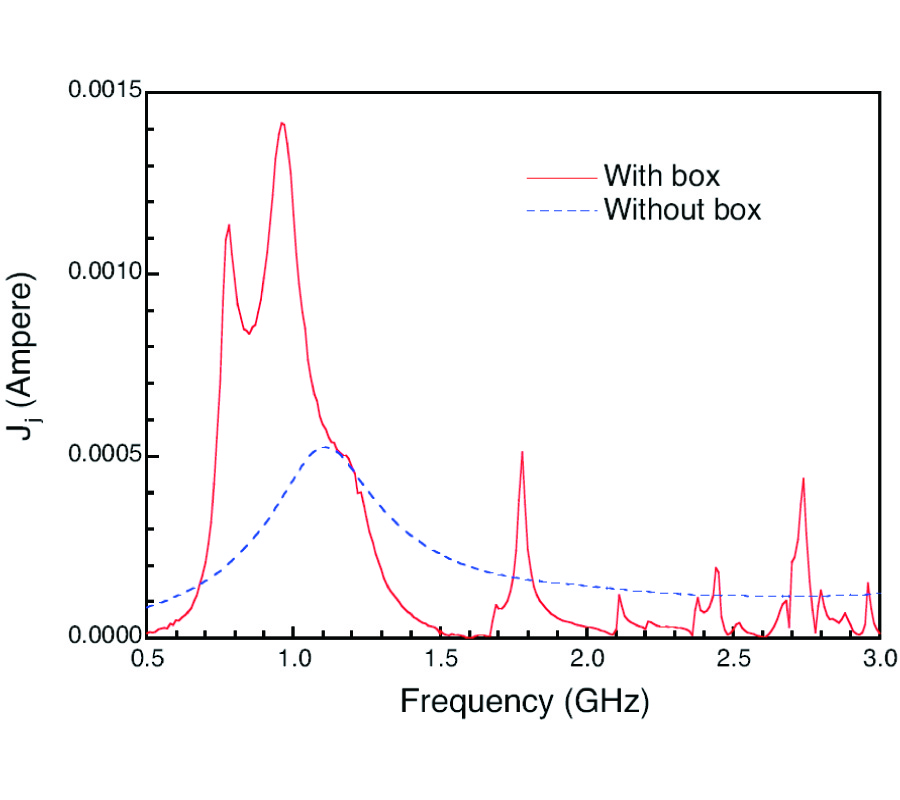
In this paper, the effects of the internal resonances of an open conducting spherical enclosure with circular aperture on its radar cross section (RCS) and shield effectiveness (SE) are studied over a wide frequency band. The sizes of the spherical enclosures investigated in the present work range from electrically small (perimeter is less than the wavelength) to electrically large (perimeter is up to ten times the wavelength). It is shown that for such an enclosure, both the RCS and SE, as functions of frequency, have sharp spikes, minima, or maxima at the resonant frequencies corresponding to the internal modes of the closed conducting sphere. Principal and higher order modes are considered. The effects of the aperture width on the perturbation of the field inside and outside of the spherical enclosure, the near field outside the cavity, the RCS and the SE are presented over a wide range of frequency. It is shown that the sharpness and amplitude of the spikes, minima, or maxima of the RCS and SE are decreased with increasing the aperture width. Also, the resonant frequencies of the enclosed spherical cavity are shifted with increasing the aperture width. For the purpose of verifying the accuracy of the obtained results for the SE of an open spherical enclosure at resonance, the obtained field configurations and distributions inside a spherical enclosure of a small aperture are compared to those of the spherical cavity modes which have already been obtained analytically. Also, some of the results concerning the RCS of a spherical enclosure are compared to other published results.
EFFECT OF INTERNAL RESONANCE ON THE RADAR CROSS SECTION AND SHIELD EFFECTIVENESS OF OPEN SPHERICAL ENCLOSURES
2007-01-31
PIER
Vol. 70, 211-223
The Magnetic-Moment Quadric and Conditions of Vanishing Magnetic Moment for a Rotational Charged Body
Guo-Quan Zhou and Wen-Jun Zhou
Based on the concept of charge moment tensor which is different from the existent electric multiple-moment, and the concept of principal axes and principal-axis scalar charge moment, the condition of zero magnetic moment for an arbitrary rotational body with given charge distribution has been given explicitly in this paper. We find the loss of positive definiteness of is its most important characteristic which forms a sharp contrast with that of its mechanic counterpart - the positive definite inertia tensor of rigid bodies. Meanwhile the relationship between the quadric distributive law of magnetic moment and the parameters of tensor is discussed in detail. Accordingto the theory of analytic geometry, we give a series of test formulae, classify and enumerate every kind of possible quadric in a table. Finally, conclusion is given that any rotation axis which passes through origin O and alongwith any of the asymptotic line of the quadric (hyperboloids or hyperbolic cylinders) can lead to a vanishingmag netic moment.
THE MAGNETIC-MOMENT QUADRIC AND CONDITIONS OF VANISHING MAGNETIC MOMENT FOR A ROTATIONAL CHARGED BODY
2007-01-31
PIER
Vol. 70, 199-209
Design and Experiment of One Dimension and Two Dimension Metamaterial Structures for Directive Emission
Zibin Weng , Yong-Chang Jiao , Gang Zhao and Fu-Shun Zhang
Abstract-A new method to improve the gain of monopole and patch antenna with one dimension and two dimension metamaterial structures is presented. The analytical permittivity models of metamaterial are derived using the transmission line method. Then the monopole and patch antenna with the metamaterial are fabricated and measured. The experimental results show that this method is effective and these structures can realize congregating the radiation energy, thus the gain of these antennas with metamaterial increase greatly compared with the conventional ones.
DESIGN AND EXPERIMENT OF ONE DIMENSION AND TWO DIMENSION METAMATERIAL STRUCTURES FOR DIRECTIVE EMISSION
2007-01-30
PIER
Vol. 70, 191-198
Design of a Microstrip Square-Ring Slot Antenna Filled by an h-Shape Slot for UWB Applications
Saeed Sadat , M. Houshmand and Mehdi Roshandel
A novel microstrip slot antenna for UWB (Ultra Wideband) applications is proposed. A square ring slot antenna is filledb y an H shape slot as a parasitic element. This structure is fed by a single microstrip line with a fork like-tuning stub. Experiments are carriedout to investigate its return loss, its radiation andits time domain behavior, which exhibit good radiation pattern and impedance bandwidth over the entire band of frequency. Time domain consideration also exhibits that this antenna can be used with short pulses. Extended from the proposed antenna, one advanced bandnotched( 5.5-7 GHz) design is also presentedas a desirable feature for UWB applications.
DESIGN OF A MICROSTRIP SQUARE-RING SLOT ANTENNA FILLED BY AN H-SHAPE SLOT FOR UWB APPLICATIONS