Vol. 119
Latest Volume
All Volumes
PIERB 119 [2026] PIERB 118 [2026] PIERB 117 [2026] PIERB 116 [2026] PIERB 115 [2025] PIERB 114 [2025] PIERB 113 [2025] PIERB 112 [2025] PIERB 111 [2025] PIERB 110 [2025] PIERB 109 [2024] PIERB 108 [2024] PIERB 107 [2024] PIERB 106 [2024] PIERB 105 [2024] PIERB 104 [2024] PIERB 103 [2023] PIERB 102 [2023] PIERB 101 [2023] PIERB 100 [2023] PIERB 99 [2023] PIERB 98 [2023] PIERB 97 [2022] PIERB 96 [2022] PIERB 95 [2022] PIERB 94 [2021] PIERB 93 [2021] PIERB 92 [2021] PIERB 91 [2021] PIERB 90 [2021] PIERB 89 [2020] PIERB 88 [2020] PIERB 87 [2020] PIERB 86 [2020] PIERB 85 [2019] PIERB 84 [2019] PIERB 83 [2019] PIERB 82 [2018] PIERB 81 [2018] PIERB 80 [2018] PIERB 79 [2017] PIERB 78 [2017] PIERB 77 [2017] PIERB 76 [2017] PIERB 75 [2017] PIERB 74 [2017] PIERB 73 [2017] PIERB 72 [2017] PIERB 71 [2016] PIERB 70 [2016] PIERB 69 [2016] PIERB 68 [2016] PIERB 67 [2016] PIERB 66 [2016] PIERB 65 [2016] PIERB 64 [2015] PIERB 63 [2015] PIERB 62 [2015] PIERB 61 [2014] PIERB 60 [2014] PIERB 59 [2014] PIERB 58 [2014] PIERB 57 [2014] PIERB 56 [2013] PIERB 55 [2013] PIERB 54 [2013] PIERB 53 [2013] PIERB 52 [2013] PIERB 51 [2013] PIERB 50 [2013] PIERB 49 [2013] PIERB 48 [2013] PIERB 47 [2013] PIERB 46 [2013] PIERB 45 [2012] PIERB 44 [2012] PIERB 43 [2012] PIERB 42 [2012] PIERB 41 [2012] PIERB 40 [2012] PIERB 39 [2012] PIERB 38 [2012] PIERB 37 [2012] PIERB 36 [2012] PIERB 35 [2011] PIERB 34 [2011] PIERB 33 [2011] PIERB 32 [2011] PIERB 31 [2011] PIERB 30 [2011] PIERB 29 [2011] PIERB 28 [2011] PIERB 27 [2011] PIERB 26 [2010] PIERB 25 [2010] PIERB 24 [2010] PIERB 23 [2010] PIERB 22 [2010] PIERB 21 [2010] PIERB 20 [2010] PIERB 19 [2010] PIERB 18 [2009] PIERB 17 [2009] PIERB 16 [2009] PIERB 15 [2009] PIERB 14 [2009] PIERB 13 [2009] PIERB 12 [2009] PIERB 11 [2009] PIERB 10 [2008] PIERB 9 [2008] PIERB 8 [2008] PIERB 7 [2008] PIERB 6 [2008] PIERB 5 [2008] PIERB 4 [2008] PIERB 3 [2008] PIERB 2 [2008] PIERB 1 [2008]
2026-10-18 Latest Published
By Mohammed Yaqoub Yousif Faris Mohammed Ali Nasr Alkhafaji Rand Muwafaq Hadi Bahaa Hamzah Alkhuwaildi
Progress In Electromagnetics Research B, Vol. 119, 1-18, 2026
Abstract
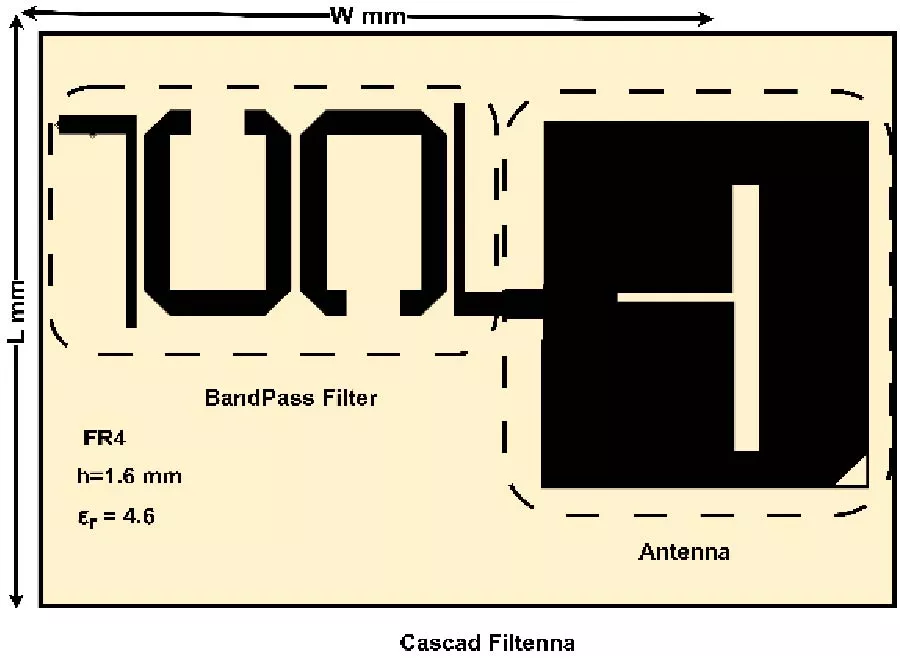
This paper presents a single-layer quasi-reflectionless filtering antenna (filtenna) operating at 3.5\,GHz for compact 5G mid-band radio-frequency (RF) front-ends. The structure simultaneously provides radiation, bandpass filtering, and absorption of out-of-band reflections. Unlike conventional reflective filtennas, rejected energy is dissipated in a chip resistor rather than returned toward the source, which is beneficial when the antenna port drives or is driven by nonlinear stages such as power amplifiers or low-noise amplifiers. Theoretical analysis, full-wave simulation, and measurement are used as a proof of concept. A T-slot microstrip patch, a two-pole U-shaped bandpass filter (BPF), and a one-pole absorptive stub are co-integrated on flame-retardant type 4 (FR4) (εr = 4.6, thickness 1.6 mm). At the design frequency, the absorptive stub behaves nearly as an open circuit, so in-band power is delivered to the radiator; outside the passband, out-of-band signals are routed into the absorptive path. Quasi-reflectionless matching with S11 < -10 dB is obtained across approximately 1–7 GHz, with a realized gain of about 1.99 dBi and filtering radiation characteristics. Measured results agree well with analytical and simulated predictions.
2026-10-18
PIER B
Vol. 119, 1-18, 2026
download: 2
Quasi-Reflectionless Filtering Antenna for 5G Wireless Systems
Mohammed Yaqoub Yousif, Faris Mohammed Ali, Nasr Alkhafaji, Rand Muwafaq Hadi and Bahaa Hamzah Alkhuwaildi
This paper presents a single-layer quasi-reflectionless filtering antenna (filtenna) operating at 3.5\,GHz for compact 5G mid-band radio-frequency (RF) front-ends. The structure simultaneously provides radiation, bandpass filtering, and absorption of out-of-band reflections. Unlike conventional reflective filtennas, rejected energy is dissipated in a chip resistor rather than returned toward the source, which is beneficial when the antenna port drives or is driven by nonlinear stages such as power amplifiers or low-noise amplifiers. Theoretical analysis, full-wave simulation, and measurement are used as a proof of concept. A T-slot microstrip patch, a two-pole U-shaped bandpass filter (BPF), and a one-pole absorptive stub are co-integrated on flame-retardant type 4 (FR4) (εr = 4.6, thickness 1.6 mm). At the design frequency, the absorptive stub behaves nearly as an open circuit, so in-band power is delivered to the radiator; outside the passband, out-of-band signals are routed into the absorptive path. Quasi-reflectionless matching with S11 < -10 dB is obtained across approximately 1–7 GHz, with a realized gain of about 1.99 dBi and filtering radiation characteristics. Measured results agree well with analytical and simulated predictions.

Quasi-Reflectionless Filtering Antenna for 5G Wireless Systems