Vol. 117
Latest Volume
All Volumes
PIERB 117 [2026] PIERB 116 [2026] PIERB 115 [2025] PIERB 114 [2025] PIERB 113 [2025] PIERB 112 [2025] PIERB 111 [2025] PIERB 110 [2025] PIERB 109 [2024] PIERB 108 [2024] PIERB 107 [2024] PIERB 106 [2024] PIERB 105 [2024] PIERB 104 [2024] PIERB 103 [2023] PIERB 102 [2023] PIERB 101 [2023] PIERB 100 [2023] PIERB 99 [2023] PIERB 98 [2023] PIERB 97 [2022] PIERB 96 [2022] PIERB 95 [2022] PIERB 94 [2021] PIERB 93 [2021] PIERB 92 [2021] PIERB 91 [2021] PIERB 90 [2021] PIERB 89 [2020] PIERB 88 [2020] PIERB 87 [2020] PIERB 86 [2020] PIERB 85 [2019] PIERB 84 [2019] PIERB 83 [2019] PIERB 82 [2018] PIERB 81 [2018] PIERB 80 [2018] PIERB 79 [2017] PIERB 78 [2017] PIERB 77 [2017] PIERB 76 [2017] PIERB 75 [2017] PIERB 74 [2017] PIERB 73 [2017] PIERB 72 [2017] PIERB 71 [2016] PIERB 70 [2016] PIERB 69 [2016] PIERB 68 [2016] PIERB 67 [2016] PIERB 66 [2016] PIERB 65 [2016] PIERB 64 [2015] PIERB 63 [2015] PIERB 62 [2015] PIERB 61 [2014] PIERB 60 [2014] PIERB 59 [2014] PIERB 58 [2014] PIERB 57 [2014] PIERB 56 [2013] PIERB 55 [2013] PIERB 54 [2013] PIERB 53 [2013] PIERB 52 [2013] PIERB 51 [2013] PIERB 50 [2013] PIERB 49 [2013] PIERB 48 [2013] PIERB 47 [2013] PIERB 46 [2013] PIERB 45 [2012] PIERB 44 [2012] PIERB 43 [2012] PIERB 42 [2012] PIERB 41 [2012] PIERB 40 [2012] PIERB 39 [2012] PIERB 38 [2012] PIERB 37 [2012] PIERB 36 [2012] PIERB 35 [2011] PIERB 34 [2011] PIERB 33 [2011] PIERB 32 [2011] PIERB 31 [2011] PIERB 30 [2011] PIERB 29 [2011] PIERB 28 [2011] PIERB 27 [2011] PIERB 26 [2010] PIERB 25 [2010] PIERB 24 [2010] PIERB 23 [2010] PIERB 22 [2010] PIERB 21 [2010] PIERB 20 [2010] PIERB 19 [2010] PIERB 18 [2009] PIERB 17 [2009] PIERB 16 [2009] PIERB 15 [2009] PIERB 14 [2009] PIERB 13 [2009] PIERB 12 [2009] PIERB 11 [2009] PIERB 10 [2008] PIERB 9 [2008] PIERB 8 [2008] PIERB 7 [2008] PIERB 6 [2008] PIERB 5 [2008] PIERB 4 [2008] PIERB 3 [2008] PIERB 2 [2008] PIERB 1 [2008]
2026-01-12 Latest Published
By Naveen Jacob Muralidhar Kulkarni Krishnamoorthy Kandasamy
Progress In Electromagnetics Research B, Vol. 117, 1-15, 2026
Abstract
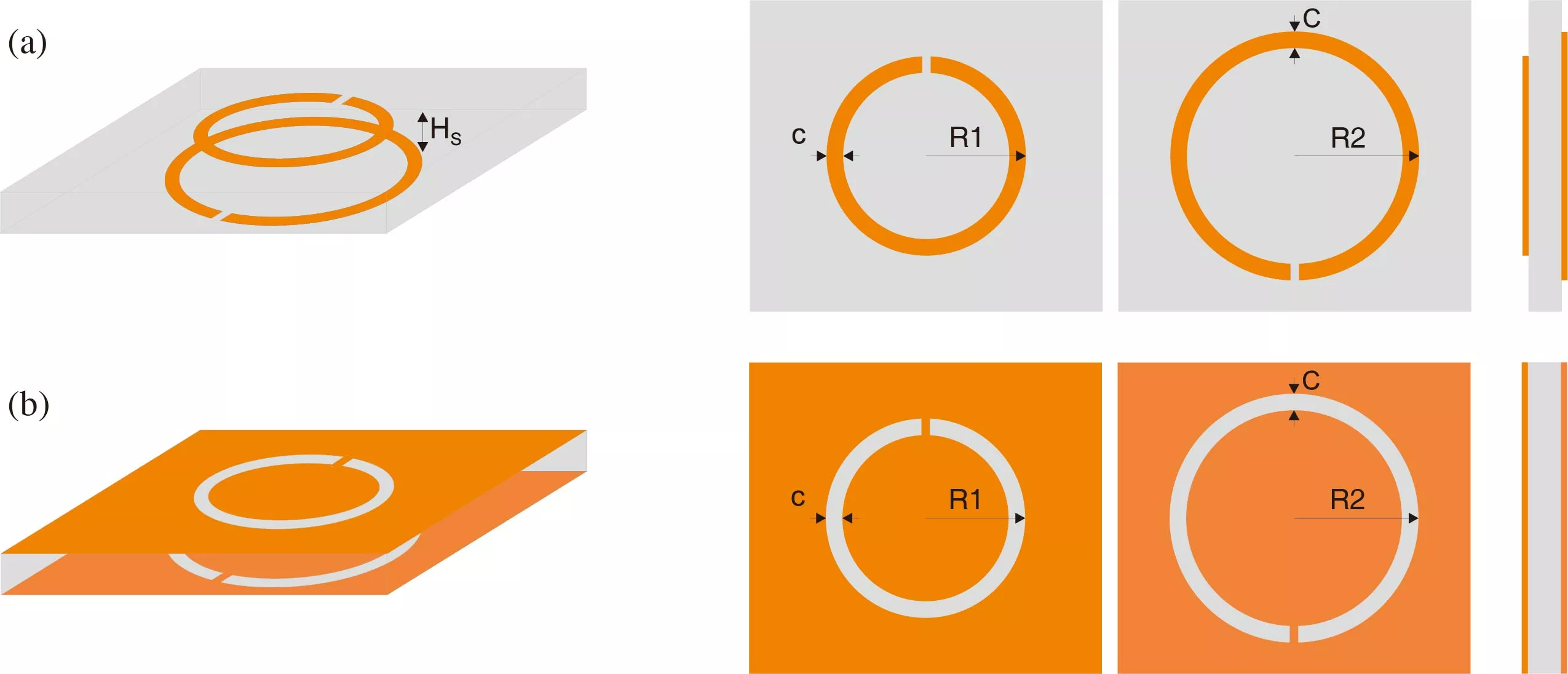
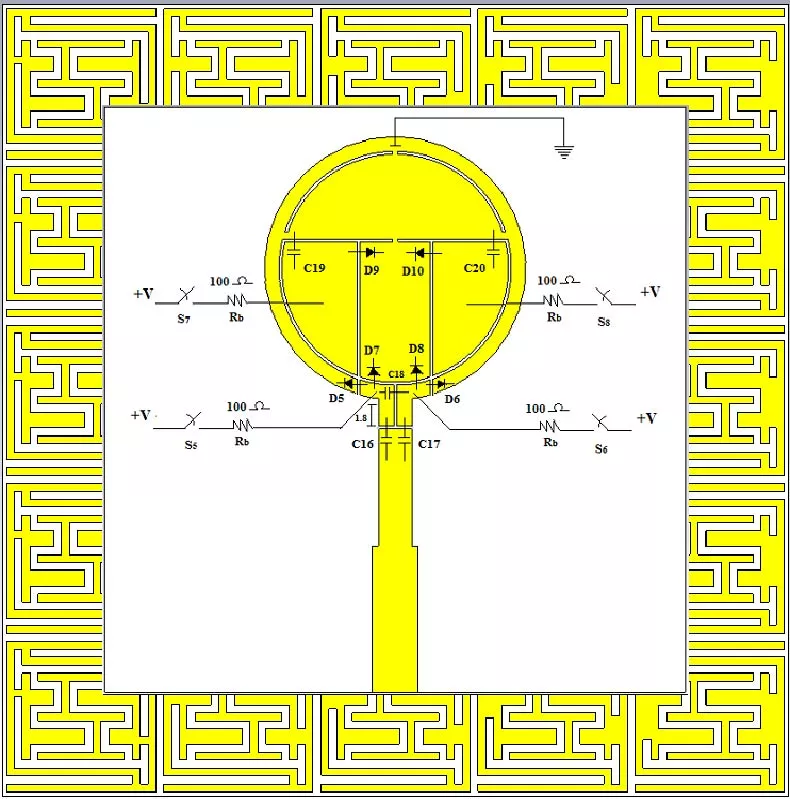
A bandwidth tunable, circularly polarized (CP) patch antenna, with complementary split ring resonator (CSRR), embedded on the ground plane is presented in this paper. The antenna is capable of switching between ultra-wide band (UWB) frequency response, spanning through 2.6 GHz to 12 GHz and a narrowband (NB) frequency response at 6 GHz. Excitation of CSRR results in negative permittivity medium, producing notch band response at its designed frequency. This notch band is shifted by varying the arm length of CSRR using PIN diodes. This will result in tuning the bandwidth (BW) of the NB response of antenna, spanning from 1 GHz to 4.4 GHz, by retaining the central frequency at 6 GHz. The fractional bandwidth can be varied in a range of 16% to 73.3%, exhibiting an increase by a factor of 4.58. The antenna also exhibits switchable circular polarization (LHCP/RHCP) at 6 GHz for both UWB as well as narrowband responses. A compact tunable multiband Artificial Magnetic Conductor (AMC) unit cell is also designed and is used to construct a Phase Gradient Metasurface (PGM). The radiating beam of the antenna is steered using the PGM as a reflector to obtain a beam steering angle of +36° for LHCP and -44° for RHCP radiations. The antenna is a promising solution for applications which demand bandwidth switching & beam steering, such as cognitive radio services.
2026-01-12
PIER B
Vol. 117, 1-15, 2026
download: 26
Bandwidth Reconfigurable Circularly Polarized Antenna with Beam Steering Ability Using Phase Gradient Metasurface
Naveen Jacob, Muralidhar Kulkarni and Krishnamoorthy Kandasamy
A bandwidth tunable, circularly polarized (CP) patch antenna, with complementary split ring resonator (CSRR), embedded on the ground plane is presented in this paper. The antenna is capable of switching between ultra-wide band (UWB) frequency response, spanning through 2.6 GHz to 12 GHz and a narrowband (NB) frequency response at 6 GHz. Excitation of CSRR results in negative permittivity medium, producing notch band response at its designed frequency. This notch band is shifted by varying the arm length of CSRR using PIN diodes. This will result in tuning the bandwidth (BW) of the NB response of antenna, spanning from 1 GHz to 4.4 GHz, by retaining the central frequency at 6 GHz. The fractional bandwidth can be varied in a range of 16% to 73.3%, exhibiting an increase by a factor of 4.58. The antenna also exhibits switchable circular polarization (LHCP/RHCP) at 6 GHz for both UWB as well as narrowband responses. A compact tunable multiband Artificial Magnetic Conductor (AMC) unit cell is also designed and is used to construct a Phase Gradient Metasurface (PGM). The radiating beam of the antenna is steered using the PGM as a reflector to obtain a beam steering angle of +36° for LHCP and -44° for RHCP radiations. The antenna is a promising solution for applications which demand bandwidth switching & beam steering, such as cognitive radio services.
Bandwidth Reconfigurable Circularly Polarized Antenna with Beam Steering Ability Using Phase Gradient Metasurface