Vol. 112
Latest Volume
All Volumes
PIERB 116 [2026] PIERB 115 [2025] PIERB 114 [2025] PIERB 113 [2025] PIERB 112 [2025] PIERB 111 [2025] PIERB 110 [2025] PIERB 109 [2024] PIERB 108 [2024] PIERB 107 [2024] PIERB 106 [2024] PIERB 105 [2024] PIERB 104 [2024] PIERB 103 [2023] PIERB 102 [2023] PIERB 101 [2023] PIERB 100 [2023] PIERB 99 [2023] PIERB 98 [2023] PIERB 97 [2022] PIERB 96 [2022] PIERB 95 [2022] PIERB 94 [2021] PIERB 93 [2021] PIERB 92 [2021] PIERB 91 [2021] PIERB 90 [2021] PIERB 89 [2020] PIERB 88 [2020] PIERB 87 [2020] PIERB 86 [2020] PIERB 85 [2019] PIERB 84 [2019] PIERB 83 [2019] PIERB 82 [2018] PIERB 81 [2018] PIERB 80 [2018] PIERB 79 [2017] PIERB 78 [2017] PIERB 77 [2017] PIERB 76 [2017] PIERB 75 [2017] PIERB 74 [2017] PIERB 73 [2017] PIERB 72 [2017] PIERB 71 [2016] PIERB 70 [2016] PIERB 69 [2016] PIERB 68 [2016] PIERB 67 [2016] PIERB 66 [2016] PIERB 65 [2016] PIERB 64 [2015] PIERB 63 [2015] PIERB 62 [2015] PIERB 61 [2014] PIERB 60 [2014] PIERB 59 [2014] PIERB 58 [2014] PIERB 57 [2014] PIERB 56 [2013] PIERB 55 [2013] PIERB 54 [2013] PIERB 53 [2013] PIERB 52 [2013] PIERB 51 [2013] PIERB 50 [2013] PIERB 49 [2013] PIERB 48 [2013] PIERB 47 [2013] PIERB 46 [2013] PIERB 45 [2012] PIERB 44 [2012] PIERB 43 [2012] PIERB 42 [2012] PIERB 41 [2012] PIERB 40 [2012] PIERB 39 [2012] PIERB 38 [2012] PIERB 37 [2012] PIERB 36 [2012] PIERB 35 [2011] PIERB 34 [2011] PIERB 33 [2011] PIERB 32 [2011] PIERB 31 [2011] PIERB 30 [2011] PIERB 29 [2011] PIERB 28 [2011] PIERB 27 [2011] PIERB 26 [2010] PIERB 25 [2010] PIERB 24 [2010] PIERB 23 [2010] PIERB 22 [2010] PIERB 21 [2010] PIERB 20 [2010] PIERB 19 [2010] PIERB 18 [2009] PIERB 17 [2009] PIERB 16 [2009] PIERB 15 [2009] PIERB 14 [2009] PIERB 13 [2009] PIERB 12 [2009] PIERB 11 [2009] PIERB 10 [2008] PIERB 9 [2008] PIERB 8 [2008] PIERB 7 [2008] PIERB 6 [2008] PIERB 5 [2008] PIERB 4 [2008] PIERB 3 [2008] PIERB 2 [2008] PIERB 1 [2008]
2025-07-05
PIER B
Vol. 112, 121-133, 2025
download: 245
A Four-Element Conformal MIMO Antenna with Time-Domain Analysis for UWB Applications
Sandeep Kiran Vattiprolu and Pullagura Rajesh Kumar
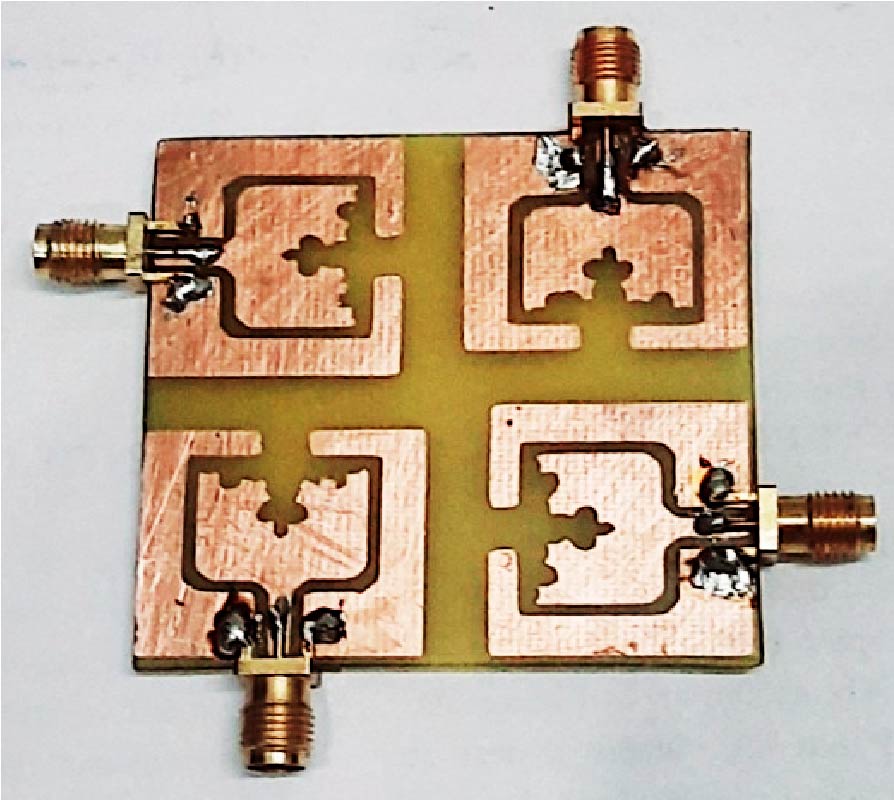
This paper presents the design of a four-element conformal Multi-Input Multi-Output (MIMO) antenna system for Ultra-Wideband (UWB) applications. It is implemented on a flexible RT Duroid 5880 substrate with a relative permittivity of 2.2, a loss tangent of 0.0009, and a thickness of 0.25 mm. It employs a stepped microstrip line-fed guitar-shaped antenna as a single antenna element. The single antenna element is then arranged orthogonally around the four edges of a 63 × 63 mm2 substrate to create a 4-element MIMO system. The four antennas, designated as Ant-1 to Ant-4, have their ground planes connected through L-shaped stubs. The prototypes of single antenna element and 4-element MIMO are built to compare the simulation and measurement findings. The single antenna element is tested under flat, X-bend, and Y-bend cases. It achieves -10 dB impedance bandwidth from 3.14 GHz to over 10.6 GHz, a maximum group delay deviation of 2 ns, and a system fidelity factor greater than 80% in all cases. The 4-element MIMO system was also tested in flat and conformal configurations. It covers a minimum -10 dB impedance bandwidth from 3.5 to 10.8 GHz and exhibits mutual coupling below -18 dB. Its equivalent circuit model is also realized. Its diversity analysis shows an envelope correlation coefficient (ECC) below 0.01, diversity gain (DG) near 10 dB, channel capacity loss (CCL) under 0.4 bits/s/Hz, total active reflection coefficient (TARC) below -10 dB, and mean effective gain (MEG) between -3 dB and -12 dB across the operating band.
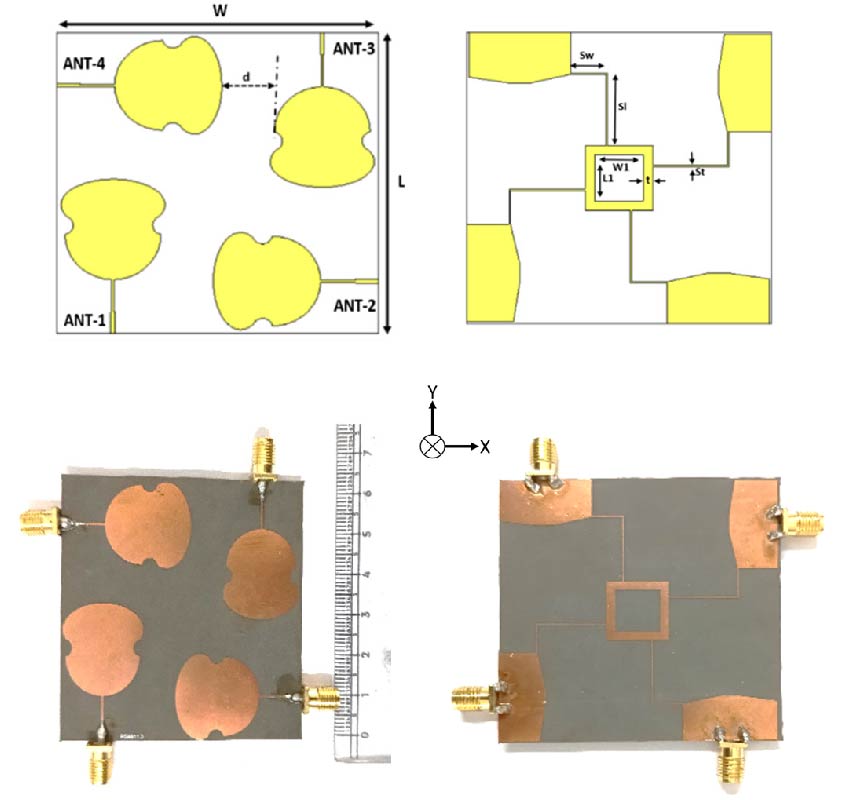
A Four-element Conformal MIMO Antenna with Time-domain Analysis for UWB Applications
2025-07-05
PIER B
Vol. 112, 113-120, 2025
download: 165
Integration of Adaptive Cross Approximation and Generalized Orthogonal Matching Pursuit for Monostatic Electromagnetic Scattering Analysis
Chenggang Wu, Zhonggen Wang, Wenyan Nie, Dai Dong and Yang Liu
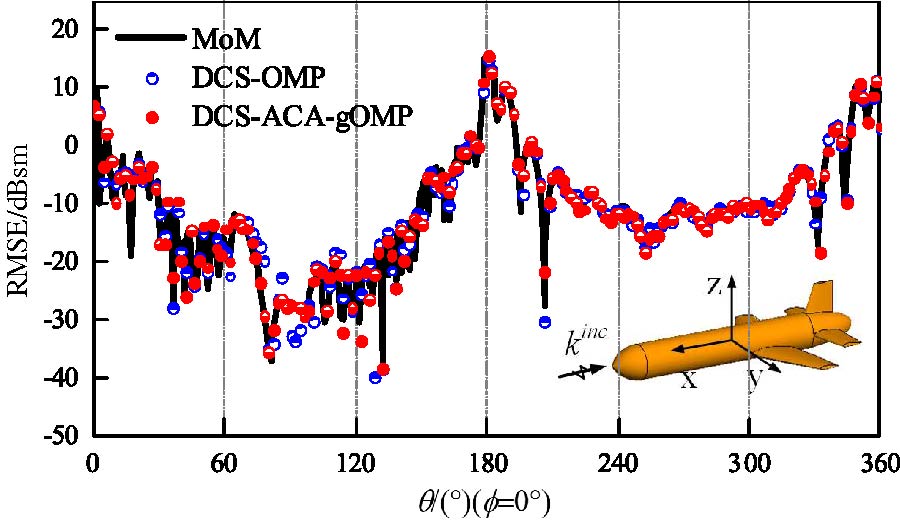
A novel dual compressive sensing (DCS) method is presented to resolve the limitations in computational accuracy and efficiency encountered by conventional DCS approaches during monostatic electromagnetic scattering analysis. Based on the connection between adaptive cross approximation (ACA) and generalized orthogonal matching pursuit (gOMP) in DCS, the integration of ACA and gOMP into the DCS framework is implemented. Specifically, ACA is employed to construct a deterministic measurement matrix by extracting row indexes containing critical information from the impedance matrix. This method reduces column correlation in the measurement matrix, enabling fewer rows to achieve comparable accuracy. Furthermore, the gOMP algorithm is adopted for signal recovery, leveraging its multi-column selection mechanism to better utilize the optimized information from ACA, thereby enhancing reconstruction accuracy and efficiency. Numerical analysis demonstrates that the proposed method achieves a significant enhancement in both accuracy and efficiency.
Integration of Adaptive Cross Approximation and Generalized Orthogonal Matching Pursuit for Monostatic Electromagnetic Scattering Analysis
2025-07-05
PIER B
Vol. 112, 105-112, 2025
download: 241
A Microwave Imaging Solution to Inverse Scattering Problem Using Distorted Born Iterative Method with Hybrid LSQR
Soumya Nharakkat, Thathamkulam Anjit, Anju Maria and Palayyan Mythili
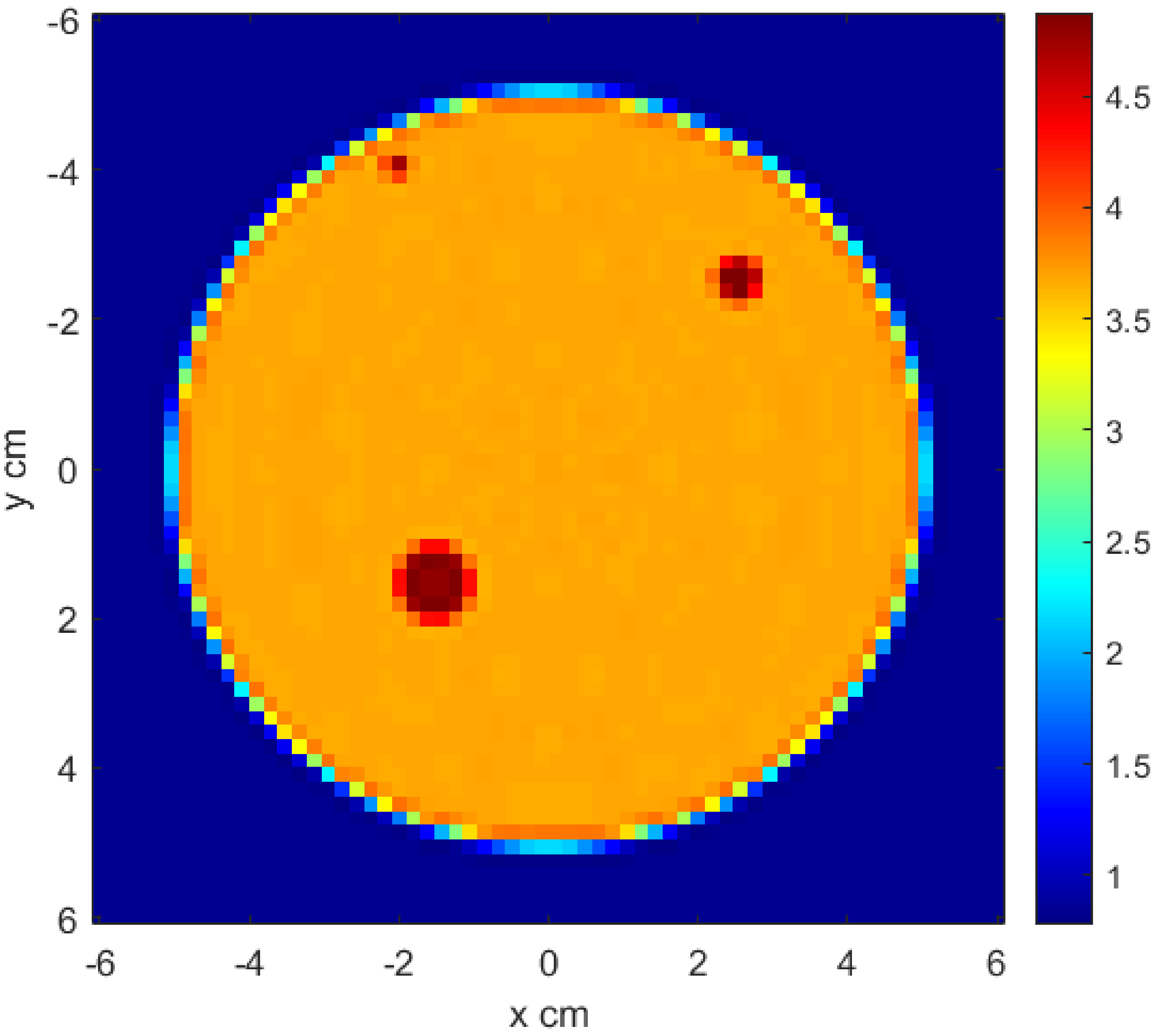
DBIM is a deterministic iterative method which exhibits second-order convergence indicating that the reconstruction error decreases quadratically with successive iterations. Existing regularization techniques when applied with DBIM often face challenges in determining the optimal regularization parameter (λ), leading to inconsistent convergence across various problems. To address this, a quantitative imaging algorithm is proposed in this paper by combining the Distorted Born Iterative Method (DBIM) and Hybrid LSQR method for solving Inverse Scattering Problems (ISP). This enhances the accuracy of the reconstructed object profiles and optimizes the regularization level to prevent both under- and over-regularization. For a fair comparison with the results in the literature, simulation studies are conducted using a breast profile that has two tumor inclusions, each with a radius of 6 mm, and two fibro-glandular tissue inclusions, each with a radius of 10 mm. The proposed method achieves a Root Mean Square Error (RMSE) of 0.75, indicating a better level of accuracy. The experimental validation is performed using a phantom made of Delrin material. The Delrin phantom, with a diameter of 10 cm, contains three inclusions made of PVC material with diameters of 10 mm, 6 mm and 3 mm. These inclusions have been successfully reconstructed with errors 0.085, 0.128 and 0.165 respectively. These results demonstrate the effectiveness of this algorithm in reconstructing both high and low-dielectric profiles, making it suitable for microwave imaging applications.
A Microwave Imaging Solution to Inverse Scattering Problem Using Distorted Born Iterative Method with Hybrid LSQR
2025-07-02
PIER B
Vol. 112, 89-103, 2025
download: 284
Intelligent MPPT Framework with Reinforcement Learning and Dynamic Search Region Optimization for Photovoltaic Systems Under Variable Environmental Conditions
Xiaoping Lei
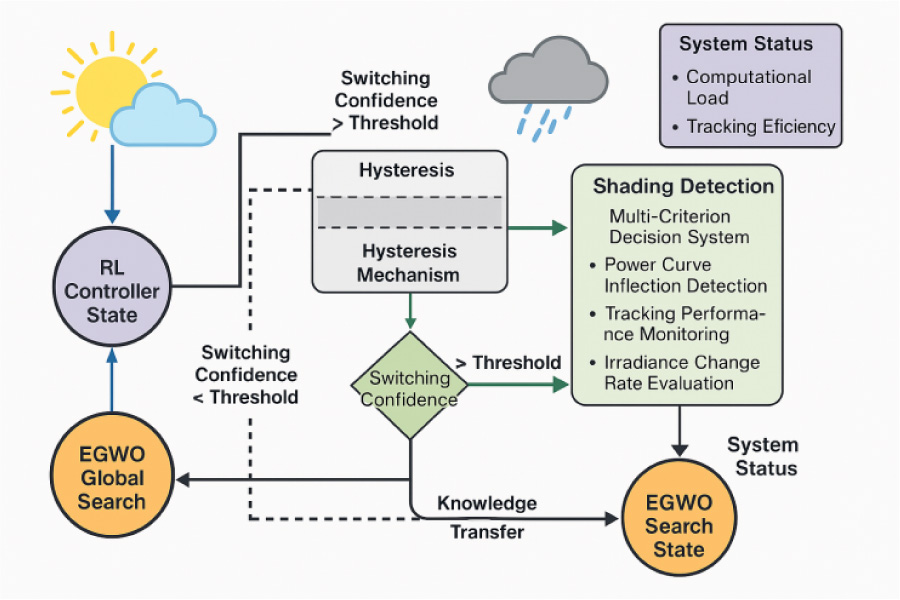
This paper introduces an intelligent Maximum Power Point Tracking (MPPT) framework for photovoltaic systems that achieves significant performance gains through two primary innovations: a dynamic search space optimization that intelligently constrains the search region to approximately 2% of the conventional area, and a sophisticated Q-learning algorithm operating within this optimized region. The framework establishes a real-time relationship between environmental conditions and maximum power point parameters for this aggressive search space reduction. For complex partial shading conditions, an adaptive switching mechanism dynamically activates an enhanced meta-heuristic optimization component with improved convergence properties, ensuring appropriate algorithm selection based on detected operating conditions. Experimental results demonstrate that under uniform irradiance, the framework achieves 99.12% tracking efficiency (a 3.34% improvement over P&O). Under rapidly changing conditions, it maintains 97.83% efficiency (compared to P&O's 90.12%), and under partial shading, it achieves 95.89% global MPPT efficiency (versus 76.25% for P&O). The proposed method significantly reduces steady-state oscillations to 0.41% (from 1.87% for P&O) and offers 42.3% faster convergence. While requiring moderately higher computational resources, the approach is implementable on medium-range microcontrollers, balancing performance with practical deployment.
Intelligent MPPT Framework with Reinforcement Learning and Dynamic Search Region Optimization for Photovoltaic Systems under Variable Environmental Conditions
2025-06-29
PIER B
Vol. 112, 75-87, 2025
download: 209
Quasi-Z-Source Composite Voltage Vectors Model Predictive Control with a Novel Sliding Mode Reaching Law for PMSM
Yang Zhang, Yang Gao, Kun Cao, Ping Yang, Gao Tang and Bing Luo
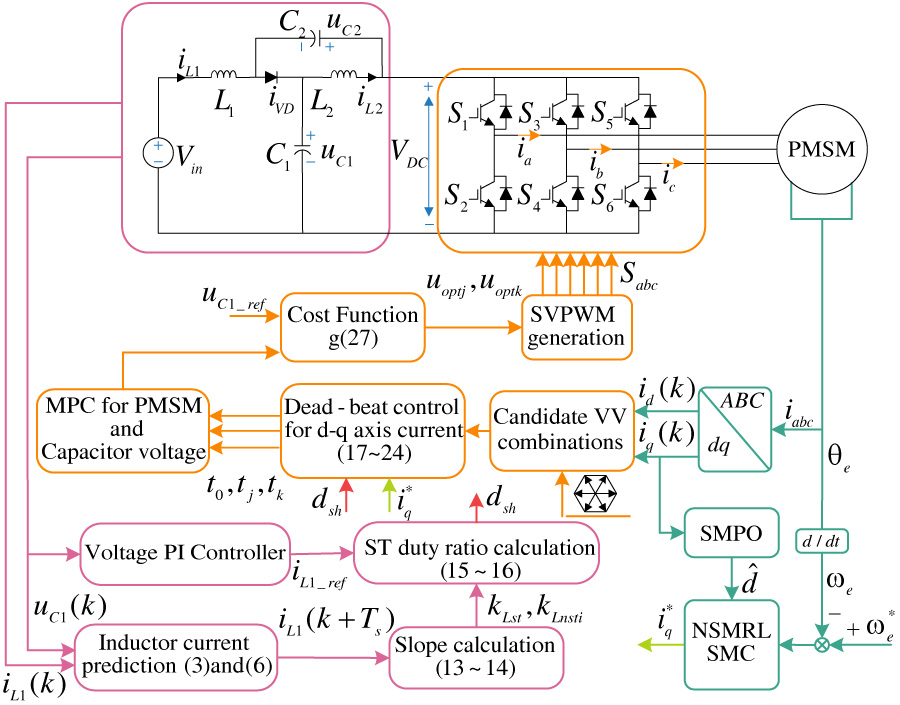
The model predictive control (MPC) for quasi-Z source inverter (QZSI)-based permanent magnet synchronous motor (PMSM) system suffers from the problems of inductor current ripple, large motor stator current pulsation and system susceptibility to load torque disturbance. A QZSI composite voltage vector model predictive current control strategy with a novel sliding mode reaching law (CVVs-NSMRL-MPCC) is proposed. Firstly, a composite voltage vector - including one shoot-through, one zero, and two active voltage vectors - is applied to the QZSI during each sampling period, which can effectively reduce the QZSI inductor current ripple and three-phase current pulsation. And the design work for weighting coefficients in the cost function is simplified by calculating the inductor current at ST duty cycle using dead beat control. Furthermore, a sliding mode controller with a novel reaching law is designed for the motor speed loop. Based on it, the external load disturbances are feed-forward compensated to the output port of the controller by the disturbance observer, which reduces the PMSM speed loop pulsation during load torque disturbances and improves the system transient control performance. Finally, the practicality of the strategy proposed in this paper is verified by experiments.
Quasi-Z-Source Composite Voltage Vectors Model Predictive Control with a Novel Sliding Mode Reaching Law for PMSM
2025-06-16
PIER B
Vol. 112, 61-73, 2025
download: 263
Study of Complex Shapes Reflective Structures for UWB Antenna Based on Dielectric Materials with Various Conductive Coatings
Mikhail S. Shishkin
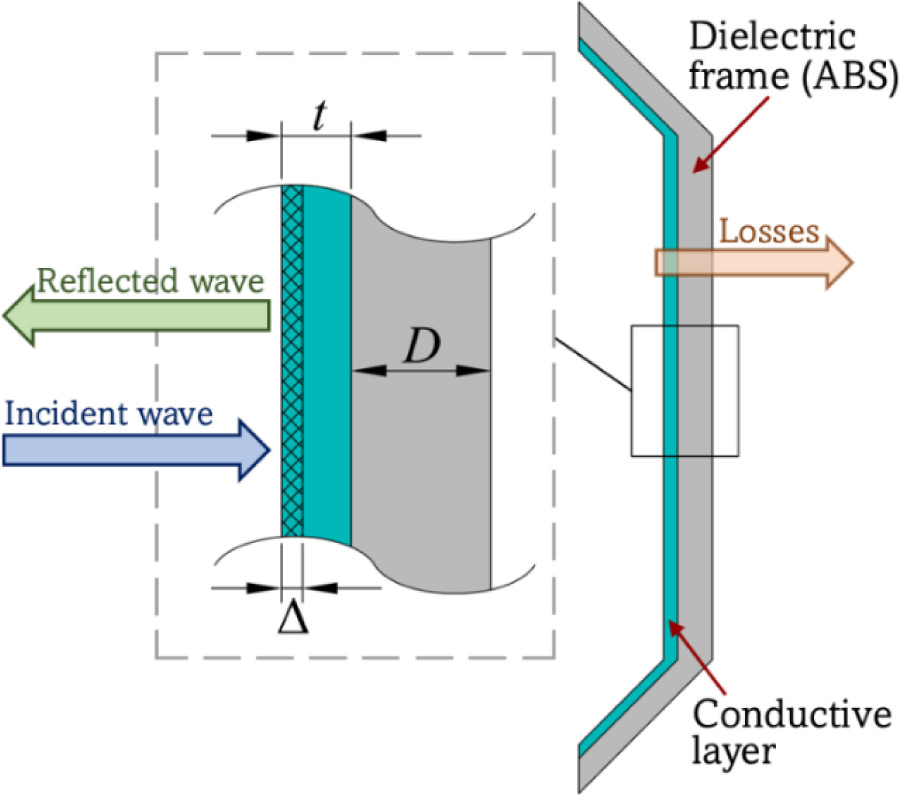
The paper summarizes the principles of various reflectors for microstrip antennas with a particular focus on volumetric reflectors (cavities) that are more challenging to manufacture than flat structures made from printed circuit boards or sheet metal. It is demonstrated in this study that volumetric reflectors can significantly enhance the directional properties of an antenna without typically increasing the antenna's radiating area or overall volume. To reduce the manufacturing costs associated with antenna's volumetric parts, the article proposes the use of 3D printing with commonly available dielectric materials, such as plastics. This technique is relatively straightforward and cost-effective compared to the manufacture of volumetric metal parts. Moreover, the article suggests applying a conductive layer to the parts of the antenna that contribute to radiation formation. The option of covering the reflector (cavity) on the inside with ordinary aluminum foil and the option with conductive enamel are considered. The results of simulation in antenna designs with different reflector conductivities and the results of experimental studies of antennas are presented. The results obtained show that the method is feasible to be used with virtually no compromise on the antenna characteristics and substantially reduces the production cost.
Study of Complex Shapes Reflective Structures for UWB Antenna Based on Dielectric Materials with Various Conductive Coatings
2025-05-31
PIER B
Vol. 112, 43-59, 2025
download: 314
Multi-Physics Coupling Analysis of Vibration and Noise Abnormalities in Transformer Under Geomagnetically Induced Current
Chao Pan, Chuanhui Wang, Tongrui Fu and Shoukun Zou
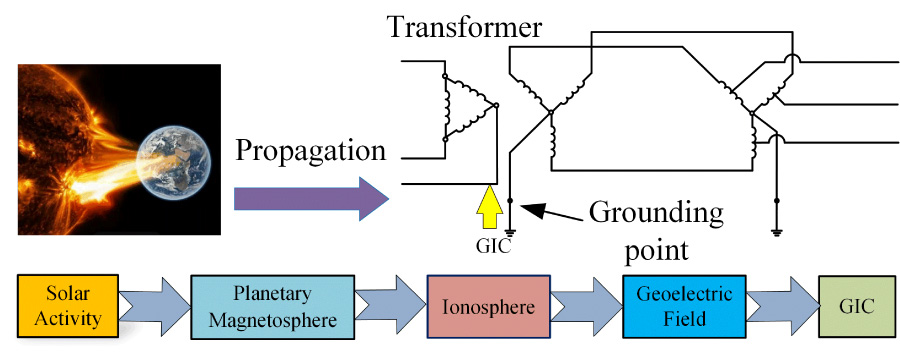
Focusing on the instability problems of power grid transformer caused by geomagnetically induced current (GIC), this paper investigates the multi-physics coupling characteristics of transformer under GIC. First, the propagation path of GIC is analyzed, and the variation characteristics are further studied based on measurement data. The variational signatures can be characterized by two key parameters: the GIC distortion rate (Δk) and the distortion time (tτ). A multi-physics coupling model considering GIC distortion is proposed, which includes mechanical domain coupling between electromagnetic and acoustic domains. Simulations are conducted on a three phase transformer under varying conditions of distortion rate (Δk), distortion time (tτ), and load factor (ƞ). Then the spatial-temporal variations of winding current, magnetic leakage, core vibration acceleration, and noise can be analyzed. Results reveal that vibration and noise exhibit abnormal intensification under GIC interference. Meanwhile, dynamic experimental platform is established. And the result is verified through consistency of virtual model and physical entity. On this basis, a nonlinear mapping relationship between distortion rate (Δk) and sound pressure level (Lp) is established. Finally, a stability criterion is developed, providing a foundation for situational awareness and full lifecycle management of grid equipment under GIC interference.
Multi-physics Coupling Analysis of Vibration and Noise Abnormalities in Transformer under Geomagnetically Induced Current
2025-05-29
PIER B
Vol. 112, 29-41, 2025
download: 535
FDTD Modeling of Lightning Electromagnetic Fields Over Mixed and Sloped Domains Using Staircase Approximation
Mohamed Omari, Abdenbi Mimouni and Imane Ghlib
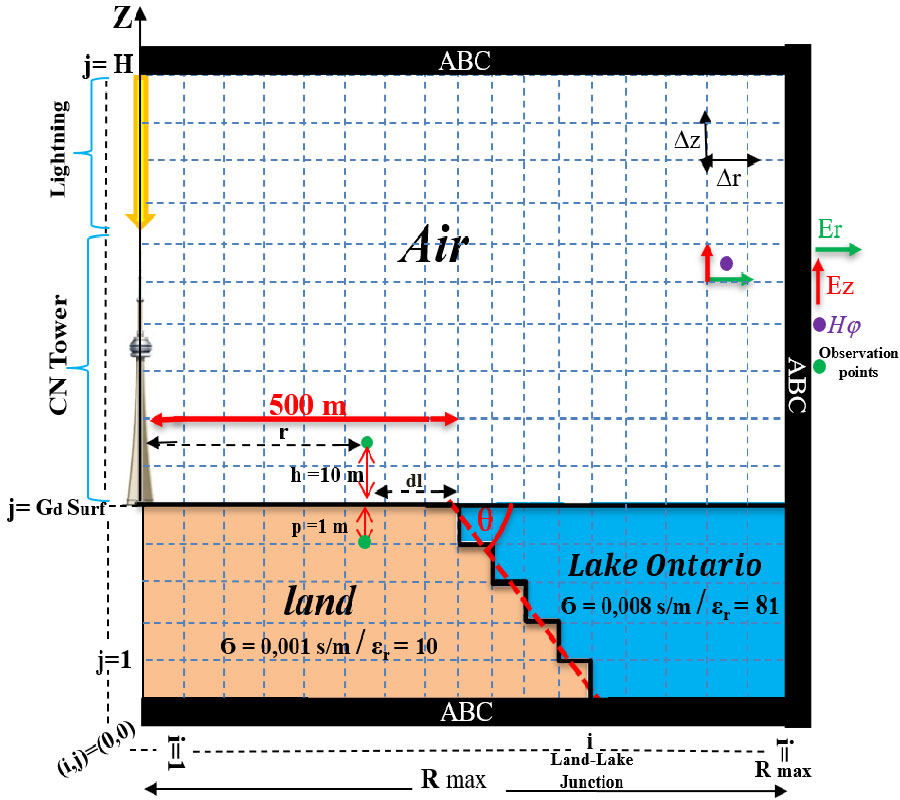
This paper investigates the modeling of lightning electromagnetic (EM) fields over mixed propagation paths, including land-ocean and land-lake interfaces with slope angles, using Finite-Difference Time-Domain (FDTD) method combined with staircase approximation. Two scenarios are considered: a land strike involving a soil-ocean domain and a real-world lightning strike to the CN Tower with a land-Lake Ontario interface. The return stroke currents are modeled using established MTLE model, and electromagnetic fields are computed above and below ground. Simulation results demonstrate strong agreement with previously published Finite Element Method (FEM) results, confirming the accuracy of the proposed approach. The study highlights the significant impact of slope angles on electromagnetic field components, particularly underground fields near mixed interfaces, and confirms the effectiveness of the staircase approximation for modeling sloped geometries in FDTD. These findings contribute to improving the assessment of lightning effects in complex environments, including urban areas and mixed land-water regions.
FDTD Modeling of Lightning Electromagnetic Fields over Mixed and Sloped Domains Using Staircase Approximation
2025-05-26
PIER B
Vol. 112, 15-27, 2025
download: 431
Design and Development of Four Port Wideband High Isolation Koch Curve Fractal MIMO Antenna
Ashwini Kumar, Basudha Dewan, Amit Kumar Jain, Pratish Rawat, Zahriladha Zakaria and Ahmed Jamal Abdullah Al-Gburi
An innovative four-port Coplanar Waveguide (CPW) Multi-Input Multi-Output Antenna (MIMOA) based on a Koch Curve Fractal (KCF) with high isolation is proposed in this article. The High Frequency Structure Simulator (HFSS) is used for performance analysis and parametric optimization. Initially, a KCF-based CPW-fed single-element patch antenna is designed, which is later transformed into a four-port MIMOA (FPMIMOA). The proposed MIMOA is fabricated on an FR4 substrate and offers a wide impedance bandwidth of 1.23 GHz (4.46-5.69 GHz), centered at 4.92 GHz. It exhibits excellent diversity performance, including a Channel Capacity Loss (CCL) of less than 0.4 bits/s/Hz, an Envelope Correlation Coefficient (ECC) below 0.004, a Diversity Gain (DG) greater than 9.8, a Mean Effective Gain (MEG) below 3 dB, and a Total Active Reflection Coefficient (TARC) less than -20 dB from port 1 to the other ports. It also demonstrates an isolation level of 28 dB across the operating band. Furthermore, the proposed MIMOA achieves a high radiation efficiency (η) of 94% and a gain of 3.14 dBi. The antenna has been fabricated and experimentally tested to validate the simulated results. This MIMOA is suitable for applications such as public safety, the 5G sub-6 GHz band (4.8-5.0 GHz), and the 5.2 GHz Wireless LAN (5.15-5.35 GHz).
Design and Development of Four Port Wideband High Isolation Koch Curve Fractal MIMO Antenna
2025-05-16
PIER B
Vol. 112, 1-14, 2025
download: 481
Circular Microstrip Antenna with Electromagnetic Band Gap on Polyester Mylar Film Substrate for Metal Detection Applications in River Prawns
Watcharaphon Naktong, Natchayathorn Wattikornsirikul, Suwat Sakulchat, Sommart Promput and Montree Kumngern
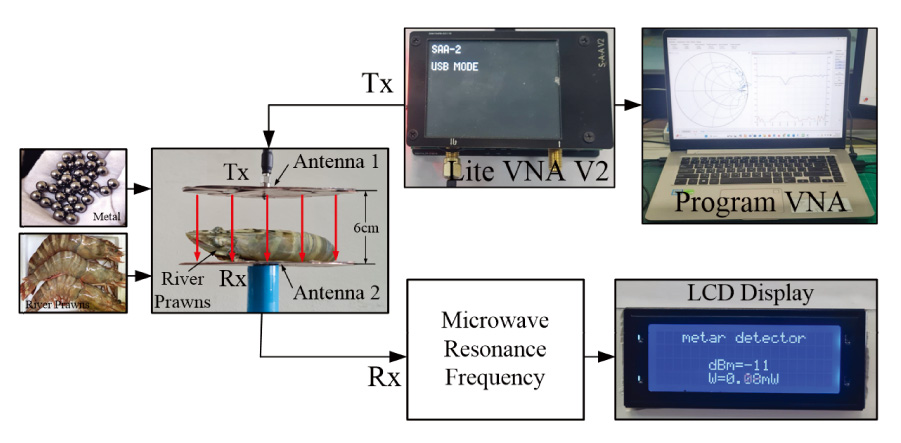
This paper presents the design of a circular-shape microstrip patch antenna structure with nine circular Electromagnetic Band Gaps (EBGs), which have been arranged in a flower shape to increase the antenna gain and be more effective in detecting metals in river prawns. Test results show that the frequency of 1.50 GHz has the greatest effect on metal detection in river prawns. The circular microstrip antenna with the EBG structure is fabricated with a copper sheet and a thickness of 0.03 cm. The radiator patch has a radius of 1.615 cm, and the EBGs, with a radius of 0.8 cm, are arranged around a circular patch antenna structure. The substrate uses a mylar polyester film sheet that has a thickness of 0.05 cm; the dielectric value is 3.2; and the impedance bandwidth of the operating frequency range is 5.26% (1.48-1.56 GHz). This proposed antenna can increase the gain up to 43.76%, with a value of 5.19 dBi. In the application for detecting metal in river prawns, the distance for placing the Tx and Rx antennas to detect metal in river prawns is 6 cm. This circular microstrip antenna can detect metals ranging from 0.5 to 3 cm and above, with an average power value ranging from -12.38 to -18.84 dBm.
Circular Microstrip Antenna with Electromagnetic Band Gap on Polyester Mylar Film Substrate for Metal Detection Applications in River Prawns