Vol. 116
Latest Volume
All Volumes
PIERB 116 [2026] PIERB 115 [2025] PIERB 114 [2025] PIERB 113 [2025] PIERB 112 [2025] PIERB 111 [2025] PIERB 110 [2025] PIERB 109 [2024] PIERB 108 [2024] PIERB 107 [2024] PIERB 106 [2024] PIERB 105 [2024] PIERB 104 [2024] PIERB 103 [2023] PIERB 102 [2023] PIERB 101 [2023] PIERB 100 [2023] PIERB 99 [2023] PIERB 98 [2023] PIERB 97 [2022] PIERB 96 [2022] PIERB 95 [2022] PIERB 94 [2021] PIERB 93 [2021] PIERB 92 [2021] PIERB 91 [2021] PIERB 90 [2021] PIERB 89 [2020] PIERB 88 [2020] PIERB 87 [2020] PIERB 86 [2020] PIERB 85 [2019] PIERB 84 [2019] PIERB 83 [2019] PIERB 82 [2018] PIERB 81 [2018] PIERB 80 [2018] PIERB 79 [2017] PIERB 78 [2017] PIERB 77 [2017] PIERB 76 [2017] PIERB 75 [2017] PIERB 74 [2017] PIERB 73 [2017] PIERB 72 [2017] PIERB 71 [2016] PIERB 70 [2016] PIERB 69 [2016] PIERB 68 [2016] PIERB 67 [2016] PIERB 66 [2016] PIERB 65 [2016] PIERB 64 [2015] PIERB 63 [2015] PIERB 62 [2015] PIERB 61 [2014] PIERB 60 [2014] PIERB 59 [2014] PIERB 58 [2014] PIERB 57 [2014] PIERB 56 [2013] PIERB 55 [2013] PIERB 54 [2013] PIERB 53 [2013] PIERB 52 [2013] PIERB 51 [2013] PIERB 50 [2013] PIERB 49 [2013] PIERB 48 [2013] PIERB 47 [2013] PIERB 46 [2013] PIERB 45 [2012] PIERB 44 [2012] PIERB 43 [2012] PIERB 42 [2012] PIERB 41 [2012] PIERB 40 [2012] PIERB 39 [2012] PIERB 38 [2012] PIERB 37 [2012] PIERB 36 [2012] PIERB 35 [2011] PIERB 34 [2011] PIERB 33 [2011] PIERB 32 [2011] PIERB 31 [2011] PIERB 30 [2011] PIERB 29 [2011] PIERB 28 [2011] PIERB 27 [2011] PIERB 26 [2010] PIERB 25 [2010] PIERB 24 [2010] PIERB 23 [2010] PIERB 22 [2010] PIERB 21 [2010] PIERB 20 [2010] PIERB 19 [2010] PIERB 18 [2009] PIERB 17 [2009] PIERB 16 [2009] PIERB 15 [2009] PIERB 14 [2009] PIERB 13 [2009] PIERB 12 [2009] PIERB 11 [2009] PIERB 10 [2008] PIERB 9 [2008] PIERB 8 [2008] PIERB 7 [2008] PIERB 6 [2008] PIERB 5 [2008] PIERB 4 [2008] PIERB 3 [2008] PIERB 2 [2008] PIERB 1 [2008]
2025-10-31 Latest Published
By Chenwei Feng Zhenzhen Lin Yawei Sun Yangbin Huang Yinhua Wu
Progress In Electromagnetics Research B, Vol. 116, 48-64, 2026
Abstract
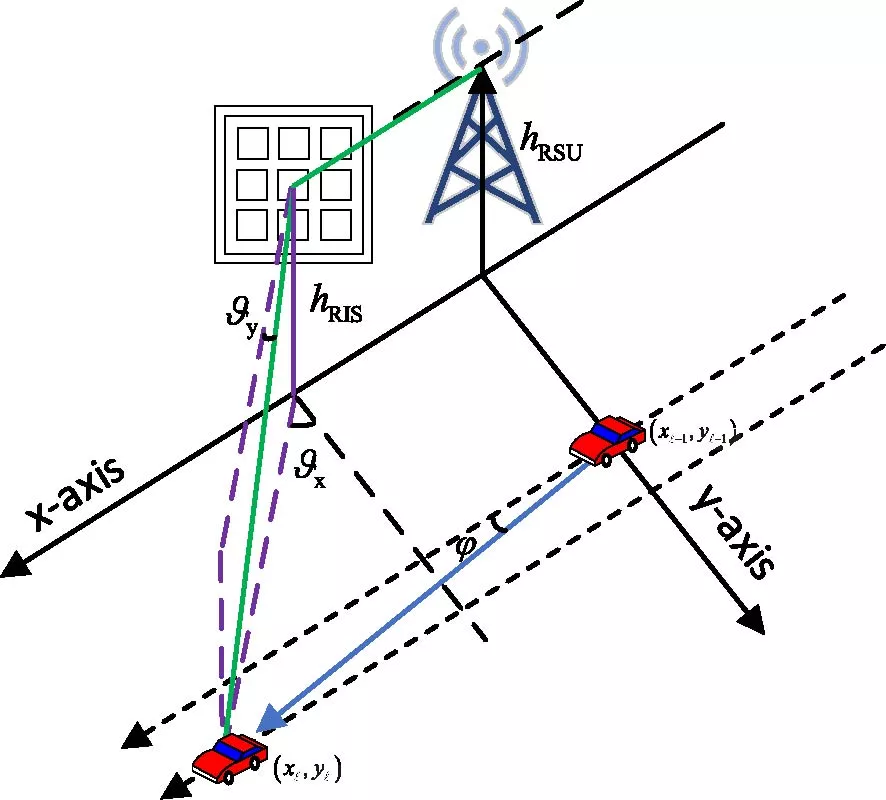
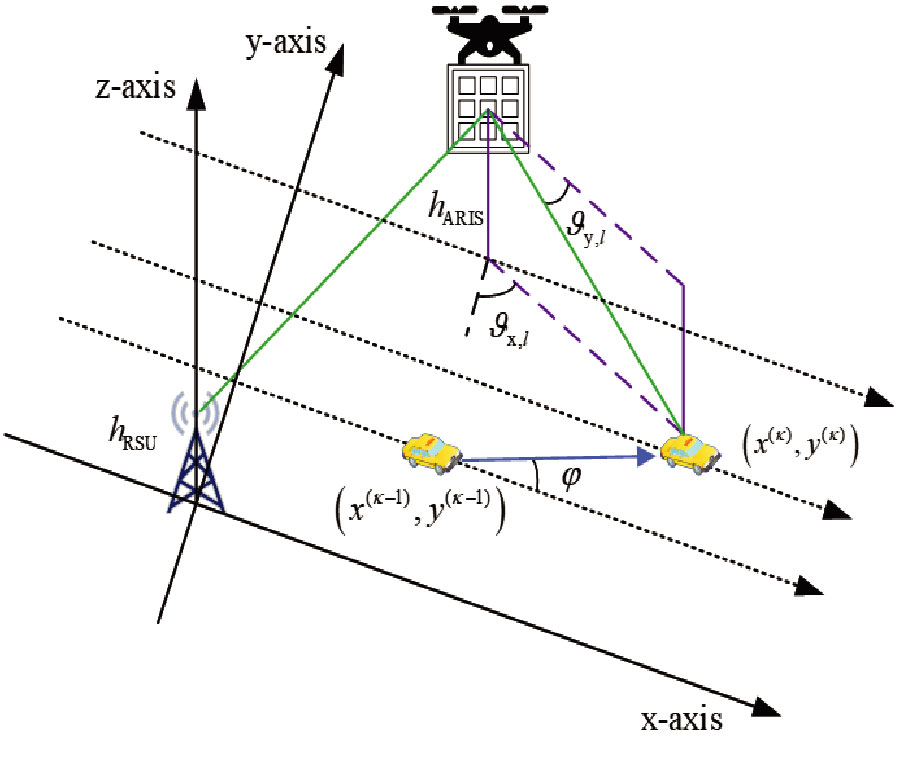
With the growth of demand for high-rate and high-quality wireless communication services, Unmanned Aerial Vehicle (UAV) communication technology has received a lot of attention. By deploying Reconfigurable Intelligent Surface (RIS) on the UAV, more users can be reached while effectively expanding the signal coverage. The rotational nature of the UAV also provides new degrees of freedom in the design of RIS-assisted millimeter-wave Multiple Input Multiple Output (MIMO) systems. In this paper, using the advantages of UAV and RIS technologies, Aerial Reconfigurable Intelligent Surface (ARIS) is introduced to assist the communication, and the millimeter-wave Vehicle to Infrastructure (V2I) communication scenario based on the ARIS-assisted multi-vehicle beam tracking problem. First, Zero Forcing (ZF) beamforming is employed at the base station to eliminate inter-vehicle interference. On this basis, the vehicle-side beam combining matrix, the RIS-side reflection beamforming matrix, along with the rotation angle of the ARIS, are jointly designed to maximize the number of vehicles and data rates, thereby providing high-quality communication for beam tracking studies. Secondly, an ARIS-assisted multi-vehicle beam tracking model is derived in a MIMO-based 3D communication scenario. Finally, an Extended Kalman Filter (EKF) algorithm based on the angular deviation correction mechanism is proposed to realize the beam tracking of multiple vehicles. Simulation results show that the proposed EKF algorithm can effectively reduce the beam tracking error in multi-vehicle communication scenarios with robust beam tracking capability under the joint design based on beam merging matrix, beamforming matrix and ARIS rotation angle.
2025-10-30
PIER B
Vol. 116, 33-47, 2026
download: 145
Comprehensive Phase Shifter Review: State of the Art and Future Trends
Sana Gharsalli, Radhoine Aloui, Sofien Mhatli, Alonso Corona-Chavez, Zabdiel Brito-Brito, Satyendra Kumar Mishra and Ignacio Llamas-Garro
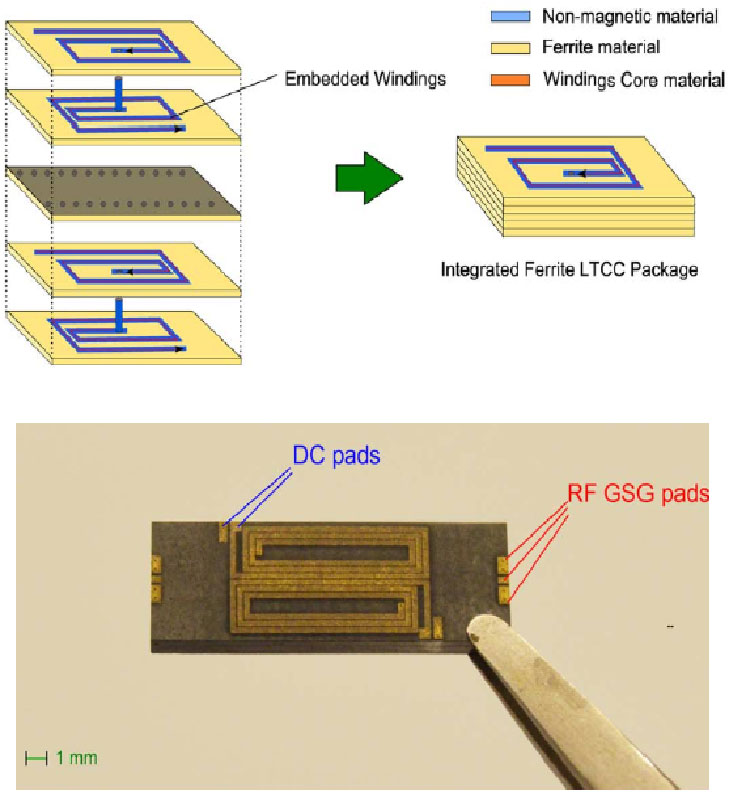
RF signals are widely used in various applications, including radar systems, wireless communication systems, and telecommunications. Phase shifters allow tuning of the signal's phase, using digital and analog designs. This adjustment is essential for antenna beam steering and shaping, signal cancellation, and frequency synthesis in antenna arrays. Phase control is essential to improve the performance of wireless communication and radar systems by enhancing signal reception and transmission. This study examines different types of phase shifters, including a comparative analysis of different phase shifter topologies and technologies, highlighting advantages and limitations according to applications. In addition, this review includes a specific study on liquid metal phase shifters. Finally, the article outlines future research directions for liquid metal phase shifters: It is emphasized that there is a constant need for innovative design strategies to keep pace with the evolving wireless communications and radar fields. Therefore, this article can be a reference for the next milestones in RF phase shifter research.
Comprehensive Phase Shifter Review: State of the Art and Future Trends
2025-10-17
PIER B
Vol. 116, 19-32, 2026
download: 138
Model of a Planar Cherenkov-Type Antenna for Microwave Applications
Vadym Pazynin, Kostyantyn Sirenko and Wilhelm Keusgen
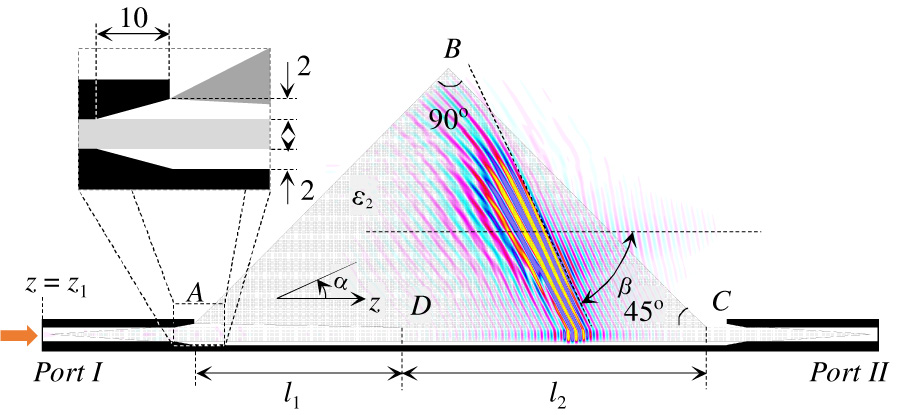
In this paper, a radiator employing the Cherenkov mechanism for electromagnetic energy transfer from an optically less dense medium into a more dense one is developed and studied using a two-dimensional numerical model. The radiator’s principal components are a dielectric prism and an open dielectric waveguide, where the phase velocity of eigenwaves exceeds that within the prism. For two linear field polarizations in the 24 GHz to 64 GHz range, this radiator exhibits high efficiency (over 93%) and radiation patterns with main lobes that closely coincide in both direction and width. The direction of radiation demonstrates strong agreement with predictions from the Cherenkov wave theory and shows weak dependence on frequency. These characteristics make the developed antenna suitable for directional emission and reception of electromagnetic pulses of various polarizations with spectral bandwidths of up to one octave or more. It is demonstrated that the radiation patterns of such antennas can be electrically controlled by altering the permittivity of the dielectric waveguide using an external control signal. The proposed antenna design avoids expensive fabrication processes and can be scaled to sub-millimeter wave ranges without significant modifications.
Model of a Planar Cherenkov-type Antenna for Microwave Applications
2025-10-14
PIER B
Vol. 116, 1-18, 2026
download: 123
Reconfigurable Designs of U-Slot Cut Microstrip Antennas for Dual Band Circularly Polarized Response
Amit A. Deshmukh and Venkata A. P. Chavali
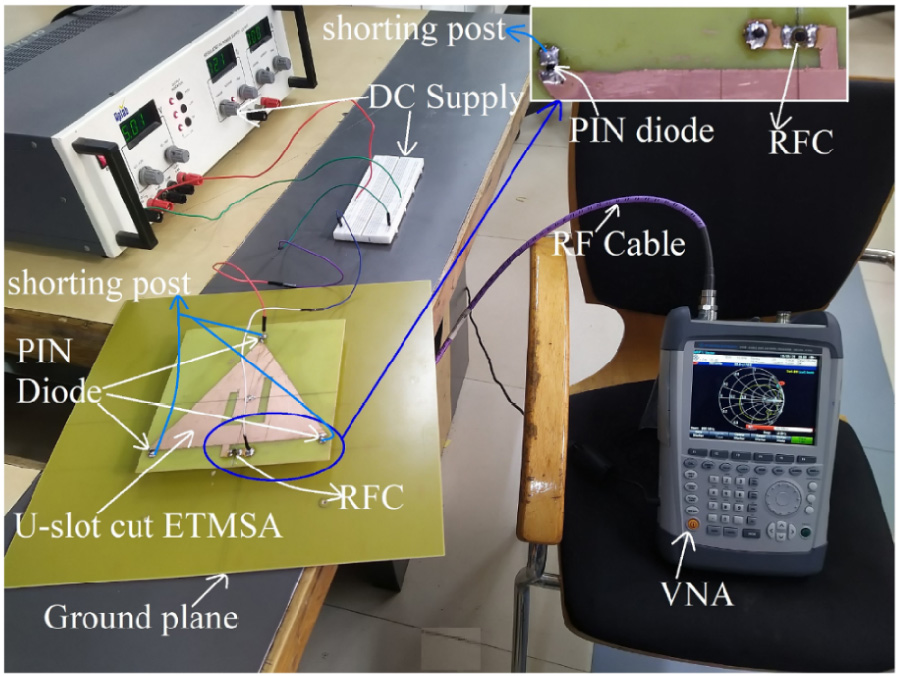
Resonant slot cut microstrip antenna is a single patch solution to achieve circularly polarized response, but it does not offer tunability in the center frequency of axial ratio bandwidth. This paper presents reconfigurable designs of shorting post loaded U-slot cut circular and equilateral triangular microstrip antennas that offer tunable circularly polarized response. Shorting posts positions alter the excitation of resonant modes on the U-slot cut patch that achieves tuning in the circularly polarized frequency. On substrate thickness of ~0.05λcAR, using the circular patch, tuning in the center frequency of axial ratio bandwidth by 253 MHz (28.26%) is obtained, whereas equilateral triangular patch design offers 319 MHz (32.68%) of frequency tuning. In both the designs, broadside radiation pattern with a peak gain of larger than 7 dBic is obtained across the axial ratio bandwidth. Design methodology is proposed that yields a similar configuration as per specific wireless application. With the obtained frequency tuning in axial ratio bandwidth, redesigned variations of the proposed configurations can cater to pairs of GPS L-band applications.
Reconfigurable Designs of U-slot Cut Microstrip Antennas for Dual Band Circularly Polarized Response