Search Results(13787)

2023-04-07
PIER Letters
Vol. 110, 37-45
Polarization Insensitive Dual Band FSS for S-Band and X-Band Applications
Anandan Suganya and Rajesh Natarajan
This paper presents the design of dual-band spatial filter for shielding S band and X band wireless signals. The proposed Frequency Selective Surface (FSS) geometry consisting of a square loop convoluted with four strips positioned along the conducting loop. The FSS is aimed to reject WLAN/S-band (2.64 GHz) and X-band (8.3 GHz) wireless signals. The proposed FSS is tested for its angular stability by considering the wave incidence at various angles between 0˚ and 60˚. It is also tested for its polarization insensitive feature via TE mode and TM mode. The prototype FSS is printed on an FR-4 substrate with 1.6 mm thickness and the unit cell footprint of 14.8 mm and tested in an anechoic chamber. The working principle is explained through surface current distribution and the equivalent circuit model of the FSS. Measured results have better similarity with the simulated results.
Polarization Insensitive Dual Band FSS for S-band and X-band Applications
2023-04-06
PIER C
Vol. 132, 1-10
Mutual Coupling Reduction in Multiband MIMO Antenna Using Cross-Slot Fractal Multiband EBG in the E-Plane
Niraj Kumar , Usha Kiran Kommuri and Priyanka Usha
A multiband electromagnetic band gap (EBG) structure is designed and implemented with a multiband MIMO antenna for mutual coupling reduction. An area of 16 × 16 mm2 on a low cost FR4 substrate is used for the proposed EBG design. The designed E-coupled slotted U-shape MIMO antenna resonates at 5.7 GHz, 7.5 GHz and 10 GHz frequencies. Edge to edge separation between the two antennas is kept as 6 mm. EBG structure is placed in the ground plane between two antennas that enable us to keep separation of antennas less than the size of the EBG. Mutual coupling gets reduced by 6.6 dB for 5.7 GHz, 4 dB for 7.5 GHz and 6.95 dB for 10 GHz. Simulated radiation properties of MIMO antenna are verified by measured results, and surface current distribution of MIMO antenna surface also verifies the mutual coupling reduction. Envelope correlation coefficient < 0.01 and channel capacity loss < 0.2 are achieved at resonating frequencies.
Mutual Coupling Reduction in Multiband MIMO Antenna Using Cross-slot Fractal Multiband EBG in the E-plane
2023-04-05
PIER B
Vol. 99, 159-178
A Canonical Filter Theory Approach for the Synthesis of Inductive Wireless Power Systems with Multiple Resonators
Masoud Ahmadi , Tristan Vander Meulen , Loïc Markley and Thomas Johnson
The advantage of the canonical filter theory approach to design inductive power transfer (IPT) systems is that values for the coupled resonator elements are readily calculated from scaled canonical filter prototypes with specific frequency response characteristics. For example, Butterworth bandpass filter prototypes can be used to synthesize resonant-coupled IPT systems with critically-coupled frequency response characteristics. In this work, we analyze two canonical filter prototype structures: one prototype has series matching elements at the ports, and the other prototype has shunt matching elements at the ports. Equations are provided to transform the networks into coupled resonator structures that implement IPT links with a transmitter, receiver, and multiple repeater coils. The filter methodology for IPT link synthesis also provides an easy framework to evaluate design trade-offs. An example of comparing resonator inductor sizes for both the series and shunt matching topologies is shown for IPT links operating in ISM frequency bands of 6.78 MHz, 13.56 MHz, 27.12 MHz, and 40.68 MHz. Experimental results are shown for four different IPT examples that were designed using filter synthesis methods.
A Canonical Filter Theory Approach for the Synthesis of Inductive Wireless Power Systems with Multiple Resonators
2023-04-05
PIER M
Vol. 116, 77-89
A Compact Reconfigurable Multi-Frequency Patch Antenna for LoRa IoT Applications
Muhammad Sani Yahya , Socheatra Soeung , Francis Emmanuel Chinda , Sharul Kamal Bin Abd Rahim , Umar Musa , Nursyarizal B. M. Nor and Sovuthy Cheab
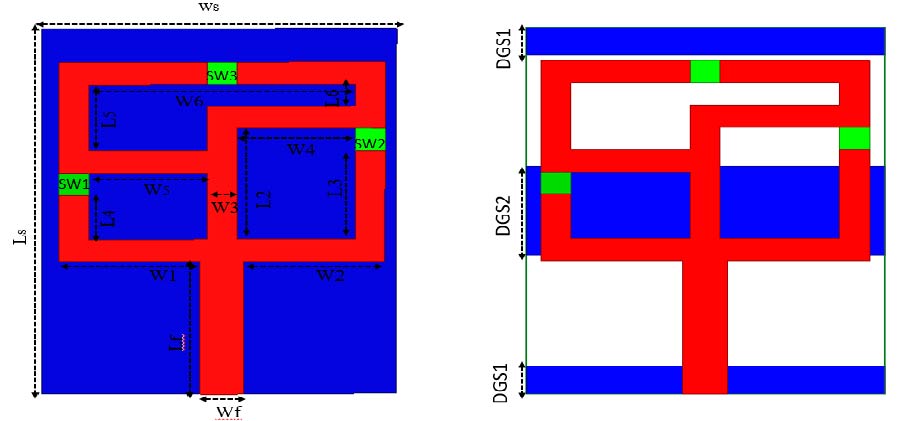
In this study, a compact, reconfigurable, and high-efficiency Long Range (LoRa) patch antenna, which is novel, is presented for Internet of Things (IoT) applications. The antenna is designed to operate at the three major frequencies used for LoRa communication, namely 915 MHz, 868 MHz, and 433 MHz, which are widely employed for global LoRa connectivity. The compact size and impedance matching of the antenna are achieved through the use of meandered radiating patches, a partial ground plane, and a ground plane stub. The antenna is prototyped on a commercially available and cost-effective FR-4 material and measures 80 mm x 50 mm x 1.6 mm (0.12λ x 0.07λ at the lowest resonant frequency), which is smaller than the size of a standard credit card. The antenna utilizes three RF PIN diodes (SW1, SW2, and SW3) for frequency reconfiguration, which are characterized by low insertion loss and fast switching time. The RLC equivalent circuit of the antenna was validated through simulations and measurements, yielding the peak gain and radiation efficiency of 2.1 dBi and >90%, respectively. These results prove that the antenna is a promising solution for LoRa IoT applications in terms of size, cost, and performance, filling a gap in the existing literature of LoRa MPAs that are typically large, non-reconfigurable, low-gain, and single-band.
A Compact Reconfigurable Multi-frequency Patch Antenna for LoRa IoT Applications
2023-04-04
PIER
Vol. 177, 33-42
Systemically Delivered, Deep-Tissue Nanoscopic Light Sources
Xiang Wu , Fan Yang , Sa Cai and Guosong Hong
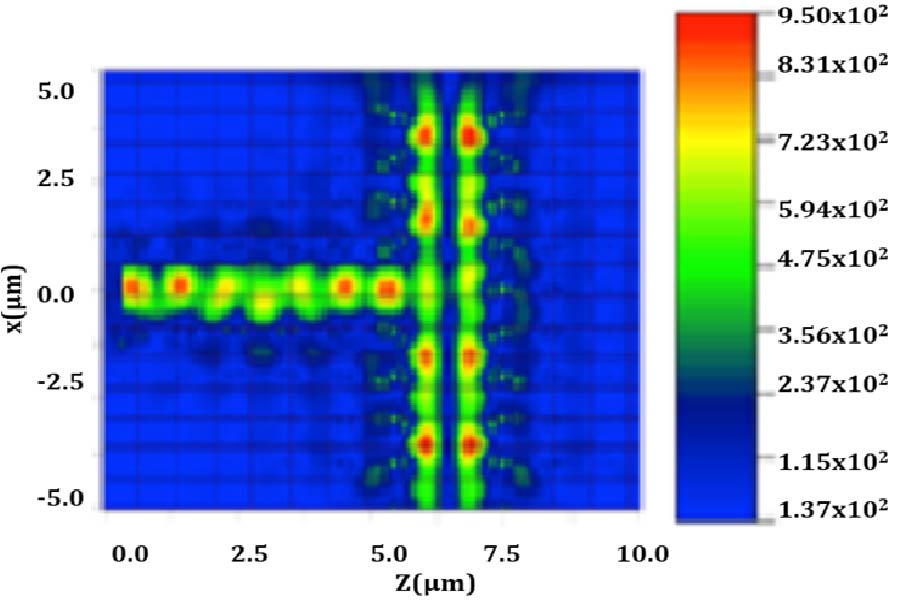
Light is widely used in life science in both controlling and observing biological processes, yet a long-standing challenge of using light inside the tissue lies in the limited penetration depth of visible light. In the past decade, many in vivo light delivery methods using photonics and materials science tools have been developed, with recent demonstrations of non-invasive, deep-tissue light sources based on systemically delivered luminescent nanomaterials. In this perspective, we provide an overview for the principles of intravital nanoscopic light sources and discuss their advantages over existing methods for in vivo light delivery. We then highlight their recent applications in optogenetics neuromodulation and fluorescent imaging in live animals. We also present an outlook section about the feasibility of combining these non-invasive light sources with other modalities to expand the utilities of light in biology.
Systemically Delivered, Deep-tissue Nanoscopic Light Sources
2023-04-04
PIER M
Vol. 116, 65-75
Three-Dimensional Near-Field Pattern Shaping Antenna Array with Arbitrary Focus Configuration
Qiaojiang Xia , Xiao Cai , Zhu Duan and Wen Geyi
In this paper, a 24-element microstrip antenna array with three-dimensional near-field pattern shaping capability for microwave hyperthermia is presented. The antenna array operating at 2.45 GHz is designed based on the weighted constrained method of the maximum power transmission efficiency (WCMMPTE). By setting proper constraints for the electric field distribution of several selected points within the target area, the three-dimensional (3D) shape of the electric field can be characterized, meanwhile ensuring that the power is maximally concentrated in this area. Moreover, the shape, size, and spatial location of the three-dimensional area are all adjustable according to the selection of those specific points, making the array quickly adaptable for different actual requirements. The electric field distribution of the preset 3D shape can be focused at center or off-center with optimized excitations fed into the array. The measured electric field distribution shows that the transmitting array antenna is able to achieve a preset 3D shape of the electric field distribution as well as a preset offset position in the desired direction, agreeing very well with the simulations.
Three-dimensional Near-field Pattern Shaping Antenna Array with Arbitrary Focus Configuration
2023-04-03
PIER C
Vol. 131, 259-273
Analysis and Design of Dual-Wide Band (28/38 GHz) Chebyshev Linear Antenna Array Integrated with 3D Printed Radome for 5G Applications
Ahmed Khairy , Ayman Mohamed Fekry Elboushi , Abdelhameed Abdelmoneim Shaalan and Mai F. Ahmed
This research presents the design of a Chebyshev linear antenna array (CLA) integrated with the dielectric lens. In comparison to a uniform amplitude distribution (UAD), a Chebyshev amplitude distribution (CAD) is used to achieve a low side lobe level (SLL) characteristic and increase the directivity of the antenna array. The proposed CLA is optimized to operate at a high fifth generation (5G) frequency. The proposed CLA achieves a -10 dB wide bandwidth from 25.8 GHz to 42.4 GHz. Dielectric lenses can be employed to modify the phase and amplitude of the antenna array, which increases the realized gain and leads to stable radiation over the operational bandwidth. The main purposes of the dielectric lens are to improve the realized gain, enhance efficiency, and result in stable radiation pattern properties. Also, the research presents a study of two types of dielectric lenses with different shapes and their effects on the efficiency and the realized gain of the antenna. The substrate of the dielectric lens is epoxy resin, which has a relative permittivity (εr) of 2.716. The proposed CLA integrated with the proposed Type 2 dielectric lens has a realized gain of 15.2 dB and 11.94 dB at the dual-bands 28 GHz and 38 GHz, respectively. All the suggested designs are simulated using CSTMWS2020 and HFSS. However, to verify the obtained results, the proposed CLA is fabricated using a photolithography process technique, and the proposed Type 2 dielectric lens is fabricated using a 3D printing technique.
Analysis and Design of Dual-Wide Band (28/38 GHz) Chebyshev Linear Antenna Array Integrated with 3D Printed Radome for 5G Applications
2023-04-03
PIER M
Vol. 116, 53-63
Multiband Antenna for GPS, IRNSS, Sub-6 GHz 5G and WLAN Applications
Devendra H. Patel and Gautam Durlabhji Makwana
An elliptical shape multi-band microstrip patch antenna with narrow semicircle cuts and bulges on two horizontal ends is proposed for Global Positioning System (GPS), Indian Regional Navigation Satellite System (IRNSS), Sub-6 GHz 5G and Wireless Local-Area Network (WLAN) wireless communication applications. The proposed antenna operates at 1.56 GHz, 2.49 GHz, 3.5 GHz, and 5.24 GHz for desired applications, respectively. The proposed antenna, fed by coaxial feeding mounted on Rogers AD255C substrate, has optimized physical dimensions of 80×80×3.175 mm3. The semicircle cuts and bulges on horizontal ends on the elliptical element contribute to exciting higher-order modes and affect the current distribution at the resonant frequencies resulting in producing multi-band operations. The antenna is fabricated and tested. The measured return loss characteristic (S11) below -10 dB is -14.58 dB, -18.80 dB, -22.25 dB, & -27.03 dB, with the radiation efficiency of 58.7%, 94.8%, 93.2%, & 84.9% and peak gain of 3.49 dBi, 6.49 dBi, 4.93 dBi & 4.36 dBi for desired application band, respectively. The proposed antenna also offers impedance bandwidths of 40 MHz (1.55-1.59 GHz), 90 MHz (2.43-2.52 GHz), 100 MHz (3.44-3.54 GHz) & 90 MHz (5.23-5.32 GHz) at resonant frequencies and relatively stable radiation patterns. Simulated and measured results for the proposed antenna exhibit good agreement. The proposed multi-band antenna offers a simple design and improved performance.
Multiband Antenna for GPS, IRNSS, Sub-6 GHz 5G and WLAN Applications
2023-04-02
PIER B
Vol. 99, 139-157
Dual-Band Hexagonal SRR Antennas and Their Applications in SIMO and MISO-Based WLAN/WiMAX Systems
Puneet Sehgal and Kamlesh Patel
This article presents the performance of a hexagonal split-ring resonator (H-SRR) antenna in the 2.4/5.2 GHz bands and evaluation of channel capacity for single-input multiple-output (SIMO) and multiple-input single-output (MISO) systems. The proposed antenna consists of two hexagonal-shaped split-ring resonators for dual-band operation with higher gain and metallic loadings between the rings to achieve a wide impedance bandwidth. Impedance modeling of the proposed antennas confirms the role of conductance and inductance of metallic loading for enhancing the antenna characteristics, and thus, the fabricated H-SRR antenna achieves dual-band features with improved impedance bandwidth of 50%/76% and a gain of 2.32/2.57 dB at 2.4/5.2 GHz frequency bands. The performance of the hexagonal SRR antenna is then investigated for space diversity applications in the 1×3 SIMO and 3×1 MISO systems with circular SRR antennas. In linear and spherical arrangements of the antennas, the channel capacity is found in the range of 2.7 to 4.8 Mbps at the 2.4/5.2 GHz bands, which also confirms its dependency on the number of antennas as well as on the placement of antennas.
Dual-Band Hexagonal SRR Antennas and Their Applications in SIMO and MISO-based WLAN/WIMAX Systems
2023-04-02
PIER M
Vol. 116, 39-52
Design and Analysis of a Frequency Selective Surface Loaded Bioinspired Antenna in Frequency and Time Domains
Anett Antony and Bidisha Dasgupta
The paper addresses a bioinspired printed antenna in the shape of a `Lotus' which is further loaded with a new type of Frequency Selective Surface (FSS) structure with unit cell dimension as 0.16λ0×0.16λ0×0.033λ0, where λ0 is the lowest operating wavelength. The two dissimilar layers of FSS, which are separated by an air gap of about 3.2 mm, have been placed below the antenna. The combined structure operates over 3.8 GHz to 14.4 GHz (116.5% measured) with peak realized gain of 7.5 dBi. The introduction of the FSS layer provides gain enhancement of about 5.9 dBi. The standalone FSS geometry provides a wide transmission bandwidth from 5.5 to 12.5 GHz along with good angular stability of about 50º. The Gielissuper formula has been used to develop the petal of the lotus shaped antenna. The time domain analysis of the lotus shaped antenna has also been provided. The proposed structure can be used as an electromagnetic sensor for wide band applications over C, X and partially Ku bands.
Design and Analysis of a Frequency Selective Surface Loaded Bioinspired Antenna in Frequency and Time Domains
2023-04-01
PIER C
Vol. 131, 241-257
A Novel Receiving Subarray Partition Layout Model for Microwave Power Transmission with Smaller Power Dispersion
Jianxiong Li and Wen Qin
A novel subarray layout method is proposed for the problems of high power dispersion and high complexity of the existing layout methods of receiving rectifier antenna arrays. By the traditional RF synthesis and DC synthesis array layout, the number of units used is high, and the received power dispersion is high. Therefore, this paper proposes a uniform non-overlapping triangular subarray partition layout, and the layout takes three discrete parameters of subarray type, subarray position, subarray placement direction as optimization variables. The minimum dispersion of the received power of the subarray is used as the optimization objective to establish the optimization model. We adopt the Taboo Search (TS) algorithm to achieve the global optimum by setting up a taboo table for global neighborhood search and homogenize the received microwave power value from each subarray. The result shows a lower coefficient of variation (CV) with fewer subarrays and a globally symmetric subarray layout, which reduces the engineering complexity and cost of the subsequent rectification circuit, as well as a lower dimensional span between different subarray types in this novel subarray layout model. We conducted a series of numerical simulations to prove that the method can meet the requirement of minimum power dispersion while ensuring that the total reception efficiency will not be greatly reduced, which verifies the effectiveness of this receiving subarray layout method.
A Novel Receiving Subarray Partition Layout Model for Microwave Power Transmission with Smaller Power Dispersion
2023-04-01
PIER Letters
Vol. 110, 29-36
A Terahertz Low Scan Loss High Gain Beam Steering Transmitarray
Guang Liu , Zhenzhan Wang , Haowen Xu , Min Yi and Haotian Zhu
This paper presents a terahertz high gain beam steering transmitarray antenna (BSTA) working at 340 GHz. Substrateless double hexagon ring slots unit-cells which present low loss characteristics at THz band are used to constitute the layout of THz BSTA. To improve the beam steering performance, bifocal technique is used to design the layout of BSTA. Because the fabrication risk of the THz BSTA prototype increases a lot as the aperture dimension is enlarged, four inch silicon wafer is chosen after weighting the risk and gain of the BSTA. Micromachining process is used to fabricate the large aperture THz BSTA to ensure the machining accuracy of the unit-cells. The measured results of the prototype show that the THz BSTA could realize -15°~15° range beam scanning with gain > 38.3 dB, scanning loss < 1.2 dB and side lobe level < -17.8 dB, by moving the feed along the focal plane of the BSTA.
A Terahertz Low Scan Loss High Gain Beam Steering Transmitarray
2023-03-30
PIER C
Vol. 131, 227-240
Effects of Defect Layers and Loss Factors on Transmission Spectrum for One-Dimensional Lossy Metamaterial Photonic Crystal
Rawdha Thabet , Ouarda Barkat and Mohamed Lahdi Riabi
An exhaustive numerical analysis is presented on the effects of defect layers and electric and magnetic loss factors on the transmission spectrum of one-dimensional metamaterial photonic crystal. The proposed structure is a symmetrical multilayer configuration consisting of alternating layers of lossy metamaterial and double-positive material, with a defective region in the middle. The study shows that one or more defect transmission modes are generated in photonic band gaps. The optical properties have been numerically analyzed and simulated using the transfer matrix method. Parameters, such as permittivity, thickness and number of the defect layers, influence the band gap width and the tunability of the defect peak frequency. The effects of the electric and magnetic loss factors (or damping frequencies) of the metamaterial on the intensity and on the quality factor of the defect modes are also well observed. The analysis is validated by comparing the results to some available in the literature, and the proposed structure can be exploited in the design of narrowband filters in the microwave domain.
Effects of Defect Layers and Loss Factors on Transmission Spectrum for One-dimensional Lossy Metamaterial Photonic Crystal
2023-03-30
PIER C
Vol. 131, 209-225
High-Gain Pixel Patch Antenna Array for Miniature Wireless Communications and IoT Applications
Yasser M. Madany , Hassan M. Elkamchouchi and Sara I. Abd-Elmonieum
Since wireless technology has been developed so quickly, there is a surge in interest in multi-band reconfigurable antennas as devices and satellites continue to advance in the direction of downsizing. Due to physical limitations, current and future wireless technologies as well as the cutting-edge compact satellites need antenna systems that are dependable, effective, and have a large bandwidth. The fifth generation of mobile communication technology promises to deliver fast data rates, low latency, and exceptional spectrum efficiency. One of the most crucial factors that makes this technology possible is the way in which satellite technology is integrated with terrestrial communication systems. Therefore, it is crucially important to develop next-generation antennas that can meet the functional requirements for 5G and CubeSat applications. Additionally, the antenna components need to be small and low-profile for Advanced Driver-Assistance Systems (ADAS) and Vehicle-to-Everything (V2X) to function properly. Reconfigurable antennas can offer a wide range of configurations in terms of operating frequency, radiation pattern, and polarization. This paper aims to investigate pixel antenna arrays for wireless communication and Internet of Things (IoT) systems. Design, analysis, and comparison have been done on both the traditional and proposed pixel design configurations. The proposed pixel patch design area reduction is about 75%, and the full design area reduction is about 90%, compared to conventional patches. The pixel design parameters of these antennas are carefully examined to increase their gain, radiation pattern, and efficiency. For a variety of applications, increased gain and various radiation pattern configurations may be advantageous. As a result, increasing the coverage of 5G, 6G, and small satellites requires antennas with a small size, higher gain, and better radiation patterns.
High-Gain Pixel Patch Antenna Array for Miniature Wireless Communications and IoT Applications
2023-03-30
PIER Letters
Vol. 110, 21-28
Low-Cost Substrate Integrated Waveguide Equalizer Based on the Indium Tin Oxides Conductive Film
Jun Dong , Fan Yin , Taixing Jiang , Xiang Zhong , Yang Yang and Hao Peng
A low-cost and mechanical reconfigurable substrate integrate waveguide (SIW) equalizer is presented and studied in this work. Different from the previous SIW equalizers using Tantalum Nitride (TaN) or absorbing material as the resistive element, the indium tin oxides (ITO) are introduced into SIW equalizer. The absorbing material will deform under uneven pressure due to the structural softness of material, resulting in instable equalizing values. Compared with the absorbing material, ITO provides more structural stability, excellent high frequency characteristic, and can be easily integrated with traditional printed circuit board (PCB). Furthermore, an equalizer with reconfigurable equalizing values can be realized by adjusting ITO materials with different impedances. A SIW equalizer based on the ITO Conductive Film, operating from 26 to 40 GHz, has been designed, fabricated and experimentally verified. For measurement results, the return losses are better than -17.4 dB with 3, 6, and 10 dB equalizing values respectively over the entire Ka-band, and the insertion losses at the frequency point of 40 GHz are -2.89 dB, -4.80 dB, and -7.37 dB, respectively. The proposed equalizer presents the advantages of mechanical reconfigurable, low cost, and high stability. In addition, ITO Conductive Film is a good candidate for the design of high millimeter-wave band equalizer.
Low-Cost Substrate Integrated Waveguide Equalizer Based on the Indium Tin Oxides Conductive Film
2023-03-29
PIER C
Vol. 131, 197-208
Design and Development of a Miniaturized Highly Isolated UWB-MIMO Diversity Antenna with Quad Band Notch Characteristics
Sadineni Ramesh Babu and Puttaraje Dinesha
A miniaturized quadruple band reject UWB-MIMO antenna with high degree of isolation is designed and experimentally evaluated in this study. The reported design utilizes dual antenna elements that are organized orthogonally by employing polarization diversity. Notch bands can be acquired by incorporating three U-shape slots and a split ring resonator (SRR) on the antenna element that exhibits band rejection of 3.41-4.07 GHz, 4.41-4.76 GHz, 5.21-5.64 GHz and 6.92-8.63 GHz to reject the potential interference from 5G, INSAT, WLAN and X-band. The UWB-MIMO antenna is resonating in the frequency band from 2.9 to 12 GHz with a good isolation (<-25 dB). The response of the reported antenna has been examined experimentally in terms of notch frequencies, surface current variation, gain, radiation patterns, envelope correlation coefficient, diversity gain, and total active reflection coefficient.
Design and Development of a Miniaturized Highly Isolated UWB-MIMO Diversity Antenna with Quad Band Notch Characteristics
2023-03-29
PIER M
Vol. 116, 23-38
Design and Optimization of Quasi-Constant Coupling Coefficients for Superimposed Dislocation Coil Structures for Dynamic Wireless Charging of Electric Vehicles
Zhongqi Li , Xinbo Xiong , Liquan Ren , Pengsheng Kong , Yang Zhang and Junjun Li
In the dynamic wireless charging system of electric vehicles, the misalignment between transmitting and receiving coils will cause drastic changes in the coupling coefficient, which will lead to system instability. A dynamic and static wireless power transfer system superimposed dislocation coil (SDC) structure is proposed in this paper. This structure ensures a constant coupling coefficient between the transmitting and receiving coils of the dynamic and static wireless power transfer system for electric vehicles. Firstly, the variation law of the coupling coefficient of the SDC structure is analyzed. Secondly, a quasi-constant coupling coefficient optimization method is proposed based on the SDC structure to obtain the coil parameters that meet the requirements. Finally, according to the optimization results, an experimental platform for wireless power transfer based on the SDC structure is built. The experimental results show that the maximum fluctuation rate of the inter-coil coupling coefficient is only 3.12% when the misalignment between the transmitting coil and the receiving coil is within half of the outer length of the transmitting coil. Thus, the correctness and effectiveness of the proposed structure and method are verified.
Design and Optimization of Quasi-Constant Coupling Coefficients for Superimposed Dislocation Coil Structures for Dynamic Wireless Charging of Electric Vehicles
2023-03-28
PIER Letters
Vol. 110, 11-19
Reconfigurable Bandstop Filter with Switchable CLLs for Bandwidth Control
Moheddine Smari , Saber Dakhli , Erwan Fourn and Fethi Choubani
In this paper, a compact reconfigurable bandstop filter suitable for multistandard and multiband mobile terminals is reported. The proposed dual bandstop filter consists of a microstrip line coupled to two switchable Capacitively Loaded Loops (CLLs). We achieve tuning of individual notched frequency bands by using open circuits as switches and incorporated in each CLL element. The performance characteristics in terms of S-parameters and surface currents distribution show that the proposed filter is able to adjust two stopbands independently in a wide tuning range. A corresponding prototype of tunable dual-stopband filter is manufactured, and practical measurement agree well with the simulation results.
Reconfigurable Bandstop Filter with Switchable CLLs for Bandwidth Control
2023-03-27
PIER C
Vol. 131, 185-195
High Performance UWB MIMO Antenna by Using Neutralization Line Technique
Aziz Dkiouak , Mohssine El Ouahabi , Saad Chakkor , Mostafa Baghouri , Alia Zakriti and Youssef Lagmich
In this work, we propose a compact CoPlanar Waveguide (CPW) fed two-port multiple-input multiple-output (MIMO) antenna with high isolation for Ultra-Wideband (UWB) applications. The proposed antenna consisting of two symmetrical radiators placed side-by-side on an FR-4 substrate with a size of 0,48λ × 0,48λ × 0,01λ mm3 at 3,1 GHz (where λ = guided wavelength at the lowest frequency of operation). The isolation between the antenna elements is more than 16,5 dB in the entire UWB, which is achieved by introducing in the ground plane a vertical T-shaped neutralization line. The simulation results of the antenna system are in good agreement with the measured one. The proposed antenna covers the entire UWB with an impedance bandwidth 8,6 GHz (from 3,1 to 11,7 GHz), considering the -10 dB standard. The designed UWB MIMO antenna has a low envelope correlation coefficient (less than 0,057), a good efficiency (more than 50%), a low total channel capacity loss (CCLTotal < 0,25 bit/s/Hz) and stable total active reflection coefficient (TARC) attributes, thus meeting the standards applicable to various wireless MIMO applications.
High Performance UWB MIMO Antenna by Using Neutralization Line Technique
2023-03-27
PIER C
Vol. 131, 171-184
Dual Cost Function Model Predictive Control for PMSM
Dingdou Wen , Wenting Zhang , Zhe Li , Zhongjian Tang , Yang Zhang and Yun Ling
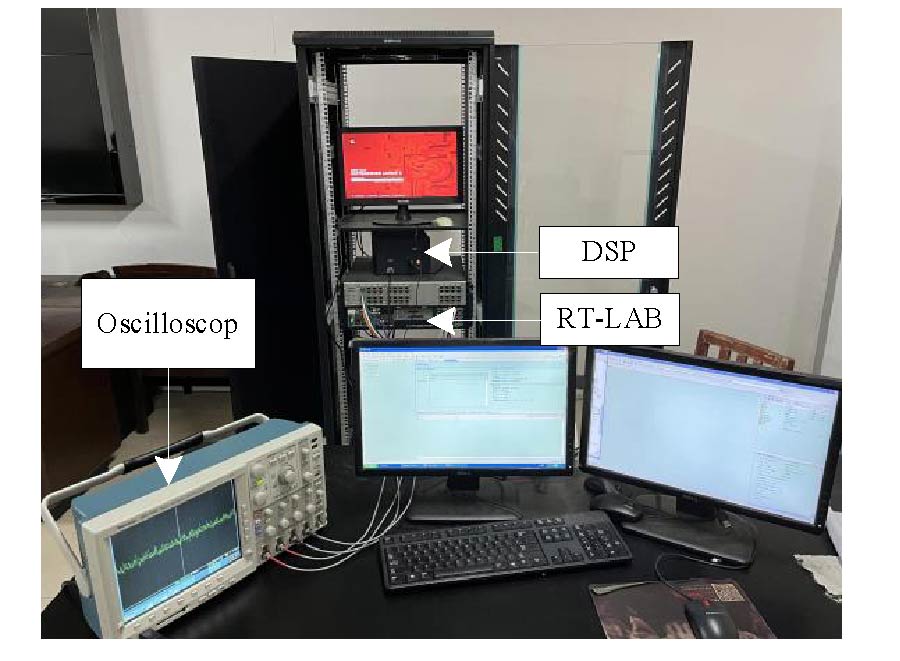
In model predictive current control (MPCC), in order to reduce the switching frequency, the number of switching changes is introduced into the cost function. But it will lead to the complexity of weight coefficient adjustment. To solve the problem, a dual cost function model predictive control (DCF-MPC) strategy for permanent magnet synchronous motor (PMSM) is proposed. First, the dual cost function is established, and the cost function g1 first screens out the combination of two or three voltage vectors which minimizes the current steady-state error. Then, the cost function g2 selects the voltage vector combination that minimizes the number of switching changes from the selected voltage vector combinations in g1 as the optimal voltage vector combination. Finally, the experiment shows that compared with the traditional single cost function, the proposed method eliminates the weight coefficient of MPCC, simplifies the system structure and reduces the amount of calculation. Moreover, it suppresses the stator current ripple, reduces the harmonic content of three-phase current, and has better steady-state and dynamic performance under different working conditions.
Dual Cost Function Model Predictive Control for PMSM