Search Results(13787)

2022-11-09
PIER B
Vol. 97, 73-89
Evaluation of Lightning Electromagnetic Induction on Buried Signaling Cable of High-Speed Railway Considering the Frequency Dependence of Soil Electrical Parameters
Yaqiong Qiao , Zhiguo Liang , Longsheng Wang , Shuai Bai , Jianlei Gang , Hongyang Zhang and Wu Duan
Evaluation of the lightning coupling on the buried signaling cable nearby when the through-ground wire is used as the discharge channel of lightning current requires accurate models for the calculation of the underground lightning electromagnetic field and the induced current of this field on the signaling cable conductor. To accomplish this, a full-wave approach based on the finite-element method (FEM) is used, which incorporates the frequency dependence of soil conductivity and relative permittivity into in the model. The numerical results show that for soils characterized by relatively low resistivity values (less than 4000 Ω.m), the frequency dependence of the electrical properties of the soil has a negligible influence on the horizontal component of the electric field and the vertical component of the magnetic field. However, the distribution of the lightning electromagnetic field is markedly affected by the distance between the air-soil interface and the buried signaling cable. We also find that the coupling strength of the lightning electromagnetic field to the buried signaling cable is strongly dependent on the wave shape of the lightning current, soil resistivity, the distance between the cable and the air-soil interface, and the distance between the cable and the lightning strike point. Finally, the common grounding methods of the cable shielding layer in cable protection are compared. Results show that single-layer double-terminal grounding is the most effective anti-interference measure for the electromagnetic field coupling between the through-ground wire and the buried signal cable near the lightning point of the high-speed railway. The desired shielding effect properties with the frequency from dc to 1 MHz can be achieved using this method.
Evaluation of Lightning Electromagnetic Induction on Buried Signaling Cable of High-speed Railway Considering the Frequency Dependence of Soil Electrical Parameters
2022-11-09
PIER C
Vol. 126, 157-172
A 3D Multi-Rays Path Loss Model Above 6 GHz Under Indoor Environments with Regular Structures
Yu Yu , Ting-Ting Liu , Yong-Qiang Bao , Hengfei Xu , Shu Jiang and Wen-Hao Zeng
An analytical multi-rays path loss model with low complexity and high accuracy is proposed to realize the ubiquitous communication links with solid stability and full coverage. The closed-form formulas are derived to describe the path loss above 6 GHz under regularly-structured indoor environments, ensuring a clear propagation mechanism and low computational complexity. In this model, the construction and destruction of the dominant rays, i.e., the direct, reflected, diffracted, diffracted reflected, and reflected-reflected rays, on the path loss, are considered according to variation of the transmitting antenna position and propagation condition. The proposed model contains information on the sizes, structures, and materials of the environments and eliminates the influences of small scale fading by averaging the path loss over a circle with radius of ten wavelengths. Based on the measurements under the ``L-shaped'' corridor and office environments at 8 GHz band, the accuracy and extensibility of the proposed path model are verified. This work can help analyze the propagation mechanisms and construct the solver for calculating the attenuation of electromagnetic waves under indoor environments. It can also provide vital information for the link budget and node deployment for future wireless communication systems above 6 GHz.
A 3D Multi-rays Path Loss Model above 6 GHz under Indoor Environments with Regular Structures
2022-11-09
PIER Letters
Vol. 107, 119-124
A Low-Profile Dual-Band Hybrid Coupler with Flexible Frequency Band Ratio
Hassan Naseri , Peyman PourMohammadi , Zahra Mousavirazi , Amjad Iqbal , Guy A. E. Vandenbosch and Tayeb Denidni
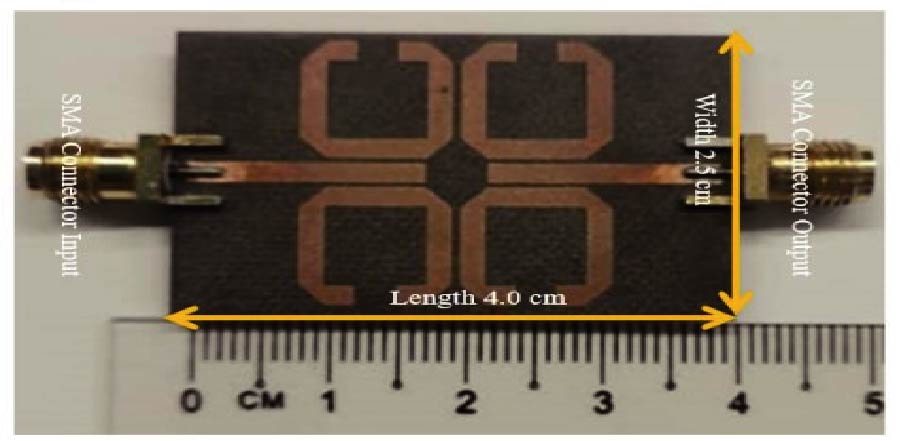
In this paper, a new method is introduced to design a simple-profile hybrid coupler in two arbitrary frequency bands. The structure is achieved by means of dual-band quarter-wavelength transformers as the arms of a traditional branch line coupler. A prototype of the coupler operating at 0.9 GHz and 2.45 GHz is designed and fabricated to validate the robustness of the method. Comparing simulated with measured results, a good agreement is observed. Moreover, the performance of the coupler in terms of impedance bandwidth and isolation level between the input ports is compared with existing works. Further, the suggested coupler has the simplest profile resulting from the most flexible design process.
A Low-profile Dual-band Hybrid Coupler with Flexible Frequency Band Ratio
2022-11-08
PIER C
Vol. 126, 143-155
Ultra-Wideband Quad Element MIMO Antenna on a Flexible Substrate for 5G and Wearable Applications
Abhilash Achariparambil , Karamkulambel Kunjappan Indhu , Ramakrishnan Anil Kumar , Kinatingal Neema and Chandroth K. Aanandan
This study describes the development of a low-profile, omnidirectional, CPW fed Ultra-Wide Band (UWB) MIMO antenna. The antenna is designed on a flexible FR4 substrate with thickness 0.07 mm, making it suitable for wearable applications. The fractional bandwidth obtained is more than 100% (3.1-9.3 GHz) which spans the wireless communication bands such as ISM (5.15-5.35 GHz), ISM (5.725-5.825 GHz), Wi-Fi (5 GHz), Wi-Max (3.4-3.6 GHz), Sub 6 GHz 5G (3.3-4.2 GHz), and WLAN (5.15-5.825 GHz). The antenna also provides safe SAR value, low envelope correlation coefficient, good antenna gain, acceptable radiation efficiency, optimum Total Active Reflection Coefficient (TARC) value, low Channel Capacity Loss (CCL), good gain, and acceptable radiation efficiency across the frequency ranges. Simulated and measured performances of the antenna in the entire band are presented.
Ultra-wideband Quad Element MIMO Antenna on a Flexible Substrate for 5G and Wearable Applications
2022-11-08
PIER Letters
Vol. 107, 111-118
On the Electrostatic Interaction Between Point Charges Due to Dielectrical Shielding
Long T. Nguyen , Tuan K. Do , Duy V. Nguyen and Trung V. Phan
How will the electrostatic interaction between two point charges change if they are shielded from the other by a dielectrical slab? While the physical setting of this electromagnetic problem is relatively simple, it is easy to be wronged, and the correct solution is surprisingly complicated. Here we will show a general answer using the method of images, in which the electrical field is not found by solving the Poisson's equation but by superposing an infinite number of image charges to recurrently satisfy all interfaces' boundary conditions. We also obtain analytical and algebraic results in some special cases.
On the Electrostatic Interaction between Point Charges due to Dielectrical Shielding
2022-11-03
PIER B
Vol. 97, 55-71
Uncertainty Assessment of Stochastic EM Problems via an Adaptive Anisotropic Polynomial-Chaos Technique
Christos I. Salis , Nikolaos V. Kantartzis and Theodoros T. Zygiridis
A novel polynomial-chaos (PC) techninullque is implemented based on anisotropic index sets. The proposed scheme takes advantage of the effect of each random variable on the output parameter of interest and adaptively constructs the PC expansion. Particularly, the algorithm starts by generating bases via low and high reliability heuristics and builds a PC representation, until an error criterion is satisfied or until the maximum desired polynomial order is reached. Our method is tested on a variety of uncertainty problems, where the statistical moments of the outputs of interest are estimated. Numerical results prove the efficiency of the proposed approach, since accurate outcomes are obtained in lower computational times than other techniques.
Uncertainty Assessment of Stochastic EM Problems via an Adaptive Anisotropic Polynomial-chaos Technique
2022-11-03
PIER C
Vol. 126, 125-142
A High-Gain Dual-Band Superstates Enabled Antenna for 5G-mm Wave Applications
Aafreen Khan , Anwar Ahmad and Maksud Alam
In this Article, the antenna is designed by using different shapes of patch structures on 8.468×9.741 mm2 ground plane. Different shapes like A, H, F, T, and U are simulated by using HFSS Software. For gain enhancement, various techniques on the different shape patches have been applied. The maximum gain achieved in the case of A shape patch with MTM structure and circular reflector with superstates is 14.2 dBi, and the band covered is (36.248-38.764) GHz and (33.384-34.503) GHz. Other shapes like H, F, T, and U are designed by modification in A shape patch, and by applying various techniques like MTM and reflector surface with superstates interesting results have been achieved. The designed antenna is an mm-wave antenna and a novel structure for 5G communications.
A High-Gain Dual-Band Superstates Enabled Antenna for 5G-mm Wave Applications
2022-11-03
PIER C
Vol. 126, 105-123
An Improved Low Switching Frequency Three-Vector Model Predictive Torque Control Strategy for Permanent Magnet Synchronous Motors
Qianghui Xiao , Zhe Li , Yang Zhang , Bing Luo and Tingting Wang
In order to further reduce the computational complexity as well as the average switching frequency of the inverter for model predictive torque control (MPTC), an improved MPTC control strategy for a three-vector low switching frequency based permanent magnet synchronous motor is proposed. Firstly, an analysis is conducted on the combined effect of the torque and magnetic chain based on the three voltage vectors, based on which the vector combinations are matched to form an offline optimized switching table, and then the three voltage vector combinations are selected from the offline optimized switching table according to the torque control requirements in order to reduce the amount of system calculations. Then, on this basis, a hysteresis loop technique for direct torque control is introduced to reduce the average switching frequency of the inverter. An improved MPTC control strategy with fuzzy variable hysteresis loop width is further proposed to fuzzy control the dynamic output hysteresis loop width scaling factor according to the motor operating state. Experimental results show that the improved MPTC control strategy with fuzzy variable hysteresis loop width results in optimal combined average switching frequency and current harmonics with reduced computational effort.
An Improved Low Switching Frequency Three-Vector Model Predictive Torque Control Strategy for Permanent Magnet Synchronous Motors
2022-11-03
PIER C
Vol. 126, 91-103
Low Profile Textile Flower Shaped Antenna for Ultra Wideband Applications
Samanthapudi Bhavani and Thangavelu Shanmuganantham
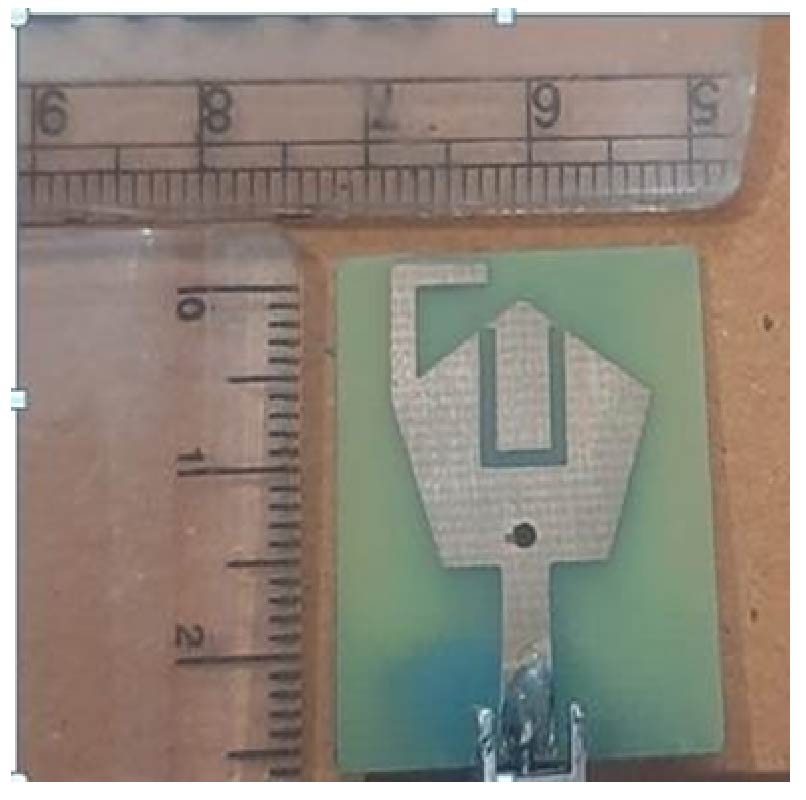
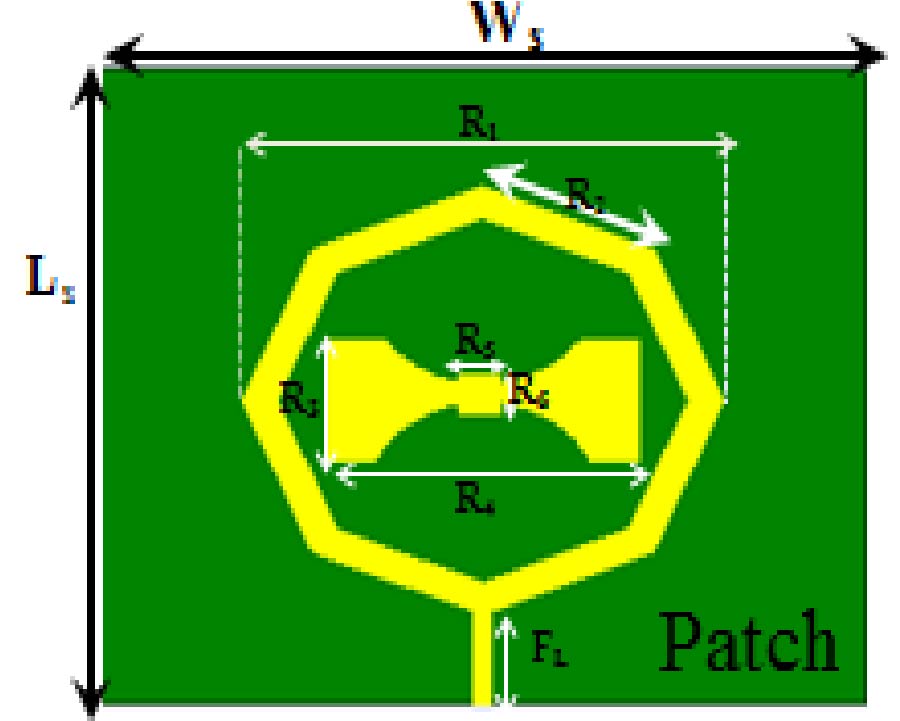
In this paper, a miniaturized Ultra-Wideband (UWB) flower-shaped radiator antenna is designed and simulated for 2.9 GHz to 14.8 GHz applications in Wireless Body Area Networks (WBAN). To achieve wideband, two alterations have been incorporated into the proposed design i.e. by adopting a flower-shaped patch to enhance bandwidth and by using the defective ground plane, which reduces capacitive effects, increasing impedance matching within the operating band. This innovative antenna has a footprint of 15 mm x 20 mm x 1.6 mm and uses textile material denim as its substrate, making it compatible with portable UWB devices. Aside from these characteristics, the device also has omnidirectional radiation patterns, a peak gain up to 5 dB, and a fidelity factor over 85%. It is found that the simulation and measurement results are in good agreement. In comparison with existing structures, the antennas obtained show wide operating ranges and compact dimensions.
Low Profile Textile Flower Shaped Antenna for Ultra Wideband Applications
2022-11-02
PIER C
Vol. 126, 77-90
Low Profile, Wideband, High Gain CDRA with Microstrip Feed for ISM and C Band Applications
Manshree Mishra , Anil Rajput , Pramod Kumar Gupta and Biswajeet Mukherjee
Modern wireless communication systems require low profile, high gain and wideband antennas. To meet these requirements a low profile Cylindrical Dielectric Resonator Antenna (CDRA) is proposed with wide bandwidth and high gain for ISM and C-Band applications. The CDRA is excited with a 50 ohm microstrip feed line with HEM12δ, HEM21δ and HEM13δ modes being observed at 5.6 GHz, 7.4 GHz and 8.6 GHz resonant frequencies respectively. The perturbation on the basic CDRA leads to the excitation of higher order modes and also decrease the effective permittivity of the CDRA by a factor of 13.4%, thereby reducing the antenna's Q factor, which helps to broaden the antenna's operating frequency range. The proposed structure offers wide impedance bandwidth of 69.4% from 4.8 GHz to 9.9 GHz. A peak gain of 8.9 dBi at 9.4 GHz and 95% radiation efficiency at 5.6 GHz are observed. Additionally, the proposed CDRA has a small footprint of 1.12λ0 x 1.12λ0 with a low profile of 0.16λ0 where λ0 is the wavelength of the lower cut-off frequency. The proposed antenna is fabricated and measured, and a close agreement is found between the simulated and measured results.
Low Profile, Wideband, High Gain CDRA with Microstrip Feed for ISM and C Band Applications
2022-11-02
PIER Letters
Vol. 107, 103-110
Passive 2-d Retro Directive Array Antenna with Adjustable Reflection Angle
Mohammadreza Fallah , Nima Mokary Bahar and Seyed Hassan Sedighy
In this paper, a planar passive array antenna is proposed with capability of reradiating the incoming incident wave to predetermined θ and φ reflection angles (2-D). This purpose is achieved by differentiating array elements' phases with the help of inter-connecting transmission lines. Incident and reradiated signal paths are isolated through two orthogonal polarizations used in the array structure. The idea is realized with a 2×2, microstrip, dual linearly polarized antenna arrays in 2 GHz operating frequency on the Ro5880 substrate with 1.2 mm height. Nonlinear nature of the theory behind this idea leads to some limitations in choosing the angles of incident and reflected signals which is thoroughly investigated.
Passive 2-D Retro Directive Array Antenna with Adjustable Reflection Angle
2022-11-01
PIER C
Vol. 126, 63-75
A 2 Bit Reconfigurable Beam-Steering Antenna Array Using Phase Compensation
Xiuwen Tian and Lizhong Song
A 2 bit reconfigurable beam-steering antenna array using phase compensation is proposed, which consists of a 1 bit reconfigurable antenna and 90˚ digital phase shifter. The p-i-n diodes are soldered in the 2 bit element to realize 2 bit phase shift. Due to the 2 bit phase quantization error, a fixed compensation phase is added to each array element to reduce sidelobe level. A 2 bit reconfigurable antenna array with 1×8 elements shows that the sidelobe levels of the scanning-beams are less than -6.2 dB. At the same time, simulated results also show that the antenna can steer beam direction from -48˚ to 50˚, and the beam gain fluctuation is less than 2.2 dB. A prototype is fabricated and tested. The proposed antenna can provide a novel idea to design a 2 bit reconfigurable beam-steering antenna array with a better beam-scanning performance in various applications.
A 2 Bit Reconfigurable Beam-steering Antenna Array Using Phase Compensation
2022-10-31
PIER
Vol. 176, 11-23
Optically Transparent and Mechanically Flexible Coplanar Waveguide-Fed Wideband Antenna Based on Sub-Micron Thick Micro-Metallic Meshes
Jing Pan , Yuanqing Yao , Liu Yang , Hui Li and Sailing He
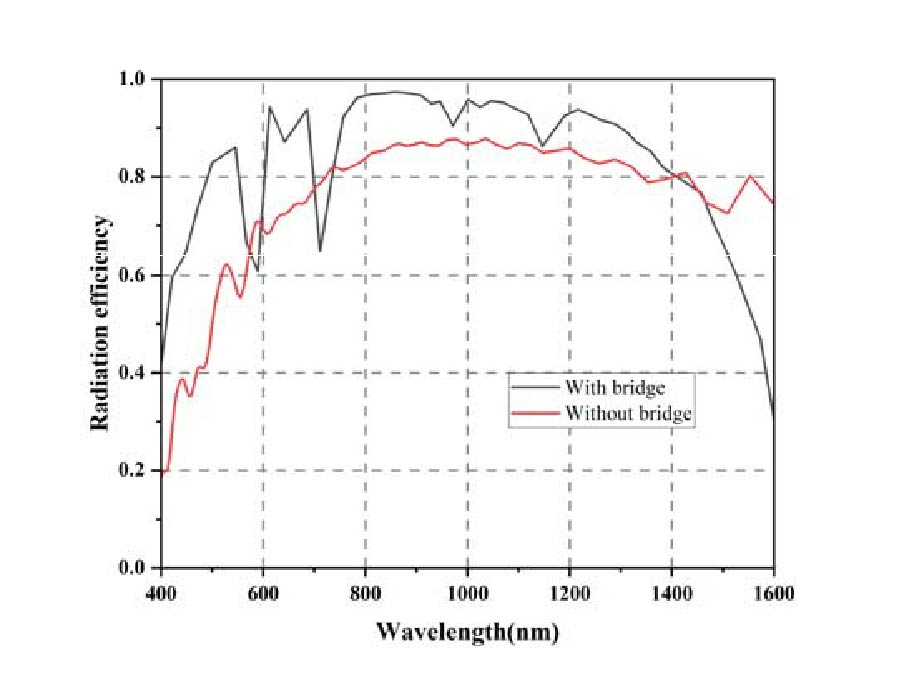
An optically transparent and flexible coplanar waveguide (CPW)-fed wideband antenna is proposed and demonstrated experimentally based on sub-micron thick micro-metallic meshes (μ-MMs). Due to the high visible transmittance (83.1%) and low sheet resistance (1.75 Ω/sq) of the silver μ-MM with thickness of only 190 nm, the transparent CPW has very low insertion loss and provides a good feed to the high-performance transparent antenna. The measured S11 spectrum of our antenna matches well with that of the opaque counterpart. The measured fractional bandwidth is 22% from 3.4 to 4.25 GHz. Based on numerical modeling, whose accuracy is experimentally verified, the radiation efficiency and the peak gain of our transparent antenna at 3.45 GHz are calculated to be 89.7% and 3.03 dBi, respectively. Besides the good optical and electromagnetic properties, our transparent antenna is also highly flexible. Despite the sub-micron thick μ-MMs, the transparency, radiation efficiency and mechanical properties of our transparent antenna are obviously superior to those of the transparent antennas reported previously, and the overall size and radiation gain are also comparable. Therefore, our transparent antenna has an excellent comprehensive performance, showing great potential for practical applications as well as the emerging applications in the field of flexible and wearable electronics.
Optically Transparent and Mechanically Flexible Coplanar Waveguide-fed Wideband Antenna Based on Sub-micron Thick Micro-metallic Meshes
2022-10-31
PIER C
Vol. 126, 49-62
Cantenna Adjustment with 1x6 Woodpile Shaped EBG for Application in Goat Manure Moisture Content and Bulk Density Monitoring
Watcharaphon Naktong , Sawitree Prapakarn , Natthapong Prapakarn and Natchayathorn Wattikornsirikul
This study aimed to investigate the structural design of a cantenna with Woodpile shaped electromagnetic band gap (EBG) for gain enhancement and to increase the efficiency of signal transmission for measuring the moisture content and the bulk density of goat manure, which can help farmers reduce the cost of buying chemical fertilizers. From the test of operating frequency ranges from 2 to 3 GHz, it was found that the frequency band that responds to humidity the best is 2.60 GHz, increasing the efficiency of the gain with the 6x6 cm2 Woodpile shaped EBG. It was arranged in transverse electric (TE) and placed parallel to the end of the cantenna. This allows the gain to be increased to 9.31 dBi, in which the cantenna structure without EBG has the gain of 7.32 dBi. When the cantenna is used to determine the moisture content (MC) and bulk density, the transmission distance between the cantenna Tx/Rx is 3 cm with an average power rating of 0.0001-0.5 mW. This cantenna can measure humidity in the unit of wet basis (wb.) as low as 0.14% wb., at an average power of 0.5 mW.
Cantenna Adjustment with 1x6 Woodpile Shaped EBG for Application in Goat Manure Moisture Content and Bulk Density Monitoring
2022-10-31
PIER C
Vol. 126, 39-47
Compact Wideband Single-Side Printed Antenna for Microwave and Millimeter-Wave Wireless Communications
Hagar A. Farag , Asmaa Elsayed Farahat , Ahmed I. Bahnas and Khalid Fawzy Ahmed Hussein
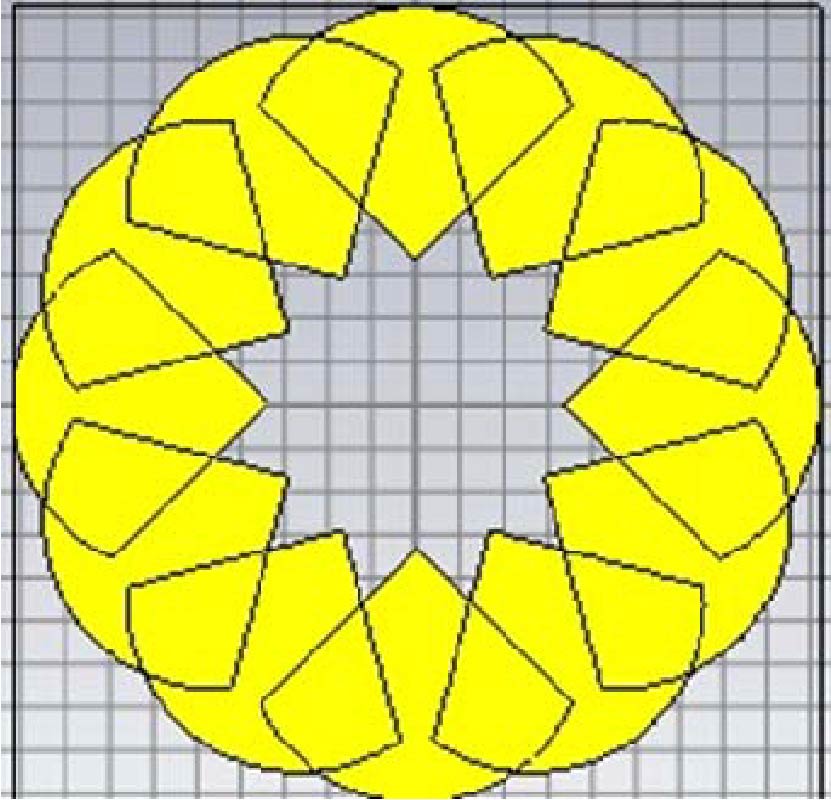
A novel miniature antenna is proposed for wireless communications in the K-band and Ka-band of the electromagnetic spectrum. The frequency band of this antenna extends from 18 to 40 GHz. The proposed antenna is a planar monopole printed on a thin dielectric substrate of 0.25 mm thickness. To enhance the frequency bandwidth of this antenna it is constructed as five circular sectors placed with sequential rotations and merged to form a multi-leaf shaped monopole patch antenna. To enhance the antenna performance, the monopole patch is fed through a coplanar waveguide (CPW) structure. This enables the overall antenna structure and the feeding CPW to be printed on only one side of the dielectric substrate leaving the other side blank, which reduces the dielectric loss and enhances the radiation efficiency. The assessment of the antenna performance is achieved through simulation as well as experimental work. A prototype of the antenna is fabricated for this purpose. The experimental results show excellent agreement with the simulation ones. The antenna is printed on a Rogers' RO3003 substrate of 0.25 mm thickness. It is shown, through both results, that the antenna has 2.2:1 ratio bandwidth, 76% percentage bandwidth, and 278 bandwidth-dimension ratio. The radiation efficiency is maintained above 99% over the entire bandwidth (18-40 GHz).
Compact Wideband Single-side Printed Antenna for Microwave and Millimeter-wave Wireless Communications
2022-10-29
PIER
Vol. 176, 1-10
Exceptional Ring by Non-Hermitian Sonic Crystals
Bing-Bing Wang , Yong Ge , Shou-Qi Yuan , Ding Jia and Hong-Xiang Sun
Exceptional point (EP) and exceptional ring (ER) are unique features for non-Hermitian systems, which have recently attracted great attentions in acoustics due to their rich physical significances and various potential applications. Despite the rapid development about the study of the EP and ER in one-dimensional acoustic systems, the realization of them in two-dimensional (2D) non-Hermitian structures is still facing a great challenge. To overcome this, we numerically and theoretically realize an ER in 2D reciprocal space based on a square-lattice non-Hermitian sonic crystal (SC). By introducing radiation loss caused by circular holes of each resonator in a Hermitian SC, we realize the conversion between a Dirac cone and the ER. Based on the theoretical analysis with the effective Hamiltonian, we obtain that the formation of the ER is closely related to different radiation losses of dipole and quadrupole modes in the resonators. Additionally, in the non-Hermitian SC, two eigenfunctions can be merged into a single self-orthogonal one on the ER, which does not exist in the Hermitian SC. Finally, by verifying the existence of the EP in every direction of 2D reciprocal space, we further demonstrate the ER in the proposed non-Hermitian SC. Our work may provide theoretical schemes and concrete methods for designing various types of non-Hermitian acoustic devices.
Exceptional Ring by Non-Hermitian Sonic Crystals
2022-10-28
PIER Letters
Vol. 107, 93-101
Broadband Proximity Coupled Millimeter-Wave Microstrip Array Antenna for Automotive Radar Applications
Shuo Wang , Dan Zhang , Zhendong Ding , Huiwen Chen and Shenxiang Yang
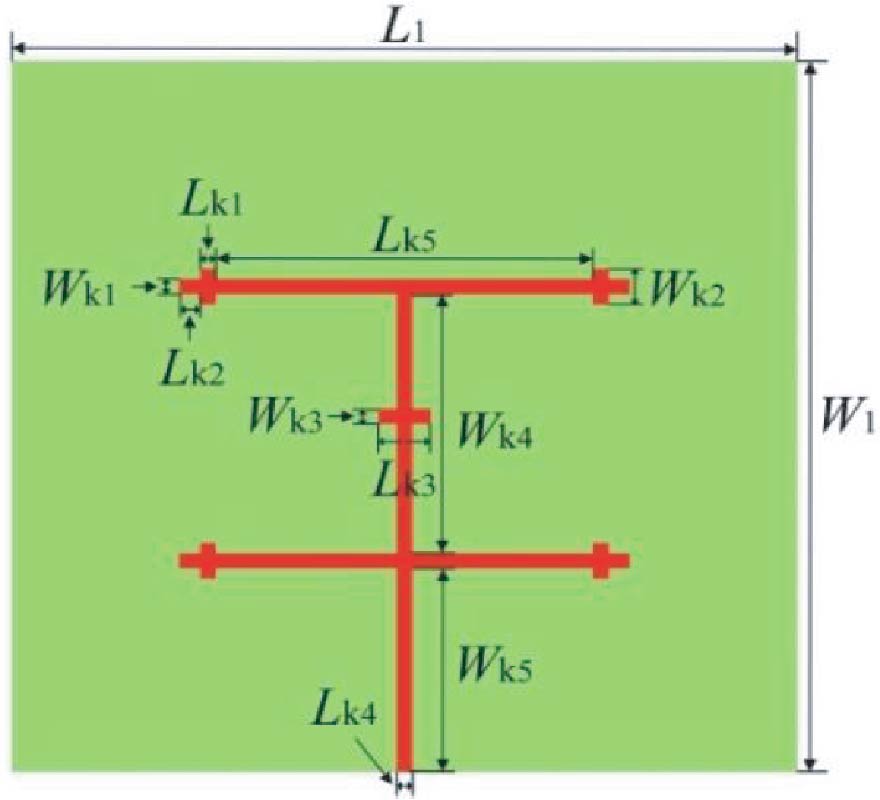
In this letter, a broadband proximity coupled millimeter-wave microstrip array antenna is presented for automotive radar applications. The antenna array consists of a microstrip line and a series of trapezoidal radiating elements that are periodically arranged on both sides of the microstrip line, at intervals of about half the guided-wavelength. The introduction of the trapezoidal radiating patch enhances the excitation coupling while suppressing out-of-band frequencies, and it has a wider impedance bandwidth than the rectangular patch. In the design of proposed antenna, the normalized resistance of the trapezoidal radiating element is controlled by adjusting the gap with the microstrip line, so that a low-sidelobe level (SLL) can be achieved. Taking the 77-81 GHz frequency band allocated to automotive radar applications as an example, a 1×16 linear array is designed and fabricated. The measured SLL is better than -20 dB. The measured gain of 1×16 array is higher than 15 dBi over the operating frequency range of 77-81 GHz. The 1×16 linear array can achieve an impedance bandwidth of 7.6% (75.6-81.6 GHz).
Broadband Proximity Coupled Millimeter-wave Microstrip Array Antenna for Automotive Radar Applications
2022-10-27
PIER Letters
Vol. 107, 83-91
Ultra-Wide Band Antenna on Flexible Substrate for Future Wireless Communications
Rania R. Elsharkawy , Khalid Fawzy Ahmed Hussein and Asmaa Elsayed Farahat
In this paper, a novel ultra-wide band (UWB) antenna with a planar single-layer structure is proposed. The antenna consists of a main circular patch that is capacitively coupled to six circular patches of very small size relative to the main patch. The coupling is achieved through narrow gaps of semicircular shape which are uniformly distributed on the circumference of the main patch. A coplanar waveguide (CPW) is used for feeding the antenna to get the complete antenna structure with the feeding line printed on one face of a flexible dielectric substrate. The antenna is fabricated and subjected to experimental assessment of its performance regarding the bandwidth, gain, and radiation efficiency. The measurements show good agreement with the simulation results. It is shown that the proposed antenna operates efficiently over the frequency band of 3.1-10.6 GHz. The antenna has a radiation efficiency that ranges from 99% to 100% over the entire band. This high efficiency is attributed to the planar single-layer structure of the antenna and the use of a thin low-loss substrate. The antenna maximum gain ranges from 2 dBi to 5 dBi over the entire frequency band. The substrate material is Rogers RO3003TM which is flexible and can be conformal to planar and curved surfaces. The total substrate dimensions are 35 × 39.4 × 0.5 mm.
Ultra-wide Band Antenna on Flexible Substrate for Future Wireless Communications
2022-10-26
PIER B
Vol. 97, 37-54
Electromagnetic Simulation for Robust Recognition Algorithm of Radar Target by Homing Missiles
Alaa G. A. Abd-Elfattah , Khalid Fawzy Ahmed Hussein , Asmaa Elsayed Farahat and Magdy A. Kotb
A novel signal processing scheme for identification of jet fighter targets by the onboard radar of active and hybrid homing missiles is proposed in the present work. For a specific target, the frequencies of the internal resonances of the cavity-backed apertures existing as the air-inlet pipes of the jet engine are used to construct an interior signature function for the proposed target identification scheme. For the purpose of quantitative description and assessment of the proposed scheme, electromagnetic simulation is used where the air-inlet pipe is modeled as an open-ended conducting cylinder with a number of radial conducting blades placed inside the cylindrical cavity near the open end. The transmitted radar pulse is formed by frequency chirping using linear frequency modulation (LFM) to include the frequencies in the band 1.0--2.0\,GHz with high sweep resolution. The selected frequency band is wide enough to distinguish among various jet fighter targets. The CST® simulator is used to evaluate the radar cross section (RCS) of the open-ended pipe model with the internal blades due to an incident chirped pulsed plane wave as mentioned above over the frequency band 1.0-2.0 GHz. The proposed target identification algorithm is mathematically described and computationally applied to identify different targets with different dimensions of the jet engine pipe. The effect of the additive white Gaussian noise (AWGN) on the correctness of the target identification decision using the proposed scheme is investigated by calculating the false alarm rate (FAR) with varying the signal-to-noise ratio (SNR). The numerical examinations show that the proposed algorithm succeeds in taking the correct decision regarding the target identification with FAR<10% for SNR} ≥ 12 dB.
Electromagnetic Simulation for Robust Recognition Algorithm of Radar Target by Homing Missiles
2022-10-26
PIER C
Vol. 126, 23-37
Band-Stop Filtering for Electromagnetic Interference Rejection in Printed UWB Components Using Single Compact Archimedean Spiral EBG Cell
Sumon Modak , Partha Pratim Shome , Md. Ahsan Halimi , Taimoor Khan , Ahmed A. Kishk and Tayeb A. Denidni
The design and analysis of a compact printed Archimedean spiral electromagnetic bandgap (EBG) structure are presented for frequency shielding in microwave circuits, including antenna and bandpass filters. The EBG characterization resonating at 7.7 GHz is done through a performance matrix such as transmission and reflection coefficients and equivalent circuit modeling, which demonstrates excellent resonance stability. The EBG unit cell is investigated for achieving frequency rejection in the printed monopole-based ultra-wideband (UWB) antenna and bandpass filter circuits. By introducing the Archimedean EBG unit cell on the UWB antenna ground plane, dual-frequency rejection, at 7.4, and 7.7 GHz, was realized. Further, such structure is utilized in a multi-mode resonator (MMR) based UWB bandpass filter to attain band-notched functionality at 7.6 and 7.8 GHz with a maximum attenuation of -16.5, and -15.6 dB, respectively. The prototypes of the EBG-loaded UWB antenna and EBG-Loaded UWB filter are fabricated and characterized. Excellent agreement is achieved between simulated and measured results of both prototypes.
Band-stop Filtering for Electromagnetic Interference Rejection in Printed UWB Components Using Single Compact Archimedean Spiral EBG Cell