Search Results(13787)

2022-10-26
PIER M
Vol. 114, 69-78
Design of an Ultra-Broadband Polarization Rotating Reflective Surface for the Reduction of Radar Cross Section
Xin Mu , Miao Lv and Tao Ni
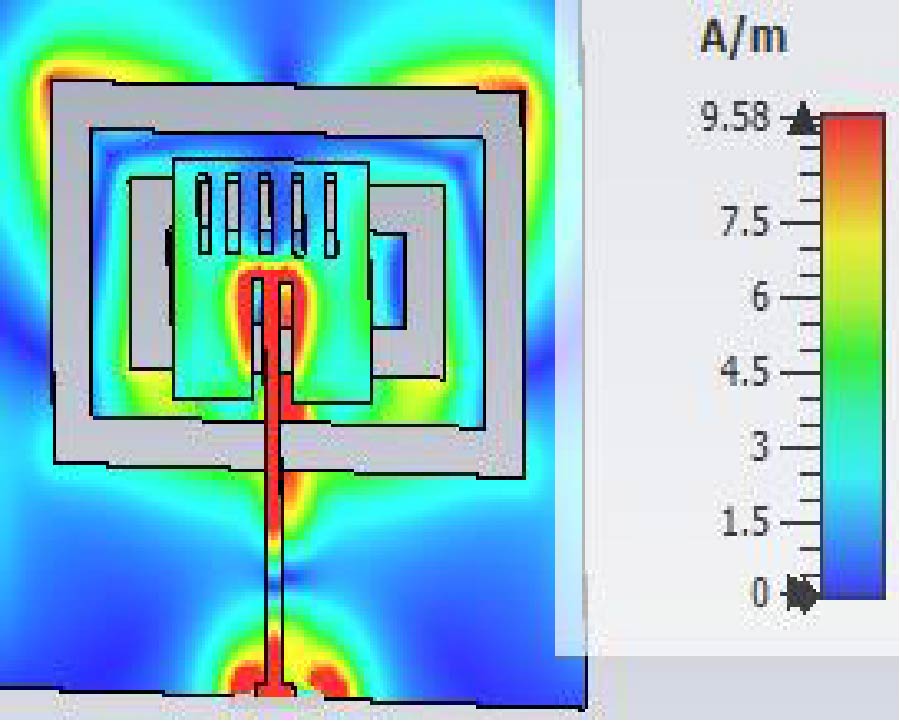
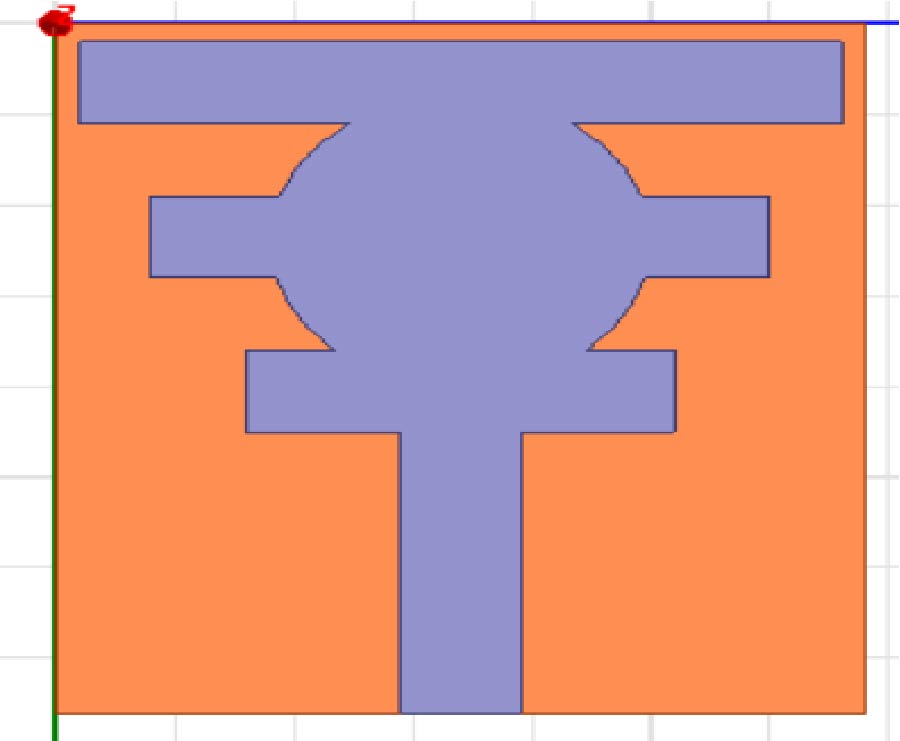
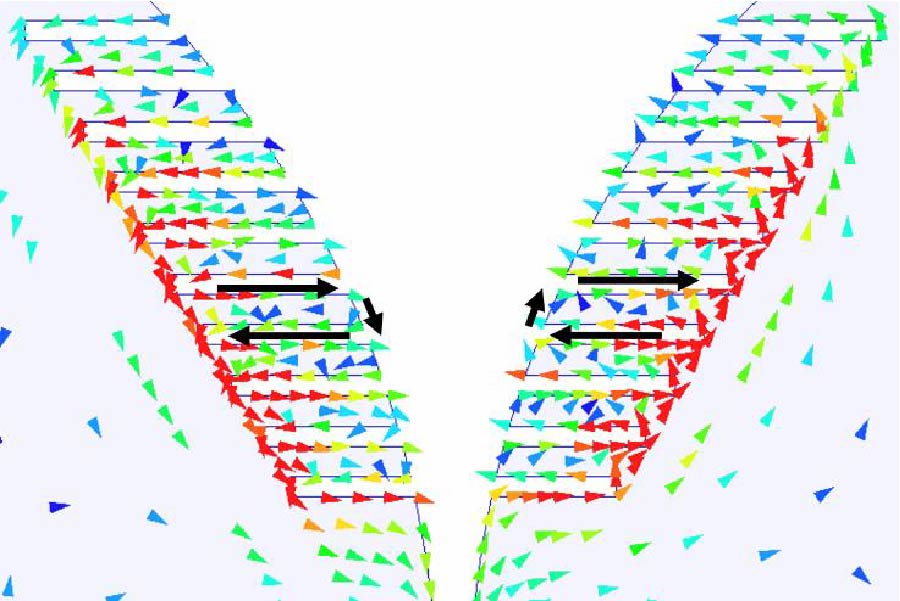
A novel ultra-broadband Polarization Rotation (PR) Reflective Surface (PRRS) is presented, which can reflect the linearly polarized incident wave in orthogonal polarization state. The proposed PRRS consists of a periodic array of double split ring patches printed on a substrate, which is backed by a metallic ground. A PRRS composed of circular split ring units can realize polarization rotation in two wide frequency bands. When two circular split rings with gradual radii are arranged concentrically, an ultra-broadband polarized rotation will be obtained. This paper explains the mechanism of polarization rotation and the mechanism of Radar Cross Section (RCS) reduction and studies the influence of structural parameters on the polarization rotation frequency band. Simulation results show that a 101.6% PR bandwidth is achieved. Meanwhile, by arranging the unit cells of the PRRS in four orthogonal directions, the monostatic RCS reduction band ranges from 8 GHz to 21.8 GHz (or 92.6%) for arbitrary polarization of the incident wave.
Design of an Ultra-broadband Polarization Rotating Reflective Surface for the Reduction of Radar Cross Section
2022-10-26
PIER Letters
Vol. 107, 75-81
A Hot-via Chip-to-Substrate Interconnect for Ultra-Compact System Package Application Up to W Band
Jiapeng Yang , Bingqing Zou , Jinping Xu and Jun Zhou
A hot-via chip-to-substrate interconnect with its operation frequency up to W-band for ultracompact radio frequency (RF) system in package (SIP) is reported in this paper. In order to improve the accuracy of the simulation model in millimeter wave bands, a trapezoidal platform model is established for modeling the RF performance of the hot-via which is formed by inductively coupled plasma (ICP) etching process. A three hot-vias structure in a gallium arsenide (GaAs) chip is employed to form a Ground-Signal-Ground (GSG) transition structure. Bumps on the Silicon substrate are designed as a half quasi-coaxial structure to make it compatible with the assembly process of SIP. A full-wave simulation model is established for a hot-via chip-to-substrate interconnect structure with HFSS, based on which structural parameters, such as the gap between the hot-vias and the radius of the quasi-coaxial structure, are optimized for the best performance over 92-96 GHz. A prototype of the hot-via chip-to-substrate interconnects in their back-to-back connected form has been fabricated. Measured results demonstrate that the overall insertion loss is less than 1.85 dB, and the return loss is better than 12 dB from 92 GHz to 96 GHz.
A Hot-via Chip-to-substrate Interconnect for Ultra-compact System Package Application up to W Band
2022-10-25
PIER B
Vol. 97, 19-35
A UWB Dual Band-Notched on-Chip Antenna and Its Equivalent Circuit Model
Sanjukta Mandal , Sujit Kumar Mandal , Ashis Kumar Mal and Rajat Mahapatra
This paper presents a CPW-fed, UWB-extended bandwidth, dual band-notched on-chip antenna with its equivalent circuit model. The UWB-extended bandwidth is realized by truncating the bottom corners of a rectangular patch radiator while a 90º-rotated `C'-shaped slot in the patch and a `U'-shaped slot in the feedline are used to achieve two notch bands for mitigating the signal interference in the frequency bands of 5.15 to 5.925 GHz and 7.9 to 8.8 GHz. Based on the fundamental theory, different parasitic as well as distributed circuit parameters associated with the designed on-chip antenna are extracted, and then the corresponding equivalent circuit model is configured from them. The resultant circuit is validated with the well approved full-wave electromagnetic simulation result and is found in close approximation with each other.
A UWB Dual Band-notched On-chip Antenna and Its Equivalent Circuit Model
2022-10-25
PIER C
Vol. 126, 13-22
A Circular Array with Improved Focusing Properties
Mohammed Z. Mohammed Fwzi and Khalil Hassan Sayidmarie
A concentric circular array consisting of two rings is proposed to focus the radiated field at a point in the near-field zone. In the proposed two-ring array, the radius of the outer ring was chosen so that the radiated fields from all elements on the two rings add constructively at the focal point, thus no phase shifter is needed in this design. The N elements of the inner ring are uniformly excited in amplitude and phase, while the M elements on the outer ring are excited uniformly in phase, and given uniform magnitude excitations of N/M of that given to the inner. Therefore, two deep nulls are achieved on both sides of the focusto enhance the focal width. The focusing properties are investigated by exploring the array parameters, such as variation of the focused field along the normal to the array, field distribution on the focalplane, and depth of field (size of the focal spot). Computer simulations using the MATLAB environment are performed by point source radiators. For verification, the array was simulated using the CST microwave studio, and the obtained results showed good agreement. The array is useful for hyperthermia and imaging applications.
A Circular Array with Improved Focusing Properties
2022-10-25
PIER C
Vol. 125, 253-264
A Low-Profile Dual-Band Circularly Polarized Antenna with Wide 3-DB Axial Ratio Beamwidth for BeiDou Applications
Wen Wang , Jingchun Zhai , Gengliang Chen and Zhuopeng Wang
A thin dual band circularly polarized (CP) patch antenna with a wide 3-dB axial ratio beamwidth (ARBW) is presented for BeiDou Navigation System (BDS) application. The CP radiation is achieved using simple stacked square patches for dual band radiation in the BDS B1 band (1561±2 MHz) and B3 band (1268±10 MHz). A `string moon' type branch extension technique is proposed to enhance the ARBW and axial ratio bandwidth in both operating bands. Loading 30° gap-type annular parasitic metal strips (APMS) further improves the ARBW in both operating bands. The experimental results show that the impedance bandwidth of the antenna is 6.3% (1.25-1.33 GHz) and 4.5% (1.52-1.59 GHz), and the axial ratio bandwidth is 1.6% (1.26-1.28 GHz) and 1.2% (1.55-1.57 GHz), respectively. In addition, the 3-dB ARBWs in the φ=0° and φ=90° planes are 185° and 184° at 1.268 GHz, respectively; and 222° and 211° at 1.561 GHz, respectively. The simulated results are in good agreement with the measured ones.
A Low-profile Dual-band Circularly Polarized Antenna with Wide 3-dB Axial Ratio Beamwidth for Beidou Applications
2022-10-25
PIER C
Vol. 125, 241-251
Reconfigurable Hybrid Metal-Graphene UWB Filters for Terahertz Applications
Hamza Ben Krid , Zied Houaneb and Hassen Zairi
This paper presents the design, analysis, and developments of a reconfigurable hybrid metal-graphene filter for terahertz applications. In fact, through the graphene material, we can reconfigure both the resonance frequency and the bandwidth. Further, the variation in chemical potential, relaxation times, and temperature of graphene provides excellent proprieties performances, with a variation of the resonant frequency from 8.60 THz to 8.85 THz, good return loss reaching -22.94 dB and a bandwidth reconfiguration from 1.717 THz to 1.930 THz. The simulation of the proposed filter is performed using CST software.
Reconfigurable Hybrid Metal-graphene UWB Filters for Terahertz Applications
2022-10-25
PIER C
Vol. 125, 229-240
Design and Analysis of a Bandwidth Enhanced Low-Profile SIW Cavity-Backed Slot Antenna Using TE210 Mode
Bollavathi Lokeshwar , Jammalamadugu Ravindranadh and Devabhaktuni Madhavi
In this paper, a bandwidth improvement technique in SIW slotted antennas is presented. Distinct from conventional SIW antennas with multiple cavity modes, a single cavity mode (TE210) is utilized to improve the bandwidth. When a rectangle slot is loaded at bottom surface of the cavity, the TE210 cavity mode is perturbed. As a result, two independent modes (odd TE210, even TE210) are introduced and merged in close proximity. Finally, the antenna is fabricated and tested. The measured results render an impedance bandwidth of 12.8% and a maximum gain of 7.1 dBi. The cross-polar level of maximum -29 dB and -34 dB is at 9.73 GHz and 10.63 GHz, respectively. The proposed design holds many features such as easy fabrication and light weight. Besides, the proposed design is a single-layered that makes it extremely convenient to integrate with other planar configurations.
Design and Analysis of a Bandwidth Enhanced Low-profile SIW Cavity-backed Slot Antenna Using TE<sub>210</sub> Mode
2022-10-25
PIER C
Vol. 125, 217-228
Analysis and Design of Compact Ultra-Wideband in-Phase/Out-of-Phase Power Dividers
Ho-Sy-Nhat Huy , Khac Kiem Nguyen and Son Xuat Ta
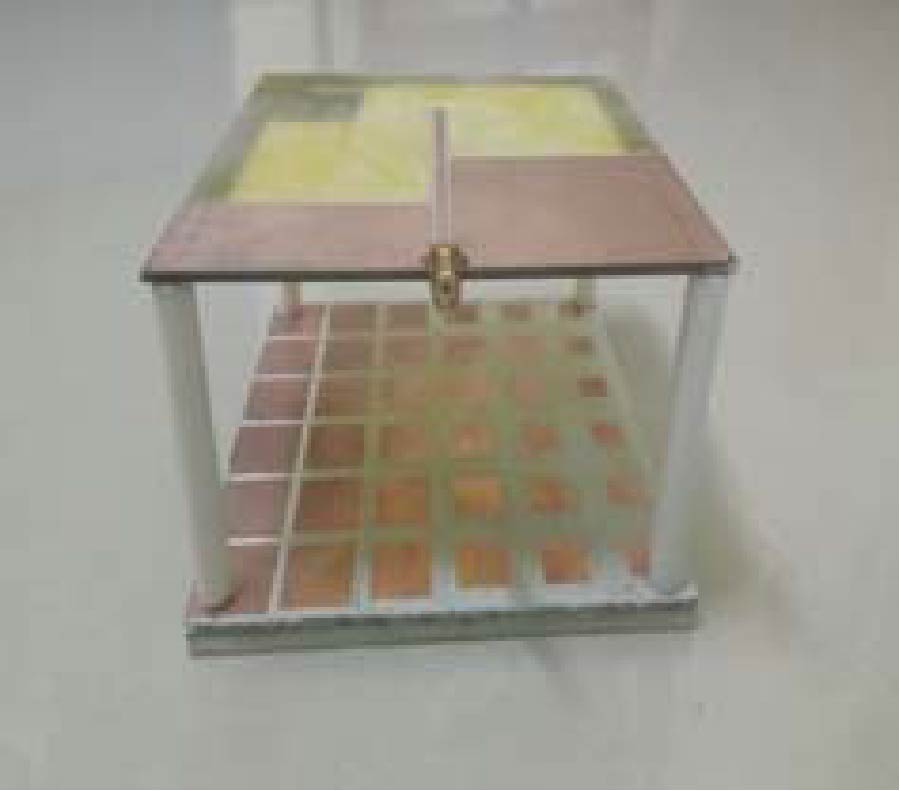
This paper presents the analysis and design of in-phase/out-of-phase power dividers with compact-size and ultra-wideband characteristics. The proposed designs are composed of a T-junction microstrip (MS)-to-slotline power divider with a shorting via and two slotline-to-MS transitions. The phase response at the outputs can be controlled by arranging the MS-line direction of the transition, i.e., the same direction results in the in-phase, whereas the opposite MS-line directions reverse the electrical field, thus resulting in the out-of-phase. Thanks to utilizing the MS-to-slotline power divider and circular slots and circular stubs at the transitions, the proposed structures achieve ultra-wide bandwidth and compact size simultaneously. The dividers are theoretically analyzed using transmission-line equivalent circuit, and then verified computationally and experimentally. Simulation and measurement indicate that the proposed power dividers yield ultra-wideband performance across 1.2-11.0 GHz (~160%) with magnitude difference ±0.5 dB and phase difference ±5° at the outputs. As an example of application, a differential-fed Vivaldi antenna fed by the proposed out-of-phase power divider is implemented. The antenna yields a 160% bandwidth (1.2-11.0 GHz) for 10-dB return loss and a stable end-fire radiation within the whole impedance bandwidth.
Analysis and Design of Compact Ultra-wideband In-phase/Out-of-phase Power Dividers
2022-10-25
PIER Letters
Vol. 107, 67-74
A Low-Profile and Low-Cost Dual Circularly Polarized Patch Antenna
Zahra Mousavirazi , Hassan Naseri , Mohamed Mamdouh M. Ali , Pejman Rezaei and Tayeb Denidni
This paper presents a low profile and low-cost patch antenna with dual circularly polarized (CP) capability in X-band at a canter frequency of 8.3 GHz. The dual-CP antenna is divided into three layers, composed of a parasitic square patch, radiation square patch with four equal arms, and 90˚ patch coupler. Two arms of the radiation patch are connected to the 90˚ hybrid coupler using two metalized vias. right-handed circular polarization (RHCP) and Left-handed circular polarization (LHCP) is achieved by exciting two different ports. To validate the proposed design, the prototype of dual-CP antenna is fabricated and measured. Based on the measurement, the structure of proposed antenna has an excellent circular-polarization purity of less than 3-dB over the whole operational frequency bandwidth of the antenna (8 GHz-8.47 GHz) with a wide 3-dB axial ratio (AR) beamwidth of 133˚ across the angular range from -55° to +78° at 8.3 GHz.
A Low-profile and Low-cost Dual Circularly Polarized Patch Antenna
2022-10-25
PIER Letters
Vol. 107, 59-66
Asymmetric Coplanar Strip-Fed Electrically Small Metamaterial Inspired Antenna for Quadband Operation
Prathibha N. Pillai and Ramasamy Pandeeswari
This article presents a novel electrically small asymmetric coplanar strip (ACS) fed metamaterial inspired antenna for quad band operation. A metamaterial inspired open split ring resonator (OSRR) is the radiator which is fed using ACS to obtain four operating bands. The proposed antenna with a compact size of 18 mm × 15.5 mm × 1.6 mm is fabricated and tested. The experimental results are in good compliance with simulated ones. The proposed electrically small antenna has a radian sphere (ka) of 0.65 and achieves an average gain of 2.24 dBi with requisite radiation properties suitable for WiMAX and WLAN applications.
Asymmetric Coplanar Strip-fed Electrically Small Metamaterial Inspired Antenna for Quadband Operation
2022-10-24
PIER C
Vol. 125, 201-216
A Mode Switchable Ferrite Composite Right/Left Handed Microwave Coupler
Mahmoud Abdalla and Zhirun Hu
In this paper, novel mode switchable microwave coupled line couplers on ferrite substrates are presented. The couplers are realized in Composite Right/Left Handedcoplanar waveguide configurations. Two different types of mode switchable couplers are proposed. The first one can switch the power from the backward coupling port to the through port. The second one can switch the power from the backward coupling port to both the through and forward coupling ports. In both cases, the mode switching is achieved by varying the applied DC magnetic bias. The theoretical analysis of the switching mechanism has been carried out based on the general coupled mode approach. The analysis is then verified numerically and experimentally. The measurement results confirm the switching functionalities of the fabricated couplers with better than 10 dB isolation between the switched signals. Moreover, these novel mode switchable couplers are compact and require very low external DC magnetic bias due to their CPW configurations. These new proposed switrches can be applied in the smart microwave compoennts in different radar/communication application.
A Mode Switchable Ferrite Composite Right/Left Handed Microwave Coupler
2022-10-21
PIER C
Vol. 125, 191-200
A Compact Folded RFID Tag Antenna with Nested Deformable Rings for Two-Side Anti-Metal Application
Chenchen Niu , Jiade Yuan and Zhimeng Xu
A novel compact two-side anti-metal tag antenna for radio frequency identification (RFID) applications is proposed in this paper. The proposed tag antenna is composed by three aluminum patches separated by two layers of foam substrates. Particularly, the middle patch of the antenna is designed as three nested deformable rings for the miniaturization of antenna and realizes better power transmission coefficient (PTC) between the antenna and tag microchip. The antenna operates at the center frequency of 915 MHz and maintains a compact size of 35 mm × 22 mm × 2.15 mm (0.1068λ0 × 0.0671λ0 × 0.0066λ0). When the front or back side of the tag antenna is mounted on a large background metallic plate and tested with an effective-isotropic-radiated-power (EIRP) of 4 W, the antenna can achieve the maximum read distances of 6.23 m or 6.08 m. The tag antenna shows various advantages, including small size, low profile, and good antenna performance. Most importantly, the proposed tag antenna has two-side anti-metal property compared to a traditional single-side anti-metal antenna, which fulfills the emerging demands in the industrial internet of things field.
A Compact Folded RFID Tag Antenna with Nested Deformable Rings for Two-side Anti-metal Application
2022-10-20
PIER Letters
Vol. 107, 49-57
Light-Weight Unmanned Aerial Vehicle Wireless Power Transfer System Based on Hollow Copper Coated Aluminum Tubes
Pengcheng Cao , Yong Lu , Changbo Lu and Shuai Wu
Limited endurance has become a bottleneck restricting the wide application of unmanned aerial vehicles (UAVs), and wireless power transfer (WPT) technology is expected to become an effective means to help UAVs break this bottleneck. UAV has strict restrictions on the weight of onboard system, so the lightweight design of the receiving side has become the core goal of UAV WPT systems design. In order to achieve this goal, this paper first proposes a novel magnetic coupler based on hollow copper-coated aluminum tubes, in which the receivers act as both landing gears and energy pick-up. The coupling mechanism of the magnetic coupler is analyzed. Secondly, based on the LCC-S resonant compensation network with a simple structure on the receiving-side, the system circuit is designed, and the system transmission model is established. Finally, a UAV WPT prototype is built and tested. The experimental results show that the transmission power of the designed system can reach 157 W, the overall efficiency 80%, and each receiver (also acting as landing gear) weight only 22 g. The weight power density ratio is 3.568 W/g.
Light-weight Unmanned Aerial Vehicle Wireless Power Transfer System Based on Hollow Copper Coated Aluminum Tubes
2022-10-19
PIER Letters
Vol. 107, 39-47
Miniaturized Antenna Pair for 2.4/5/6 GHz Wi-Fi 6E Operation
Saou-Wen Su and Peng-Hao Juan
The aim of this work is to provide a miniaturπized antenna pair, which has a smallest size of 5 mm × 25 mm (about 0.04λ × 0.20λ at 2.4 GHz) among the recent laptop antennas and yet is capable of 2.4/5/6 GHz Wi-Fi 6E operation with acceptable isolation. The antenna pair comprises two small and symmetrical antenna units. Each unit is identical in geometry and has a coupling strip and a parasitic strip with an in-series inductor. The back-to-back unit arrangement helps better isolation in the 2.4 GHz band. A decoupling coupled strip is introduced between the units with a 5 mm spacing. This floating strip of a half wavelength at about 5.36 GHz attracts the surface currents of one unit excited in the 5/6 GHz bands, which in turn helps much decreased currents entering the port of the other unit. As a result, enhanced isolation can also be achieved in the upper bands.
Miniaturized Antenna Pair for 2.4/5/6 GHz Wi-Fi 6E Operation
2022-10-18
PIER M
Vol. 114, 59-67
Robust Slow Light Enhancement Based on Flat Band States in the Continuum
Yanhong Liu , Kai Sun , Mina Ren , Lijuan Dong , Fusheng Deng , Xiaoqiang Su and Yun Long Shi
Flat band systems have attracted considerable interest in different branches of physics, providing a flexible platform for exploring the fundamental properties of flat bands. Flat band states in the continuum (FBICs) can be derived from a one-dimensional lattice loaded with electromagnetically induced transparency (EIT) medium. The appearance of the strong slow light phenomena has been found under the conditions of EIT and flat band. Flat bands provide a key ingredient in designing dispersionless wave excitations. Different from the conventional flat band states, the FBIC is delocalized state and has robustness, providing us an efficient way to achieve large delay slow light. These results may provide inspiration for exploring fundamental phenomena arising from FBICs.
Robust Slow Light Enhancement Based on Flat Band States in the Continuum
2022-10-18
PIER Letters
Vol. 107, 33-38
Near-Field Shaped Focusing with Planar U-Slot Antenna Array of Amplitude and Phase Regulation
Yingjun Li , Shixing Yu and Na Kou
In this paper, we present a planar array for near-field shaped focusing. A near-field synthesis method for forming a special pattern on the focal plane is investigated. The phase and amplitude of the array are adjusted by digital phase shifters and attenuators. Prototypes are fabricated and measured to verify the effectiveness of this method. Near-field shaped focusing performances with square and triangular patterns are realized respectively. The experimental results show that the method can focus the electric field to a designated area clearly. Our work can provide a reference for applications such as microwave hyperthermia and wireless power transfer.
Near-field Shaped Focusing with Planar U-slot Antenna Array of Amplitude and Phase Regulation
2022-10-17
PIER C
Vol. 125, 179-189
Elimination of Cogging Torque and Torque Ripple in Magnetic Gear Using Slicing Technique
Muhammed Khudair Rashid and Ahmed Mahmood Mohammed
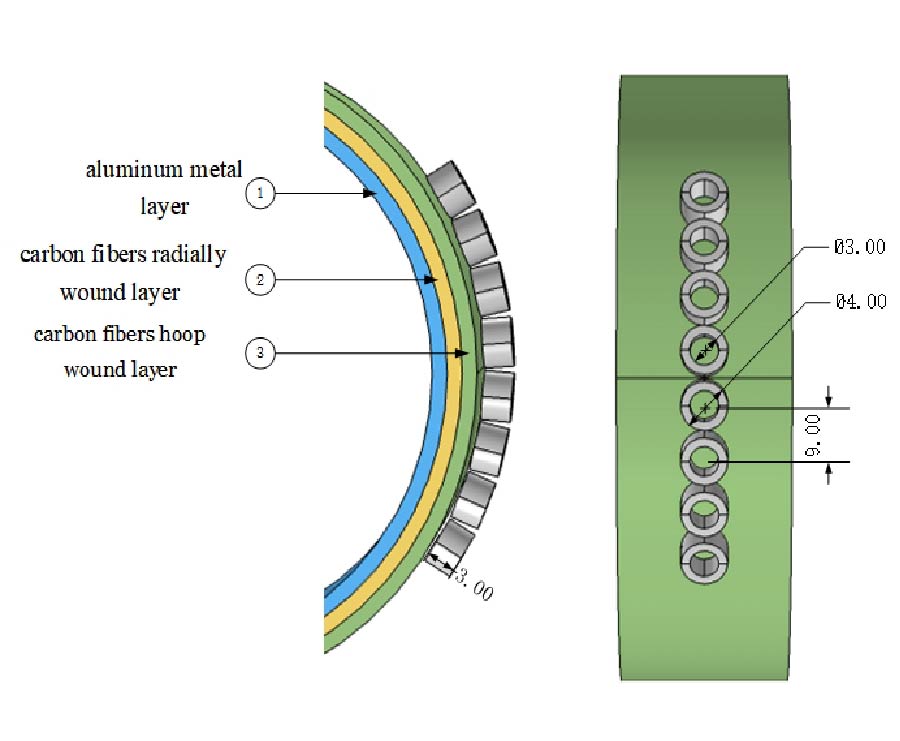
Magnetic gears (MGs) have many advantages over mechanical gears, including high efficiency, no contact, no lubrication, and low noise. Even though MGs are energy-efficient, cogging torque and torque ripple are always challenging, especially at low-speed applications. Generally, the cancellation of cogging torque enhances the performance of the operation of PM machines. This article proposes an approach based on slicing technique through which reduced cogging torque and improved torque density can be achieved in MGs. The two-dimensional finite element method (2D FEM) has been used to analyze the models using Simcenter and MATLAB software packages. The results show that the elimination of cogging torque of the proposed models compared to the base model is 97.53% on the inner rotor, and that of the outer rotor is 42.23%. Also, the torque density is slightly improved by 0.05% on the inner rotor while 0.1% improvement on the outer rotor is obtained.
Elimination of Cogging Torque and Torque Ripple in Magnetic Gear Using Slicing Technique
2022-10-17
PIER M
Vol. 114, 49-57
A Comparison of Two Generalizations to the Linear Sampling Method for Inverse Scattering
Yeasmin Sultana and James Richie
The linear sampling method (LSM) is a very popular method for determining the boundary of an object from the scattered field. However, there are instances where LSM provides the convex hull of the boundary rather than the true boundary. There are two common generalizations to LSM: the Generalized Linear Sampling Method (GLSM) and the Multipoles-based Linear Sampling Method (MLSM). In this paper, the ability of GLSM and MLSM to overcome some of the deficiencies of LSM are investigated. It is found that GLSM may be ideal for imaging thin features of scatterers and that MLSM can provide an improvement over LSM in a more general sense. GLSM may also require user input to adjust the indicator function whereas MLSM does not appear to rely as much on indicator function adjustments for adequate results.
A Comparison of Two Generalizations to the Linear Sampling Method for Inverse Scattering
2022-10-17
PIER M
Vol. 114, 37-47
Uncertainty Analysis Method of Computational Electromagnetics Based on Clustering Method of Moments
Jinjun Bai , Mingzhao Wang and Xiaolong Li
Uncertainty analysis is one of the hot research issues in the field of computational electromagnetics in the past five years. The Method of Moments is a non-embedded uncertainty analysis method with relatively high computational efficiency, and has the unique advantage of not being affected by the ``curse of dimensionality''. However, when the nonlinearity between the simulation input and output is large, the accuracy of the Method of Moments is not ideal, which severely limits its application in the field of computational electromagnetics. In this paper, an improved strategy based on the central clustering algorithm is proposed to improve the expected value prediction results of the Method of Moments, thereby improving the accuracy of the overall uncertainty analysis. At the same time, the co-simulation technology of MATLAB software and COMSOL software is completed, then the accuracy and computational efficiency of the proposed algorithm in this paper are quantitatively verified. In this case, the clustering Method of Moments is effectively popularized in commercial electromagnetic simulation software.
Uncertainty Analysis Method of Computational Electromagnetics Based on Clustering Method of Moments
2022-10-17
PIER Letters
Vol. 107, 27-32
Power Absorption of 3D Printed Layers on a Microstrip Line
Chung-Yen Hsu and Lih-Shan Chen
Power-absorbing layers on a microstrip line prepared by 3D printing are investigated in this study. Polylactic acid (PLA) with added carbon is used in the 3D printing process for the preparation of the power-absorbing layers. The S-parameters of the 3D-printed layers are measured using a vector network analyzer. The effect of the layer thicknesses on the power absorption, which enables high-frequency devices to function correctly, is discussed. As the layer thickness increases, the magnitude of S11 increases, while the magnitude of S21 decreases accordingly. The experimental results show that the power absorption is within 80-95% (sheet resistance: 75.1 Ω/□-823.76 Ω/□), in the frequency range of 2-6 GHz. In addition, simulated S-parameter analysis was performed using a high-frequency structure simulator. The simulation results are in good agreement with the experimental results.
Power Absorption of 3D Printed Layers on a Microstrip Line