Search Results(13787)

2022-11-21
PIER C
Vol. 127, 1-16
TV-Based Phased Array System Design in BTSs for 5G/IoT Applications
Amir Reza Dastkhosh , Mehdi Naseh , Davide Dardari and Fujiang Lin
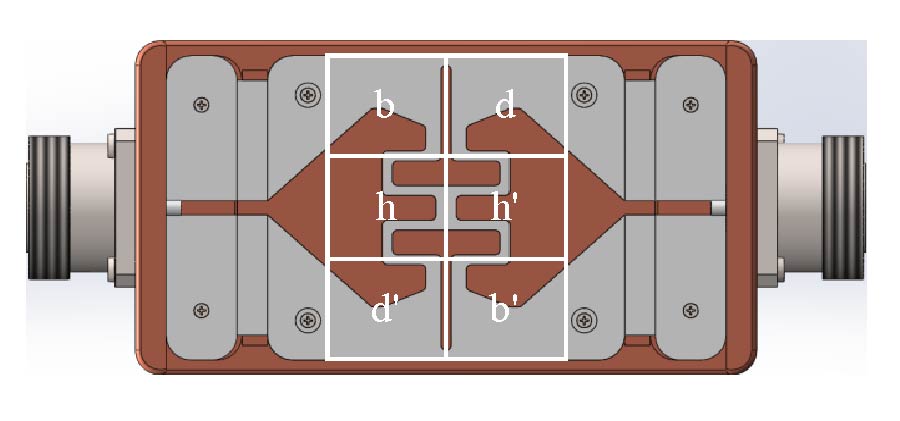
Cellular UHF (Ultra High Frequency) transceiver networks and base transceiver station antenna systems comprise high power phase shifters for changing and adjusting the phases or delays of high-power transmitting signals delivered to antenna elements. In this work, theoretical and practical adjustment method of amplitudes and phases for electronic steering of a phased array antenna pattern are illustrated. In otherwords, a high power phase shifter with an asymmetric power divideris designed. The phases are changed and adjusted progressively, and thus the beam direction changes from -60° to 60°. The UHF phase shifter has been simulated in Advanced Design System (ADS) and CST STUDIO SUITE SPARK3D and measured. The simulations show that the designed and manufactured UHF phase shifter can also handle more than 20 KW and can be redesigned to reach up to more than 100 KW RF (Radio Frequency) power (microstrip/stripline structures) and can control/change phases of transmitting/receiving antennas. The phase shifter can be designed on any low loss substrate. By using this method in planar high power phased array antenna systems, 360° planar beam tilting is also achievable.zzz
TV-based Phased Array System Design in BTSs for 5G/IoT Applications
2022-11-20
PIER Letters
Vol. 108, 1-8
Coplanar Series-Fed Spiral Antenna Arrays for Enlarged Axial Ratio Bandwidth
Kazuhide Hirose , Yuki Tamura , Masaki Tsugane and Hisamatsu Nakano
We study two array antennas to expand a 3 dB axial ratio bandwidth. Each array is located at a quarter wavelength above the ground plane and analyzed using the moment method. First, we use paired spiral elements fed by balanced parallel lines to avoid unwanted radiation from the feedline. It is found that the antenna shows an axial ratio bandwidth of 30%. Next, the elements are separated and fed by a single feedline to simplify the feed system. It is revealed that the antenna can radiate a circularly polarized wave under a feedline radiation of less than -16 dB. The frequency responses show that an axial ratio < 3 dB and VSWR < 2 are obtained in a bandwidth of 21%, where the gain is more than 13.3 dBi. The simulated results are verified with experimental ones.
Coplanar Series-fed Spiral Antenna Arrays for Enlarged Axial Ratio Bandwidth
2022-11-20
PIER Letters
Vol. 107, 151-157
Ultrasonic Probing System with Multiple Transmitters and Multiple Receivers with Undersampling
Amoon Khalil and Dmitry Y. Sukhanov
Wave probing systems are used to obtain 2D or 3D images of objects. According to the nature of the waves used (acoustic-microwave and others), these waves can penetrate the fabrics or barriers that are in their way, so it is possible to photograph hidden objects. A system for ultrasonic wideband probing in air with multiple transmitters and multiple receivers with parallel digitization of signals from the receiving array using undersampling is proposed. Probing at frequencies from 38 kHz to 43 kHz is considered when receiving array signals are digitized at a frequency of 18 kHz. Transmitter and receiver placements have been optimized to minimize artifacts and noise. the transmitting and receiving arrays are located at the same plane. The presented results of the experimental study confirm that the processing of measured signals based on spatially matched filtering makes it possible to visualize scattering objects in the environment, including those hidden behind sound-permeable barriers.
Ultrasonic Probing System with Multiple Transmitters and Multiple Receivers with Undersampling
2022-11-19
PIER C
Vol. 126, 253-265
Parameter Identification of PMSWG Based on ASMDRPSO
Yang Zhang , Mingfeng Zhou and Zhun Cheng
Aiming at the problem of poor identification accuracy in traditional particle swarm optimization algorithms, an adaptive search particle swarm optimization algorithm (ASMDRPSO) method for permanent magnet synchronous wind generator (PMSWG) parameter identification is proposed. Firstly, in order to solve the issue of the under-rank equation, a full-rank state equation and fitness function are established. Then, in ASMDRPSO, a dynamic adjustment strategy is adopted in the inertia weight update process to enrich population diversity. In addition, the average best position strategy is designed to avoid getting stuck in a local optimum. Moreover, an adaptive learning radius is supplemented in ASMDRPSO, and the particle search range is enlarged when the ASMDRPSO evolution is stalled. Finally, the simulated and experimental results are presented to verify the stronger optimization ability, stronger robustness, and higher search accuracy of the proposed control strategy than the traditional PSO.
Parameter Identification of PMSWG Based on ASMDRPSO
2022-11-18
PIER M
Vol. 114, 103-115
Analysis of Active Reflection Coefficient and Radiated Fields on a Co-Located MIMO Radar System in Transmit Mode
Nivia Colon-Diaz and Dan Janning
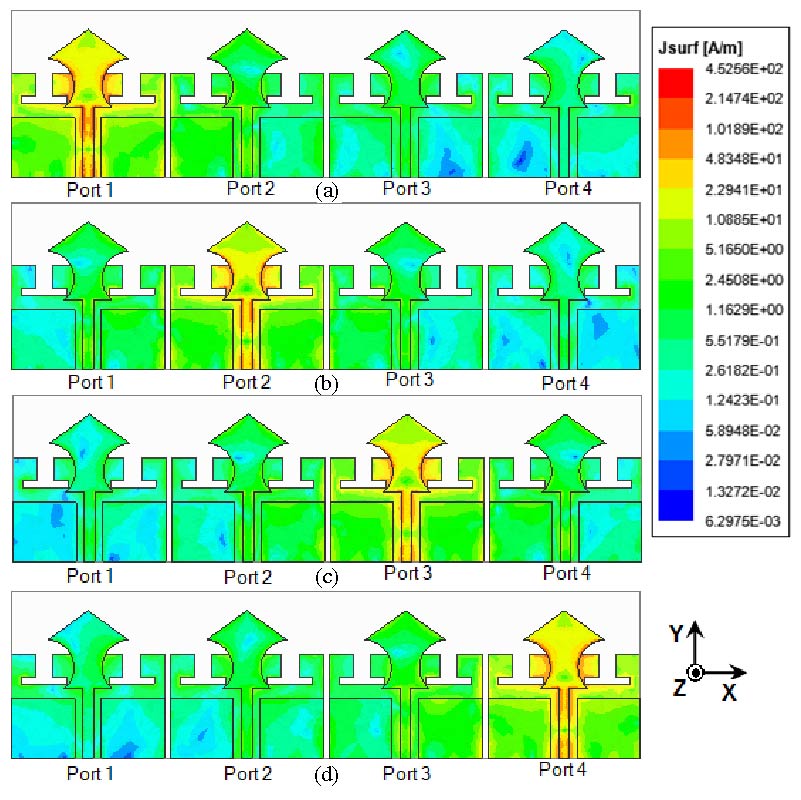
A study of the impact of mutual coupling effects in a co-located multiple input multiple output (MIMO) radar system is presented. Predicted and measured results corroborate that the active reflection coecient (ARC) and beampatterns are impacted by the excitation of each sub-array, the geometric configuration, and their polarization. A uniform linear array (ULA) and a uniform planar array (UPA) layouts are considered. The excitations used in the study are linear frequency modulation (LFM) and Doppler division multiple access (DDMA). A thorough analysis is presented to understand the effects these parameters have on the ARC and on the beampatterns of the radar system.
ANALYSIS OF ACTIVE REFLECTION COEFFICIENT AND RADIATED FIELDS ON A CO-LOCATED MIMO RADAR SYSTEM IN TRANSMIT MODE
2022-11-17
PIER C
Vol. 126, 243-251
A T-Shaped Polyomino Subarray Design Method for Controlling Sidelobe Level
Ahmed Jameel Abdulqader , Jafar Ramadhan Mohammed and Yaser Ahmed Ali
Partitioning large planar antenna arrays into smaller subarrays reduces the system costs and gives many other advantages. In this article, symmetrical T-shaped tetromino subarrays are suggested to perform the partition process of the large planar arrays. Different structures of T-shaped tetromino subarrays have been obtained by simply rotating its orientation by multiple angles of 90 degrees such that the entire planar array aperture can be filled. Two array architectures based on different T-shaped tetrominoes are constructed. The amplitude weights of the designed subarrays are optimized by means of the genetic algorithm such that the resulting array patterns have low sidelobe level. In the first architecture, all the elements in the original array are divided into several subarrays based on three T-shape structures, while in the second architecture all the elements are combined into eight different T-shapes. To control the sidelobe level in the proposed T-shaped tetromino subarrays, a surface mask boundary function is included in the optimization process to find the optimum weights of the T-shaped subarrays. Simulation results showed that the sidelobes can be reduced to less than -20 dB in the first architecture, and less than -25 dB in the second architecture, in addition to a significant reduction in the complexity of the feeding network for each one. Moreover, detailed connections of the feeding network circuitry of the used T-shaped tetromino subarray structures are given for practical implementation.
A T-shaped Polyomino Subarray Design Method for Controlling Sidelobe Level
2022-11-17
PIER M
Vol. 114, 91-101
Tunable Dual-Band and Polarization-Insensitive Electromagnetic Induced Transparency-Like Window Based on Graphene Metamaterials
Qixiang Zhao , Yanyan Liang , Mengshi Ma , Hang Mo , Lin Peng , You Lv and Shuquan Zheng
In this paper, a polarization-insensitive and dual-band Electromagnetic Induced Transparency-Like (EIT-Like) metamaterial is proposed, which is made of a cross-shaped graphene structure. Due to the mutual coupling between intralayer and interlayer, two high transmission windows can be obtained in different frequency bands. The sensibilities located at the two transmission peaks are calculated as 0.385 THz/RIU and 0.979 THz/RIU respectively. In addition, the maximum group index of 174.5 is obtained. By adjusting the Fermi level of graphene, the transmission and group index could be modulated independently. The characteristics make the proposed metamaterials possess the potential as a tool for biological detection, slow light technology, and filters in THz region.
Tunable Dual-band and Polarization-insensitive Electromagnetic Induced Transparency-Like Window Based on Graphene Metamaterials
2022-11-16
PIER C
Vol. 126, 1-11
Study on Electromagnetic Vibration Performance of Hybrid Excitation Double Stator BSRM for Flywheel Battery Under Eccentricity
Qianwen Xiang , Zhende Peng and Yu Ou
In this paper, the electromagnetic vibration characteristics of hybrid excitation double-stator Bearingless Switched Reluctance Motor (HEDSBSRM) used in flywheel battery are analyzed when the rotor is eccentric. Firstly, the influence of rotor eccentricity on motor vibration is theoretically analyzed. Then the finite element method is adopted to study the radial electromagnetic force of the motor in the two-dimensional air-gap region. In addition, the three dimensional equivalent vibration model of the motor outerstator is established, and the mode shapes and natural frequencies of the motor stator are obtained by the modal analysis. The vibration characteristics of the outer stator under eccentric motion are analyzed by the coupling calculation of electromagnetic field and mechanical field. Finally, the modal combination principle is used to analyze the vibration characteristics of the motor running at multiple speeds under eccentric condition. The results show that the vibration of HEDSBSRM is closely related to eccentricity, which affects the motor performance and lays the foundation for the optimization design of HEDSBSRM application in flywheel battery.
Study on Electromagnetic Vibration Performance of Hybrid Excitation Double Stator BSRM for Flywheel Battery under Eccentricity
2022-11-15
PIER M
Vol. 114, 79-89
Scattering from a 90° Metallic Wedge with One Face Coated by a Double Negative Metamaterial Layer
Giovanni Riccio , Gianluca Gennarelli , Flaminio Ferrara , Claudio Gennarelli and Rocco Guerriero
This manuscript refers to the electromagnetic scattering problem involving plane waves at skew incidence with respect to the edge of a right-angled metallic wedge having one face coated by a double negative metamaterial sheet. Its presence in the propagation scenario is properly accounted at high frequencies by considering the geometrical optics response of the structure and the diffraction contribution arising from the edge of the wedge. In particular, the reflection coefficients related to the coated surface are determined for both the polarizations by using the equivalent transmission line circuit, whereas the diffraction coefficients are obtained by applying the uniform asymptotic physical optics approach. This last is based on electric and magnetic equivalent surface currents under the physical optics approximation and permits to evaluate the diffraction contribution in the context of the uniform geometrical theory of diffraction. The resulting approximate solution is characterized by the same simplicity of use of the heuristic solutions and provides reliable field values as confirmed by the numerical tests carried out by a full-wave commercial software.
Scattering from a 90° Metallic Wedge with One Face Coated by a Double Negative Metamaterial Layer
2022-11-14
PIER Letters
Vol. 107, 141-149
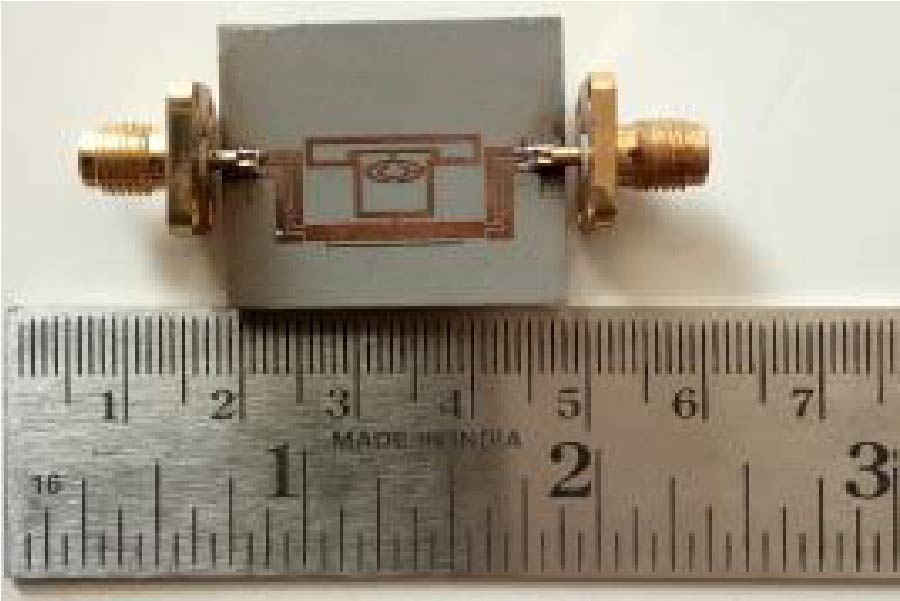
A Simple Balanced Bandpass Filter Using Loop-Type Microstrip Resonator Loaded with Shorted/Opened Stubs
Jun-Mei Yan , Zhi-Peng Xiao and Liangzu Cao
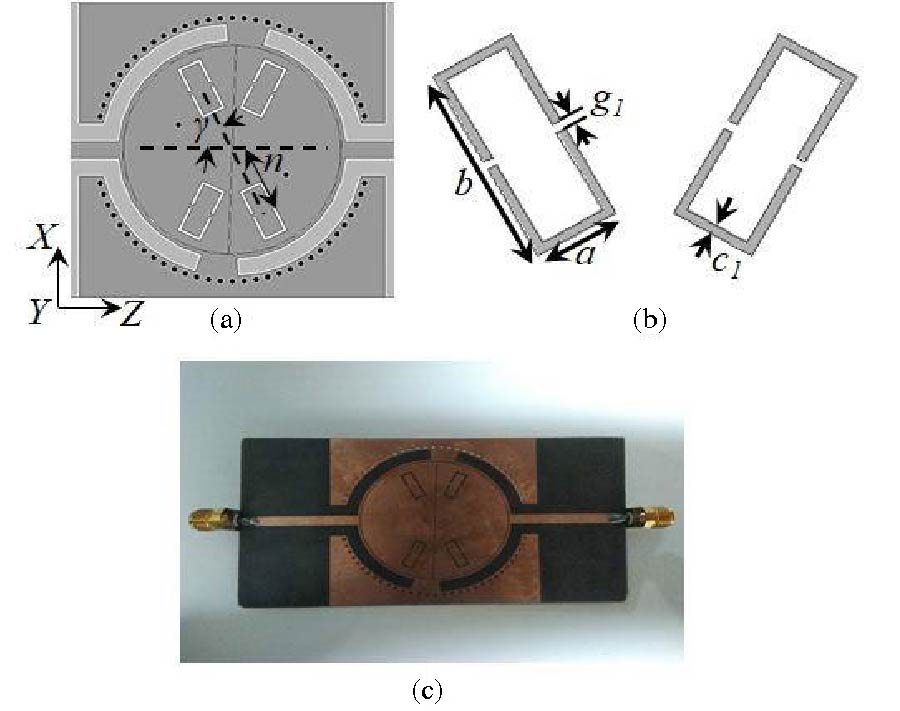
A simple balanced bandpass filter is presented. It is constructed mainly by a loop-type resonator with loaded shorted/opened stubs. The resonator is fed by the balanced coupled-line structure. In the loop-type resonator, three approaches can be simultaneously utilized to achieve high common-mode suppression. One is that the loop-type resonator has different differential/common-mode resonant frequencies, which results in a good in-band common-mode suppression. The second is that the loaded short stubs with different lengths will make the input/output port couplings to have different coupling strengths, which will deteriorate the common-mode bandpass response. The third is that loading the grounded resistors can effectively dissipate the common-mode signal. Meanwhile, loading the grounded resistors in the balanced coupled-line structure can effectively dissipate the reflective common-mode signal. A detailed description about its structure, operational mechanism and design method is given. For demonstration, a prototype balanced bandpass filter working at 2.4 GHz is designed, fabricated and measured. A high in-band common-mode suppression of 49 dB is achieved. The measured and simulated results can verify the effectiveness of the proposed balanced bandpass filter and the design method.
A Simple Balanced Bandpass Filter Using Loop-type Microstrip Resonator Loaded with Shorted/Opened Stubs
2022-11-13
PIER C
Vol. 126, 227-241
An off-Grid Compressed Sensing Method for Synthesis of Maximally Sparse Arrays with Arbitrary Beampatterns
Xiaowen Zhao and Yunhua Zhang
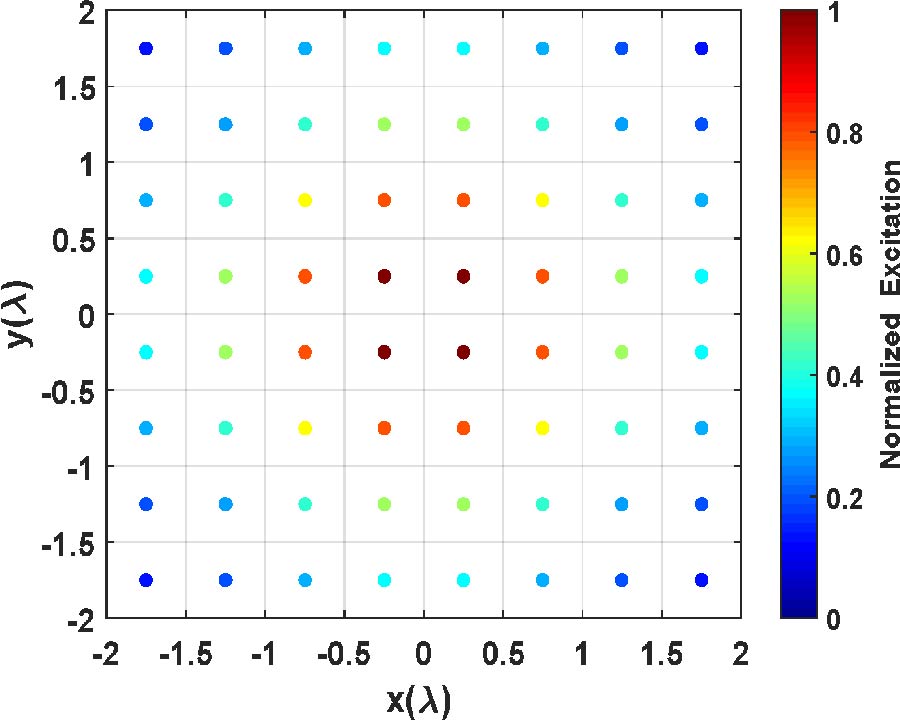
Most of the works on sparse array synthesizing via the compressed sensing (CS) approach assume that the active elements exactly lie on the predefined grids. In fact, grid-mismatch error is unavoidable when an array aperture is discretized into grids, and the synthesizing results largely depend on the density of the grids. To overcome this limitation, an innovative off-grid CS approach is proposed for jointly estimating the excitations and positions of array elements. The synthesis problem is specifically formulated using a ridge regression model based on dynamic grids. The candidate positions of elements are treated as variables rather than constants predefined by discretization. Numerical experiments are conducted to validate the effectiveness and flexibility of the proposed method in realizing several maximally sparse arrays meeting the targeted patterns, i.e., the focused and shaped beam patterns of 1-D and 2-D arrays.
An Off-grid Compressed Sensing Method for Synthesis of Maximally Sparse Arrays with Arbitrary Beampatterns
2022-11-12
PIER B
Vol. 97, 91-114
A Review on Materials and Reconfigurable Antenna Techniques for Wireless Communications: 5G and IoT Applications
Rayirathil Kadavath Athira Mohan and Kanagasabapathi Girirajan Padmasine
Compact wireless devices have been proposed as a result of the introduction of wireless communication systems, allowing more space to be used for other electronic components. A reconfigurable antenna is critical in today's cutting-edge wireless technologies. Reconfigurable antennas can perform a variety of tasks depending on their operating frequency, radiation pattern and polarization. Dynamic tuning can be done by altering mechanical, electrical, physical, or optical switches to run a certain switching mechanism. This can be accomplished using a single reconfigurable antenna that allows the user to customize a range of performance attributes such as resonant frequency, polarization and radiation pattern to meet their specific requirements. This paper looks into different types of reconfigurable antenna switching mechanisms, different types of effective implementation techniques, different types of reconfigurable antennas, and some recently proposed reconfigurable antenna designs for the Fifth Generation (5G) and IoT applications in various wireless communication systems.
A Review on Materials and Reconfigurable Antenna Techniques for Wireless Communications: 5G and IoT Applications
2022-11-11
PIER C
Vol. 126, 217-226
Analysis and Optimization of a Novel Consequent-Pole Flux Reversal Machine with Asymmetric-Stator-Poles
Libing Jing and Kun Yang
Flux reversal machines (FRMs) have a broad application prospect due to its simple structure, high efficiency, and high reliability. However, due to the large magnetic flux leakage between poles, the further improvement of torque density of the FRMsis limited. To reduce magnetic flux leakage and improve torque, a novel consequent pole FRM with asymmetric stator poles is proposed in this paper. The `NS-NS' arrangement order of thepermanent magnets (PMs) of the conventional FRM is changed to the `NSN-S' PMs arrangement order with asymmetric stator poles, and the consequent pole topology is used simultaneously. All the N-poles of PMs are replaced by iron poles. Finally, the topology of the `Fe/S/Fe-S' arrangement order is obtained. A simplified magnetic circuit model is established to explain the principle of reducing magnetic flux leakage. To improve the torque density, the key design parameters are optimized by genetic algorithm, and the optimal parameters of the machine are finally determined. Finally, the finite element model is established. Compared with the conventional FRM, the torque of the proposed machine is increased by 67.18%, and the consumption of PM is reduced by 51.6%. Therefore, the proposed machine has good electromagnetic characteristics and economic benefits.
Analysis and Optimization of a Novel Consequent-pole Flux Reversal Machine with Asymmetric-stator-poles
2022-11-11
PIER Letters
Vol. 107, 133-139
Design of a Plasmonic Metasurface for Refractive Index Sensing of Aqueous Glucose
Arslan Asim and Michael Cada
In this paper, a new plasmonic absorbing metasurface sensor has been proposed to determine glucose concentrations. Surface Plasmon Resonance (SPR) shift has been used as the indicator of glucose concentration. The sensor employs metal-dielectric-metal configuration along with metal nano-cylinders to provide near unity absorption in the near infrared wavelength range (1800-2200 nm). The absorption frequency shifts when the sensor is surrounded by materials of different refractive indices. The structure has been investigated through Finite Difference Time Domain (FDTD) simulations. The results show reflectance and absorbance peaks with different analyte concentrations. The sensor displays a linear response along with sensitivity and Figure of Merit (FOM) equal to almost 500 nm/RIU and 11.82 RIU-1 respectively. The proposed sensor has potential applications in food and biomedical industries.
Design of a Plasmonic Metasurface for Refractive Index Sensing of Aqueous Glucose
2022-11-11
PIER Letters
Vol. 107, 125-131
Conjugated Split-Ring Resonators-Based Ultrathin, Polarization- and Angle-Insensitive Metasurface
Evandro César Vilas Boas , Jorge Ricardo Mejia-Salazar and Felipe Augusto Pereira De Figueiredo
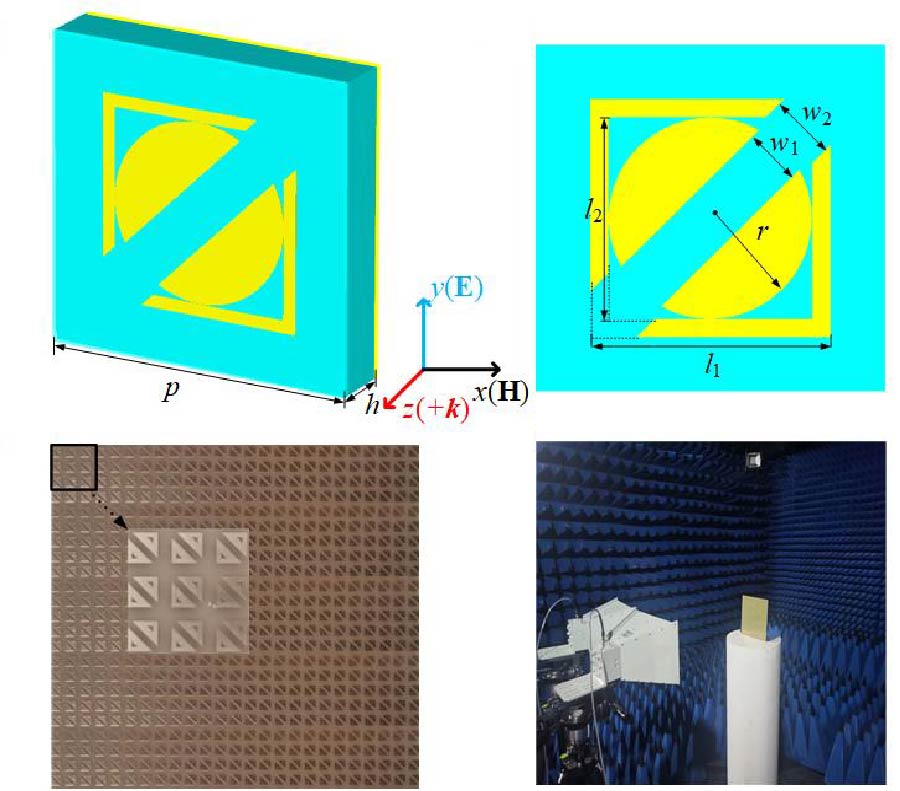
We show a new polarization- and angle-insensitive ultrathin metasurface design using four conjugated hexagonal split-ring resonators (CHSRRs). The CHSRRs are made of copper and arranged in a λ/4 cell-size polyimide film substrate with a dielectric constant of 3.5 and thickness of 0.2 mm (λ/400 at 3.75 GHz). Each CHSRR aperture faces one corner of the square unit cell, thus forming a conjugated loop to achieve TE and TM polarization-insensitive behavior in a wide range of incident angles. Results demonstrated a -10 dB impedance bandwidth of 530 MHz (3.44 to 3.97 GHz) under normal incidence, partially covering the n77 band used for 5G applications.
Conjugated Split-ring Resonators-based Ultrathin, Polarization- and Angle-insensitive Metasurface
2022-11-10
PIER
Vol. 175, 149-157
Noninvasive Raman Imaging for Monitoring Mitochondrial Redox State in Septic Rats
Changwei Jiao , Zijian Lin , Yinghe Xu and Sailing He
Raman imaging for a sepsis study is reported here for the first time. We propose a confocal resonance Raman microscopic imager (CRRMI)to measure in vivo the redox state of mitochondria over a surface area of a septic rat. The CRRMI has excellent performance with spectral and spatial resolutions of 0.1 nm and 2 um, respectively. It is found for the first time that the Raman signal related to the mitochondrial dysfunction in sepsis is abnormally large only locally at many points with some random spatial distribution. Our CRRMI can detect the mitochondrial redox state through the skin of a naturally living rat even without the removal of hairs, and overcomes some issues that a pointwise measurement method of Raman signalsmay encounter when monitoring mitochondrial dysfunction of a sepsis rat, such as the fluorescence of hairs, hitting the points without mitochondrial redox metabolic disorder, etc.The present Raman imager can be used for giving an early warning for sepsis. It provides a new method for noninvasive monitoring of mitochondrial redox status in sepsis.
Noninvasive Raman Imaging for Monitoring Mitochondrial Redox State in Septic Rats
2022-11-10
PIER C
Vol. 126, 207-216
Graphene-Based Materials for Microstrip Patch Antenna
Nur Iffah Zulaikha Azman , Muhammad Khairul Bin Othman , Nur Amirah Athirah binti Zaini and Mohamad Ashry Jusoh
Microstrip patch antennas are becoming increasingly relevant because of their advantages such as light weight, low costs, and ease of fabrication. To enhance the performance of an antenna, graphene was included into the fabrication of the microstrip patch antenna. Because of its numerous excellent characteristics, graphene has gained attention in recent years as a leading material. In this research, a microstrip patch antenna based on graphene was fabricated and tested at 5 GHz. The fabrication started with the production of graphene paste and was screen printed onto RT duroid 5880 substrates. To verify the binding between the graphene paste and the substrate, an adhesion test was performed on the finished graphene-based patch antenna using the Scotch tape method. The performance of fabricated antenna was measured using vector network analyzer (VNA) which includes return loss and bandwidth. The findings of the measurements were compared with the simulation results that were generated by the High Frequency Structure Simulator (HFSS). The return loss of the graphene-based antenna was measured to be -17.6314 dB, which is a little bit lower than the simulated value of -18.0597 dB that was generated by the HFSS software. The calculated bandwidth for simulated and fabricated graphene-based patch antenna were found at 156 MHz and 297.4 MHz, respectively. Based on the findings, it can be concluded that the return loss result indicates that the fabricated graphene-based patch antenna agrees well with the simulated patch antenna, although the fabricated patch antenna has a greater bandwidth than the simulated antenna.
Graphene-based Materials for Microstrip Patch Antenna
2022-11-10
PIER C
Vol. 126, 197-206
Performance Enhancement of a Compact Circularly Polarized Slot Antenna Using Corner Truncation
Hirak Keshari Behera , Manas Midya and Laxmi Prasad Mishra
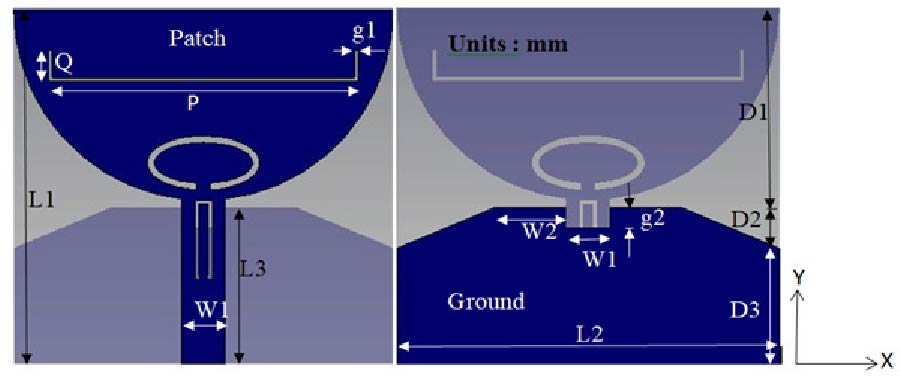
This paper presents a design of a compact wide slot circularly polarized antenna which is being fed by a microstrip feed line. The designed antenna covers an area of size 25 mmx25 mm with a substrate thickness of 1.6 mm. The 3 dB axial ratio (AR) band can be produced by projecting a circular stub in the ground plane and feeding the slot through an asymmetry-fed microstrip feedline. The AR bandwidth of the antenna is further improved by adding truncation in the ground plane. Measured results show that the graph attains an impedance matching bandwidth of 124.3% centered at 7.4 GHz (2.8-12 GHz) and a 3 dB AR bandwidth of is 52.42% centered at 5.15 GHz (3.8-6.5 GHz). The proposed antenna is suitable for the use in C-band application.
Performance Enhancement of a Compact Circularly Polarized Slot Antenna Using Corner Truncation
2022-11-10
PIER C
Vol. 126, 183-196
Network Optimization Algorithm for Radar Active Jamming Identification Based on Neural Architecture Search
Zejun Gao , Fei Cao , Chuan He , Xiaowei Feng , Jianfeng Xu and Jianqiang Qin
A network optimization approach based on Neural Architecture Search (NAS) and network pruning is suggested to solve the issue of poor recognition performance of missile-borne radar active jamming under the condition of short sample sizes. The approach realized the ideal network design under severely constrained technical indications by combining the benefits of several methods, including NAS, convolutional light-weighting, and network pruning. The recognition network's convolution kernel size parameters were first optimized using NAS. The number of model parameters were then decreased via convolutional substitution. Finally, the structured pruning algorithm further screened the redundant network based on the technical indicators. The WideResNet28_2 wide residual network's recognition accuracy is only 84.38% when there are only 1000 training samples for each type of signal, according to the simulation results. After optimization, the number of new model parameters was increased 2.55M, 2.26M, and 1.78M, respectively, and their respective recognition accuracy was increased to 85.7%, 85.61%, and 85.37%. According to the simulation results, the technique offers a wide range of possible applications in the optimized design of radar active jamming identification networks for small sample sizes.
Network Optimization Algorithm for Radar Active Jamming Identification Based on Neural Architecture Search
2022-11-10
PIER C
Vol. 126, 173-181
Design and Fabrication of Adjustable Reflectionless Microstrip Diplexer for L-Band
Abbas Taghvaei , Reza Bayderkhani and Maryam Espahbodi
In this study, an adjustable reflectionless diplexer is designed and fabricated for the L-band based on microstrip transmission lines. The proposed diplexer can separate and combine different frequencies within the L-band frequency range. The equations and theoretical process of the structure can be proved from coupling matrix and even/odd mode circuit analysis. In this design, our aim is that the proposed diplexer not only has low insertion loss and proper return loss in the channels' stopband but also can change the channels' frequency. The physical specifications are calculated proportionally to the central frequency based on the coupling coefficients and diagram. Also, frequency adjustability is achieved by connecting the varactor diode to the structure's resonator. The proposed structure can be used in the frequency range of 1.6-2.2 GHz. Furthermore, the measured return losses in the stopband and passband are 8 dB and 13 dB, respectively. In this paper, all simulations are performed by ADS software.
Design and Fabrication of Adjustable Reflectionless Microstrip Diplexer for L-band