Search Results(13787)

2022-10-16
PIER C
Vol. 125, 161-177
Printed Fractal Folded Coplanar-Strips-Fed Array Rectenna for IoE Applications
Zahra Badamchi , Ngoc Duc Trinh , Chloe Bois and Tarek Djerafi
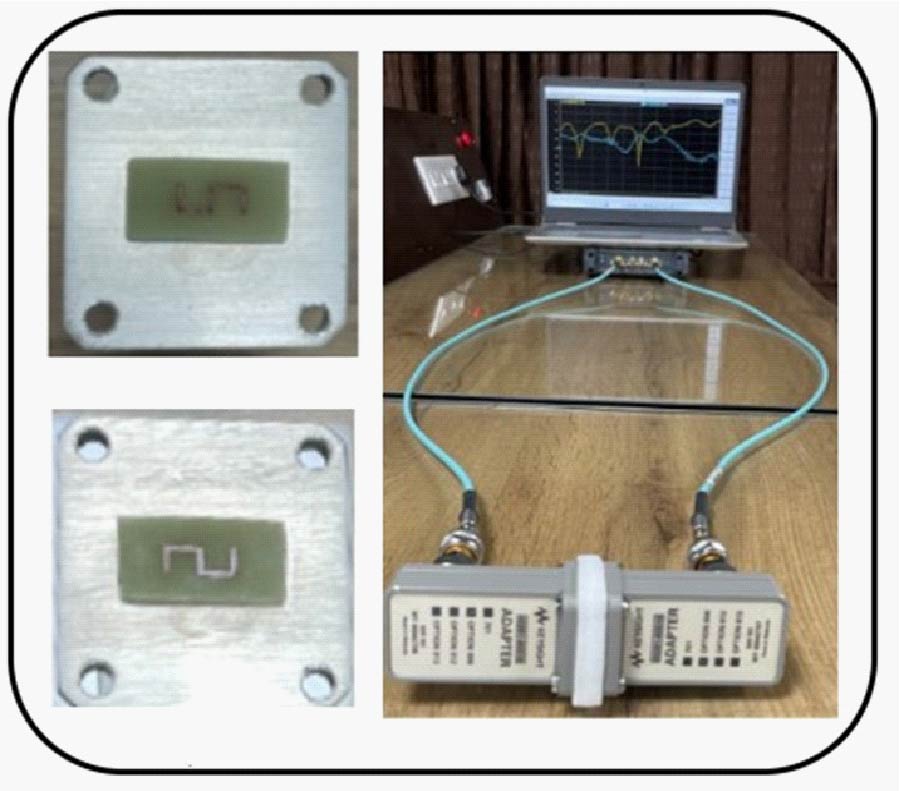
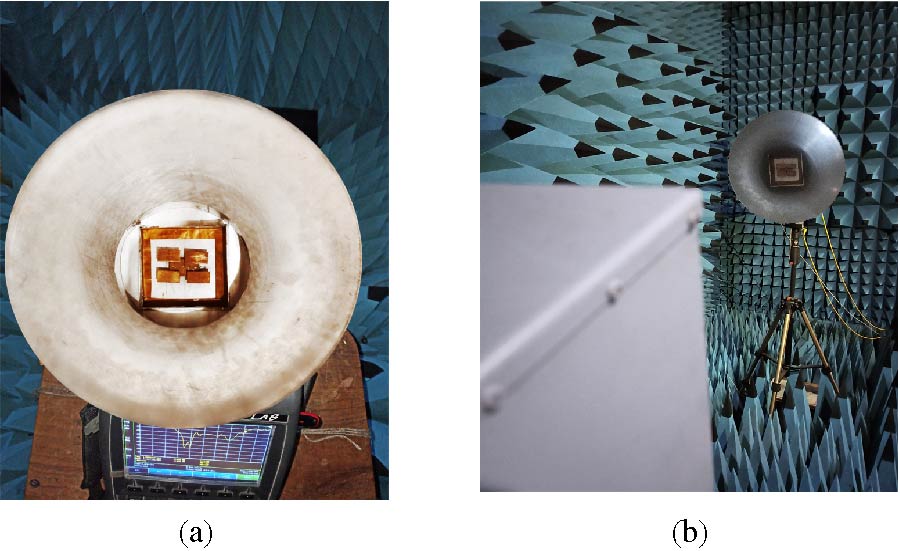
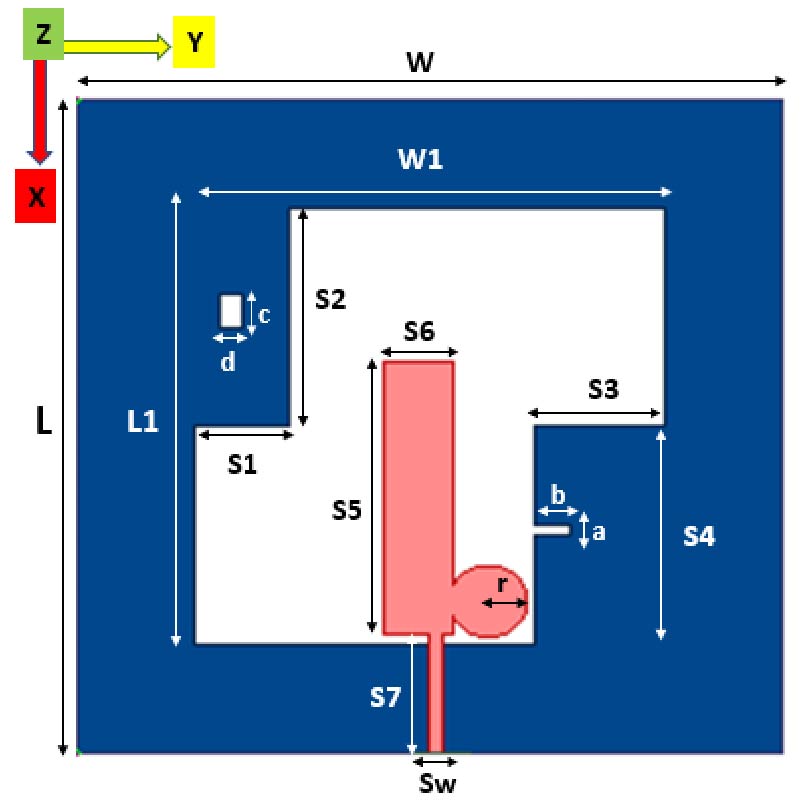
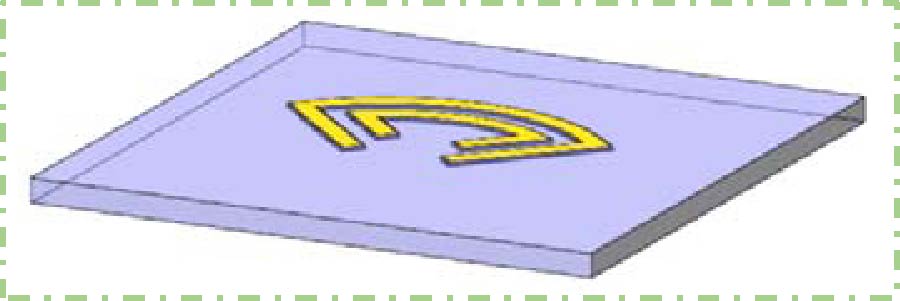
This paper presents a low-cost antenna integrable to a large set of indoor common building materials. Employing the printing technology on thin transparent polyethylene terephthalate material and using available building materials not only leads to a low-cost environmentally friendly solution for the expected massive sensor deployment but also eliminates the dispersive behavior of the materials that are interacting with them. A coplanar-strips fed fractal folded antenna element was designed and validated experimentally with four different materials including gypsum, plywood, and plexiglass. The aesthetically viable ground-free antenna achieves wideband performance and radiates in the broadside plane perpendicularly to the wall. The single antenna element covers the frequency band of 2.18-3.96 GHz with a gain of 1 dBi at 2.4 GHz. To take advantage of the large available surface, a high efficiency 2.4 GHz array rectenna for powering electronic devices intended for IoE technology is proposed. The proposed array rectenna has a dimension of 384×354×6.475 mm3 and employs a single diode as the rectifier element. The measured results for the presented array rectenna reveal an AC-DC power-conversion-efficiency (PCE) of more than 20% for input powers as low as 0.025 μW/cm2 with a peak PCE of 61.3% at 4.03 μW/cm2.
Printed Fractal Folded Coplanar-strips-fed Array Rectenna for IoE Applications
2022-10-15
PIER
Vol. 175, 139-147
Solving Multivariable Equations with Tandem Metamaterial Kernels
Qingze Tan , Chao Qian , Tong Cai , Bin Zheng and Hongsheng Chen
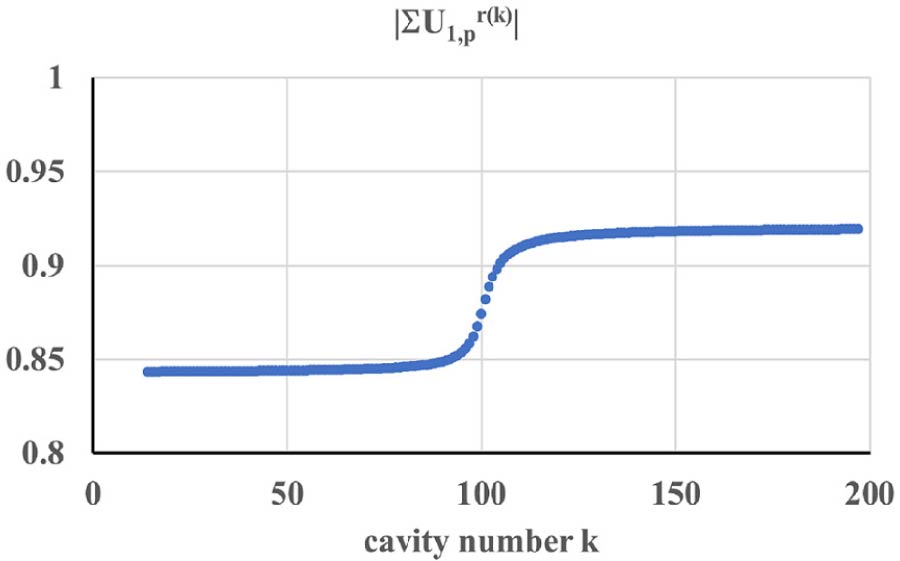
A fundamental building block in characterizing and tackling scientific and industrial questions boils down to the ability of quickly solving mathematical equations. However, with the ever-growing volume of information and unsustainable integration growth in electronic processors, a radically new modality for solving equations is highly imminent. Here, we introduce an electromagnetic counterpart to solve multivariable complex equations, where two metamaterialkernels are connected in series to form a closed-loop electromagnetic system. Complex-valued information is carried by electromagnetic fields, and the equation solution for arbitrary input signals can be recursively attained after a number of feedbacks. As an illustration, we present the capability of such system in solving eight complex equations, and inversely design two 4 × 4 metamaterialkernels by topology optimization, whose average element error is reduced to smaller than 10-4. Having accomplished all unknown coefficients with high fidelity, our work represents a conspicuous apparatus for a myriad of enticing applications in ultra-compact signal processing and neuromorphic computing.
Solving Multivariable Equations with Tandem Metamaterial Kernels
2022-10-15
PIER C
Vol. 125, 147-159
A Diesel-Electric Hybrid Field Modulation Motor with Bread-Loaf Eccentric Magnetic Pole for Ship Propulsion
Weizhao Tang , Libing Jing and Lianhua Zheng
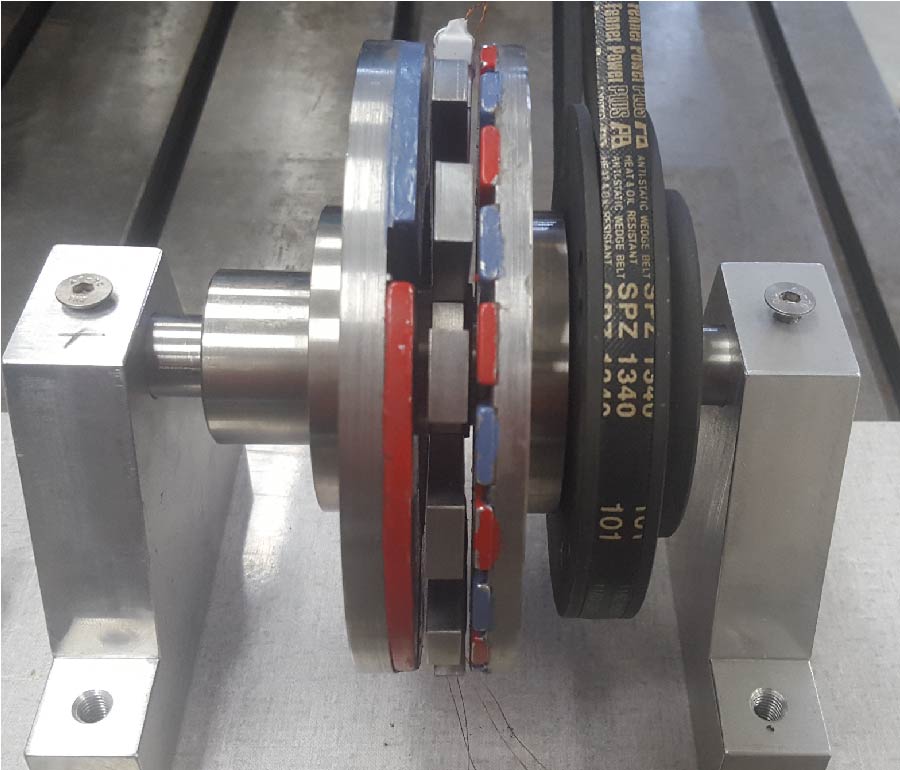
In order to improve the reliability and continuous navigation of ship propulsion, a diesel-electric hybrid field modulation motor with bread-loaf eccentric magnetic poleis proposed in this paper. The permanent magnet of the inner rotor of the motor adopts a bread-loaf eccentric magnetic pole structure and is embedded and fixed on the iron yoke of the inner rotor. The structure can obtain a sinusoidal air gap magnetic field, to reduce the torque ripple of the motor. In this study, some key parameters of the motor are optimized by using the optimization strategy of the combination of genetic algorithm and finite element method. In addition, compared with the conventional magnetic field modulation motor with surface mounted permanent magnet, the motor has a stronger rotor structure. The back-EMF, torque and loss of the motor are calculated. The proposed motor has good sinusoidal back-EMF, less loss, and better stability. Finally, the working modes of the motor in the diesel-electric hybrid ship propulsion system are mainly diesel internal combustion engine driving mode, electric propulsion mode, and hybrid propulsion mode. The system can improve the reliability and continuous navigation of the ship propulsion system.
A DIESEL-ELECTRIC HYBRID FIELD MODULATION MOTOR WITH BREAD-LOAF ECCENTRIC MAGNETIC POLE FOR SHIP PROPULSION
2022-10-13
PIER B
Vol. 96, 213-233
Leakage Magnetic Field Calculation and Optimization of Double Inverse Series Coil Structure of Electric Vehicle Wireless Charging Systems
Zhongqi Li , Pengsheng Kong , Liquan Ren , Xinbo Xiong , Junjun Li , Wei Wu and Huadong Liu
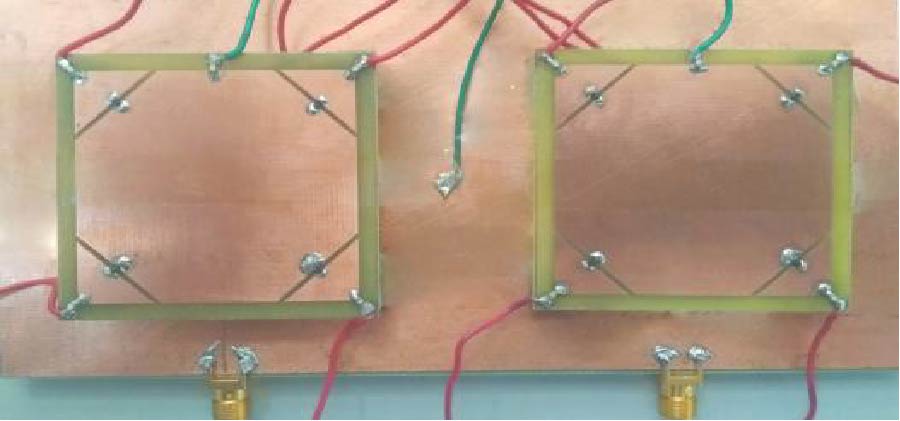
In the wireless power transfer (WPT) system of electric vehicles, low electromagnetic field (EMF) shielding will reduce transfer efficiency. How to reduce leakage EMF and obtain a high transfer efficiency is a difficult problem. In this paper, a double inverse series coil (DISC) structure is proposed to reduce the leakage EMF of WPT systems. First, a calculation method of EMF for rectangular coils is proposed, and the leakage EMF distribution characteristics of the coil structure on the target surface are analysed according to the proposed calculation method. Secondly, an optimization method with the optimal leakage EMF effect of the target surface is given. The parameters of each coil that meet the design requirements are obtained based on the proposed optimization method. Finally, according to the obtained coil parameters, a set of WPT system based on DISC structure is developed, and the correctness of the proposed structure and method is verified by simulated and measured results. The results show that with applying the DISC structure, the maximum leakage EMF in WPT system is only 9.56 μT on target surface without additional shielding, and the transfer efficiency is up to 95%.
Leakage Magnetic Field Calculation and Optimization of Double Inverse Series Coil Structure of Electric Vehicle Wireless Charging Systems
2022-10-13
PIER C
Vol. 125, 133-146
A Taguchi-Preconditioned GA Method for the Design Optimization of a PM Vernier Motor
Gaojia Zhu , Shijie Liu , Longnv Li , Yishuang Zhao , Shengyang Hu and Yiran Yun
This paper presents an efficient Taguchi-preconditioned genetic algorithm (TPGA) strategy for the design optimization of a 630-kW permanent magnet vernier motor (PMVM). In the TPGA, firstly, the Taguchi method is combined with comparative finite element analyses (FEA) to judge the influence factors of six typical structural parameters on the torque output. Secondly, four influential parameters are taken from the six typical ones and decided as the variables in the global optimization processes coupling genetic algorithm (GA) and FEA. As two variables with small influence factors are set to constants in the computationally costly optimization processes, the calculation burden can thus be effectively reduced. Thirdly, with the four influential optimization variables, FEA-assisted GA is used to maximize the output torque of the PMVM. During the global optimization processes, a preliminarily optimized structural configuration obtained from the Taguchi analyses is used as the initial values of the variables. Finally, the working performances of the machine with the optimal parameters are obtained through FEM calculations. The optimization effectiveness is validated by comparing the output torque of the GA-optimized machine with that of the initial and the Taguchi-preliminary optimized ones.
A Taguchi-preconditioned GA Method for the Design Optimization of a PM Vernier Motor
2022-10-13
PIER M
Vol. 114, 27-36
High-Performance Microstructure Core Photonic Crystal Fibre-Based Biosensor for Alcohol Detection
Ang Chuan Shi , Abdul Mu’iz Maidi , Nianyu Zou and Feroza Begum
A high-performance photonic crystal fibre-based alcohol biosensor is introduced for the selective test analytes: propanol, butanol, and pentanol operating at wavelengths ranging from 0.8 to 2.0 µm. The performance of the proposed sensor with the architecture of octagonal-shaped cladding air holes in two rings surrounding a single infiltrated hexagonal core hole produces high relative sensitivities, low confinement losses, small effective areas, and high nonlinear coefficients. At the optimal 1.4 µm wavelength, propanol, butanol, and pentanol assessed relative sensitivities of 93.10%, 93.95%, and 94.70%, respectively, and confinement losses of 6.38 × 10⁻¹⁰ dB/m for propanol, 2.12 × 10⁻¹⁰ dB/m for butanol and 1.04 × 10⁻¹⁰ dB/m for pentanol. Moreover, the nonlinear coefficients achieved results of 2446 W-1km-1 for propanol, 2703 W-1km-1 for butanol, and 2869 W-1km-1 for pentanol, at the optimum wavelength. These outstanding results of optical properties prove the potential and capabilities for practical sensing and optical communication applications.
HIGH-PERFORMANCE MICROSTRUCTURE CORE PHOTONIC CRYSTAL FIBRE-BASED BIOSENSOR FOR ALCOHOL DETECTION
2022-10-13
PIER M
Vol. 114, 13-25
Research on Sparse Imaging Method of Electrical Impedance Tomography Based on DK-SVD
Qi Wang , Xin Ding , Ming Ma , Xiuyan Li , Xiaojie Duan and Jianming Wang
As a noninvasive imaging technique for the interior of objects, Electrical Impedance Tomography (EIT) is widely used in many fields of biomedicine. Sparse reconstruction algorithms have made major breakthroughs in the field of image reconstruction in recent years. The K-SVD algorithm is an adaptive dictionary signal sparse representation algorithm, which could improve the reconstruction accuracy. However, the parameters in the K-SVD algorithm are fixed, which cannot match all the measurement data of EIT very well. Moreover, the K-SVD algorithm adopts a greedy algorithm in the sparse coding stage, which has high computational complexity. In this study, an electrical impedance sparse imaging method based on DK-SVD (deep k-singular value decomposition) was designed. It provides the corresponding optimal model parameters for each set of measurement data through the method of multi-layer perceptron (MLP) network training, thereby improving the imaging quality. At the same time, the iterative soft threshold algorithm (ISTA) is used in the sparse coding stage to improve the convergence speed. The reconstruction results show that compared with the K-SVD algorithm and Total Variation (TV) algorithm, the reconstruction error of the DK-SVD method is smaller, and the irregular and sharp inclusions can be accurately reconstructed. Image artifacts are also greatly reduced.
Research on Sparse Imaging Method of Electrical Impedance Tomography Based on DK-SVD
2022-10-13
PIER Letters
Vol. 107, 27-36
Design of Microstrip UWB Balun Using Quasi-TEM Approach Aided by the Artificial Neural Network
Wlodzimierz Zieniutycz and Lukasz Sorokosz
The design procedure for UWB balun realized in the microstrip technology is proposed in the paper. The procedure applies Artificial Neural Network which corrects the dimensions of the approximate design found by appropriate scaling of the dimensions of the prototype. The scale coefficients for longitudinal and transverse dimensions of microstrip lines are determined from electromagnetic modeling based on transmission line equations. The scaling procedure of radial stubs is also proposed. The design procedure was verified experimentally for exemplary balun with radial stub.
DESIGN OF MICROSTRIP UWB BALUN USING QUASI-TEM APPROACH AIDED BY THE ARTIFICIAL NEURAL NETWORK
2022-10-10
PIER B
Vol. 97, 1-18
Robust Multi-Objective Optimization for BEESM Based on Improved Climbing Algorithm
Naxi Xu , Xiaodong Sun , Ke Li and Ming Yao
Robust optimization design of brushless electrically excited synchronous machines (BEESMs) is a problem that has received extensive attention. The increase in finite element calculation cost due to the increase in the number of motor parameters is one of the main problems faced by optimization. In this paper, a robust multi-objective optimization design method of BEESM based on an improved hill-climbing algorithm is proposed. All design parameters are divided into three subspaces according to the sensitivity by the sensitivity analysis method combined with Kendall's rank coefficient, thereby reducing the consumption required for FEM calculation. The screening problem of Pareto frontier solutions is solved by an improved hill-climbing algorithm. The candidate points to be optimized are screened through the improved climbing algorithm, and only the candidate points located on the Pareto frontier will be optimized, which ensures the high performance of the candidate points. Based on the noise problems that may occur in actual production and processing, the candidate points are robustly analyzed, and the optimal design is screened out. The robust optimization design method proposed in this paper can reduce the computational cost and improve the robustness of the motor based on improving the performance of the motor.
Robust Multi-objective Optimization for BEESM Based on Improved Climbing Algorithm
2022-10-10
PIER M
Vol. 113, 237-247
A Defected Circular Ring Dual-Band MIMO Antenna with High Isolation for 5G and IEEE 802.11 a/ac/ax
Jing Cai , Jianlin Huang , Bo Chen , Lingrong Shen , Tian Hong Loh and Gui Liu
The design and analysis of a dual-band two-port multiple-input-multiple-output (MIMO) antenna with high isolation suitable for fifth-generation (5G) and wireless local area network (WLAN) applications are introduced in this paper. On the top of the substrate, the proposed antenna element is mainly composed of a defected circular ring with an L-shaped strip, an F-shaped stub, and an L-shaped stub. The bottom of the substrate comprises two rectangular defected ground structures and a neutral line with two Y-shaped stubs. The antenna isolation structure is employed to minimize the coupling between antenna elements, which is larger than 15 dB. The overall dimension of the proposed two-port MIMO antenna is approximately 45 mm × 45 mm × 1.59 mm. The measured -10 dB impedance frequency bands include 3.28-3.72 GHz and 4.44-5.92 GHz, which can cover 5G (3.3-3.6 GHz and 4.8-5 GHz) and IEEE 802.11 a/ac/ax (5.15-5.35 GHz and 5.47-5.85 GHz). The measured efficiency is greater than 60% and 55% at the lower and higher frequency bands. The measured peak gain ranges from 4 dBi to 5.8 dBi in both operating frequency bands. The proposed MIMO antenna is feasible for the 5G and WLAN applications.
A Defected Circular Ring Dual-band MIMO Antenna with High Isolation for 5G and IEEE 802.11 a/ac/ax
2022-10-09
PIER C
Vol. 125, 117-131
A Miniaturized Circularly Polarized Multiband Antenna for Wi-MAX, C-Band & X-Band Applications
Sonali Kumari , Yogendra Kumar Awasthi and Dipali Bansal
In this paper, a compact triangular-shaped multiband Antenna is proposed for linear as well as circular polarization. The proposed Antenna is well-suitable for Wi-Max, C-band, and X-band applications. 2.4 GHz is very well suitable for RFID applications. The antenna is excited with a feed of variable width at one corner of the main patch. The parametric analysis has been done for feed width, slot cutting on the ground, and tapering cut at both remaining corners of the main patch. Circular polarization is achieved due to a tapering cut. It achieved circular polarization at 2.4 and 9.8 GHz and linear polarization at 4.31 and 6.75 GHz. The structure shows an impedance bandwidth of 2.13-3.02 GHz and 4.01-10.00 GHz. The measured peak gain is achieved to be 3.66 dB. A good agreement is found between simulated and experimental results.
A Miniaturized Circularly Polarized Multiband Antenna for Wi-Max, C-band & X-band Applications
2022-10-08
PIER M
Vol. 114, 1-12
A Miniaturized Reconfigurable Quad-Band Bandpass Filter with W-Shaped SIRs
Ren Wang , Tao Tang , Melad M. Olaimat , Yuanzhi Liu , Omar M. Ramahi and Zhu Jin
A novel quad-band bandpass filter (BPF) consisting of two deformed W-shaped microstrip Stepped-Impedance Resonators (SIRs) with different dimensions is proposed. The W-shaped SIRs are miniaturized from E-shaped SIRs, and each one of the SIRs generates two passbands, and thus four passbands centered at 3.18 GHz, 4.51 GHz, 5.46 GHz, and 8.43 GHz with fractional bandwidth of 6.7%, 9.1%, 8.4%, and 8.2% were obtained. Compared with the basic SIR structures and E-shaped structures, the effective area of the miniaturized SIR is reduced by more than 60% and 20%, respectively. The operating frequency bands can be determined by switching the diodes that are connected to the cross coupling lines of the two SIRs. The improved design can be used for 5G and other applications.
A MINIATURIZED RECONFIGURABLE QUAD-BAND BANDPASS FILTER WITH W-SHAPED SIRS
2022-10-07
PIER C
Vol. 125, 105-115
High Performance Two-Arm Antenna for Super Wideband Operation
Eman G. E. Ouf , May Abd Abo-Elhassan , Asmaa Elsayed Farahat , Khalid Fawzy Ahmed Hussein and Shaimaa Mohassieb
A super wideband antenna is proposed to operate in the frequency band 2.2-22 GHz. The antenna has two planar arms printed on the opposite faces of a three-layer dielectric substrate. Each arm of the antenna is capacitively coupled to a circular ring near its end to increase the impedance matching bandwidth. The dielectric substrate is customized to fit the shape of the antenna arms and the parasitic elements to reduce the dielectric loss. The substrate material is composed of three layers. The upper and lower layers are Rogers RO3003TM of 0.13 mm thickness, and the middle layer is made of paper of 2.3 dielectric constant and 2.7 mm thickness. The antenna is fed through a wide band impedance matching balun of a novel simple design. A prototype of the proposed antenna is fabricated to validate the simulation results. The experimental measurements are in good agreement with the simulation results, and both of them show that the antenna operates efficiently over the frequency band 2.2-22 GHz with minimum radiation efficiency of 97% and maximum gain of 5.2 dBi. The antenna has a bandwidth to dimension ratio (BDR) of 1755.
High Performance Two-arm Antenna for Super Wideband Operation
2022-10-06
PIER B
Vol. 96, 197-212
A Linear-Complexity Layer-Coupling Algorithm for 1D- and 2D-Periodic Scattering in Multilayered Media
Loes Frederique Van Rijswijk , Frank Jaco Buijnsters and Martijn Constant van Beurden
The formulation of a matrix-vector product with linear complexity for layer-coupling is discussed in the context of scattering by periodic dielectric scatterers embedded in a layered medium and formulated as a spectral-domain volume integral. It is shown how a traditional formulation in terms of reflection and transmission coefficients can be modified to arrive at an algorithm of linear complexity if used as a matrix-vector product. The computational performance scheme is demonstrated for stacks in which scattering objects are distributed over hundreds of layers.
A Linear-complexity Layer-coupling Algorithm for 1D- and 2D-periodic Scattering in Multilayered Media
2022-10-06
PIER C
Vol. 125, 93-104
A Nested Slot and T-Match Network Based Hybrid Antenna for UHF RFID Tag Applications
Amit Kumar Singh , Sudhir Bhaskar and Amit Kumar Singh
A planar UHF RFID tag antenna with a hybrid nested slot and T-match network is presented. A novel T-match network in a nested slot is introduced to have superior conjugate impedance matching between tag antenna and the semiconductor microchip. Size curtailment is acquired by means of exploiting the T-match network branches and the feeder strip line. Moreover, expanding the nested slot area and increasing the T-match branch length modify the electrical length and increase the antenna inductance. Thus by utilizing the arm of matching network and feeder, conjugate impedance is achieved in accordance with the semiconductor chip at 865 MHz. A surpassing UHF tag with volume 120×60×1.6 mm3 (0.346λ×0.173λ×0.0046λ), with outstanding 10-dB return loss of 12 MHz has been flourishingly demonstrated, and it is able to obtain a detection range of 13.9 m. This tag antenna composition is simulated with respect to 4 W EIRP reader.
A Nested Slot and T-match Network Based Hybrid Antenna for UHF RFID Tag Applications
2022-10-06
PIER C
Vol. 125, 83-92
A Novel UWB Antenna with Dual Band Notched Characteristics Using a Single Parasitic
Grandhi Venkata Subrahmanyam and Sri Rama Krishna Kalva
A novel ultrawideband (UWB) antenna with a single parasitic U-type element is reported to exhibit dual-band notch peculiarities. A slotted radiator and a novel defected ground structure (DGS) comprise the proposed antenna, which has a bandwidth of 2.9-11.75 GHz (121%) in the UWB spectrum. By etching a single inverted U-shaped parasitic element on top of the DGS, two rejected bands at the downlink of X-band (6.8-8 GHz) and the uplink of X-band (9.7-11.3 GHz) applications are achieved. The proposed antenna is printed on an FR-4 substrate with a compact size of 24×28 mm2, has a gain fluctuation of 1.4-5.7 dBi, and a peak radiation efficiency of 92.3%. The suggested antenna is a viable candidate for downlink and uplink X-band notched UWB applications owing to the excellent agreement between its measured and simulated results.
A Novel UWB Antenna with Dual Band Notched Characteristics Using a Single Parasitic
2022-10-04
PIER C
Vol. 125, 67-82
Design, Analysis, and Modeling Using WCIP Method of Novel Microstrip Patch Antenna for THz Applications
Anouar Mondir , Larbi Setti and Rida El Haffar
This paper aims to model and analyze planar antennas for high frequencies using an iterative wave design procedure (WCIP). The formulation adopted in the method allowed determining a basic equation for the interaction of linearly combined electromagnetic fields with the incident and reflected waves in various dielectric media over a discontinuity. In this paper, we design a broadband terahertz patch antenna using graphene. We propose to design a new numerical tool to model the implementation of graphene to achieve an efficient and flexible antenna. The design methodology started with the design of a compact conventional microstrip antenna for 118.87 GHz, and the antenna was then miniaturized using rectangular slots. Based on the simulation results, the suggested structure antenna with a slot can offer great characteristics in terms of broadband performance and frequency reconfiguration using various voltages on the graphene. The antenna provides frequency bands fr1 = 118.7 GHz, fr2 = 120 GHz, fr3 = 123.36 GHz, fr4 = 128.27 GHz, fr5 = 131 GHz and fr6 = 132.8 GHz with a bandwidth is Δfr1 = 9.5 GHz, Δfr2 = 3.66 GHz, Δfr3 = 4 GHz, Δfr4 = 3.23 GHz, Δfr5 = 3.401 GHz, Δfr6 = 3.01 GHz and uniform radiation patterns, the value of VSWR between 1 and 2 for different chemical potential value respectively μc = 0.1 eV, μc = 0.2 eV, μc = 0.3 eV, μc = 0.4 eV, μc = 0.5 eV, μc = 0.6 eV using polyimide with a dielectric constant of 3.5 and a loss tangent of 0.008. In addition, we studied the effect of different substrate materials (Arlon and Duroid 5880). The simulation is performed using a new WCIP equation, and the validation is performed by comparison with the finite integration method in technique (FIT). A comparison of the computation time is presented in this paper.
Design, Analysis, and Modeling Using WCIP Method of Novel Microstrip Patch Antenna for THz Applications
2022-10-04
PIER C
Vol. 125, 51-66
Design of Flexible Dual-Band Tree Fractal Antenna for Wearable Applications
Aya N. Alkhafaji , Sinan M. Abdulsatar and Jawad Kadhim Ali
A dual-band flexible monopole antenna for wearable applications is presented. The antenna structure is built based on Tree-shaped fractal geometry. The suggested antenna is printed on Rogers RT5870, a semi-flexible material with a relative dielectric constant and loss tangent of 2.33 and 0.0012, respectively. According to the results, the proposed antenna achieves dual impedance bandwidth ranging from 1.72 GHz to 1.88 GHz for the lower band and 5.1 GHz to 5.33 GHz for the upper band. The simulated results show that the fractional impedance bandwidths and realized gains of the antenna are 8.9/4.8%, and 1.47/5.67 dBi for the 1.81/5.2 GHz, respectively. The antenna's performance under various bending scenarios has also been demonstrated at both resonant frequencies. The overall size of the proposed antenna is about 45×41×0.25 mm3. The antenna shows good performance to be a candidate for wearable applications.
DESIGN OF FLEXIBLE DUAL-BAND TREE FRACTAL ANTENNA FOR WEARABLE APPLICATIONS
2022-10-04
PIER C
Vol. 125, 35-49
A Two-Step Learning-by-Examples Method for Photovoltaic Power Forecasting
Alessandro Polo
In this paper, an innovative machine learning (ML) approach for the prediction of the output power generated by photovoltaic (PV) plants is presented. Toward this end, a two-step learning-by-examples (LBE) strategy based on support vector regression (SVR) is proposed to learn the complex relation among the heterogeneous parameters affecting the energy production of the power plant. More specifically, the first step is aimed at down-scaling the weather forecasts from the standard air temperature and the solar irradiance to the local module temperature and the plane-of-array (POA) irradiance. Then, the second step predicts the output power profile given the down-scaled forecasts estimated at the previous step. The advantages and the limitations of the proposed two-step approach have been experimentally analyzed exploiting a set of measurements acquired in a real PV plant. The obtained results are presented and discussed to point out the capabilities of the proposed LBE method to provide robust and reliable power predictions starting from simple weather forecasts.
A TWO-STEP LEARNING-BY-EXAMPLES METHOD FOR PHOTOVOLTAIC POWER FORECASTING
2022-10-03
PIER C
Vol. 125, 25-34
A Modified Bow-Tie Slot Loaded Cavity Backed Antenna Based on SIW
Anil Kumar Katta and Praveen Babu Choppala
A design of a modified bow-tie slot loaded wideband antenna using a Substrate Integrated Waveguide (SIW) cavity is proposed in this paper. The simple bow-tie slot perturbs the current distribution of the TE120 mode, which generates two hybrid modes, namely odd TE120 and even TE120 modes at 9.6 GHz and 10.8 GHz respectively, but the achieved bandwidth is only 500 MHz (5.2%). To increase the bandwidth, a short rectangular slot is incorporated at the middle of the bow-tie slot, which moves the hybrid odd TE120 mode to 10.2 GHz, near even TE120, which helps to achieve a wide bandwidth of 1.1 GHz ranging 9.9 GHz-11 GHz (10.5%), and also it exhibits a unidirectional radiation pattern. The proposed antenna is fabricated for experimental validation of the modified bow-tie slot antenna. The measured value of bandwidth is 1.1 GHz from 10.1 GHz to 11.2 GHz (10.3%) with a consistent gain of 6.25 dBi, and the variation between co-pol and cross-pol is maximal. Because of the wide bandwidth, high gain and compactness, the suggested antenna is suitable for satellite, radar, and all practical wireless applications of X-band frequencies.
A Modified Bow-Tie Slot Loaded Cavity Backed Antenna Based on SIW