Vol. 115
Latest Volume
All Volumes
PIERB 116 [2026] PIERB 115 [2025] PIERB 114 [2025] PIERB 113 [2025] PIERB 112 [2025] PIERB 111 [2025] PIERB 110 [2025] PIERB 109 [2024] PIERB 108 [2024] PIERB 107 [2024] PIERB 106 [2024] PIERB 105 [2024] PIERB 104 [2024] PIERB 103 [2023] PIERB 102 [2023] PIERB 101 [2023] PIERB 100 [2023] PIERB 99 [2023] PIERB 98 [2023] PIERB 97 [2022] PIERB 96 [2022] PIERB 95 [2022] PIERB 94 [2021] PIERB 93 [2021] PIERB 92 [2021] PIERB 91 [2021] PIERB 90 [2021] PIERB 89 [2020] PIERB 88 [2020] PIERB 87 [2020] PIERB 86 [2020] PIERB 85 [2019] PIERB 84 [2019] PIERB 83 [2019] PIERB 82 [2018] PIERB 81 [2018] PIERB 80 [2018] PIERB 79 [2017] PIERB 78 [2017] PIERB 77 [2017] PIERB 76 [2017] PIERB 75 [2017] PIERB 74 [2017] PIERB 73 [2017] PIERB 72 [2017] PIERB 71 [2016] PIERB 70 [2016] PIERB 69 [2016] PIERB 68 [2016] PIERB 67 [2016] PIERB 66 [2016] PIERB 65 [2016] PIERB 64 [2015] PIERB 63 [2015] PIERB 62 [2015] PIERB 61 [2014] PIERB 60 [2014] PIERB 59 [2014] PIERB 58 [2014] PIERB 57 [2014] PIERB 56 [2013] PIERB 55 [2013] PIERB 54 [2013] PIERB 53 [2013] PIERB 52 [2013] PIERB 51 [2013] PIERB 50 [2013] PIERB 49 [2013] PIERB 48 [2013] PIERB 47 [2013] PIERB 46 [2013] PIERB 45 [2012] PIERB 44 [2012] PIERB 43 [2012] PIERB 42 [2012] PIERB 41 [2012] PIERB 40 [2012] PIERB 39 [2012] PIERB 38 [2012] PIERB 37 [2012] PIERB 36 [2012] PIERB 35 [2011] PIERB 34 [2011] PIERB 33 [2011] PIERB 32 [2011] PIERB 31 [2011] PIERB 30 [2011] PIERB 29 [2011] PIERB 28 [2011] PIERB 27 [2011] PIERB 26 [2010] PIERB 25 [2010] PIERB 24 [2010] PIERB 23 [2010] PIERB 22 [2010] PIERB 21 [2010] PIERB 20 [2010] PIERB 19 [2010] PIERB 18 [2009] PIERB 17 [2009] PIERB 16 [2009] PIERB 15 [2009] PIERB 14 [2009] PIERB 13 [2009] PIERB 12 [2009] PIERB 11 [2009] PIERB 10 [2008] PIERB 9 [2008] PIERB 8 [2008] PIERB 7 [2008] PIERB 6 [2008] PIERB 5 [2008] PIERB 4 [2008] PIERB 3 [2008] PIERB 2 [2008] PIERB 1 [2008]
2025-09-25
PIER B
Vol. 115, 120-133, 2025
download: 124
Highly-Miniaturized Broadband MIMO Antennas for WLAN/WiMAX/5G and UWB Communications
Lubab A. Salman and Kareem Madhloom Gatea
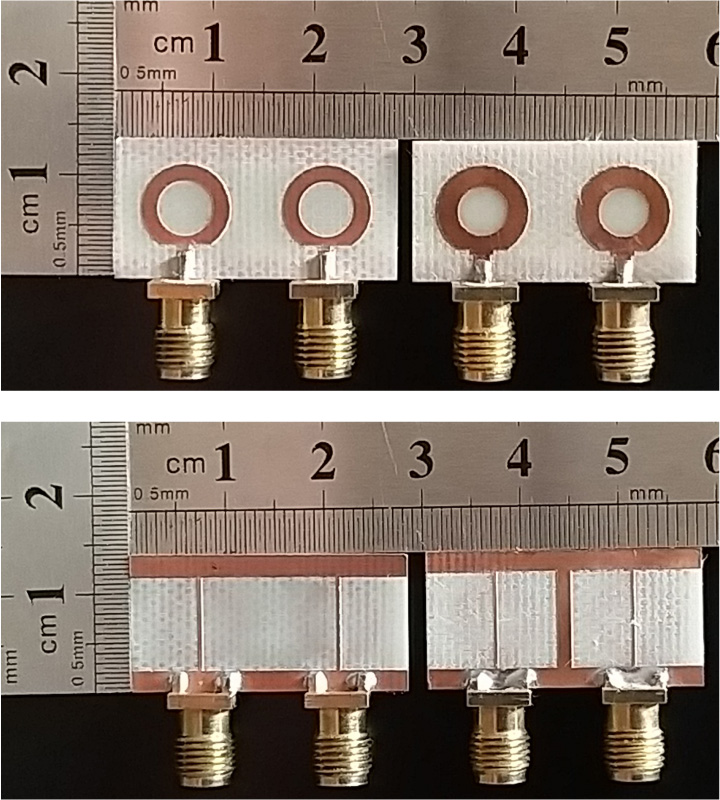
Highly-miniaturized MIMO antennas are very much desired for 5G-and-beyond hand-held devices as well as miniaturized stationary devices for WSN and IoT applications. In this paper, two compact two-port printed MIMO arrays, measuring 28 × 14 × 0.8 mm3 each, with and without isolation enhancement, are proposed. These arrays have nearly omni-directional radiation patterns over an extended operational bandwidth. The proposed designs feature an extended set of control parameters by which the desired performance could be achieved without compromising space and weight requirements or accuracy. They were fine tuned to provide an operational bandwidth about 4 GHz with relatively low starting frequencies of 2.7 and 3.3 GHz, respectively, allowing simultaneous WiFi, WiMax, 5G operation with a moderate gain and very high efficiency. Prototypes are manufactured and examined for impedance bandwidth, isolation, diversity, and radiation properties showing very good agreement with simulation results.
Highly-miniaturized Broadband MIMO Antennas for WLAN/WiMAX/5G and UWB Communications
2025-09-09
PIER B
Vol. 115, 110-119, 2025
download: 99
Improved Low Sidelobe Pattern Synthesis of Planar Arrays Having a Distorted Triangular or Rectangular Lattice Due to Row Displacements
Will P. M. N. Keizer
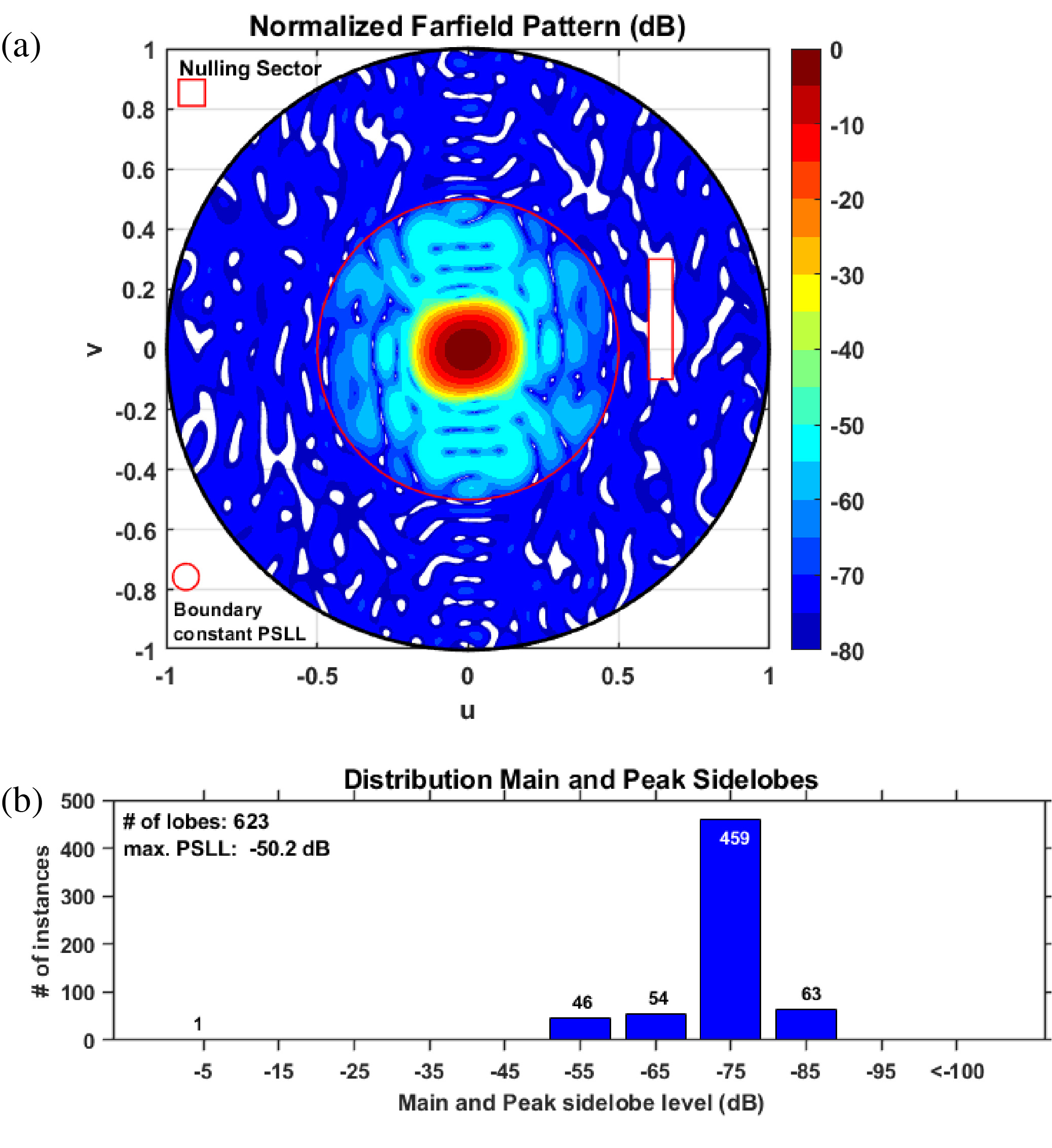
This paper describes how the low sidelobe pattern synthesis of planar arrays with a distorted triangular or rectangular lattice, caused by row displacements, can be improved using the iterative Fourier transform (IFT) method. Array antennas with a rectangular, or triangular lattice combined with row displacements have an array factor that lacks periodicity in cosine u-v space for the u-direction. This means that for the u-direction, the pattern synthesis using the IFT method is limited to far-field directions that belong to the rectangular sector of the array factor computed by the inverse 2D FFT. Missing far-field directions in the pattern synthesis occur when the width of the computed array factor (AF) in u-v space is <2. In this case, not all far-field directions in visible u-v space are engaged in the pattern synthesis. The solution to this problem is to reduce the inter-element spacing along the rows with a factor two by including dummy elements with zero excitation between the active elements in each row. In this way, the width of AF, computed by the inverse 2D FFT, is doubled in u-v space. This doubling will result in twice as many far-field directions in the u-direction being involved in the pattern synthesis. After successful synthesis, all dummy excitations are removed from the synthesized set of excitations. The element excitations thus obtained, without the dummy ones, still perform the same as the original excitation obtained from the pattern synthesis. Three examples will demonstrate the validity of this solution.
Improved Low Sidelobe Pattern Synthesis of Planar Arrays Having a Distorted Triangular or Rectangular Lattice due to Row Displacements
2025-09-08
PIER B
Vol. 115, 95-109, 2025
download: 142
Joint Beam Tracking Algorithm Research Based on RIS Selection
Chenwei Feng, Zhenzhen Lin, Yawei Sun, Yangbin Huang and Yinhua Wu
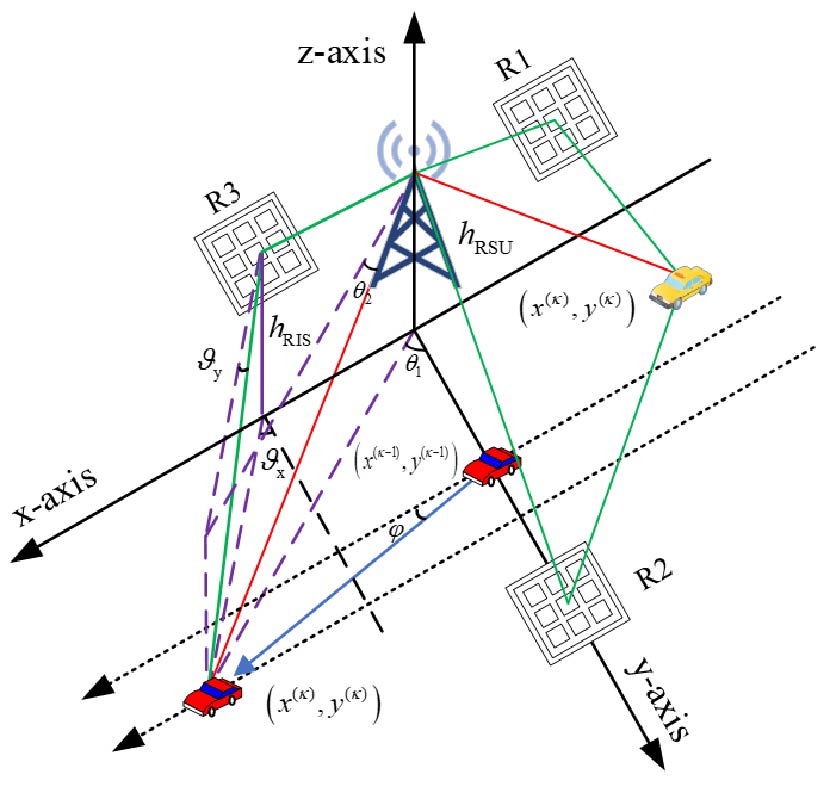
Reconfigurable Intelligent Surface (RIS), as one of the potential key technologies for 6G, can effectively solve the problem of millimeter-wave links being obstructed by constructing an intelligent and controllable wireless communication environment. In this paper, a joint beam tracking algorithm based on RIS selection is proposed for the scenario of multi-RIS-assisted millimeter-wave vehicle-to-infrastructure (V2I) communication. The aim is to select as few RISs as possible to aid communication while the performance of beam tracking can be maximized. Firstly, the beam tracking model jointly composed of line-of-sight paths and virtual line-of-sight paths constructed by multiple RISs is derived based on the multiple-input-multiple-output model in a 3D road scene, and the beam tracking under this combined path is realized based on the Extended Kalman Filter (EKF) algorithm. Second, for the RIS-assisted millimeter-wave V2I scenario, a new metric to quantify the beam tracking performance is comprehensively designed based on the received signal-to-noise ratio, the beam angle variation, and the distance variation from the RIS to the vehicle. Finally, based on this metric, the joint beam tracking is realized by the RIS selection strategy and the EKF algorithm under the combined path. Simulation results show that the joint beam tracking algorithm based on RIS selection proposed in this paper has lower beam tracking error than the traditional signal-to-noise ratio based beam tracking algorithm.
Joint Beam Tracking Algorithm Research Based on RIS Selection
2025-09-05
PIER B
Vol. 115, 78-94, 2025
download: 439
Advanced Numerical Approaches for Magnetic Force Calculations: A Comprehensive Review
Yuxin Yang, William Robertson, Azadeh Jafari and Maziar Arjomandi
Magnetic forces play a significant role in modern engineering applications, from medical imaging, data storage to transportation and industrial machinery. Accurate and efficient computational methods for magnetic force are necessary for engineering design and optimisation. However, different methods are typically based on distinct assumptions and are suited to different application scenarios. To assist researchers and engineers in selecting the most appropriate method for their specific needs, this review provides a comprehensive overview of various numerical approaches for calculating magnetic forces across different magnetic systems. Several key methods such as The Dipole Method, Filament Method, Finite Element Method (FEM), Energy Method, Maxwell Tensor Method, Integral Method and Boundary Element Method (BEM) are discussed in detail, demonstrating their fundamental theories, applicable scenarios, advantages, and limitations. Recent advancements and improved versions of these methods are also covered, demonstrating their enhanced accuracy and efficiency. In addition, the potential solutions of these methods and future directions of developing advanced magnetic force computation techniques are also discussed in this paper.
Advanced Numerical Approaches for Magnetic Force Calculations: A Comprehensive Review
2025-08-31
PIER B
Vol. 115, 63-77, 2025
download: 168
Wireless Dual-Hand Motion Perception Based on Millimeter-Wave FMCW MIMO Radar
Haipeng Wang, Zhongfang Ren, Wei Pan, Zheng Xiao and Yunbo Li
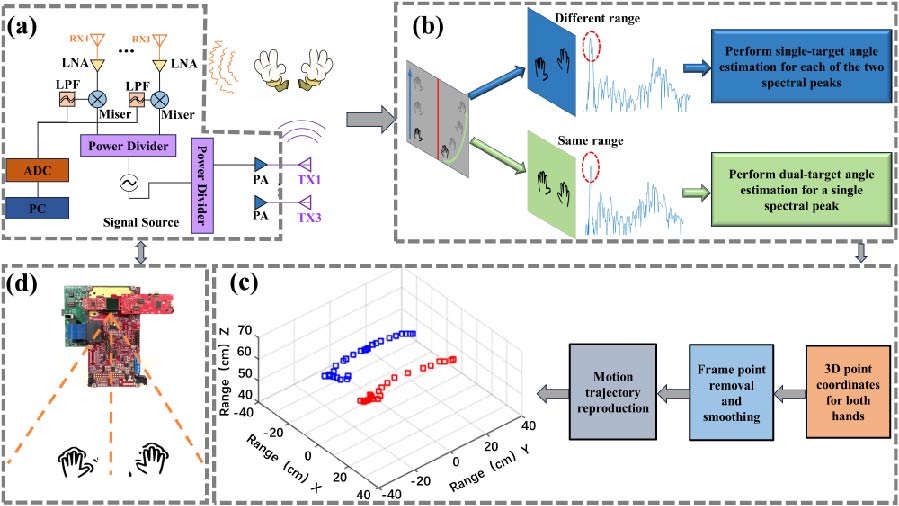
Radar-based hand gestures recognition have played an important role in developing human-computer interaction (HCI). However, when radar-based hand gesture recognition techniques are applied to multi-target scenarios, the challenges mainly involve problems of mutual interference and inaccurate recognition of hand motion when both hands move within the same plane. Here, we propose a dual-hand trajectory perception prototype based on a 60 GHz frequency-modulated continuous-wave (FMCW) multiple-input multiple-output (MIMO) radar sensor platform with an L-shaped virtual antenna array. To address the challenges, the approach involves estimating azimuth and elevation angles separately from the two data components derived from the L-shaped array through multiple signal classification (MUSIC) algorithm, incorporating spatial division techniques combined with digital beam formation (DBF). The dual-hand applications mainly include angle targets at two distinct distances or dual-angle targets at the same distance. Therefore, the target distances are first determined using range fast fourier transform (range FFT). If a single target distance is identified, we proceed to solve for the angles of two targets. Alternatively, if two distinct target distances are distinguished, we individually solve for the single-angle target corresponding to each distance. Furthermore, to mitigate noise inherent in the raw data of visualization, a frame point removal and smoothing algorithm is devised to refine the trajectories. Experimental verifications prove that the proposed multi-target motion perception algorithm by using a MIMO FMCW radar sensor platform can realize accurate recognition of air-writing gestures and enable tracking the trajectories of both single-handed and dual-handed targets in three-dimensional space. It also gives a new option for controlling the HCI.
Wireless Dual-hand Motion Perception Based on Millimeter-wave FMCW MIMO Radar
2025-08-27
PIER B
Vol. 115, 51-62, 2025
download: 181
Performance Analysis of Breast Phantom Layers Using UWB Antenna and Dimensionality Reduction Techniques
Sonal Amit Patil and Ashwini Naik
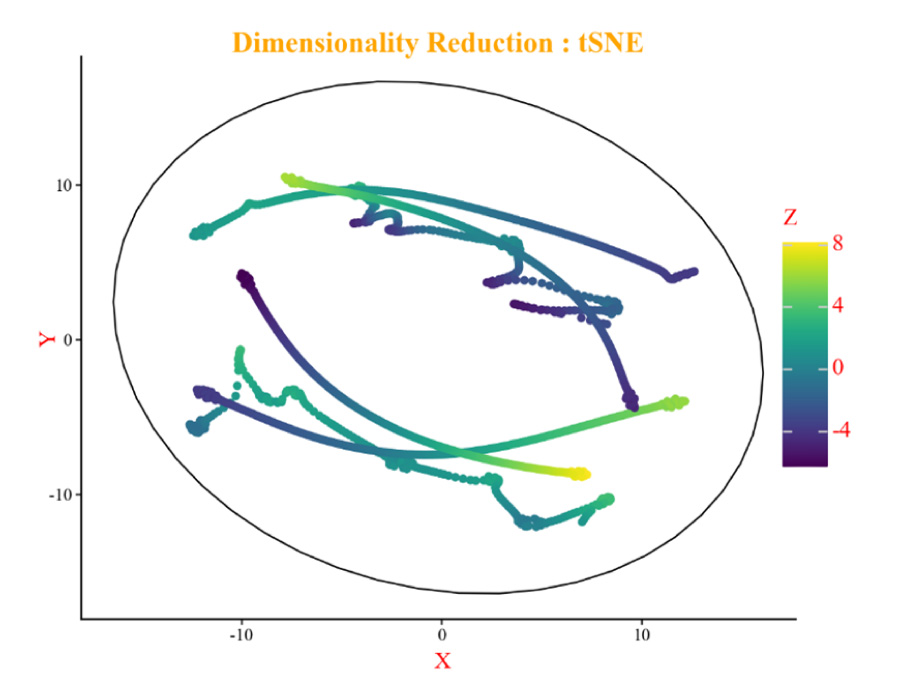
This work explores the data-driven approaches for breast tumor detection and analysis of different breast tissues by using microwave sensing technique. Microwave sensing offers a promising trade-off in tissue penetration depth and is prominent dielectric disparity between healthy and tumorous tissues at microwave frequencies. Tumor cells exhibit unique properties, such as increased water content and different ionic composition, which create distinct dielectric traits compared to healthy tissue. This frequently shows variations in loss characteristics compared to normal tissue and can exploit those differences for detection. The key parameter used is Specific Absorption Rate for the determination of tumor location. The differential absorption between healthy and tumor tissue is potentially aided in identifying the presence of lesion. The five sets of reflection characteristics are recorded with the system comprising UWB antenna with breast phantom by using VNA with a gap of 4-5 days. Further, the dimensionality reduction technique is applied to extract the features using PCA and tSNE. In order to enhance the detection accuracy, dimensionality reduction techniques are used in tandem with the supervised machine learning approach. Among the four supervised algorithms, including SVM, KNN, RF and MLP, the random forest was found to be the most optimal for the data with an auc score of 99.97%.
Performance Analysis of Breast Phantom Layers Using UWB Antenna and Dimensionality Reduction Techniques
2025-08-22
PIER B
Vol. 115, 38-50, 2025
download: 146
A New Spatial Detection Technique Using New RF Codes for Microwave-Based Object Localization System
Mohd Adzimnuddin Mohd Nor Azami, Mohamad Zoinol Abidin Abd Aziz, Abd Shukur Ja'afar, Mohd Riduan Bin Ahmad and Mohd Sufian Abu Talib
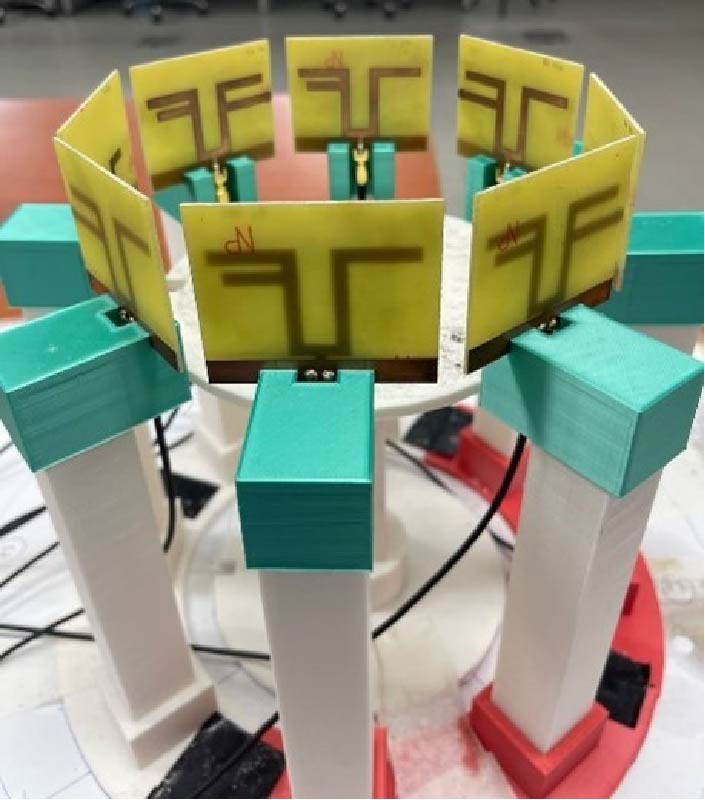
Microwave-based object localization system is a noninvasive technique that uses microwave signals to detect, map, and analyze the properties of materials. This approach provides information about hidden objects within materials. However, the localization process can be complex, requiring sophisticated algorithms to interpret the signals accurately. This study proposes a new technique for microwave-based object localization system using Radio Frequency (RF) Codes to perform spatial detection with four pairs of RF Code sensors representing bits of ``111,'' ``110,'' ``101,'' and ``011.'' The system incorporates four identical RF Code paths arranged symmetrically around a circular container, improving spatial coverage and enabling accurate detection of hidden objects located at eight different spatial positions. Steel is used as the hidden object, while Stone serves as Material X in this system. The system achieved an average detection accuracy of 70% and a detection efficiency close to 100% across all spatial positions. Additionally, the RF Code performance chart is designed to interpret the detection accuracy results, making the analysis more accessible and practical. The proposed system has potential applications in nondestructive testing, material analysis, industrial inspection, and security systems, offering a reliable and efficient solution for detecting hidden or embedded objects.
A New Spatial Detection Technique Using New RF Codes for Microwave-based Object Localization System
2025-08-21
PIER B
Vol. 115, 25-37, 2025
download: 437
SDF-Net: A Space-Frequency Dynamic Fusion Network for SARATR
Xinlin He, Chao Li, Kaiming Li and Ying Luo
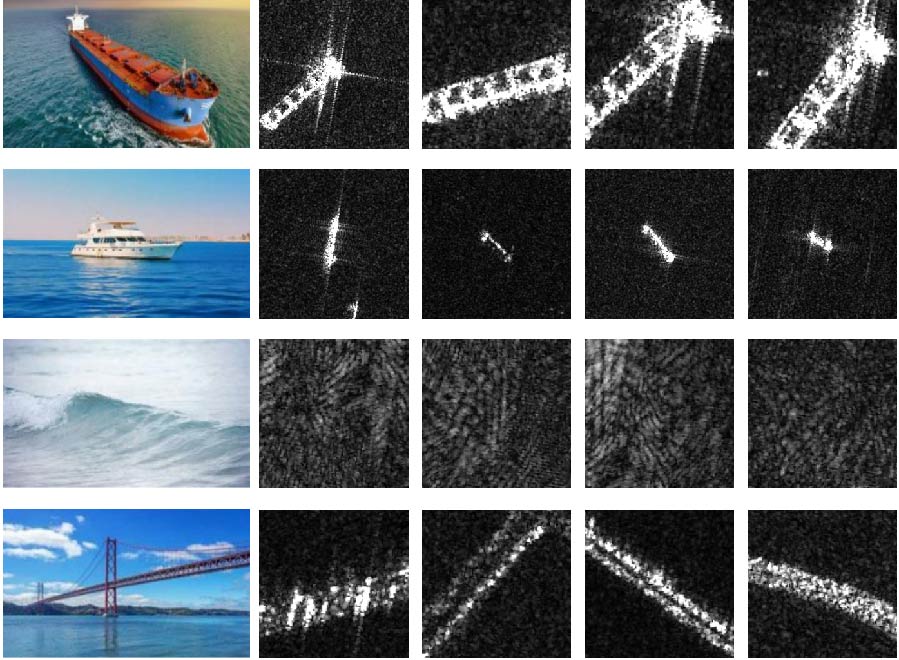
With the development of deep learning networks, convolutional neural network (CNN) and other techniques provide effective detection methods for synthetic aperture radar automatic target recognition (SAR ATR), and have been widely used. However, due to the objective factors such as complex scene interference inherent in SAR images, the recognition rate of traditional time-domain processing of SAR images is not high enough, which is still a key problem to be solved urgently. To solve this problem, we propose a space-frequency dynamic fusion network (SDF-Net). The network consists of four space-frequency joint processing (SJP) modules connected in series, each comprising convolutional layers and unbiased fast fourier convolution (UFFC) units at different scales to achieve joint feature extraction in the spatial and frequency domains. Building on a four-level series structure, residual paths from the original image features are introduced into the inputs of SJP2, SJP3, and SJP4. Additionally, residual paths from the features output by SJP1 are introduced into the inputs of SJP3 and SJP4, and from SJP2 into the input of SJP4. By incorporating residual paths of features from different stages, the network facilitates cross-stage information interaction, effectively integrating long-distance contextual information. At each fusion node, dynamically generated weights are used for feature fusion, followed by sequential progressive processing through spatial-frequency joint processing, ultimately leading to classification and recognition results. Experimental results on the MSTAR dataset and the FUSAR-Ship1.0 dataset show that compared to traditional methods, this network algorithm achieves a higher recognition rate.
SDF-Net: A Space-frequency Dynamic Fusion Network for SARATR
2025-08-16
PIER B
Vol. 115, 15-24, 2025
download: 119
Admittance and Impedance Relations at Moving Boundaries
Vito Lancellotti
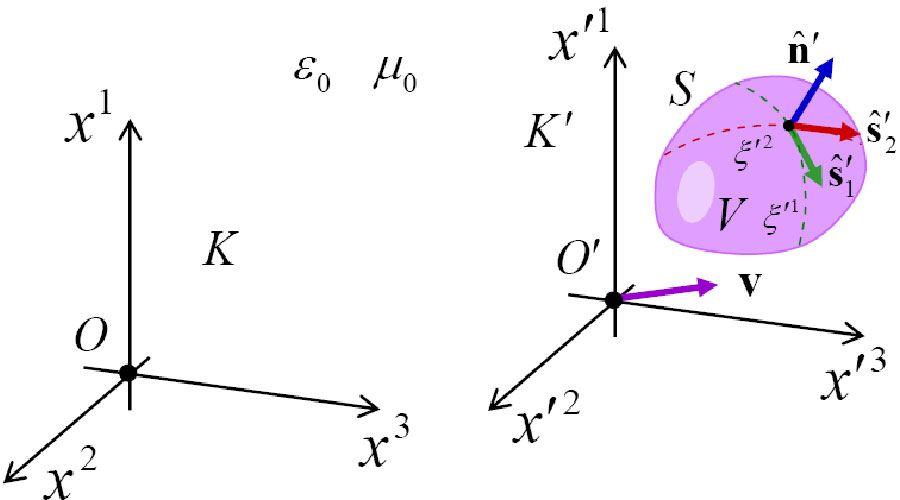
Admittance and impedance (Leontovich) matching conditions at the boundary of a good conductor find widespread usage in the formulation and (numerical) solution of electromagnetic problems. Starting with the known relationships at a stationary interface, we derive manifestly covariant admittance and impedance relations in a flat space-time for a conducting body which moves with uniform velocity in free space. Explicit formulas (in the ordinary space, that is) are given for both isotropic and anisotropic conductors. Under the same hypotheses, we also derive, at the conducting interface, the surface density of four-force by means of the normal component of the relevant energy-momentum tensor. The low-velocity limit of the formulas is also presented because it is of particular interest for practical applications. Moreover, since the covariant admittance and impedance relations as well as the matching condition of the energy-momentum tensor require the unitary four-vector perpendicular to a surface in motion, we outline, in the appendices, the derivation of unitary four-vectors tangential to a hyper-line and perpendicular to a hyper-surface in the Lorentz space.
Admittance and Impedance Relations at Moving Boundaries
2025-08-11
PIER B
Vol. 115, 1-14, 2025
download: 211
Compact Mechanically Reconfigurable DMS-BPF Filtenna with MIMO Configuration for Wide-to-Narrowband Conversion in Sub-6 GHz and X-Band Applications
Amany A. Megahed, Rania Hamdy Elabd, Ahmed Jamal Abdullah Al-Gburi and Marwa E. Mousa
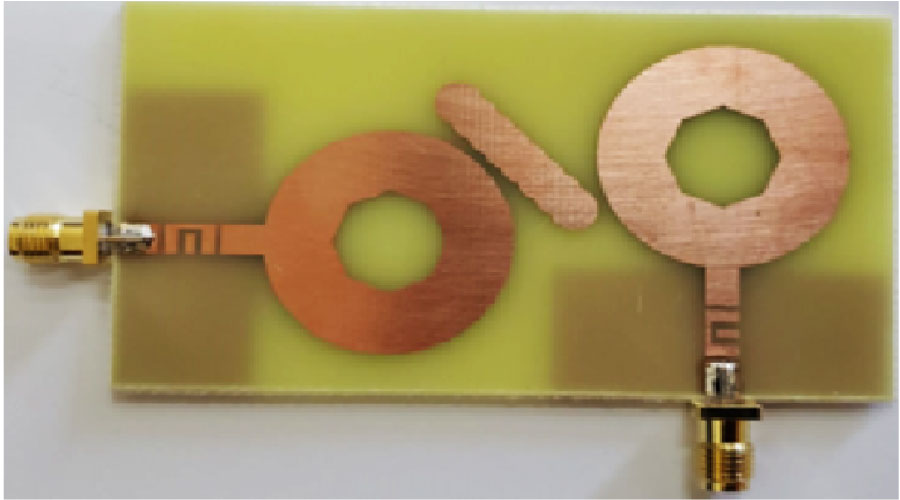
This paper introduces a novel, compact, frequency-reconfigurable multiple-input multiple-output (MIMO) filtenna that integrates a defected microstrip structure (DMS)-based bandpass filter (BPF) with a wideband circular patch antenna to support dynamic tuning across sub-6 GHz and X-band applications. The antenna operates efficiently as a wideband system while enabling mechanically controlled narrowband filtering through a reconfigurable BPF structure embedded in the feedline. Tunability is achieved using discrete switching mechanisms, allowing frequency selection from 5.9 GHz up to 12 GHz, with a peak gain of 6 dBi and high radiation efficiency. A two-port MIMO configuration with orthogonal element placement and an embedded decoupling structure ensures superior isolation (< –48 dB), extremely low envelope correlation coefficient (ECC < 0.0035), and diversity gain (DG) approaching 9.998 dB. The proposed antenna demonstrates excellent performance metrics with a compact footprint of 80 × 45 mm², making it well-suited for compact wireless applications in environments with limited spectral availability.
Compact Mechanically Reconfigurable DMS-BPF Filtenna with MIMO Configuration for Wide-to-Narrowband Conversion in Sub-6 GHz and X-Band Applications