Vol. 130
Latest Volume
All Volumes
PIERL 130 [2026] PIERL 129 [2026] PIERL 128 [2025] PIERL 127 [2025] PIERL 126 [2025] PIERL 125 [2025] PIERL 124 [2025] PIERL 123 [2025] PIERL 122 [2024] PIERL 121 [2024] PIERL 120 [2024] PIERL 119 [2024] PIERL 118 [2024] PIERL 117 [2024] PIERL 116 [2024] PIERL 115 [2024] PIERL 114 [2023] PIERL 113 [2023] PIERL 112 [2023] PIERL 111 [2023] PIERL 110 [2023] PIERL 109 [2023] PIERL 108 [2023] PIERL 107 [2022] PIERL 106 [2022] PIERL 105 [2022] PIERL 104 [2022] PIERL 103 [2022] PIERL 102 [2022] PIERL 101 [2021] PIERL 100 [2021] PIERL 99 [2021] PIERL 98 [2021] PIERL 97 [2021] PIERL 96 [2021] PIERL 95 [2021] PIERL 94 [2020] PIERL 93 [2020] PIERL 92 [2020] PIERL 91 [2020] PIERL 90 [2020] PIERL 89 [2020] PIERL 88 [2020] PIERL 87 [2019] PIERL 86 [2019] PIERL 85 [2019] PIERL 84 [2019] PIERL 83 [2019] PIERL 82 [2019] PIERL 81 [2019] PIERL 80 [2018] PIERL 79 [2018] PIERL 78 [2018] PIERL 77 [2018] PIERL 76 [2018] PIERL 75 [2018] PIERL 74 [2018] PIERL 73 [2018] PIERL 72 [2018] PIERL 71 [2017] PIERL 70 [2017] PIERL 69 [2017] PIERL 68 [2017] PIERL 67 [2017] PIERL 66 [2017] PIERL 65 [2017] PIERL 64 [2016] PIERL 63 [2016] PIERL 62 [2016] PIERL 61 [2016] PIERL 60 [2016] PIERL 59 [2016] PIERL 58 [2016] PIERL 57 [2015] PIERL 56 [2015] PIERL 55 [2015] PIERL 54 [2015] PIERL 53 [2015] PIERL 52 [2015] PIERL 51 [2015] PIERL 50 [2014] PIERL 49 [2014] PIERL 48 [2014] PIERL 47 [2014] PIERL 46 [2014] PIERL 45 [2014] PIERL 44 [2014] PIERL 43 [2013] PIERL 42 [2013] PIERL 41 [2013] PIERL 40 [2013] PIERL 39 [2013] PIERL 38 [2013] PIERL 37 [2013] PIERL 36 [2013] PIERL 35 [2012] PIERL 34 [2012] PIERL 33 [2012] PIERL 32 [2012] PIERL 31 [2012] PIERL 30 [2012] PIERL 29 [2012] PIERL 28 [2012] PIERL 27 [2011] PIERL 26 [2011] PIERL 25 [2011] PIERL 24 [2011] PIERL 23 [2011] PIERL 22 [2011] PIERL 21 [2011] PIERL 20 [2011] PIERL 19 [2010] PIERL 18 [2010] PIERL 17 [2010] PIERL 16 [2010] PIERL 15 [2010] PIERL 14 [2010] PIERL 13 [2010] PIERL 12 [2009] PIERL 11 [2009] PIERL 10 [2009] PIERL 9 [2009] PIERL 8 [2009] PIERL 7 [2009] PIERL 6 [2009] PIERL 5 [2008] PIERL 4 [2008] PIERL 3 [2008] PIERL 2 [2008] PIERL 1 [2008]
2026-04-03 Latest Published
By Hao Shen Borui Bian Dan Zhang
Progress In Electromagnetics Research Letters, Vol. 130, 15-22, 2026
Abstract
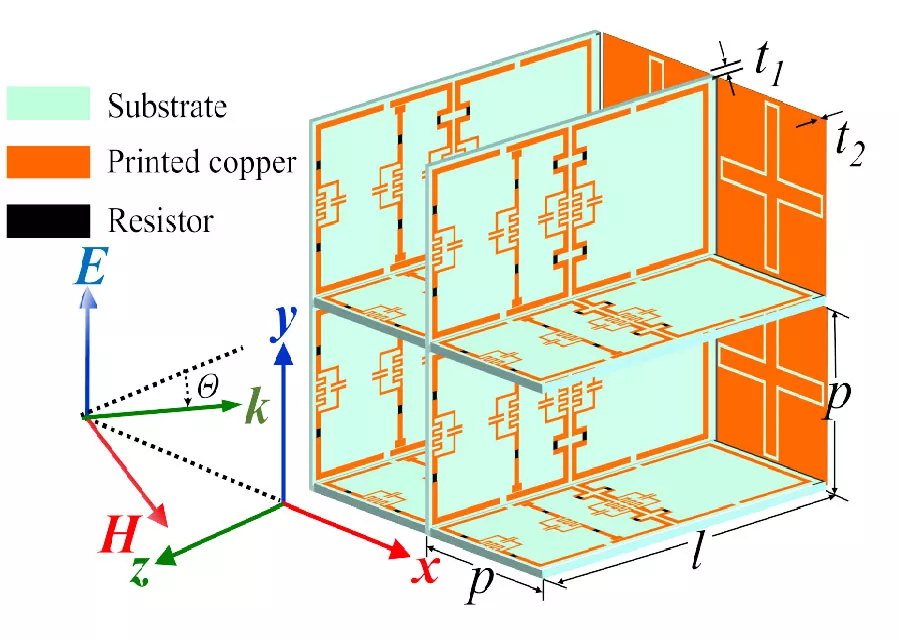
This letter presents a high-selectivity three-dimensional (3-D) dual-polarized frequency-selective rasorber (FSR). The proposed design comprises a 3-D array of multiple lossy strip-type resonators integrated with a planar bandpass frequency-selective surface (FSS). While the multiple resonances of the strips provide wideband absorption, a parallel LC structure is loaded within each resonator to achieve a low-loss transmission band. Numerical and experimental results demonstrate an ultra-wide low-reflection band with a fractional bandwidth (FBW) of 162.2% from 2.0 to 19.2 GHz. This includes a transmission band at 10 GHz with an insertion loss of 0.47 dB, alongside a lower frequency absorption band (2.0-9.5 GHz, FBW 130.4%) and an upper frequency absorption band (10.5-19.2 GHz, FBW 58.6%). The operating mechanism is further validated by an equivalent circuit model and measurement of a fabricated prototype, showing good agreement between theory and experiment.
2026-04-03
PIER Letters
Vol. 130, 15-22, 2026
download: 16
A High-Selectivity 3-D Dual-Polarized Frequency Selective Rasorber with Wide Absorption Bands Based on Multiple Strip-Type Resonators
Hao Shen, Borui Bian and Dan Zhang
This letter presents a high-selectivity three-dimensional (3-D) dual-polarized frequency-selective rasorber (FSR). The proposed design comprises a 3-D array of multiple lossy strip-type resonators integrated with a planar bandpass frequency-selective surface (FSS). While the multiple resonances of the strips provide wideband absorption, a parallel LC structure is loaded within each resonator to achieve a low-loss transmission band. Numerical and experimental results demonstrate an ultra-wide low-reflection band with a fractional bandwidth (FBW) of 162.2% from 2.0 to 19.2 GHz. This includes a transmission band at 10 GHz with an insertion loss of 0.47 dB, alongside a lower frequency absorption band (2.0-9.5 GHz, FBW 130.4%) and an upper frequency absorption band (10.5-19.2 GHz, FBW 58.6%). The operating mechanism is further validated by an equivalent circuit model and measurement of a fabricated prototype, showing good agreement between theory and experiment.
A High-selectivity 3-D Dual-polarized Frequency Selective Rasorber with Wide Absorption Bands Based on Multiple Strip-type Resonators
2026-03-24
PIER Letters
Vol. 130, 9-14, 2026
download: 115
Design of a Tunable Wide-Stopband Plasmonic Filter Based on a Metal-Insulator-Metal (MIM) Waveguide for Mid-Infrared Applications
Ahmed Lounis, Imane Zegaar, Hocine Bensalah and Abdesselam Hocini
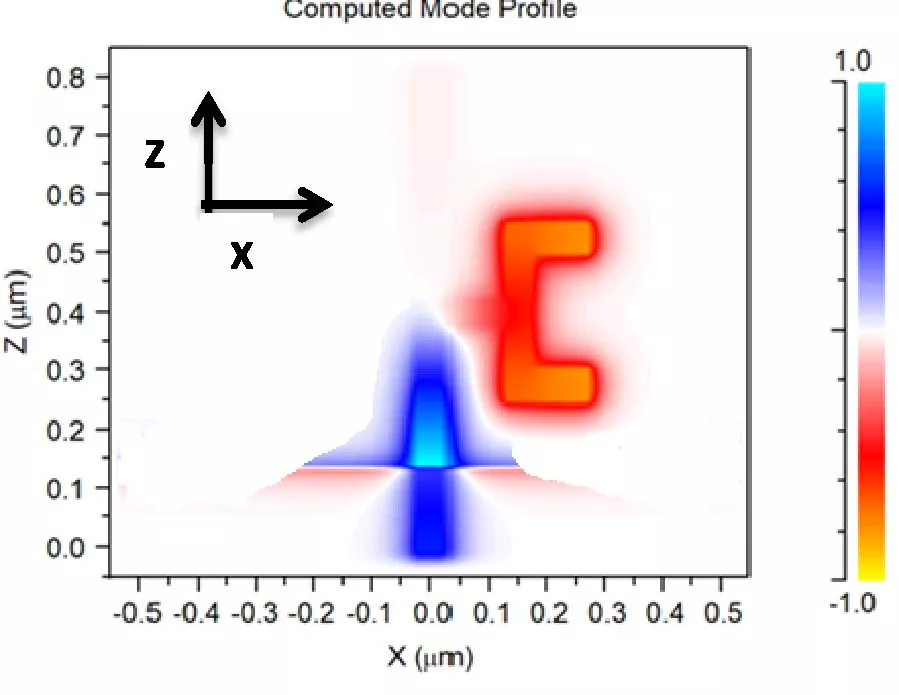
Wide-stopband plasmonic filters are essential components in compact mid-infrared (MIR) photonic systems. This work proposes a geometrically tunable wide-stopband plasmonic filter based on a metal-insulator-metal (MIM) waveguide with dual resonator cavities. The optical response is numerically investigated using the two-dimensional finite-difference time-domain (2D FDTD) method. The influence of the resonator height H2 and the inter-cavity distance D on the stopband characteristics is analyzed. The symmetric dual-cavity configuration enables effective control of the stopband bandwidth and central wavelength. The design achieves a significantly broadened stopband while maintaining compactness and high transmission selectivity, making it a promising candidate for integration into mid-infrared photonic and sensing systems.
Design of a Tunable Wide-stopband Plasmonic Filter Based on a Metal-Insulator-Metal (MIM) Waveguide for Mid-infrared Applications
2026-03-18
PIER Letters
Vol. 130, 1-8, 2026
download: 139
Design and Experimental Validation of Linear to Circular Polarization Converter for Point to Point THz Communication
Murtaza Waheed, Javid Ahmad Ganie, Mingyan Zhong, Qusay Raghib Al-Taai, Kushmanda Saurav and Chong Li
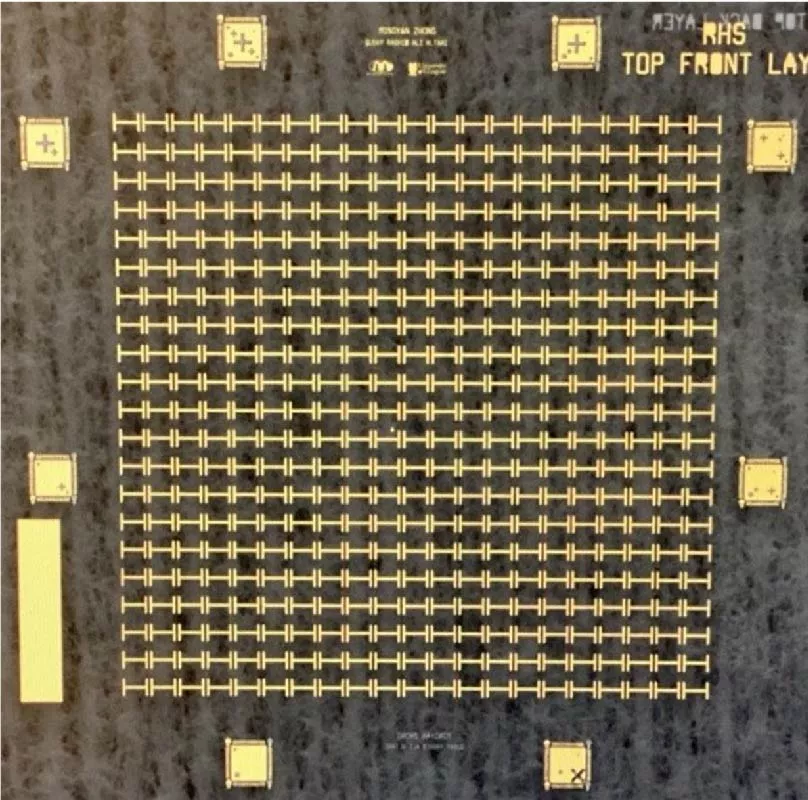
This letter presents a compact, low profile singe substrate transmissive linear-to-circular polarization (LCP) converter designed and experimentally validated for point-to-point THz communication bands. The proposed LCP converter consists of an H-shaped gold metallic pattern deposited on both sides of a 100 μm-thick fused silica substrate. The LCP converter operates within the 0.225-0.307 THz frequency band, achieving a simulated 3-dB axial ratio bandwidth of 30.8% in simulation. Owing to its wide axial ratio bandwidth, the proposed design is a promising candidate for point-to-point THz communication applications. The performance of the proposed converter is verified through surface current distribution, which explains the occurrence of Huygens response and equivalent circuit model. The proposed converter exhibits a measured 3-dB axial-ratio bandwidth of 27.8% in the frequency band 0.229-0.303 THz. The simple geometry and single-substrate implementation, with a thin profile and wide 3-dB axial ratio bandwidth, make the proposed design suitable for practical deployment scenarios.
Design and Experimental Validation of Linear to Circular Polarization Converter for Point to Point THz Communication