Vol. 127
Latest Volume
All Volumes
PIERL 128 [2025] PIERL 127 [2025] PIERL 126 [2025] PIERL 125 [2025] PIERL 124 [2025] PIERL 123 [2025] PIERL 122 [2024] PIERL 121 [2024] PIERL 120 [2024] PIERL 119 [2024] PIERL 118 [2024] PIERL 117 [2024] PIERL 116 [2024] PIERL 115 [2024] PIERL 114 [2023] PIERL 113 [2023] PIERL 112 [2023] PIERL 111 [2023] PIERL 110 [2023] PIERL 109 [2023] PIERL 108 [2023] PIERL 107 [2022] PIERL 106 [2022] PIERL 105 [2022] PIERL 104 [2022] PIERL 103 [2022] PIERL 102 [2022] PIERL 101 [2021] PIERL 100 [2021] PIERL 99 [2021] PIERL 98 [2021] PIERL 97 [2021] PIERL 96 [2021] PIERL 95 [2021] PIERL 94 [2020] PIERL 93 [2020] PIERL 92 [2020] PIERL 91 [2020] PIERL 90 [2020] PIERL 89 [2020] PIERL 88 [2020] PIERL 87 [2019] PIERL 86 [2019] PIERL 85 [2019] PIERL 84 [2019] PIERL 83 [2019] PIERL 82 [2019] PIERL 81 [2019] PIERL 80 [2018] PIERL 79 [2018] PIERL 78 [2018] PIERL 77 [2018] PIERL 76 [2018] PIERL 75 [2018] PIERL 74 [2018] PIERL 73 [2018] PIERL 72 [2018] PIERL 71 [2017] PIERL 70 [2017] PIERL 69 [2017] PIERL 68 [2017] PIERL 67 [2017] PIERL 66 [2017] PIERL 65 [2017] PIERL 64 [2016] PIERL 63 [2016] PIERL 62 [2016] PIERL 61 [2016] PIERL 60 [2016] PIERL 59 [2016] PIERL 58 [2016] PIERL 57 [2015] PIERL 56 [2015] PIERL 55 [2015] PIERL 54 [2015] PIERL 53 [2015] PIERL 52 [2015] PIERL 51 [2015] PIERL 50 [2014] PIERL 49 [2014] PIERL 48 [2014] PIERL 47 [2014] PIERL 46 [2014] PIERL 45 [2014] PIERL 44 [2014] PIERL 43 [2013] PIERL 42 [2013] PIERL 41 [2013] PIERL 40 [2013] PIERL 39 [2013] PIERL 38 [2013] PIERL 37 [2013] PIERL 36 [2013] PIERL 35 [2012] PIERL 34 [2012] PIERL 33 [2012] PIERL 32 [2012] PIERL 31 [2012] PIERL 30 [2012] PIERL 29 [2012] PIERL 28 [2012] PIERL 27 [2011] PIERL 26 [2011] PIERL 25 [2011] PIERL 24 [2011] PIERL 23 [2011] PIERL 22 [2011] PIERL 21 [2011] PIERL 20 [2011] PIERL 19 [2010] PIERL 18 [2010] PIERL 17 [2010] PIERL 16 [2010] PIERL 15 [2010] PIERL 14 [2010] PIERL 13 [2010] PIERL 12 [2009] PIERL 11 [2009] PIERL 10 [2009] PIERL 9 [2009] PIERL 8 [2009] PIERL 7 [2009] PIERL 6 [2009] PIERL 5 [2008] PIERL 4 [2008] PIERL 3 [2008] PIERL 2 [2008] PIERL 1 [2008]
2025-10-24
PIER Letters
Vol. 127, 69-75, 2025
download: 95
Circularly Polarized Holographic Metasurface Antenna with Metal Vias and Its Gain Enhancement Analysis
Chunyu Liu, Chen Zhang, Xuwen Guo and Huayong Zou
This paper presents a design method for circularly polarized metasurface antennas by integrating waveguide-fed metasurfaces with optical holography principles. Two interleaved linear slot elements on the metasurface top layer are excited by a reference wave from the feed, generating a circularly polarized beam. Simply adjusting the position of each slot element steers the beam in the desired direction. To enhance gain, metal vias are added around the antenna perimeter, reducing reference wave leakage. To validate this method, two 24 GHz circularly polarized holographic metasurfaces were simulated and experimentally characterized. Measurements show a 1.23 dB gain enhancement in the metasurface antenna with metal vias. Simulated and measured results validate the antenna's performance. This approach yields compact, low-profile antennas without requiring a separate feed network. Furthermore, the structure can be extended to create reconfigurable circularly polarized antennas, demonstrating significant potential in this field.
Circularly Polarized Holographic Metasurface Antenna with Metal Vias and Its Gain Enhancement Analysis
2025-10-20
PIER Letters
Vol. 127, 59-67, 2025
download: 97
Reconfigurable Multilayer Graphene Antenna for Terahertz Sensing: Machine Learning-Based Frequency and Bandwidth Estimation
Hamza Ben Krid, Hlali Aymen and Hassen Zairi
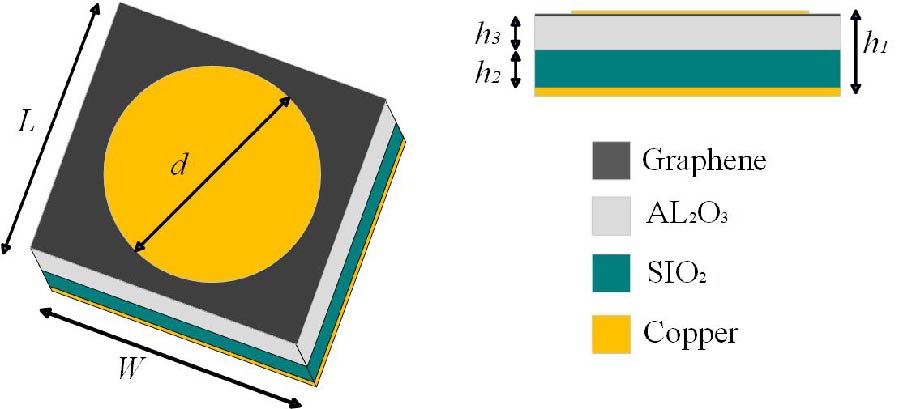
This paper presents a reconfigurable multilayer graphene antenna for terahertz sensing, machine learning-based frequency and bandwidth estimation. The antenna utilizes the tunable electromagnetic properties of graphene, enabling dynamic reconfiguration of the resonant frequency and bandwidth. By adjusting key physical parameters including chemical potential, relaxation time, and temperatur, the antenna achieves frequency tuning from 1.542 THz to 1.562 THz, with an improved return loss reaching -30.8 dB and a bandwidth range from 91 GHz to 96 GHz. Furthermore, the resonance frequency and bandwidth are predicted using machine learning algorithms, including Random Forest and XGBoost, with results that closely match simulation data. These results highlight the potential of the proposed structure not only for adaptive communication systems but also for terahertz sensing platforms requiring frequency agility and environmental responsiveness.
Reconfigurable Multilayer Graphene Antenna for Terahertz Sensing: Machine Learning-based Frequency and Bandwidth Estimation
2025-10-14
PIER Letters
Vol. 127, 51-57, 2025
download: 99
A Generative Optimization Method for Reflectarray Antennas Combining Self-Supervised Learning and Transfer Learning
Hao Huang and Xue-Song Yang
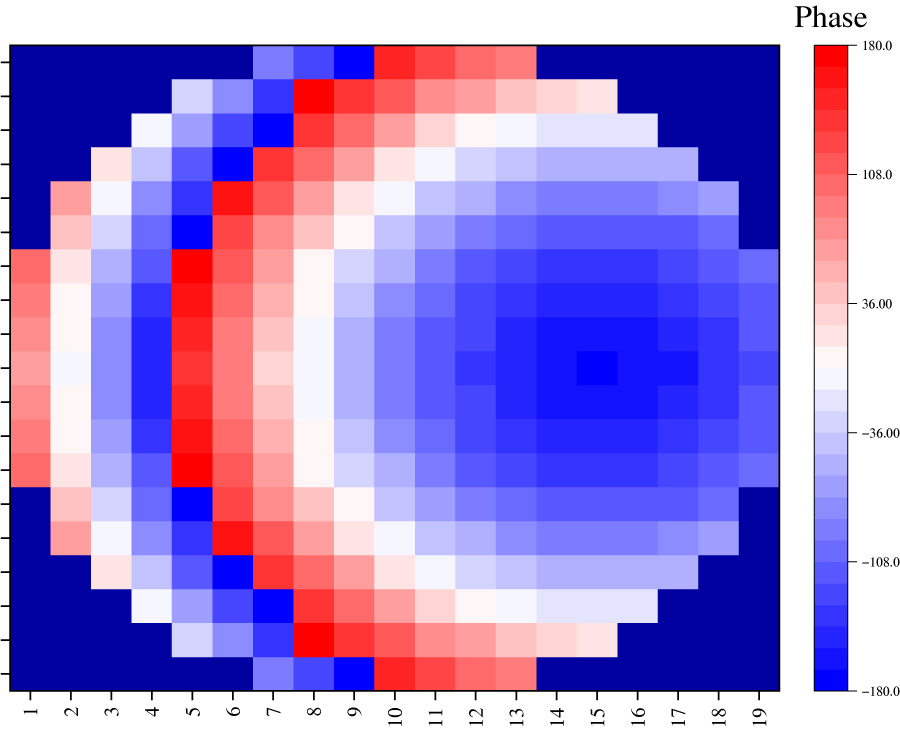
A hybrid machine-learning-based optimization method is proposed for quick optimization of antenna shape design. The hybrid optimization method combines self-supervised learning and transfer learning. The application of self-supervised learning avoids the requirement to obtain labeled simulation data for electromagnetic samples, thereby reducing the difficulty of sample construction. The introduction of transfer learning further improves the sample utilization and optimizes efficiency in electromagnetic tasks. The proposed method enables rapid and high-degree-of-freedom optimization of antennas. To validate its effectiveness, a reflectarray antenna design incorporating distinct elements is employed as a case study. Simulation results indicate that the designed antenna exhibits a realized gain of 26.3 dBi and 46% aperture efficiency at the center frequency, and each element has a highly flexible independent structural design. During the optimization process, the proposed hybrid method demonstrates higher optimization efficiency than traditional methods, while significantly reducing sample construction time.
A Generative Optimization Method for Reflectarray Antennas Combining Self-supervised Learning and Transfer Learning
2025-09-09
PIER Letters
Vol. 127, 45-49, 2025
download: 239
Single-Cavity Triple-Mode Bandpass Filter Based on a Novel Combined-Type Rectangular Patch Resonator
Yaoran Yue and Yang Liu
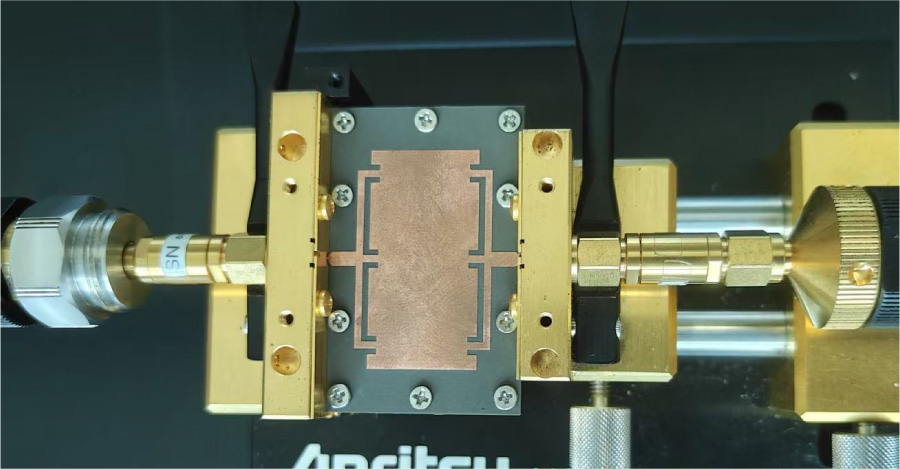
A novel single-cavity triple-mode combined-type rectangular patch resonator (CRPR) is proposed in this paper, which is realized by integrating the rectangular patch structure with the rectangular substrate integrated waveguide (RSIW) structure. By cleverly designing the length-to-width ratios of both the RSIW structure and the patch structure, as well as the size ratio between them, the three higher-order modes of the CRPR can be resonance. Then, a highly selective bandpass filter (BPF) is realized through a special feeding structure. To demonstrate the method, an instance of a BPF is designed, synthesized, fabricated, and measured. The consistency of all results validates the effectiveness of the proposed design method. The proposed filter offers advantages such as relatively compact size, easy integration, and high selectivity.
Single-cavity Triple-mode Bandpass Filter Based on a Novel Combined-type Rectangular Patch Resonator
2025-08-29
PIER Letters
Vol. 127, 39-44, 2025
download: 223
Dynamically Tunable Helical Antenna System for Robust Quadrotor Communication Systems
Ethan Chien and Jan Steckel
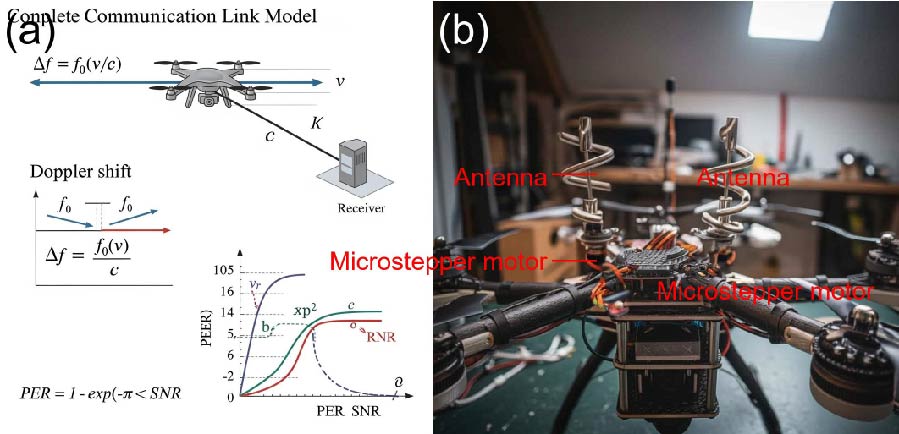
Unmanned aerial FPV systems demand ultra-low latency, high-reliability communication. At high speeds and in cluttered environments, Doppler shifts and rapid multipath changes significantly increase packet error rates (PER). This paper introduces a novel solution: real-time geometry tuning of a circularly polarized helical antenna array to mitigate these effects in ExpressLRS (ELRS) long-range FPV control links. Using full-wave simulations (Ansys HFSS) and blind field trials, we validate system performance. A new analytical framework integrates Doppler-induced frequency offset into the antenna's radiation pattern and PER model. The adaptive array autonomously adjusts coil pitch and diameter based on velocity and attitude, reducing PER by 20% at speeds over 150 mph. It also maintains near-unity VSWR, preventing reflection spikes, and halves RSSI variation, indicating improved link stability. These results demonstrate that tunable helical antennas can effectively mitigate Doppler and multipath impairments in high-mobility UAV environments, informing future antenna designs and supporting the development of AI-integrated, adaptive RF systems for drone racing and autonomous swarms.
Dynamically Tunable Helical Antenna System for Robust Quadrotor Communication Systems
2025-08-15
PIER Letters
Vol. 127, 29-37, 2025
download: 358
Continuous High-Order Sliding Mode Optimization Control of PMSM Based on STSMO
Junqin Liu, Zhentong Wang, Feng Deng, Kaihui Zhao and Xiangfei Li
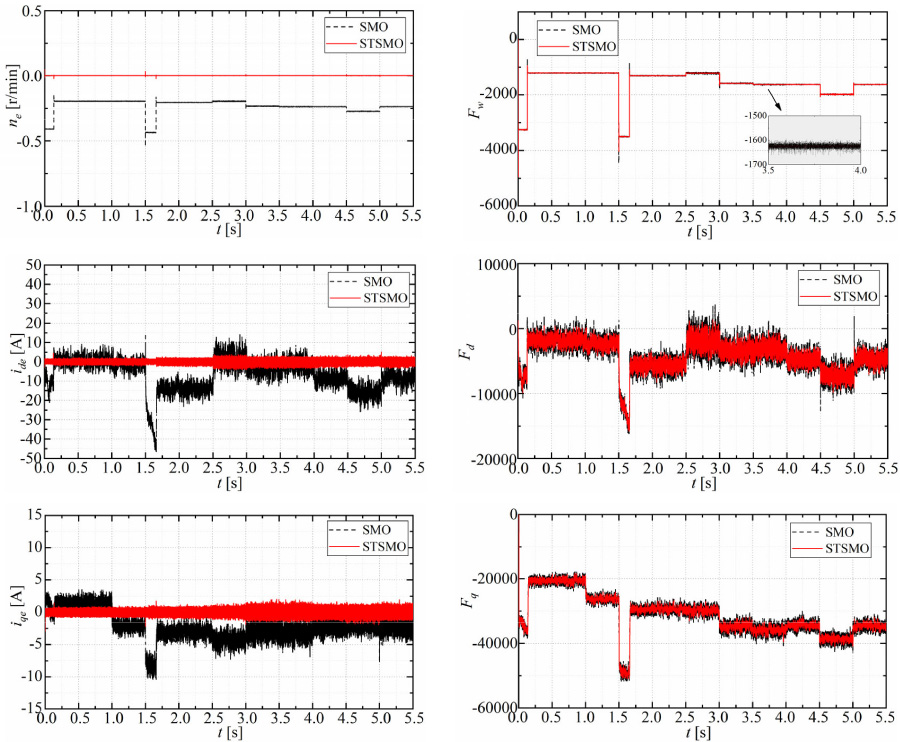
Improving only the speed-loop controller in a PMSM drive system is insufficient to address limitations in the current loops, such as integral saturation and severe oscillations. To achieve high-performance current control across the speed-current loop structure, this paper proposes an improved non-singular fast terminal sliding mode continuous composite control (INFTSMC) method, integrated with a fast super-twisting sliding mode observer (STSMO). First, a state-space model of the PMSM speed-current loops is established. Then, the speed and current loop controllers are designed using the STSMO within the INFTSMC framework. The fast super-twisting control law is adopted to reduce the number of observer parameters and to mitigate the severe oscillations caused by high gains in conventional sliding mode observers. Finally, the proposed composite control strategy is compared with conventional PI and SMC+SMO controllers through both simulation and RT-LAB experiments. The results demonstrate that the proposed approach significantly enhances the dynamic response performance of the PMSM drive system.
Continuous High-order Sliding Mode Optimization Control of PMSM Based on STSMO
2025-07-30
PIER Letters
Vol. 127, 23-28, 2025
download: 449
Classification of Severe Bacterial Pneumonia Based on CT Images and Deep Learning
Ke Cui, Dawei Gong, Xiaobo Chen, Youzu Xu, Haiyan Li, Yefei Zhu, Julian Evans, Xin Gong, Zhenzhan Shi, Yinghe Xu and Sailing He
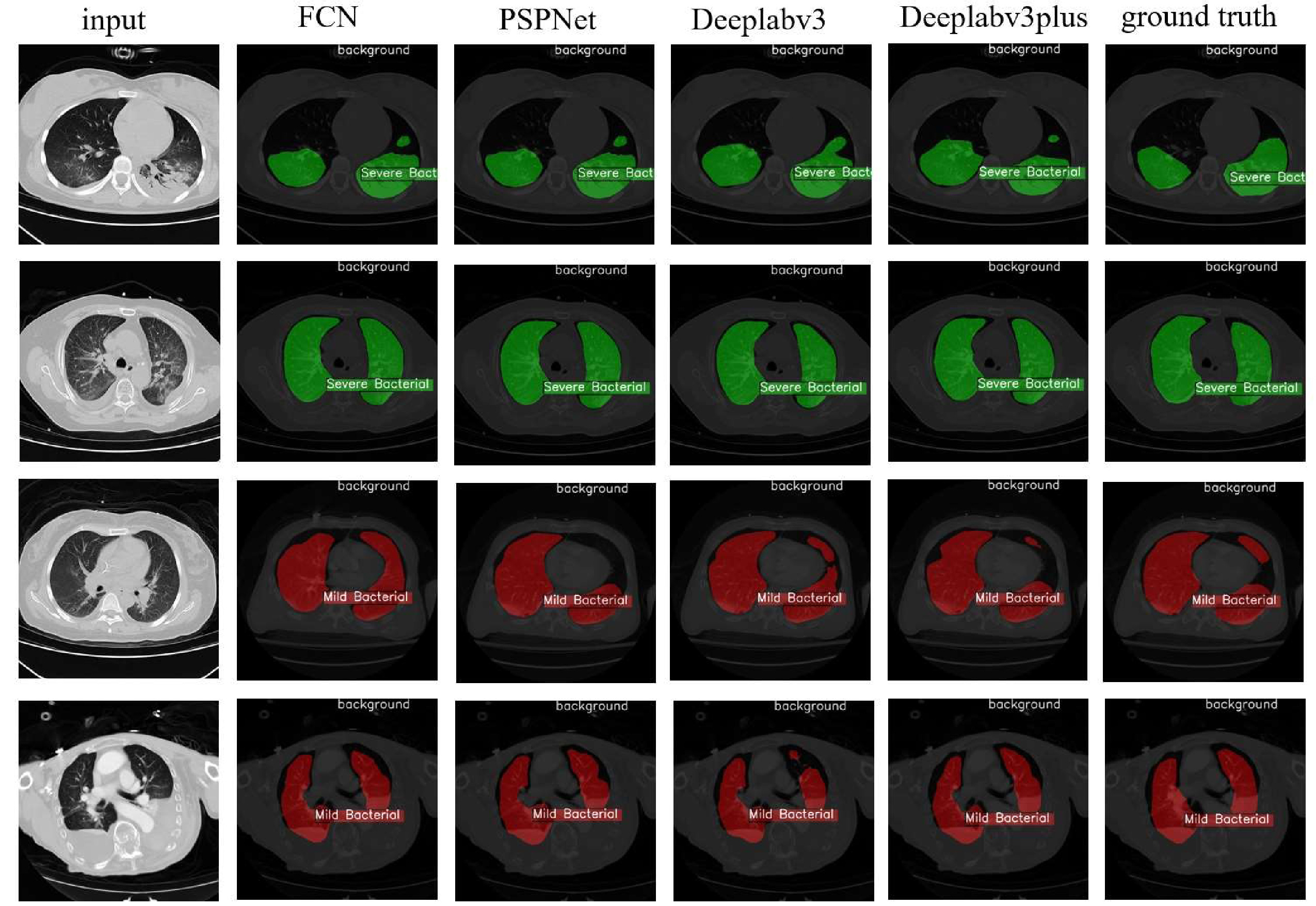
Severe bacterial pneumonia is a serious respiratory disease caused by bacteria, which is mainly transmitted through the respiratory tract. To achieve early recognition of severe pneumonia patients through images, this study collected the CT images of 180 patients diagnosed with bacterial infection in the lungs on the day of emergency admission to a large regional medical center (a Top-Tier (Grade 3 A) hospital). After classification by two deputy chief physicians of the respiratory department, 93 cases of severe bacterial infection were obtained and the rest 87 cases were identified as mild bacterial infection. The CT sequences were then preprocessed and annotated to obtain 599 images with annotated lung infection areas. Together with 107 normal (non-infected) images, these bacterial infection images were randomly divided into a training set of 447 and a test set of 259. In the experiment, four deep learning methods, namely, FCN, PSPNet, deeplabv3, and deeplabv3plus, were used for training and three-class classification (severe bacterial infection, mild bacterial infection, and normal). Deeplabv3plus showed the best performance, with an overall accuracy of 96.91% (including a sensitivity of 95.25%, a specificity of 97.24%, an accuracy of 86.96%, a recall rate of 95.24%, and an F1 score of 90.91%) for severe bacterial infection. Using deep learning technology to diagnose severe pneumonia as early as possible can produce valuable treatment time for patients, thereby significantly reducing mortality and complication rates.
Classification of Severe Bacterial Pneumonia Based on CT Images and Deep Learning
2025-07-23
PIER Letters
Vol. 127, 15-21, 2025
download: 379
Wideband Metasurface Antenna with Polarization Reconfigurable Controlled by Resistors
Guanghuan Geng and Zhendong Ding
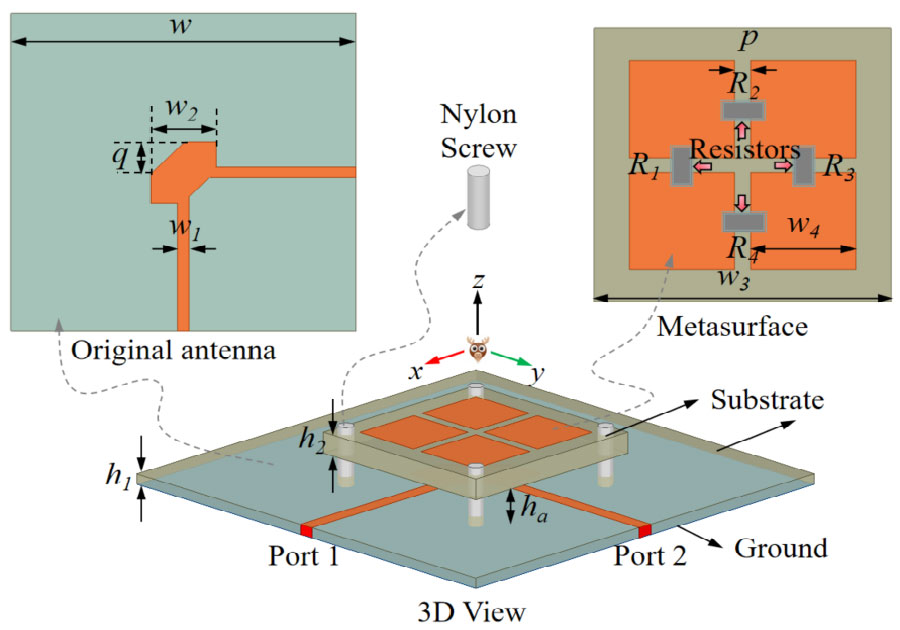
A polarization reconfigurable metasurface broadband antenna has been proposed. A 2×2 metasurface was used to achieve circular polarization (CP) characteristics, and four resistors were embedded to achieve linear polarization (LP). Among them, characteristic mode analysis (CMA) was used to discover the CP characteristics of the metasurface. Adding resistors changed the direction of the mode current, which causes CP to switch to LP state. The design results were validated through fabrication and measurement. The measured results show that the impedance bandwidth (IBW) is 21.1%, the axial ratio bandwidth (ARBW) 12.9%, the peak gain (PG) 7.7 dBic at 6.8 GHz in the CP state, its IBW 21.0%, the PG 4.7 dBi at 7.0 GHz in the LP state. The proposed antenna has the characteristics of broadband, polarization reconfigurability, easy processing, and low cost, and its operating frequency can be used in the C-band of wireless communication.
Wideband Metasurface Antenna with Polarization Reconfigurable Controlled by Resistors
2025-07-07
PIER Letters
Vol. 127, 9-14, 2025
download: 431
Switchable Tunable Absorber Based on Graphene and Vanadium Dioxide
Baojun Chen, Tianyu Jiao, Mengqiu Qian, Yanjie Ju and Yanbing Xue
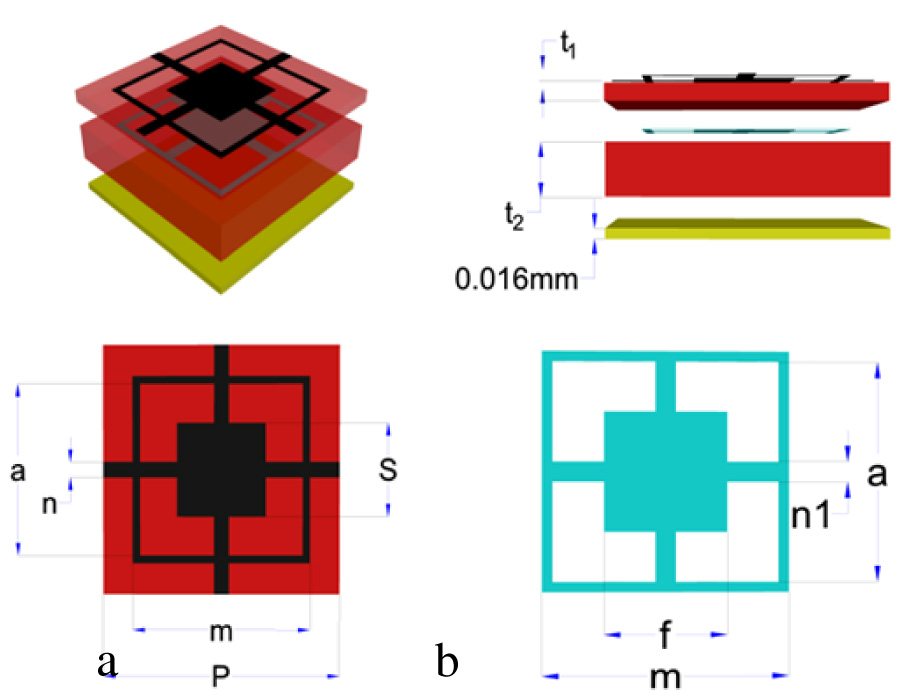
This article addresses the challenges associated with poor tunability and the single absorption function in absorbers. To address these challenges, we designed a dual-band switchable tunable absorber utilizing graphene and vanadium dioxide.The proposed absorber exploits the phase transition characteristics of vanadium dioxide to achieve absorption in the low-frequency band when it is in the dielectric state and absorption switching in the high-frequency band after phase transition. Furthermore, the Fermi level is altered by applying a bias voltage to the graphene, resulting in reduced square resistance. This mechanism allows tuning of the absorption frequency when the vanadium dioxide is in the dielectric state and adjustment of the absorption bandwidth when it is in the metallic state. Simulation results reveal that when the vanadium dioxide is in the dielectric state, the absorption rate exceeds 90% within the 20.0-27.7 GHz range. At this time, increasing the Fermi level of the graphene alters the absorption frequencies to 11 GHz and 42 GHz, respectively. Conversely, when the vanadium dioxide is in the metallic state, the absorption rate exceeds 90% within the 31.1-48.7 GHz range. Thus, elevating the Fermi level of the graphene leads to absorption band tuning at higher frequencies. This absorber demonstrates strong tunability and multifunctional absorption capabilities, offering outstanding practical application value.
Switchable Tunable Absorber Based on Graphene and Vanadium Dioxide
2025-07-06
PIER Letters
Vol. 127, 1-7, 2025
download: 387
Generation of Dual-Polarized Vortex Beams in the X-Band Using Reflective Metasurface
Shuman Li, Leyuan Li, Ying Sun, Zhuopeng Wang and Lin Shao
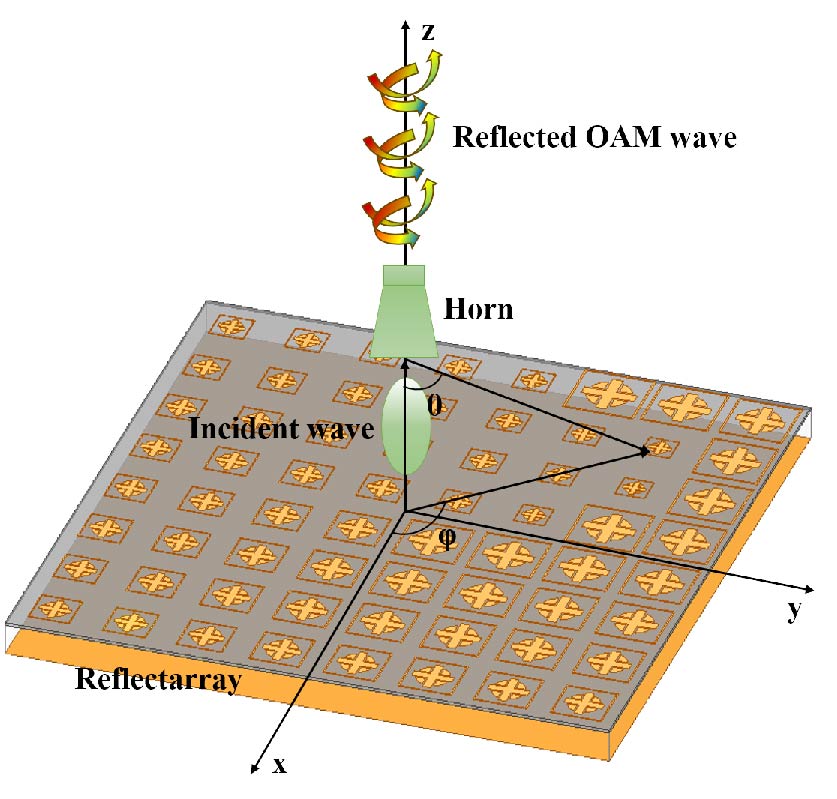
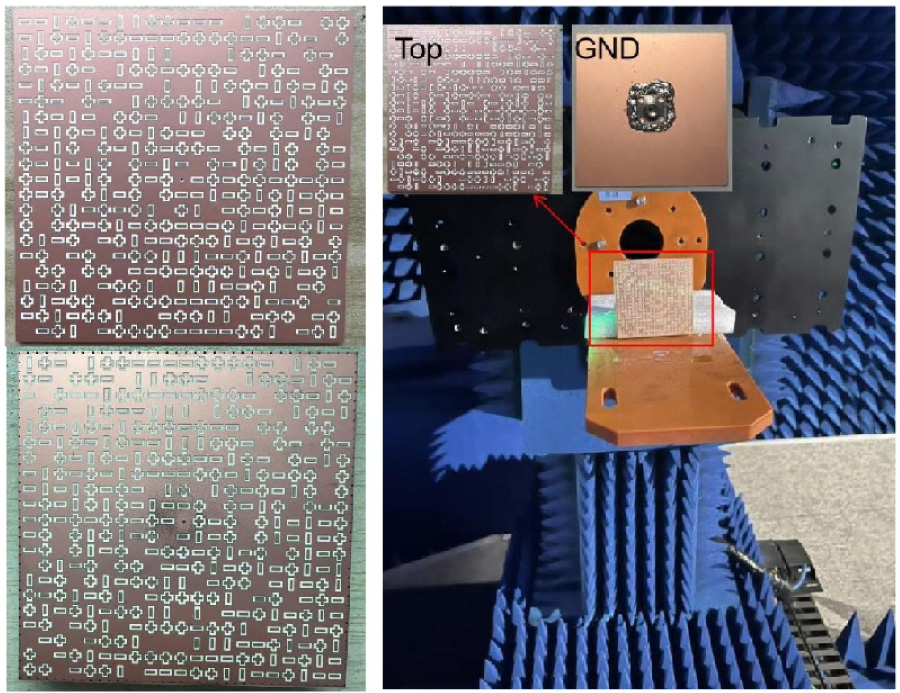
This paper presents a single-layer reflective metasurface for generating dual-linearly polarized orbital angular momentum (OAM) beams with mode number l=-1 at X-band. Phase modulation is achieved by adjusting the unit cell dimensions, which efficiently converts linearly polarized waves into vortex waves with the desired OAM mode. The proposed unit cell integrates a compact `米'-shaped inner patch with a square frame, with a compact size of 0.4λ0 × 0.4λ0, enabling independent control of both x-polarized and y-polarized waves. By varying the unit size,a broad phase shift range of 374° is achieved at 8-12 GHz. Based on phase compensation principles, the designed metasurface array is successfully generates dual-polarized vortex waves at X-band. The proposed metasurface exhibits high gain, narrow divergence angle, bandwidth, and dual-polarization capability, demonstrating significant potential for OAM wave multiplexing in wireless communication systems.
Generation of Dual-polarized Vortex Beams in the X-band Using Reflective Metasurface