Vol. 132
Latest Volume
All Volumes
PIERL 132 [2026] PIERL 131 [2026] PIERL 130 [2026] PIERL 129 [2026] PIERL 128 [2025] PIERL 127 [2025] PIERL 126 [2025] PIERL 125 [2025] PIERL 124 [2025] PIERL 123 [2025] PIERL 122 [2024] PIERL 121 [2024] PIERL 120 [2024] PIERL 119 [2024] PIERL 118 [2024] PIERL 117 [2024] PIERL 116 [2024] PIERL 115 [2024] PIERL 114 [2023] PIERL 113 [2023] PIERL 112 [2023] PIERL 111 [2023] PIERL 110 [2023] PIERL 109 [2023] PIERL 108 [2023] PIERL 107 [2022] PIERL 106 [2022] PIERL 105 [2022] PIERL 104 [2022] PIERL 103 [2022] PIERL 102 [2022] PIERL 101 [2021] PIERL 100 [2021] PIERL 99 [2021] PIERL 98 [2021] PIERL 97 [2021] PIERL 96 [2021] PIERL 95 [2021] PIERL 94 [2020] PIERL 93 [2020] PIERL 92 [2020] PIERL 91 [2020] PIERL 90 [2020] PIERL 89 [2020] PIERL 88 [2020] PIERL 87 [2019] PIERL 86 [2019] PIERL 85 [2019] PIERL 84 [2019] PIERL 83 [2019] PIERL 82 [2019] PIERL 81 [2019] PIERL 80 [2018] PIERL 79 [2018] PIERL 78 [2018] PIERL 77 [2018] PIERL 76 [2018] PIERL 75 [2018] PIERL 74 [2018] PIERL 73 [2018] PIERL 72 [2018] PIERL 71 [2017] PIERL 70 [2017] PIERL 69 [2017] PIERL 68 [2017] PIERL 67 [2017] PIERL 66 [2017] PIERL 65 [2017] PIERL 64 [2016] PIERL 63 [2016] PIERL 62 [2016] PIERL 61 [2016] PIERL 60 [2016] PIERL 59 [2016] PIERL 58 [2016] PIERL 57 [2015] PIERL 56 [2015] PIERL 55 [2015] PIERL 54 [2015] PIERL 53 [2015] PIERL 52 [2015] PIERL 51 [2015] PIERL 50 [2014] PIERL 49 [2014] PIERL 48 [2014] PIERL 47 [2014] PIERL 46 [2014] PIERL 45 [2014] PIERL 44 [2014] PIERL 43 [2013] PIERL 42 [2013] PIERL 41 [2013] PIERL 40 [2013] PIERL 39 [2013] PIERL 38 [2013] PIERL 37 [2013] PIERL 36 [2013] PIERL 35 [2012] PIERL 34 [2012] PIERL 33 [2012] PIERL 32 [2012] PIERL 31 [2012] PIERL 30 [2012] PIERL 29 [2012] PIERL 28 [2012] PIERL 27 [2011] PIERL 26 [2011] PIERL 25 [2011] PIERL 24 [2011] PIERL 23 [2011] PIERL 22 [2011] PIERL 21 [2011] PIERL 20 [2011] PIERL 19 [2010] PIERL 18 [2010] PIERL 17 [2010] PIERL 16 [2010] PIERL 15 [2010] PIERL 14 [2010] PIERL 13 [2010] PIERL 12 [2009] PIERL 11 [2009] PIERL 10 [2009] PIERL 9 [2009] PIERL 8 [2009] PIERL 7 [2009] PIERL 6 [2009] PIERL 5 [2008] PIERL 4 [2008] PIERL 3 [2008] PIERL 2 [2008] PIERL 1 [2008]
2026-10-07 Latest Published
By Jie Xiang Chia King Ho Holden Li
Progress In Electromagnetics Research Letters, Vol. 132, 7-15, 2026
Abstract
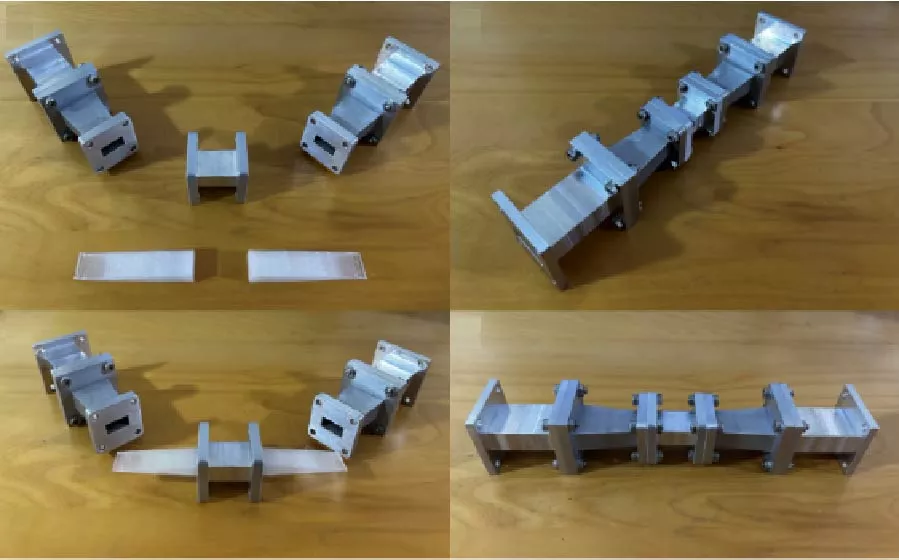
Waveguide transmission lines are known for their low insertion losses, particularly at higher GHz frequencies. However, they tend to be larger and bulkier than other transmission lines. This study investigates using dielectric-loaded waveguides to reduce the overall size and volume of waveguide-routed systems with the dielectric properties of 3D-printed plastics. Compared to other studies that use dielectric loading for size reduction, this study aims to reduce size, volume, and weight while maintaining relatively low losses. The approach is to use low-loss tangent dielectrics with a suitable dielectric constant responsible for reducing size, volume, and weight. Among 3D-printed plastics, Cyclic Olefin Copolymer (COC) is the most suitable based on its dielectric constant and loss tangent in the order of conventional dielectrics such as PTFE. The measured insertion loss of the 3D-printed dielectric-loaded waveguide was 0.22 dB, comparable to that of air-loaded WR90 waveguides of the same length (0.10 dB), while reducing the cross-sectional area by 46.35% and the weight by 26%. The advantage of 3D printing, dielectric-loaded waveguides is the ability to design less constrained waveguide profiles and intricate routing of waveguide transmission lines due to more flexible fabrication capabilities of 3D printing. Combining the benefits of 3D printing and the dielectric properties of COC, this study demonstrates the use of smaller waveguides in a higher frequency band that would be out of band in their air-loaded medium. By loading the smaller out-of-band waveguide with dielectric, the result shows that longer-wavelength signals, which would not be able to propagate without dielectric loading, can now propagate with low insertion loss. The waveguide chain is also miniaturized with a reduced size and overall volume, which would not have been possible with conventional air-loaded waveguides for a given frequency band, as it propagates below the cutoff frequency.
2026-10-07
PIER Letters
Vol. 132, 7-15, 2026
download: 16
X-Band 3D-Printed Dielectric-Loaded Out-of-Band WR62 Waveguide Transmission Line for Reduced Size and Weight
Jie Xiang Chia and King Ho Holden Li
Waveguide transmission lines are known for their low insertion losses, particularly at higher GHz frequencies. However, they tend to be larger and bulkier than other transmission lines. This study investigates using dielectric-loaded waveguides to reduce the overall size and volume of waveguide-routed systems with the dielectric properties of 3D-printed plastics. Compared to other studies that use dielectric loading for size reduction, this study aims to reduce size, volume, and weight while maintaining relatively low losses. The approach is to use low-loss tangent dielectrics with a suitable dielectric constant responsible for reducing size, volume, and weight. Among 3D-printed plastics, Cyclic Olefin Copolymer (COC) is the most suitable based on its dielectric constant and loss tangent in the order of conventional dielectrics such as PTFE. The measured insertion loss of the 3D-printed dielectric-loaded waveguide was 0.22 dB, comparable to that of air-loaded WR90 waveguides of the same length (0.10 dB), while reducing the cross-sectional area by 46.35% and the weight by 26%. The advantage of 3D printing, dielectric-loaded waveguides is the ability to design less constrained waveguide profiles and intricate routing of waveguide transmission lines due to more flexible fabrication capabilities of 3D printing. Combining the benefits of 3D printing and the dielectric properties of COC, this study demonstrates the use of smaller waveguides in a higher frequency band that would be out of band in their air-loaded medium. By loading the smaller out-of-band waveguide with dielectric, the result shows that longer-wavelength signals, which would not be able to propagate without dielectric loading, can now propagate with low insertion loss. The waveguide chain is also miniaturized with a reduced size and overall volume, which would not have been possible with conventional air-loaded waveguides for a given frequency band, as it propagates below the cutoff frequency.
X-Band 3D-Printed Dielectric-Loaded Out-of-Band WR62 Waveguide Transmission Line for Reduced Size and Weight
2026-10-06
PIER Letters
Vol. 132, 1-6, 2026
download: 36
A High-Gain Ultra-Wideband Dual-Polarized Vivaldi Antenna
Chenxi Chen and Jiade Yuan
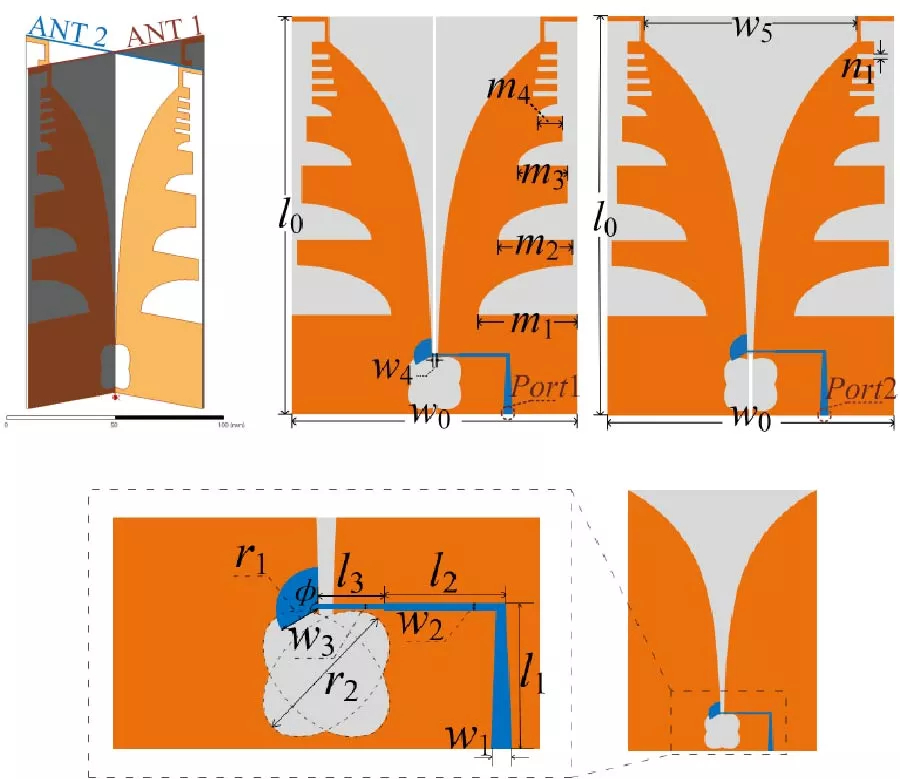
This paper proposes a high-gain ultra-wideband (UWB) dual-polarized Vivaldi antenna. The proposed antenna consists of two identical Vivaldi elements orthogonally crossed to achieve dual polarization. A tapered stepped-impedance feed matching line combined with a petal-shaped open-slot structure is deployed for every Vivaldi element to enhance impedance matching efficiently and extend operational bandwidth. Furthermore, gradient-tapered curved slots, periodic tapered rectangular slots, and bent extended stubs are arranged on both sides of the radiating patch, which effectively improves the antenna's gain and directivity at mid and low frequencies within its operating bandwidth. The overall dimensions of the proposed antenna are 0.57λL × 0.8λL, where λL refers to the free-space wavelength at the lowest operating frequency. Experimental measurements demonstrate that the proposed antenna achieves an impedance bandwidth of 1.5-9.5 GHz for S11 ≤ -10 dB. The dual-polarization port isolation is higher than 21 dB throughout the operating band, with a peak gain of 11.38 dBi. The antenna can be deployed for wideband communication and radar detection applications.
A High-Gain Ultra-Wideband Dual-Polarized Vivaldi Antenna
