Search Results(13790)

2020-07-08
PIER C
Vol. 103, 187-197
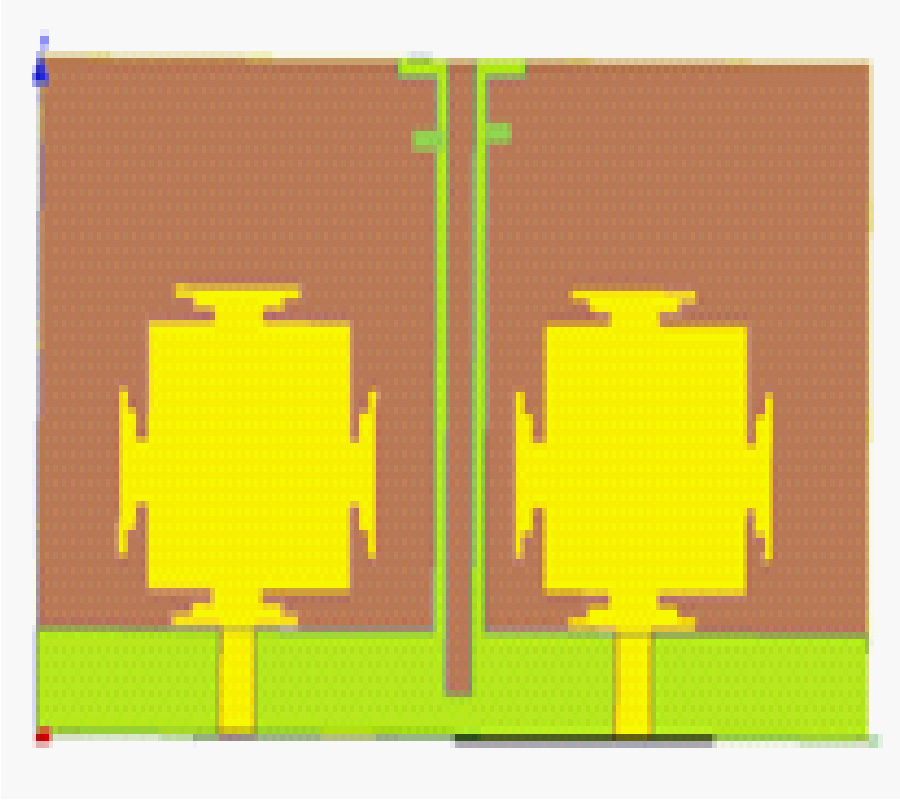
Design of an Ultra Wide Band Antenna Based on a SIW Resonator
Massimo Donelli , Sreedevi K. Menon , Giada Marchi , Viviana Mulloni and Mohammedhusen Manekiya
In this work, the design of an ultra-wideband (UWB) fork monopole antenna based on a surface impedance substrate integrated waveguide (SIW) resonator has been proposed. The SIW resonator not only improves the antenna bandwidth and its performances, but also permits to reduce the antenna size and weight. An antenna prototype has been designed, fabricated, and experimentally assessed. The obtained results are quite satisfactory, and they demonstrate the potentialities of the proposed geometry.
DESIGN OF AN ULTRA WIDE BAND ANTENNA BASED ON A SIW RESONATOR
2020-07-08
PIER C
Vol. 103, 177-186
S-Band Klystron with 300 MHz Bandwidth at 850 kW Peak Power and 20 kW Average Power
Zhiqiang Zhang , Jirun Luo , Zhaochuan Zhang , Xiaojuan Yu and Yunping Huang
In this paper, an S band, 300 MHz bandwidth, and 20 kW average power klystron was developed in the Aerospace Information Research Institute, Chinese Academy of Sciences. The klystron operates at 72 kV beam voltage and 41 A beam current with peak powers of over 850 kW and efficiency of over 30% at a 2.47% RF duty cycle. The results, including simulations, design, technologies and performances of the klystron, are presented. Some problems, such as gain dip, high order mode oscillation, output window cracking, and startup time, were also discussed.
S-BAND KLYSTRON WITH 300 MHZ BANDWIDTH AT 850 KW PEAK POWER AND 20 KW AVERAGE POWER
2020-07-07
PIER M
Vol. 94, 1-8
Measurement of the Local Intrinsic Curvature of a L = 1 Radio-Vortex at 30 GHz
Lorenzo Scalcinati , Bruno Paroli , Mario Zannoni and Marco Alberto Carlo Potenza
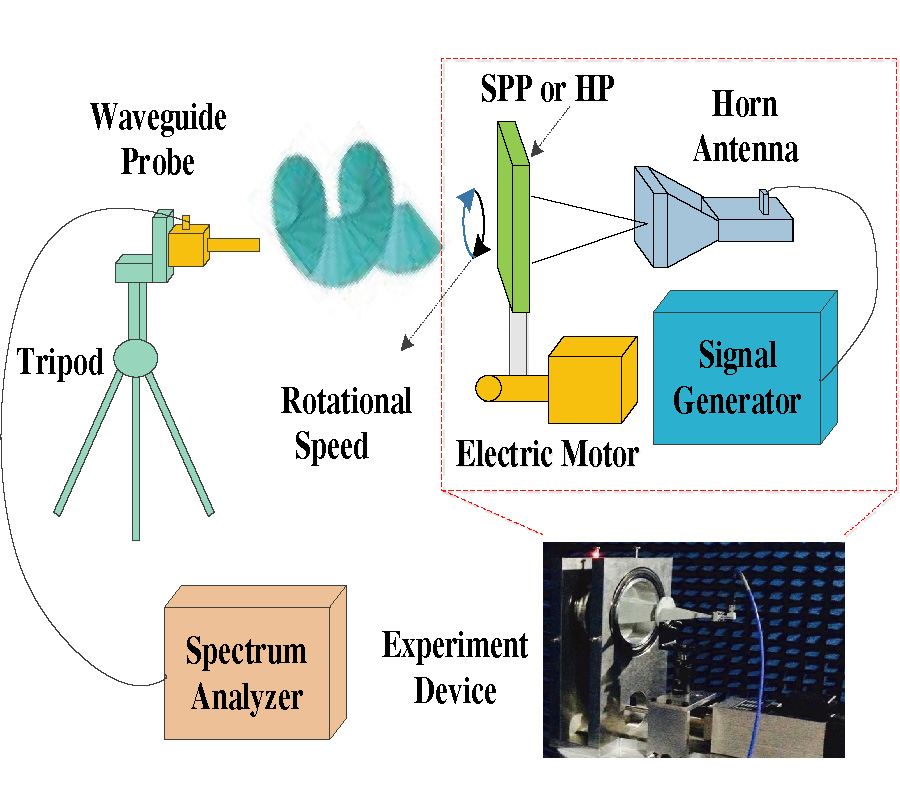
We exploit the properties of differential geometry of minimal surfaces to introduce a novel approach for characterizing wavefronts. Since Gaussian and mean curvatures describe global and local properties of any differentiable surface, a method for characterizing wavefronts endowed with non--trivial topological features has been introduced. We provide experimental evidence that the wavefront of an l = 1 radio-vortex at 30 GHz can be fully characterized by exploiting the wavefront phase in the far field of the source, accessing a small portion of the beam only. A particular care is dedicated to distinguish diffraction effects from the intrinsic curvature of the helicoidal wavefront. Results are applicable to the local measurement of the topological charge and to the local detection of orbital angular momentum radiation at the millimetric wavelengths.
MEASUREMENT OF THE LOCAL INTRINSIC CURVATURE OF A <I>l</I> = 1 RADIO-VORTEX AT 30 GHZ
2020-07-07
PIER
Vol. 167, 83-94
Shark-Fin Antenna for Railway Communications in LTE-R, LTE, and Lower 5G Frequency Bands
Ashwini Kumar Arya , Seong Jin Kim , Sungik Park , Dong-Hoon Kim , Rehab S. Hassan , Kyeongjun Ko and Sanghoek Kim
This paper presents a design study of a shark-fin antenna for future railway communications. Three specific bands are considered here as LTE-R (700 MHz), LTE (2100 MHz), and Lower 5G Band (3500 MHz). A 3-D metallic structure using the 3D printing technique has been designed and fabricated for the consideration of the required bands. The size (volume) of the antenna element is 163 × 61.9 × 10 mm3. The multi-physical simulations in terms of the smooth air flow and lower drag coefficient are performed for analyzing the need of shark-fin radome cover. More than 70 MHz bandwidth was observed for the LTE-R band and also a wide band response was observed that cover the required bands well i.e. the LTE, and lower 5G band. The proposed shark-fin antenna results the expected ideal radiation performance with an omnidirectional behavior in the horizontal plane.
SHARK-FIN ANTENNA FOR RAILWAY COMMUNICATIONS IN LTE-R, LTE, AND LOWER 5G FREQUENCY BANDS
2020-07-06
PIER C
Vol. 103, 167-176
Absorptive Filter Integrated Single Pole Double Throw Switch Using Switchable T-Shape Resonator for IoT Applications
Abdullah Mohammed Zobilah , Noor Azwan Shairi , Zahriladha Zakaria , Peng Wen Wong , Mohd Khairy Zahari , Mohammed Yahya Qaid Algumaei and Zayed Abdo Abdullah Nasser
In this paper, an absorptive filter-integrated switch (FIS) using switchable T-shape resonators is presented. The FIS was made up of two absorptive T-shape resonators and integrated with single pole double throw (SPDT) switch. A simple mathematical analysis of isolation and insertion loss of filter-integrated SPDT switch is discussed. PIN diodes were used as the switching elements for the SPDT switch and to reconfigure between the band-stop and bandpass responses. The proposed absorptive FIS design could be used for internet of things (IoT) applications such as Zigbee and Bluetooth at an operation frequency of 2.45 GHz. As a result, the proposed FIS exhibited low magnitude of insertion loss and high isolation. Therefore, the key advantages of the proposed FIS design are low insertion loss, high isolation, and good return loss at both ON- and OFF-state ports.
ABSORPTIVE FILTER INTEGRATED SINGLE POLE DOUBLE THROW SWITCH USING SWITCHABLE T-SHAPE RESONATOR FOR IOT APPLICATIONS
2020-07-05
PIER M
Vol. 94, 51-59
Design of Circular Array with Yagi-Uda Corner Reflector Antenna Elements and Camera Trap Image Collector Application
Suad Basbug
A six-element circular antenna array with Yagi-Uda corner reflector elements is proposed in order to achieve 360° beam-steering capability, high gain and cost-effective design objectives. The array element is mainly composed by a Yagi-Uda antenna, a corner reflector and a Wilkinson balun. For steering the main beam, instead of classical RF switching techniques, a virtual switching technique is offered. For this aim, each antenna element is connected to an affordable RF transceiver managed by a microcontroller. A USB hub is also used so that a computer operates all microcontrollers as peripheral devices. In this way, the switching operation can be performed in the software level. Furthermore, if every transceiver in the separate chain is set to a different frequency channel, a simultaneous communication is also possible with the help of the multithreading facility of the computer. In order to show the antenna array performance, the main antenna characteristics and test results are given. As a proof of concept, a wireless image collector scenario is also realized for a camera trap application. The results show that the circular antenna array design and switching technique work successfully.
DESIGN OF CIRCULAR ARRAY WITH YAGI-UDA CORNER REFLECTOR ANTENNA ELEMENTS AND CAMERA TRAP IMAGE COLLECTOR APPLICATION
2020-07-05
PIER M
Vol. 94, 41-49
CPW-Fed All-Metallic Vivaldi Antennas with Pattern Diversity for Millimeter Wave 5G Access Points
Gulur Sadananda Karthikeya , Mahesh Pandurang Abegaonkar and Shiban Kishen Koul
A coplanar waveguide (CPW) fed uniplanar all-metallic antenna is proposed for mmWave 5G access points. The antenna has an impedance bandwidth from 26 to 30 GHz with a corresponding end-fire gain of 8 dBi at 28 GHz. The effective radiating volume is 0.0031 λ03 indicating a high gain yield for minimal physical footprint. The radiation efficiency is 99.5%, and the losses are primarily due to finite conductivity of copper. The pattern integrity is high across the band with cross-polarization level below 30 dB, due to lack of electrically thick dielectric substrate. Industry standard low-cost chemical etching technique is used for fabrication of the prototype. A compact, co-polarized stacked beam switching module is also proposed for wide angular coverage with three-ports. This module houses the proposed all-metallic antennas for beam switchability. A customized 3D-printed scaffolding using polylactic acide (PLA) is designed to house the proposed antennas. The antenna module has a wide angular coverage of ±50º. Since the proposed antenna has high radiation efficiency with high gain for minimal physical footprint, it could be a potential solution for mmWave 5G access points. Detailed simulated and measured results are presented.
CPW-FED ALL-METALLIC VIVALDI ANTENNAS WITH PATTERN DIVERSITY FOR MILLIMETER WAVE 5G ACCESS POINTS
2020-07-05
PIER M
Vol. 94, 31-39
Wave Scattering by a Perfect Electromagnetic Conductor Wedge Residing Between Isorefractive Media
Husnu Deniz Basdemir
In this study, plane wave diffraction by a perfect electromagnetic wedge which is lying between isorefractive media is investigated. The diffracted waves are constructed by using the relation between initial geometric optics waves and scattered waves at the transition boundaries. The uniform theory of diffraction method is used for derivation of the uniform wave expressions. Thus, obtained uniform expressions are analyzed numerically for different set of parameters.
WAVE SCATTERING BY A PERFECT ELECTROMAGNETIC CONDUCTOR WEDGE RESIDING BETWEEN ISOREFRACTIVE MEDIA
2020-07-05
PIER M
Vol. 94, 19-29
PBG Structured Compact Antenna with Switching Capability in Lower and Upper Bands of 5G
Jasmine Saini and Manoj Kumar Garg
A novel integrated compact antenna with photonic band gap (PBG) structure, having switching capability between lower and upper bands of 5G cellular communication is proposed. The proposed antenna can operate in the lower band (3.1 GHz to 3.5 GHz) as well as in the upper band (24 GHz to 27 GHz) of 5G cellular communication. Two radiating patches for the aforementioned frequency bands are developed in the same structure. A small patch for the upper-frequency band is inserted into a rectangular slot made in a large patch of the lower-frequency band. Both patches radiate at different times with the same ground. Two PIN diodes have been used to excite both patches at different times. The results indicate that the antenna has higher gain and wider bandwidth than the conventional antenna without a PBG structure.
PBG STRUCTURED COMPACT ANTENNA WITH SWITCHING CAPABILITY IN LOWER AND UPPER BANDS OF 5G
2020-07-05
PIER Letters
Vol. 92, 109-116
A Compact Phase Shifter with Wide Phase Range Using Loaded Transmission Line
Ting Wu , Juan Chen and Peng-Fei Wu
This paper presents a 90° broadband compact phase shifter which employs loade λ/2 transmission line. By adding an H shaped open stub loaded transmission line, the bandwidth of the phase shifter is broadened. Detailed theoretical analysis and circuit configuration are presented to explain the mechanism. The proposed phase shifter is fabricated and measured to validate the design principle. The simulated and measured results show that the proposed phase shifter achieves 6.6 to 19.4 GHz bandwidth with low phase instability ±5°, very low insertion loss (0.3 dB in 7.5-15.2GHz), high return loss (10 dB), and a compact size (5.8cm*6.1cm). Good agreements are observed between the measured and simulated results with small phase deviation. Moreover, the configuration of the proposed phase shifter is simple in both design and fabrication which makes the design suitable for actual applications.
A COMPACT PHASE SHIFTER WITH WIDE PHASE RANGE USING LOADED TRANSMISSION LINE
2020-07-05
PIER Letters
Vol. 92, 101-107
Nonuniform Electromagnetic Field at the Interface Between Dielectric and Conducting Media
Yuriy Vasetsky
The study of the electromagnetic field, taking into account eddy currents in the conductive half-space, is based on the exact analytical solution of the general three-dimensional quasi-stationary problem. The mathematical model includes an approximate solution using asymptotic expansion in the case of strong skin effect. Analytical expressions are obtained for the electric and magnetic fields at a flat interface in the form of limited asymptotic series, each term of which is expressed through a known field of external sources. The expressions take into account the nonuniformity of the field near the surface, since they contain its derivatives with respect to the coordinate. The series expansion was carried out according to a small parameter, which is proportional to the ratio of the field penetration depth to the distance between the interface and the sources of the external field. The found expressions generalize the approximate boundary impedance condition for the case of the penetration of nonuniform electromagnetic field into conductive medium.
NONUNIFORM ELECTROMAGNETIC FIELD AT THE INTERFACE BETWEEN DIELECTRIC AND CONDUCTING MEDIA
2020-07-04
PIER M
Vol. 94, 9-18
Coupling Analysis of Non-Parallel Transmission Lines Excited by Ambient Wave Using a Time Domain Hybrid Method
Zhihong Ye and Qingyuan Fang
A time domain hybrid method is presented to solve the coupling problem of non-parallel transmission lines (NPTLs) excited by ambient wave efficiently, which consists of transmission line (TL) equations, finite-difference time-domain (FDTD) method, and interpolation techniques. In this method, NPTLs are firstly divided into multiple independent transmission line segments according to the FDTD grids. Then the TL equations are applied to build the coupling models of these TL segments, which rely on the calculation precisions of per unit length (p.u.l) distribution parameters of NPTLs and equivalent sources of TL equations. Thus, the p.u.l parameters of NPTLs are derived from empirical formulas, and the equivalent sources are obtained by some linear interpolation schemes of electric fields on the edges of FDTD grids. Finally, the difference scheme of FDTD is utilized to discretize the TL equations to obtain the voltages and currents on NPTLs and terminal loads. The significant feature of this hybrid method is embodied by its synchronous calculations of space electromagnetic fields and transient responses on NPTLs in time domain. The accuracy of this presented method is testified by the numerical simulations of plane wave coupling to NPTLs on the ground and in the shielded cavity by comparing with FDTD-SPICE method and CST software.
COUPLING ANALYSIS OF NON-PARALLEL TRANSMISSION LINES EXCITED BY AMBIENT WAVE USING A TIME DOMAIN HYBRID METHOD
2020-07-04
PIER Letters
Vol. 92, 93-100
Four Dimensional Strictly Noncircular Unitary ESPRIT Algorithm for L-Shaped Bistatic MIMO Radar
Yonghong Liu , Jiaxiong Fang , Tianyi Zhao , Hua Chen and Weiyue Liu
In this paper, a joint two dimensional (2D) direction of departure (DOD) and 2D direction of arrival (DOA) strictly noncircular (NC) unitary estimation of signal parameters via rotational invariance techniques (ESPRIT) method is proposed for an L-shaped bistatic multiple input multiple output (MIMO) radar. In the case that the incident signals are NC signals, we first utilize the received data vector and its conjugate counterparts to construct a new data vector, and then the unitary ESPRIT method is adopted to estimate the 2D-DODs and 2D-DOAs, which can automatically pair the four dimensional (4D) angle parameters. Simulation results are included to verify the effectiveness of the proposed algorithm.
FOUR DIMENSIONAL STRICTLY NONCIRCULAR UNITARY ESPRIT ALGORITHM FOR L-SHAPED BISTATIC MIMO RADAR
2020-07-01
PIER C
Vol. 103, 155-166
Meta-Heuristic Multi-Objective as an Affordable Method for Improving the Grating Lobe in a Wide Scan Phased Array Antenna
Maryam Shadi and Zahra Atlasbaf
In electronic beam scanning, the number of phase shifters is an obvious challenge. So, there are several methods to reduce the number of phase shifters. The aim of this paper is to investigate the use of the meta-heuristic algorithm to lower the grating lobe level in the subarray antenna. Improve the result obtained by group subarray optimization techniques to determine topology and space between elements, and complex optimization of weight, simultaneously. Uniform subarray and random subarray are analyzed in Matlab to determine the coefficient of excitation by the evolutionary algorithm, as well as swarm and hybrid. The results of the simulation are shown; this method leads to radiation pattern without grating lobe in wide scanning angle. It indicates that there is a possibility of obtaining wide electronic scanning with minimum number of phase shifters and improving result.
META-HEURISTIC MULTI-OBJECTIVE AS AN AFFORDABLE METHOD FOR IMPROVING THE GRATING LOBE IN A WIDE SCAN PHASED ARRAY ANTENNA
2020-06-30
PIER C
Vol. 103, 137-153
Design of 4×4 Butler Matrix and Its Process Modeling Using Petri Nets for Phase Array Systems
Ved Prakash , Sonal Dahiya , Sunita Kumawat and Priti Singh
Petri net is a mathematical and graphical tool used for analyzing the properties of parallel and concurrent system designs. Here, it is used for checking the process modeling of 4 × 4 Butler matrix fabricated on Rogers RO3210 and resonating in Ku band. Butler matrix is well suited for satellite and aircraft antenna applications as a feeding network for phase array systems. So, this basic feed design process of antennas is studied using Petri nets for better understating the designing process and removal of any deadlocks occurring during designing and feeding of antennas. It is accomplished by analyzing the behavioral and structural properties of Petri nets. A Butler matrix divides the power amplitude into four equal parts and provides a progressive phase difference of 45˚. Therefore, its components, 0 db coupler, 3 db coupler, and phase shifters, have also been designed and simulated. After designing the components, firstly these components are joined to form a matrix design which is simulated and fabricated in ANSYS HFSS. Secondly, the designed structure is analyzed for structural and behavioral properties using Petri net's graphical and mathematical properties. After analyzing the process, the feed design can be modified further according to user requirements, and deadlock can be removed by checking the difference between the simulated and measured results of design. Likewise, here the matrix has been compared and found to be following the same pattern. The overall size of the matrix is 5.58 × 7.43 cm2, which is further suitable for the user's feeding requirements and applications.
DESIGN OF 4×4 BUTLER MATRIX AND ITS PROCESS MODELING USING PETRI NETS FOR PHASE ARRAY SYSTEMS
2020-06-29
PIER M
Vol. 93, 197-207
Research on Active Disturbance Rejection Control of Hybrid Excitation Magnetic Suspension Switched Reluctance Motor Considering Noise
Yonghong Huang , Libin Yan , Fan Yang and Wenjun Zeng
The bearingless switched reluctance motor system based on active disturbance rejection control has good anti-interference performance and robustness, but it is easy to lose stability due to the influence of measurement noise in actual engineering. The main reason for the sensitivity of active disturbance rejection control to noise lies in the noise amplification of its extended state observer. To solve this problem, a novel reduced-order extended state observer based on predictive linear tracking differentiator is proposed. First, the general form of the observer is given, and then active disturbance rejection controller is designed based on suspension system of the hybrid excitation bearingless switched reluctance motor. The suspension force is used as the hysteresis loop to eliminate the estimation of the disturbance feedforward gain, and the stability of the control system is analyzed by Lyapunov equation. Finally, the simulation comparison is conducted through Matlab. The results show that this method can effectively suppress the influence of measurement noise and reduce the error of disturbance estimation when the observer is in a low bandwidth.
RESEARCH ON ACTIVE DISTURBANCE REJECTION CONTROL OF HYBRID EXCITATION MAGNETIC SUSPENSION SWITCHED RELUCTANCE MOTOR CONSIDERING NOISE
2020-06-29
PIER Letters
Vol. 92, 85-92
Single-Substrate Double-Side High Selectivity Frequency Selective Surface
Xiaofan Yang , Liandong Wang , Xujian Shen , Xiaoming Liu , Tao Qi and Yixin Zhou
Frequency selective surface is a key component in applications such as communication antenna and remote sensing radiometer. One of the core parameters is selectivity, which is usually realized using a multi-layer structure or through a complicated 3D structure. These methods, however, would impose much challenge on alignment or fabrication. This paper proposes a single-substrate and combined-united array to realize a high selectivity frequency selective surface. The unit cell is a combined pattern of cross dipole and square loop to generate double transmission zeroes out of the passband. Both sides of the substrate are printed with the same pattern to enhance the selectivity. Such a structure enables easy fabrication and assembly by avoiding using multi-substrates. A prototype in the Ku-band demonstrates that both sides of the passband show high selectivity.
SINGLE-SUBSTRATE DOUBLE-SIDE HIGH SELECTIVITY FREQUENCY SELECTIVE SURFACE
2020-06-29
PIER
Vol. 167, 67-81
A Review of Deep Learning Approaches for Inverse Scattering Problems (Invited Review)
Xudong Chen , Zhun Wei , Maokun Li and Paolo Rocca
In recent years, deep learning (DL) is becoming an increasingly important tool for solving inverse scattering problems (ISPs). This paper reviews methods, promises, and pitfalls of deep learning as applied to ISPs. More specifically, we review several state-of-the-art methods of solving ISPs with DL, and we also offer some insights on how to combine neural networks with the knowledge of the underlying physics as well as traditional non-learning techniques. Despite the successes, DL also has its own challenges and limitations in solving ISPs. These fundamental questions are discussed, and possible suitable future research directions and countermeasures will be suggested.
A REVIEW OF DEEP LEARNING APPROACHES FOR INVERSE SCATTERING PROBLEMS (INVITED REVIEW)
2020-06-28
PIER C
Vol. 103, 123-135
Various Models for Faults in Transmission Lines and Their Detection Using Time Domain Reflectometry
Laurent Sommervogel
This paper presents new ways of modelling several types of faults that can be encountered while monitoring cables throughout their lifecycle. These models comply with the traditional RLGC representation of a transmission line, which makes them easily usable for numerical simulations in frequency-domain. Theoretical fault signatures will then be extracted in Y. J., J. Powers, T. S. Choe, C. Y. Hong, Etime-domain to provide a better way of analyzing plots given by traditional devices, like time domain reflectometers (TDR). This allows a more accurate assessment of a cable's health and condition. It will be shown in particular that some faults can be detected even if their damaged zone remains small compared to the wavelength. A direct benefit from this is that very expensive high frequency tools are not always necessary to detect these faults. The general objective of this paper is to improve fault location accuracy by combining measurement and simulation. It will be shown how this combination can become a powerful tool to detect, locate and characterize a defect in a cable. The suggested models can be applied to any type of cable, from a coaxial line to a multi wire harness. In this work, a focus has been put on civil and military aircrafts, but similar cables are also found in cars or nuclear power plants for instance.
VARIOUS MODELS FOR FAULTS IN TRANSMISSION LINES AND THEIR DETECTION USING TIME DOMAIN REFLECTOMETRY
2020-06-27
PIER M
Vol. 93, 185-196
Study of Frequency Characteristics for Three-Coil Wireless Power Transfer System with Different Positions
Xueyi Zhang , Yang Yuan and Zhongqi Li
To explore the problem that the frequency characteristics of a magnetically coupled three-coil wireless power transfer (WPT) system are affected with different positions, in this paper, the expressions of the resonant frequency and the frequency corresponding to the maximum output power are deduced based on equivalent circuit theory. It is concluded that not only the resonant frequency is changed with different positions, but also the frequency corresponding to the maximum output power is changed with different positions. The WPT system always features a maximum efficiency point and a maximum output power point. The frequencies of the two points are almost the same. Finally, a three-coil experiment setup is built, and experimental results are well consistent with calculation and simulation results, which verifies the correctness of the proposed method. Proposed method provides a feasible scheme for simultaneously achieving high efficiency and high output power, and also provides a useful reference for the further research on the frequency tracking and optimization control algorithms.
STUDY OF FREQUENCY CHARACTERISTICS FOR THREE-COIL WIRELESS POWER TRANSFER SYSTEM WITH DIFFERENT POSITIONS